The Pauper Sage Who Borrowed a Jewel From Heaven and Gave It Back
With nothing for the Sabbath, Rabbi Shimon ben Halafta prays until heaven drops him a jewel, and his wife warns what a borrowed treasure will cost.
Table of Contents
 Click for full size
Nothing in the House for the Sabbath
The sun was already low over the rooftops, and there was nothing in the house. No bread, no wine, no oil for a second lamp. Rabbi Shimon ben Halafta stood in his doorway and counted what he had, which was nothing, and the Sabbath was coming the way it always came, whether a man was ready or not.
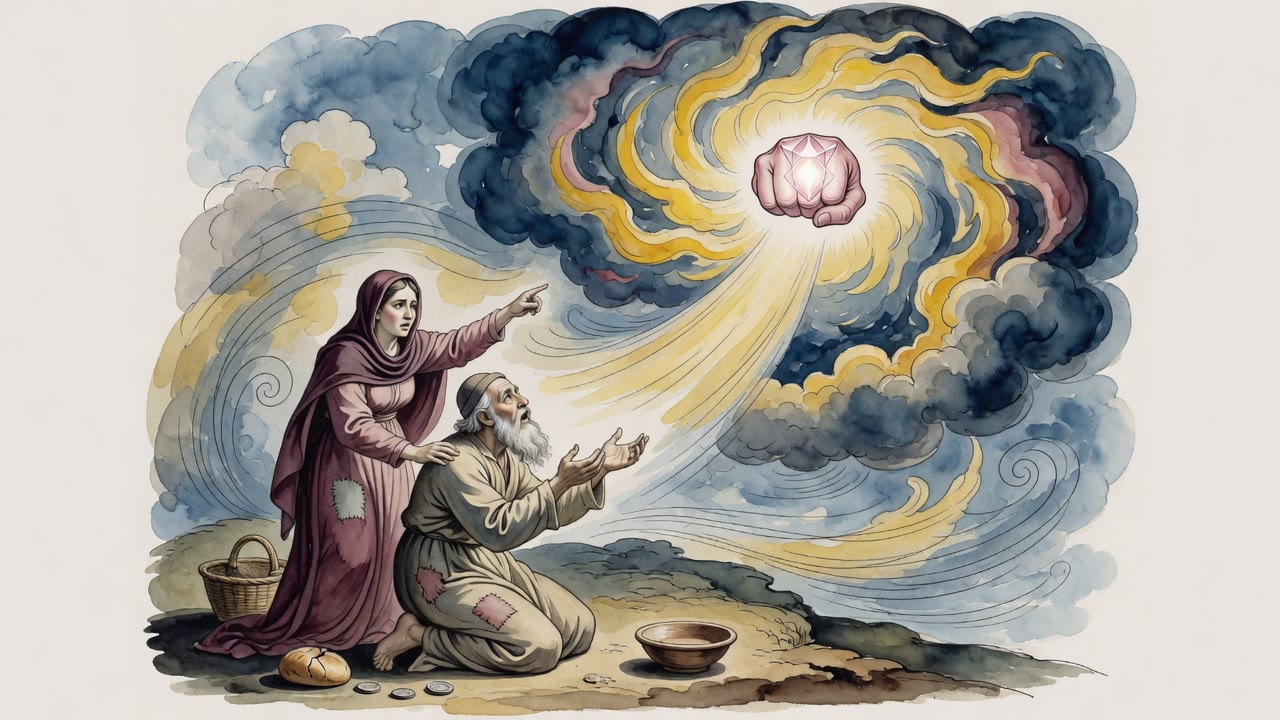
He did not sit down to worry. He walked. Out past the last houses, past the edge of the town, into the open field where the light was failing and no one would see him. There, with the first star not yet risen, he lifted his hands and prayed. Not for wisdom. Not for long life. For supper.
A Hand Opens Above the Field
Something fell into his palm. It was heavy and cold and it caught what was left of the light, a precious stone, a single jewel dropped from heaven into the hand of a man who had asked only for a meal. He closed his fingers around it and did not ask questions. The Sabbath does not wait for questions.
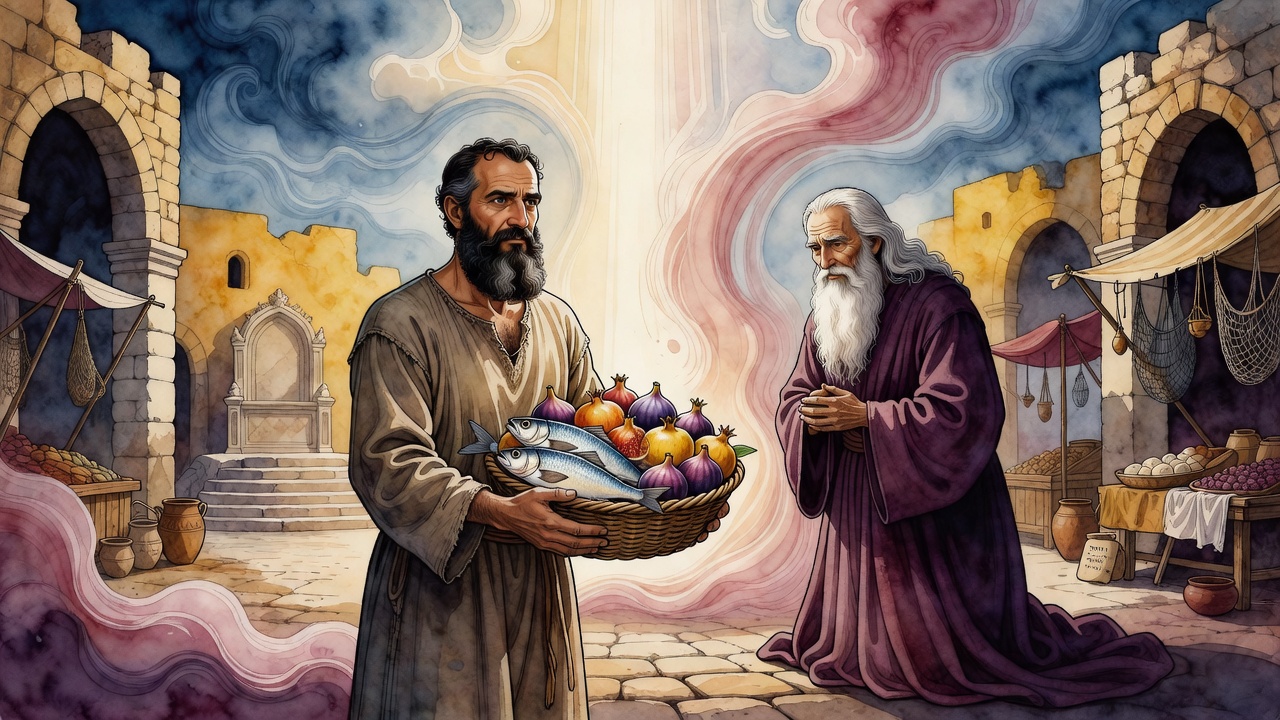
He carried it back through the darkening streets to the money-changer, who weighed it and paid out for it, and with that silver he bought everything. Bread and wine, fish and oil, greens for the pot. He came home with his arms full. He kindled the lamps, he made kiddush, he sat down at a table that an hour before had been bare, and he ate on the night of the Sabbath like a man at a wedding.
The Warning at the Sabbath Table
His wife watched the food appear and set down her cup. "Where did all this come from?" she asked.
"From what the Holy One, blessed be He, has provided," he said.
She did not lift her fork. "If you do not tell me the truth, I will not taste a thing."
So he told her. The empty house, the field, the prayer, the stone that dropped from an open hand in heaven, the money-changer, all of it. He waited for her to be glad.
She pushed the plate away. "I will not eat," she said, "until you promise me you will give it back when the Sabbath has gone."
"Give it back? Why?"
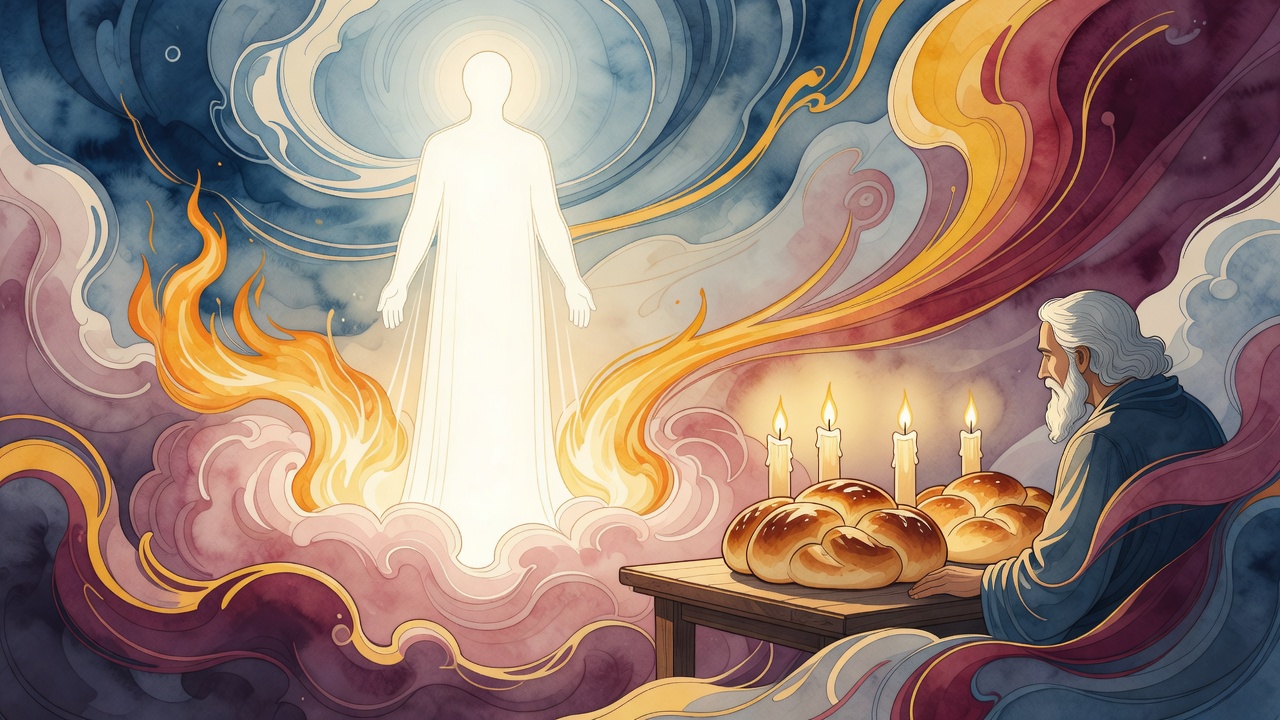
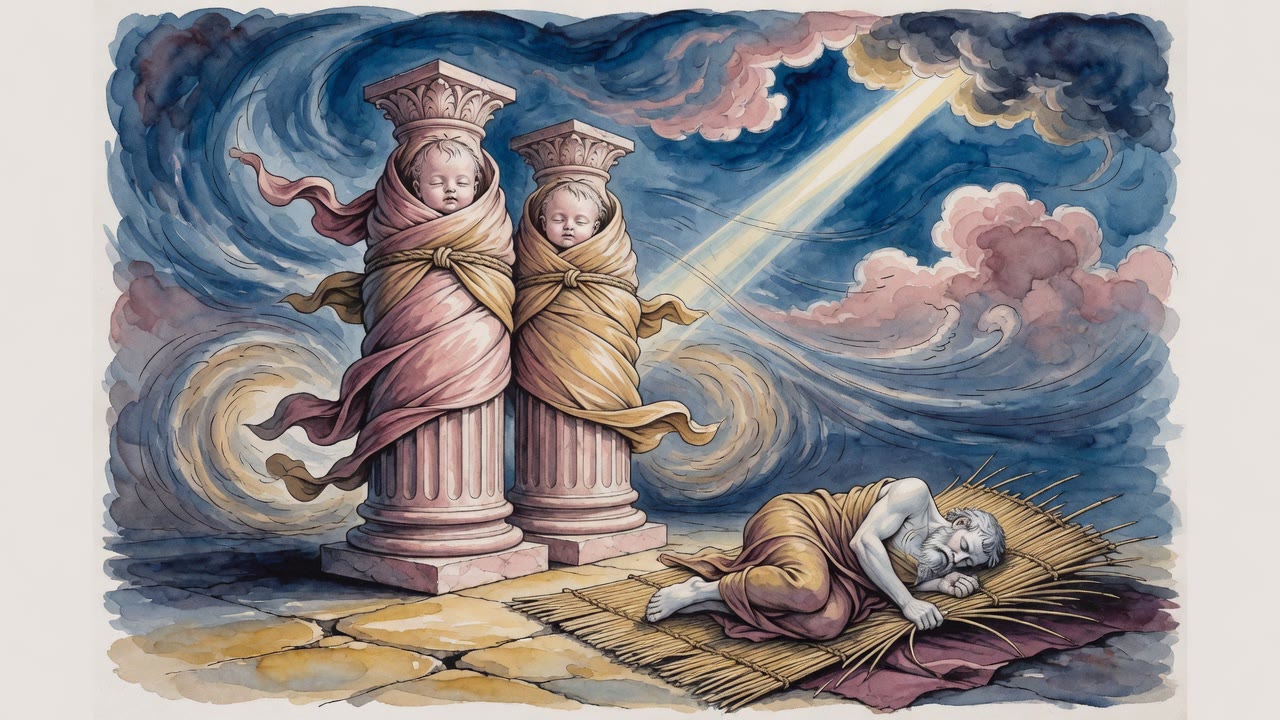
Then she told him what she saw. "Tomorrow the righteous will sit down at their tables in the world that is coming, and your companions will sit there with you. Their tables will be heaped and set square on four legs, piled with everything a soul earned by the Torah it learned. And you will come to yours, and it will be short one leg, and it will lean, because tonight you spent what was meant to hold up your place there forever." The wage of Torah, she said, is not paid out in this world. It is paid at the end. "She shall laugh at the latter day."
He Gives the Jewel Back
Rabbi Shimon ben Halafta had reached the Throne with his prayers, and now his own wife had reached higher. He did not argue. When the Sabbath had gone out, when the last of its light faded and the ordinary week began again, he took the stone that had bought his feast, and he prayed a second time, and he gave it back. It rose out of his hand the same way it had come into it. Heaven took back its loan. The table in this world was bare again, and the table in the next world stood on all four legs.
The Disciple Who Came Home Rich
In another town lived another Rabbi Shimon, and his students loved the Land of Israel until one of them left it. That disciple went abroad, out past the borders, and when he came back he came back wealthy, robed and ringed and heavy with foreign gold. The other students watched him. They began to whisper. If a man can grow that rich by leaving, why stay? In their hearts they had already begun to pack.
Their teacher knew. He always knew. He did not scold them and he did not forbid them. He said, "Come with me," and he led them out of the study house, out of the town, down into the valley that lies below Meron, his city, where the hills fold open onto an empty floor of grass and stone.
The Valley That Filled With Gold
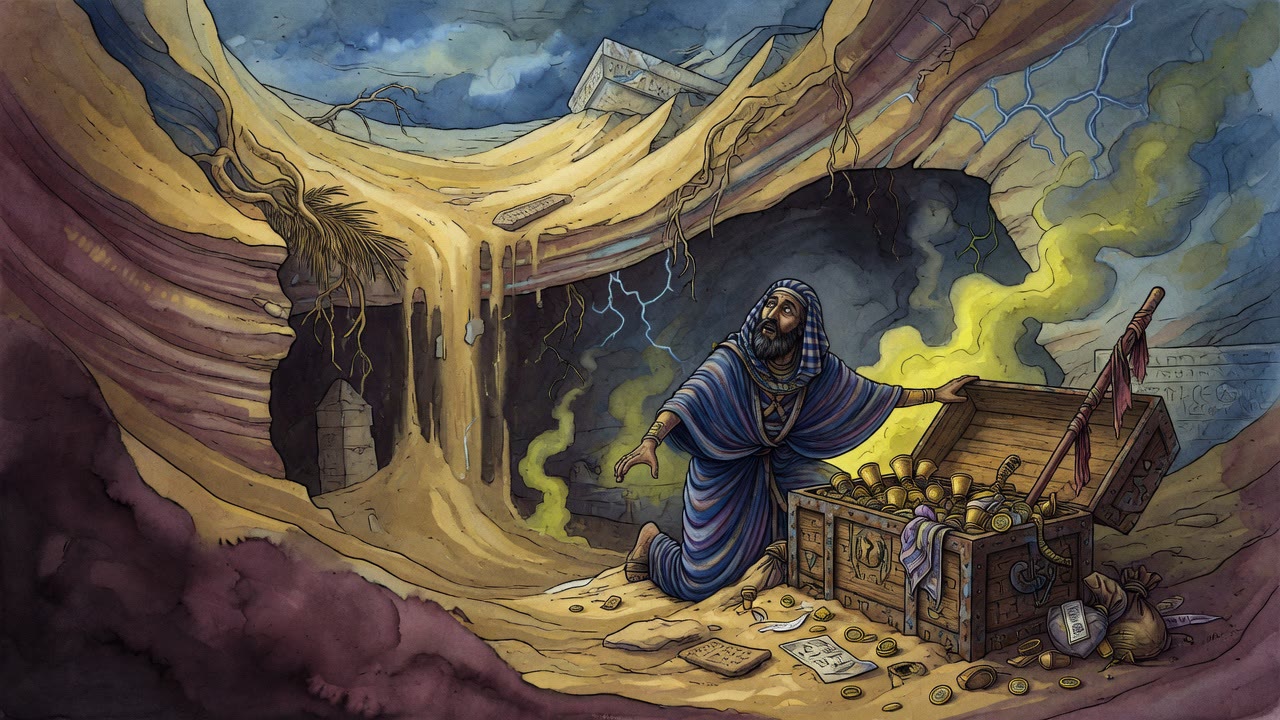
There he lifted his hands, the way the other Shimon had raised his in his own bare field, and he prayed. The valley answered. Gold came up out of the ground and spread across the whole floor of it, dinar over dinar over dinar, until the grass was buried and the whole valley burned yellow in the sun, more than a man could lift, more than a caravan could haul.
The students stood at the rim of it and could not breathe. Their teacher turned to them. "Whoever wants it," he said, "let him go down and take it. Take as much as your arms will hold. Only know this before you bend your back. Whatever any one of you lifts out of this valley today, he lifts it out of his own portion in the world that is coming. This is not where the wage is paid. It is paid there, at the latter day, and not one hour before."
No one went down. The gold lay in the valley, and the students went home to their books, and the Land held them the way it had before, and the disciple who had gone abroad stood among them with all his foreign wealth and knew, too late to be proud of it, exactly what it had cost.
← All myths