Parshat Bo6 min read

The Plague of Darkness Was Cut From God's Own Hiding Place

Two sages traced the dark that pinned Egypt to the blackness God hides behind, a coin-thick scoop of the deep that doubled once it was loosed.

Curated by Arthur · Told by Maggid ·
Table of Contents
  1. The Darkness Above the Throne
  2. A Thing From Before the First Day
  3. The Guardian Angels Said Yes
  4. The Darkness That Doubled Itself

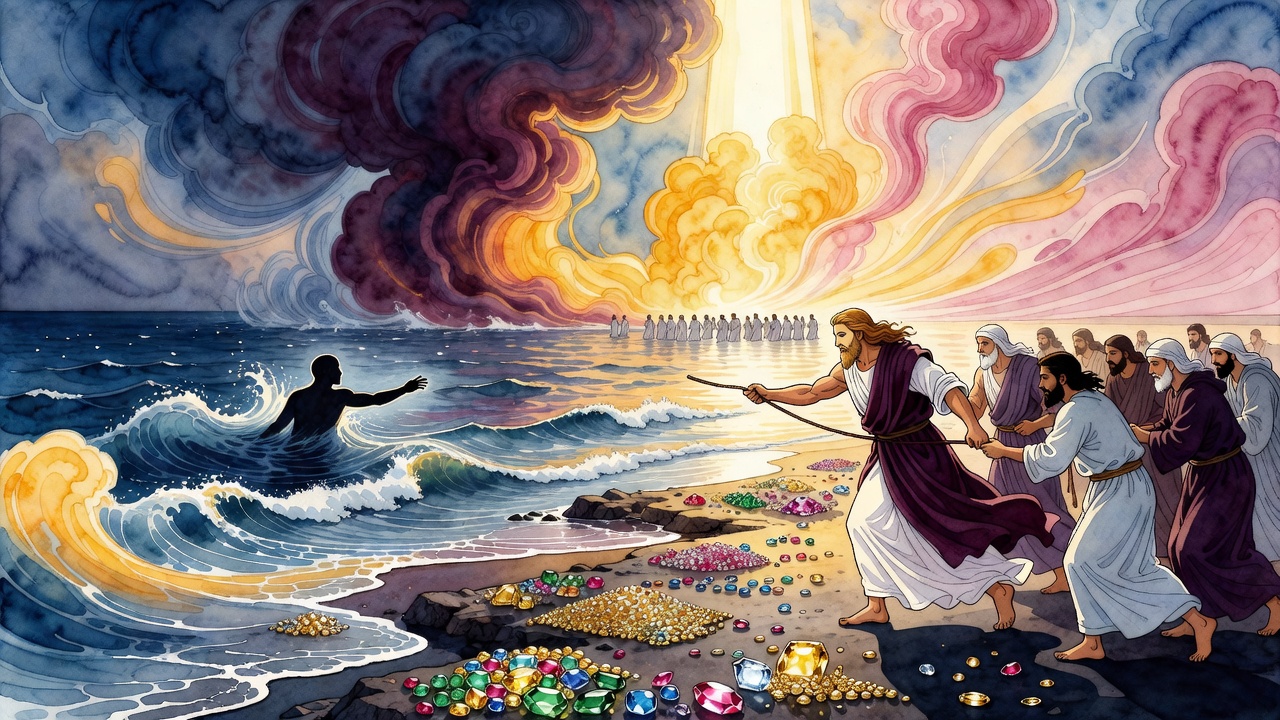
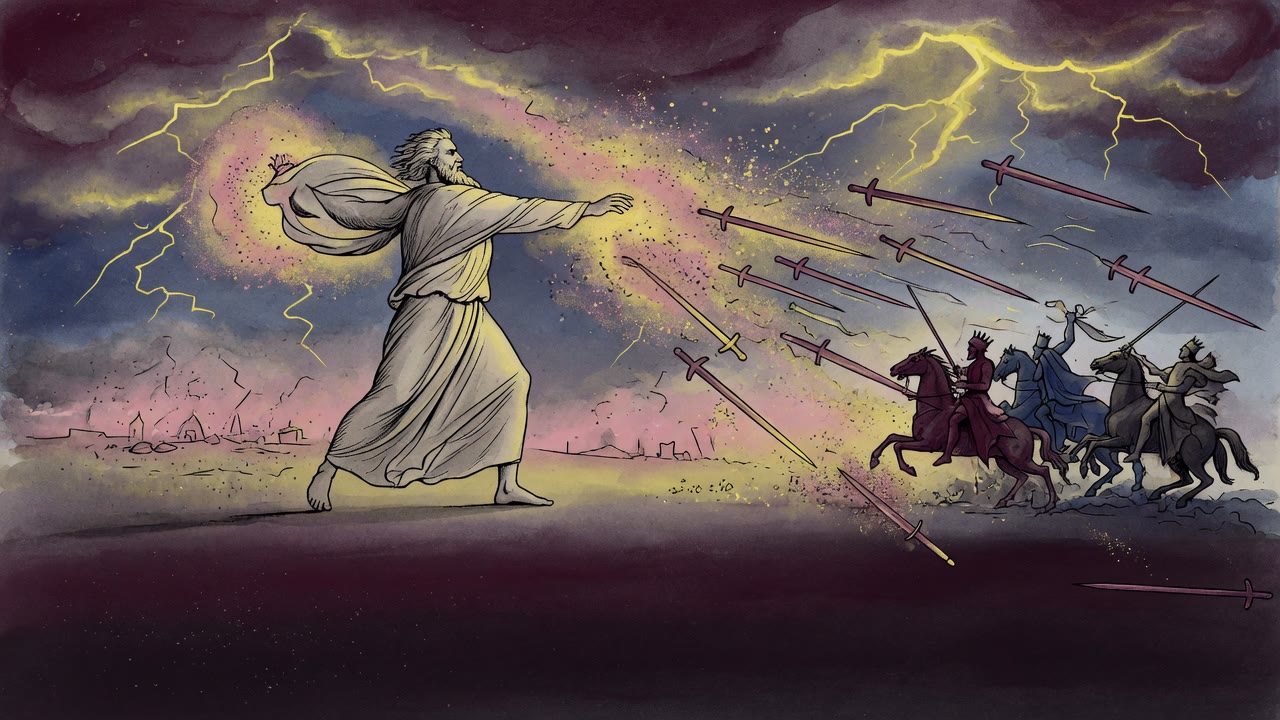
Moses lifted his hand toward the sky over Egypt, and nothing answered from the sun. The light did not dim the way it dims at dusk. It withdrew, as if pulled upward through a hole no eye could find, drawn back toward a place above the heavens that no mortal had ever been shown.
Then the dark came down.

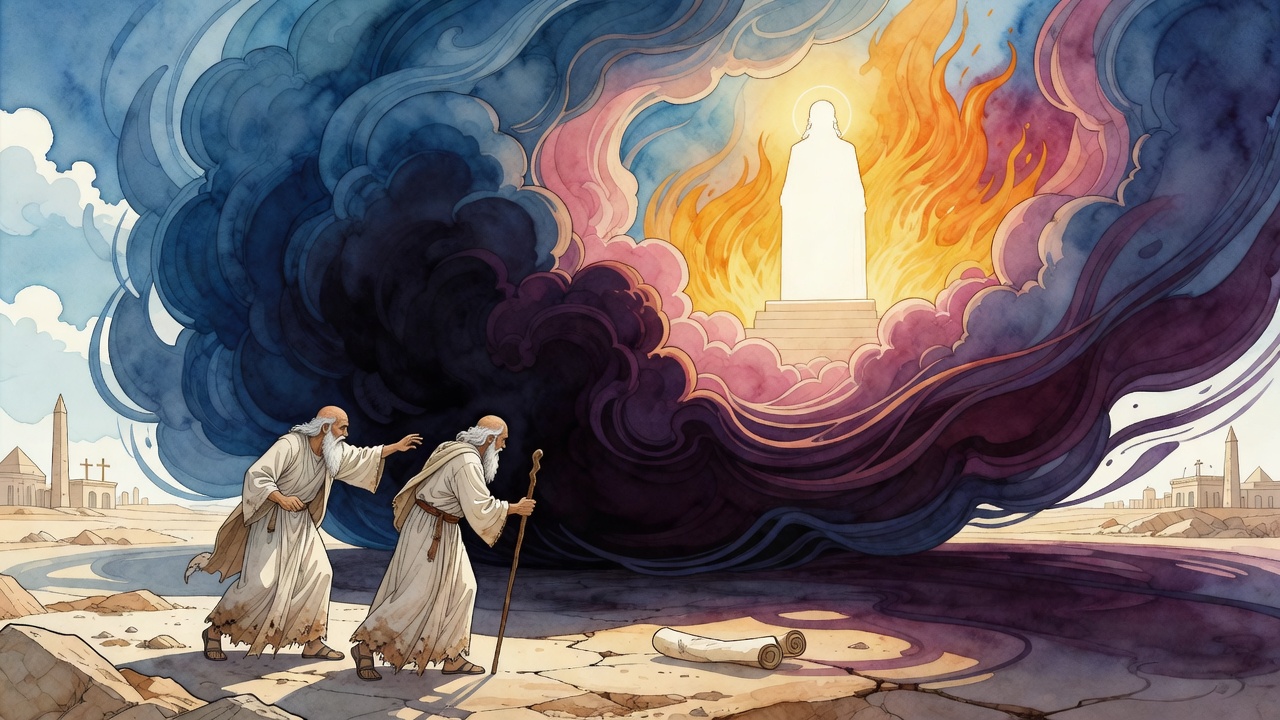
It did not fall like night. Night is thin. A man can wave a torch through it and the torch wins. This came down as a weight, a substance with edges, and it settled over the fields and the river and the painted houses of Egypt the way water settles into a sealed jar. The first Egyptians to walk into it stopped walking. Their hands had touched something that should not have a surface.

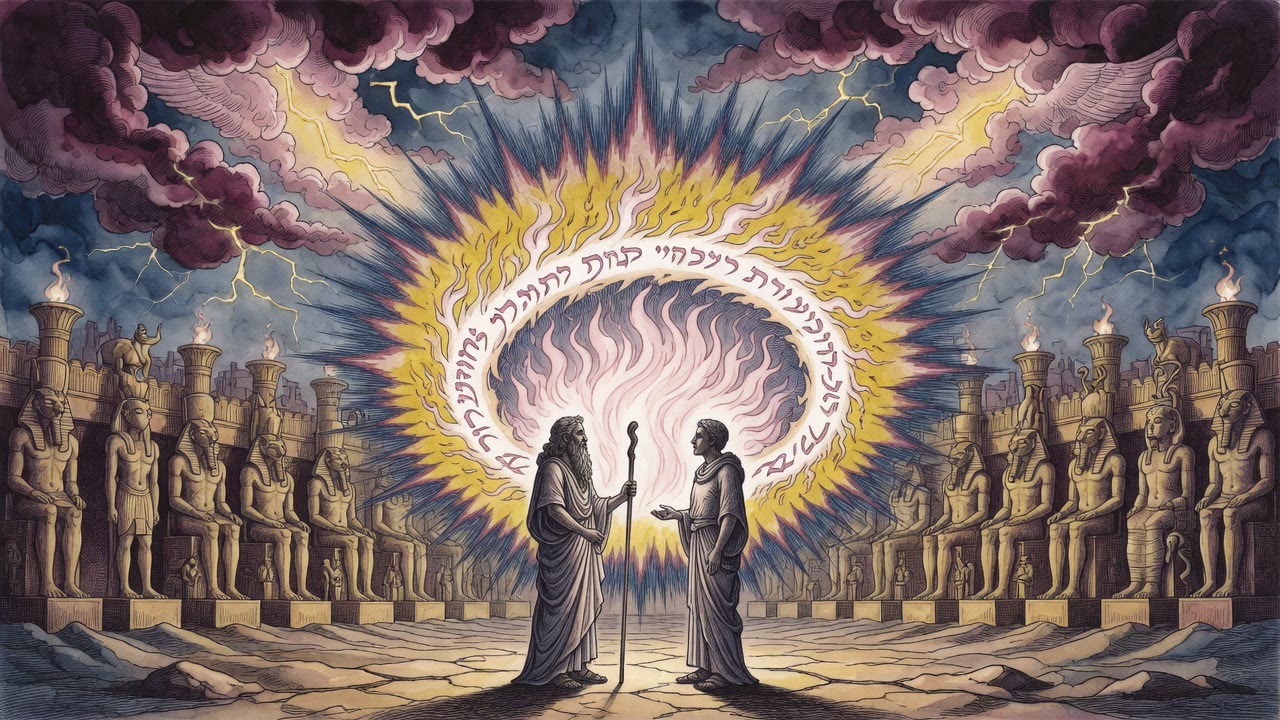
They lit lamps. The flames stood in the bowls and gave nothing back, because the dark around each wick refused to be parted. A father reaching across a room for his own child closed his fingers on the dark itself and could not find the boy. The river was there, the granaries were there, the gods carved into the temple walls were there, and not one of them could be seen.

The Darkness Above the Throne

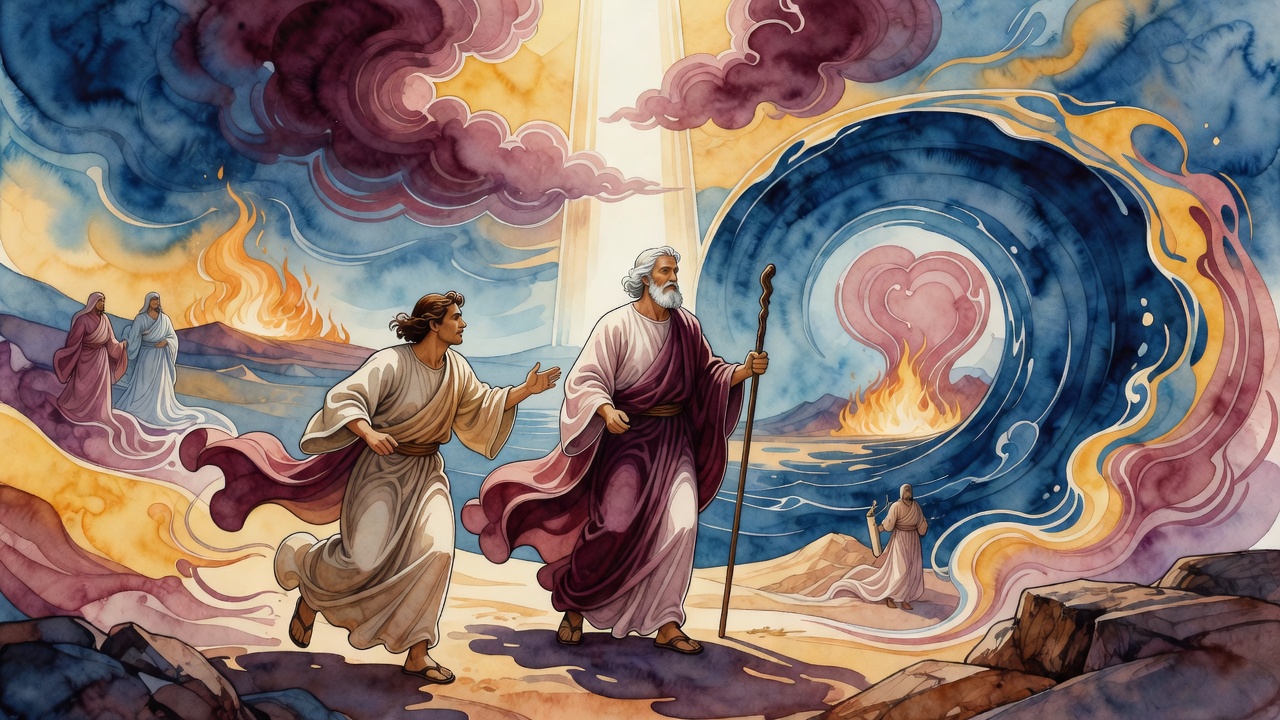
Two sages stood over the verse and argued about where the thing had come from, because a darkness that thick had to come from somewhere old.

Rabbi Judah traced it upward. There is a dark above the heavens, he said, a blackness in which God made His own hiding place. "He made darkness His covering," runs the line in the Psalm, "His pavilion round about Him." That is no ordinary shadow. It is the curtain God draws across Himself so that no creature can look in and live. From that supernal dark, Rabbi Judah said, a measure was cut loose and lowered onto a single nation.

Rabbi Nehemiah pointed down instead. He read another verse, "a land of gloom, like darkness itself," and he heard in it the floor of the world. The darkness over Egypt, he said, was hauled up out of Gehinnom, out of the pit where the wicked are laid and covered over with the dark, the way an earthen lid is set on an earthen vat. Whether it came from the highest place or the lowest, both sages agreed on one thing. It was not made for that night. It was older than the sun it was now smothering.

A Thing From Before the First Day

This was the darkness from the second verse of the world, the one that lay on the face of the deep before God ever said the word for light. It had been folded away when the light came. Now a fold of it was opened again.

So it had body. "He sent darkness, and it was dark," the verse says, and the sages leaned on that doubled phrase. Why say a darkness was dark? Because this darkness was a substance you could weigh. The Rabbis reached for a coin to measure it and could only say it was as thick as a Gordian denarius, a heavy minted disk from a far-off place, packed solid edge to edge. Egypt was breathing a coin's worth of the primordial deep into its own lungs.

The wicked know this dark already, the sages said, for it is the same dark drawn over them when they go down. Ask how you cover an earthen vat. Only with a lid of earthenware, a thing of the same kind as itself. So God covers the wicked who walk in darkness with the deep that is darkness, the very dark that lay upon the face of the deep at the beginning. A scoop of that lid had now been pressed over Egypt while it still breathed.

The Guardian Angels Said Yes

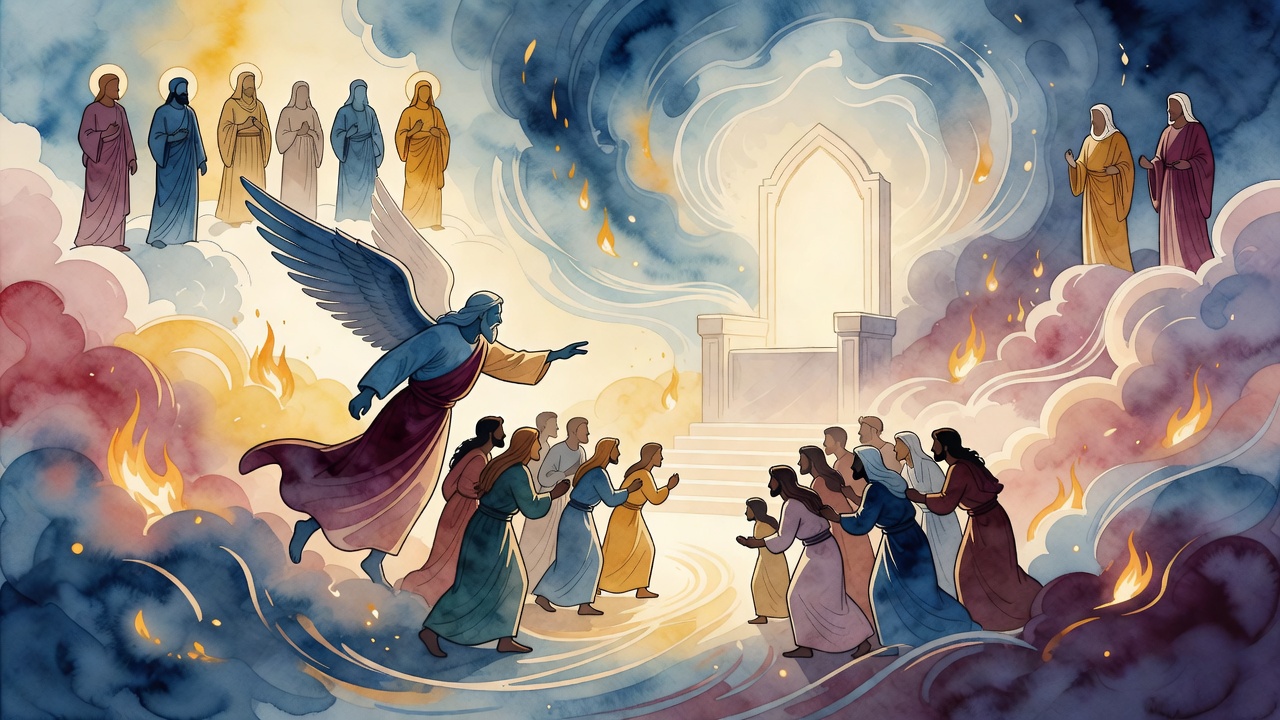
Before the dark was loosed, the Holy One turned to the guardian angels of Egypt, the very spirits set over that nation to defend it. They deserve to be struck with darkness, He told them.

Not one of them objected. They consented at once. "They did not defy His word," and the word here was the word against their own charge. The princes of Egypt signed the sentence on Egypt, because the nation had refused to bend to the authority of Heaven, and so Heaven's own officers would not bend to defend it.

The Darkness That Doubled Itself

And then the dark did something no one had ordered.

Picture a king whose slave has spat on his name. The king calls one of his men. "Go," he says, "and give him fifty lashes." The man takes the slave out and brings the whip down, and counts, and does not stop at fifty. He lays on a hundred. He adds fifty of his own, out of his own appetite for the work.

So it was with the darkness. The Holy One sent a measure, and the darkness, once it was let into the air of Egypt, added something of itself. It thickened past its order. Rabbi Acha said the Egyptians had refused to take the yoke of Heaven on themselves, and now an unyoked thing was loose in their streets, growing heavier than its sender had decreed.

For three days they could still shuffle and grope. Then the dark pressed down with its full added weight, and a man who had been sitting could not stand, and a man who had been standing could not sit. Egypt was pinned in place by something it could feel against its skin, a piece of the blackness in which God hides His face, lowered onto one kingdom and left there to swell.


← All myths
From the tradition

Sources

4 sources

The texts this telling draws on, in full. Open a card to read inline, or expand it for a wider, quieter read.

Midrash Tanchuma Buber, Bo 2:1Midrash Tanchuma Buber, Bo

Another interpretation of "Stretch out your hand toward the heavens" (Exodus 10:21). From where did the darkness come? Rabbi Judah and Rabbi Nehemiah. Rabbi Judah says: from the darkness above, as it is said, "He made darkness His hiding place" (Psalms 18:12). Rabbi Nehemiah says: from the darkness of Gehinnom, as it is said, "A land of gloom, like darkness" (Job 10:22).

Rabbi Joshua ben Levi said: In three places we have heard that a person recites his teaching close to his death. As it is said, "to make known to you the certainty of words of truth, that you may answer words of truth to those who sent you" (Proverbs 22:21). And likewise Solomon said, "The end of the matter, all has been heard" (Ecclesiastes 12:13). What is "the shadow of death and no order" (Job 10:22)? Once a person is in the shadow of death, he orders his teaching.

Rabbi Tanchuma bar Abba [said]: When he comes to depart, the ministering angels say to him, "Ascribe strength to God" (Psalms 68:35). And likewise it says, "Thus said the Lord [God]: On the day he went down to Sheol" (Ezekiel 31:15). Hence "a land of gloom, like darkness."

Rabbi Judah says: With what are the wicked covered when they go down to Sheol? With darkness. Hezekiah said: A vat, with what does one cover it? With an earthenware vessel of the same kind as itself; just as it is of earthenware, so one covers it only with earthenware. So too the wicked, what is written concerning them? "And their deeds are in darkness" (Isaiah 29:15). Therefore the Holy One, blessed be He, brings them down to Sheol, which is dark, and covers over them the deep, which is darkness, as it is said, "and darkness was upon the face of the deep" (Genesis 1:2). Hence, that darkness which came upon the Egyptians came from within Gehinnom. And how thick was that darkness? Our Rabbis said: as thick as a Gordian denarius (that is, the name of a place), "and the darkness grew dense" (Exodus 10:21).

Full source
Midrash Tanchuma, Bo 1Midrash Tanchuma

And the Lord said unto Moses: “stretch out thy hand toward the heaven, that there may be darkness over the land of Egypt, even darkness which may be felt” (Exod. 10:21). Scripture states (elsewhere in reference to this verse): He sent darkness, and it was dark; and they rebelled not against His word (Ps. 105:28). The darkness that the Holy One, blessed be He, spread over Egypt was exceedingly thick. Why? Because they would not submit to the authority of the word of the Holy One, blessed be He The Holy One, blessed be He, told Egypt’s guardian angels: They deserve to be smitten with darkness, and they all agreed at once, for they rebelled not against His word (ibid.). He sent darkness, and it was dark (ibid. 105:28). This implies that the darkness had a substance of its own. To what may this be compared? It may be compared to a king whose slave has rebelled against him. He told one of his aides: “Go give him fifty lashes.” When that person whipped the slave, however, he administered a hundred lashes, adding fifty of his own accord. Similarly, when the Holy One, blessed be He, may His name be blessed, sent the darkness upon Egypt, the darkness added something of its own. Hence, He sent darkness, and it was dark (ibid.).

Full source
Midrash Tanchuma Buber, Bo 1:1Midrash Tanchuma Buber, Bo

(Exodus 10:21:) "Then the LORD said to Moses: Stretch out your hand toward the heavens, [that there may be darkness over the land of Egypt]," etc. This is what Scripture says (Psalms 105:28): "He sent darkness and made it dark; [and they did not defy His word]." The darkness that the Holy One, blessed be He, sent upon the Egyptians was very severe.

R. Acha said: It was because they did not accept the authority of the Holy One, blessed be He, over themselves.

Our Rabbis said: What is the meaning of "they did not defy His word"? It refers to their having exchanged the word of the Holy One, blessed be He. The Holy One, blessed be He, said to the ministering angels: The Egyptians deserve to be smitten with darkness. Immediately they consented and said, "Yes." Not one of them defied the Holy One, blessed be He, after [Him]. "They did not defy His word." "He sent darkness and made it dark."

To what is the matter comparable? To a king against whom his servant offended, and he said to one [of his men]: Go and strike him fifty [lashes]. He went and struck him a hundred, and added to it on his own. So too the Holy One, blessed be He, sent darkness upon Egypt, and the darkness was increased. "He sent darkness and made it dark."

Full source
Midrash Tanchuma, Bo 2Midrash Tanchuma

Stretch out thy hand toward heaven, that there may be darkness (Exod. 10:21). Where did the darkness come from? R. Judah and R. Nehemiah discussed this question. R. Judah held: It descended from the darkness of the upper regions, as it is said: He made darkness His hiding place, His pavilion round about Him (Ps. 18:12). While R. Nehemiah argued that it ascended from the darkness of the netherworld, as it is stated: A land of thick darkness, as darkness itself, a land of the shadow of death, without any order, and where the light is as darkness (Job 10:22).

R. Joshua the son of Levi declared: We are informed by three verses that man should cause his learning to be heard (by others) at the time of his death. Where do we learn this? It is written: That I might make thee know the certainty of the words of death, that thou mightest bring back words of truth to them that send thee (Prov. 22:21). Similarly, Solomon declared: The end of the matter, all having been heard, fear God (Eccles. 12:13). And by the verse Shadow of death and without order (Job 10:22). When a man is about to enter the shadow of death, he must systematize his studies, for it is said: The shadow of death, without any order R. Tanhuma the son of Abba held: When a man is about to die, the ministering angels proclaim: “Give glory unto the Lord.” Hence, a land of thick darkness, as darkness itself (Job 10:22).

Woe to the house whose windows open toward the darkness, as it is said: And where the light is as darkness (ibid.), for the light itself comes from darkness. Hence it says: Thus saith the Lord God: In the day when he went down to the netherworld, I caused the deep to mourn and cover itself for him, and I restrained the rivers thereof, and the great waters were stayed (Ezek. 31:15). R. Judah the son of Rabbi stated: What are the wicked covered with in the netherworld? With darkness. And Hezekiah the son of R. Judah explained why that was so. With what does one cover an earthenware tub? With a lid that is made of the same substance. And just as an earthenware tub is covered with an earthenware lid, the wicked whose works are in the dark (Isa. 29:15) are covered by the Holy One, blessed be He, with the deep which is darkness, as it is said: And darkness was upon the face of the deep (Gen. 1:2). This refers to the netherworld. Hence, the darkness that came upon the Egyptians ascended from the netherworld. Even darkness which may be felt (Exod. 10:21). How thick was this darkness? Our sages asserted that it was as thick as a dinar, as it is said: Even darkness which may be felt.

Full source