5 min read

The Queen of Sheba Came to Test Solomon and Left Speechless

A queen who ruled a land Solomon had never seen crossed the known world with riddles, gold, and spices to find out whether the reports were exaggerated.

Curated by Arthur · Told by Maggid ·
Table of Contents
  1. The Bird That Found a Country
  2. The Riddles She Brought
  3. The Glass Floor
  4. What She Said Before She Left

The Queen of Sheba did not come to Jerusalem as a pilgrim. She came as a prosecutor.
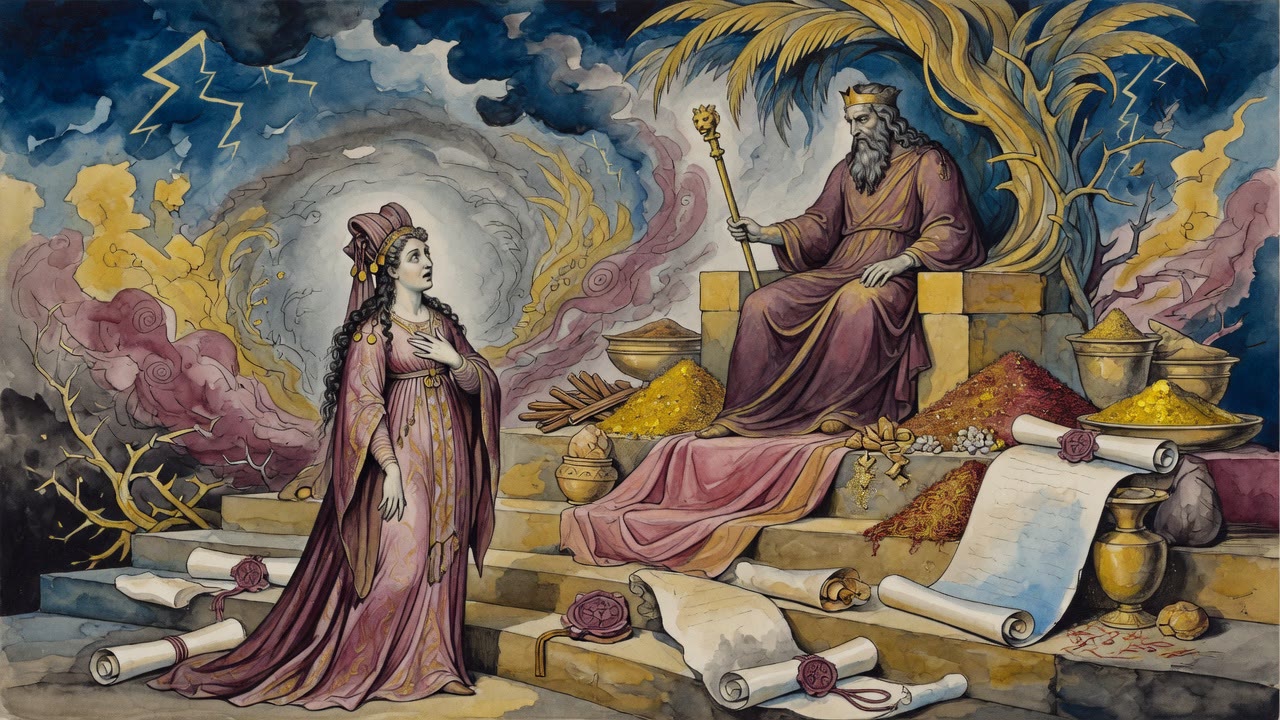
The reports about Solomon had traveled too far. A king in Jerusalem, people said, could speak with beasts, command birds, answer riddles, judge without hesitation, and build a court so ordered that even foreign rulers felt smaller when they entered it. She had heard enough praise to mistrust it. Praise grows in transit. Wisdom gets inflated by servants, merchants, and frightened ambassadors. So she loaded camels with gold, spices, and precious stones, gathered her attendants, and crossed the distance herself.

The Bird That Found a Country

Solomon had command over birds, and one bird had gone missing from inspection. When the hoopoe returned, it reported a land not yet under Solomon's authority, a distant kingdom whose queen worshipped the sun each morning. Solomon did not send an army. He sent the bird back with a royal summons tied to its wing, carried by a flock that darkened the sky as it arrived over the queen's morning prayers.

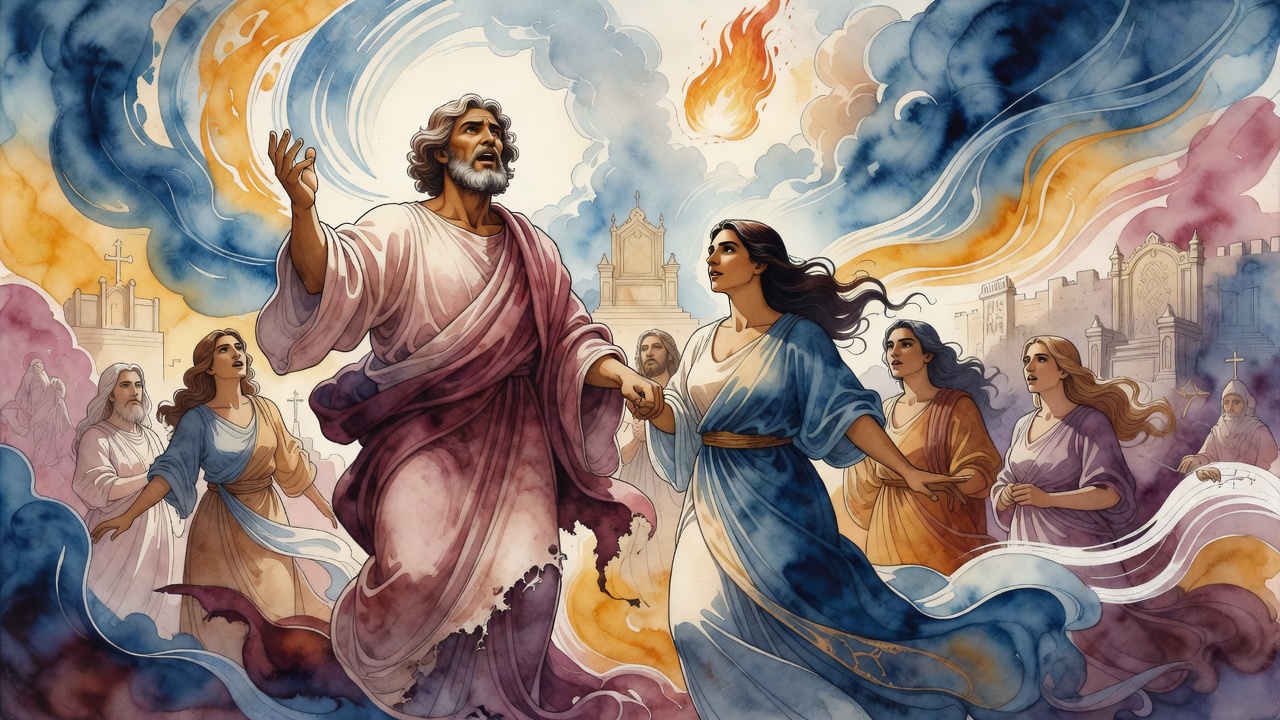
The sky went dark. The queen looked up and tore her garment. A letter came down from the flock, written in Solomon's name, demanding her presence in Jerusalem. Her court told her they knew nothing of this king and regarded his dominion as nothing. She ignored them. She assembled a fleet laden with treasures and traveled.

The Riddles She Brought

Josephus says she prepared problems of extreme difficulty, questions designed specifically to expose whether Solomon's reputation was real or propaganda. He answered every one faster than anyone expected. But the riddles were not what undid her confidence. It was everything else. The architecture. The organization of his household. The portion of food set each day, seven thousand sheep, a thousand oxen, the calculations so precise that not a single vessel was wasted. The officials who carried themselves as if nothing so ordinary as governance required effort.

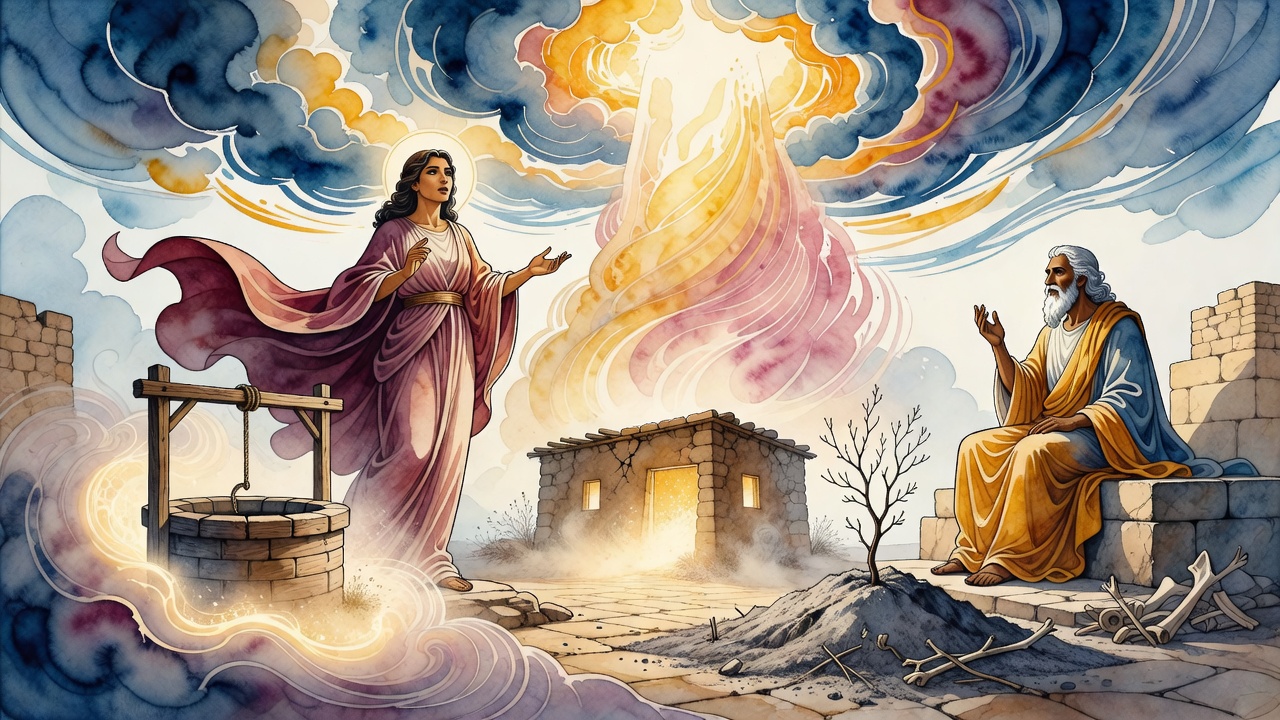
She asked him about a well that was inside the sanctuary but drew water from outside it, about seven who leave and nine who enter and two who pour and one who drinks and twenty-four who serve, about a woman who said to her son be my husband and your father shall be my brother-in-law. He answered each one. He recognized the first as a lamp, the second as the lunar month and the days and the sun and moon and stars, the third as the riddle of Lot and his daughters.

The Glass Floor

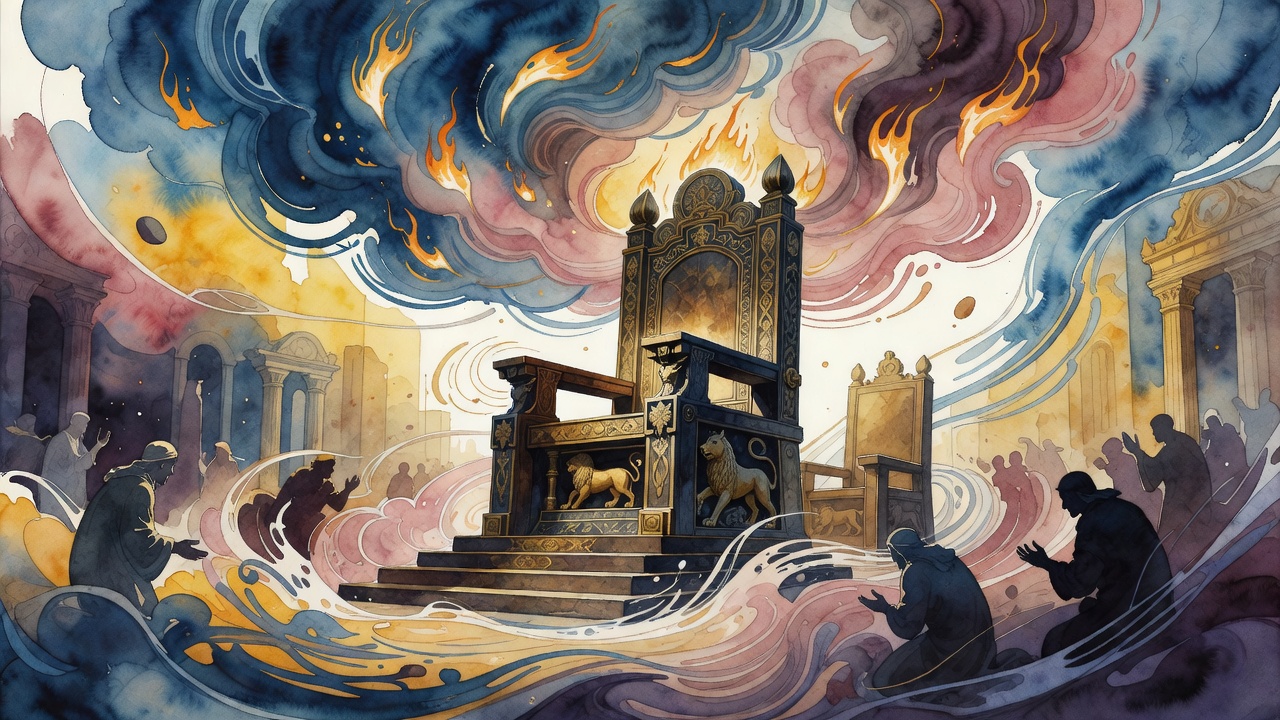
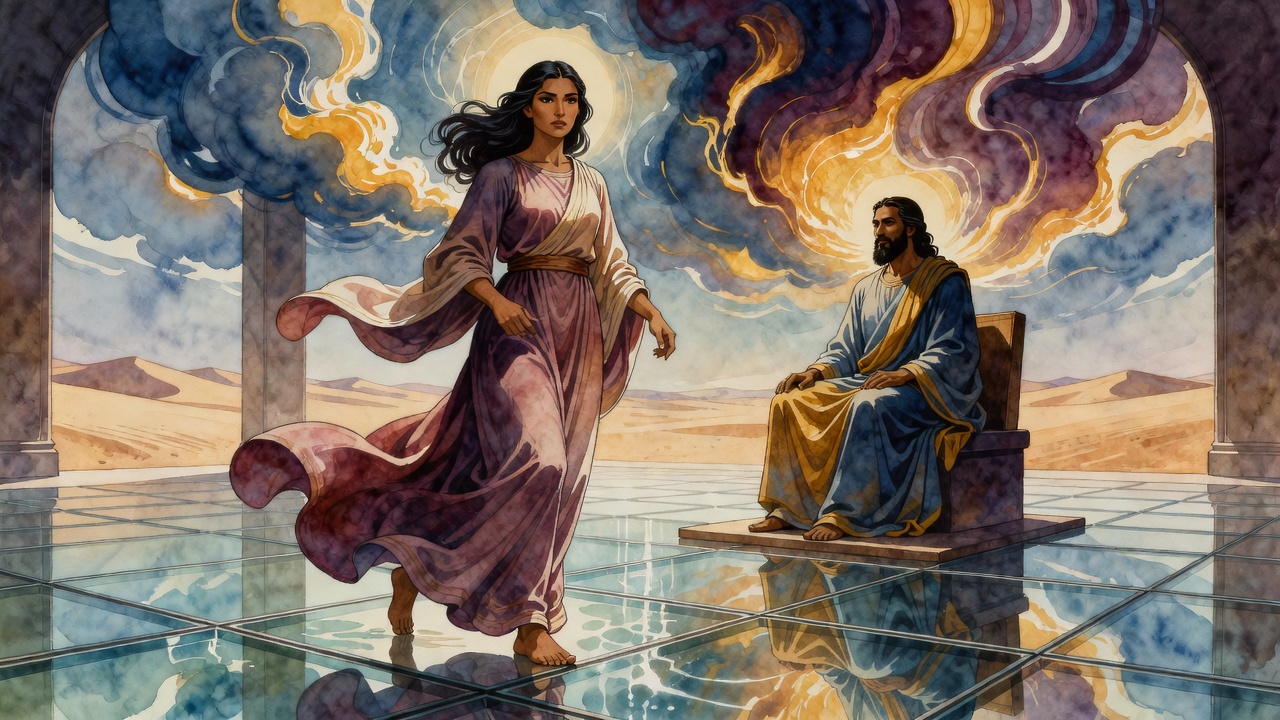
Solomon had prepared the meeting room. He sat inside a hall built entirely of glass. When the queen arrived and walked toward him, she saw what appeared to be a pool of water between her and where he sat. She lifted her skirt to wade through it. He watched from where he sat as the illusion worked exactly as designed. There was no water. The floor was glass over water, smooth and flat and perfect. She had shown him, in a single unrehearsed moment, more than she had meant to.

He also laid a test of his own design. He placed before her a group of males and females, all the same height and dressed in identical clothing, and asked her to distinguish between them. She had no answer until he sent his servants in with nuts and roasted corn and watched who reached with bare hands and who extended gloved hands from beneath their garments. The women, more cautious, reached carefully. The men grabbed without thinking. These are the males, he said, and these the females.

What She Said Before She Left

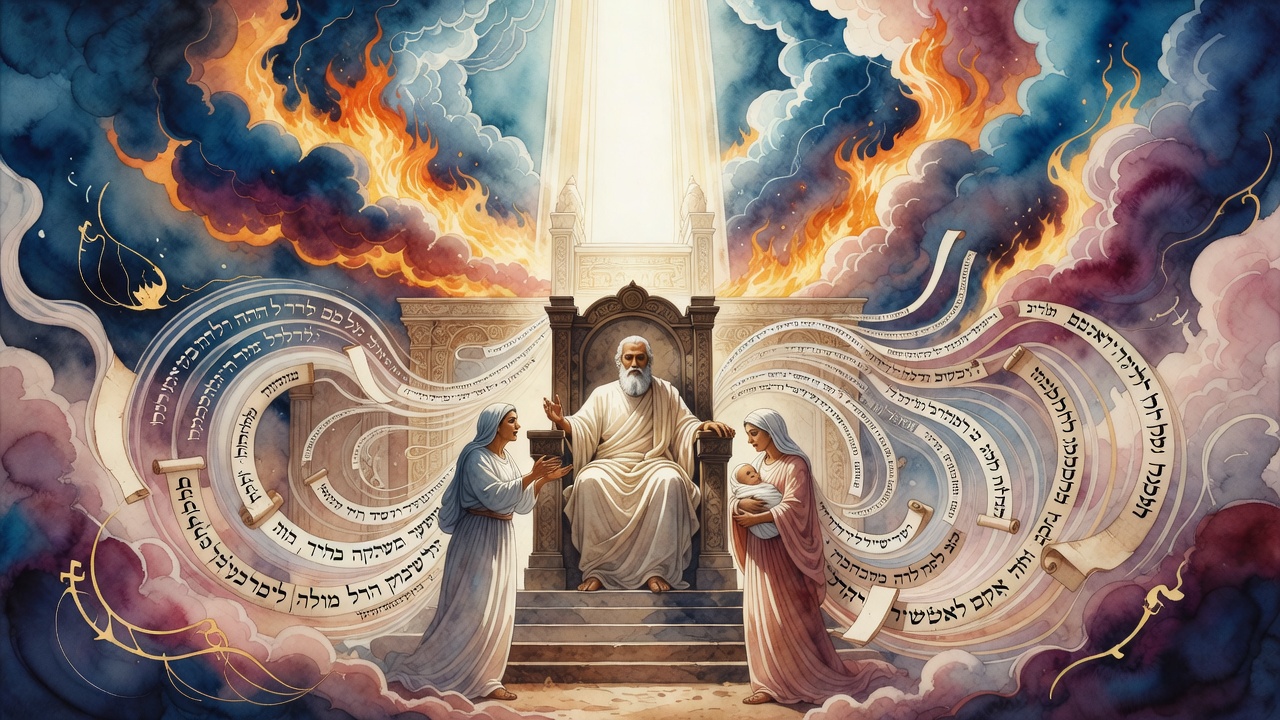
The queen told Solomon that the half of his wisdom had not been told to her. She blessed the God of Israel who had delighted in him and set him on the throne to do justice and righteousness. She gave him a hundred and twenty talents of gold and spices in quantities never brought to Jerusalem before or since. He gave her everything she had desired and asked for, and she returned to her own land.

The tradition did not let her go quietly. She came as a prosecutor and left as a witness. She came to determine whether the reports were exaggerated and found they were insufficient.


← All myths
From the tradition

Sources

6 sources

The texts this telling draws on, in full. Open a card to read inline, or expand it for a wider, quieter read.

Legends of the Jews 5:55Legends of the Jews

Intrigued, he decides to reach out to the Queen of Sheba. But how do you send a royal invitation across vast distances in those days? You use avian mail, of course!

That Solomon, pleased with the hoopoe's report, summoned his scribes. They carefully penned a letter, bound it securely to the hoopoe's wing, and off it flew, soaring skyward with its distinctive cry, followed by a whole flock of other birds. Can you imagine the sight?

Their destination? Kitor, in the land of Sheba. Now, picture this: it’s morning, and the queen is outside, engaged in her daily worship of the sun. Suddenly, the sky darkens as a massive flock of birds blots out the sunlight. The queen, understandably startled, tears her garment in astonishment.

Then, the hoopoe, the messenger, alights nearby. Seeing the letter attached to its wing, the queen takes it and reads the message. What did it say? Well, it was quite the royal decree!

The letter, straight from King Solomon himself, begins with a greeting: "From me, King Solomon! Peace be with thee, peace with the nobles of thy realm!" Then it gets down to business. Solomon declares that God has appointed him king over all creatures – beasts, birds, demons, spirits, you name it! He boasts that kings from across the East and West come to greet him.

But here’s the real kicker: Solomon offers the Queen of Sheba an invitation, and a warning. "If thou wilt come and salute me," he writes, "I shall show thee great honor, more than to any of the kings that attend me." But, he continues, "if thou wilt not pay homage to me, I shall send out kings, legions, and riders against thee!"

And who are these kings, legions, and riders? According to Solomon, "The beasts of the field are my kings, the birds my riders, the demons, spirit, and shades of the night my legions." A pretty formidable force. The letter concludes with a rather chilling threat: "The demons will throttle you in your beds at night, while the beasts will slay you in the field, and the birds will consume your flesh." Yikes!

So, what do you think the Queen of Sheba did? Did she accept Solomon's invitation? Did she risk the wrath of his wild army? That, my friends, is a story for another time. But it does make you wonder about the power of words, the audacity of kings, and the important role even the smallest creatures can play in the grand scheme of things.

Full source
Legends of the Jews 5:56Legends of the Jews

Getting a summons from King Solomon himself! That’s precisely what happened to the Queen of Sheba in the legends surrounding this powerful and mysterious monarch.

So, Solomon sends a letter. We don't know the exact contents, but clearly it was… impactful. Upon reading it, the Queen tore her garment in distress! She then turns to her elders and princes, asking if they understand Solomon's words. Their dismissive response – "We know nothing of King Solomon, and his dominion we regard as naught" – offers her no comfort. Can you

Unfazed by her court's lack of vision (or perhaps spurred on by it), the Queen of Sheba doesn't just send a reply email. No, she assembles a massive fleet of ships, laden with treasures beyond imagination!: the finest woods, shimmering pearls, dazzling precious stones – a king's ransom (or rather, a queen's!). But the gifts don't stop there. She sends along six thousand youths and maidens. They were all born on the same year, same month, same day, same hour! Identical in stature and size, all clad in purple robes. What a sight that must have been!

Accompanying this dazzling display was, of course, a letter. This letter acknowledges that the journey "From the city of Kitor to the land of Israel is a journey of seven years." This detail alone speaks volumes about the distance and the magnitude of the Queen's decision. However, she promises Solomon that because he has expressed the wish for her to visit him, she will "hasten and be in Jerusalem at the end of three years."

Full source
Antiquities VIII.6Antiquities of the Jews (Josephus)

She did not trust the reports. The Queen of Sheba, whom Josephus calls the queen of Egypt and Ethiopia, heard endless stories about Solomon's wisdom, but she refused to believe secondhand accounts. Hearsay, she reasoned, always inflates the truth. She would judge for herself.

So she assembled a caravan loaded with gold, precious stones, and rare spices, and traveled to Jerusalem. Her purpose was specific: she brought riddles and questions of extreme difficulty, problems designed to expose whether Solomon's reputation was real or merely propaganda. Solomon answered every one of them faster than anyone expected.

It was not the riddles that stunned her. It was everything else. She toured the royal palace and marveled at the architecture. She observed the daily operations, the organization of the servants, their clothing, their choreographed attendance at meals. She watched the daily Temple sacrifices and saw how the priests and Levites managed every detail with precision. The House of the Forest of Lebanon left her speechless.

Finally she could not contain herself. She told Solomon directly: "Everything I heard about you was an understatement. The reports tried to convince my ears, but they could not capture what my eyes now see. Your people and your servants are fortunate, they hear your wisdom every single day." Then she blessed God for loving the land of Israel enough to place such a king over it (1 Kings 10:9).

The gifts she brought were spectacular, twenty talents of gold, an enormous quantity of spices, and precious stones. Josephus adds a tradition that the balsam root, which still grew in the land of Israel in his own day, originally came from this queen's gift. Solomon reciprocated generously, giving her whatever she desired. Nothing she asked for was refused. Then she returned to her own kingdom, having confirmed with her own eyes what rumor alone could never prove.

Full source
Legends of the Jews 5:59Legends of the Jews

The story goes that Benaiah, one of Solomon's most trusted courtiers, escorted the Queen to meet the king. But this wasn't just any meeting. Solomon, in his infinite wisdom (and perhaps a touch of theatrical flair), had arranged the encounter in a house made entirely of glass. Imagine the scene: shimmering reflections, light dancing everywhere... a true spectacle.

That's where the trickery began. As the Queen approached, she saw Solomon sitting, seemingly surrounded by water. Can you picture her surprise? Thinking she needed to protect her garments, she lifted her skirt to wade through the "water."

There was no water. It was an illusion, a dazzling display of Solomon's ingenuity.

Here’s where things get interesting. As the Queen raised her garment, Solomon noticed something about her feet: they were hairy. Now, before we jump to conclusions, remember this is folklore. What does it all mean?

Solomon, ever the diplomat (and maybe a little blunt), remarked, "Thy beauty is the beauty of a woman, but thy hair is masculine; hair is an ornament to a man, but it disfigures a woman." Ouch. A bit of a backhanded compliment, wouldn’t you say?

This encounter, as recounted in Legends of the Jews (Ginzberg's retelling, that is), isn't just about appearances. It's about challenging assumptions, about seeing beyond the surface. It's about how even the wisest among us can be deceived, and how even royalty isn't immune to a little embarrassment.

But the story doesn't end there. The Queen, undeterred by Solomon's observation, immediately engages him in a battle of wits. "I have heard of thee and thy wisdom," she said, "if now I inquire of thee concerning a matter, wilt thou answer me?" To which Solomon, ever confident, replies, "The Lord giveth wisdom, out of His mouth cometh knowledge and understanding."

This sets the stage for the riddles and tests of wisdom that are to come. But for now, let's just ponder that initial meeting. What was Solomon trying to prove with his glass house illusion? Was he simply showing off his power and intelligence? Or was there a deeper lesson he wanted the Queen of Sheba to learn?

Perhaps it's a reminder for all of us: things aren't always as they seem. And sometimes, a little bit of humility – even for a queen – can go a long way.

Full source
Legends of the Jews 5:63Legends of the Jews

Legends of the Jews turns to The Queen of Sheba's Gender Test That Solomon Solved Instantly.

She placed a group of males and females, all of the same height and dressed in identical clothing, before him. "Distinguish between them," she challenged.

How would you do it? Solomon, without missing a beat, signaled to his eunuchs. They brought forth nuts and roasted ears of corn. The reaction, according to the legend, was the key. The males, unashamed, grabbed the treats with their bare hands. The females, more demure, carefully extended gloved hands from beneath their garments to take the offered food.

"Those are the males," Solomon declared, "and these the females." Simple, elegant, and insightful. It's the kind of solution that makes you say, "Of course! But I never would have thought of that."

But the Queen of Sheba wasn't done yet. She had another trick up her sleeve. This time, she presented Solomon with a group of men, some circumcised and others not. Could he tell the difference?

This time, Solomon’s response was even more…divine.

He signaled to the Kohen Gadol, the High Priest. The High Priest then opened the Ark of the Covenant. Now, remember the Ark of the Covenant – the holiest object in Judaism, housing the tablets of the Ten Commandments. Its presence was said to radiate the Shekhinah, the divine presence.

According to the story, those who were circumcised bowed deeply, their faces illuminated by the Shekhinah. Those who were uncircumcised fell prostrate, face down on the ground.

"Those are circumcised, these uncircumcised," Solomon announced.

"Thou art wise, " the Queen exclaimed, finally convinced of Solomon's unparalleled wisdom.

What are we to make of these stories? They're more than just ancient anecdotes. They illustrate that wisdom isn't just about knowing facts; it's about understanding human nature and having a connection to the divine. It's about seeing beneath the surface and discerning the truth.

These tales from Legends of the Jews, drawing on older sources like the Talmud and Midrash (rabbinic interpretive commentary), remind us that true wisdom is a gift, a skill, and perhaps even a responsibility. It’s a gift to be used thoughtfully, a skill to be honed, and a responsibility to be wielded with humility and understanding. Perhaps, like Solomon, we too can find wisdom in the unexpected places, in the subtle cues, and in the presence of something greater than ourselves.

Full source
Legends of the Jews 5:51Legends of the Jews

Legends of the Jews turns to The Queen of Sheba Tests Solomon With Ancient Riddles.

Well, stories abound, and some of the most intriguing revolve around riddles, specifically, riddles posed by none other than the Queen of Sheba. Of all the tales, only a handful of riddles displaying Solomon’s incredible wit have survived. They are all tied directly to the Queen and her visit. for a second. The Queen of Sheba, ruler of a distant land, undertaking a long and arduous journey to test the wisdom of Solomon. What was her motivation? What was their relationship? The story of this queen, her connection to Solomon, and the reasons that propelled her from her faraway kingdom to Jerusalem is a fascinating chapter in the already eventful life of the wisest of all men. It's a story that makes you wonder about the power of curiosity, doesn't it?

The tradition says Solomon's dominion extended far beyond the human realm. He ruled not only over people, but also over the beasts of the field, the birds of the air, even demons, spirits, and the specters of the night. He possessed a unique gift: he understood the language of them all, and they understood him. Legends of the Jews, by Louis Ginzberg, paints this picture vividly. It’s wild to imagine a king with such comprehensive power! What would he say to the animals, and what did he learn from the spirits?

Full source