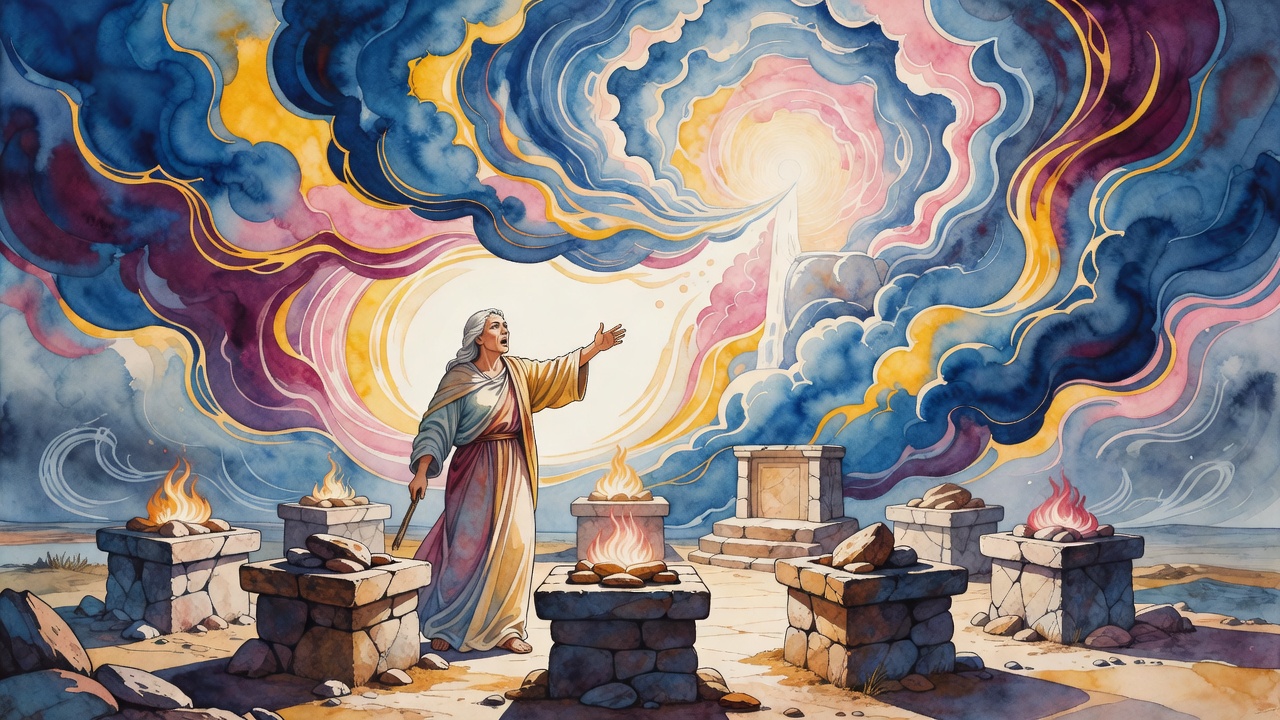
The Rock Obeys While Israel Learns Exile's Count
The letters of one word Moses spoke add up to 852, the years Israel was given on its land. The exile came at 850, two years early.
Table of Contents
The rock felt no joy at reward and no dread of punishment. It could not be praised. It could not be blamed. No promise of blessing moved it. No threat of judgment touched it.
 Click for full size
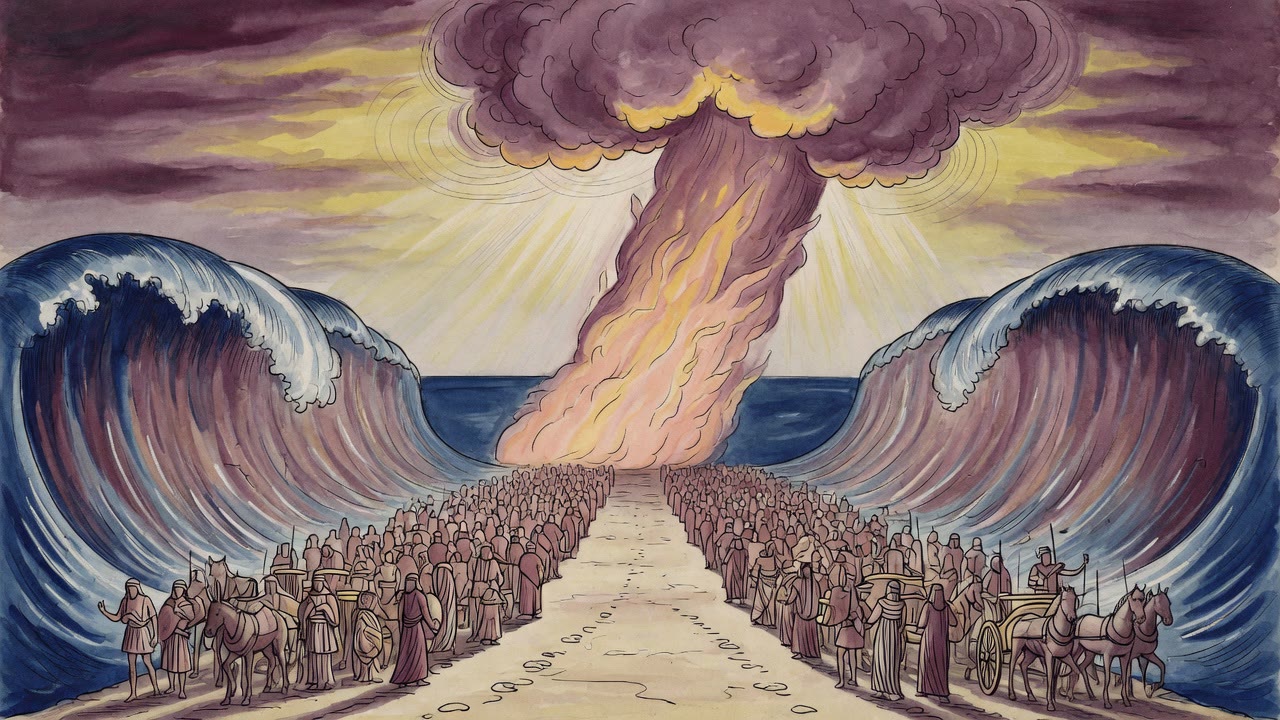
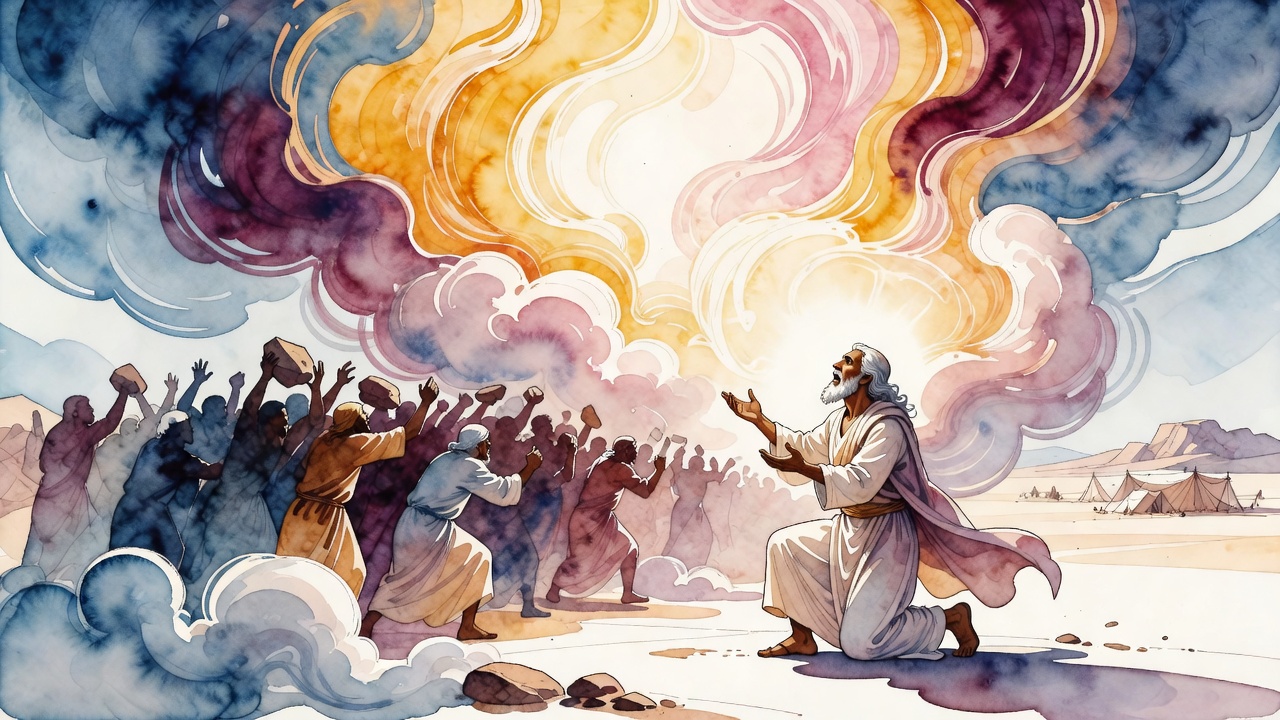
Then the Holy One told Moses, "Speak to the rock before their eyes, and it shall give its waters."
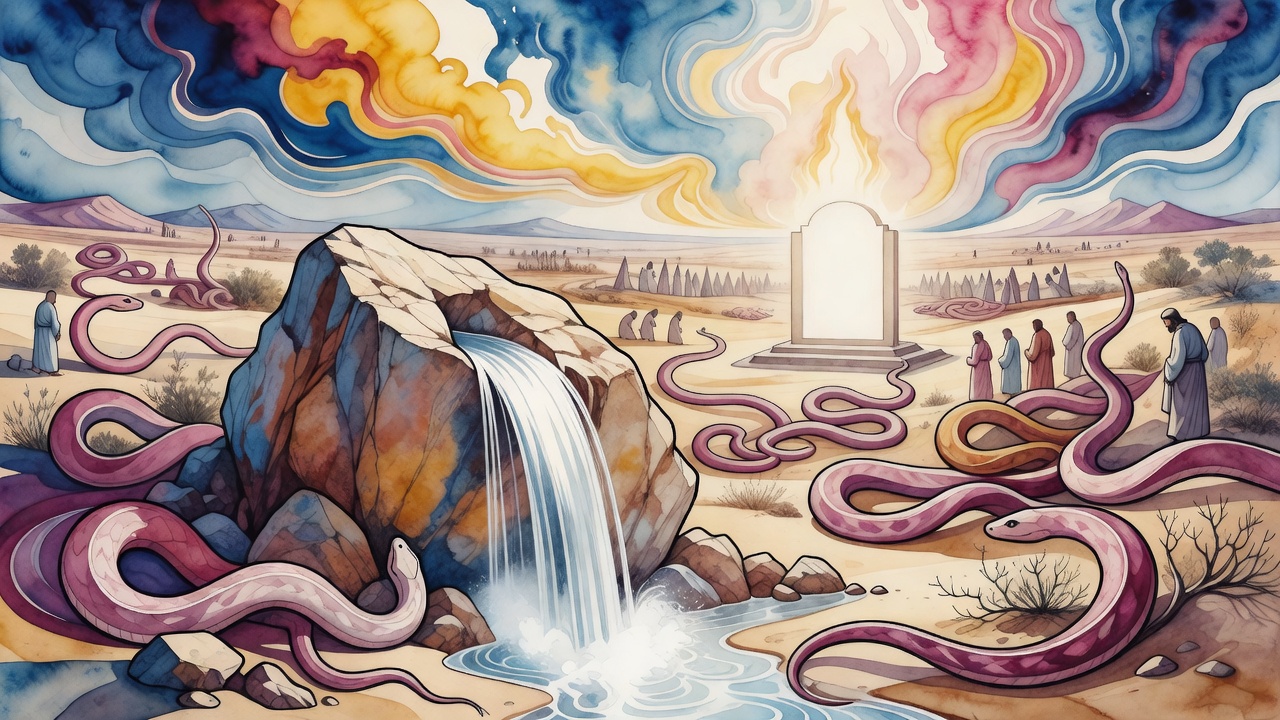
At a single word from the Creator, stone loosened and water poured before all Israel. Thirsty throats drank. Hearts were meant to drink something harder.
The Argument from a Mute Stone
The water was never the whole point. The rock was meant to teach. If a mute, unfeeling stone obeys the command of the Creator, having nothing to gain and nothing to lose, then we who stand to receive reward for obedience and answer for rebellion, how much more are we bound to do what God commands.
That is the kal va-chomer, the reasoning from the lesser to the greater, staged in public with a crowd watching liquid leave rock. Mercy for the body. Shame for the stubborn will.
Moses stood between the people and the stone with a command that sounded simple and cut deep. Speak. Do not strike for show. Let the silent thing instruct the loud camp.
Water ran. The lesson waited to be accepted or refused like every other wilderness gift.
Serpents on the Road of Memory
Years later Moses would recall how God led Israel through the great and terrible wilderness, and every word of that memory carried a hidden warning. To lead a people through such a place is to know what they will become.
They were destined to rebel and to worship idols, repaying lavished goodness with betrayal. Silver multiplied for them would be spent on gold for Baal, as Hosea charged. For that exchange they would one day be scattered among the four kingdoms.
The verse's fiery serpent and scorpion and thirst where there is no water become more than trail hazards. The parched ground is the guilty kingdom of exile itself, a place not only of physical drought but of spiritual famine, where the people thirst for the Holy Spirit and for the words of Torah. Amos named the hunger: not for bread or water, but for hearing the words of the LORD.
The same prophets who foretold the thirst also foretold its quenching. Isaiah heard God say, "I will pour water upon the thirsty." The wilderness that hints at sin and exile points, at last, toward restoration.
Eight Hundred Fifty-Two
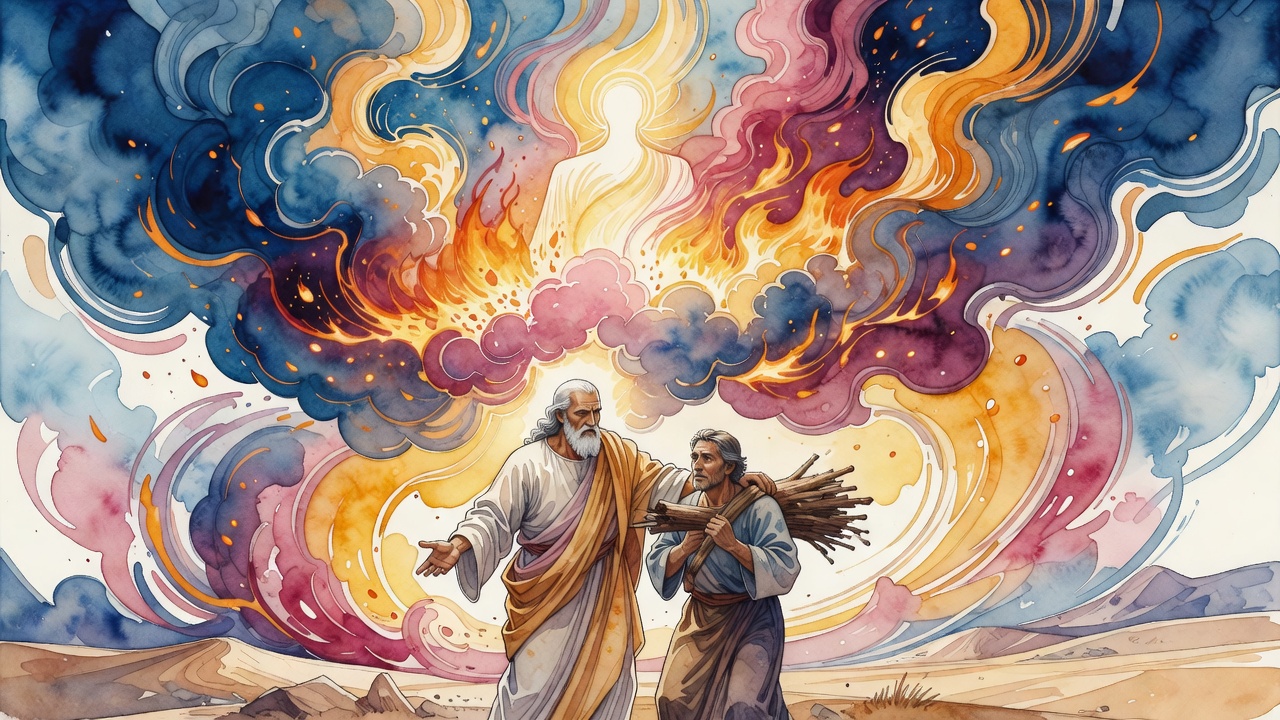
Inside another warning Moses hid a number. "And you grow old in the land," he said, and the letters of ve-noshantem reckon to eight hundred fifty-two. That, said the sages, is the tally of years Israel was destined to dwell upon the soil before destruction.
Had they filled out the full count, the measure of guilt would have ripened to the brim, and then there would have been no remedy left, as Job warned when sufficiency is filled and distress comes. A complete reckoning would have meant complete ruin, no survivor and no remnant.
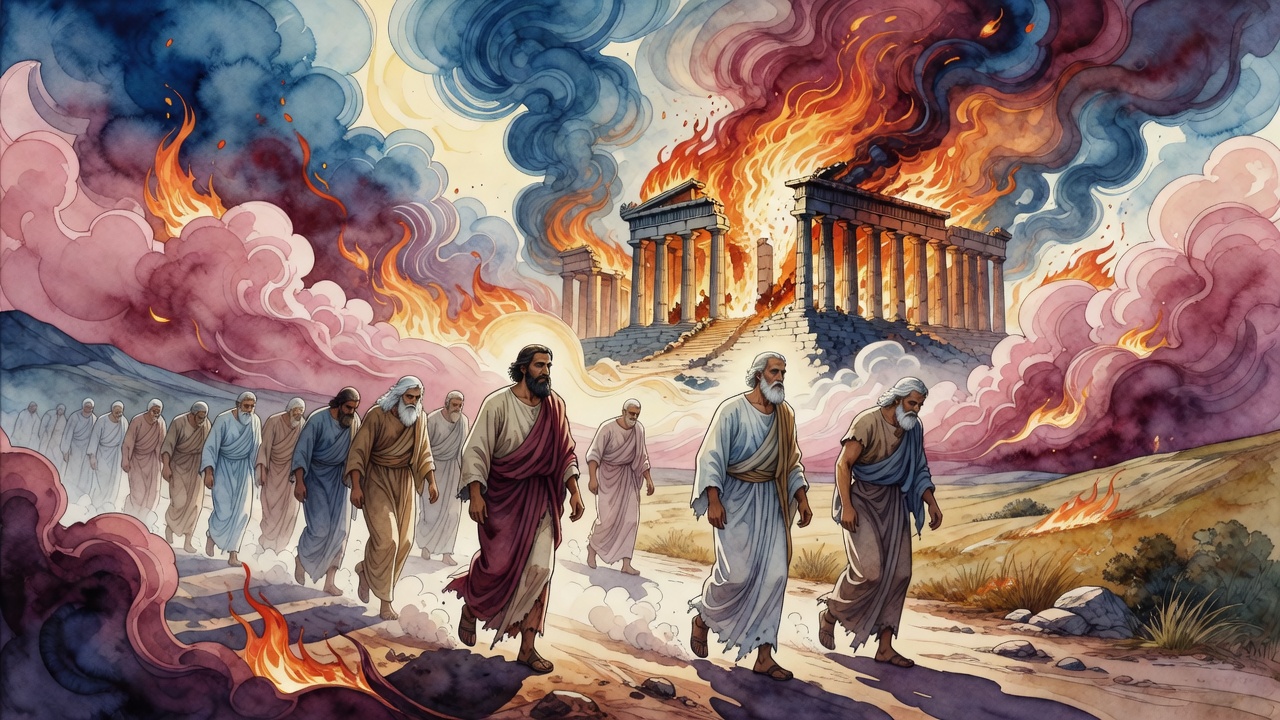
So the Holy One did not wait. He hastened the exile by two years, snatching His people out before the cup overflowed. Daniel's strange praise becomes clear: "And the Lord watched over the evil and brought it upon us, for the Lord our God is righteous." The catastrophe came early, and the earliness was the kindness.
By striking before the appointed hour, God left a remnant alive. The punishment itself was wrapped in rescue. The date of the disaster was an act of love.
From Rock Water to Scattered Thirst
Hold the scenes in one hand. A rock that obeys without hope of reward. A wilderness whose serpents and thirst foreshadow idolatry and exile. A number that almost fills and is cut short so that someone remains to return.
Israel drinks from stone and still learns to spend silver on false gods. Israel is warned by desert venom and still walks into spiritual drought among the nations. Israel is timed to ruin and is pulled early so that ruin is not total.
Moses' mouth moves between command, memory, and arithmetic. The people's story moves between water, wandering, and a door kicked open two years soon. Mercy keeps changing shape: liquid, warning, calendar.
The rock did what it was told. The people would spend centuries learning to do the same. Exile arrived like a hard friend who will not let you sleep through your own end.
Children in the camp would remember water more than argument. The midrash remembers both, because a people that forgets the argument will treat every future drought as only weather. Serpents, thirst, and a shortened count of years are weather with a mind. They teach what the rock already knew: the Creator speaks, and creation is supposed to answer.
← All myths