Parshat Shemot4 min read

The Rod Became a Snake Because Moses Spoke Slander

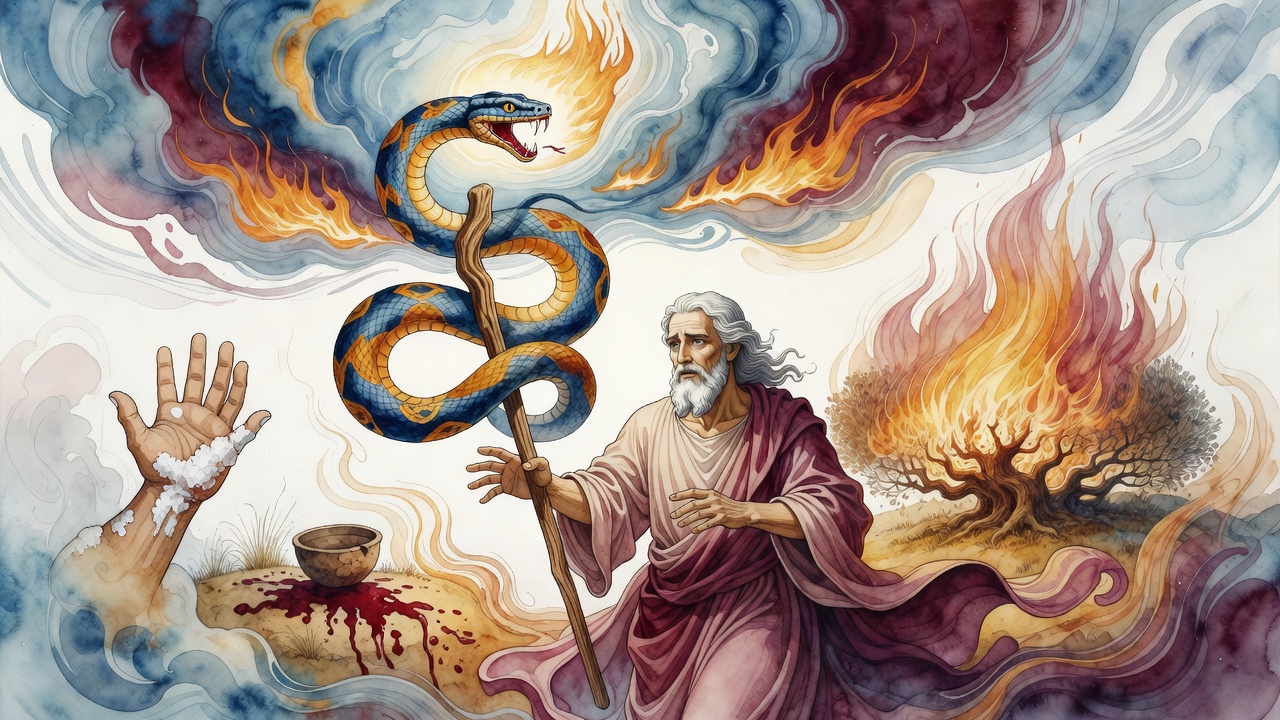
Moses doubted Israel would believe. Heaven turned his staff to a serpent for that slander, then gave signs of leprosy, blood, and a bush that would not burn.

Curated by Arthur · Told by Maggid ·
Table of Contents
  1. Slander Turned Wood Into Fangs
  2. A Bush That Burned Without Becoming Ash
  3. Sheep Before a Nation
  4. Signs Stacked Like a Campaign Map

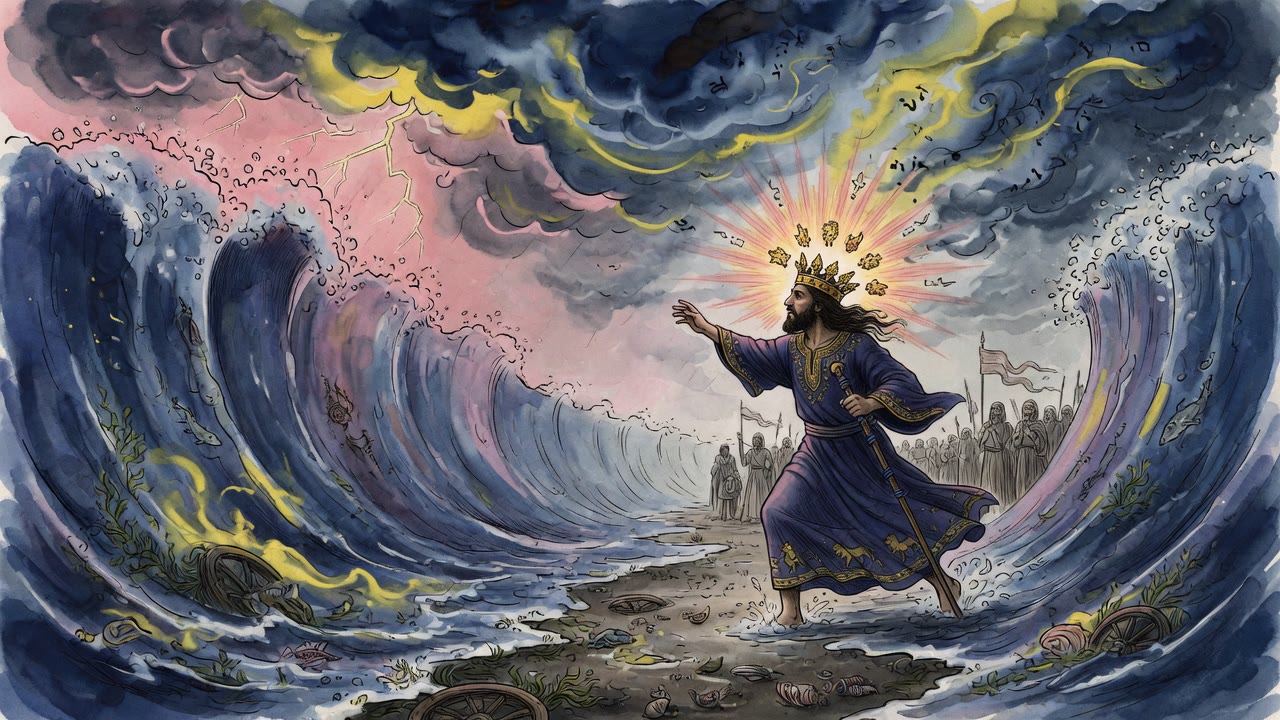
Moses stood with a wife, sons, and an ass, and the heavier load was in his hand. "And Moses took the rod of God in his hand" (Exodus 4:20). The Holy One said, Take this rod, for with it you will perform any miracle you desire. Nile blood. Rock water. Sea walls. The staff would be called the rod of the Lord and also thy rod.

The Rod Became a Snake Because Moses Spoke Slander Click for full size

Before the plagues, the rod had to teach. "What is that in thy hand?" (Exodus 4:2). A rod, he said. Cast it down. It became a snake. Why a snake? Just as a snake bites and destroys, so the Egyptians bite and destroy Israel. Then wood again, for Egypt would wither. Signs were dictionary entries written in flesh and flame.

Slander Turned Wood Into Fangs

Moses had said, "But, behold, they will not believe me, nor hearken unto my voice" (Exodus 4:1). Heaven heard slander against Abraham's children. The word mazeh, "what is this," can be read mi-zeh, "with this." With this staff you will be punished, for you spoke as the serpent once spoke. Place your hand in your bosom. It came out leprous. The people you doubted are believers and children of a believer. "And he believed in the Lord" (Genesis 15:6). "And the people believed" (Exodus 4:31).

Leprosy for impurity. Egypt made Israel impure. The hand returned clean when restored to the bosom, as Israel would be cleansed. Blood in the river would answer blood in the brick pits. The first crime corrected was the prophet's own mouth.

A Bush That Burned Without Becoming Ash

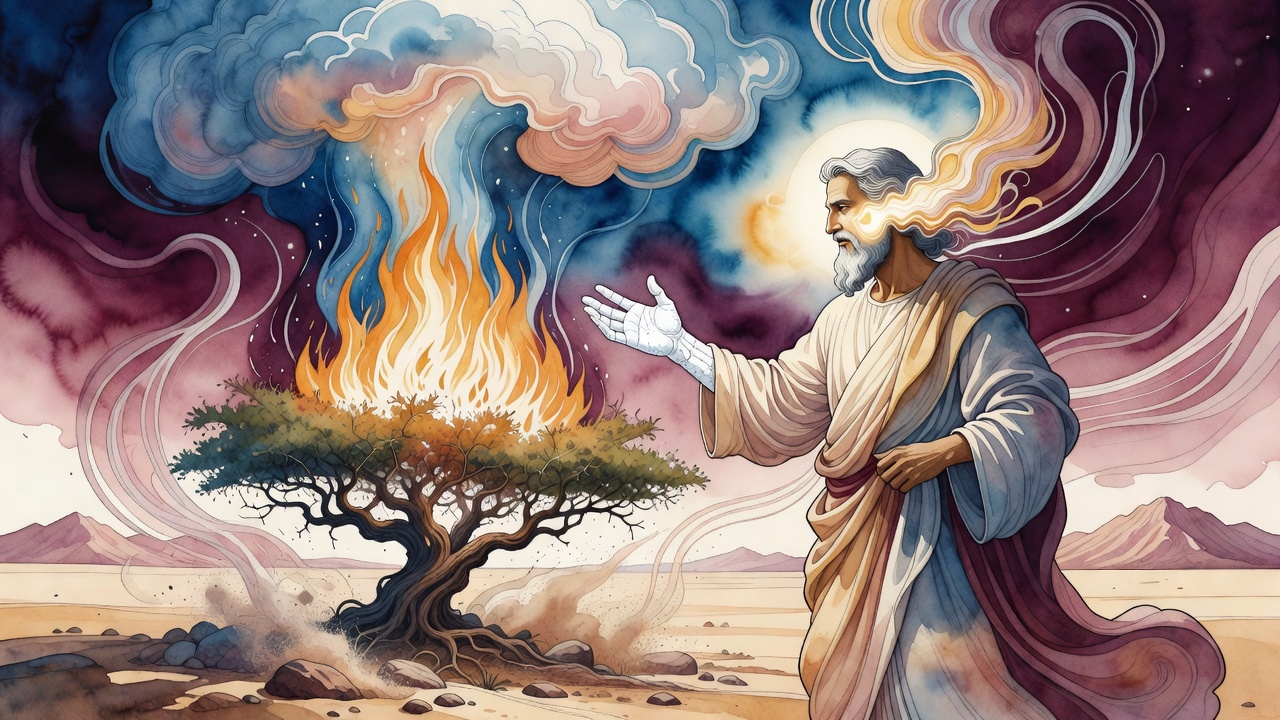
At the wilderness edge, "the bush burned with fire, and the bush was not consumed" (Exodus 3:2). Heavenly fire branches upward and is not consumed. Earthly fire eats what it touches. R. Johanan said Moses took three steps forward. R. Simeon son of Lakish said he only turned his neck. Trouble to look became merit to hear.

"Here am I," Moses answered. Heaven banked that phrase. One day Israel would cry and the Lord would answer "Here am I" (Isaiah 58:9). The bush was a covenant of mutual presence, flame without ash, speech without abandonment.

Sheep Before a Nation

The Holy One does not confer greatness until He tests a man in lesser things. David kept sheep from fields not his own. Moses led Jethro's flock to the wilderness end so they would not steal pasture. Faithful with sheep, now shepherd My flock. "Thou didst lead Thy people like a flock, by the hand of Moses and Aaron" (Psalm 77:21).

Greatness arrived as a staff that could shame its carrier. Faithfulness with animals did not cancel the rebuke for slander. The hand that kept sheep from theft had to learn not to steal a people's reputation.

Signs Stacked Like a Campaign Map

Hand leprous, hand restored, water to blood, snake that swallows pride. The Holy One revealed miracles in advance so Moses would enter Pharaoh's court with a campaign rehearsed. The heart would harden. The rod would still speak.

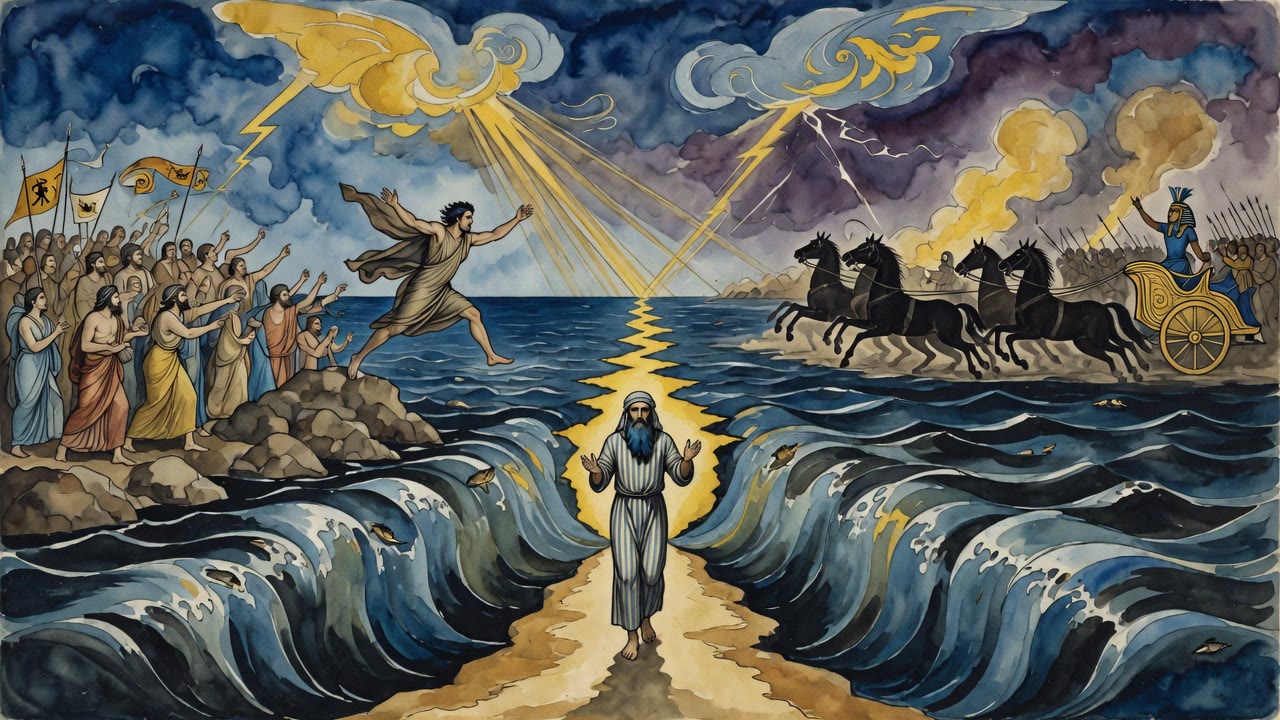
Sometimes Scripture calls it the rod of the Lord, sometimes thy rod. Ownership shared can judge both ends of the staff. Doubt Israel and the wood grows teeth. Trust the One who trusts them and the wood becomes a road through water.

Moses lifted his family onto an ass and lifted a future onto a stick. Egypt had no idea which load was heavier. A serpent on the ground had already told him: your mouth can make tools into judges.

When Moses finally faced Pharaoh, the staff that had bitten him for slander would swallow the staffs of magicians without apology. The people he once called unbelievers were the people heaven called believers.

Jethro's pasture, the bush that would not ash, the leprous hand, the blood on dry ground: all of them were stations on one road toward a river about to turn red.


← All myths

From the tradition

Sources

3 sources

The texts behind this telling. Some cards carry a translation of the source; others are our own retelling of it, and each card says which. Every card links out to the original.

Midrash Tanchuma, Shemot 23Midrash Tanchuma

Retold in our words. Read the original at the link below.Townsend 1989 translation of Midrash Tanhuma, S. Buber Recension · CC-BY

And Moses took his wife and his sons, and set them upon an ass (Exod. 4:20). The singular form ass is employed here, as when a man says: “Lead out the animal” (though he may have many). And Moses took the rod of God in his hand (ibid.). The Holy One, blessed be He, said to him: Take this rod in your hand, for with it you will be able to perform any miracle you desire. He struck the Nile with it, as it is said: And thy rod, wherewith thou smotest the river, take in thy hand (Exod. 17:5). Sometimes Scripture calls it the rod of the Lord and at other times thy rod.

The Lord said unto Moses: When thou goest (ibid. 4:21). The Holy One, blessed be He, revealed all the miracles to him, all the signs and wonders it would perform. He asked him: What is in your hand? (ibid. 2). A rod (ibid.), he replied. Cast it to the ground (ibid., v. 3), said the Holy One, blessed be He, and it will become a snake. Why a snake and not something else? Moses asked. He replied: Just as a snake bites and destroys, so the Egyptians bite and destroy the Israelites. After that He turned it into a tree, for the Egyptians were to become like a withered tree. Now, place thy hand into thy bosom (ibid., v. 6), He told him. When he withdrew it, his hand was leprous, for just as leprosy is impure, so the Egyptians were impure and were making the Israelites impure. When he replaced his hand in his bosom the flesh returned to normal. Thus shall I cleanse the Israelites from the impurities of Egypt. said the Holy One. Even as when you smote the water of the river and it turned into blood, so shall I afflict the Egyptians with the plague of blood.

Another comment on this matter. Moses said to the Holy One, blessed be He: But perhaps they will not believe me, nor hearken to my voice (Exod. 4:1). And He said: What is that in thy hand? (ibid., v. 2). The word is written as mazeh (“what is this?”), but it may be read as mi-zeh (“with this”): “With this that is in your hand you will be punished, for you have spoken slanderously against My children, just as the serpent spoke slanderously.” And He said: For God doth know (Gen. 3:5) that My son’s children are believers, and the descendants of believers. They are believers, because it is written: And the people believed (Exod. 4:31), and the descendants of believers, because it is written: And he believed in the Lord (Gen. 15:6). Just as I smote the snake with leprosy, so you shall be smitten by it, place your hand in your bosom. And he put his hand into his bosom; and behold, when he withdrew it, it was leprous and as white as snow (Exod. 4:6). And if it shall come to pass that they do not believe you (ibid., v., 8), then you shall smite the waters of the Nile and they shall turn into blood. This was also a sign to him that he would be judged in the future because of water, as it is said: Out of the rock, etc. (Gen. 20:8).

Full source
Midrash Tanchuma, Shemot 15Midrash Tanchuma

Retold in our words. Read the original at the link below.Townsend 1989 translation of Midrash Tanhuma, S. Buber Recension · CC-BY

And he looked; and behold, the bush burned with fire, and the bush was not consumed (Exod. 3:2). Because of this verse they held: The heavenly fire branches upwards as it burns, but is not consumed, and it is black in color. While here on earth, fire does not branch upwards (and) it is red in color. And though it consumes that which it touches, it does not burn. Therefore, The bush burned with fire, and the bush was not consumed.

Moses said: I will turn aside now, and see this great sight (Exod. 3:3). R. Johanan held that Moses took three steps forward. R. Simeon the son of Lakish insisted that he did not step forward at all but simply turned his neck to observe it. The Holy One, blessed be He, said to him: Because you troubled to look, be assured you will merit that I shall reveal Myself unto you. Forthwith, And God called unto him out of the midst of the bush (ibid., v. 4). The Holy One, blessed be He, said to him: Because you responded Here am I, be assured that the time will come when you will pray on behalf of Israel and I will answer you at once, with the same words: Then shalt thou call, and the Lord will answer; thou shalt cry, and He will say: “Here am I” (Isa. 58:9).

Full source
Midrash Tanchuma, Shemot 7Midrash Tanchuma

Retold in our words. Read the original at the link below.Townsend 1989 translation of Midrash Tanhuma, S. Buber Recension · CC-BY

3:1). Scripture states elsewhere: Every word of God is tried; He is a shield unto them that take refuge in Him (Prov. 30:5). The Holy One, blessed be He, does not confer greatness upon a man until He tests him in lesser things. Only then does He elevate him to greatness. Two great men in the world were tested and found to be faithful before He raised them to positions of greatness. He tested David by means of a sheep. What did David do? He led the sheep into the desert to keep them from feeding from the field of others, and that is why his brother Eliab said to him: With whom hast thou left those few sheep in the wilderness? (I Sam. 17:28). The Holy One, blessed be He, said to him: Thou hast been found trustworthy with regard to sheep, and so now I shall entrust My flock to you that you may shepherd them, as it is written: Thou shalt shepherd My people Israel (I Chron. 11:2). And Scripture likewise says: From following the ewes that give suck He brought him to be shepherd over Jacob, His people, and Israel, His inheritance (Ps. 78:71).

Similarly, when Moses tended the flock of Jethro, his father-in-law, the priest of Midian, he led it to the farthest end of the wilderness in order to keep the sheep from stealing. The Holy One, blessed be He, said to him: You have been found trustworthy with regard to sheep; now I shall entrust My flock to you that you may shepherd it, as it is said: Thou didst lead Thy people like a flock, by the hand of Moses and Aaron (Ps. 77:21).

Observe that the Holy One, blessed be He, did not divulge the existence of Moses until he was three months old, as it is said: She hid him three months, and when she could no longer hide him, she took for him an ark of bulrushes (Exod. 2:3). She then placed the child within the ark and set it in the Nile. Then it is written: The daughter of Pharaoh came down to bathe (ibid., v. 5). Our sages of blessed memory said: She went there to cleanse herself of the idolatry practiced in her father’s palace. Others maintain that she had been suffering from leprosy, but when she stretched out her hand toward the righteous one, she was cured.

And sent her handmaid to fetch it (Ps. 2:5). Her hand was extended and stretched forth. Then she took the child and brought him to the Egyptian women to be nursed, but he refused their breasts. Surely it is permissible to be nursed by them. We have been taught that an Israelite may not suckle the child of an idolater, but that an idolater may suckle the child of an Israelite if she does so with her permission. What is meant by “with her permission”? It means that if she eats the food of Israelites she may nurse him. The Holy One, blessed be He, declared: In the future, this child will speak with Me, and the Egyptian women will then say: “I nursed the one who now speaks with the Shekhinah (the Divine Presence).” Therefore, he refused their breasts.

Full source