The Serpent That Spoke and the Ark Left in Armenia
Every animal in the first garden shared one language, and the serpent used it. Long after, villagers in Armenia pried bitumen off the hull to wear as charms.
Table of Contents
 Click for full size
The Snake Who Shared the Language of Men
In the first garden every animal spoke, and they all spoke the same tongue. The lion and the sparrow and the man understood one another without effort. So did the serpent, and the serpent was watching.
He watched Adam, the man shaped from red earth, and Eve, the woman drawn from the man's own rib, and he could not stand what he saw. Two creatures wanting nothing. Two creatures obeying God and content in it. There was one tree they had been told never to touch, a tree of the knowledge of good and evil, and the serpent slid close to the woman and used the language they shared.
"You will not become less by eating it," he told her. "You will become like God, lacking nothing." He said it plainly, the way a friend gives advice. Eve listened. She ate, and the fruit was sweet, and she carried it to Adam and watched him eat too.
Their eyes changed in an instant. They looked down and saw their own bodies bare, and the sight shamed them. They stitched fig leaves together, covered themselves, and went looking for somewhere to hide from the One who had made them.
The Curse That Took His Legs and His Voice
God found them crouched among the trees, and the questioning began. Adam blamed Eve. Eve blamed the serpent. The serpent had no one left to blame.
The sentences came down one by one. Adam would break his back over ground that had once given food freely. Eve would bring children into the world through pain. And the serpent, who had started all of it, lost the most. God took his voice, so that he would never scheme with words again. God took his legs, so that he would drag himself along the dust on his belly. God set poison beneath his tongue where clever speech had been, and God promised that from then on the children of the woman would strike at his head wherever they found him.
Then God drove the man and the woman out of the garden, and the gate closed behind them, and the age when animals spoke was over.
Seven Generations, Then the Sons of Angels
For a while the world held. Through seven generations the line of Seth stayed decent, honoring the God who had made their first parents. Then it broke.
The angels of God came down and took human women as wives, and the women bore them sons of monstrous size and monstrous strength, the kind of beings that Greek tellers would later call giants. These sons trusted nothing but their own force. Violence spread until the whole earth was soaked in it, and arrogance spread with it.
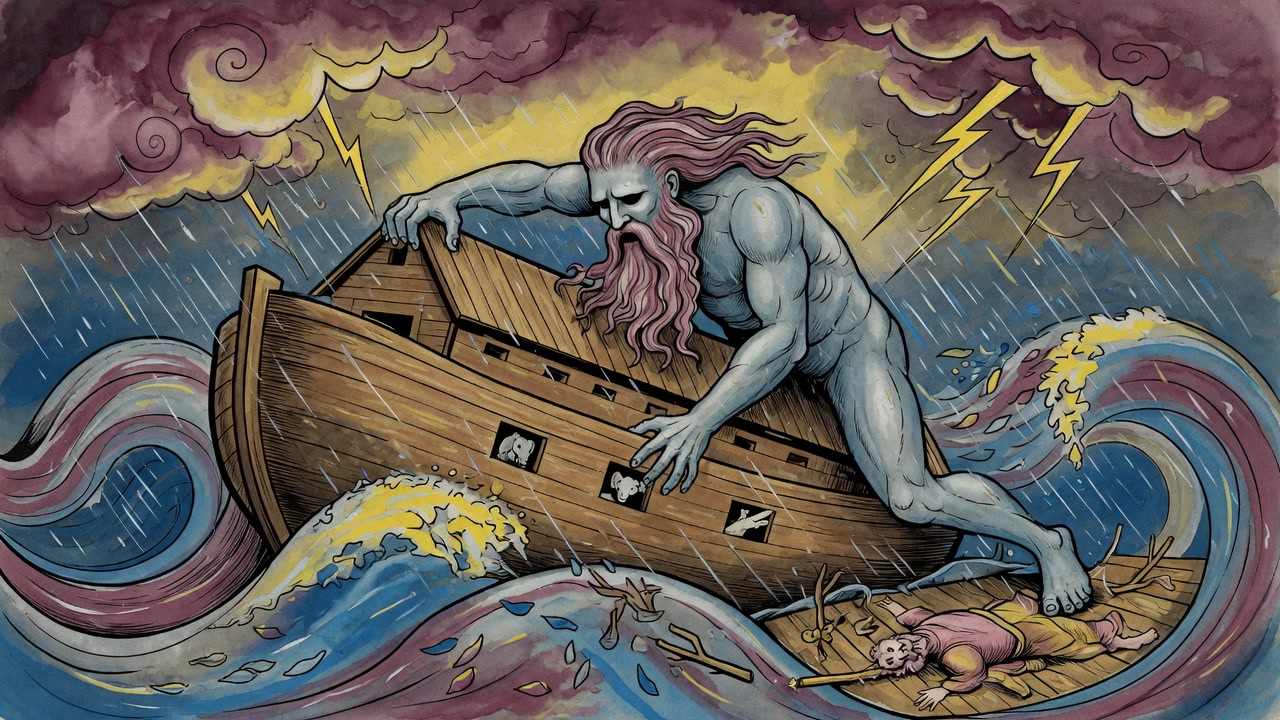
One man argued against the tide. Noah went from household to household and begged them to change how they lived. "Turn back," he told them, "before there is nothing left to turn back to." They laughed at him. Then their laughter curdled into something worse, and Noah understood that these men would kill him and his family for the crime of being right. He gathered his sons and withdrew.
The Ark of Four Stories and the Forty Days
God had already decided. He loved Noah for staying clean in a filthy generation, and He would wash the generation away and begin the human story again from one honest family. He cut the human lifespan down to a hundred and twenty years. Then He gave Noah a builder's plan.
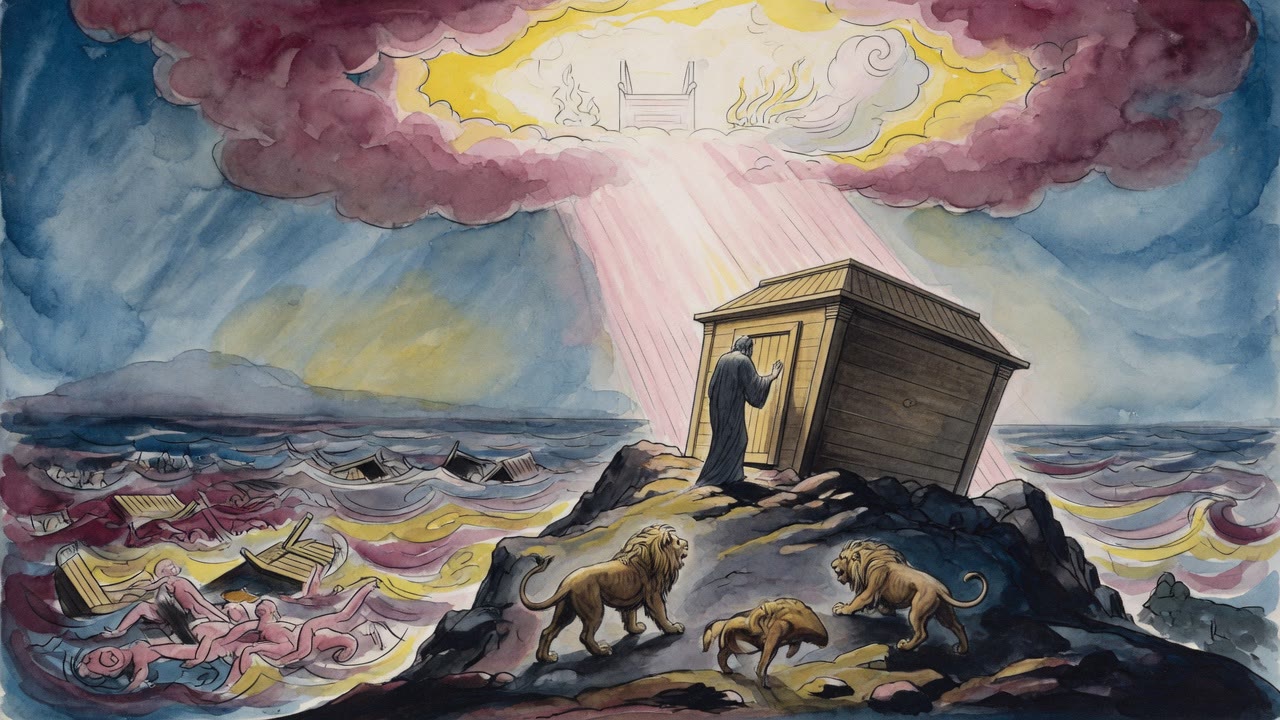
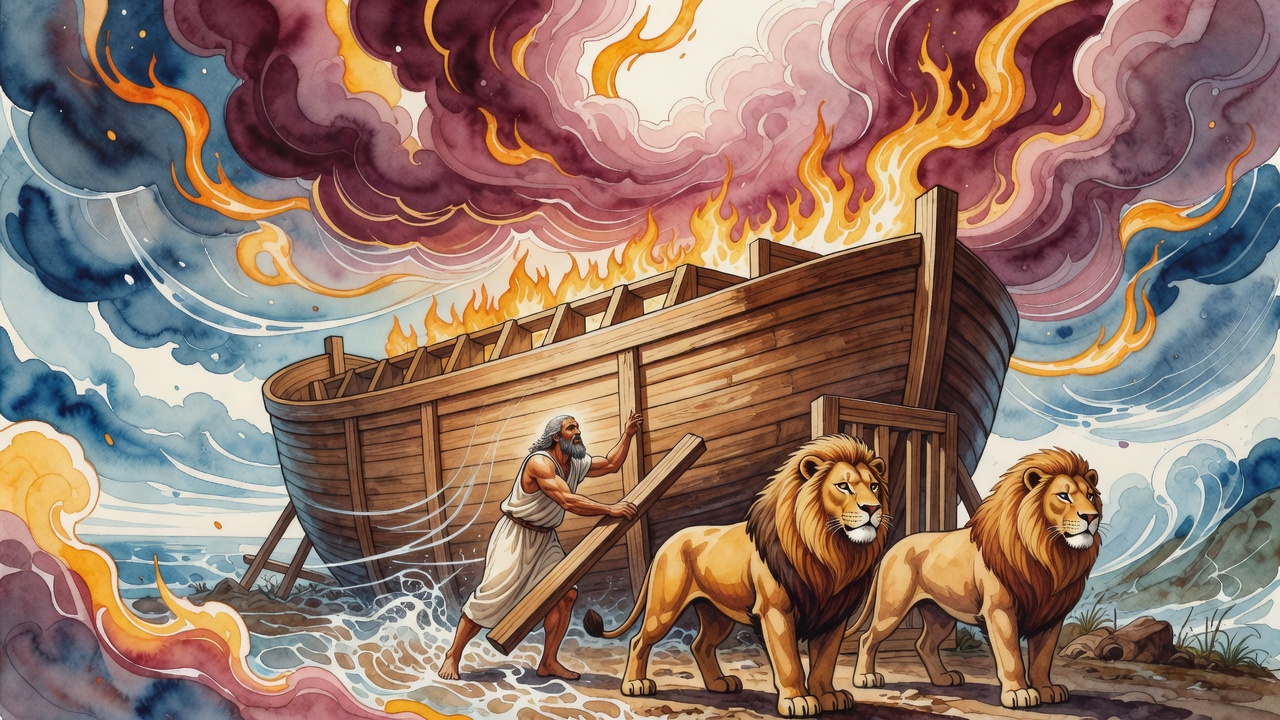
The vessel was to rise four stories tall, three hundred cubits long, fifty across, thirty high, braced with cross beams and sealed tight so the water could not force its way through the seams. Noah built it. He led his family aboard, and the animals came behind them, pair after pair, some by sevens, and he packed away food for a voyage no one had ever taken.
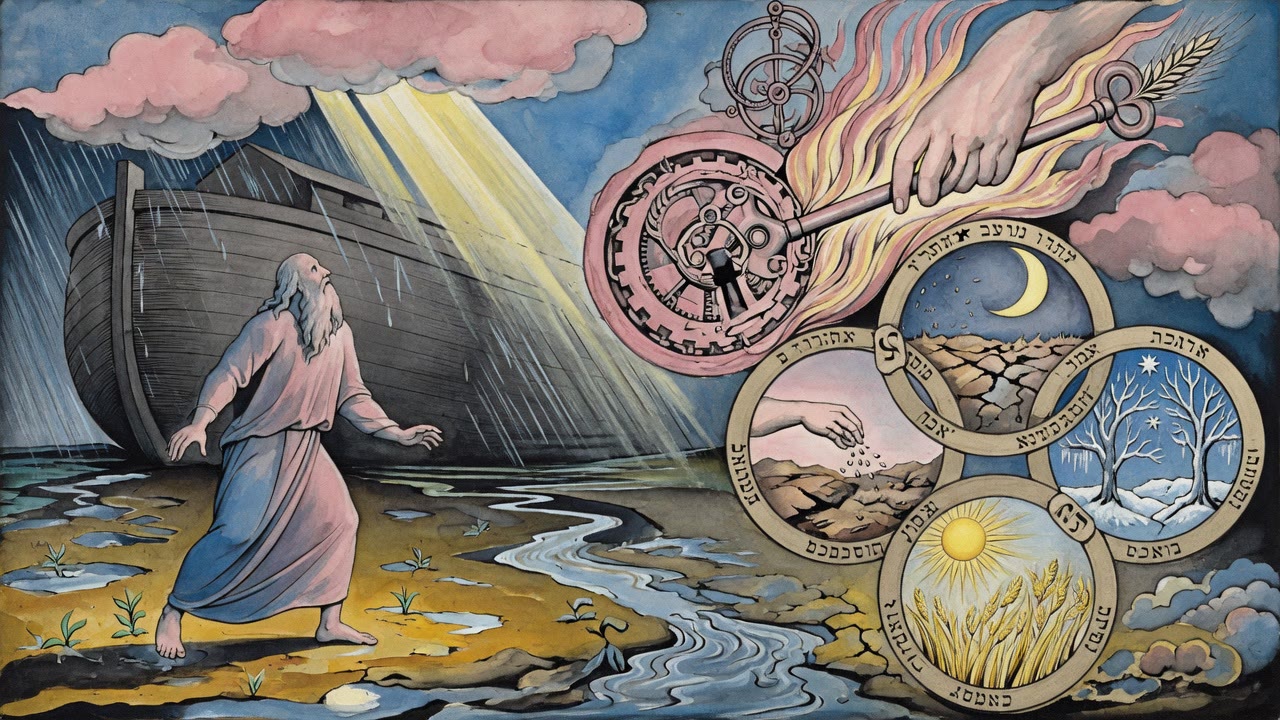
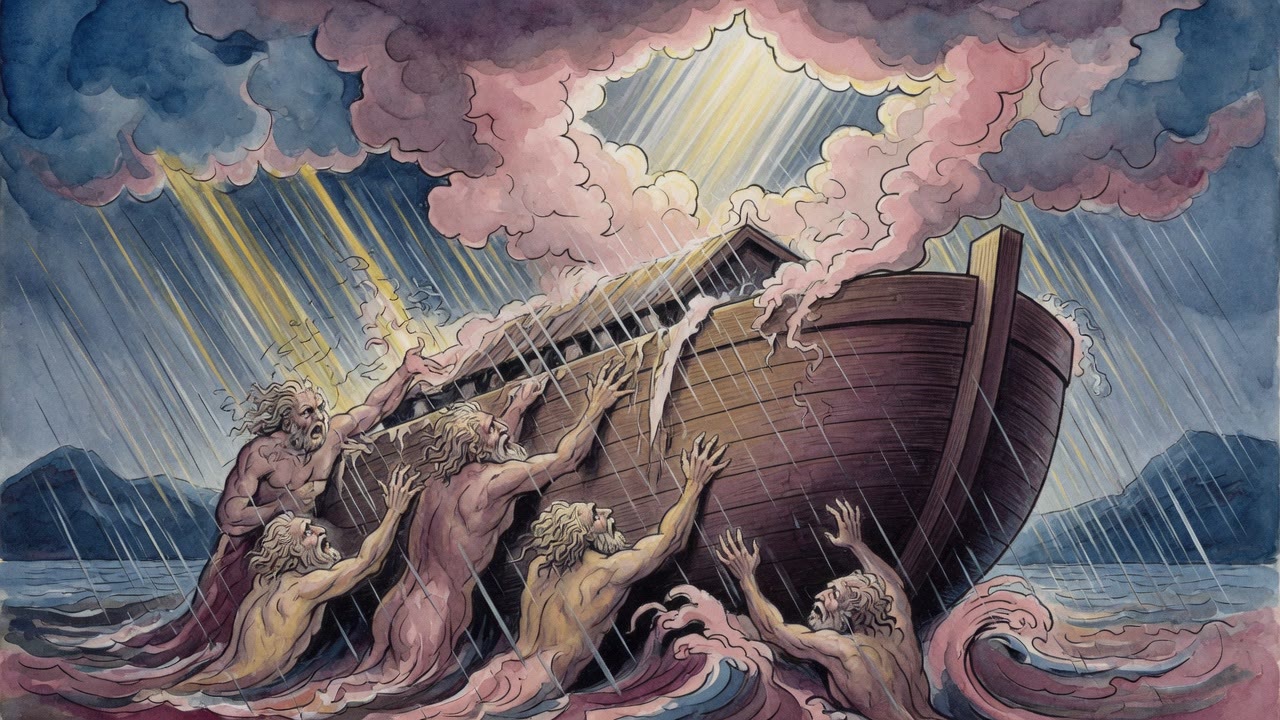
The rain fell for forty days. The water climbed fifteen cubits above the highest ground, and everything breathing outside the hull drowned. For a hundred and fifty days the ark rode a world with no shore. Then the water began to sink. Noah loosed a raven, and it came back with nowhere to land. Seven days later he loosed a dove, and it returned with mud on its feet and a fresh olive branch in its beak. The earth was drying.
When Noah finally stepped onto solid ground he built an altar, and over the smoke he asked God never to do this again. God answered that the ruin had not been His wish but the work of human hands, and He hung a bow of light in the clouds as a promise that the waters would never return. He let people eat the flesh of animals from then on, though never the blood, "for in the blood is the life," and He warned that anyone who spilled a man's blood would answer for it.
The Place of Descent
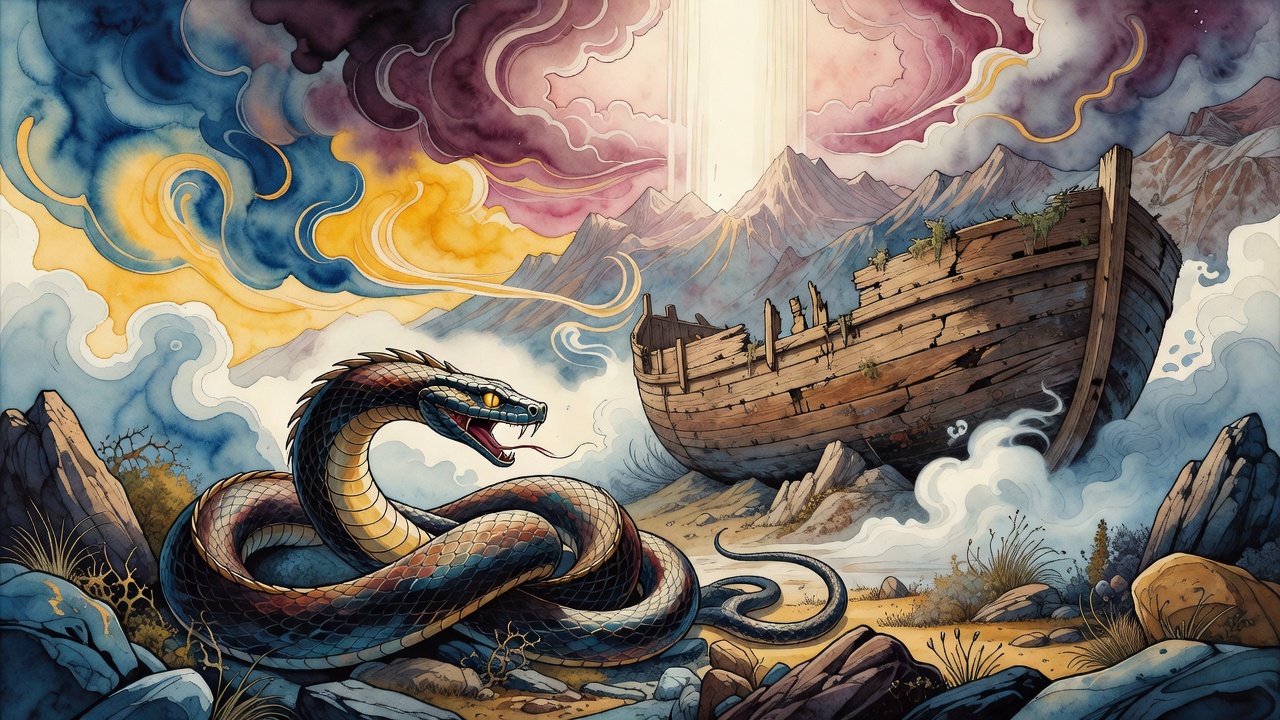
The ark had come to rest in the mountains of Armenia, and it did not rot away into legend. It stayed. The people who lived on those slopes called the spot the Place of Descent, and they would take newcomers up to see the old timbers of the hull still lodged where the water had left them. Some pried loose the black bitumen that had sealed the boards and wore it around their necks as a charm against harm.
The memory did not belong to one people either. A Chaldean named Berosus wrote of the wreck on the Armenian heights and of the scavengers who carried its tar away as amulets. Nicolaus of Damascus told of a great mountain called Baris, above the country, where a man survived a flood in a vessel that grounded on the peak, and where the fragments lasted a long time after. Nations who had never heard of Noah, who kept no Sabbath and read no Torah, still carried the flood in their records without knowing whose boat they were describing.
The bitumen hung at their throats. The timbers stood on the mountain. The story had left something a hand could touch.
← All myths