6 min read

The Seven Days the Soul Wanders Between Home and Grave

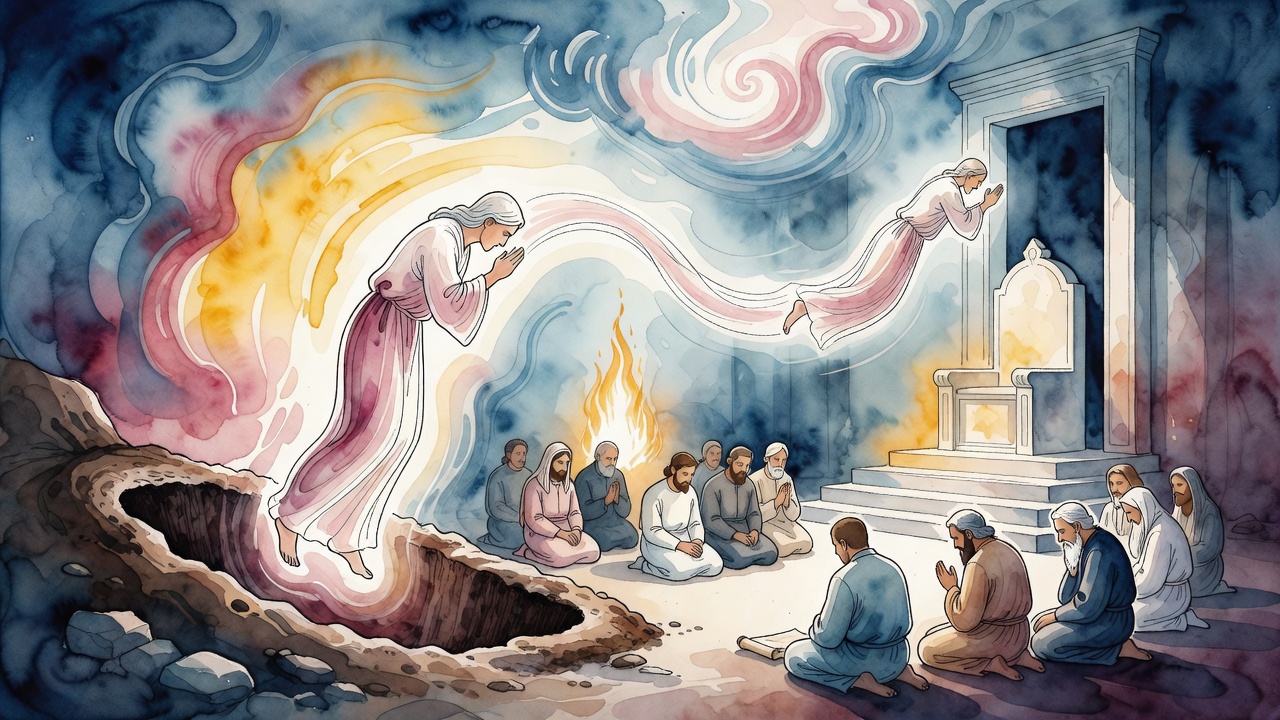
For seven days after death the soul refuses to leave, climbing from the grave to the doorway and back while the mourners sit below on the floor.

Curated by Arthur · Told by Maggid ·
Table of Contents
  1. The Night the Soul Would Not Leave
  2. The Man Who Crossed the Marketplace
  3. Gathered to the Fathers
  4. The Breath Returns to the One Who Blew It
  5. The Dew on the Head of the Holy One
The Seven Days the Soul Wanders Between Home and Grave Click for full size

The Night the Soul Would Not Leave

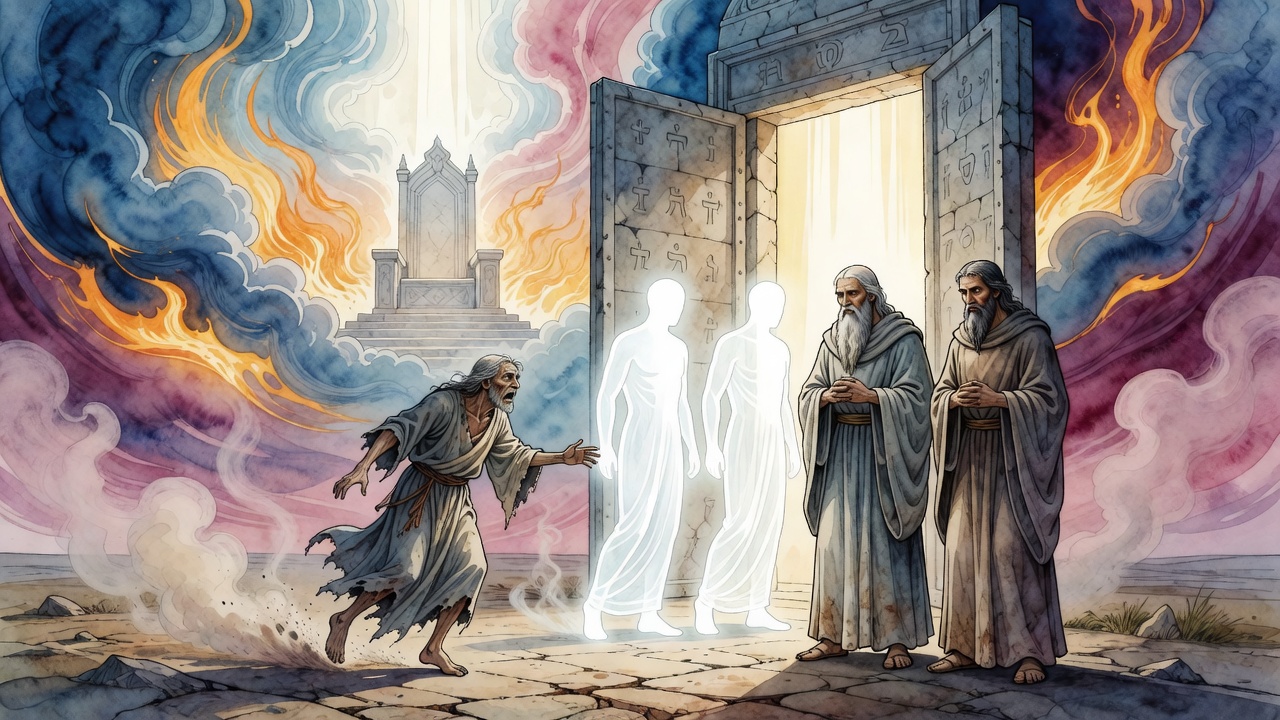
The lamp in the house of mourning burned low, and the family sat on the floor with their sandals off and their collars torn. Outside, in the fresh dark of the grave, a body lay wrapped in linen. Above the house, unwilling to go anywhere, hovered the thing that had left it.

The soul did not understand yet that it was dead. It climbed toward the doorway it had lived behind for a lifetime, toward the table where it had broken bread, toward the room where its children now wept into their knees. Then it turned and rushed back to the grave, to the still face, to the mouth that would not take breath again. Home, then grave. Grave, then home. For seven days it would run that road and find no rest at either end.

The mourners could not see it. They only felt the strange nearness of the one they had buried, as if the dead still lingered at the door.

The Man Who Crossed the Marketplace

Streets away from the house of mourning, a man pushed through a crowded marketplace with a single key closed in his fist. His house stood shuttered and locked, and inside it lay everything he owned, his coins, his oil, his bread, his inheritance. He carried none of it on his body. He carried only the key, and while that key stayed in his hand, every locked thing was already his, as good as held, waiting for the turn of his wrist.

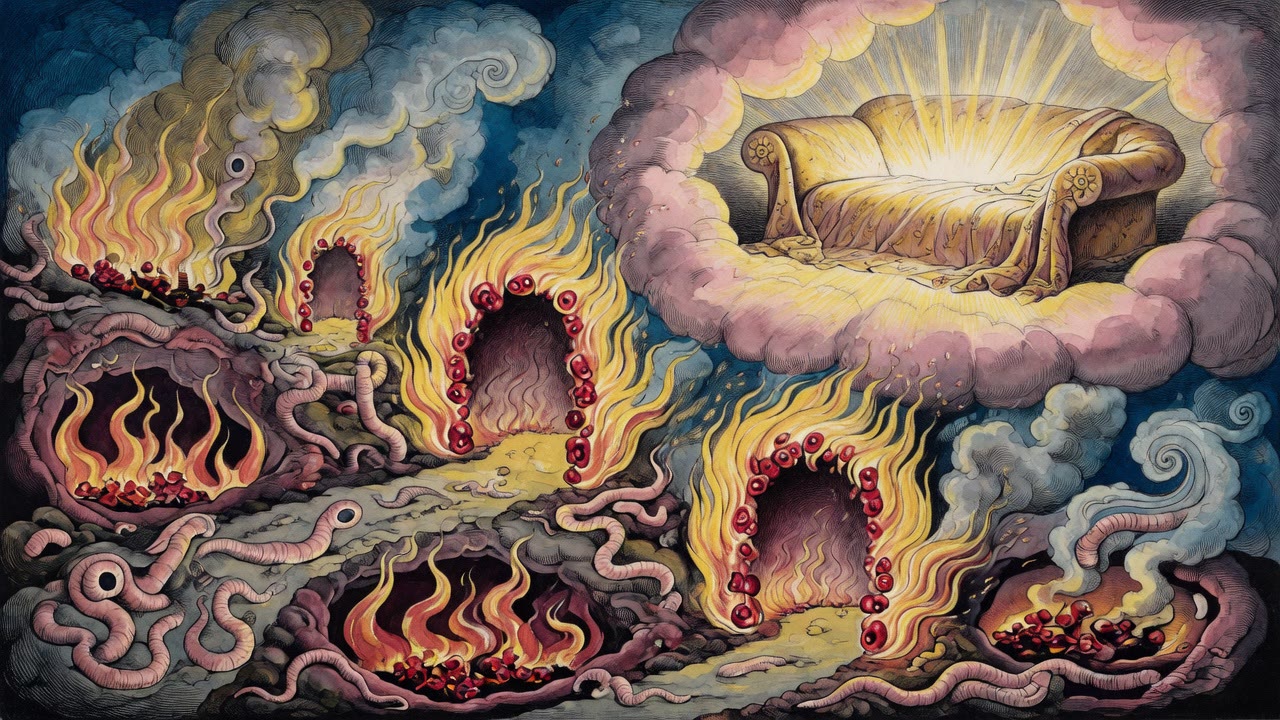
So it was with the restless soul above the grave. It was not lost. It was not loose in the dark. It was held, the way the marketplace man held his whole house inside one closed hand. "In whose hand is the soul of every living thing," runs the verse, and the hand is the hand of the Holy One. Every spirit that ever breathed is shut inside it, and the same hand that grips the souls grips also the keys to the graves and to the hidden treasure-houses where the souls are stored. Nothing that goes in is spilled. Nothing is dropped.

Gathered to the Fathers

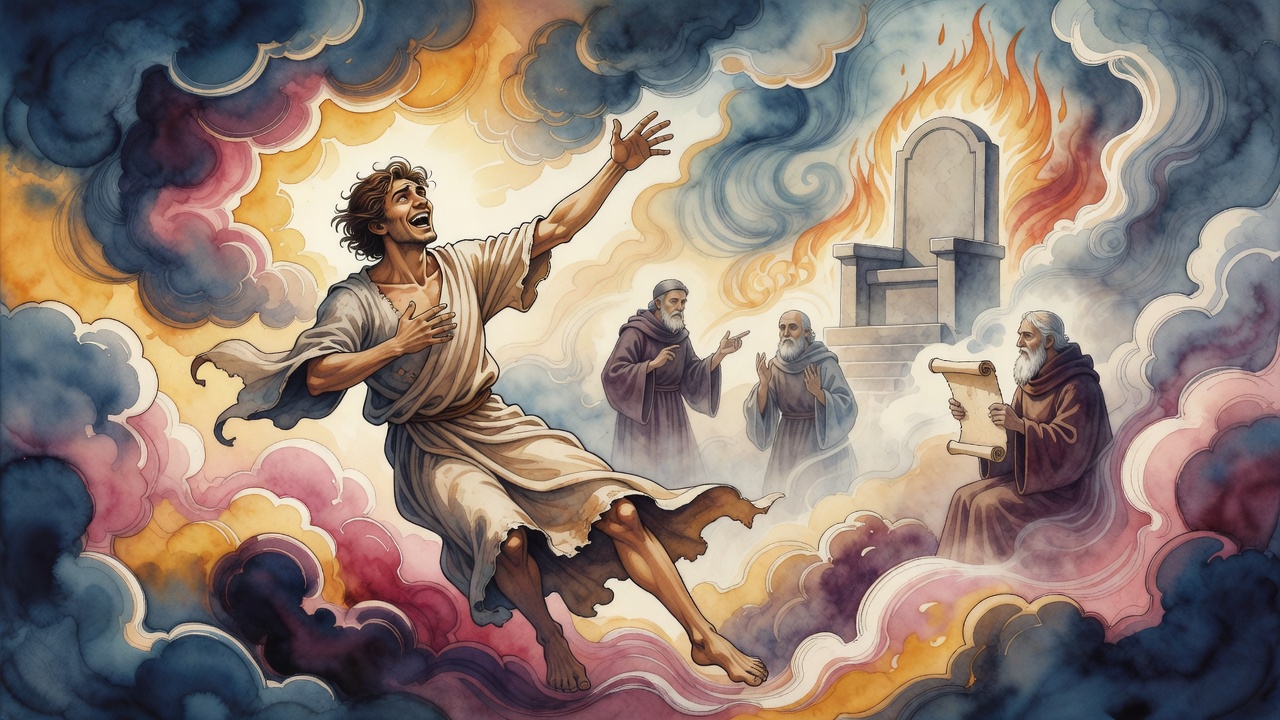
As the seventh day came near, the soul's frantic road between house and grave began to close. It was drawn toward a gathering it had not chosen and could not refuse. God had promised this long before to Abraham, when He said, "But thou shalt go to thy fathers in peace." Every soul goes to its own. The righteous are gathered to the righteous who went before them, and the wicked are gathered to the wicked, each one to the company of its own kind and its own people.

For a soul that had lived well, the arrival was not a plunge into cold. The righteous who had gone first came out to meet the newcomer the way a household comes down to the road to greet a traveler spotted from far off. "Come unto peace," they said. And the soul that had run seven days between a doorway and a grave was taken in among those who had already made the crossing.

The Breath Returns to the One Who Blew It

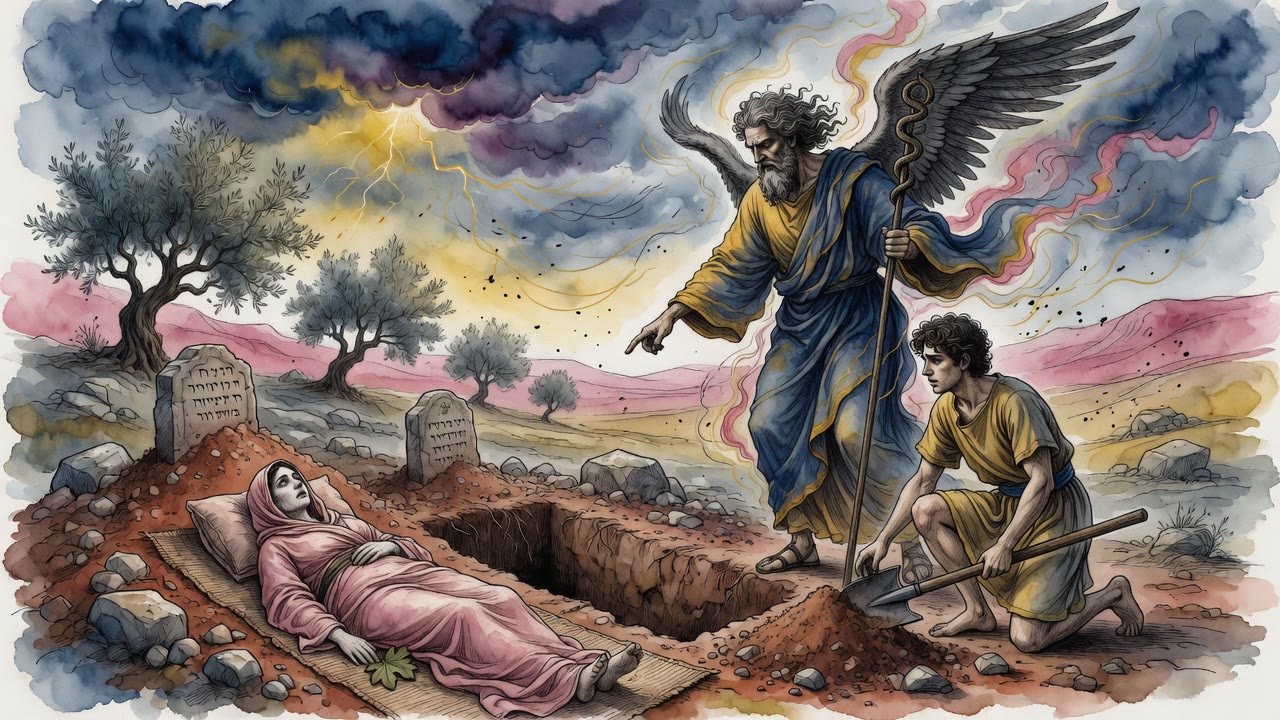
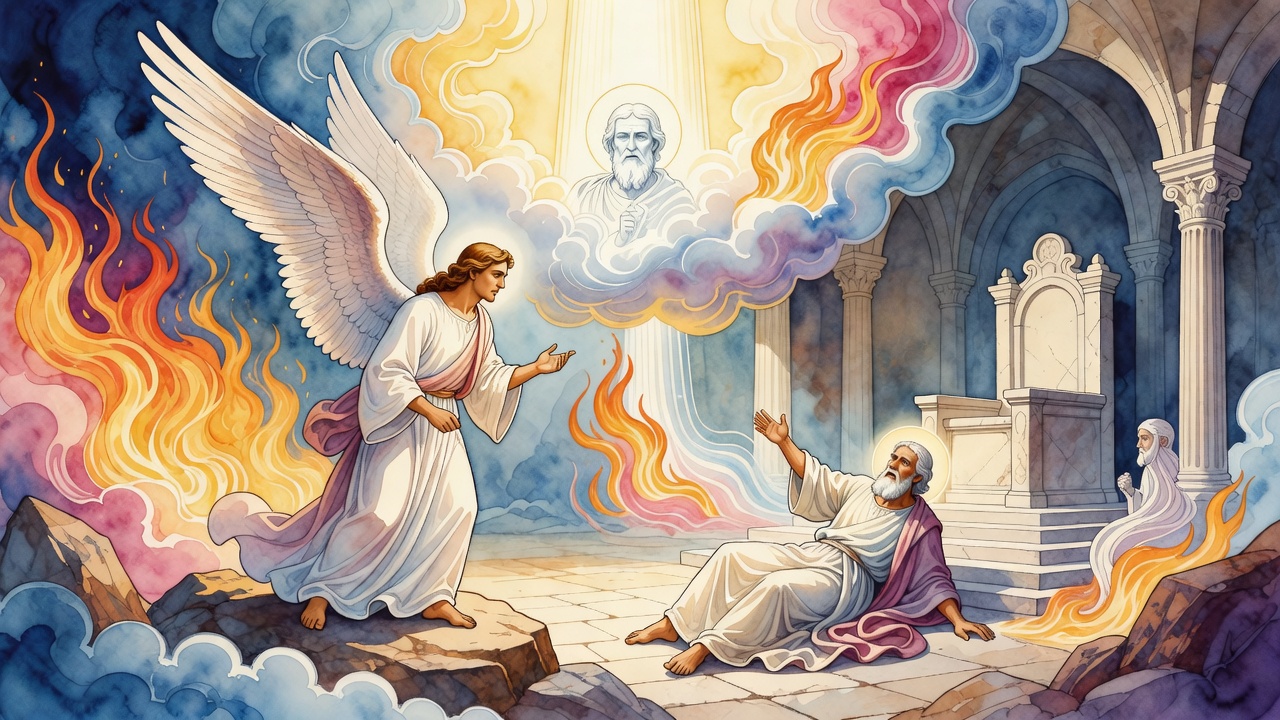
On the seventh day the body in the grave began to change. The linen sank. The flesh loosened and started its slow return to the ground it had been shaped from, for the dust goes back to the earth as it was. And the soul, no longer tied to a face it could not wake, rose past the doorway for the last time.

It was going back to where it began. Long ago, in a garden, Adam had lain on the ground as a finished shape with no life in him, a mouth and lungs and open eyes and no breath behind any of them. Then God bent close and breathed into his nostrils the breath of life, the nishmat chayim, and the shape sat up and became a living man. That breath had never been the man's own to keep. It was a spark of the One who blew it. Now, at the end, the spirit returned to God who gave it, back into the closed hand, back into the treasure-house, to wait.

The Dew on the Head of the Holy One

This is what all of them wait for, the righteous folded among the righteous, every stored spirit shut in that hand.

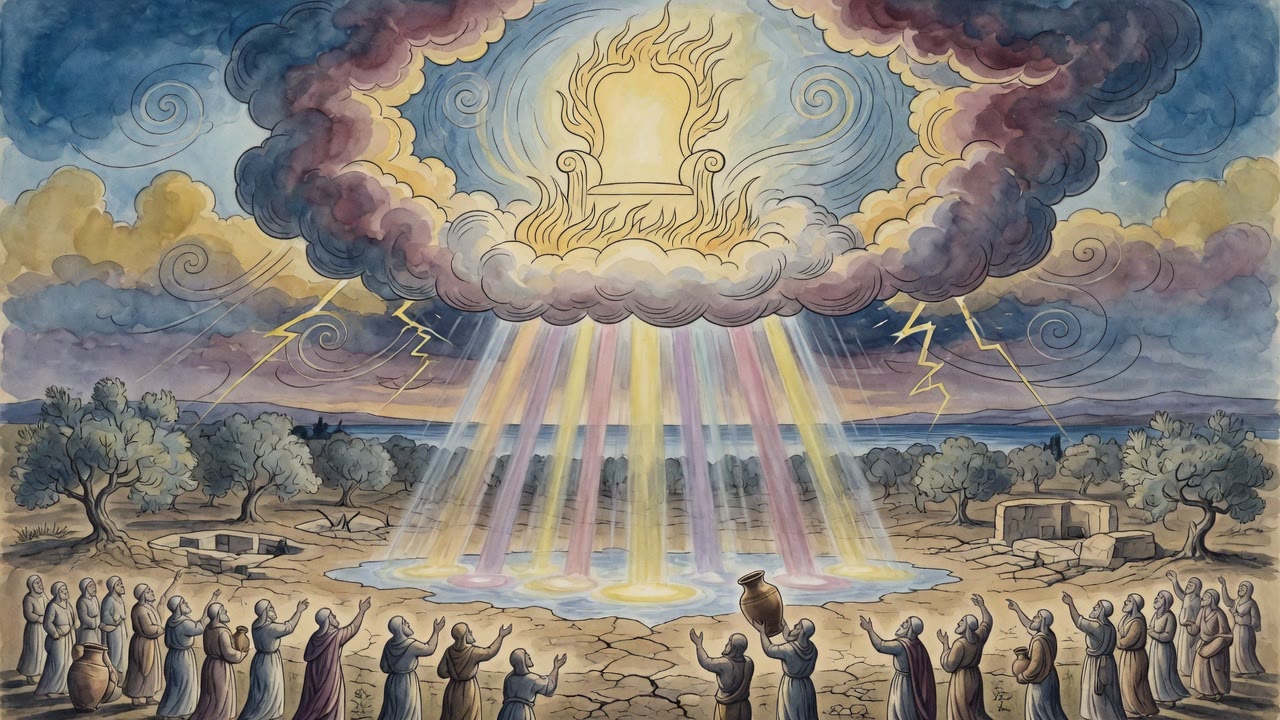
There is a dew that no morning field has ever tasted. It does not rise from the earth. It gathers on the head of the Holy One, blessed be He, whose head is full of the reviving dew, the dew of life itself. On the day appointed, when the graves are commanded to open and the seed of the earth is told to give back what it swallowed, God will shake His head, and the quickening dew will come down like rain out of His hair onto the dust of the dead.

"I was asleep, but my heart waked," says the verse, "for my head is filled with dew, my locks with the drops of the night." The sleeper stirs. The dew falls. And the souls that ran seven days between a house and a grave, and then waited in the closed hand of God through the long night of the world, are called up out of the treasure-house to be clothed again in flesh and stand.


← All myths
From the tradition

Sources

4 sources

The texts behind this telling. Some cards carry a translation of the source; others are our own retelling of it, and each card says which. Every card links out to the original.

Pirkei DeRabbi Eliezer 34:9Pirkei DeRabbi Eliezer

Retold in our words. Read the original at the link below.Pirke de Rabbi Eliezer, trans. Rabbi Gerald Friedlander, London (1916) · CC-BY

While no one has a definitive answer, Jewish tradition offers some beautiful, and even comforting, insights.

One such glimpse comes from Pirkei DeRabbi Eliezer, a fascinating early medieval text filled with stories and interpretations of the Torah. Chapter 34, in particular, paints a picture of the soul’s journey after death.

For the first seven days of mourning – the shiva – the verse says that the soul is restless. It journeys back and forth, from its old home, the place where it lived and loved, to its new abode, the grave.

Then, something changes. Pirkei DeRabbi Eliezer explains that after those initial seven days, the body begins to decompose. It returns to the earth from whence it came, just as it says in (Ecclesiastes 12:7): "And the dust returns to the earth as it was." A poignant reminder of our earthly origins and our inevitable return.

And what of the soul? Well, the verse in Ecclesiastes doesn’t stop there. It continues: "and the spirit returns to God who gave it." The soul, no longer bound to the physical body, ascends. It returns to its source, to the very place from which it originated: Heaven.

But where does this idea – that the soul comes from Heaven – come from? Pirkei DeRabbi Eliezer points us back to the very beginning, to the creation of Adam himself. Remember the story? God forms man from dust, but something is missing. Man is just a form, without life, without spirit.

So, what does God do? Here's where it gets truly beautiful. The text says that God "breathed with the spirit of the breath of His mouth, and cast a soul into him." We find this in (Genesis 2:7): "And He breathed into his nostrils the breath of life." Nishmat Chayim – the breath of life.

This isn’t just any breath; it’s a divine breath. The soul, therefore, is not something created ex nihilo – from nothing. It is an emanation of God's own being, a spark of the divine infused into humanity. That a piece of the divine resides within each and every one of us.

And so, when we die, that spark, that soul, returns to its source. It's a comforting image, really. A return home, to the place where it truly belongs.

What does that return feel like? What awaits us there? Perhaps it’s a question we’re not meant to answer just yet. But knowing that our tradition offers such a beautiful and hopeful vision of the afterlife can bring a sense of peace, and perhaps even a little bit of wonder, to the mystery of it all.

Full source
Pirkei DeRabbi Eliezer 34:11Pirkei DeRabbi Eliezer

Retold in our words. Read the original at the link below.Pirke de Rabbi Eliezer, trans. Rabbi Gerald Friedlander, London (1916) · CC-BY

Rabbi Azariah, whose wisdom is preserved in Pirkei DeRabbi Eliezer, a captivating collection of stories and teachings, tackles this very question. He tells us plainly: all the souls are in the hands of the Holy One, blessed be He. It’s a bold statement, but he backs it up with scripture. "In whose hand is the soul of every living thing" (Job 12:10), the verse from Job declares.

What does it really mean for God to hold our souls? Rabbi Azariah doesn't leave us hanging in abstract theology. He brings it down to earth with a parable – a short, relatable story meant to illustrate a deeper truth. Think of a person walking through the marketplace, clutching the key to their house. As long as that key is in their hand, all their money, all their possessions, are effectively in their grasp too.

The key is the power, the access.

So, too, with God. He holds the key. And what does this divine key unlock? Two incredibly important things: the graves and the treasure-houses of the souls. The graves. The place of endings, of apparent finality. God holds the key to even that.

And the treasure-houses of the souls… Where are these treasure-houses? It sounds like a concept straight out of Kabbalah, a mystical repository of all the souls that ever were, and ever will be. God, Rabbi Azariah implies, is not just the creator of individual souls, but the keeper of them all.

And here's the most hopeful part of the teaching. Because God holds the key, He has the power to restore every spirit to the body of flesh. It’s a powerful image of resurrection, of renewal. It echoes the verse from Psalms: "Thou sendest forth thy spirit, they are created; and thou renewest the face of the ground" (Ps. 104:30).

Think about the implications! It isn't just about individual resurrection. It's about the renewal of the entire world. God’s power over the soul extends to the very fabric of existence. He can recreate, revitalize, and bring forth new life.

What I find so comforting about this teaching is its simple, yet profound message of hope. It tells us that even in death, even in the face of ultimate loss, we are not truly gone. Our souls are held in the hands of the Divine, safe, secure, and waiting for the moment of renewal.

Remember the key. And remember the promise of renewal that lies within.

Full source
Pirkei DeRabbi Eliezer 34:5Pirkei DeRabbi Eliezer

Retold in our words. Read the original at the link below.Pirke de Rabbi Eliezer, trans. Rabbi Gerald Friedlander, London (1916) · CC-BY

Rabbi Ẓe'era, a sage of the Talmudic era, shared a powerful image: When we pass from this world, our souls don't simply float off into the void. Instead, they gather together, "each man's soul to the generation of his fathers and to his people." The righteous souls find themselves among the righteous, the wicked with the wicked.

Why this gathering? Well, the idea is rooted in a verse God speaks to Abraham himself: "But thou shalt go to thy fathers in peace" (Genesis 15:15). It suggests a continuation of connection, a sense of belonging that transcends even death. That

It gets even more intriguing. According to Rabbi Ẓe'era, when the soul departs the body, the righteous souls already residing in the afterlife come to greet the newly arrived. They offer a welcome, a blessing: "Come unto peace!" It's as if there's a welcoming committee, a chorus of angels, ready to usher us into the next stage of existence.

This idea of being gathered "to thy grave in peace" also appears in (2 (Kings 22:2)0). It's a recurring theme, this sense of finding rest and tranquility with our ancestors.

Now, it’s important to remember that these are glimpses, poetic interpretations. The tradition isn't offering a literal roadmap of the afterlife. Instead, it's providing a framework for understanding death not as an ending, but as a transition. A transition to a place of peace, a place of belonging, a place where we rejoin the great chain of generations that have come before us.

Full source
Pirkei DeRabbi Eliezer 34:15Pirkei DeRabbi Eliezer

Retold in our words. Read the original at the link below.Pirke de Rabbi Eliezer, trans. Rabbi Gerald Friedlander, London (1916) · CC-BY

One particularly evocative image comes from Pirkei DeRabbi Eliezer, specifically chapter 34. This text, a fascinating collection of stories and interpretations, explores all sorts of topics, and here, it's all about the miraculous power of… dew.

Yes, dew. That humble moisture that glistens on the grass in the morning.

Rabbi Tanchum makes a bold statement: "On account of the seed of the earth, when it is commanded, (it) discharges the dew for the resurrection of the dead." So, the very thing that nourishes the earth, that allows life to spring forth from seemingly barren ground, also holds the key to bringing back those who have passed on. But where does this dew originate?

The answer is, well, breathtaking.

It descends, we're told, from the head of the Holy One, blessed be He. The source of ultimate life, the power to resurrect, is visualized as emanating directly from God's very being. The text continues, "for the head of the Holy One, blessed be He, is full of the reviving dew." It's not just any dew; it's the reviving dew. The dew of life itself.

And it gets even more poetic. The text envisions a future time, "the future life," when God will actively participate in this process. "In the future life the Holy One, blessed be He, will shake His head and cause the quickening dew to descend."

This isn't some impersonal, automatic process. It's an act of divine compassion, a deliberate choice to bestow life. It calls to mind a parent gently waking a sleeping child.

To support this image, Pirkei DeRabbi Eliezer then quotes the (Song of Songs 5:2): "I was asleep, but my heart waked… for my head is filled with dew, my locks with the drops of the night." Now, on the surface, the Song of Songs is an erotic love poem. But Jewish tradition often reads it as an allegory for the relationship between God and Israel. In this context, the verse takes on a whole new layer of meaning. The "I" who is awakened, whose head is filled with dew, can be interpreted as God, ready to bestow life and renewal.

What I find so striking about this passage is the sheer intimacy of the imagery. We're not talking about some distant, abstract deity. We're talking about a God whose very essence is intertwined with the cycle of life and death, a God who actively participates in bringing forth resurrection.

And sometimes, that hope comes in the form of the simplest, most unassuming things… like a drop of dew.

Full source