Parshat Bereshit6 min read

Michael Teaches Seth to Bury Eve Beside Adam

Eve begged to lie beside Adam, but only Seth had seen the grave. So an archangel came down to teach the first burial.

Curated by Arthur · Told by Maggid ·
Table of Contents
  1. Eve Pleads to Be Laid Beside Her Husband
  2. Only Seth Had Watched the Angel Work
  3. An Archangel Comes Down With Instructions
  4. Eve Is Set Down Among the First Family
  5. A Command Meant for Everyone Who Would Ever Die

Eve had outlived the man she was made for, and the years since had hollowed her. She walked the fields at the edge of the garden they could never reenter, and she did not know where her husband lay. The ground had taken him in the night. She had not seen it happen. Only one of her sons had.
Now her own end was close. She could feel it in her hands, in the slow refusal of her breath, and the thing she feared was not death. The thing she feared was lying somewhere apart from Adam, alone in the dirt, separated even there.

Eve Pleads to Be Laid Beside Her Husband

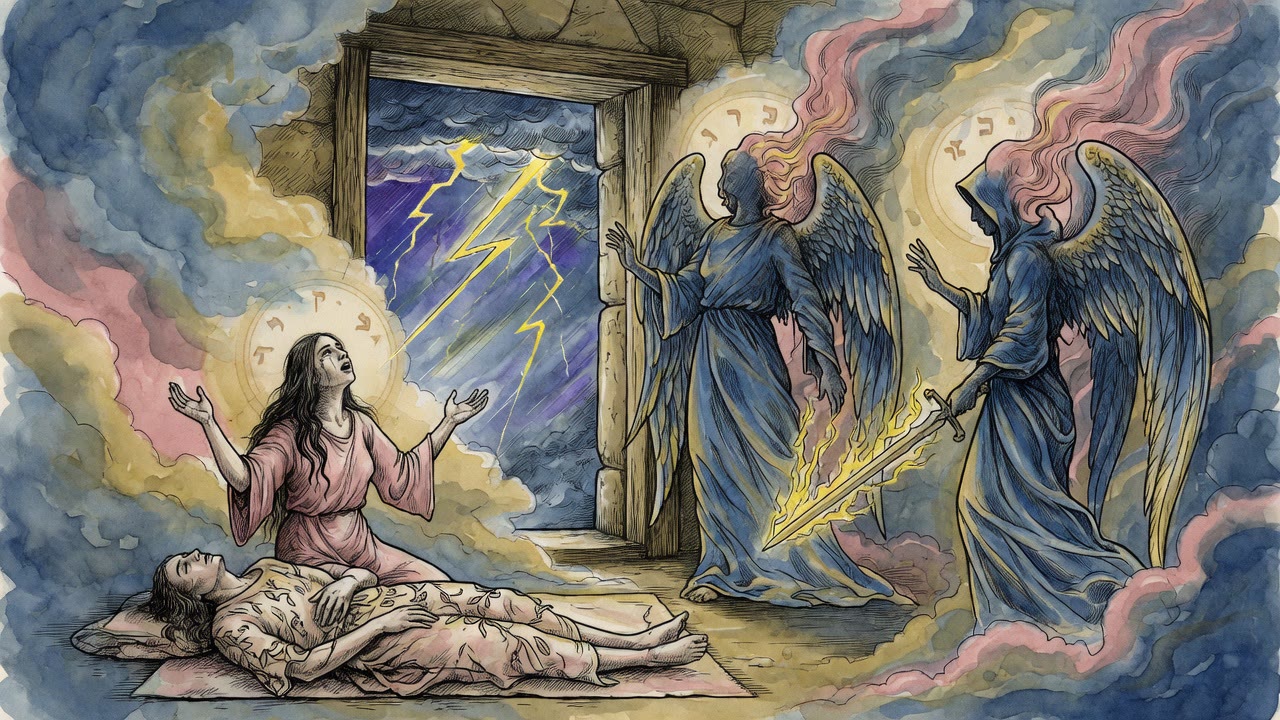
She gathered her children and her children's children around her and told them what she wanted. Her voice shook. She lifted her face the way she had learned to lift it long ago, when there was still someone above to answer her, and she prayed aloud for the only thing left to ask.

"Lord of all powers," she said, "do not separate me from the body of Adam. Let me be buried where he is buried." She had wronged much in her life and she said so plainly, naming herself unworthy, and still she begged. To be near him in the earth was the whole of her wanting. The family stood silent. They had no answer, because they did not know the place. The grave was a secret kept by sleep.

Only Seth Had Watched the Angel Work

One son stepped forward. Seth had been awake on the night his father was taken into the ground. Everyone else had slept, heavy and unknowing, while an angel had come and done the work in the dark and the soil had closed over Adam without a single human hand to guide it. Seth alone had watched from the shadows, eyes open, learning nothing he could repeat, because watching a thing done is not the same as knowing how to do it.

So Seth carried a terrible knowledge and a terrible ignorance at the same time. He knew where his father lay. He did not know how to put his mother there. He had no law for it, no order of acts, no count of days. He had a dying mother, a fresh body soon to be still, and a request he could not honor with his bare hands and his good intentions alone.

An Archangel Comes Down With Instructions

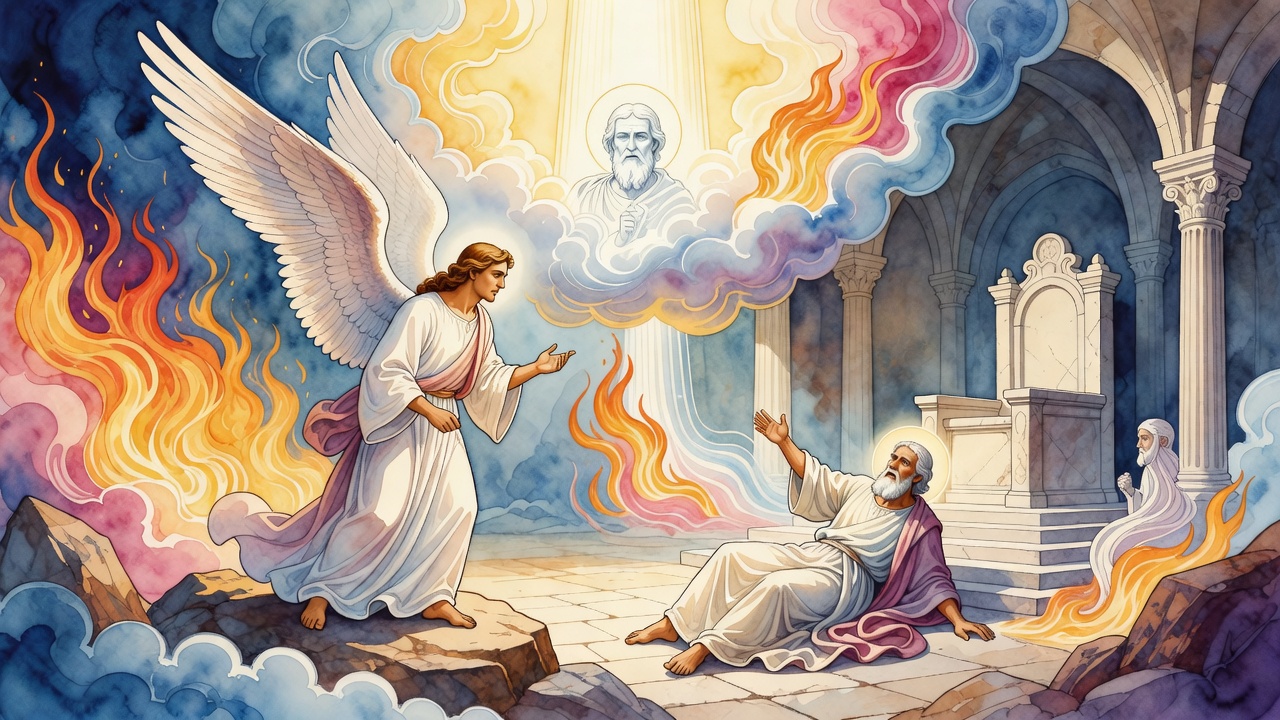
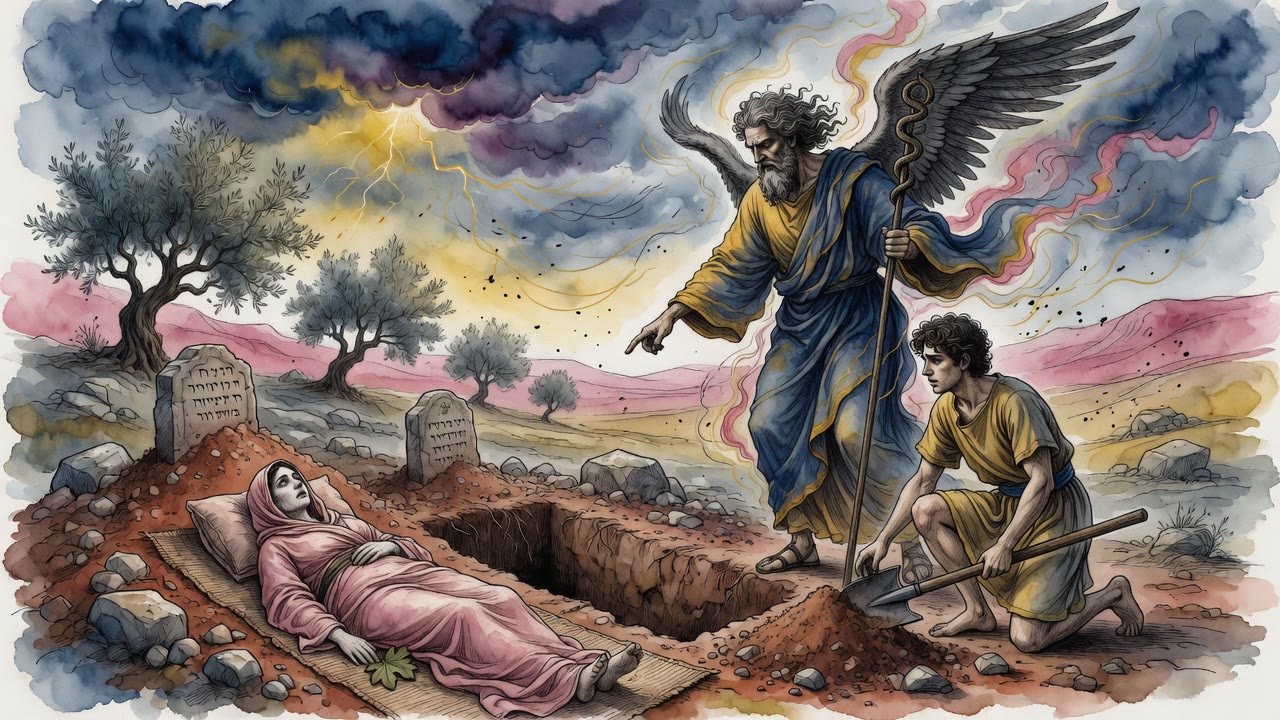
Then the air changed. Michael descended, and he did not come trailing comfort, did not arrive to soften the loss or talk Seth out of his grief. He came with instructions. He came to teach. And he did not come alone. Three other angels came down behind him, an honor guard for the first woman, moving with the quiet precision of those who have done this before and will do it again.

They took Eve's body when the time came. Michael showed Seth each thing in order, the handling of the dead, the laying of the body into the earth, the care that turns a corpse in the dirt into a person committed to rest. This was not throwing soil over flesh. It was a making, an act shaped from beginning to end, and Seth watched it the way a man watches the only teacher he will ever have for the one task he cannot escape.

Eve Is Set Down Among the First Family

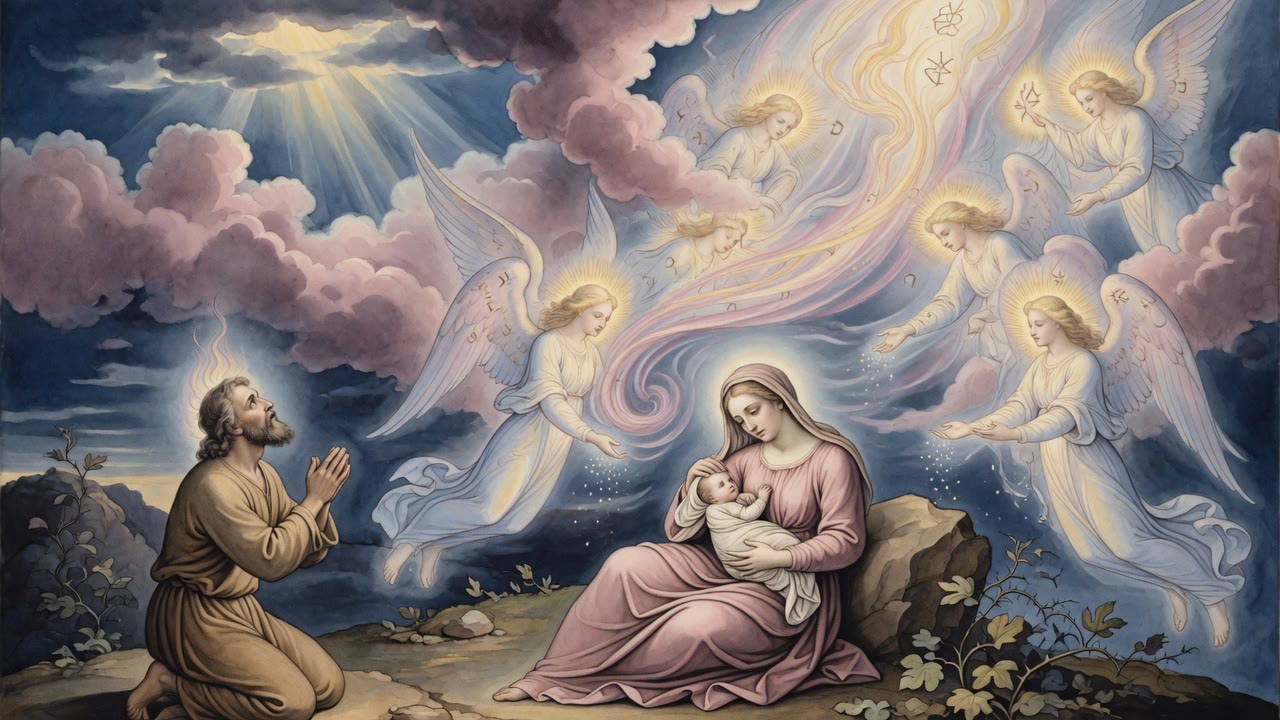
They carried her to the place Seth had guarded in his memory, and they laid her beside Adam. And beside Abel, the son struck down in the field by his own brother, the first of them all to die. Three of the first family now lay together in one ground: the first man, the first woman, the first child to be killed. The prayer Eve had spoken with her failing breath was answered exactly. She was not separated from him. The earth held them side by side, and the angels had made it so.

Seth stood over the closed grave with what he had not had a day before. He had a method now. He had seen each step and understood the shape of it, the sequence that lets the living finish the dead with dignity instead of standing helpless over a body, paralyzed by love and ignorance both.

A Command Meant for Everyone Who Would Ever Die

Before Michael went back up, he turned to Seth and gave him a charge that reached far past that single grave. "Thus shalt thou bury all men that die until the resurrection day."

Not only Eve. Not only this family in this first ground. The instruction was a pattern handed down to be repeated by every human being who would ever stand over a corpse and not know what to do with their hands. The angel had taken the rawest fact of mortal life, that bodies stop and must be put away, and he had given it order, ritual, and an end point. The dead would be buried so, every one of them, all the way to the day the graves give back what they hold.

Seth kept the charge. The first burial had a teacher and the teacher had left a law, and the family that began in a garden now carried, alongside their grief, the knowledge of how to lay one another down.


← All myths
From the tradition

Sources

2 sources

The texts this telling draws on, in full. Open a card to read inline, or expand it for a wider, quieter read.

Legends of the Jews 2:124Legends of the Jews

The stories surrounding the death and burial of Eve, the first woman, are rich with symbolism and provide a glimpse into early Jewish understandings of death, mourning, and resurrection. It’s a topic that touches on so many fundamental human questions!

In Legends of the Jews, a monumental work by Rabbi Louis Ginzberg that compiles centuries of Jewish tradition, the archangel Michael himself took on the role of instructor (Ginzberg, 1909, vol. 1, p. 119). It wasn't just a matter of throwing dirt on a body; it was a sacred act, a ritual imbued with meaning.

It wasn't just Michael. The legend continues that three angels descended from the heavens to assist, a celestial honor guard, if you will. Together, they carefully placed Eve's body into the grave alongside Adam and Abel.

Then, Michael imparted crucial instructions to Seth: "Thus shalt thou bury all men that die until the resurrection day." This wasn’t just about Eve; it was about establishing a protocol for all future generations. A template for how humanity would deal with death until the time of resurrection. A heavy responsibility, wouldn't you say?

But the story doesn't end there. Michael also commanded, "Longer than six days ye shall not mourn. The repose of the seventh day is the token of the resurrection in the latter day, for on the seventh day the Lord rested from all the work which He had created and made."

Here we see a direct link established between mourning, the Sabbath (Shabbat, the day of rest), and the concept of resurrection. The six days of mourning are finite, mirroring the six days of creation. The seventh day, the Sabbath, is a day of rest and a foreshadowing of the ultimate rest and renewal promised in the resurrection. This connection between the weekly Sabbath and the future resurrection is a profound concept. It suggests that even in death, there is hope, a promise of a future reunion and renewal.

The story highlights the Jewish emphasis on finding solace and hope even in the face of loss. The directive to limit mourning and to embrace the Sabbath as a symbol of resurrection speaks to a deep-seated belief in the cyclical nature of life and the promise of a future beyond death. Perhaps it’s a reminder that even in our grief, we are called to remember the divine rest and the promise of future restoration. What do you think?

Full source
Legends of the Jews, II. Adam, The Death Of EveLegends of the Jews

Her story, according to some traditions, is filled with sorrow, repentance, and a final plea for reunion.

Legends of the Jews, that incredible compilation by Rabbi Louis Ginzberg, gives us a glimpse into Eve's final days. Ginzberg draws from a multitude of sources, weaving together a tradition of Jewish lore. And in this tapestry, we see Eve, consumed by grief after Adam's death.

Her, spending the years after Adam’s passing in constant mourning. Her greatest anguish? Not knowing the exact location of Adam's burial place. Only Seth, their son, had witnessed the angel's interment of Adam's body while everyone else slept. It’s a poignant image – this first family, touched by both divine grace and profound loss.

As her own death approached, Eve makes a powerful request. She begs to be buried alongside Adam. Her prayer, as recounted in Legends of the Jews, is heart-wrenching: "Lord of all powers! Remove not Thy maid-servant from the body of Adam… Permit me, who am an unworthy and sinning woman, to enter into his habitation..separate us not now." The echoes of their shared paradise, their shared transgression, resonate in her plea. Can you feel the weight of that shared history?

And so, she passes. The archangel Michael, that prominent figure in Jewish angelology, steps in. He instructs Seth on the proper burial rituals. Three angels descend, and Eve is laid to rest beside Adam and Abel. Michael then gives Seth a commandment: "Thus shalt thou bury all men that die until the resurrection day." He also sets the mourning period: no longer than six days, with the seventh day, the Shabbat, a day of rest and a symbol of the future resurrection.

But here's a fascinating twist. Even though death entered the world through Adam's actions, he isn't held solely responsible for everyone's demise. Why? Because, according to this tradition, Adam pleaded with God. He didn’t want the righteous to blame him for their deaths. God, in his mercy, agrees to absolve him of that specific blame.

So, what happens when someone is about to die? God appears to them, instructing them to write down all their deeds. "Thou art dying by reason of thy evil deeds," God says, according to the legend. This record is then sealed and presented on Judgment Day, revealing each person's actions.

And the story continues after death. As soon as life leaves a person, they are brought before Adam. They accuse him of causing their death. But Adam, remember, has a defense. He points out that he only committed one transgression, while each individual is responsible for their own actions, often exceeding his single mistake.

It’s a complex and nuanced view of sin, responsibility, and divine justice. It raises questions, doesn't it? About free will, about the consequences of our actions, and about the enduring power of repentance. The story of Eve's death isn’t just an ending; it's a reflection on the human condition itself.

Full source