The Three Friends Who Walk a Dying Man to Judgment
A dying man summoned before the King runs to his three lifelong friends, but only his good deeds pass the gate and walk in at his side.
Table of Contents
 Click for full size
The Summons No Man Refuses
The messenger came at an hour no one chooses. A man who had built a good life, a house full of sons, storerooms heavy with silver, heard that he was called to stand before the King and give an accounting of himself. His knees went loose. He knew the road ran one direction only, and he knew he would not walk it twice.
So he did what any frightened man does. He ran to his friends.
The Friends Who Turned Back at the Gate
He had three of them, and he had spent his whole life with all three.
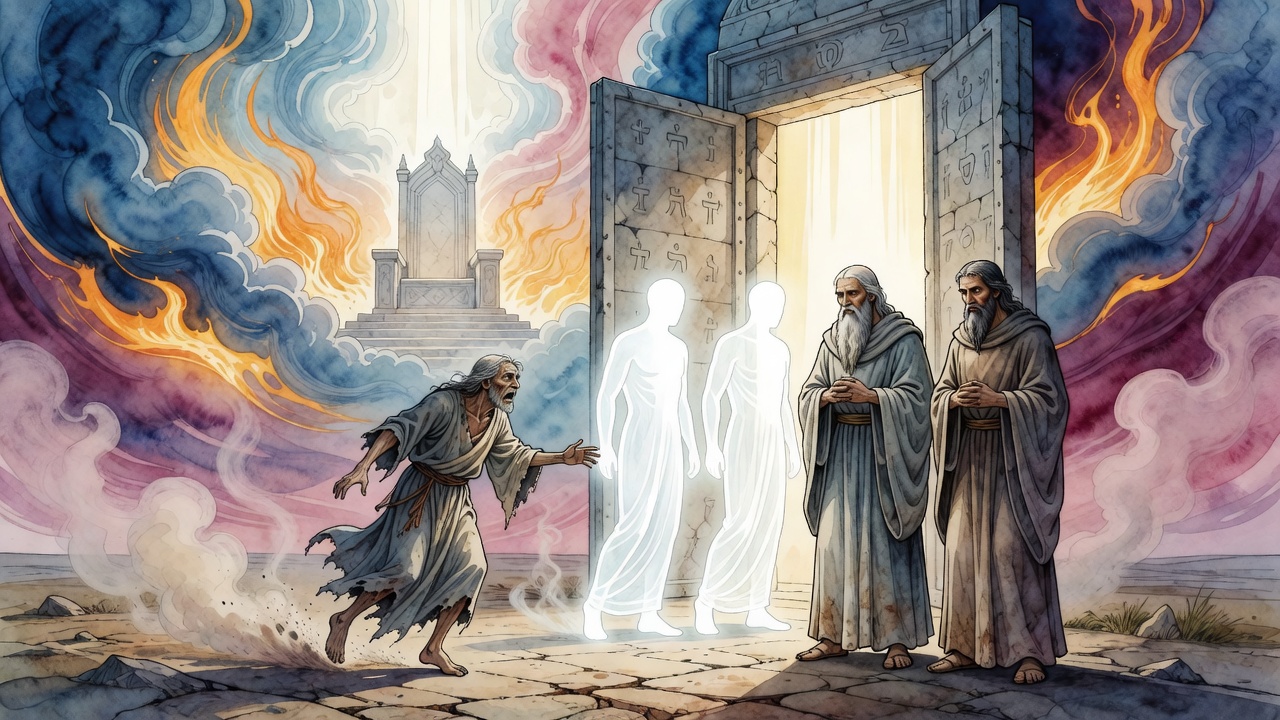
The first was his family, the sons and the household who ate at his table. He seized them and begged, "Come and save me from the judgment of this evil death." They walked with him a little way, weeping. Then they stopped. "Have you not heard," they said, "that no one prevails over the day of death? None of us can redeem a brother. The ransom for a soul is too costly, and we do not have the price." They kissed him, they turned back at the mouth of the grave, and they went home to divide what he left behind.
The second friend was his wealth, the silver and the fields and the standing that money buys. He clutched at it. "Save me from the judgment of this evil death." His wealth did not even pretend to follow. "Riches do not profit in the day of wrath," it said, cold as a shut vault. Then it stayed exactly where it was, in the world he was leaving, and did not so much as watch him go.
The Deeds That Walked in First
One friend was left, and it was the friend he had thought about least. His good deeds. The bread he had handed to a hungry man, the orphan he had defended, the mourner he had sat beside in the dark. He turned to them with the last of his voice. "I beg you, come and deliver me from the judgment of this evil death."
His good deeds answered, "Go. We will go before you." They did not lag behind him and they did not leave him at the threshold. They went ahead of him into the dark like a lamp carried into a strange house, so that his righteousness walked in front and the glory of the Lord closed the road behind him. Money could not buy that. Sons could not lend it. A man packs it himself, one act at a time, and does not learn until this hour whether the bag is full or empty.
The One Voice That Says I Am in Both Worlds
Then came the King himself. Passing through, the man learned what the whole earth learns in that country. Only one voice there can say "I Am" and mean it in this world and in the world to come. The Holy One, blessed be He, alone stands on both banks of death, unbroken, the same before a man is born and after his body is dust. "See now that I, I am He," God had declared long before, "and there is no god beside me. I kill, and I make alive."
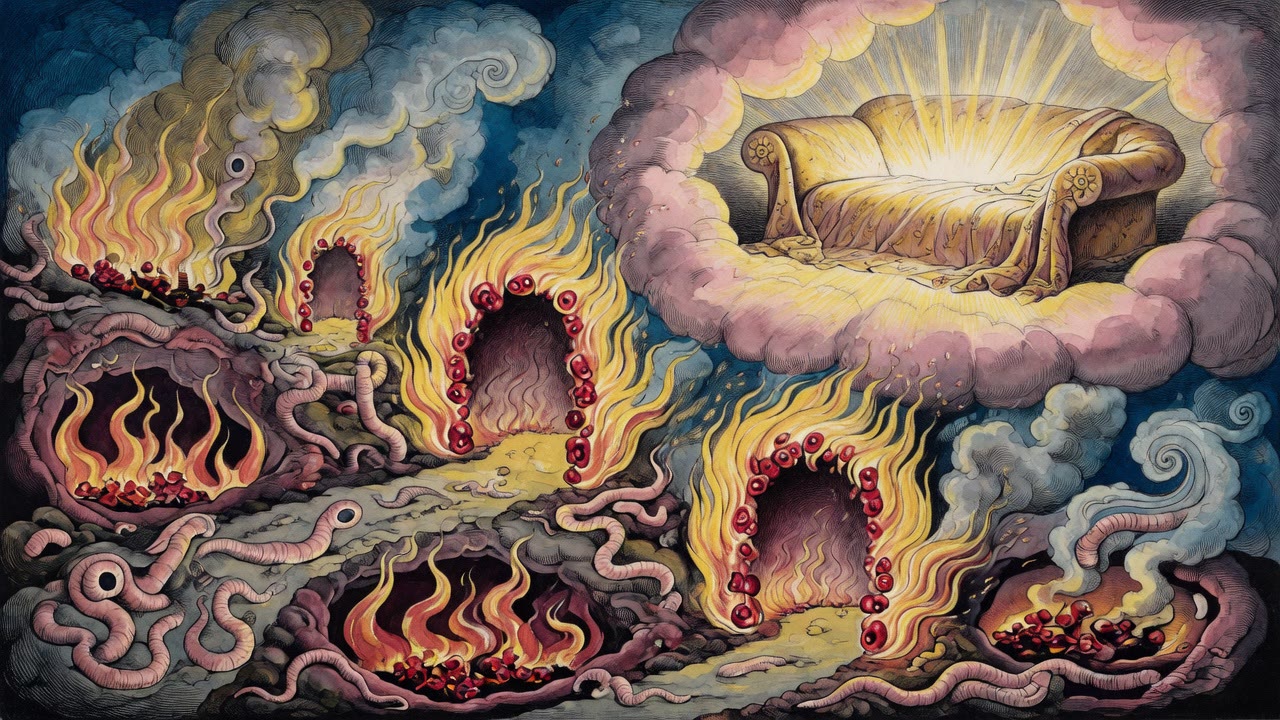
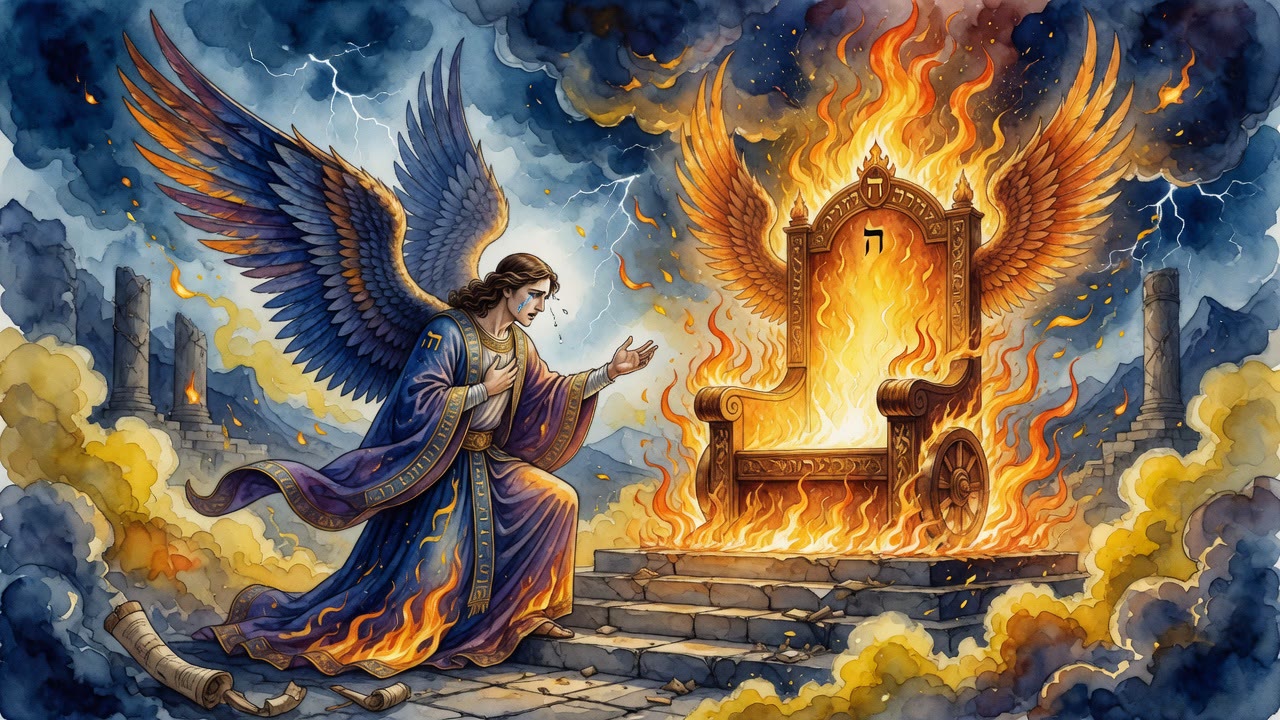
There is no appeal past that voice. No angel flies down to buy off the sentence. No seraph reaches into the fire of Gehinnom (גיהנום), the place of scouring after death, to pull out one who swore that God is not One. "There is none that can deliver out of my hand." The nations who insisted there was a second power, another god able to match Him, are handed a second death, the death from which no one rises. But the man who held, even shaking, to the One who redeemed Israel out of Egypt and will redeem them again when the last kingdom falls, that man is marked for a life that does not end.
The Spoonful That Rose Like Yeast
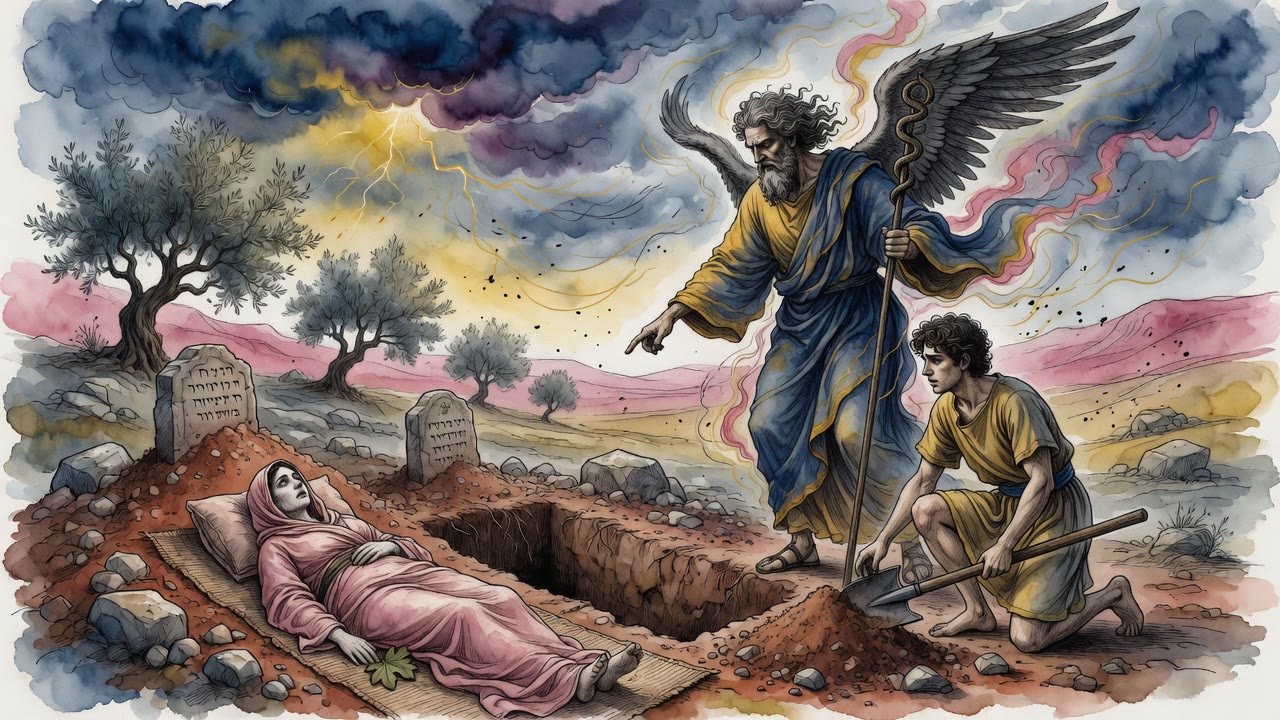
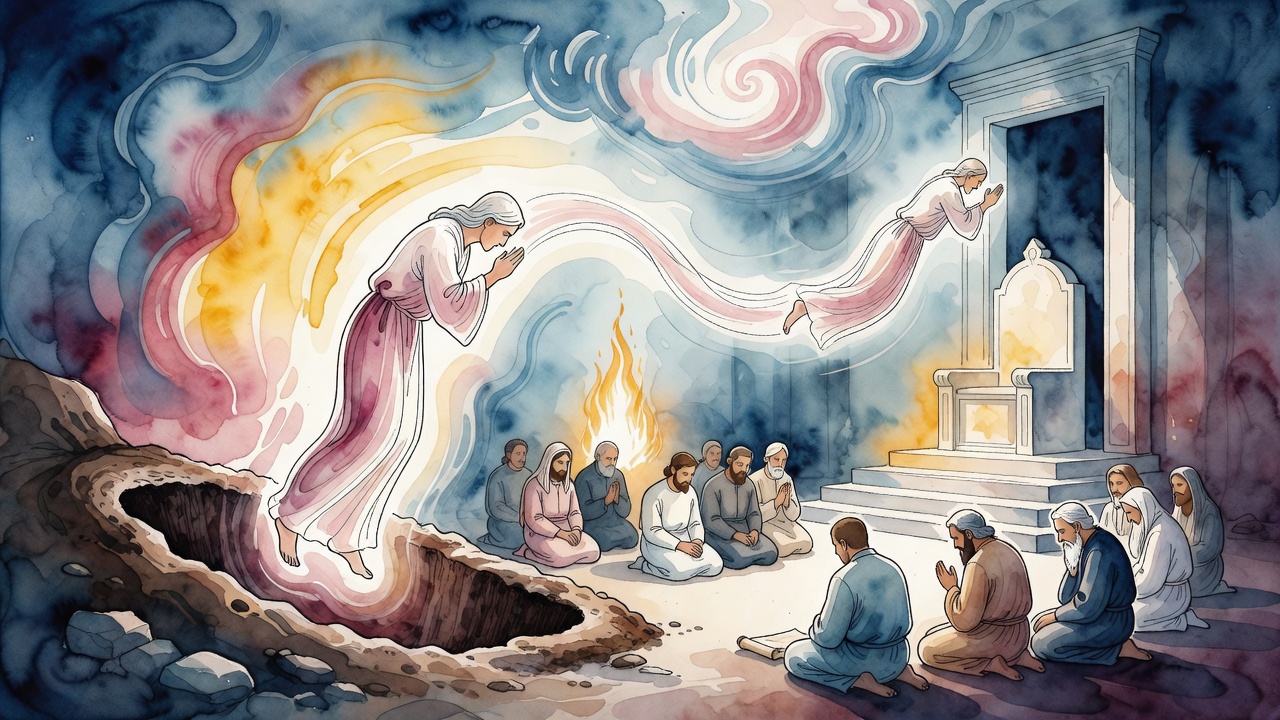
Rabbi Ishmael used to describe what is left of a body once the grave has finished with it. Not a skeleton. Not a fistful of bones. A single spoonful of earthy matter, the last stubborn residue of a person, folded into the dirt and forgotten.
That spoonful is not refuse. It is yeast. When the Holy One calls the earth to give back what it swallowed, that small remnant works through the dust the way a pinch of leaven works through a whole trough of dough. It swells. It rises. It builds the body up again out of almost nothing, and it does this without a single drop of rain or water, on the strength of the command alone.
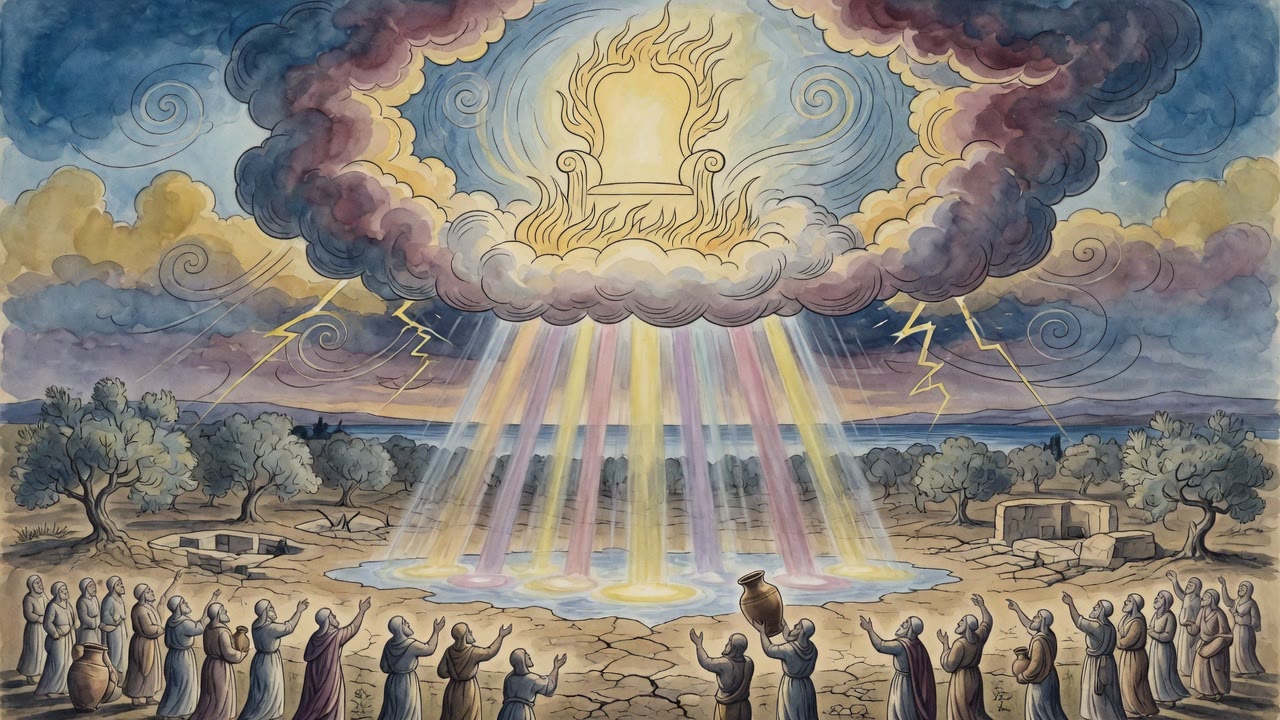
Then the ground answers. The earth shudders, the mountains shake loose, the graves crack open, and the stones that sealed them are flung aside. Up out of the broken dirt come the ones who kept faith with the One, and they do not rise as corpses. They rise shining, gathered and lifted like the jewels of a crown held high over the land, each one a stone the King sets back into His diadem with His own hand.
The sons stayed home. The silver stayed in the vault. Only the deeds walked the whole way, from the bedside, through the gate, past the fire, down into the spoonful of dust and up again into the light.
← All myths