Parshat Vayigash6 min read

The Shepherd Kings Who Took Egypt Without a Battle

An Egyptian priest wrote that shepherd kings seized Egypt without a battle and later built Jerusalem, and Josephus read him as a witness.

Curated by Arthur · Told by Maggid ·
Table of Contents
  1. Men of Obscure Race Came Out of the East
  2. The Fortress at Avaris and the Name Egypt Gave Them
  3. Two Hundred Forty Thousand Walked Toward Syria
  4. The Second Scroll Called Them Diseased
  5. Josephus Puts a Dead Priest on the Stand
  6. The Charge That Moses Taught Israel to Hate Strangers
The Shepherd Kings Who Took Egypt Without a Battle Click for full size

Men of Obscure Race Came Out of the East

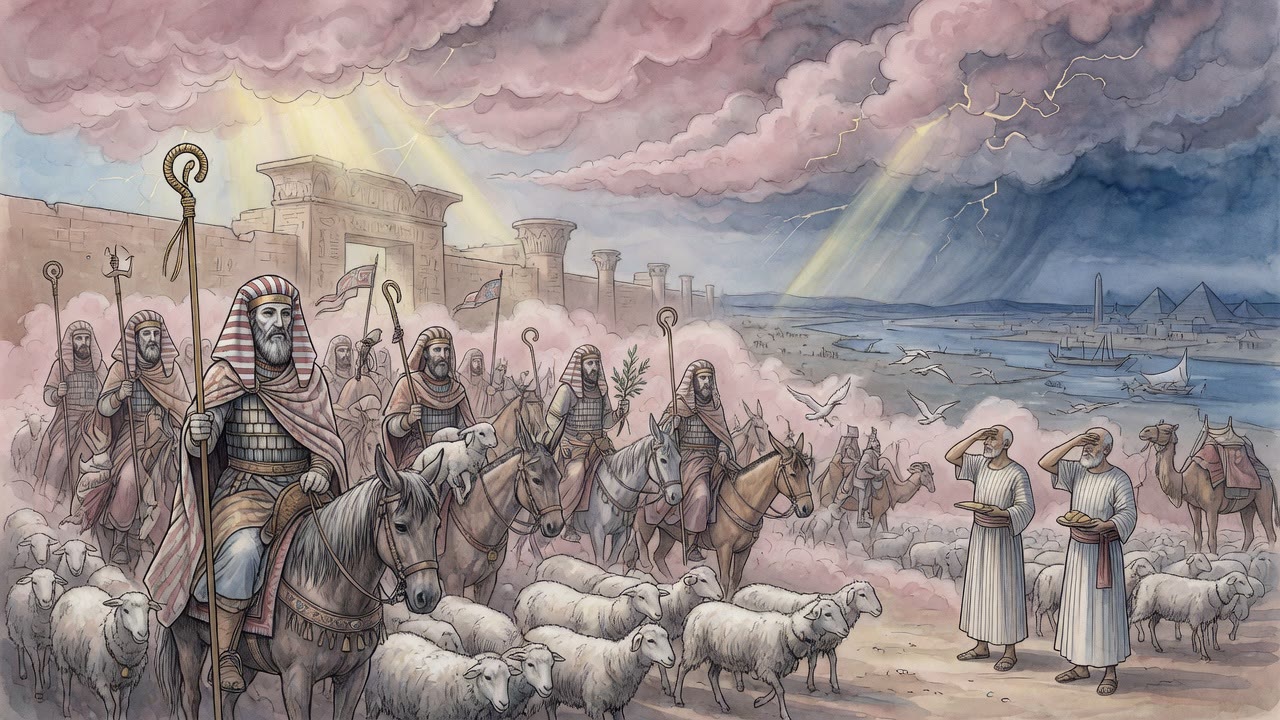
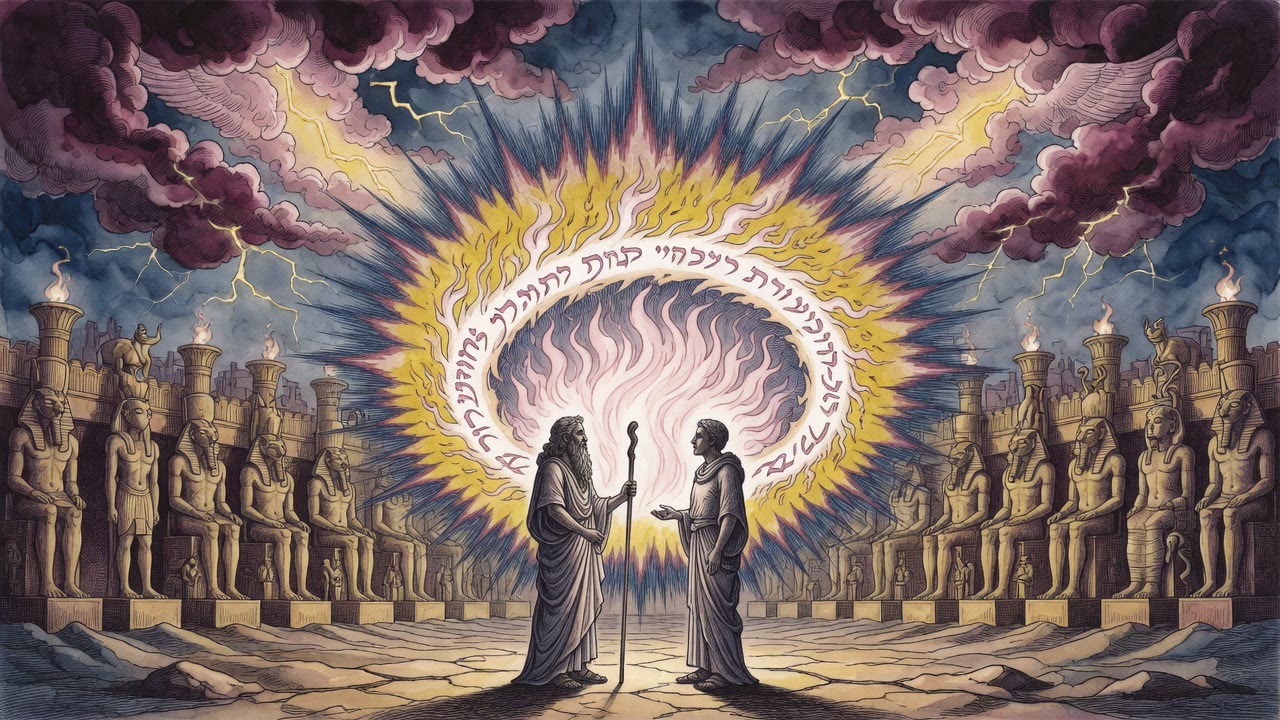
Egypt had a king named Timaus, and in his reign the eastern roads filled with men no Egyptian scribe could name. No heralds rode ahead of them. No war had been declared. The frontier posts saw dust before they saw riders, and by the time the report reached the palace there was no frontier left to report on.

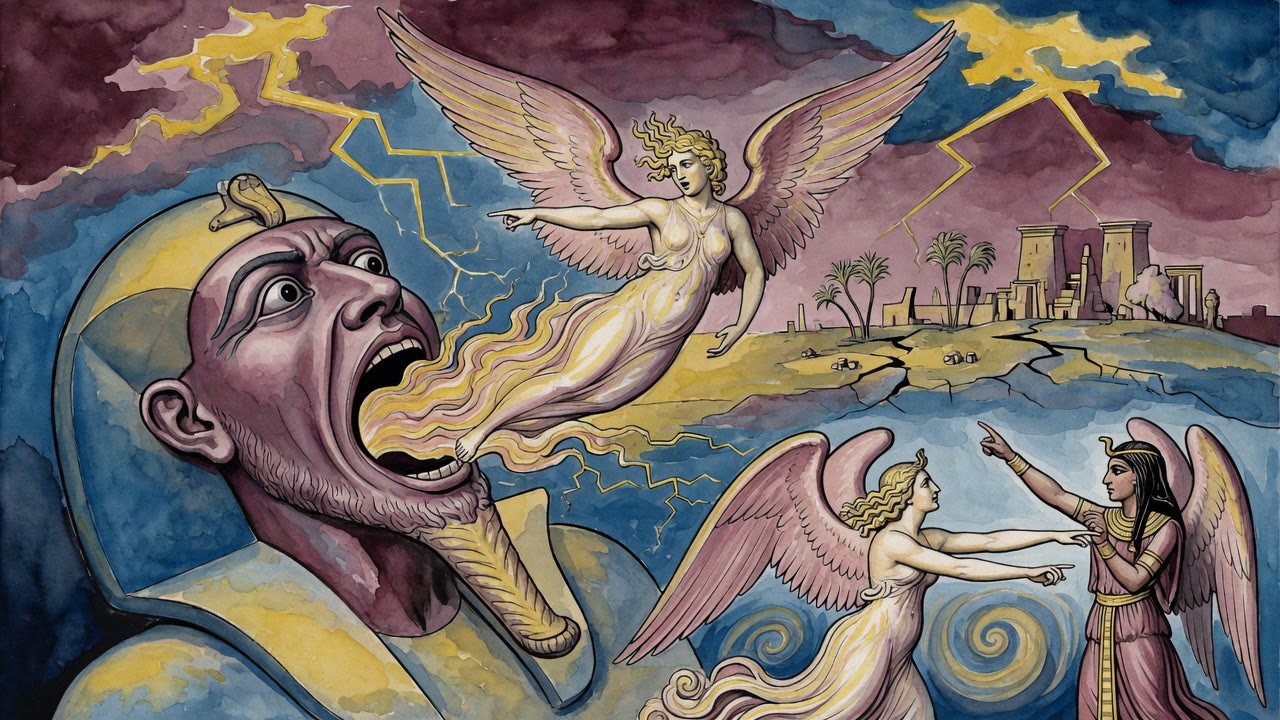
They took the country without a battle. That was the detail the Egyptian priest who wrote it all down, a man named Manetho, could never make honorable, and he did not try. Men of obscure race, he called them. They burned the cities, pulled down the temples of the gods, killed some men and dragged the wives and children of others off into slavery. Then they set one of their own on a throne at Memphis and called him Salatis, and Egypt began paying tribute out of the granaries that had fed her own priests.

The Fortress at Avaris and the Name Egypt Gave Them

Salatis did not trust the east that had carried him in. He found a city called Avaris, raised its walls, and packed it with armed men so nothing could come down that road behind him. From inside those walls his line held Egypt for five hundred and eleven years by Manetho's own count, longer than any nation cares to remember being ruled.

Egypt gave the newcomers a name. In the sacred dialect hyc meant king, and in ordinary speech sos meant shepherd, so the scribes wrote Hyksos, shepherd kings. Manetho offered a second reading and said he preferred it. Aspirate the first syllable and hyc stops meaning king and starts meaning captive. Captive shepherds. Their own sacred books, he said, called them captives too.

Two Hundred Forty Thousand Walked Toward Syria

The kings of Thebes rose against them and would not stop rising. They drove the shepherd kings back across the country taken so easily, penned them behind the Avaris walls, and sat down to a siege.

What came out of that gate was two hundred and forty thousand people with their households, and they went into the wilderness rather than take the terms. They feared Assyria, so they did not turn north. They crossed into Syria, and in the country later called Judea they built a city, walled it, and named it Jerusalem. Manetho even dated the founding. Thirty-seven years, he reckoned, before Abraham ever left Haran.

The Second Scroll Called Them Diseased

Nearly four hundred years after Manetho put down his pen, a Jewish historian in Rome unrolled the same books and found a second Egypt hiding inside them. Josephus read the passage twice.

In this account the founders of Jerusalem were not conquerors at all. They were sick. Manetho described a crowd of diseased and defiled people driven out of Egypt for what was on their skin, gathered under a renegade priest, walking to Judea to build the same city. And he wrote the ending like a dispatch from a winning general. Amenophis came back from Ethiopia with a great army, his son came with another, and both joined battle with the shepherds and the polluted people, beat them, killed many, and pursued the rest to the bounds of Syria.

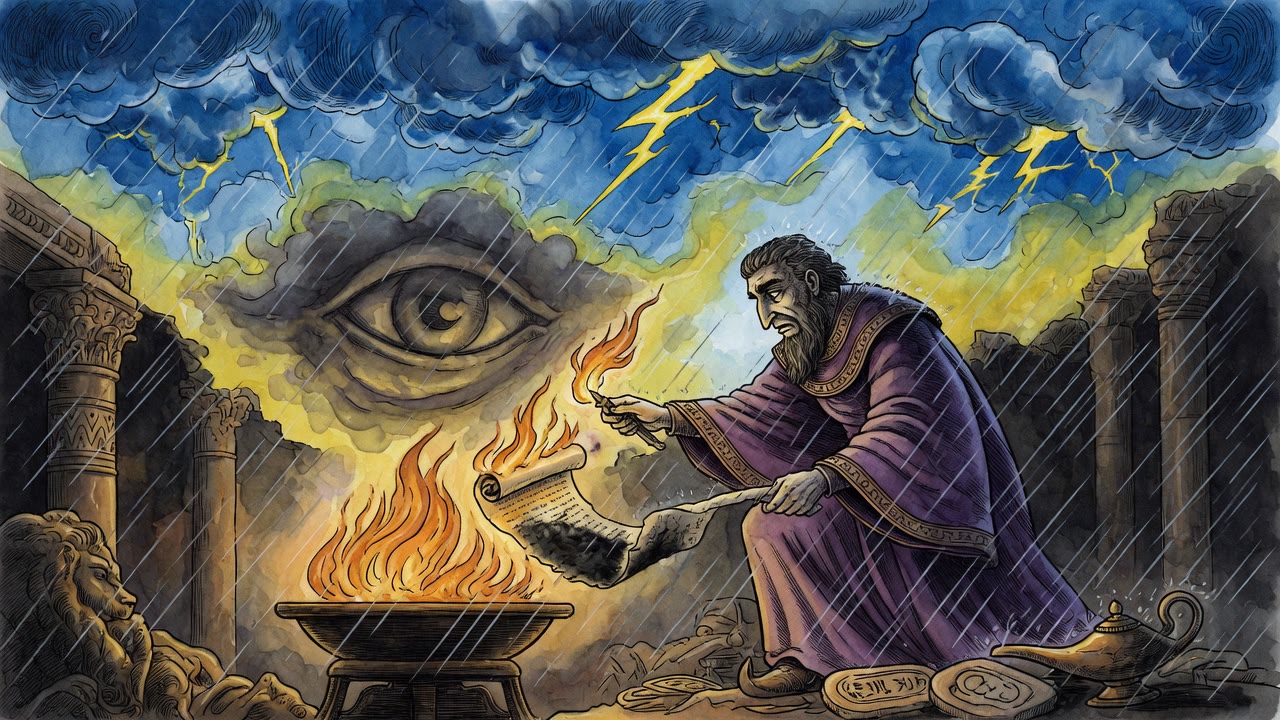
Josephus had a phrase for the whole performance. He called it "arrant lies."

Josephus Puts a Dead Priest on the Stand

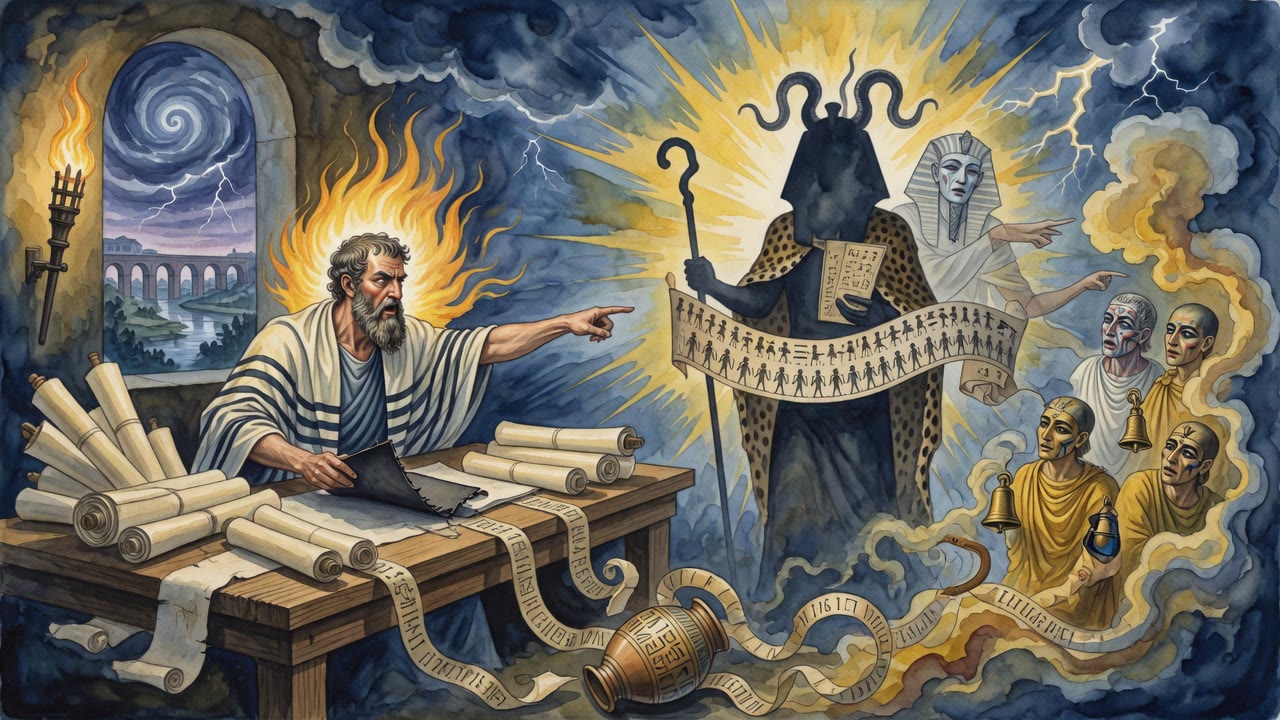
The trap was Manetho's own arithmetic, and Josephus closed it without hurrying. If these people were Egyptians thrown out for their sores, then they were Egyptians. The older scroll said the opposite. Strangers of obscure birth came from elsewhere, seized Egypt at spear-point, and left it again generations later. A people cannot be native lepers and foreign kings in the same land. Manetho had written both, about the same men.

Josephus pressed harder. He would prove out of Manetho's own pages that Moses had lived and led long before this expulsion of the sick was ever supposed to have happened. The lawgiver walked in no column of outcasts. The Egyptian had welded two unrelated memories into one insult.

One more thing caught his eye. Manetho had leaned his whole case on the word captive and claimed the Hebrews' own books used it of themselves. Josephus went back to Genesis and found the scene the Egyptian meant. Joseph's brothers stood in front of Pharaoh and said, "Thy servants are shepherds" (Genesis 47:3). Shepherds, yes. Nobody in that room said captive. Manetho had put the word into a Hebrew mouth and then submitted it as evidence.

The Charge That Moses Taught Israel to Hate Strangers

The libraries held uglier things than Manetho. Lysimachus had written his own expulsion. Apollonius Molo went after the lawgiver himself, calling Moses a charlatan and his laws a training in wickedness, and the accusation that traveled furthest was that those laws had been designed to make a man hate anyone born outside them.

Apollonius could not hold his charges in one shape. On one page the Jews were atheists and haters of the human race. On another they were cowards. A few lines later they were reckless and mad. Then they were the feeblest of all barbarians, the one nation that had given the world nothing worth keeping.

So Josephus stopped defending and started reading the law out loud. Where Apollonius had found atheism he set down piety. Where the man had found hatred of strangers he set down love and shared life. Then he put a wager in front of anyone still writing against him. Bring your own nation's laws, lay them beside these, and read both to the end. He claimed more than that the Jews possessed such laws. He claimed they kept them better than anyone kept their own.

On the table the older scroll lay open at the line about Avaris, where two hundred and forty thousand people walked out of a besieged fortress with their households and turned toward Judea. Josephus left that sentence exactly as the Egyptian had written it. He had gone looking for a witness who could not be accused of loving the Jews, and the witness had put them in Egypt, in their hundreds of thousands, and marched them out.


← All myths
From the tradition

Sources

3 sources

The texts behind this telling. Some cards carry a translation of the source; others are our own retelling of it, and each card says which. Every card links out to the original.

Against Apion 14:1Against Apion

Retold in our words. Read the original at the link below.Against Apion, trans. William Whiston · Public Domain

Take the story of the Jewish people and their time in Egypt, for example. The familiar version gives us the Exodus story from the Torah, but what did the Egyptians themselves say about it?

That's where a fascinating, albeit controversial, figure named Manetho comes in. Manetho was an Egyptian priest and historian who lived in the 3rd century BCE. He wrote a history of Egypt in Greek, drawing, as he claimed, from sacred Egyptian records. And it's his account that the historian Josephus cites in his work, Against Apion, when tackling anti-Jewish claims.

Josephus quotes Manetho's version of events, and it’s… well, it’s quite different from the one we're used to. According to Manetho, Egypt was invaded by mysterious people from the East – "men of ignoble birth," as he puts it – during the reign of a king named Timaus. These invaders, known as the Hyksos, easily conquered the land, destroyed cities and temples, and enslaved the population. They even set up their own king, Salatis, in Memphis and fortified a city called Avaris.

The name "Hyksos" is interesting. Manetho explains that Hyc meant "king" in the sacred dialect, and Sos meant "shepherd" in the ordinary dialect, thus "Shepherd Kings." However, he also mentions an alternative interpretation: that Hyc, with aspiration, meant "shepherds" in Egyptian, implying "Captive Shepherds." Manetho himself finds this second interpretation more probable.

These Hyksos, Manetho says, ruled Egypt for 511 years! Eventually, the kings of Thebes led an uprising and drove them out. But here's where it gets really interesting. Manetho claims that these expelled Hyksos, a massive group of 240,000 people, journeyed through the wilderness to Syria, fearing the Assyrians. And what did they do there? They built a city called Jerusalem.

Yes, according to Manetho, the founders of Jerusalem were none other than these expelled Hyksos, around 37 years before Abraham supposedly left Haran. He even says that these "Shepherds" were also called "Captives" in their sacred books, which he sees as aligning with the fact that the ancient Israelites were shepherds. He alludes to the story of Joseph telling the King of Egypt that he was a captive, referencing what we know as the Book of Genesis (Genesis 46:32, 34; 47:3, 4). Although, as Josephus himself notes, Joseph never actually calls himself a "captive" before the king in our version of Genesis.

So, what are we to make of all this? It's important to remember that Manetho's account is just one version of events, and a version, frankly, that's often seen as hostile to the Jewish people. It's crucial to read it critically and compare it with other sources, including the Torah itself.

Many scholars believe that Manetho's account is a distorted and negative retelling of the Israelite Exodus. The Hyksos, in this view, were a foreign dynasty that ruled Lower Egypt for a time, and the Exodus story became conflated and twisted in Egyptian memory.

What's truly compelling here is how history can be molded and reinterpreted to serve different agendas. Manetho's version paints the ancestors of the Jewish people as invaders and destroyers, a stark contrast to the Torah's narrative of enslavement and liberation.

It's a complex tapestry woven from different perspectives, biases, and agendas. And it's up to us to unravel those threads and try to understand the full picture, or as full as we can possibly make it. What do you think? How does Manetho's account challenge or change your understanding of the Exodus story?

Full source
Against Apion 27:1Against Apion

Retold in our words. Read the original at the link below.Against Apion, trans. William Whiston · Public Domain

In his work Against Apion, Josephus takes aim at various anti-Jewish claims circulating in the ancient world. One of the biggest offenders? Manetho, an Egyptian priest and historian from the Ptolemaic era. Manetho spun quite a tale about the origins of the Jews, and it's… well, let's just say it wasn't flattering.

In Josephus, Manetho claimed that the Jews were actually a bunch of diseased and defiled people who had been expelled from Egypt. He says that after being driven out, these people, led by a figure Manetho doesn't name Moses, made their way to what would become Judea and founded Jerusalem.

Josephus quotes Manetho as saying that "Amenophis returned back from Ethiopia with a great army, as did his son Ahampses with another army also, and that both of them joined battle with the shepherds and the polluted people…". He says that the Egyptians beat them, slew many, and pursued them to the bounds of Syria. Sounds pretty definitive. A nice, clean victory. But Josephus isn’t buying it.

Josephus is pretty blunt. He calls Manetho's account "arrant lies." He argues that Manetho contradicts himself. Manetho admits that the Jewish people weren't originally Egyptian, but came from elsewhere and conquered Egypt before leaving again. So, if that's true, how could they simultaneously be a group of diseased Egyptians?

Josephus wants to make it clear that Moses, the great leader who led the Israelites out of Egypt, wasn't one of these "polluted people." He intends to prove, using Manetho's own writings, that Moses lived many generations before this alleged expulsion of the diseased.

Why does all this matter? Well, these kinds of historical narratives – even the clearly biased ones – have power. They shape perceptions, fuel prejudices, and can have lasting consequences. Josephus understood this. By challenging Manetho's version of events, he was fighting back against a narrative that sought to demonize his people. He was setting the record straight, or at least, attempting to. What truths are being obscured? What biases are at play? And what can we do to ensure a more accurate and just telling of history?

Full source
Against Apion 14:1Against Apion

Retold in our words. Read the original at the link below.Against Apion, trans. William Whiston · Public Domain

Against Apion turns to Ancient Slanders Against Moses and the Laws He Gave Israel.

You see, back in the day, not everyone was a fan of the Jews. Shocking. Josephus, a Jewish historian writing in the first century CE, was particularly riled up by the accusations of writers like Apollonius Molo and Lysimachus. These folks were spreading some seriously nasty rumors about Moses, the lawgiver, and the laws he gave the Jewish people. They claimed Moses was a charlatan and that Jewish law promoted wickedness, not virtue.

Josephus wasn't having it. He decided to set the record straight, to offer a defense – an apologia – of Jewish beliefs and practices. He wasn't interested in empty praise,. His goal, as he states plainly in Against Apion, was to present the truth about the Jewish way of life, rooted in the laws themselves. It’s a timeless quest, really – to be understood, to have your values recognized, especially when they're under attack.

Apollonius, in particular, seemed all over the place with his criticisms. Sometimes he called the Jews atheists and misanthropes (man-haters!), other times he accused them of being cowardly, and then in the next breath, he’d say they were reckless and mad! He even went so far as to suggest that the Jews were the weakest of all "barbarians" – a common derogatory term used by the Greeks and Romans for anyone not of their culture– and that’s why they hadn’t contributed anything meaningful to civilization.

Josephus's response? He vowed to demonstrate that Jewish law actually promoted the opposite of what Apollonius claimed. Instead of atheism, piety; instead of hatred, love and communion.

The need to defend one's values, the struggle against prejudice and misunderstanding. it's all part of the human experience. So, Josephus decided to offer a glimpse into the very heart of Jewish life: its laws. He wanted to show the world – and perhaps remind his own people – that these laws were designed to cultivate piety, foster community, promote love for humanity, ensure justice, encourage perseverance, and even inspire a certain fearlessness in the face of death. Big stuff!

Josephus knew he might have to compare Jewish laws to those of other nations to make his point. And he wasn’t afraid to do it. He throws down the gauntlet, essentially saying that if others are going to denigrate Jewish laws in comparison to their own, then they should be prepared to have their own laws scrutinized. He aimed to prove not only that the Jews had these laws, but that they adhered to them more faithfully than anyone else. It was a bold claim, but Josephus was ready to back it up.

Against Apion is more than just a defense. It's evidence of the enduring power of faith, the importance of standing up for what you believe in, and the timeless struggle to be understood in a world often quick to judge. What accusations are we facing today? And how will we answer them?

Full source