The Soul Made a Sound the World Could Not Hear
Three sounds cross the world from end to end though human ears cannot hold them. The loudest is the sound of a soul leaving the body.
Table of Contents
 Click for full size
Rabbi Pinchas Rebuked the People Who Laughed
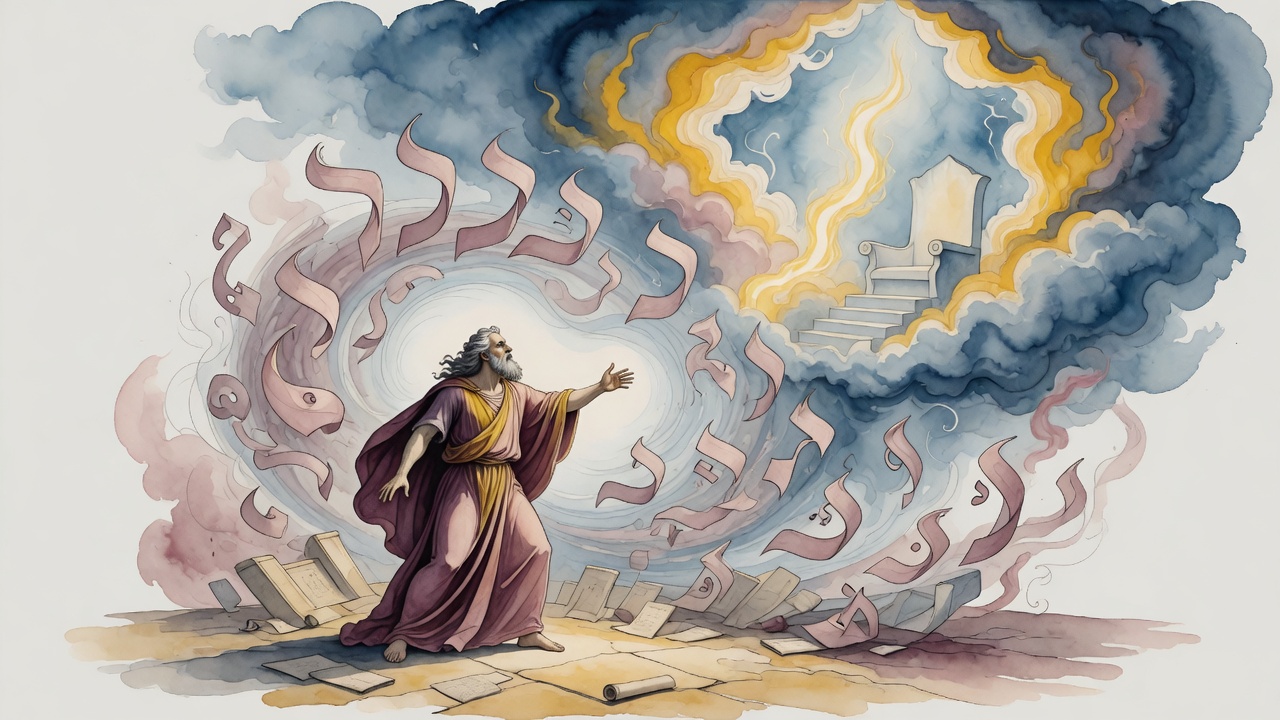
When Rabbi Shmuel bar Naḥman died in Tzippori, people nearby were laughing. Rabbi Pinchas turned to them and said: do you not understand what is happening right now? The sound of the soul leaving the body is crossing the world from one end to the other. You are laughing while the air itself is splitting.
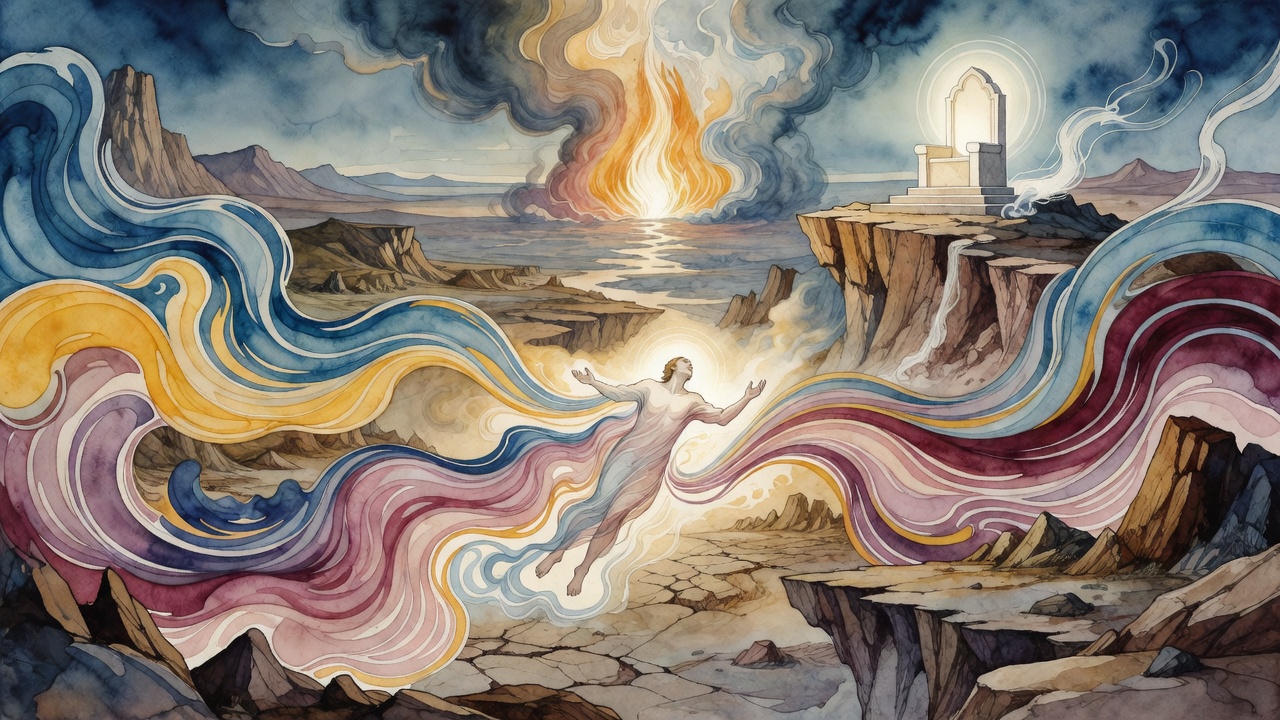
His image was precise. The soul leaving the body, Rabbi Levi had taught, makes a sound as loud as the sound of a saw biting through cedar. A human being has just left the world, and the departure is not quiet. The death that looks peaceful from the outside is the sound of massive things being separated that were not meant to separate easily.
Three Sounds the World Cannot Contain
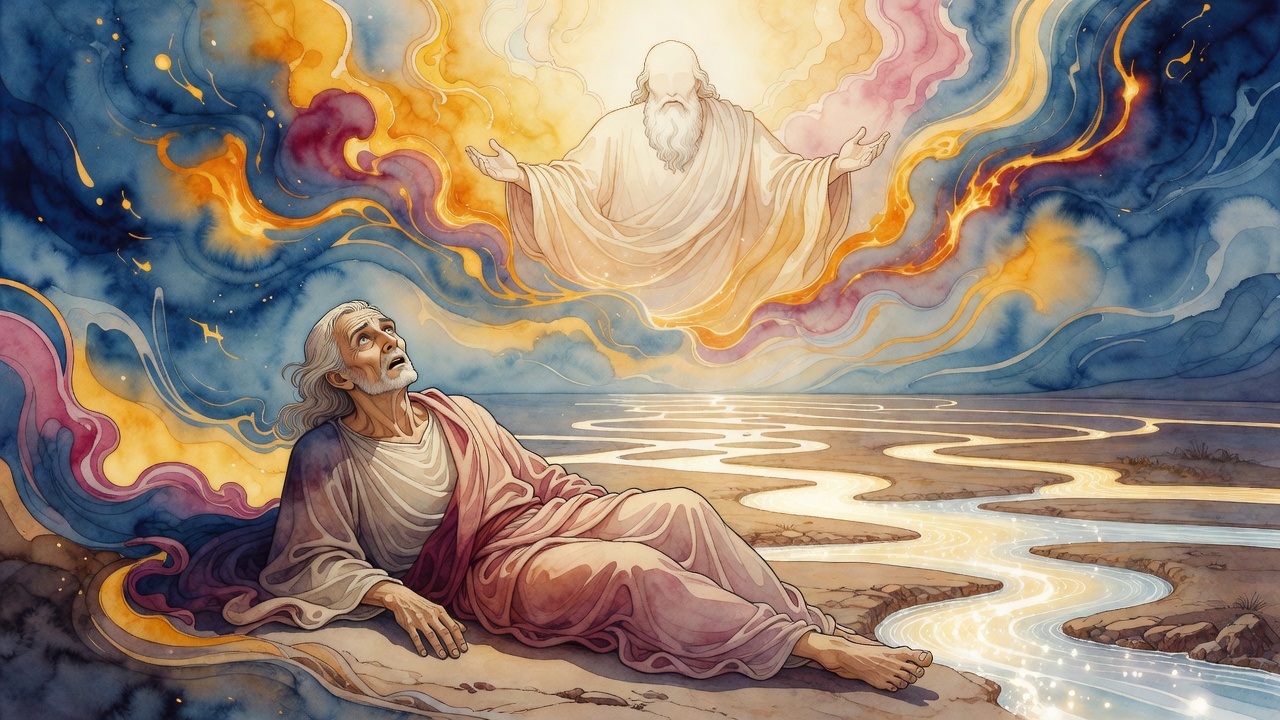
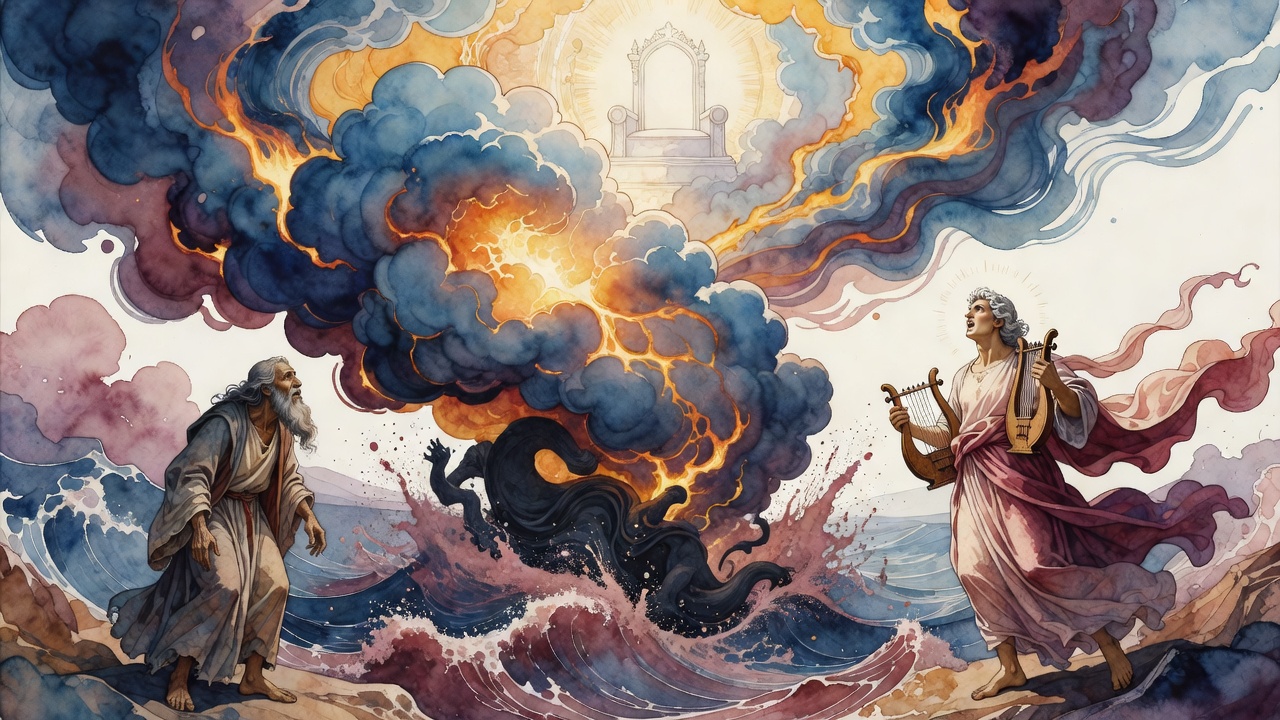
Three sounds travel from one end of the world to the other, even when no human ear can receive them. The first is the sound of the sun moving through its circuit in the sky, sawing through the heavens the way iron saws through wood. The second is the sound of the waters above calling to the waters below, and the waters below calling back. When the deep calls to the deep, the whole cosmic water system is in conversation with itself.
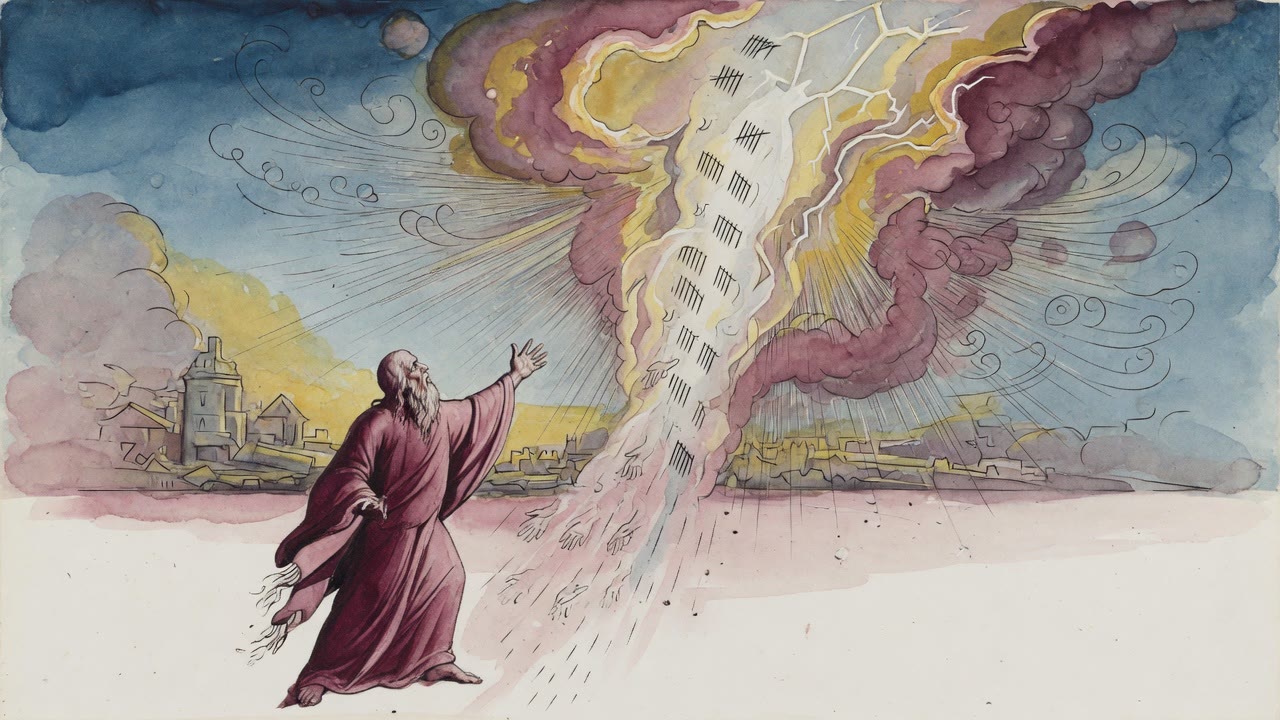
The third is the soul departing. The sun moves through heaven every day without announcement. Rain falls without anyone hearing the waters speak. But when a person dies, an even larger movement happens. A soul that was woven into a body and into the world tears free of both. The cedar-splitting sound is the measure of how tightly the two had been joined.
The World Was Made for a Man Not But Born
Genesis says the heavens and earth were created behibare'am, when they were created. The letters of that word rearrange into be'Avraham, for Abraham. The rabbis heard the world already tilting toward its own purpose from the moment of creation. Before Abraham was born, before his father Terah had left Ur, the world was already being made for the man who would answer when God called.
That is not a small claim. The sun moving through its daily arc, the waters speaking to each other, the souls of every generation departing with their world-crossing sound: all of it exists in a world prepared in advance for a particular kind of person. A person who would hear a call and go.
It Is Not Good to Be Alone
God looked at Adam and said: it is not good for the man to be alone. The midrash holds this beside the three world-crossing sounds. The soul that departs makes that vast noise because it was made for connection. A person joined to another person, joined to community, joined to Torah, is not easily separated. The sound of the separation is proportional to the depth of the joining.
The man who stood alone in the garden before Eve was made stood in an incomplete condition. The world was made for Abraham, who argued for strangers, who walked with others, who made covenants with neighbors and with God. The three sounds are all sounds of relation: the sun bound to its path, the waters bound to their cycle, the soul bound to the body it inhabited.
← All myths