The Soul Pawned Each Night and Redeemed at Dawn
Each night a man's soul is handed to God like a pledged cloak and faithfully returned at dawn, yet it still answers for every sin the body commits by mistake.
Table of Contents
At the edge of dusk a poor man pulled the cloak off his own shoulders and laid it in another man's hands. It was the only warm thing he owned. He had pawned it against a loan, and the lender held the cloak as a pledge, the debt still open between them. The law here was short and strange. Before the sun went down, every night, the lender had to give the cloak back, and every morning the debtor carried it in again. The covering crossed the same threshold twice a day, held and released, though the debt never moved.
 Click for full size
The Cloak Handed Over at Dusk
The Holy One watched this traffic of cloaks and heard in it a debt owed to Himself. "How much you owe Me," He said. A man sins in the morning, forgets by noon, sins again before dark, and still the collector does not come. Evening after evening the One entitled to seize the pledge declines to keep it.
What Ascends When a Man Lies Down
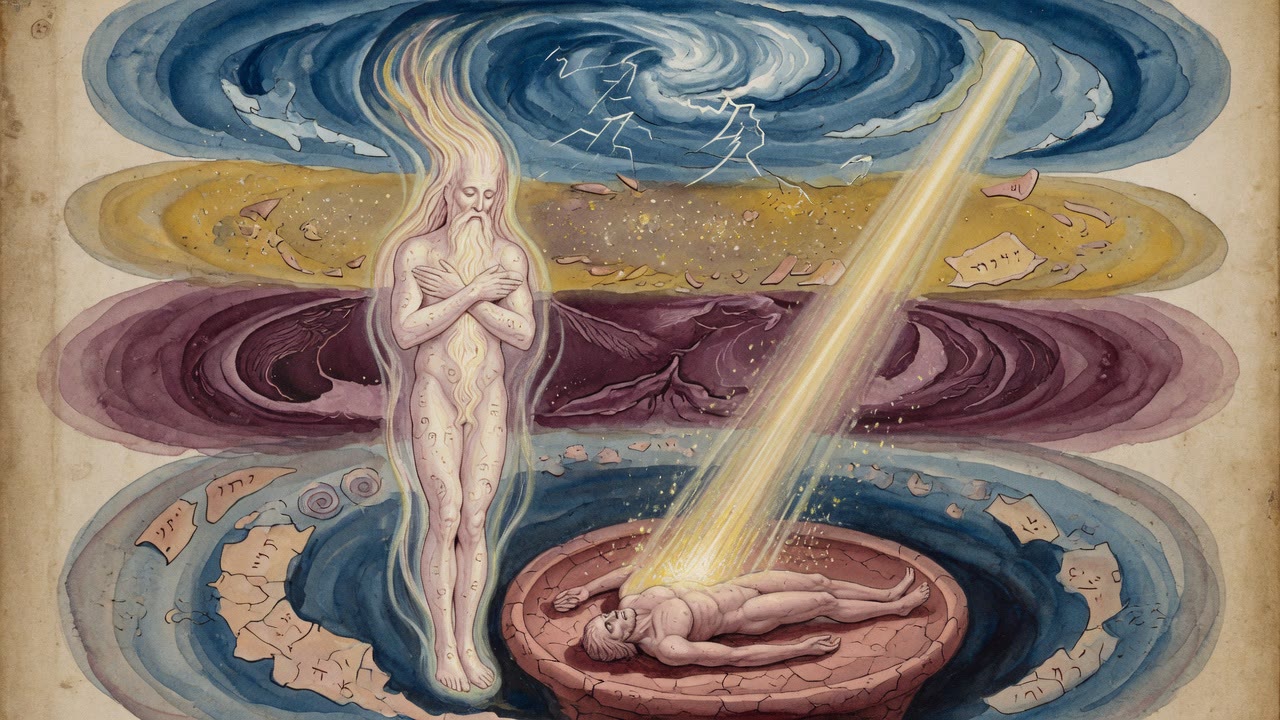
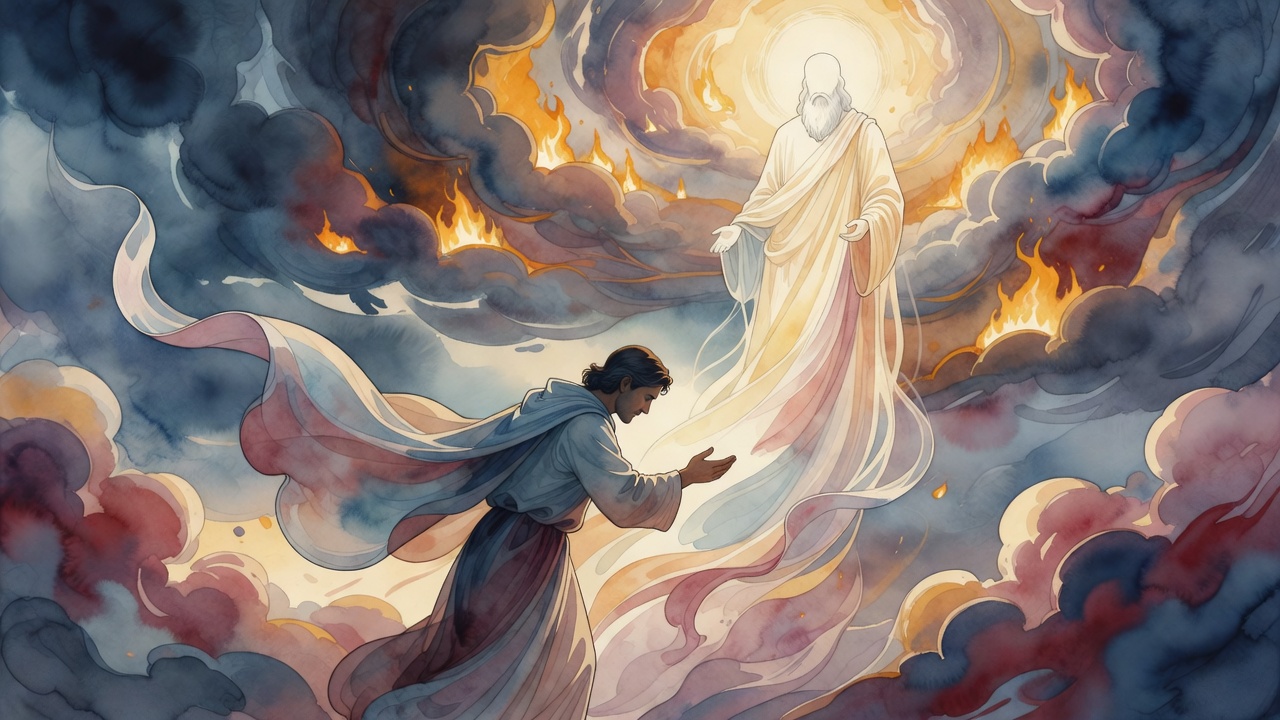
When a man lies down and his breath goes slow, something leaves him and climbs. His soul rises through the dark to the court on high and gives its accounting of the day. Every idle word, every appetite it indulged. The ledger is read back, and the soul is found liable. By the arithmetic of the court it should be kept, held against the debt like a cloak against a loan.
And every dawn it is sent back down, though it never earned release and the debt is not settled.
The Debtor Who Has Nothing to Lie On
There is a second voice in the law, and it belongs to the poor man himself. When his cloak is held past dark he does not suffer in silence. He lifts his complaint straight up past the lender's head. "I am a person and he is a person," he says. "He lies down on his bed. I have nothing to lie on." The cold is his argument. The bare ground is his argument.
"When he cries to Me, I will hear," the Holy One answered, "for I am gracious." In this world a man cries out and is heard, though the answer may be slow. The prophet Isaiah promised a day when the delay itself would end. "He will surely be gracious to you at the sound of your cry. When He hears it, He will answer you." Not after. When.
Two Men Who Wronged the King
But the same soul that is pledged and pardoned each night carries a harder charge into the court. Scripture stops in astonishment over four words. "When a soul sins." Is it the soul that sins? It was drawn from a place where there is no iniquity and no sin, given out of righteousness itself. In the place of justice, wickedness. The purest thing in a person is the thing named in the indictment, and the court can hardly say the sentence aloud.
The strangeness has the shape of a king's case. Two men wronged the king in exactly the same way. One was a man of the town, a stranger to the palace. The other was a courtier who ate at the king's table every day. The king weighed the two identical offenses, turned his face from the townsman, and handed the courtier a verdict.
The palace erupted. "The same sin," the courtiers protested. "You turn from the one and sentence the other." The king did not soften it. "The townsman does not know the customs of the crown," he said. "He offended without knowing what he trampled. But this one stands beside me every day. He knows exactly how a king is to be treated. The one who wrongs me knowing better, what judgment should go out against him?"
The Courtier Cannot Plead Ignorance
The body is the townsman. It was scooped from the ground, dust of the earth, and does not know the customs of heaven. The soul is the courtier. It was breathed in from above, out of the mouth of God, and knows precisely what the crown is owed. When the two of them sin, and they always sin together, the same act weighs differently on each.
They cannot be pried apart to be tried alone. Take the soul out and the body drops into dust. Take the body away and the soul has nothing to sin with. They are bound into one guilty creature, the knowing tenant and the ignorant house. So the astonishment stands even over an accident. "When a soul sins by mistake." A slip, a thing done without intent. The courtier cannot plead that he forgot the customs of the palace, and an error in what he should have studied is counted against him as though he meant it.
King David saw the trap and cried up out of the same court. "Errors, who can discern them? Cleanse me from hidden faults. Hold Your servant back from willful sins too, and let me be clean of the great transgression." He asked to be scrubbed of sins he could not see, because the soul in him was the courtier, and the courtier is watched. Then, like a man who hands up his own words as a pledge every night, he added a last line. "Let the words of my mouth be acceptable before You."
So the account never closes. Each night the courtier gives its reckoning and is found in debt, and each dawn the cloak is redeemed and handed back to the man with no right to demand it. He wakes, pulls the borrowed thing over his shoulders, and walks out to spend a soul he will answer for by dark.
← All myths