Pharaoh Named a Star of Evil Over Departing Israel
Pharaoh read a star called Raah and promised blood in the desert. Israel tied lambs in Egypts sight, and the blood that came was covenant, not slaughter.
Table of Contents
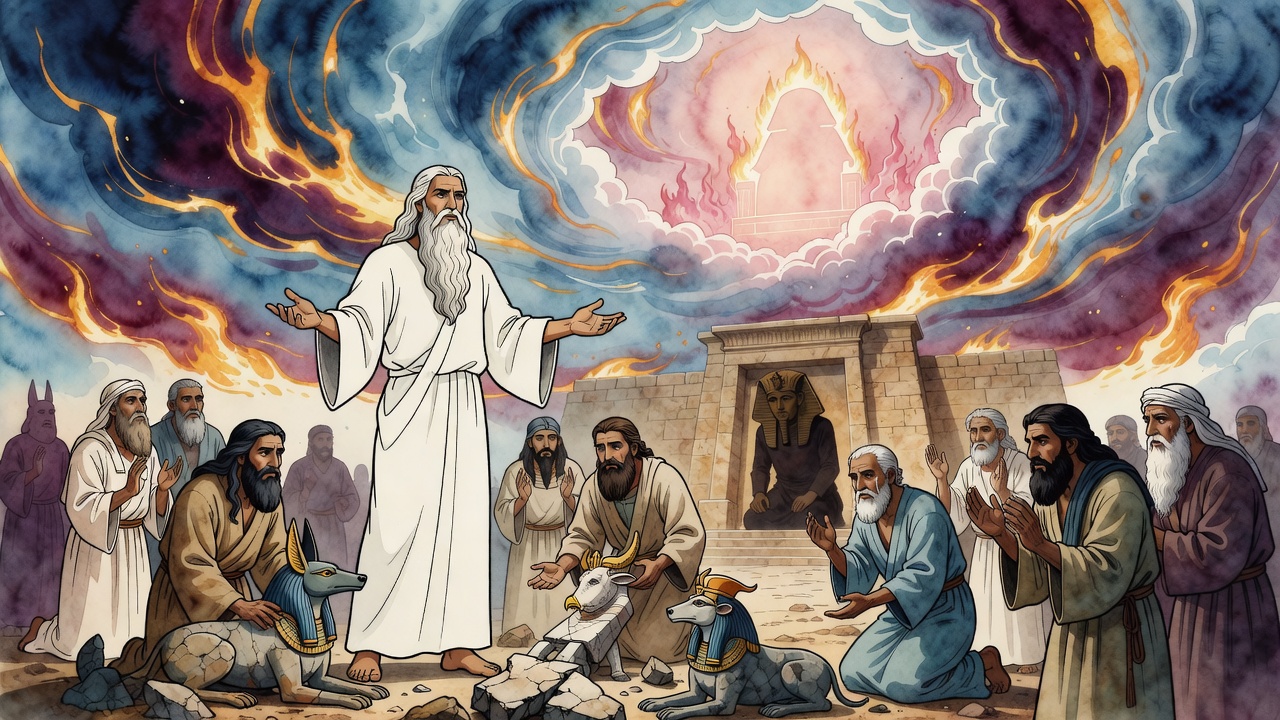
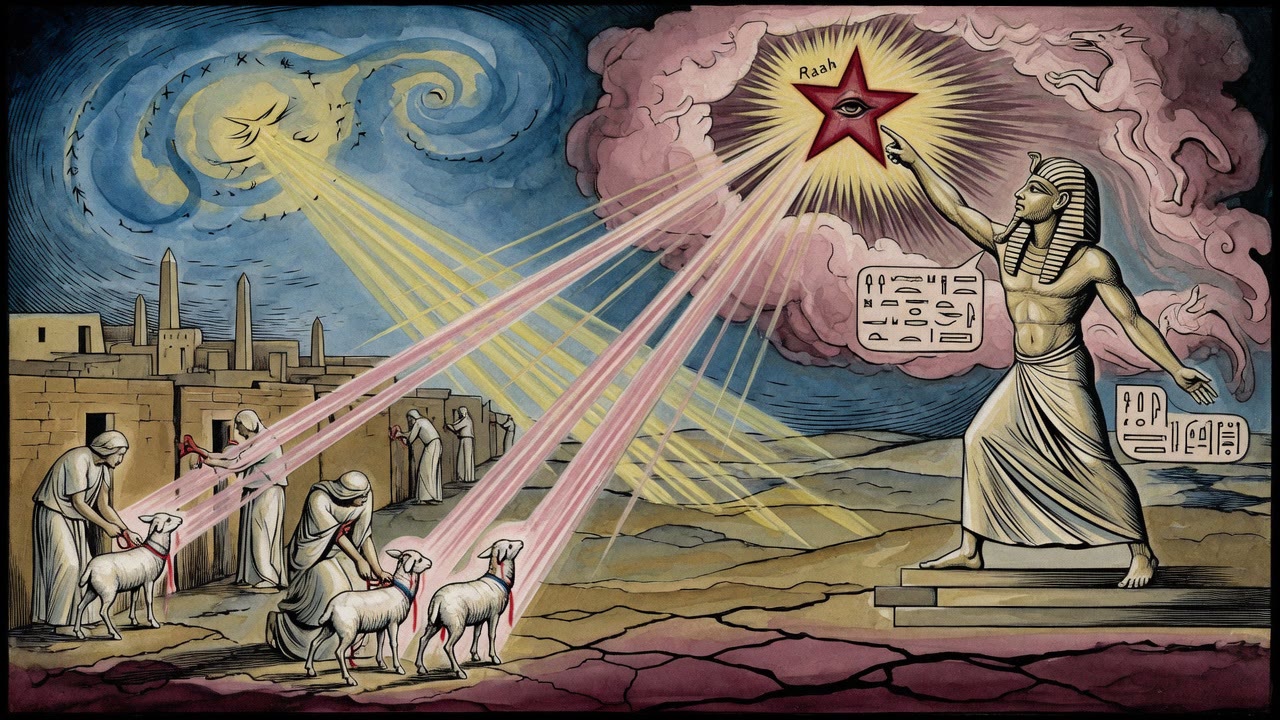
Pharaoh stood on a roof before dawn and pointed at a single rising light. "See," he told the elders of Israel, "evil is before your faces." He named the star Raah, Evil, a sign of blood and slaughter waiting in the wilderness where no river could save them.
 Click for full size
The people felt the word like a hand on the throat. Children looked up and saw only a star. Their parents heard a verdict.
The Star That Promised Slaughter
Egypt's astrologers trusted the sky more than the God who had broken their river and blackened their day. Pharaoh's reading was sharp and almost true. Blood was coming. He only misread whose blood and what kind, the way a man misreads a letter when he already knows the insult he wants to find.
When Israel later danced around a calf and stood near annihilation, Moses turned Pharaoh's taunt into a plea that filled the camp with fear and hope at once. Why should Egypt say You brought them out only to kill them in the desert? Do not hand the star-readers their proof on a platter of bones. Heaven relented. The path stayed open under the cloud, but the star's riddle waited for its answer at the edge of another land.
For a generation the name Raah hung over the march like a second sun that only Egypt claimed to understand. In the camps some still whispered Pharaoh's map of the sky. Mothers pressed their children close and named the star aloud only to spit after it. Moses walked between the tents with a face set like someone arguing a case that had not yet been called.
Four Days With the Lamb in the Street
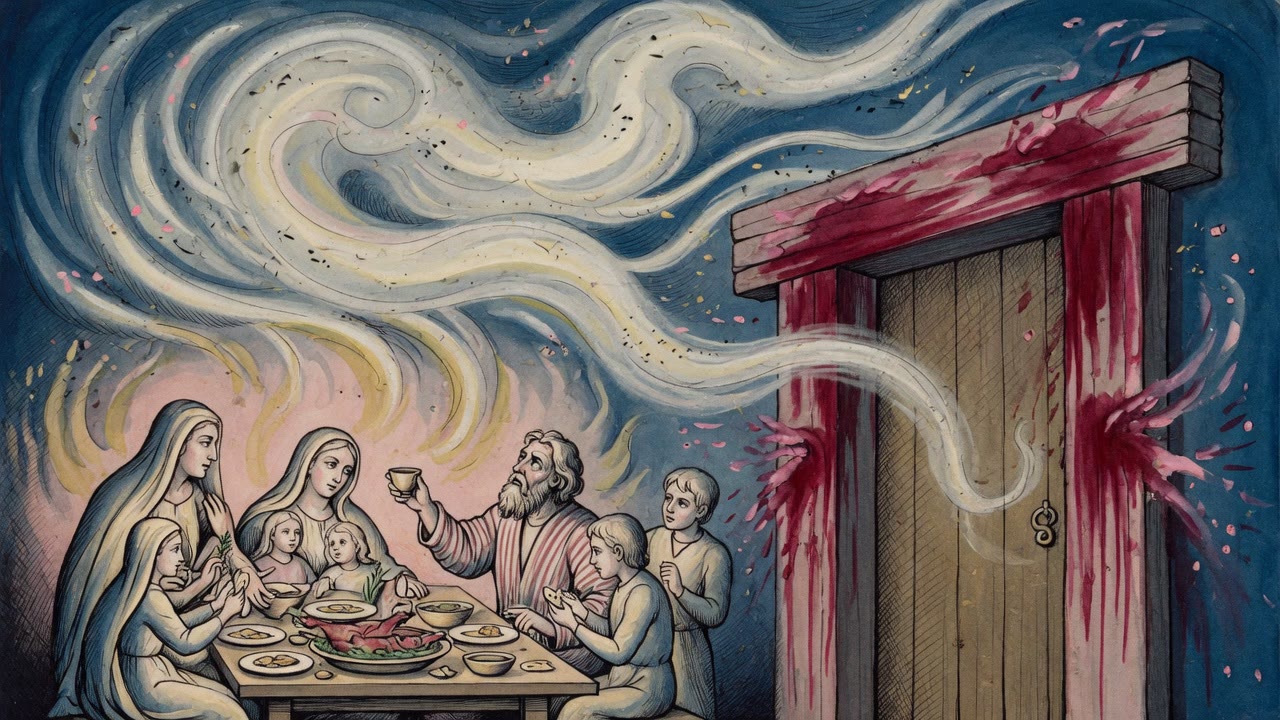
Before the night of leaving, the command was stranger than any star. Take a lamb on the tenth day. Keep it until the fourteenth. Tie it where Egyptian eyes can find it, not in a hidden pen behind the house.
For four days the animal of Egypt's worship stood bound at Israelite doors. Neighbors asked why. Some cursed in the old gods' names. Some laughed and waited for the slaves to lose their nerve. The people who had once been told to borrow silver and gold now held a living god of the land by a rope and prepared to kill it at twilight while the city watched.
Risk sat in the street with the lamb. Children fed it. Mothers counted the hours. Fathers checked the knots. The blood that would mark the doorposts was not yet spilled, but the challenge was already public. Egypt watched its sacred creature wait for Israel's knife and could not stop the waiting.
Those four days were a slow answer to Pharaoh's star. If blood was coming, it would come first from a lamb Egypt loved, not from a people Egypt owned.
Silver Taken and Still Accounted
When they finally emptied Egyptian houses of vessels, heaven did not call it free theft forever. A midrash places a hard speech in God's mouth toward Egypt. In the past you robbed them of wages and years. You built store-cities on their backs. Now they take what is owed as they walk out under a hard wind.
Even liberation keeps a ledger. The oppressed leave with pay, not with a license to become the next oppressors in their hearts. Blood and silver both had to mean something cleaner than revenge if the people were to become a nation under law rather than a mob with memory.
Pharaoh had read slaughter in the sky. God was writing wages, lambs, and a long road toward a different red sign.
Blood That Rolls Away Reproach
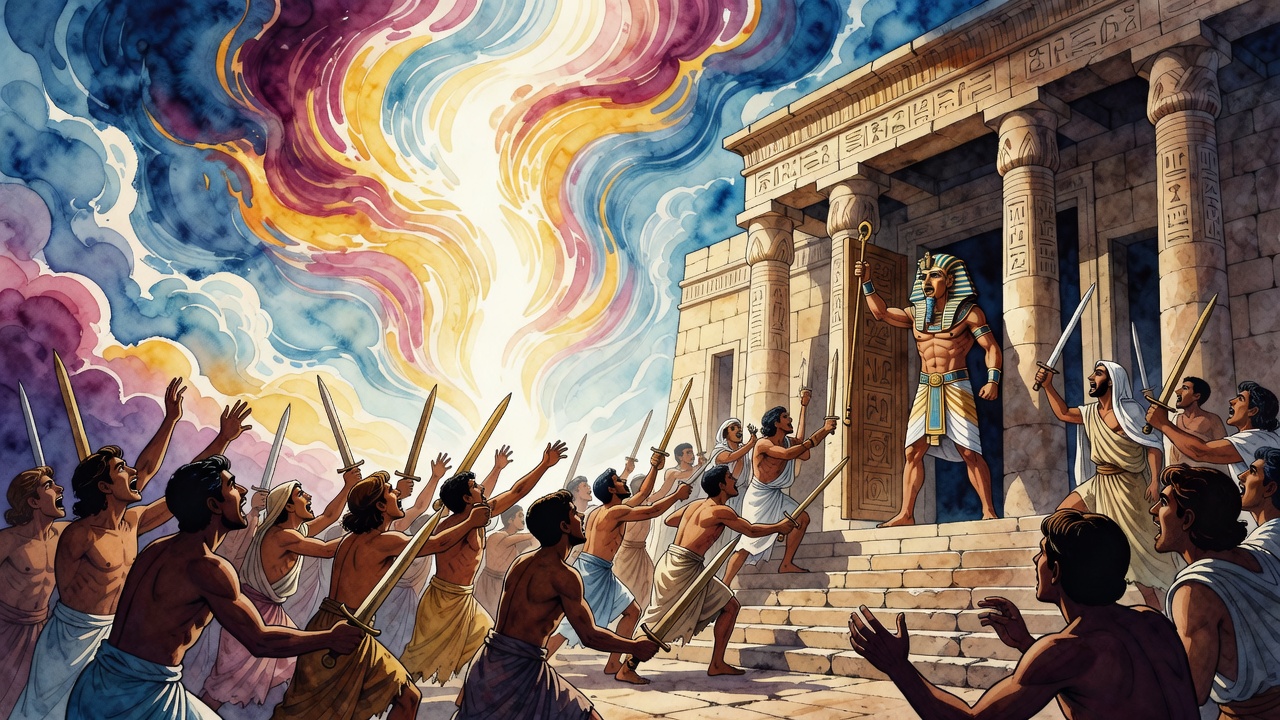
Years later, at the edge of the land, Joshua circumcised the generation born in the desert. Knives flashed in the camp at Gilgal. Covenant blood ran. Men who had never known Egypt's brick still knew Egypt's sneer, and that day the word was spoken, "This day I have rolled away the reproach of Egypt" (Joshua 5:9).
Pharaoh's star had not lied about blood. It had lied about the ending. The blood was not desert slaughter under a cruel sky. It was the mark of belonging that Egypt had mocked as weakness and weakness only. Raah became covenant. The curse of the stars dissolved into a sign on the body that no astrologer could cancel.
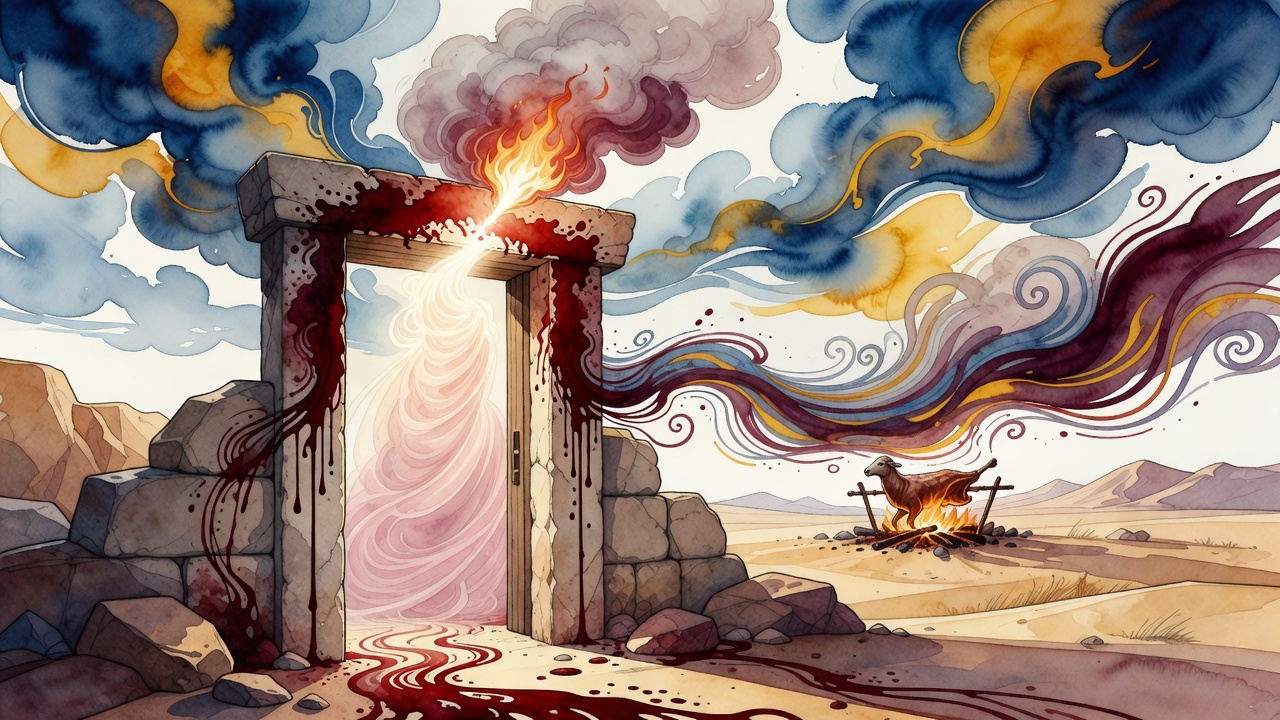
The lambs of the first Passover and the knives of Gilgal answered the same sky. Egypt read death. Israel walked out under a different reading of the same red sign, step by step, until the desert ended and the reproach rolled off like a stone from a tomb that never should have held them.
The desert wind had carried both the old Egyptian taunt and the smell of roast lamb from doors marked in red. Between those two scents the people learned which reading of blood they would carry into the land.
← All myths