The Stone No Hand Cut and the Idol of Four Metals
Gold, silver, bronze and iron carried into the desert sanctuary rise again as a king's dream idol, until a stone no hand cut grinds it to dust.
Table of Contents
 Click for full size
Gold and Silver Carried Into the Wilderness
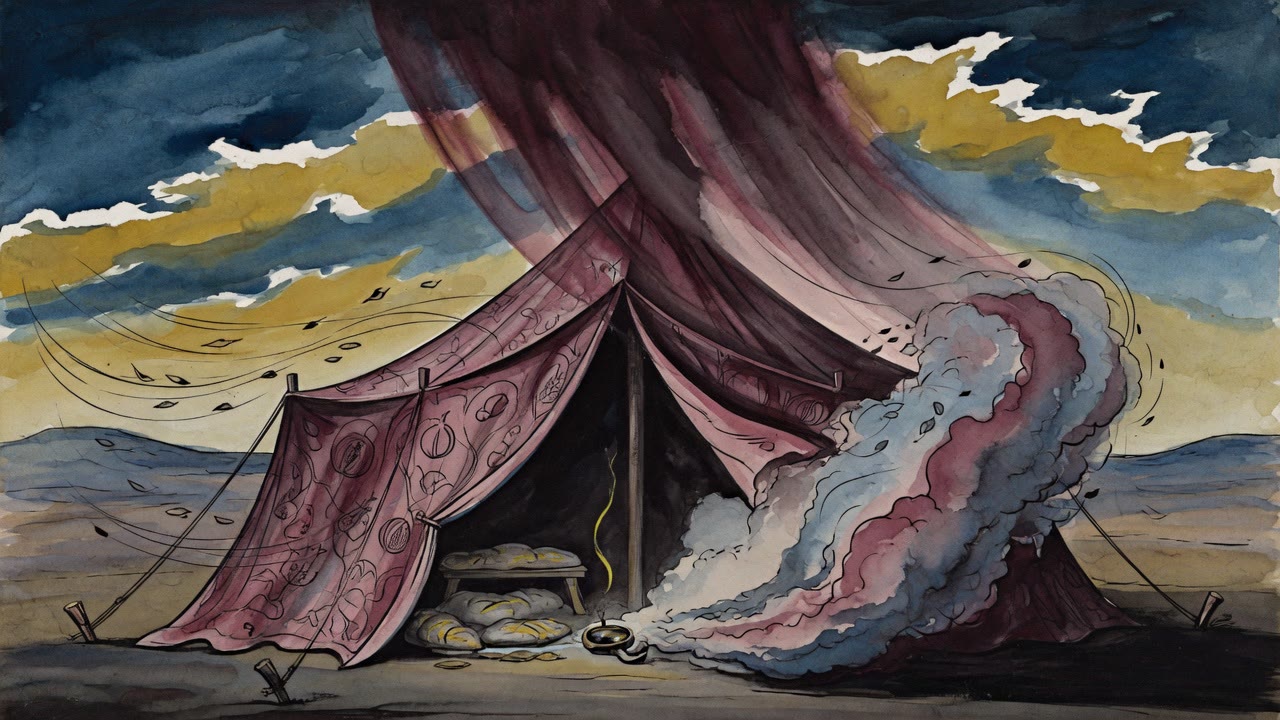
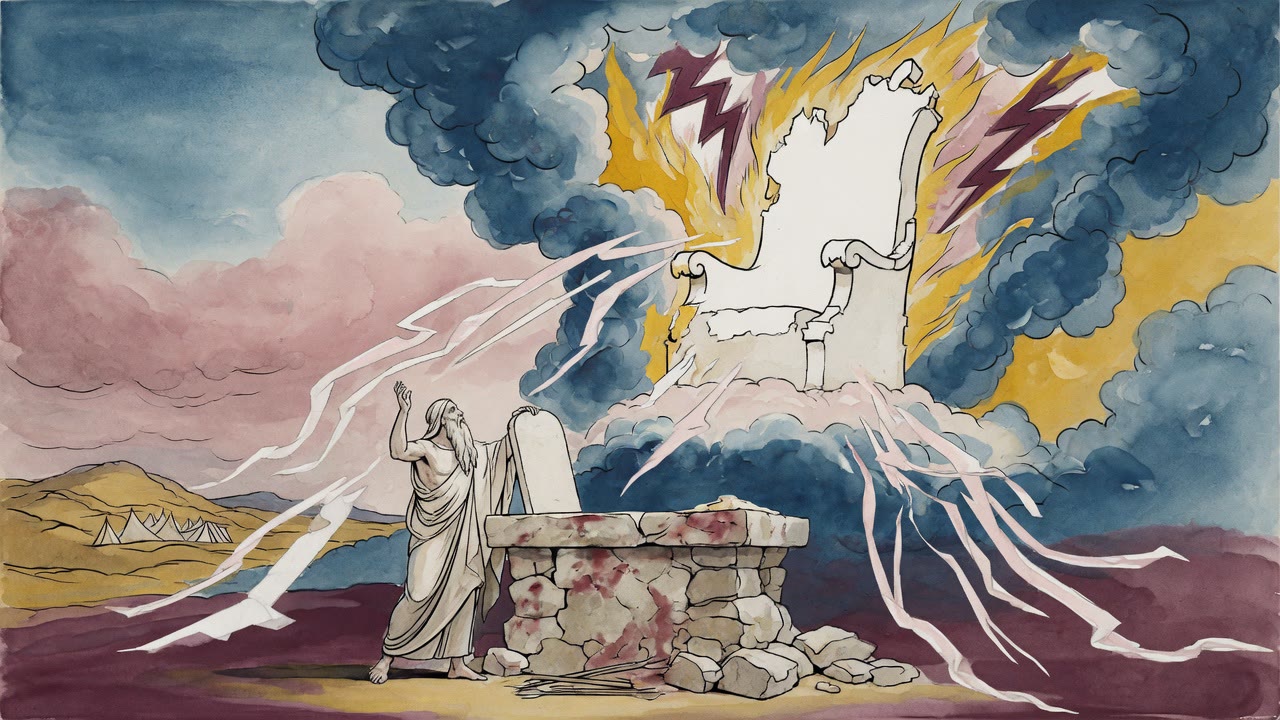
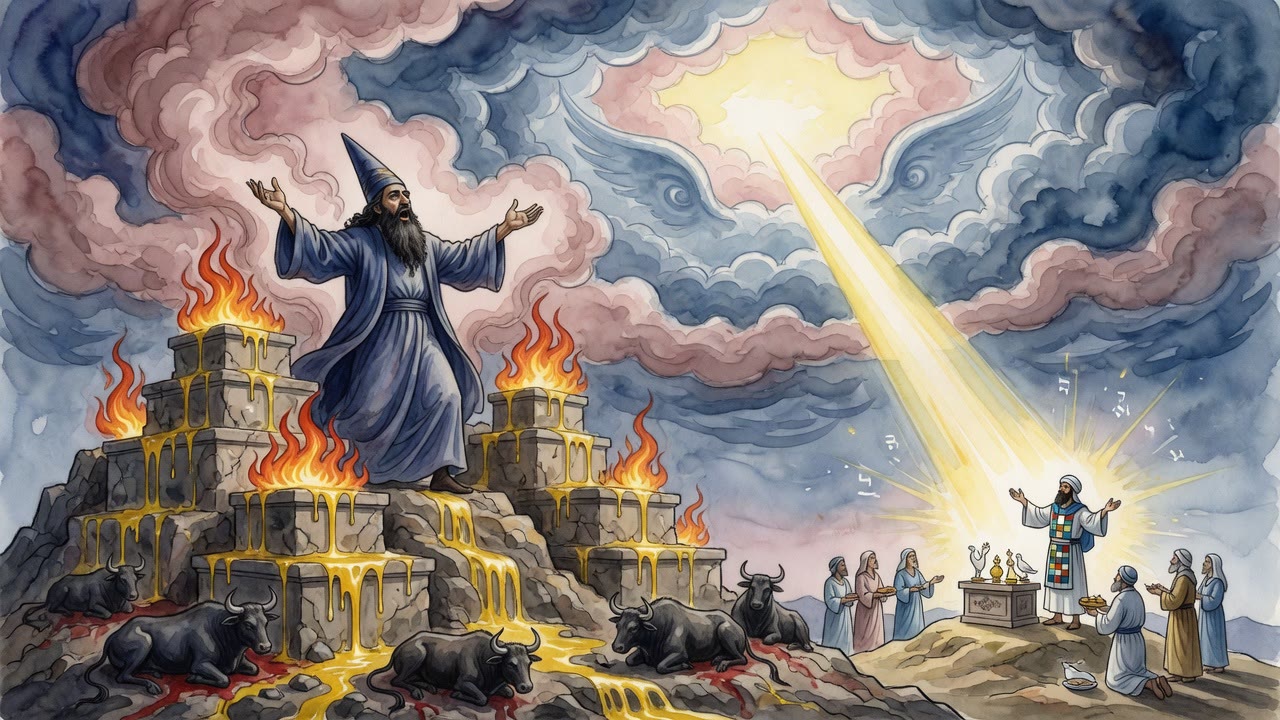
They came with their hands full. Gold plates and rings, silver counted out by the talent, bronze that caught the desert light more dully than the rest. Rams' skins dyed red were folded over shoulders and set down on the growing heap. Last came the oil, pressed and clear, poured off for a lamp that had not yet been lit. This was the freewill offering for the sanctuary, and every household in the camp brought what it could spare.
The metals lay in their piles, cool to the touch under a burning sky. Gold on top. Then silver. Then bronze, the lowliest of the three. Beside them the red-stained skins, the color of blood. Nobody carrying a plate up the line could have said it aloud, but the order of those gifts was the order of a future none of them would live to see.
The King Who Woke From a Statue He Could Not Name
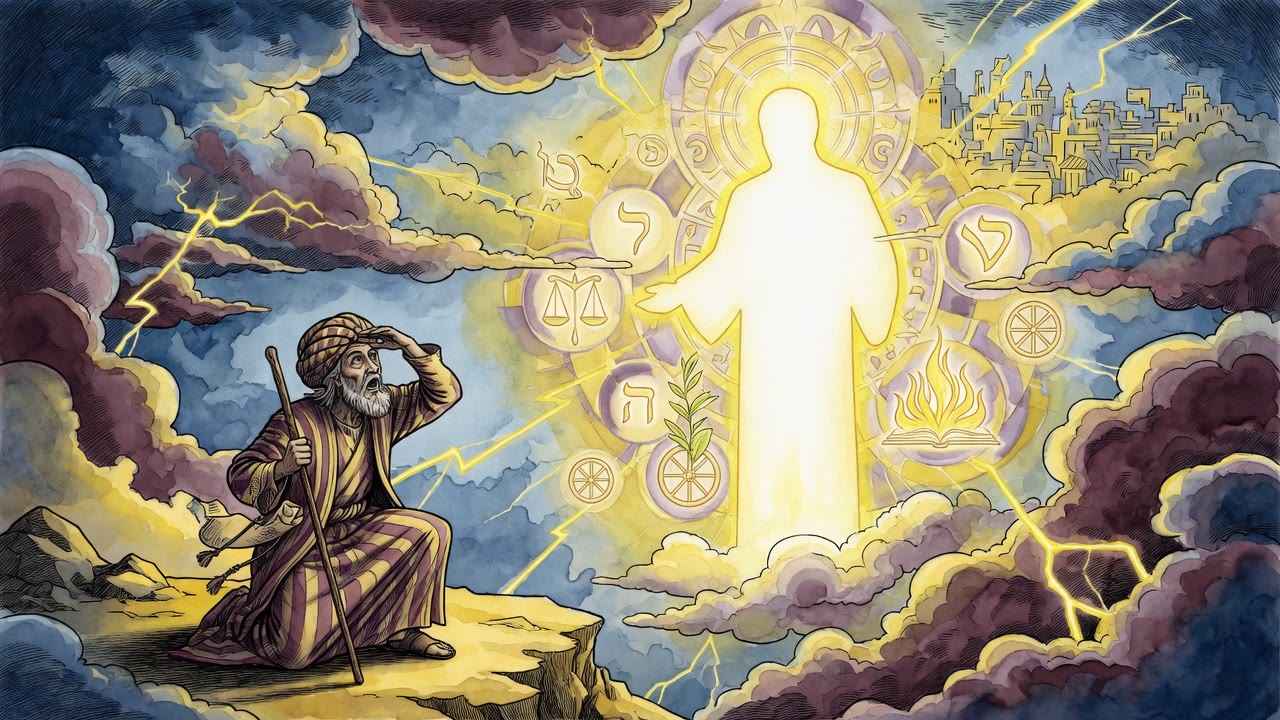
Centuries later, in Babylon, a king named Nebuchadnezzar woke in the dark with his heart slamming and the dream already draining out of him. Something enormous had stood in front of him. Something that left him shaking. He could not hold the picture, only the dread it pressed into his chest.
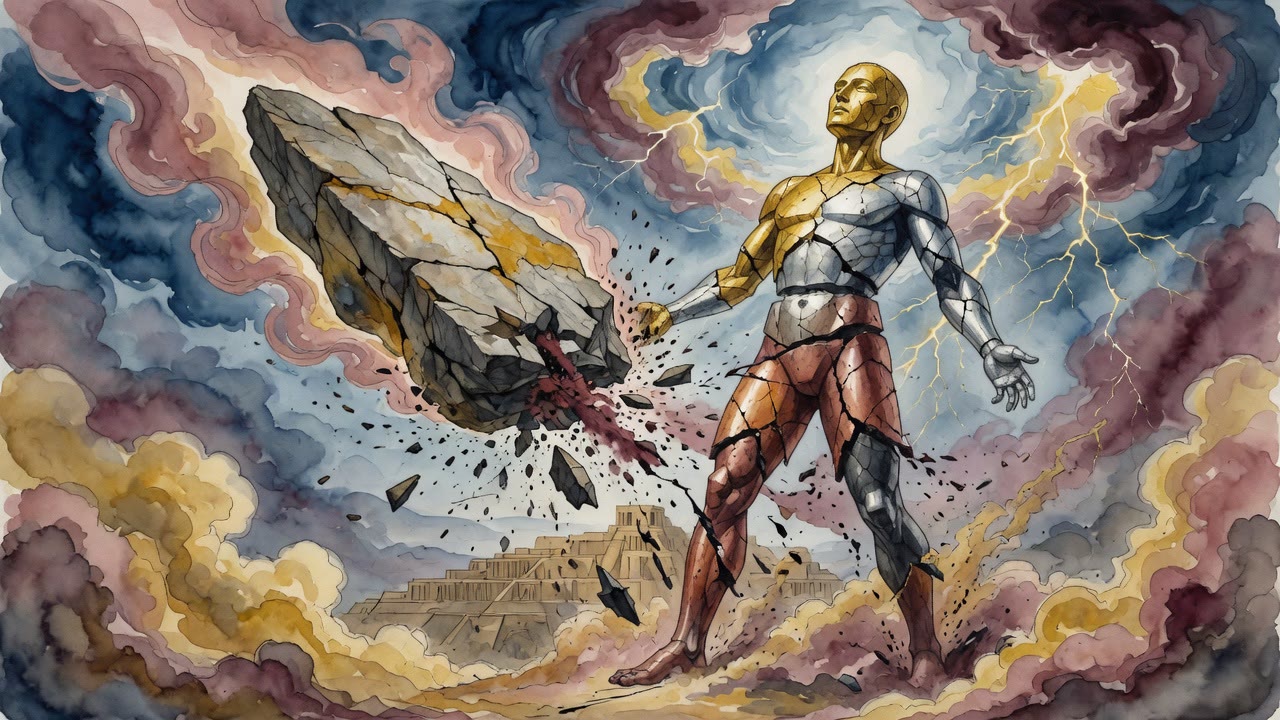
He summoned Daniel, a captive out of Judah who served in his court, and the dream came back through the exile's mouth. A great image had towered before the king, blinding and terrible. Its head was fine gold. Its breast and its arms were silver. Its belly and its thighs were bronze. Its legs were iron. And its feet were part iron and part common clay.
Four Metals Standing as Four Kingdoms
"You are the head of gold," Daniel told him. The empire of Babylon was the bright crown of the thing, and the king its living head. But after him a second kingdom would rise, lesser than his, silver where he had been gold. That was Media, the empire of coin and decree, that would one day count out ten thousand talents of silver to purchase the ruin of the Jews. Under the silver came the bronze, and that was Greece, the lowliest metal of them all, and even so it would rule over all the earth.
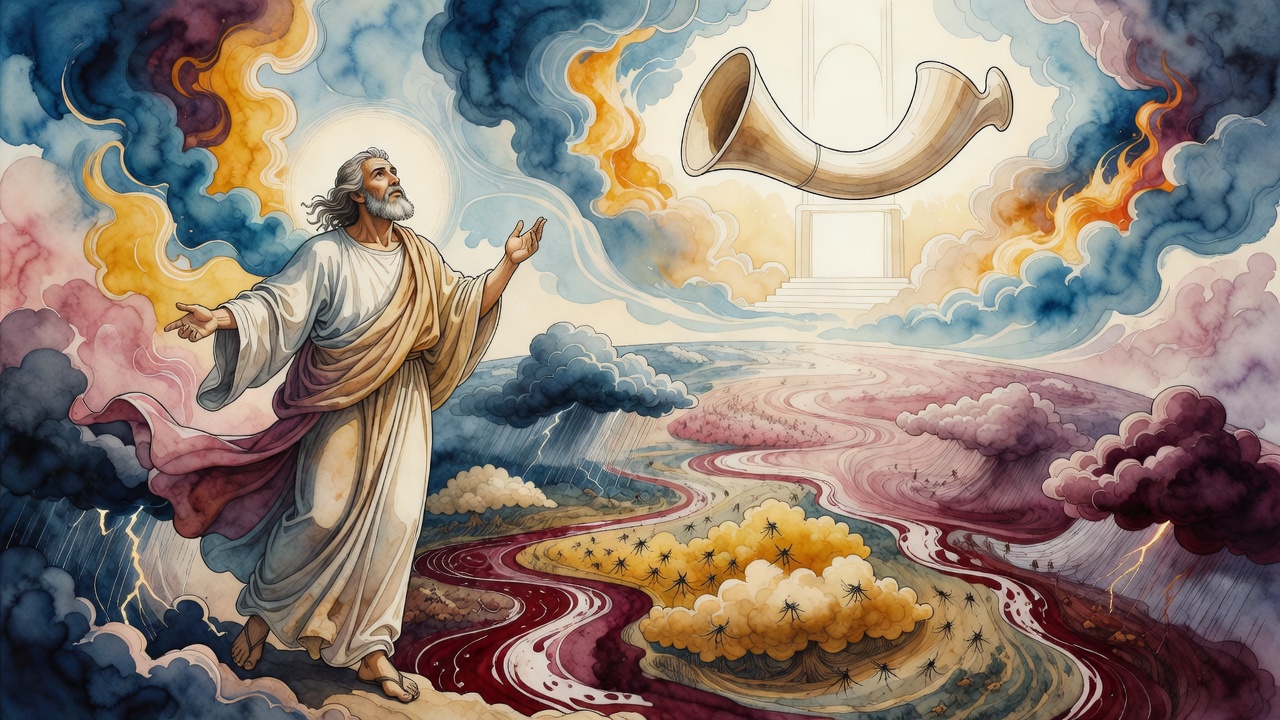
Daniel had met these kingdoms before he ever stood in the throne room. He had seen them once in a vision of his own, and his spirit had turned in on itself. "My spirit was distressed within me," he said of that night, a prophet frightened by the procession of empires marching across the years, each one climbing higher on the backs of his people.
The Feet of Iron and Crumbling Clay
Then came the legs and the feet. Iron below, hard the way iron is hard, a kingdom that would break and crush whatever it stepped on. This was Edom, the fourth and the cruelest, red as the firstborn twin who came out of the womb ruddy. Its strength was no illusion. Israel felt the iron of it on their necks.
But the feet were not all iron. They were iron kneaded together with clay, and clay is a strange thing to find holding up a colossus. This kingdom that reckoned itself unbreakable was destined to mint its very coins from clay. It would rule and it would crumble in the same breath, for the God of Israel had already sworn what he does to a vessel of clay: "He shall break it as a potter's jar is broken, smashed so without pity that not a shard is left big enough to carry fire." A statue standing on feet like that is only waiting to fall.
A Stone No Hand Had Cut
Daniel kept watching. While the image loomed there, gold down to clay, a stone tore loose from a mountain. No quarryman struck it. No chisel touched it. It came away from the living rock by itself, as though the mountain had decided.
The stone hit the image on its feet, on the iron and the clay, and the whole colossus came apart at once. Not the feet alone. All of it. The gold of Babylon, the silver of Media, the bronze of Greece, the iron of Edom, all of it broke together and became like chaff on a summer threshing floor, and the wind lifted it and carried it off until no place could be found for any of it. Every kingdom that had ever leaned its full weight on Israel was gone in a single blow, ground to a dust that would not hold a footprint.
And the stone that had struck them grew. It swelled into a great mountain and filled the whole earth. This was the Messiah, the anointed king, and he was called a stone for the sake of Jacob, who long before had been named the Stone of Israel. He would strike the arrogant of the earth with the rod of his mouth and leave them in pieces where they stood.
Back in the wilderness the oil still waited in its jar beside the gold and the silver and the bronze. It had been set aside for light. That light was the same king, the horn made to sprout for David, the lamp prepared for the anointed one, kept trimmed and ready through every empire that would rise and fall inside the metals of the offering. When the last of them blew away as chaff, Israel would sit in quiet on their own soil, secure, with no iron left anywhere in the world to press against their throats.
← All myths