The Storm That Hit Only One Ship on the Mediterranean
He had already been called a false prophet in Jerusalem. Nineveh would repent. He would rather live on the sea than wear that name twice.
Table of Contents
The harbor at Joppa was empty when Jonah reached it.
 Click for full size
No masts. No cargo. The port that served the Judean coast sat quiet, and for a man who needed to go as far west as the world went, the empty dock was a wall.
A Ship Came Back From Two Days Out
Then a vessel that had been two days at sea turned around and came in. Fully loaded. Making good time. It reversed course and nosed back to the dock where Jonah was standing, as if the water itself had changed its mind.
He took it as a blessing. The world was arranging itself around his flight. He was reading the sign the wrong way. The ship had not come to help him. It had come because it would be needed when the storm arrived, and because God wanted him on it.
He had a reason to run that was not simple fear of Nineveh. He had been Elisha's disciple. While the master still lived, Jonah had been sent to warn Jerusalem, and Jerusalem had turned, and the doom had not come, and they had called him a false prophet. Now God wanted him in Nineveh. He knew those people would repent too. The threatened punishment would not be executed. He would wear the name in two nations.
The sea had no cities that needed prophecies. He would live there.
He Paid for the Whole Ship
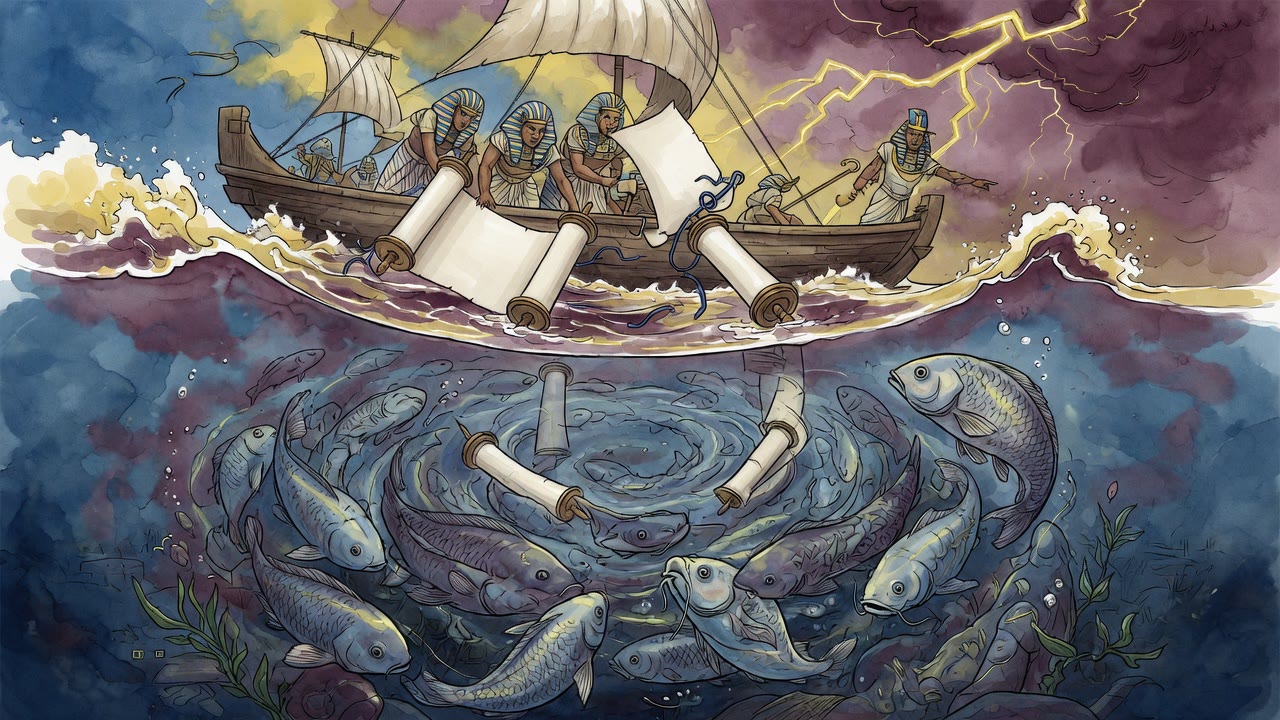
Jonah paid four thousand gold denarii for the entire cargo space. Not a berth. The whole vessel. If he owned the ship, no captain could change the route. No passenger could vote to turn back. He would control where the hull went.
He counted the coins out on the dock until the captain stopped arguing. The crew watched. A prophet buying a ship is not a common sight in Joppa, and a prophet buying the whole hold is rarer still. Jonah did not explain. He wanted the west, and he wanted it locked.
The money spent and the manifest signed, the ship left Joppa and headed toward Tarshish, at the far end of the known world. Other boats left that same morning. Merchant ships. Fishing boats. A naval transport hugging the coast. By afternoon those hulls were still moving through ordinary weather, ordinary swell, ordinary cloud. Only Jonah's ship hit the storm.
The Wind Had One Address
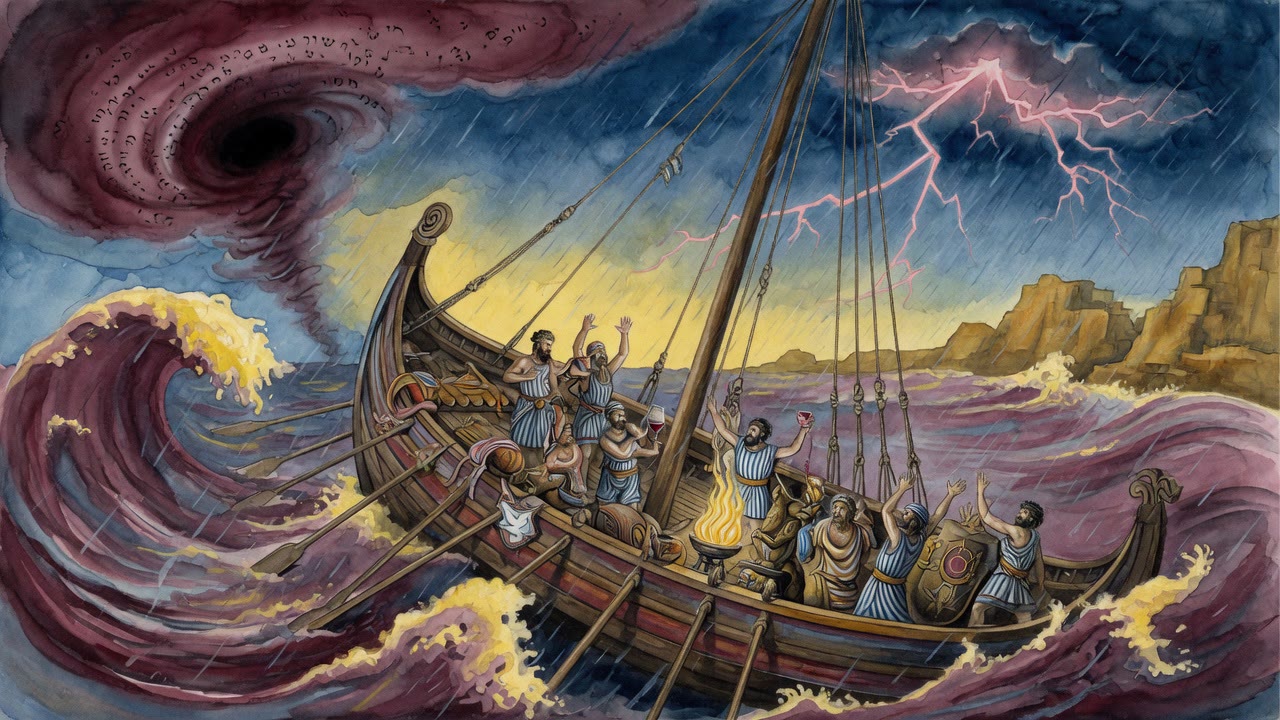
The sailors knew within minutes it was not natural weather. Experienced men have a feel for clouds and swell. This had come from nowhere and wrapped itself around their hull. In every direction the water looked calmer than it had any right to look. They could see other sails, small as chips, riding easy on a sea that refused to touch them.
They prayed. Each man called on the gods of his homeland, and there were many homelands on that deck. Nothing helped. They threw cargo overboard, tons of it, Jonah's four thousand denarii of cargo among it, trying to lighten the vessel. The storm did not ease. The ship sat in a pocket of wind that had learned his name.
Jonah was asleep in the hold. Not from terror. From relief. He had been awake since the mission came, carrying Nineveh in his mouth, and the moment the ship left the dock the weight lifted. The relief knocked him out. He slept through the praying and the jettisoning and the first hour of the sailors' panic, while water came in at the seams and men shouted in languages he did not share.
The Captain Found Him Below
The ship's captain went below and shook him. "What are you doing asleep? Arise and call upon your God. Maybe your God will take notice of us and we will not perish."
He had not yet named Jonah as the cause. He was working through every option. The gods of the known nations had been called. Now the God of this sleeping Hebrew needed to be added to the list.
They cast lots on the wet deck. The lot fell on Jonah. They cast it again. Jonah. A third time. Jonah. Even the most practical sailor could read that pattern. Hands that had been throwing cargo now held still around a man who had paid for the whole ship and then gone to sleep inside it.
He told them the truth. He was a Hebrew. He feared the God who made the sea and the dry land. He was running from a command. The storm was because of him, not because of any of them. If they threw him into the sea, the wind would stop. He was sure of it.
They Tried to Row First
The sailors did not throw him overboard at once. They were not men who tossed a passenger into a storm without exhausting every other option. They put their backs to the oars and tried for shore. The sea grew worse against them (Jonah 1:13). Blisters opened. Oars cracked. The pocket of wind held.
Then they asked the God of Jonah not to hold them guilty for this man's life, and they lifted him, and they put him into the water.
The wind died on the spot. The sea stood still under their feet as if it had never been angry. Jonah went down. The ship that had come back two days for him sat on a flat sea, and every other boat on that water had never known the storm at all.
← All myths