The Temple Lamp Burned Brighter When Oil Failed
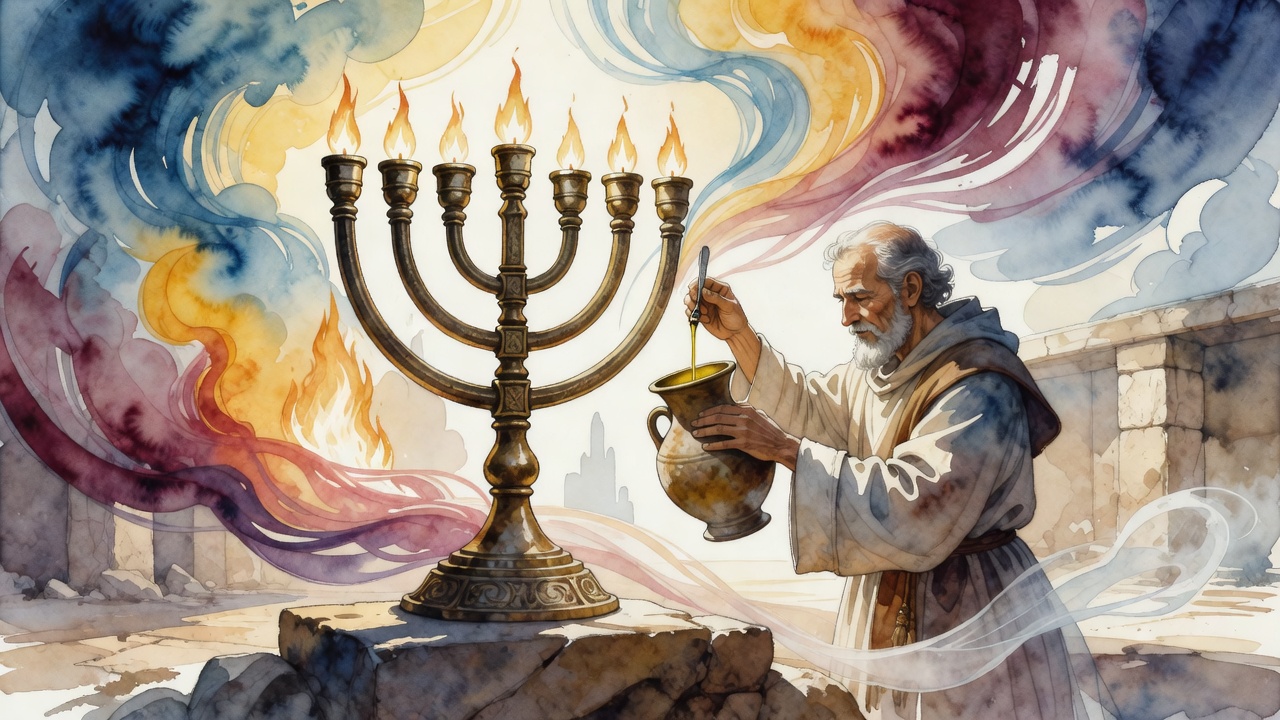
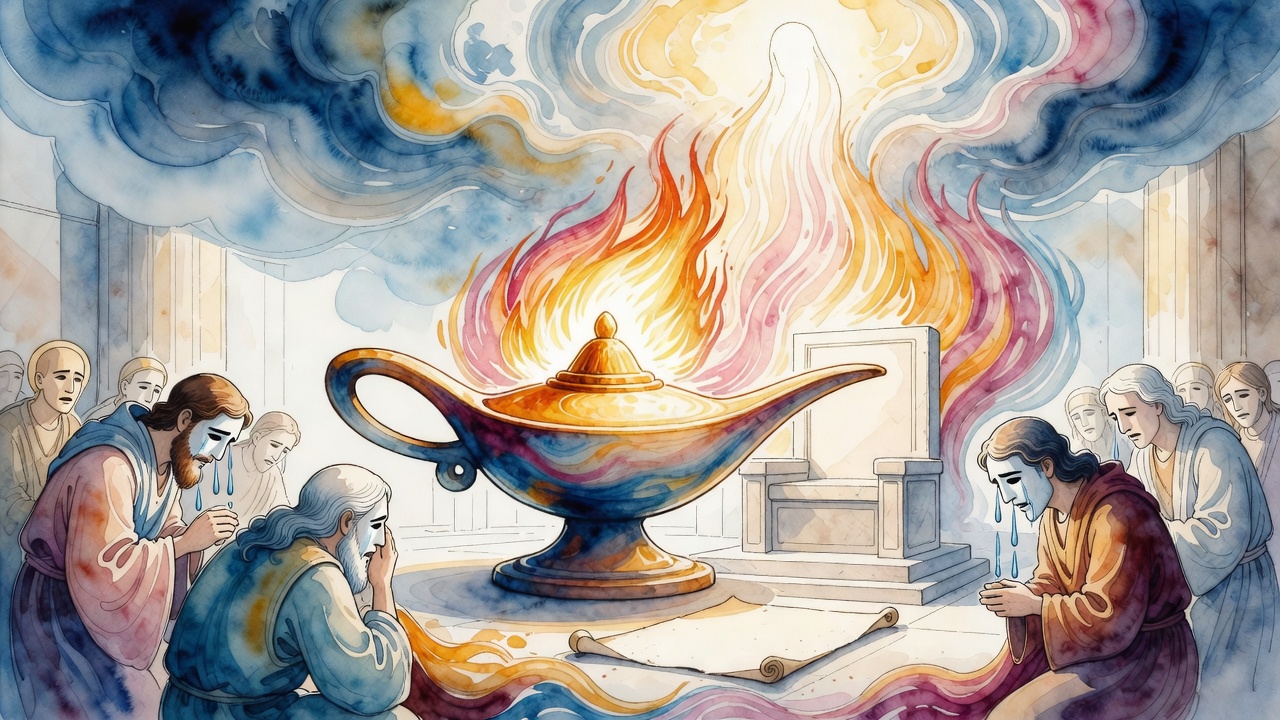
Priests wept over flasks too light in the hand. Rabbi Hanina walked to the lamp and found it blazing harder than all year.
Table of Contents
The flasks came in light. Priests weighed them twice, hoping the scale would repent. It did not. Rabbi Hanina, chief of the priests, had lit the lamp at the head of the year and watched it hold, month after month, on pure olive oil pounded for the light, not for the meal-offering. Food can take a lesser grade. Light cannot.
 Click for full size
This year the olives failed the standard. Men who served at the altar wept as if a death had entered the sanctuary. Rabbi Hanina did not preach to them. He walked to the lamp.
It was burning more brightly than at any time in the year. Thin oil. Thicker fire. Courtyards across Jerusalem still woke inside that glow. "That they bring unto Thee pure olive oil beaten for the light" (Exodus 27:20).
The Flask That Lost the Argument
A priest shook an empty vessel by the steps and asked the obvious thing. If a lamp that no one eats by must have pure oil, should not the meal-offerings, which enter the mouth, demand the same?
The command ran the other way. Daily bread on the altar could run on ordinary pressed oil because it returned every day. The light was rarer. What is rare is guarded. What feeds daily is mercifully ordinary. The weeping men had measured oil by the weight in the hand. The lamp measured loyalty. When the beaten pure grade ran short, the fire did not bargain. It intensified.
Rabbi Hanina had ministered enough years to know a miracle when it refused to go out. The miracle did not refill the flask. It ignored the flask's verdict. One of the weepers measured again, hoping arithmetic would change its mind. The flame made the tears look premature.
Abraham Between Furnace and Night
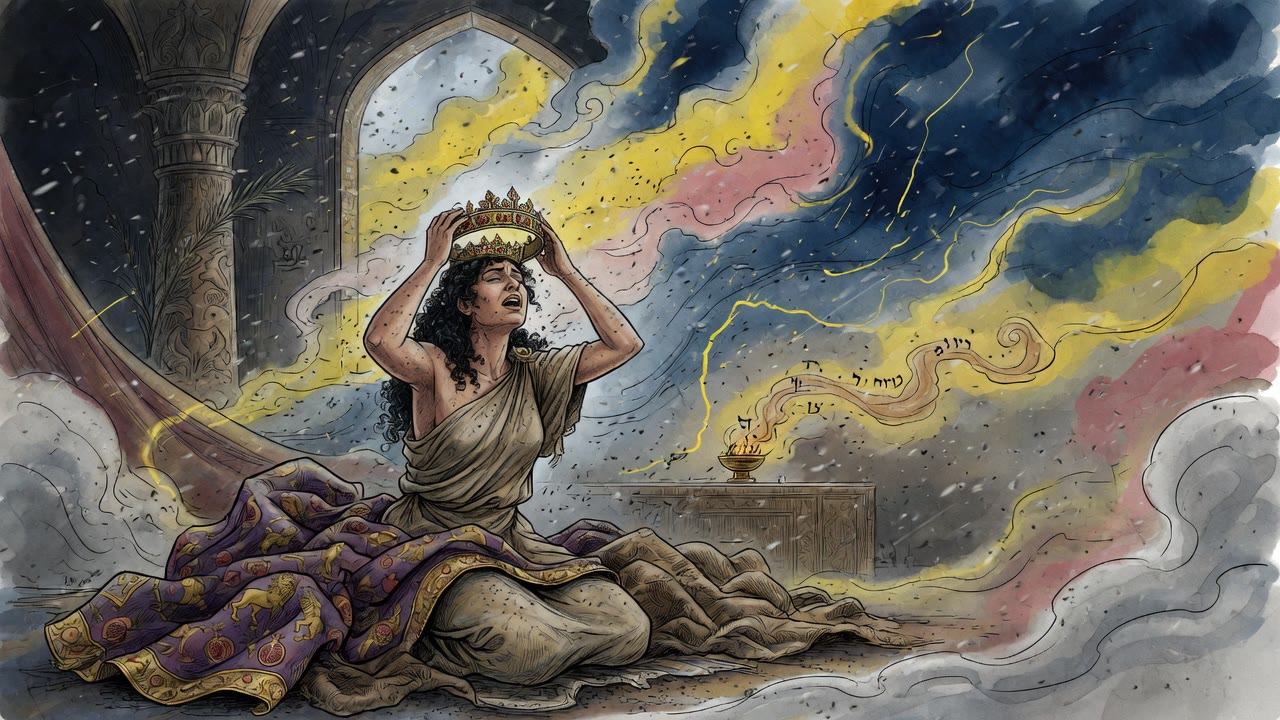
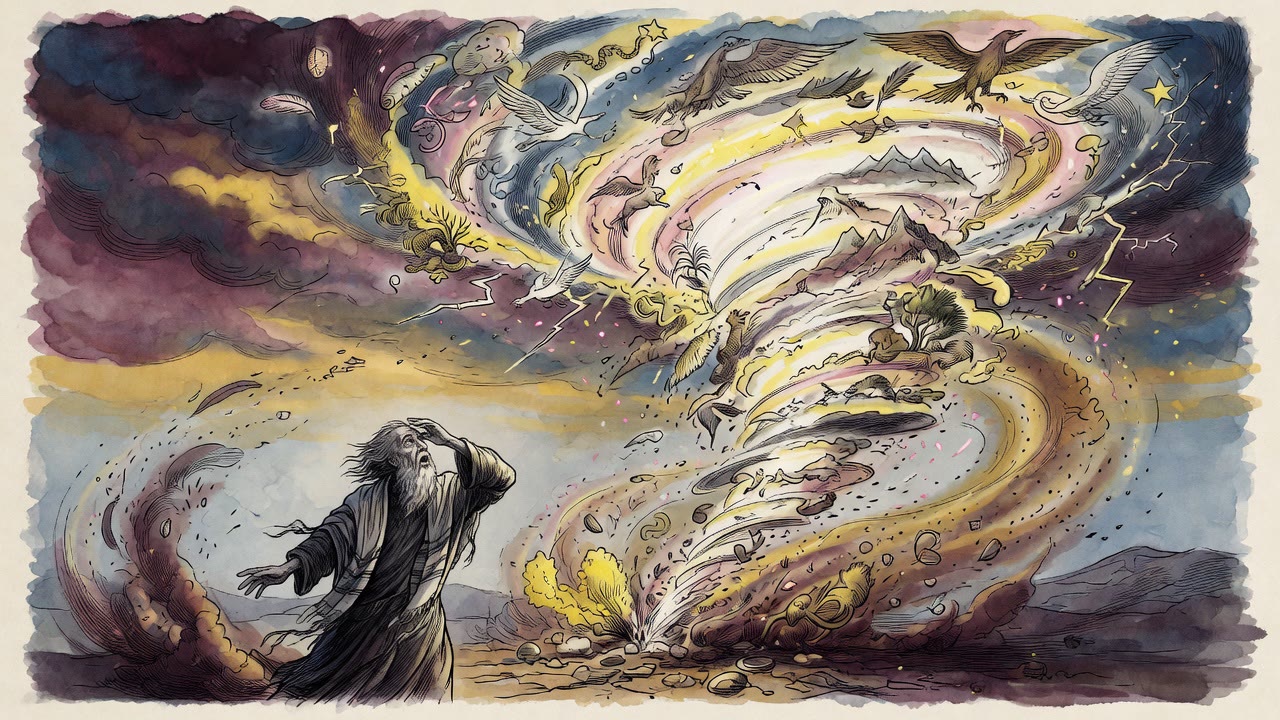
Long before that poor-oil year, Abraham stood among the pieces of a covenant and saw four things at once. Torah as a flaming torch and a fiery law. Sacrifices in a heifer of three years. Gehinnom (גיהנם), the fiery place of judgment after death, as a smoking furnace. Exile as thick darkness (Genesis 15:9-17).
The Holy One told him that Torah and sacrifices would rescue his children from that furnace. Whenever the descendants seized two of these, they would be saved from the other two. Then came the harder news. Sacrifices would one day cease. The Temple would fall. God asked Abraham to choose the remaining path. Shall your sons be enslaved in Gehinnom, or in exile among the nations?
Abraham stood in the smoke and could not easily decide. Rabbi Hanina son of Pappa held that Abraham chose the rule of foreign kingdoms. Better exile's hard road than any child descending into the furnace. The Holy One agreed. The rock would give them over. Darkness over the pieces was not only prophecy. It was a father's bargain.
Moses Grabbed Three Names
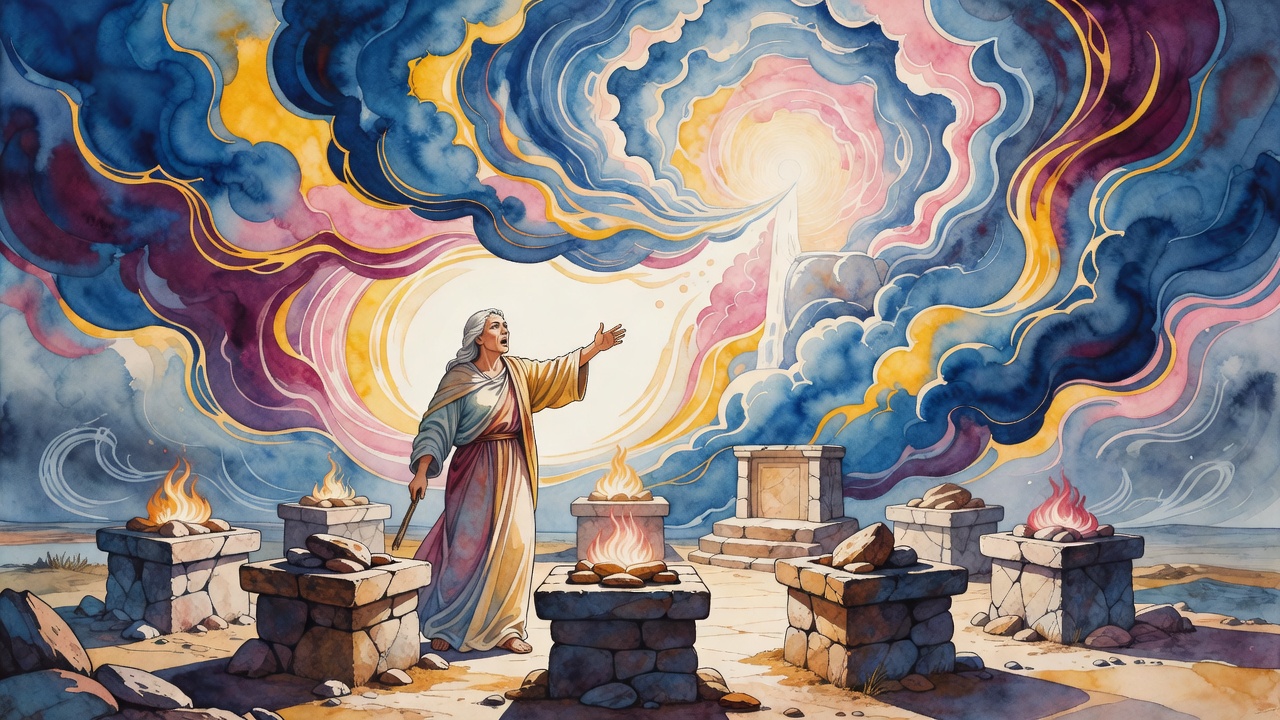
When the calf rose in the camp, Moses heard the decree that could wipe Israel out. "Get thee down, let Me alone" (Exodus 32:7, 10). He did not invent a new mercy. He grabbed the three names that had already planted prayer in the world. "Remember Abraham, Isaac, and Israel" (Exodus 32:13).
Those three had planted three prayers. Daniel later fixed the number at three each day, kneeling on his knees. David set the hours: evening, morning, and noonday (Psalms 55:18). Rabbi Judah held that morning prayer ends by the fourth hour because the morning sacrifice ended then. Prayer is not freestyle feeling. It is the mouth keeping the altar's clock after the altar's smoke is gone.
Moses called in the three who had taught Israel how to stand before God when fire was the other option. The names held. The people lived. The clock of the mouth outlasted the calf and, later, the fallen house of the lamp.
Scarcity That Still Blazed
The priests who wept over empty flasks saw a flame that refused their despair. Abraham, staring into furnace and darkness, chose the darkness that still has roads and returns. Moses, facing extinction for the calf, grabbed the three names that taught Israel how to stand three times a day.
Pure oil is for light because light is how a people finds its way through the bargain of exile. The meal-offering can be plainer. The courtyards cannot. When the olives failed, the lamp did not. When the sacrifices would fail, the prayers would not. When Gehinnom opened its mouth in a vision, Abraham aimed his children toward the long foreign night instead.
Rabbi Hanina left that year with a private proof. Heaven does not only accept abundance. Heaven can make scarcity blaze. Exile is not pretty. Thin oil is not pretty. The children live. Prayer keeps the fourth hour. The furnace waits without a customer from that line.
In later winters, when pure oil was memory, the mouth took the altar's clock. Evening, morning, noonday. The lamp's lesson moved into time itself, and the courtyards still needed a light that did not ask the flask's permission.
← All myths