The Weeping Well and the Day Moses Learned the Temple Fell
Jerusalem burns, the young leap into a hidden well rather than face the sword, and Moses is roused to see the ruined House and challenge heaven's silence.
Table of Contents
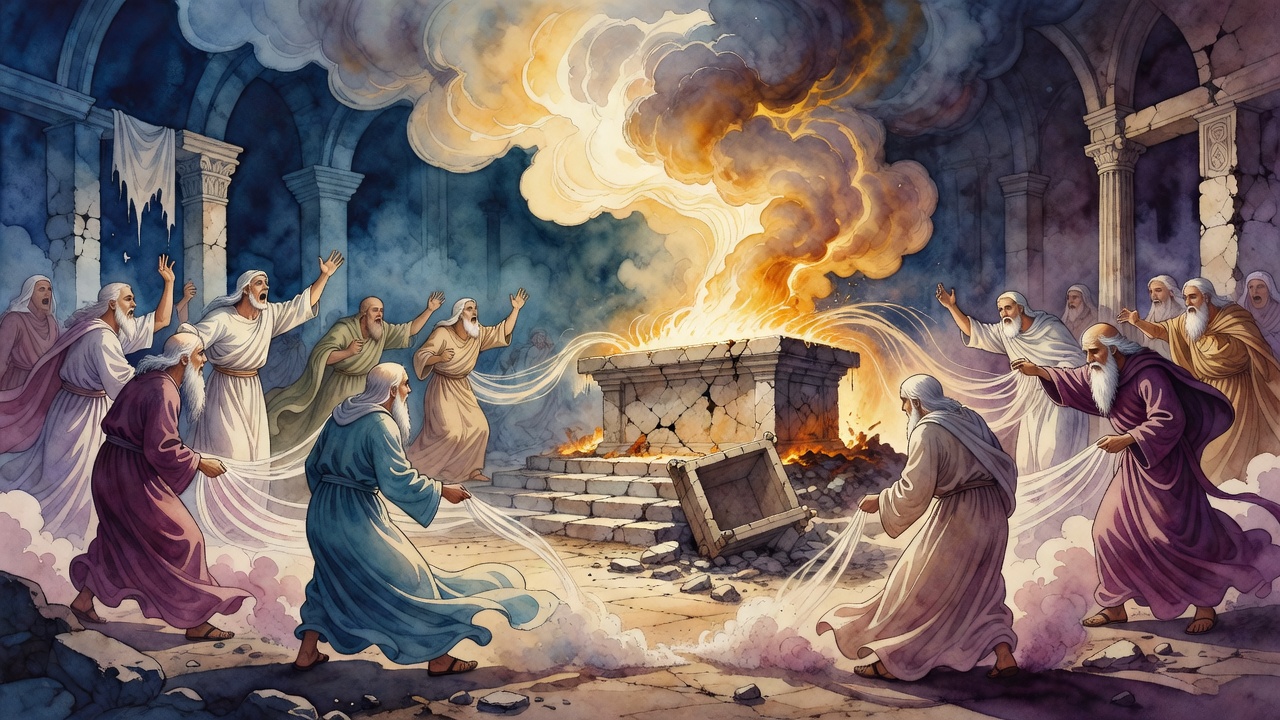
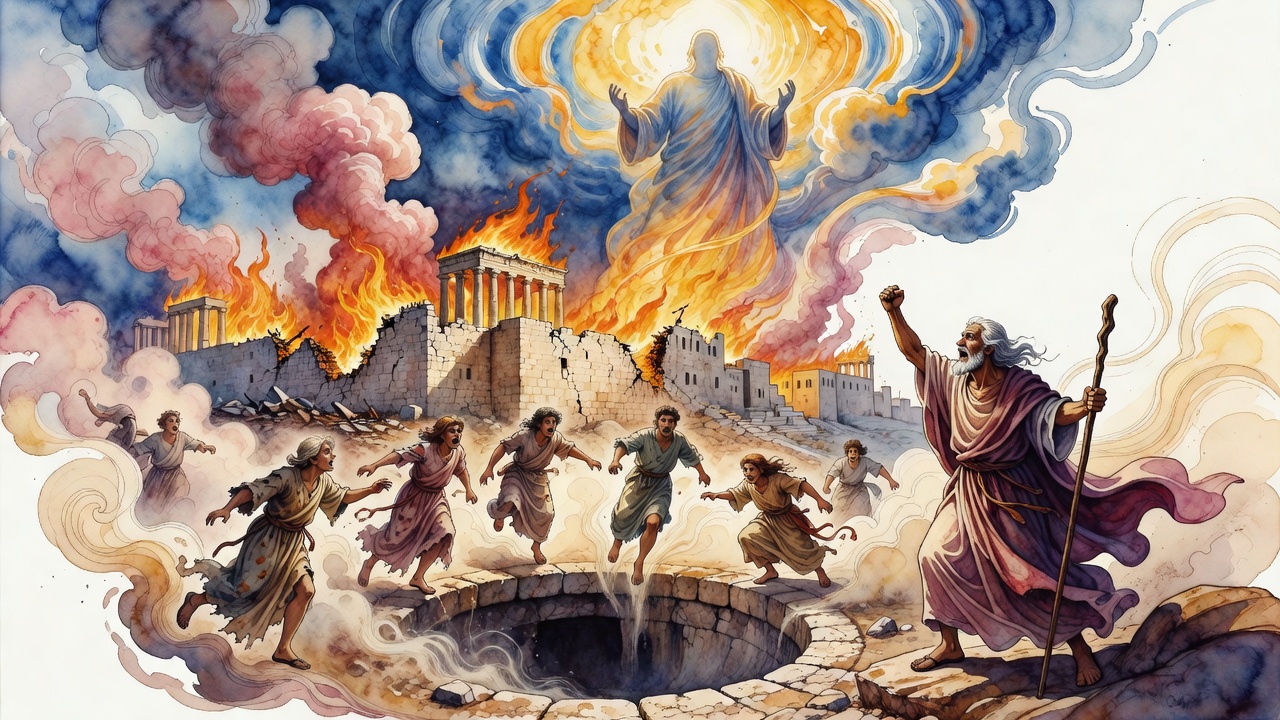
The smoke over Jerusalem hung so thick that the priests along the wall could not see the enemy climbing toward them. They could only hear it. Ladders scraping stone. The crack of a gate giving way. Down in the Temple court, a knot of young men and women stood at the mouth of a well and listened to the same sound come closer.
 Click for full size
They had one choice left. The Roman sword, or the dark water. They took the water.
The Children Who Chose the Well
One by one they went over the rim. Not thrown. They stepped, or they leapt, some holding a hand, some holding a name, some holding nothing at all. The soldiers who reached the court a breath later found only the well and the quiet rising out of it, and they cursed, because a body at the bottom of a shaft is a victory no conqueror can parade.
The water closed over the last of them. Then the water began to grieve.
It was not a sound the living were meant to hear. A low mourning came up from the stone throat of the well, steady as a heartbeat, and it did not stop when the fires burned down, and it did not stop when the last of the exiles were driven out toward Babylon. The sanctuary was gone and would not come back. The well knew it before the mourners did, and it wept for all of them.
Moses Was Called to See the Broken House
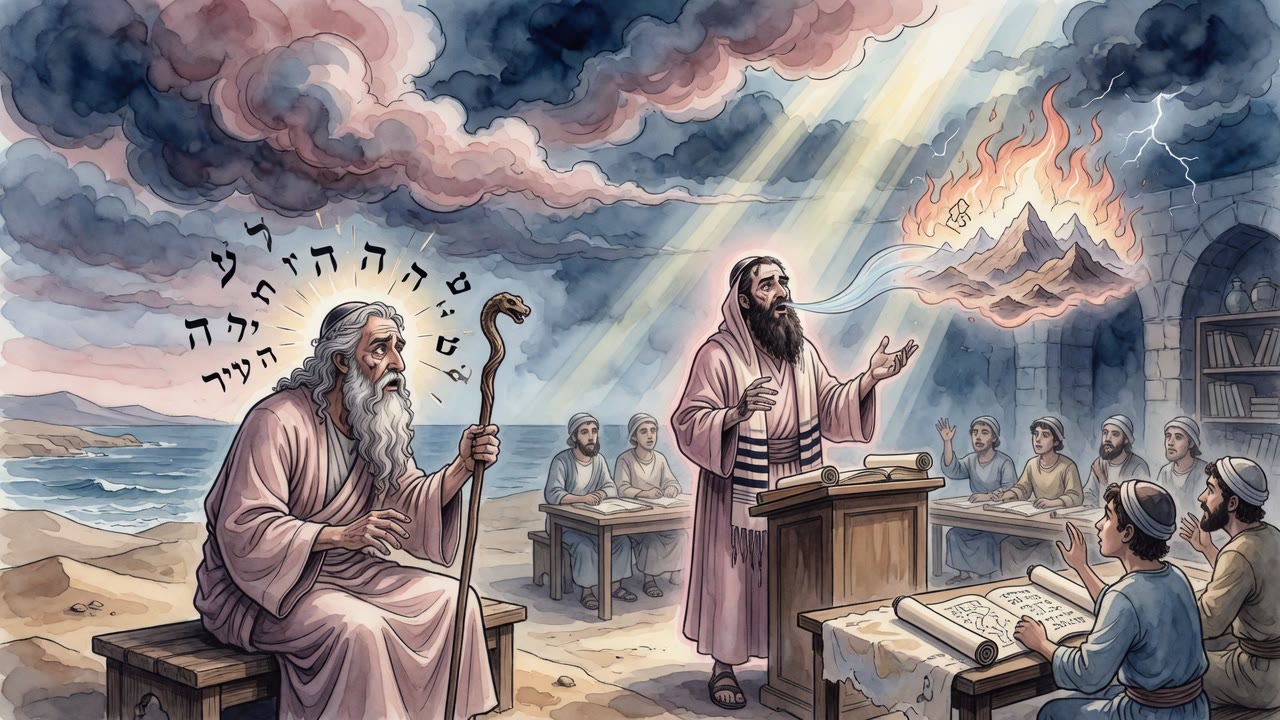
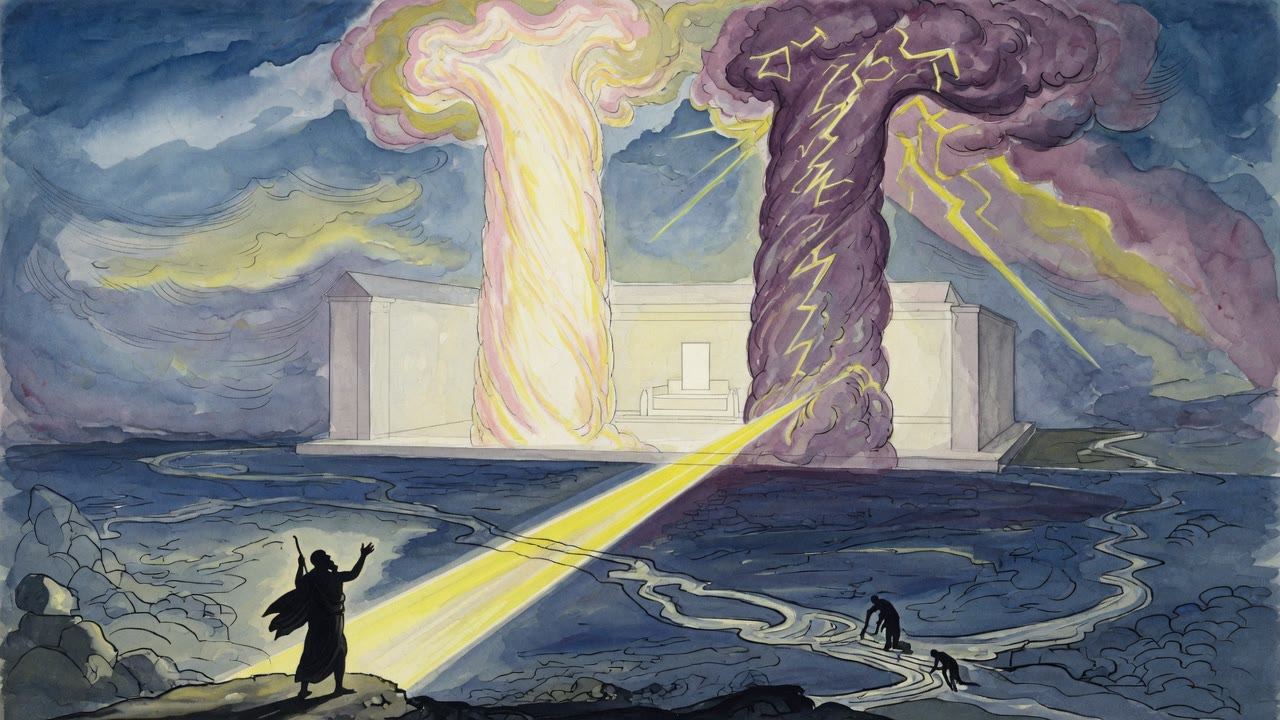
Far from the ruined court, in the quiet place where he had been laid to rest, Moses was roused and told to come and see. They led him to the House he had never once entered, the House built by other hands generations after his death, and they showed him its walls pulled down and its courts heaped with the slain. Mothers lay beside their sons. The man who had argued Israel back from the brink of extinction more than once stood over the wreckage and, for the first time, had no argument to make.
So he lifted his eyes to the one witness that had watched the whole thing and had said nothing at all.
The Sun Beaten With Sixty Whips of Fire
"Cursed be you, sun," Moses shouted into the sky. "Why did you not go dark when the enemy walked into the Temple?"
And the sun answered him. "By your life, Moses, how could I go dark? They beat me with sixty whips of fire and said to me, 'Go, pour out your light.' I had no choice."
Even the sun had been a prisoner. Flogged with fire, forced to keep shining, made to pour clean daylight down onto the blood in the courts so that nothing was hidden and nothing was spared. It could not close its eye. No one in heaven or on earth had been allowed to look away.
The Law He Threw Back at the Throne
Then Moses turned from the sun to the throne of God. He did not plead this time. He brought a charge, and he built it out of the very words he had carried down the mountain.
"Master of the Universe," he said, "You wrote in Your own Torah, 'You shall not slaughter an ox or a sheep and its young on the same day.' And here are the mothers and here are the children, killed together in a single hour. Why are You silent?"
The question hung in the air the way the smoke hung over the city. This was the man who had once talked God out of consuming Israel after the golden calf, who had stood in the breach and won. Now he stood in a far worse breach and swung the Torah itself at heaven like a hammer. And heaven gave back nothing. No wind, no voice, no defense the way the sun had made a defense. The verdict had already fallen, and even Moses could not reopen the case.
The Voice That Rises on the Ninth of Av
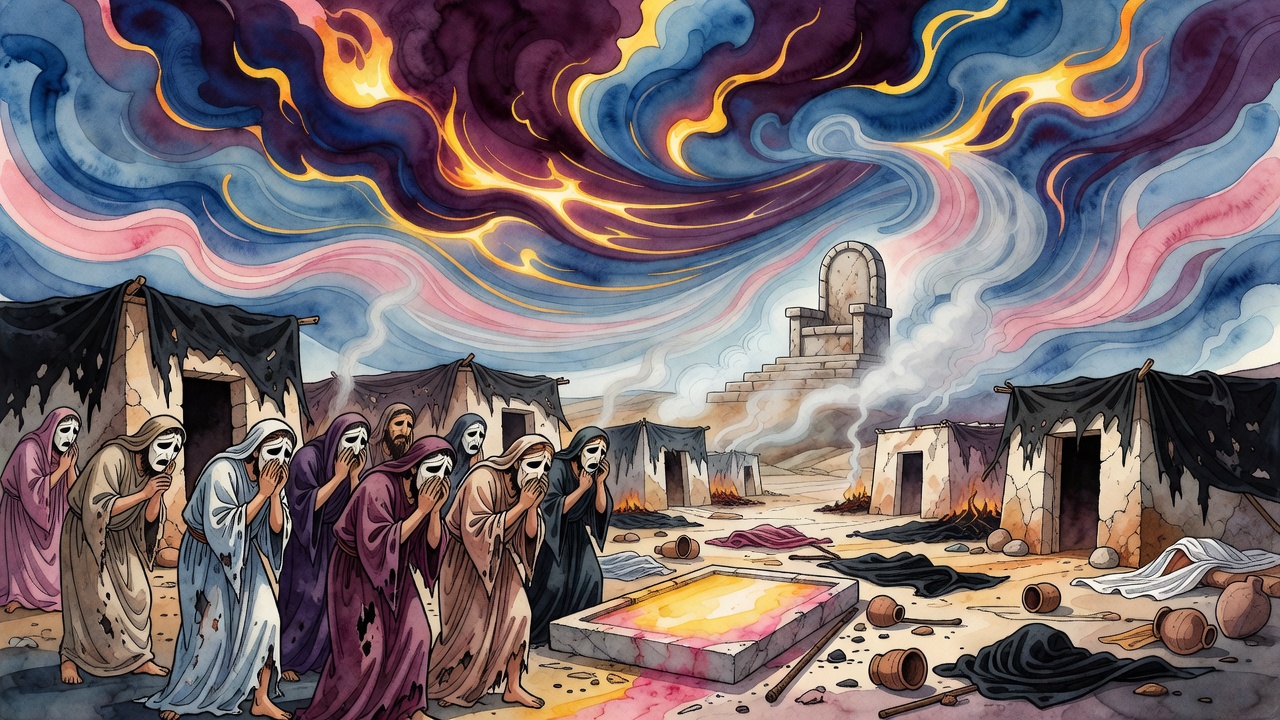
The years turned. The stones stayed down. But once each year, on the night of the Ninth of Av, when Jews across the scattered world sit low on the ground and mourn the House that fell, the old well remembers its dead and begins again to weep.
And it is not alone. From the bare ground where the Temple stood, a sound of mourning and sighing lifts into the dark, and anyone who comes to pray among the ruins on that night hears it, the grief of the stone and the grief of the water braided together, and they weep until the weeping takes their strength and they sink down where they stand. The sun still pours its light. The well still pours its sorrow. And the question Moses shouted at the throne still waits, in the mouth of the water, for an answer that has not come.
← All myths