The Well at Haran Was a Synagogue, Sinai, and the Road Home
Jacob had not lain down to sleep in fourteen years. God told him to lie down, and he argued back that the sun was still too high in the sky.
Table of Contents
Jacob was seventy-seven years old when he walked out of his father's house, and by then he had a habit of not sleeping.
 Click for full size
The well went ahead of him when he left. Two days of road, up from Beersheba to Mount Moriah, and the water travelled in front of him the entire way.
Fourteen Years Without Lying Down
Fourteen years hidden in the house of Ever, and he never lay down. Twenty years in Laban's country, the same. What he did with those nights was recite. Fifteen songs of ascent, the ones that climb one on top of another through the middle of the book of Psalms. Some said it was the whole book, start to finish, every night.
"Had it not been for the Lord Who was with us, let Israel declare now" (Psalm 124:1). He said it in the dark, standing, because lying down would have been a night he was not yet willing to take.
The Sun Dropped While He Argued
He reached the mountain at midday and God met him on it.
"Jacob. The bread is in your bag and the well is in front of you. Eat, drink. Lie down here."
"Master of the world. The sun is a fifth of the way down. Am I supposed to lie down at the wrong hour?"
The sun went over into the west while he was standing there arguing. He looked up at it and lay down.
He took twelve stones for his head. They came off the altar where Isaac had been bound. Twelve of them under one head, to tell him twelve tribes were coming out of him. Overnight they closed into a single rock, to tell him the twelve would be one nation in one land.
They call God the Place (המקום). Wherever a righteous man happens to be standing, that is where He turns out to be.
The Stone on the Well at Haran
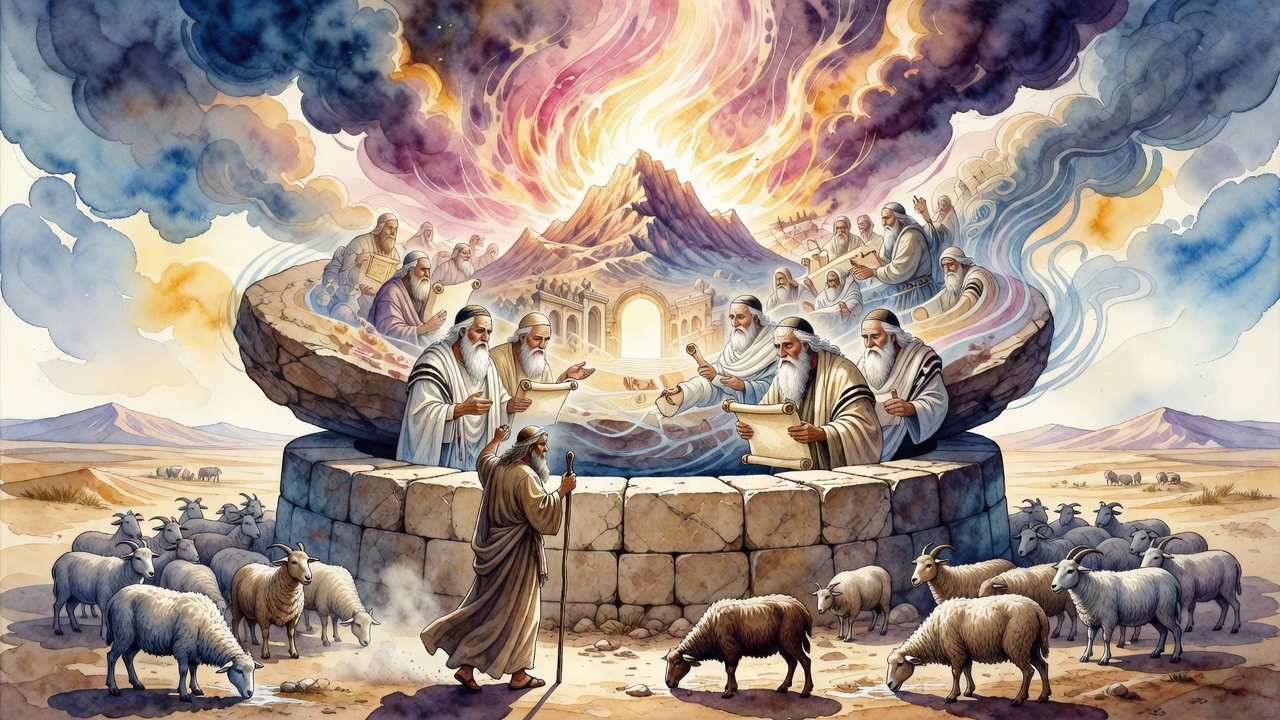
Further up the road there was a field with a well in it, three flocks lying around the mouth of it waiting, and a stone across the opening too heavy for one shepherd to move alone.
Jacob walked up. The shepherds sat. The stone sat. Nobody rolled it until all the flocks had gathered, because one man could not shift that weight. All the flocks. Not most of them. The count had to be complete before the stone came off.
He put his hands to the stone and rolled it off the mouth of the well, and watered the flock. The water came up. The animals drank. Then the stone went back, as heavy as it had been before anybody came.
A later congregation would gather the same way. Three men called up. The scroll rolled open. Everyone drank. Then the reading ended, the people went out through the door, and the weight slid back over the mouth. The pull that wants the whole thing kept shut sat there again, exactly as heavy as it had been before anybody came in.
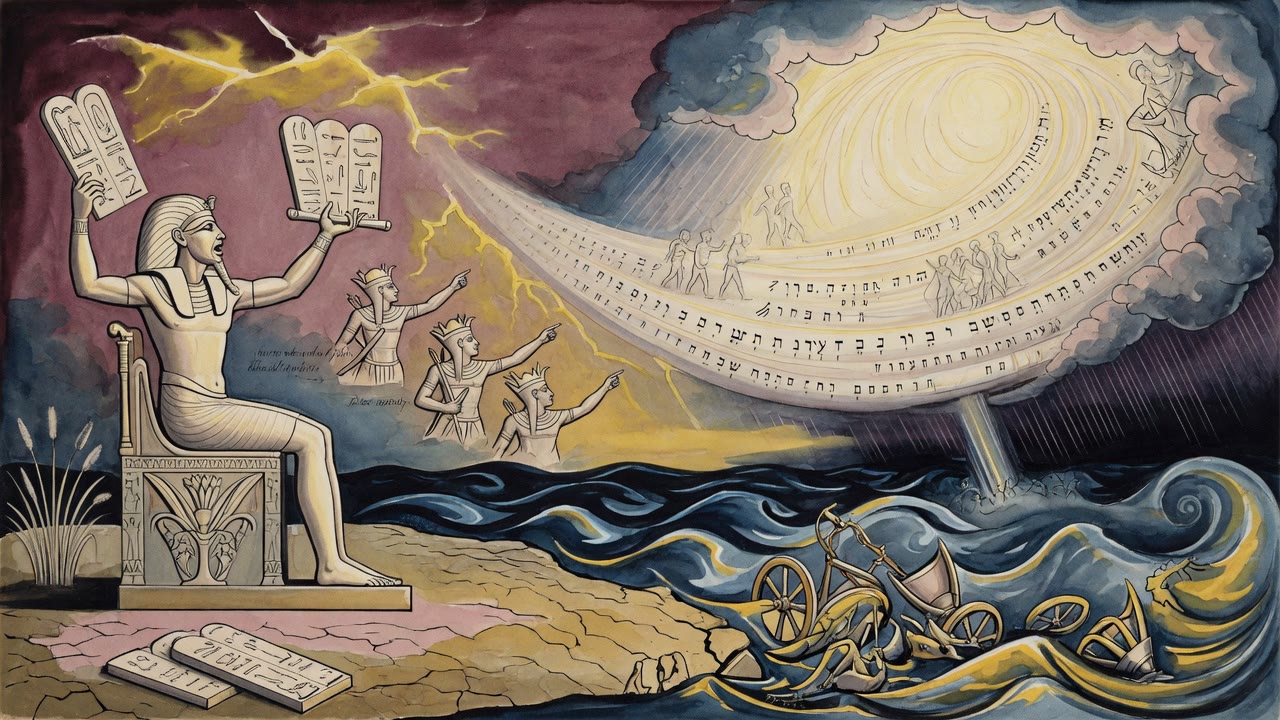
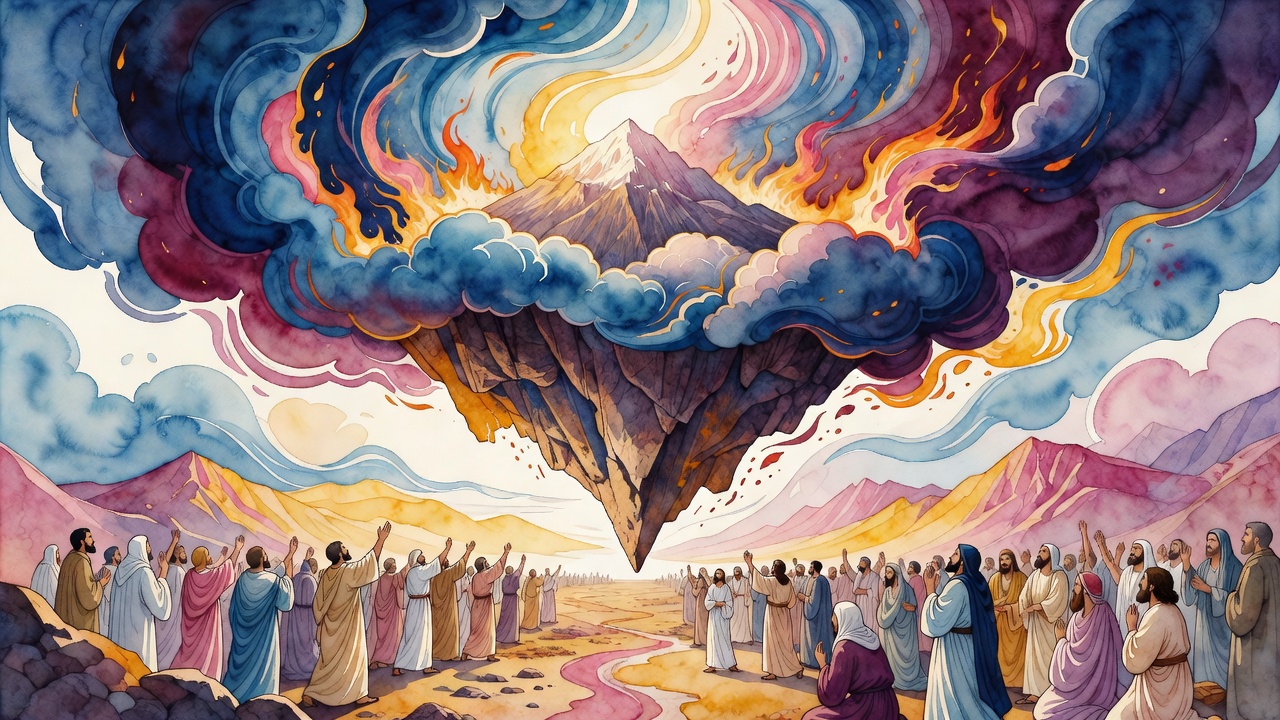
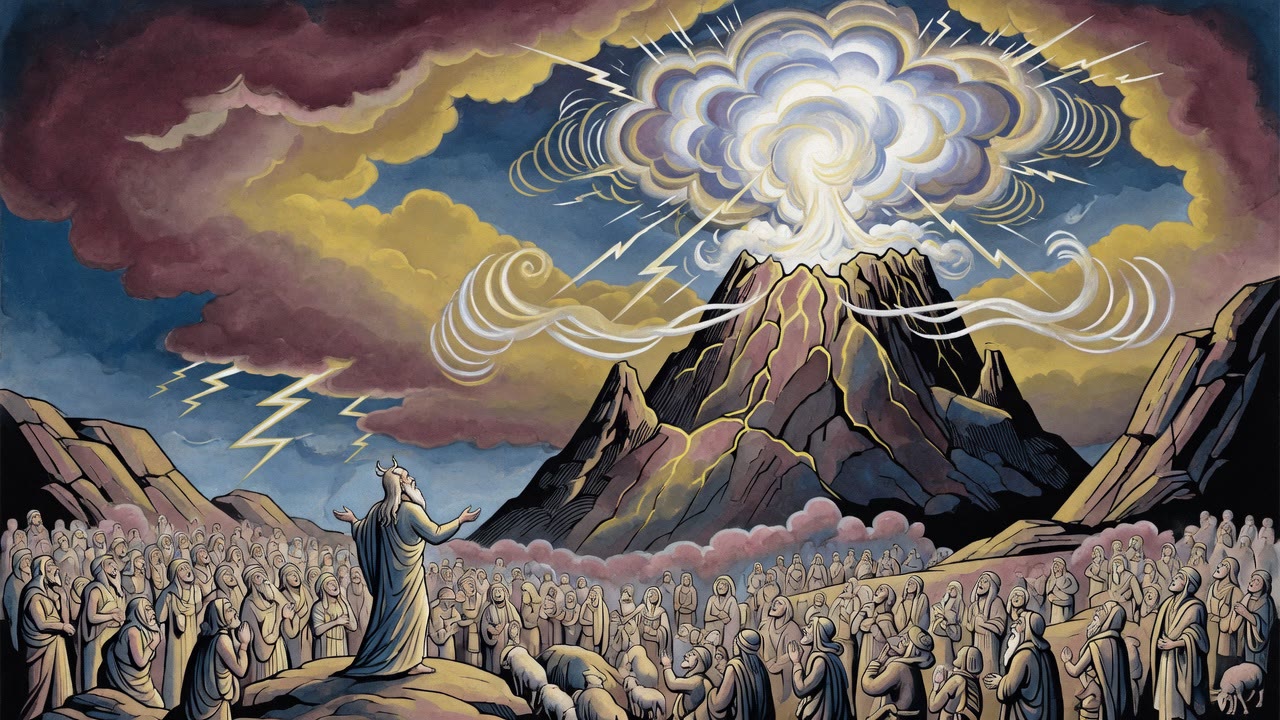
On a later mountain the same law would hold. If one Israelite had been missing from the foot of Sinai, the Torah would not have been given at all. Priests, Levites, Israelites. The water was the Ten Words. The stone on the mouth was the Presence itself.
The Pavement Under His Feet
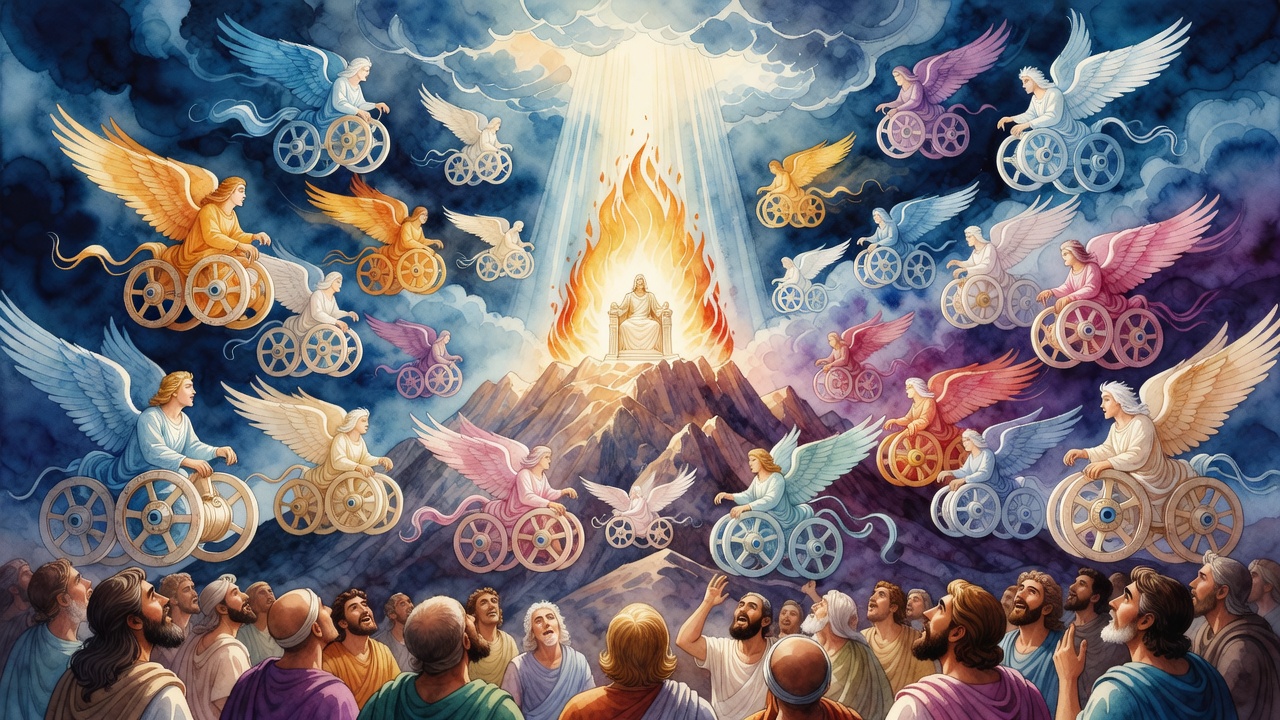
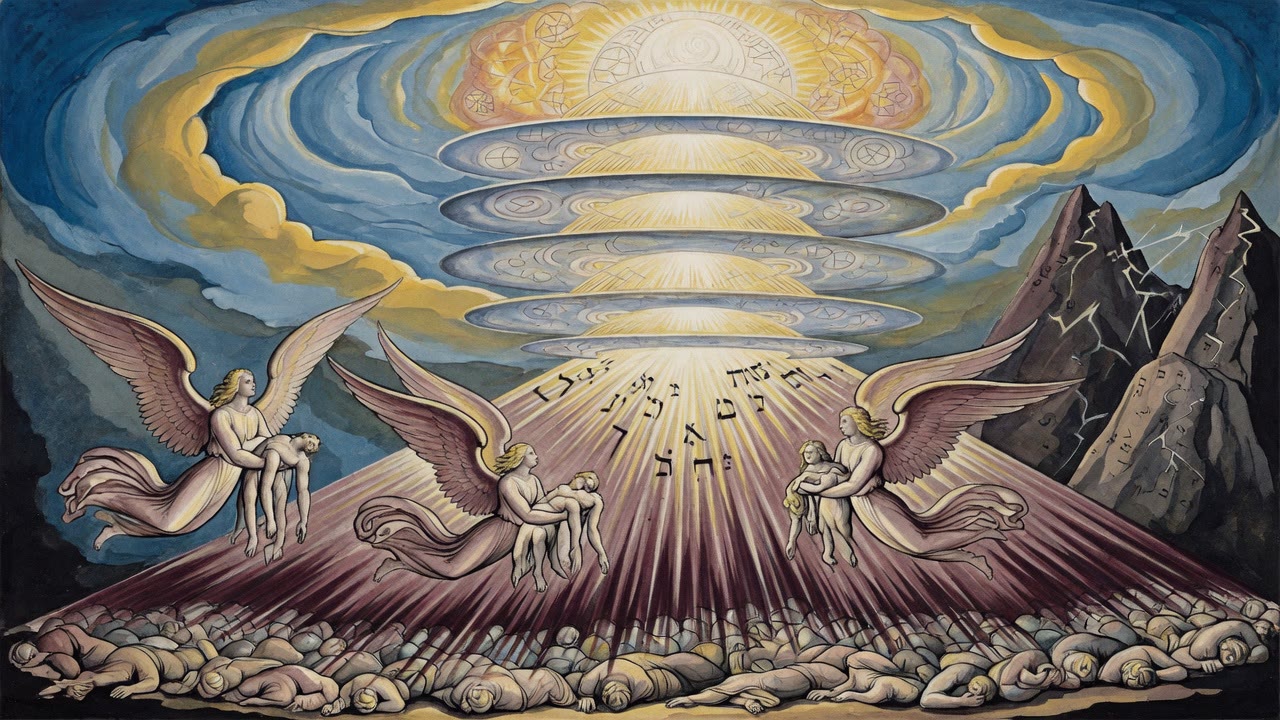
When the elders went up, they glimpsed beneath God's feet something like a pavement of sapphire, a floor so clear it looked like the sky had been laid down and walked on. The tablets were cut from that same shine. Brick had been Egypt's weight. Stone would be Babylon's. Stone is harder than brick, and so was the later yoke.
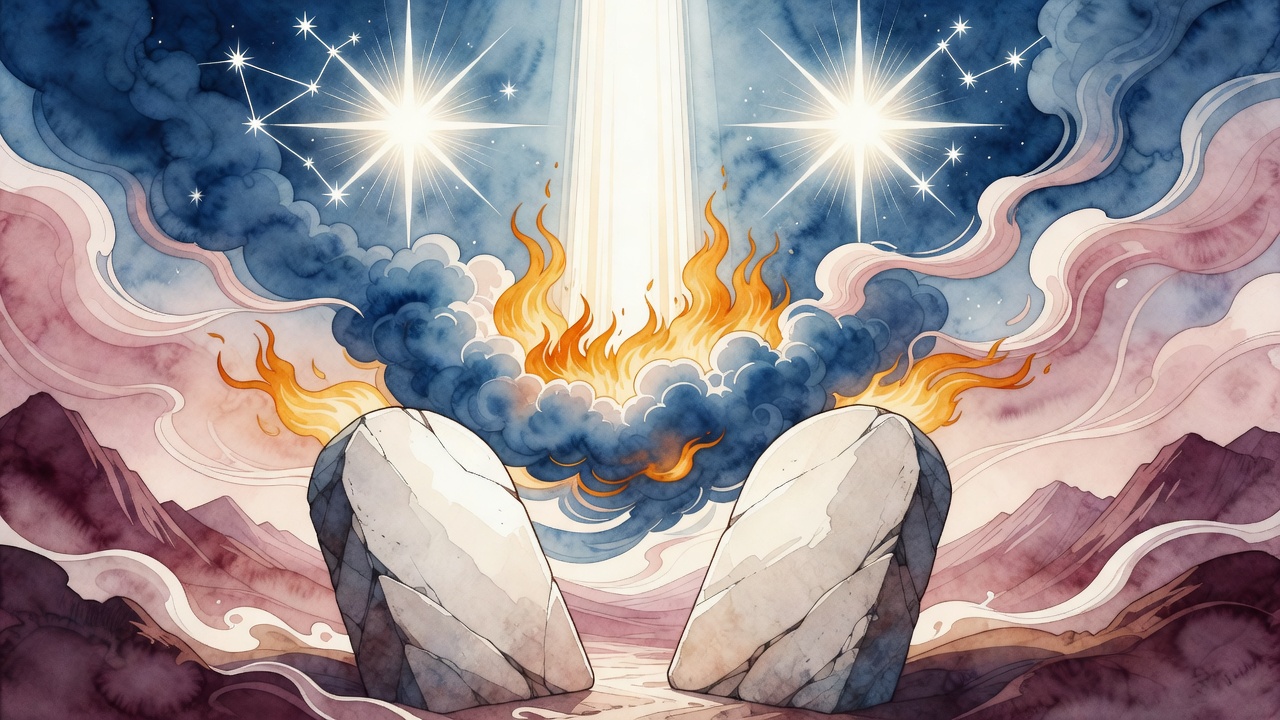
God told Moses, "Come up to Me to the mountain, and I will give you the tablets of stone, and the Torah, and the commandment" (Exodus 24:12). The summons already held more than stone. The tablets, the teaching, the rulings, the prophets, the Talmud. Everything Israel would ever learn was already folded into that one climb.
Rachel Came Over the Rise
At the well Jacob asked the shepherds, "Brothers, where are you from?"
"From Haran," they said.
"Do you know Laban son of Nahor?"
"We know him."
"Is it well with him?"
"It is well. Look. Rachel his daughter is coming with the sheep."
That was the answer, and the answer was a girl walking over a rise with her father's animals. Jacob rolled the stone, watered the flock, kissed her, and wept.
Centuries after, a voice came up out of Ramah, wailing, Rachel crying over her children and refusing to be comforted. The reply she got was already standing in the field at Haran. "Hold your voice back from weeping and your eyes from tears. There is a wage for the work you did. The children come back to their own border" (Jeremiah 31:16).
Jacob kissed her beside a well that had travelled two days in front of him, and the road home was already inside the greeting.
← All myths