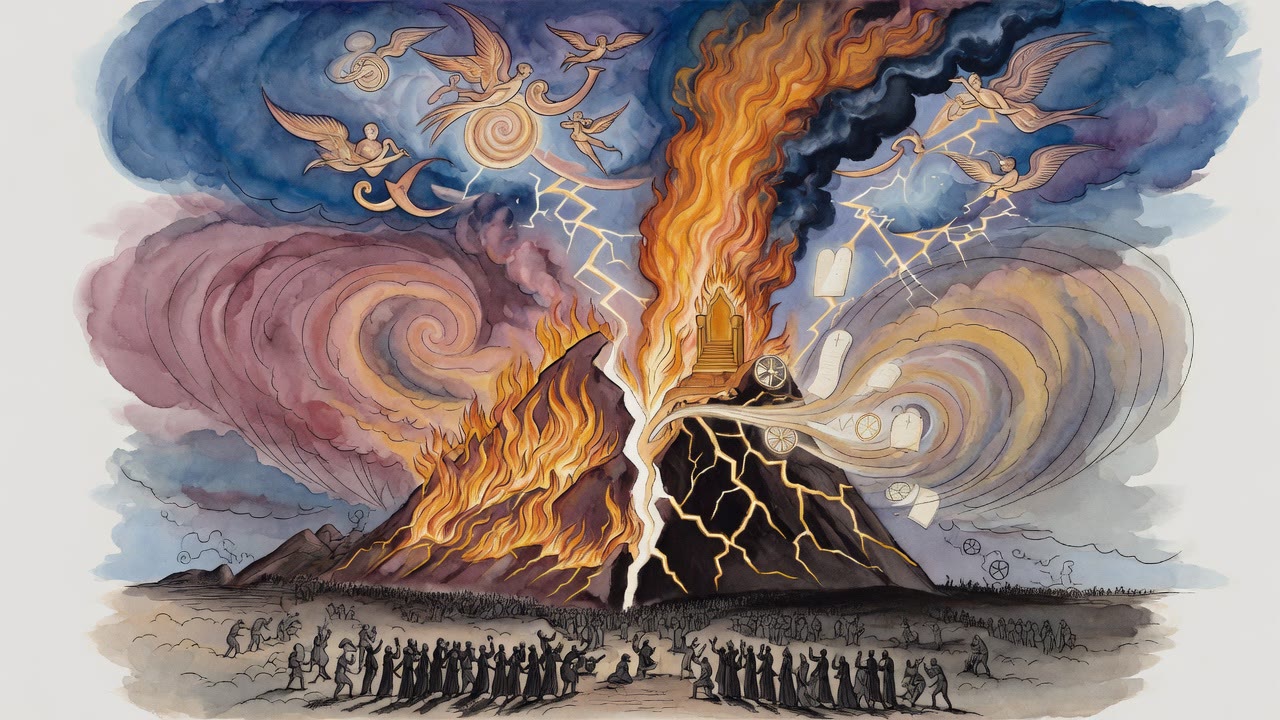
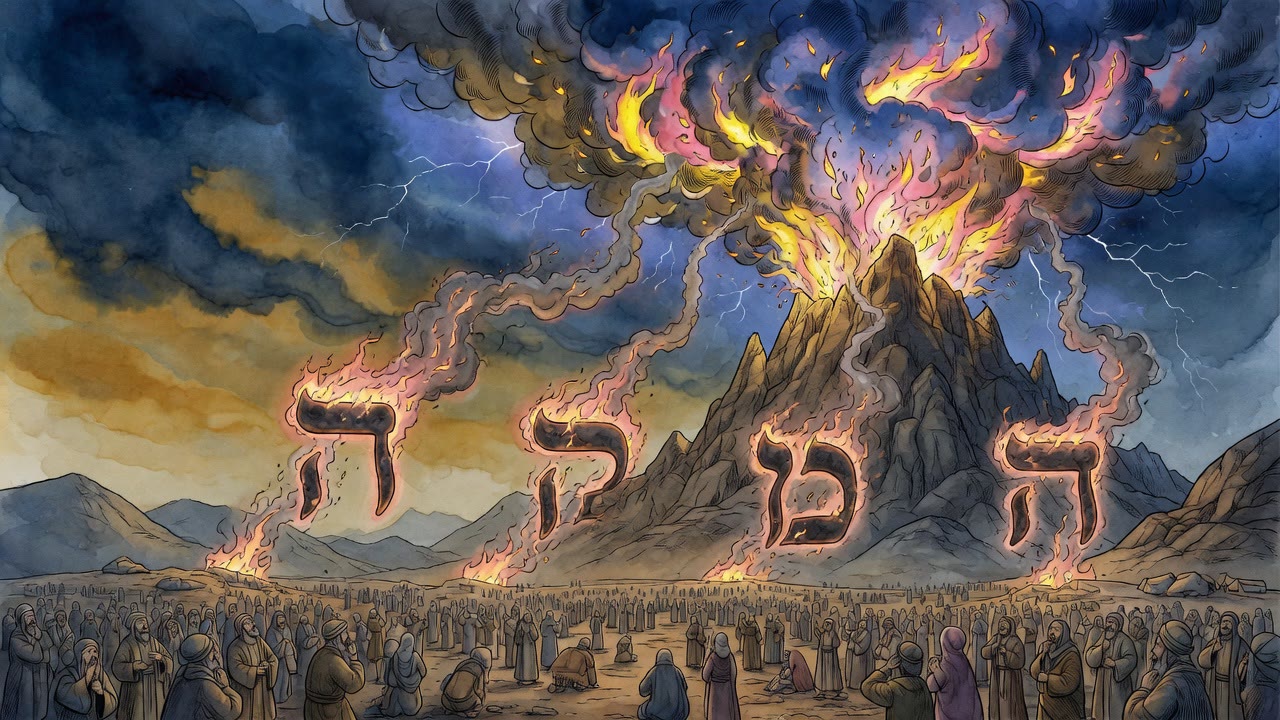
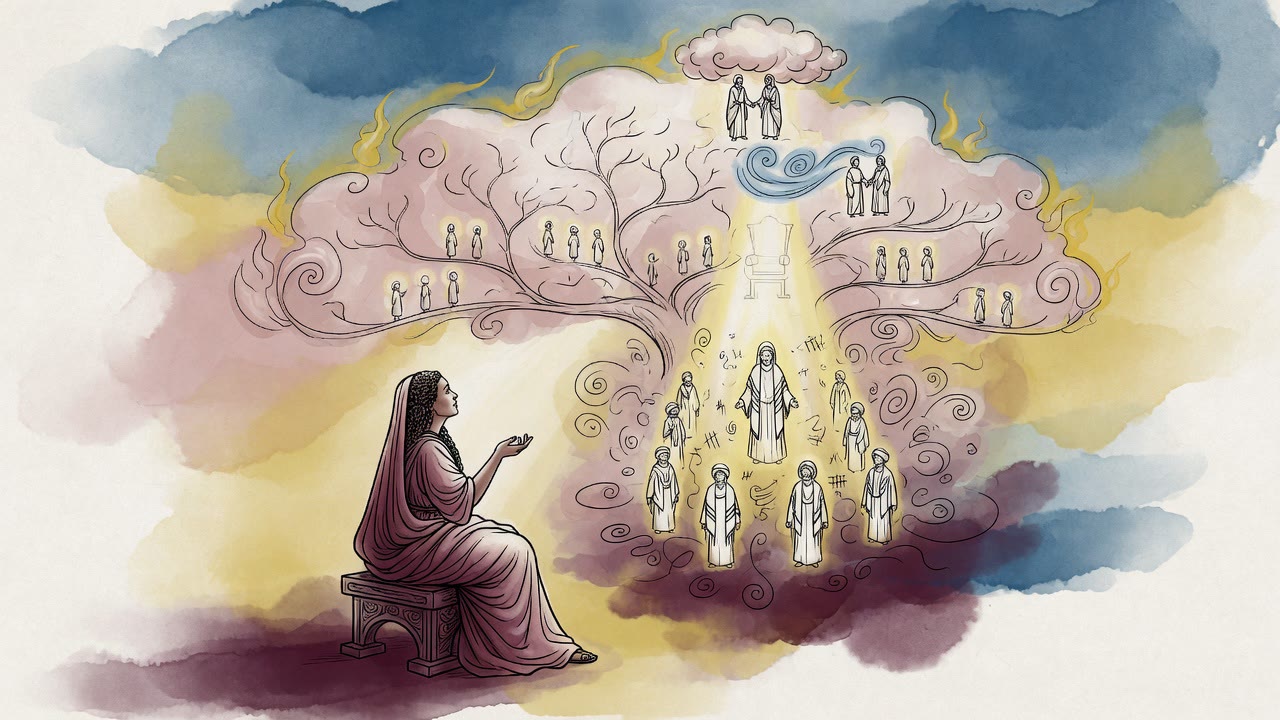
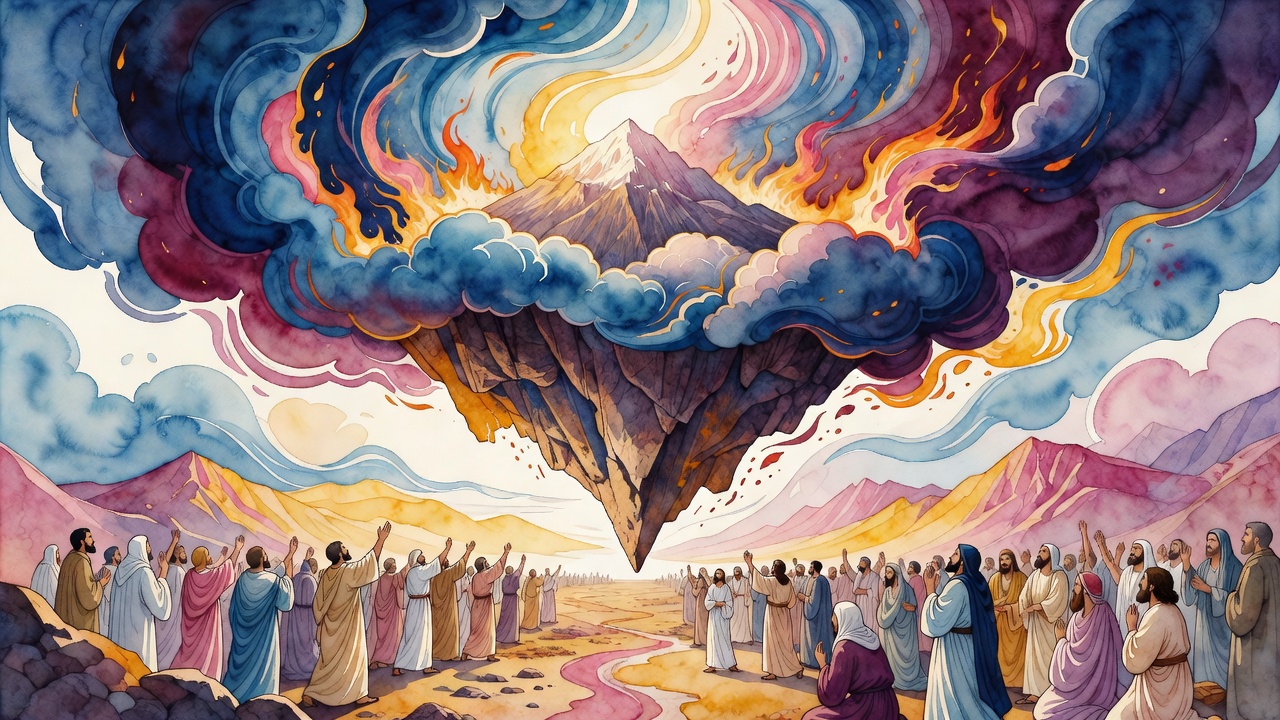
Sinai Came in the Month of the Twins and the Tablets Faced Each Other
Wicked Esau could still walk in and learn, God said, and pointed at the calendar. That was the whole answer the nations were given.
Table of Contents
 Click for full size
The Complaint the Nations Had Ready
The nations of the world had their answer ready long before Sinai ever smoked. Had He given it to us, we would have kept it.
God did not argue with them. He pointed at a calendar.
Look at which month I gave the Torah in. The third one, and its sign in the sky is the Twins. If wicked Esau ever comes to turn back and join, let him come and learn Torah. A month with two in it keeps a place open for the second one.
The Name of a Judge Came Down on the Mountain
When the verse reports who spoke, it uses Elohim, and that is the name of a judge, one who exacts payment for a wrong and is reliable about handing out a reward.
Not a force. Not a weather event on a summit. Someone who keeps accounts in both directions came down on that rock.
Ten Words in One Breath
He said all ten of them at once, in a single utterance, which no mouth of flesh and blood has ever managed. Say I am the LORD your God and you shall have no other gods before Me in one breath, both of them whole, both of them hearable at the same instant. Nobody can.
Then He went back and said them again one at a time, each word standing by itself, so that the people at the foot of the mountain could take them apart and hold them.
Only these ten came that way. The rest of the commandments arrived the ordinary way, one after another, the way anything is taught.
The people answered out of the smoke after each one, and the sages could not agree on what they said. Rabbi Ishmael said they answered yes to the ones that told them to do and no to the ones that told them not to. Rabbi Akiva said they answered yes to both, taking even the prohibitions as something to reach for rather than something to keep away from.
The King's Face on Every Coin
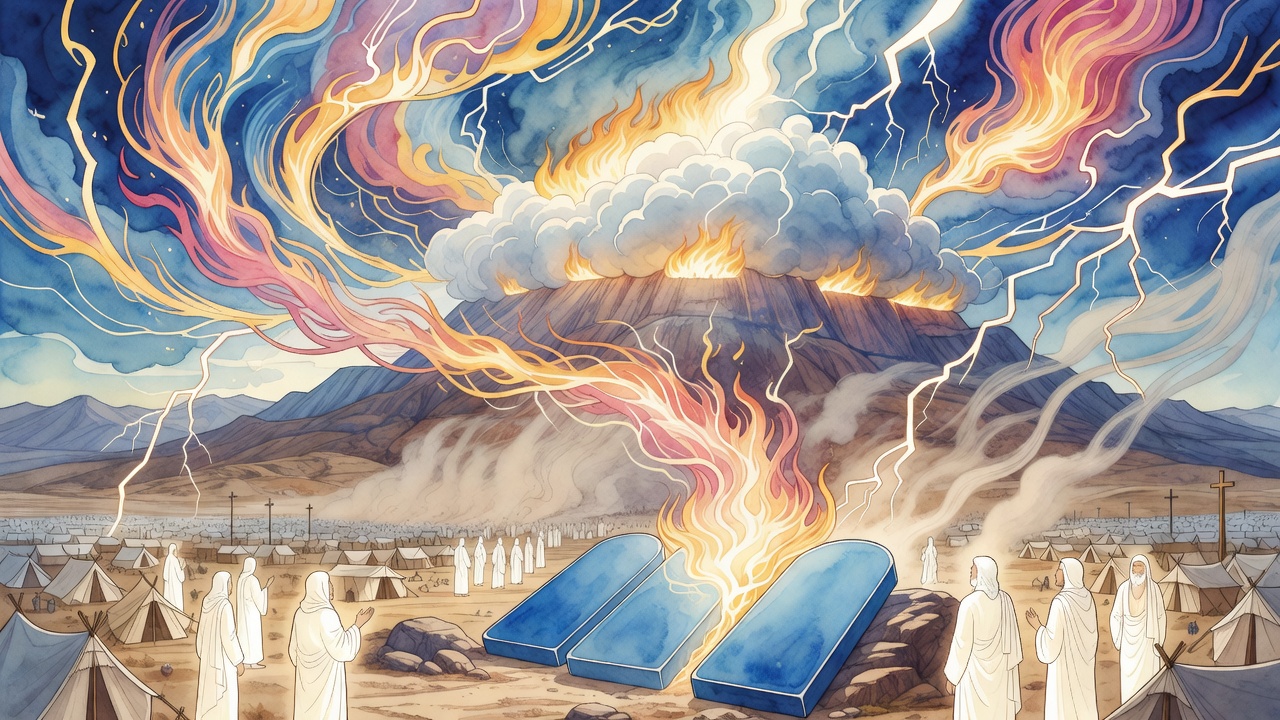
Five words were cut into one tablet and five into the other, and the two tablets mirrored each other, right against left, so that every command had a partner staring back at it.
I am the LORD your God stood opposite You shall not murder.
A king comes into a province. The people set up his portraits along the roads, carve his likeness, strike coins with his face on them, and for a while every hand in the province is holding him. Time passes. They turn the portraits to the wall. They break the statues. They file the faces off the coins, and by evening the king is a smaller man in his own country.
Whoever spills blood is charged with that afternoon's work, because a human being was made in the image of God, and the stamp on the metal is His.
What Faced What Across the Stones
You shall have no other gods stood opposite You shall not commit adultery, because a man who serves idols is written down as one who has committed adultery against the Place, and the prophets said it in exactly those words when they called Israel the woman who strays.
You shall not take the Name in vain stood opposite You shall not steal, because the thief comes to the false oath sooner or later. Stealing and murdering and adultery and swearing falsely, said Jeremiah, and he put them in that order for a reason.
Remember the Sabbath stood opposite You shall not bear false witness, because a man who keeps the seventh day is testifying that the world was made in six days and rested on the seventh, and a man who profanes it is testifying that it was not. You are My witnesses, says the LORD.
Honor your father and your mother stood opposite You shall not covet, because the man who covets ends up raising a son who curses his own father and pays honor to a man who is not his father at all.
Then the sages fell out over the layout itself and never settled it. Five here and five there, said one side. Ten on this stone and ten on that one, said the other, the whole law written out twice, once on each slab, because the words were spoken to the entire assembly and not half to one crowd and half to another.
← All myths