6 min read

The Wicked Priest Hunted the Teacher on the Day of Atonement

Driven into exile by the Dead Sea, the Teacher of Righteousness held the key to Habakkuk. The high priest rode out on the fast day to break him.

Curated by Arthur · Told by Maggid ·
Table of Contents
  1. The House of Exile Beside the Salt Sea
  2. What Habakkuk Was Never Told
  3. The Mystery Handed to Men Who Owned Nothing
  4. The Cup He Made His Neighbor Drink
  5. Delivered Into the Hands of His Enemies

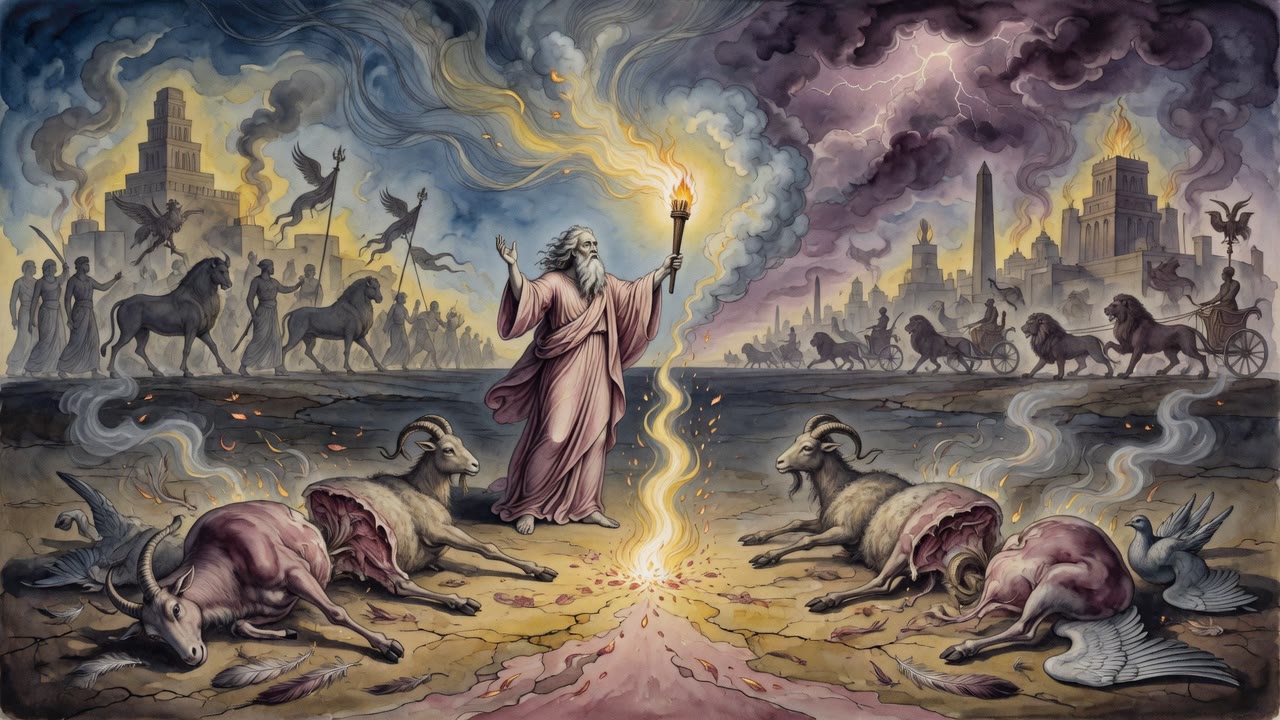
The Wicked Priest rode down out of Jerusalem on a morning his own calendar called ordinary. Men with staves went with him. The road dropped past Jericho into the heat and turned east toward the salt water, where a settlement of scribes had stopped eating at sundown and would not eat again until the stars showed on the far side of the fast.
The Wicked Priest Hunted the Teacher on the Day of Atonement Click for full size

They called the day the Day of Atonement. Jerusalem did not.

The House of Exile Beside the Salt Sea

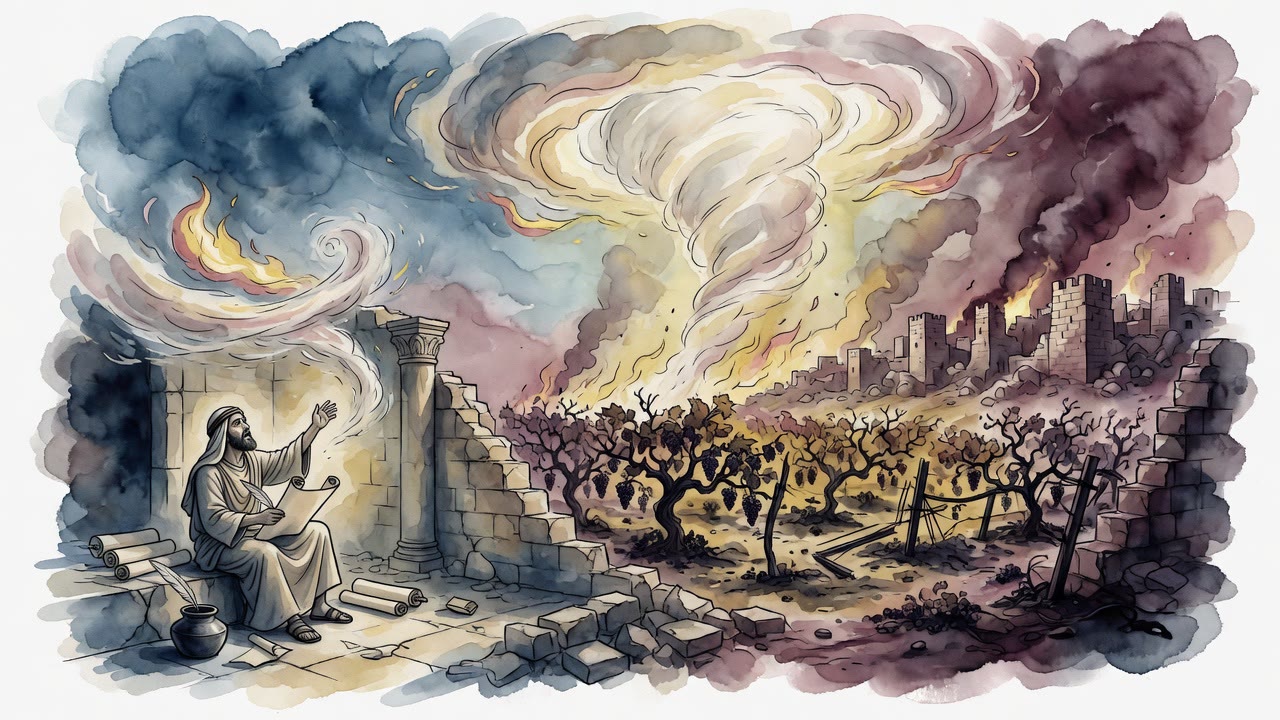
The Teacher of Righteousness had stood in the Temple courts once, in the vestments, with the incense going up. He did not stand there now. He lived in a house of exile above the western shore, in country where the cliffs crack open into caves and the water will not let a body sink. The men who followed him owned almost nothing. They borrowed garments. They carried debts they could not clear, and they wrote anyway, hunched over skins in a room that smelled of lamp smoke and brine.

What they wrote was pesher (פשר), interpretation. One man read a line of the prophet Habakkuk aloud. A second wrote the line down. Then the Teacher said what it meant, and the scribe wrote the meaning underneath. Babylon had nothing to do with it. Every line came down on the men in that room.

"That bitter and hasty nation, which marches through the breadth of the earth" (Habakkuk 1:6). The Kittim, the Teacher said. Soldiers who sacrifice to their own standards and bow down to their weapons of war before a battle. The scribe's hand kept moving. No gate in Jerusalem would hold them.

What Habakkuk Was Never Told

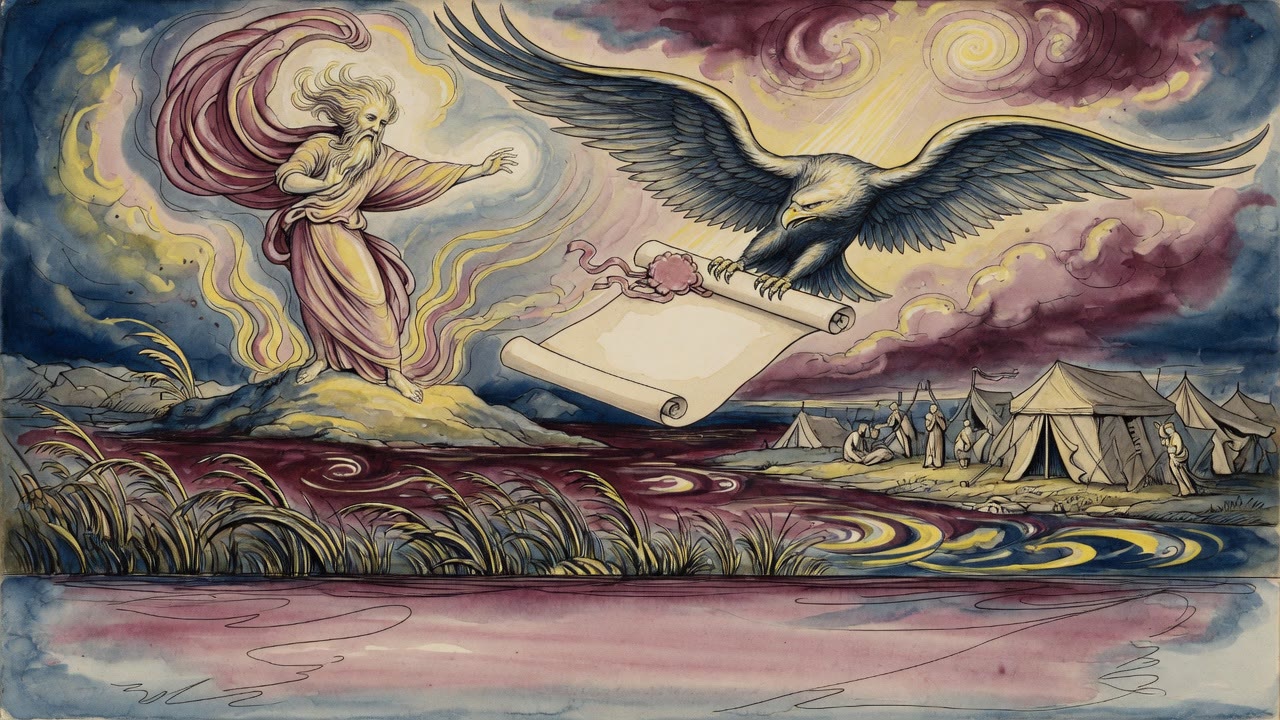
God had spoken to Habakkuk plainly. "Write the vision, and make it plain upon tablets, that he who reads it may run" (Habakkuk 2:2). So the prophet wrote. He wrote everything that would come upon the last generation, and he did not know he was writing about people not yet born. Then the voice stopped. Habakkuk was never told when the last age would close. Heaven kept that back.

The key came down centuries later into the hands of a hunted priest beside the Dead Sea. Every mystery in the words of the prophets had been opened to the Teacher, including the ones the prophets had carried in their mouths without understanding what they held.

So when the reading reached "the righteous shall live by his faith" (Habakkuk 2:4), the Teacher did not let the line float. It meant the ones who keep the Torah in the house of Judah, he said, and who stay loyal to him while Jerusalem calls him a liar. The scribe wrote it down without pausing. A living man's name had just been folded into a prophecy.

The Mystery Handed to Men Who Owned Nothing

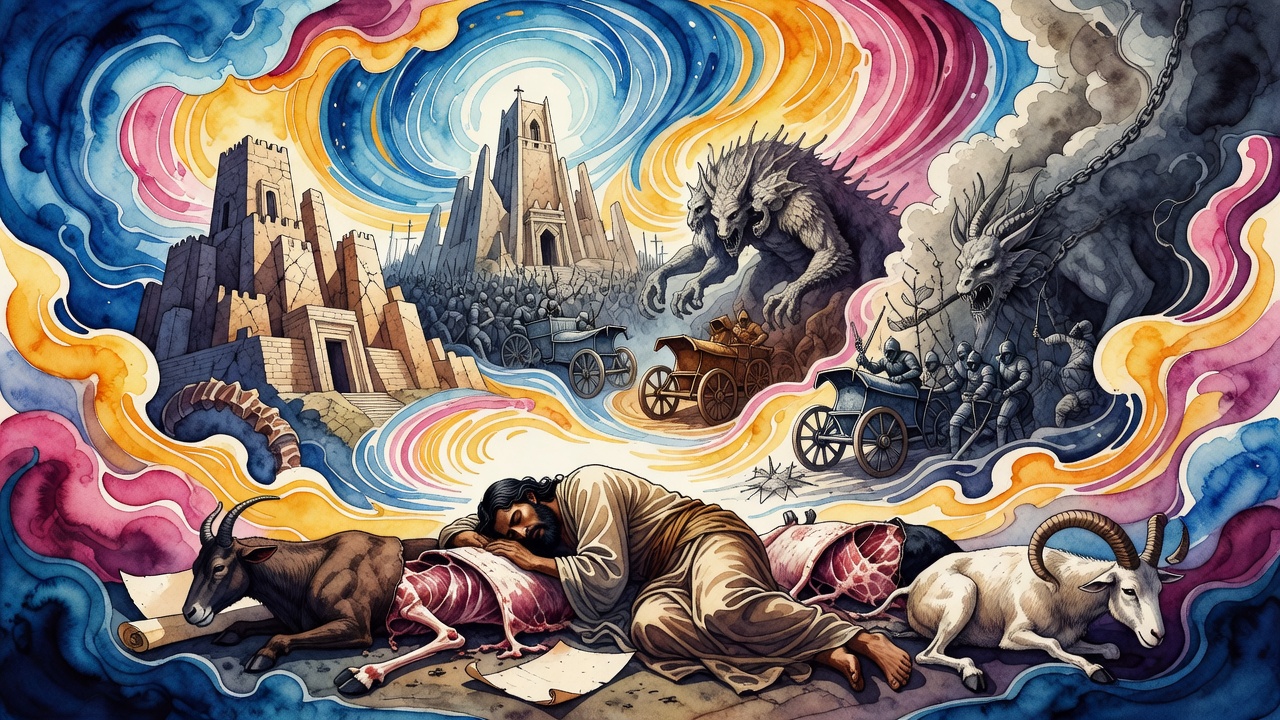
Another scroll lay in that room, and it did not read like prophecy at all. It talked about money. Do not borrow what you cannot return. Do not let a creditor keep your cloak through the cold. Honor the wife of your bosom. Weigh honestly, and do not grow fat on another man's hunger. A poor student read it by lamplight and found his own life written on the skin.

Then, in the middle of the advice about creditors, the same voice turned and said the impossible thing. Gaze upon the raz nihyeh (רז נהיה), the mystery of what will be. Study the hidden plan laid under creation, the reckoning of why the world runs as it runs, and how the end will sort the righteous from the guilty.

The student who was told this owned one garment and a bowl. He brought no bull and no lamb to any altar, and no one on the Temple staff would have known his face. The angels bend over that same mystery in heaven. So did he, in debt, in the desert, beside a clay lamp that needed oil.

The Cup He Made His Neighbor Drink

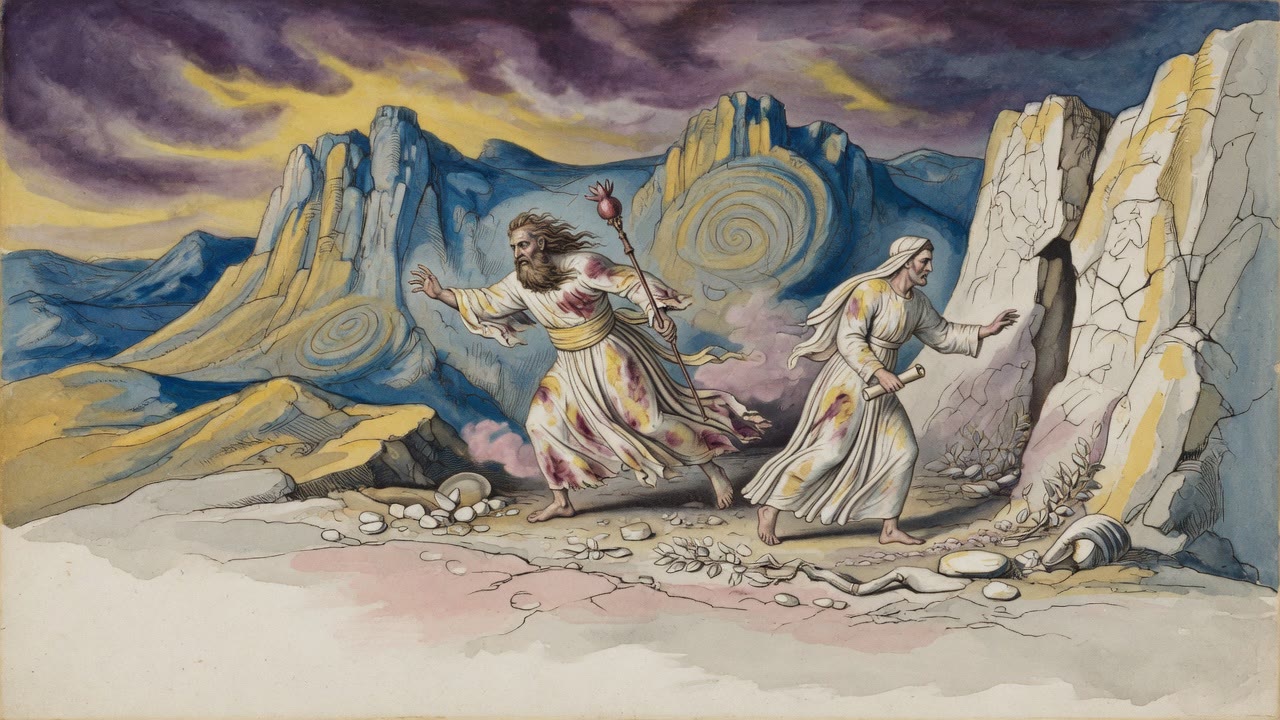
The riders came in while the community stood at prayer with dry mouths. Sandals in the doorway. Dust on the threshold of a fast day. The Wicked Priest crossed into the settlement on the day of fasting, their Sabbath of rest, and the crossing itself was the blow, because a man who travels and gives orders on the Day of Atonement is telling every fasting man in front of him that his day is a fiction.

"Come out," he called. "The day is a working day. Ask anyone in Jerusalem."

The Teacher came out. He had known this priest before the ruin, when the man first rose and was called by the name of truth, before the offices and the treasuries got into him. Nobody in the doorway said so aloud.

"Then go back and work," the Teacher answered. "We are keeping our day."

No one ate. No one drank. The fast held to the stars, and the riders turned their animals around in the dark and went up the road toward Jericho with nothing to show for the trip.

Afterward the scribe took up a verse he had been holding back for months. "Woe to him who makes his neighbor drink, who pours out his wrath and makes him drunk" (Habakkuk 2:15). Under it he wrote what the line meant, and the meaning had a face, a title, and an address in Jerusalem.

Delivered Into the Hands of His Enemies

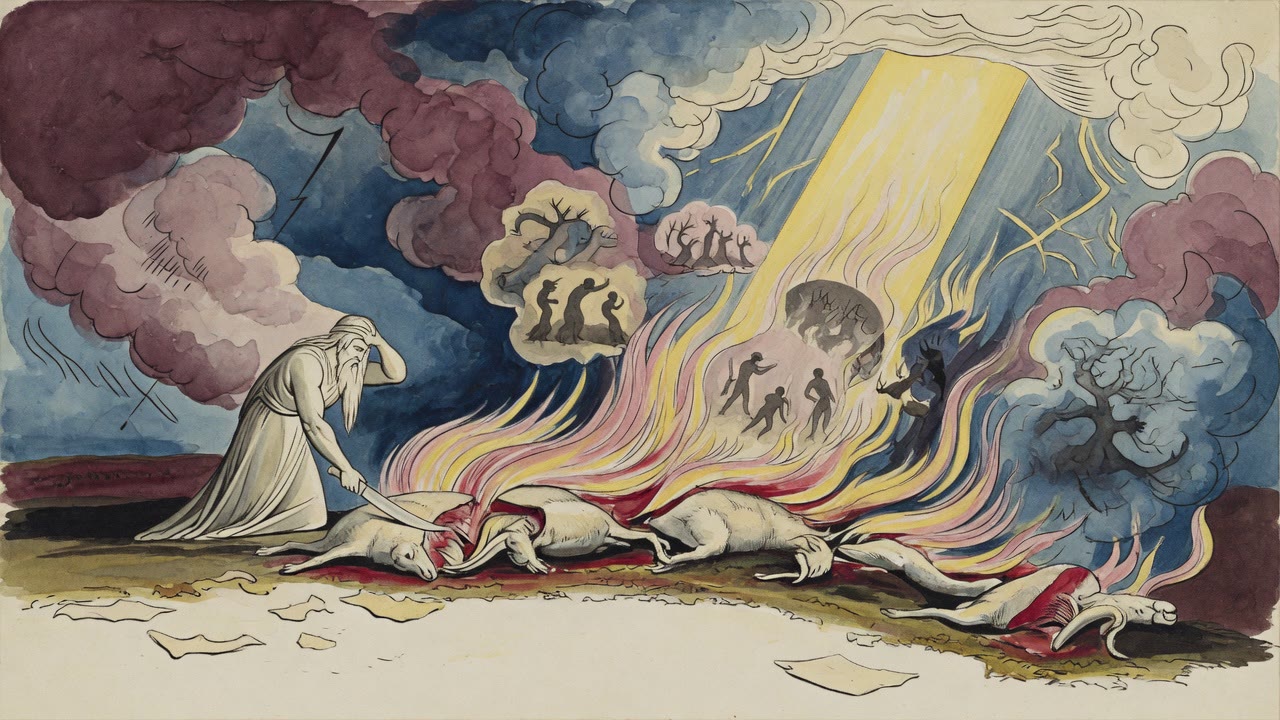
The end reached the priest through the men who had served him. God gave him into the hand of his enemies, and they took his body apart slowly, with sickness in his flesh and torment that would not lift. He died without honor and was buried without it. "You have filled yourself with shame rather than glory. Drink, you also, and stagger" (Habakkuk 2:16).

Beside the salt water the lamps burned down and were trimmed again. The poor ones went on reading a line, writing a line, and setting the meaning under it in a smaller hand. The Kittim were still coming. The last age was still closing. Nobody in that room had been told when.


← All myths
From the tradition

Sources

3 sources

The texts behind this telling. Some cards carry a translation of the source; others are our own retelling of it, and each card says which. Every card links out to the original.

1QpHab 8:1-12:10Pesher Habakkuk (1QpHab)

Retold in our words. Read the original at the link below.Original JewishMythology.com adaptation from ancient manuscript references and scholarly summaries · Original Adaptation

The second half of the Pesher Habakkuk turns from cosmic prophecy to personal vendetta. And the story it tells has haunted historians for decades. According to the pesher, a figure called the Wicked Priest (HaKohen (a priest) HaRasha, הכהן הרשע) pursued the Teacher of Righteousness to his place of exile on the Day of Atonement itself, attempting to confuse and destroy him during the holiest fast of the year.

The pesher interprets (Habakkuk 2:15-16), "Woe to him who makes his neighbor drink the cup of his wrath", as referring to the Wicked Priest's harassment of the Teacher. "He pursued the Teacher of Righteousness to the house of his exile, and at the time of the festival of rest, the Day of Atonement, he appeared before them to confuse them and to make them stumble on the day of fasting, their Sabbath of rest."

This passage reveals that the Dead Sea community observed the Day of Atonement on a different date than the Jerusalem establishment. The Wicked Priest arrived on a day that was Yom Kippur (the Day of Atonement) for the community but an ordinary day for the Jerusalem calendar. The conflict was not just personal. It was calendrical, a dispute about the most fundamental question in priestly Judaism: when does God want to be worshipped?

The pesher promises that the Wicked Priest received his punishment. "God delivered him into the hand of his enemies to afflict him with disease and torment." The text describes his end in vivid terms, suffering, humiliation, and a disgraceful death. The message to the community was clear: persecution is temporary. God's justice is certain. The Teacher was vindicated not by force but by divine judgment executed through the very enemies who once served the Wicked Priest's interests.

Full source
1QpHab 1:1-7:17Pesher Habakkuk (1QpHab)

Retold in our words. Read the original at the link below.Original JewishMythology.com adaptation from ancient manuscript references and scholarly summaries · Original Adaptation

The Pesher Habakkuk is one of the first Dead Sea Scrolls ever read by modern eyes, and it introduced the world to a revolutionary method of interpreting scripture. The Hebrew word "pesher" (פשר) means "interpretation," and the technique is simple: every line of the biblical prophet Habakkuk is quoted, then immediately followed by the community's interpretation of what it "really" means. And what it really means is always about the community itself.

(Habakkuk 1:6), for instance, describes the Chaldeans as "that bitter and hasty nation, which marches through the breadth of the earth." The pesher identifies them as the Kittim, almost certainly the Romans, who "sacrifice to their standards and worship their weapons of war." (Habakkuk 2:4), "the righteous shall live by his faith," is interpreted to mean specifically those who keep the Torah and remain loyal to the Teacher of Righteousness.

The pesher introduces two key figures. The Teacher of Righteousness (Moreh HaTzedek, מורה הצדק) is a priestly figure to whom God revealed the true meaning of all the prophets, meanings that the prophets themselves did not fully understand. Opposed to him is the Wicked Priest (HaKohen (a priest) HaRasha, הכהן הרשע), a figure of power who persecuted the Teacher and who, the pesher says, was "called by the name of truth when he first arose" but later became corrupt.

The identity of the Wicked Priest has been debated for seventy years. The most common candidates are the Hasmonean high priests of the 2nd and 1st centuries BCE. What matters theologically is the pesher's central claim: the Hebrew prophets were not writing about their own time. They were writing, in code, about the end of days. And only the Teacher of Righteousness held the key to breaking that code.

Full source
4Q416 2:1-21, 4Q418 43-454QInstruction (Musar LeMevin)

Retold in our words. Read the original at the link below.Original JewishMythology.com adaptation from ancient manuscript references and scholarly summaries · Original Adaptation

4QInstruction (Musar LeMevin, מוסר למבין, meaning "Instruction for the Understanding One") is one of the longest and most philosophically sophisticated texts found at Qumran. Preserved in fragments across multiple manuscripts from Cave 4, this wisdom text combines practical financial advice with mind-bending cosmological revelation, often in the same paragraph.

The text addresses a student called the "mevin" (מבין), the one who understands. It teaches him how to manage debt, treat his wife with honor, and navigate commercial transactions honestly. So far, so practical. But woven through these mundane instructions is a repeated command that elevates the entire text into something extraordinary: "Gaze upon the raz nihyeh" (רז נהיה), the "mystery of existence" or the "mystery of what will be."

What exactly is the raz nihyeh? The text never fully defines it, but the fragments suggest it is nothing less than the hidden blueprint of creation, the divine plan underlying all of reality, past, present, and future. By meditating on this mystery, the mevin can understand why things happen, what God intends for the world, and how the righteous and wicked will be judged at the end of days.

The most striking feature of 4QInstruction is who it addresses. The mevin is poor. He is in debt. He borrows garments. He struggles to feed his family. And yet this impoverished student is told that he has been granted access to the deepest mysteries of the cosmos, the same mysteries that the angels contemplate in heaven. The text insists that poverty is no barrier to ultimate knowledge. "You are poor," it essentially says, "but you have been given the secret of how the universe works. Act accordingly." The practical advice about money follows logically: if you understand the mystery of existence, you will also understand how to live rightly in this world.

Full source