Parshat Shemot5 min read

Three Counsellors Decided the Fate of Hebrew Infants

Pharaoh dreamed a lamb outweighed Egypt. Balaam urged the Nile. Reuel fled. Job shrugged. The decree learned to drown boys.

Curated by Arthur · Told by Maggid ·
Table of Contents
  1. The Kid on the Scale
  2. The Man Who Told Pharaoh to Stop
  3. Water Where Fire and Sword Had Failed
  4. What Silence Weighs
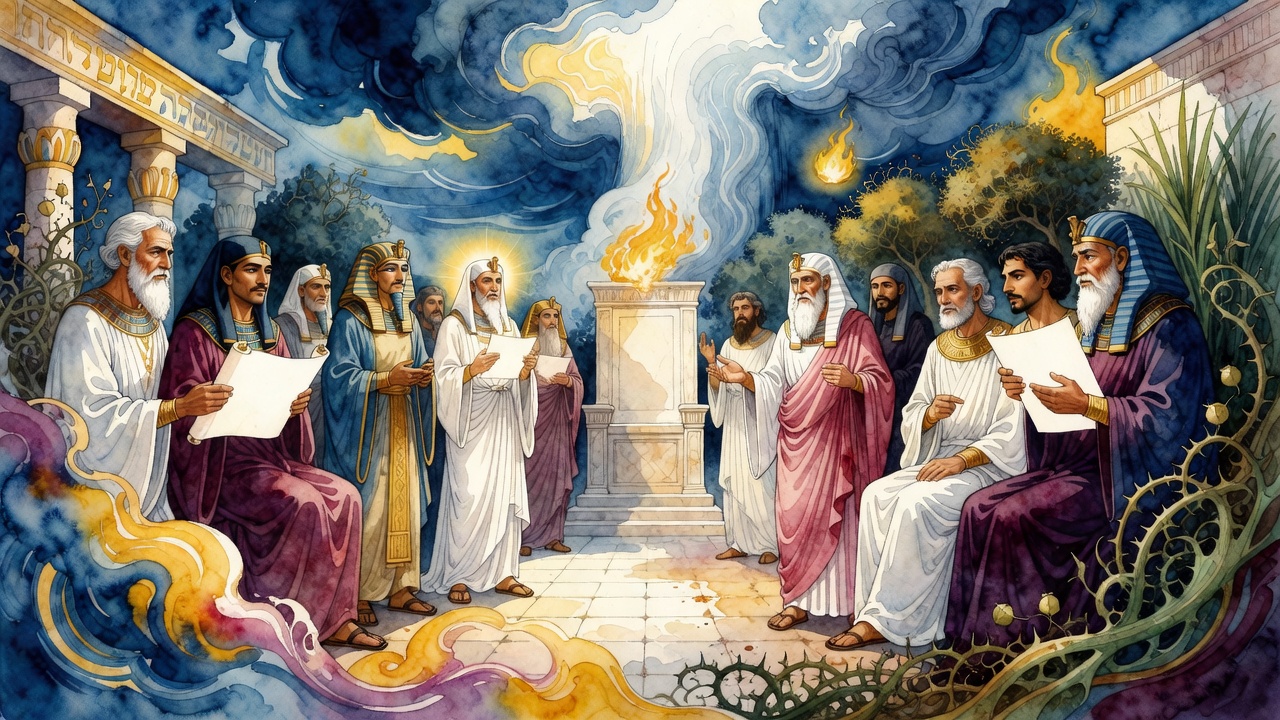
Three Counsellors Decided the Fate of Hebrew Infants Click for full size

The Kid on the Scale

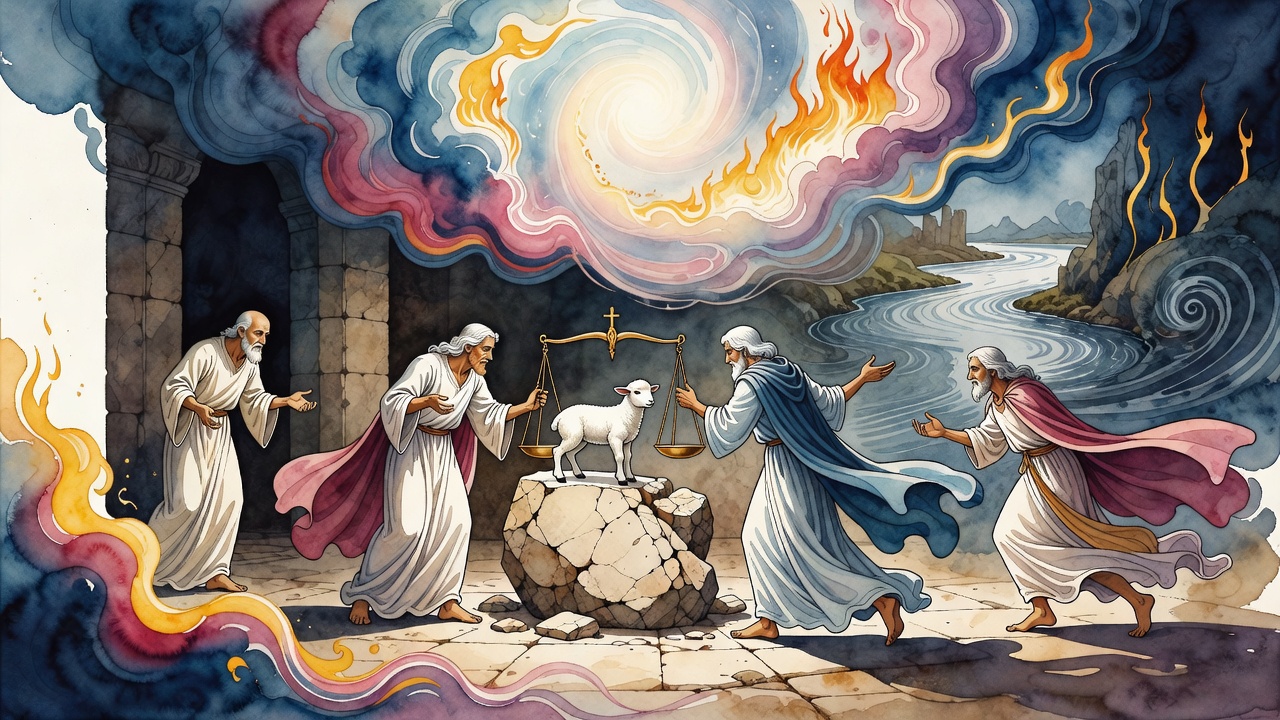
In the one hundred and thirtieth year after Israel entered Egypt, Pharaoh dreamed. An old man held scales. On one pan sat the elders and nobles of Egypt. On the other sat a tender kid. The kid slammed the nobles upward as if they were straw. Pharaoh woke with the taste of that imbalance in his mouth and summoned every man who sold wisdom for a living. Servants lit lamps before dawn. The court smelled of oil and fear.

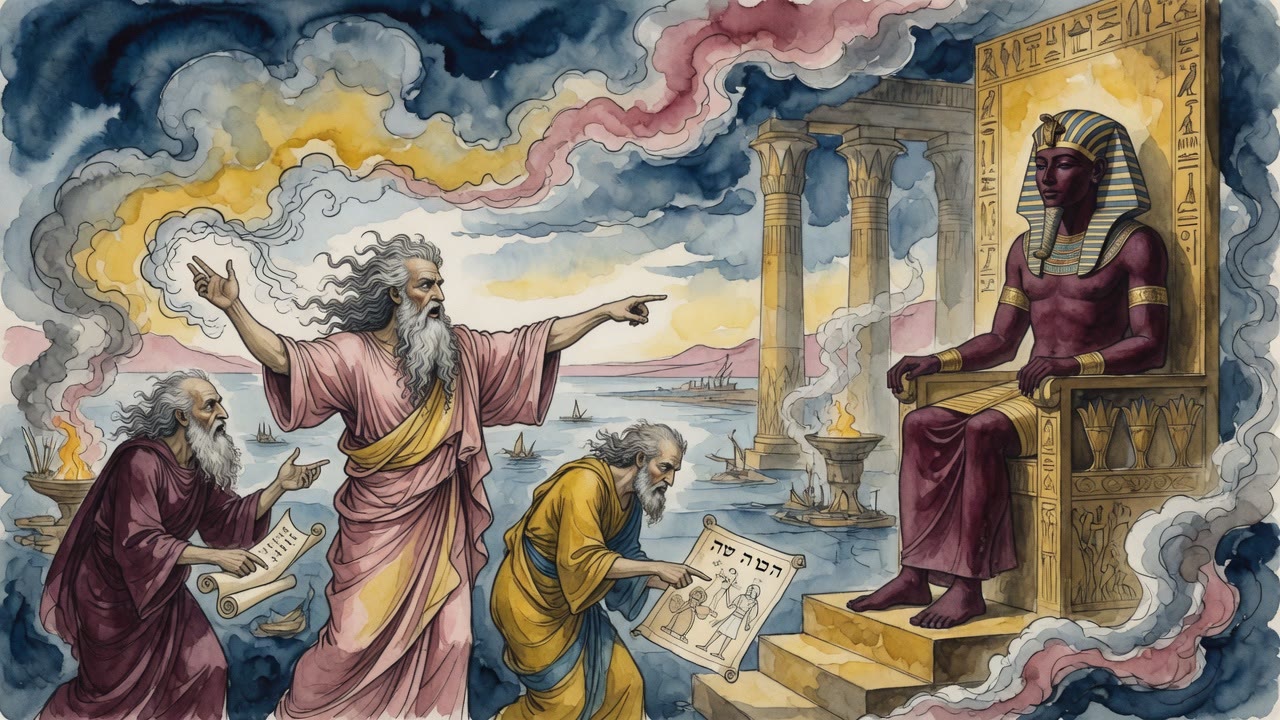
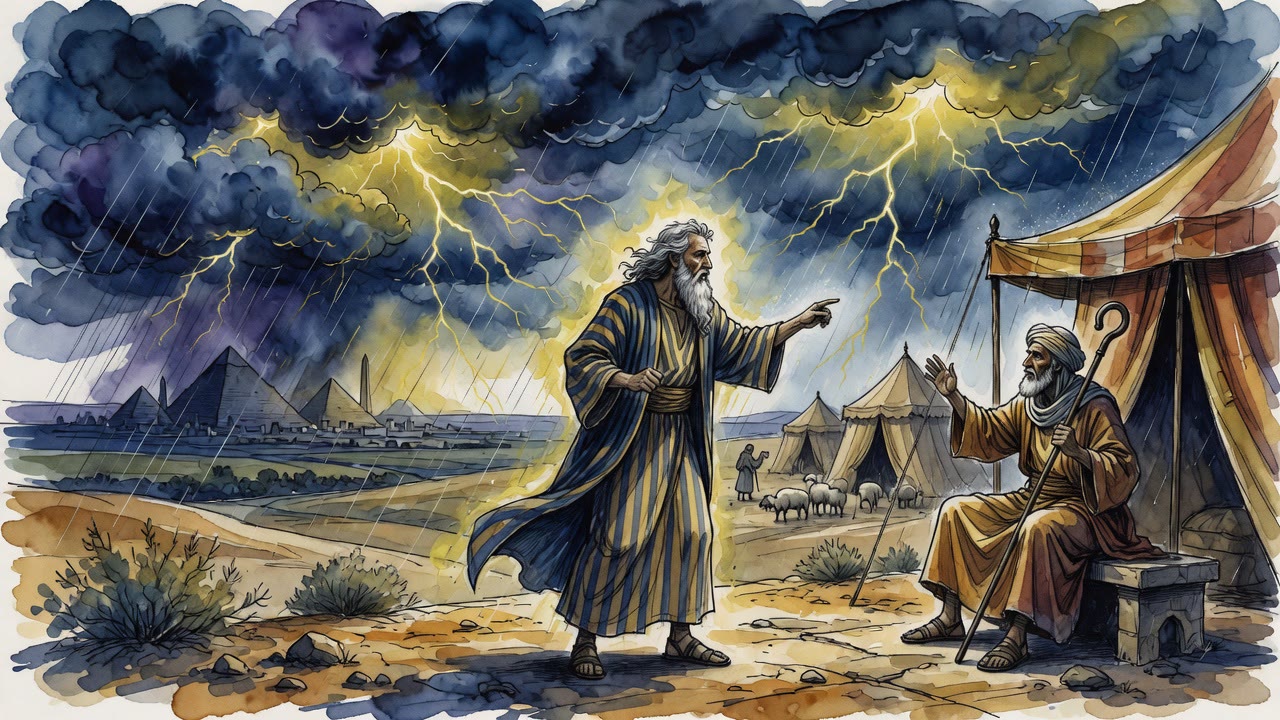
Balaam son of Beor did not wait for softer voices. A son would be born to Israel, he said, who would break Egypt and lead his people out. "Take counsel. Frustrate the hope of Israel before it hardens into history." The words hung like a blade over a cradle not yet built.

Pharaoh wanted more than one mouth. He called Reuel the Midianite, later called Jethro, and Job the Uzite. Three counselors. Three roads. One throne that already feared a lamb more than it feared famine, plague, or the Nile's moods.

The Man Who Told Pharaoh to Stop

Reuel spoke first, which is a kind of courage with a short life expectancy. "Desist from the Hebrews. Do not stretch your hand against them. The Lord chose them long ago." He named the deeds done for Abraham, Isaac, and Jacob. He reminded the court of an earlier Pharaoh who had honored Joseph and lived because he listened when a foreign dreamer spoke sense. Leave them alone, Reuel said, or send them back to Canaan with their flocks and their stubborn God.

Rage answered the way rage always answers truth in a frightened palace. Reuel was dismissed in disgrace and fled toward Midian, carrying his warning like a coal that would one day warm Moses' hands beside another kind of fire. The court watched him go and learned what truth costs when a king has already chosen fear as his chief advisor.

Job spoke next, and his words were a door left open to any crime. "Behold, all the inhabitants of the land are in thy power. Let the king do as seemeth good in his eyes." Not counsel. Permission. The silence of a man who will not dirty his tongue and so dirties the century. Pharaoh nodded, grateful for a sentence that asked nothing of his conscience.

Water Where Fire and Sword Had Failed

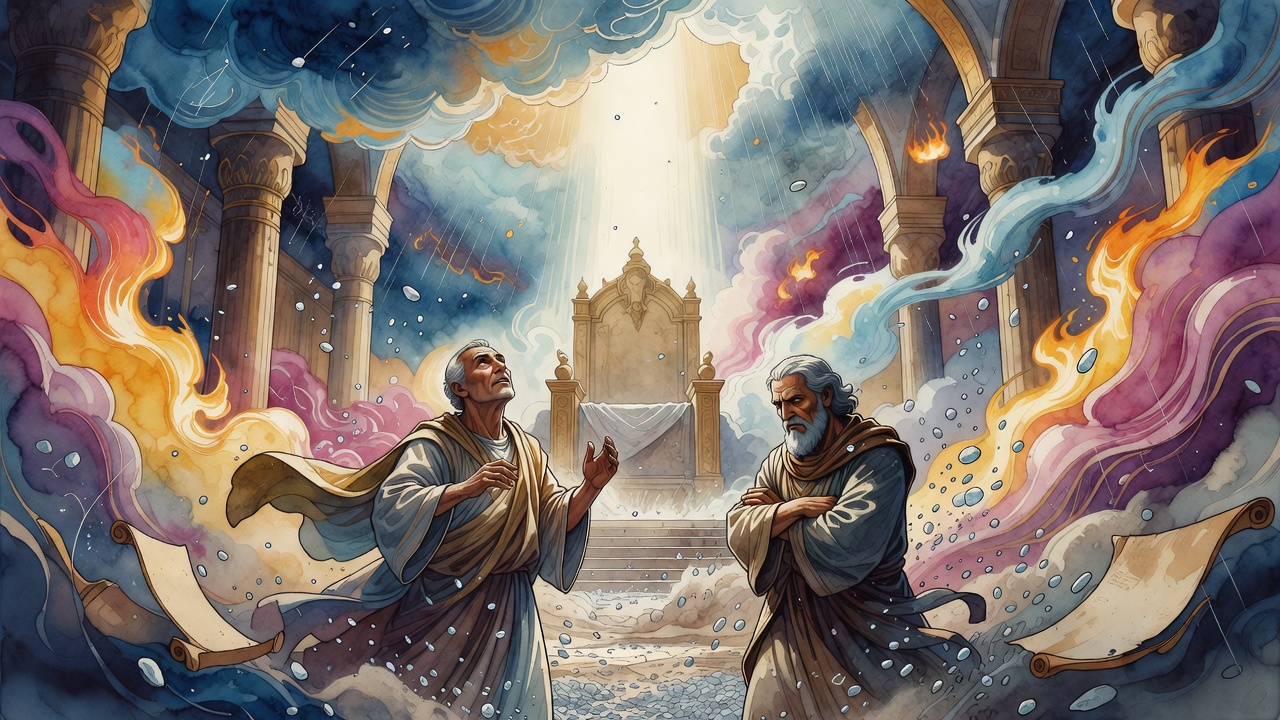
Balaam returned to the floor with a craft that smelled of old hunts. Hebrews had walked through fire in Abraham's day. The sword had not finished Isaac's line. Labor had not crushed Jacob's house. "Order every male child born in Israel thrown into the water," he said. A trial their fathers had not faced. A way to erase a name before it learned to speak. The river would do what furnaces and blades and quotas had failed to do.

The decree moved from dream to law. First, though, Egypt tried softer tools. The Book of Jubilees remembers the grim arithmetic. The more Egypt dealt evilly with them, the more they increased, and hatred grew on that increase like mold on wet grain. Yalkut Shimoni opens the word for backbreaking labor. At first Pharaoh worked with a soft mouth, b'peh rach, picking up a rake beside Israel as if slavery were a shared civic project and the king a generous foreman. Men showed their strength proudly, sweating for wages that would turn into chains by nightfall.

Night fell. Overseers appeared with quotas written like verdicts. Beating followed failure. Officers of Israel took the blows rather than sell their own to the lash. When soft mouths failed, water waited with its ancient patience. Boys to the Nile. Girls kept for the empire's future. The kid on the scale had been a prophecy. The counselors had taught a king how to fight a prophecy with drowned sons.

What Silence Weighs

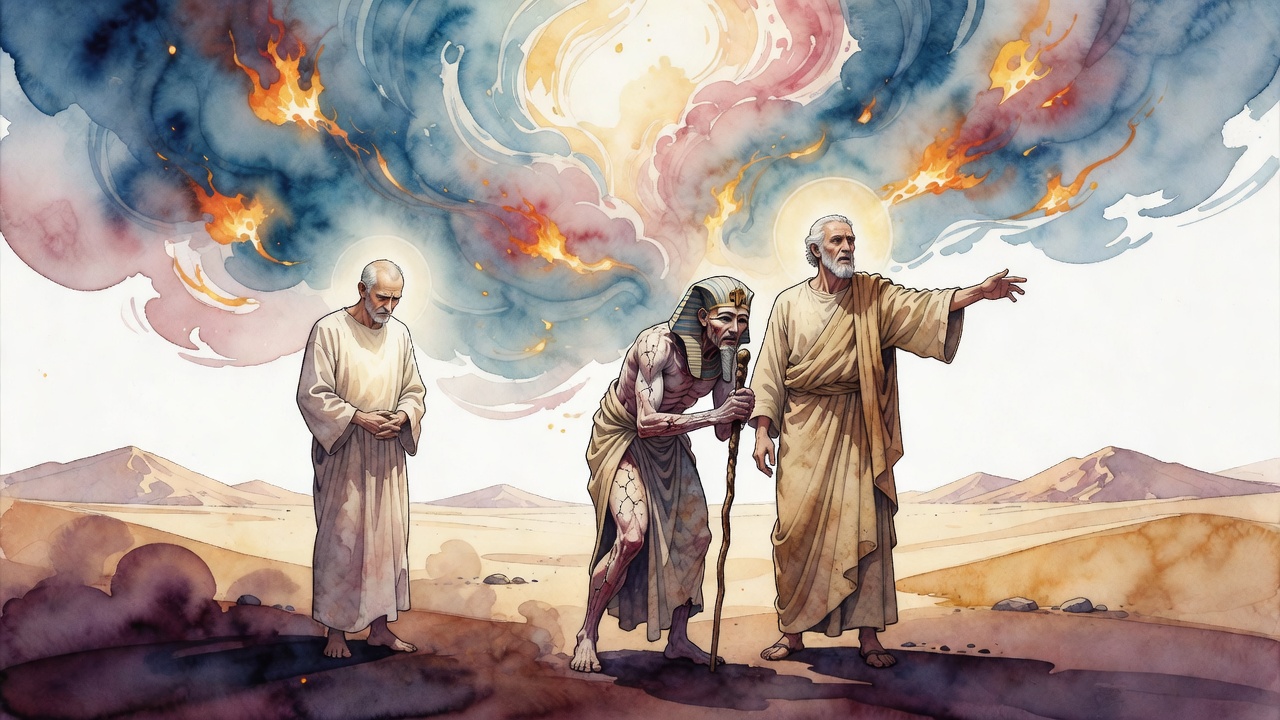
Later ages would say bad advice to a ruler is a sin with a long shadow. Balaam's counsel wrote infanticide into the river. Job's shrug wrote complicity into the record of nations. Reuel's exile wrote a different line. The man who refuses a blood decree may lose a court and gain a wilderness where a bush will burn without being consumed, and where a fugitive prince will learn to hear a Name that Pharaoh could not find in any register.

Pharaoh slept again after the law was sealed, but sleep does not cancel scales. Somewhere in a Hebrew house a midwife would disobey and keep her hands clean of murder. Somewhere a mother would weave a basket tight enough for a current. Somewhere the tender kid of the dream would grow teeth and a staff and a stammer. Egypt had chosen water. Heaven was already choosing a name that water would not keep, a child the river would refuse to swallow.

In the morning the Nile looked the same green-brown it had always worn. That is how decrees work. They change the world before they change the color of the river. The nobles who had been light on the dream-scale went about their business, not knowing a lamb had already outweighed them in a courtroom they could not adjourn.


← All myths
From the tradition

Sources

3 sources

The texts behind this telling. Some cards carry a translation of the source; others are our own retelling of it, and each card says which. Every card links out to the original.

Legends of the Jews, IV. Moses In Egypt, The Three CounsellorsLegends of the Jews

Retold in our words. Read the original at the link below.Project Gutenberg eBook #1494, The Legends of the Jews, Volume 2 · Public Domain

As retold by Ginzberg, it was the one hundred and thirtieth year after the Israelites arrived in Egypt. Pharaoh, uneasy in his power, had a disturbing dream. He saw an old man, scales in hand, weighing the elders and nobles of Egypt against… a tender kid. Incredibly, the kid outweighed them all! Understandably, Pharaoh woke up shaken.

He summoned his wise men and servants, demanding an interpretation. Fear hung heavy in the air, but Balaam, son of Beor – a figure known for his complex relationship with the Israelites – stepped forward. He declared the dream a prophecy of doom: a son would be born to Israel, one who would destroy Egypt and lead his people to freedom. "Take counsel," Balaam urged, "and frustrate the hope of Israel before it's too late!"

Pharaoh, already feeling the weight of the dream, turned to Balaam and asked for solutions. But, as Ginzberg tells us, Pharaoh didn't stop there. He sought broader advice, specifically from two other counselors: Reuel the Midianite, and Job the Uzite. These were men known for their wisdom, but they held very different perspectives.

Reuel, also known as Jethro, the future father-in-law of Moses, spoke first. "Desist from the Hebrews!" he pleaded. "Do not stretch forth your hand against them, for the Lord chose them long ago!" He reminded Pharaoh of the mighty deeds God had performed for Abraham, Isaac, and Jacob. He even invoked the memory of a previous Pharaoh who had honored Joseph, recognizing his wisdom and saving Egypt from famine. Reuel’s advice was clear: either leave the Israelites alone or let them return to Canaan, the land of their ancestors.

Pharaoh, unsurprisingly, was enraged. Reuel was dismissed in disgrace and fled to Midian.

Next, Pharaoh turned to Job. "What say you, Job? What is your advice?" Job, in contrast to Reuel, offered a chillingly simple response: "Behold, all the inhabitants of the land are in thy power. Let the king do as seemeth good in his eyes." Silence. Ambivalence. Acquiescence. A blank check for oppression.

Finally, Balaam spoke again, pushing Pharaoh toward a particularly cruel solution. According to Ginzberg, he argued that the Hebrews were invincible to fire (like Abraham), the sword (like Isaac), and even relentless labor (like Jacob). So, what was left? "Let him order all the male children that shall be born in Israel from this day forward to be thrown into the water." This, Balaam reasoned, was a trial neither they nor their fathers had faced. This was a way to erase their name.

This is where the story takes a truly dark turn.

The Zohar tells us of the profound consequences of offering bad advice to a ruler. Balaam's counsel, rooted in fear and hatred, led to the tragic decree of infanticide.

And Reuel? He faced disgrace but ultimately found his destiny in guiding Moses and embracing the God of Israel. Job's silence is a stark reminder of the dangers of moral neutrality in the face of injustice.

Perhaps it's a reminder of the power of our words, the importance of courageous truth-telling, and the devastating consequences of fear-driven decisions.

Full source
Book of Jubilees 47:1Book of Jubilees

Retold in our words. Read the original at the link below.Sefaria Community Translation · CC-BY

Like you're swimming upstream in a river of… well, you get the picture. That struggle, that feeling of being unfairly opposed, is an incredibly ancient one. "The more they dealt evilly with them," the Book of Jubilees tells us, "the more they increased and multiplied. And the people of Egypt abominated the children of Israel." (Jubilees 47). The more the Egyptians oppressed them, the more the Israelites thrived, which only fueled the Egyptians' hatred. It’s a potent reminder of how fear and prejudice can escalate, creating a truly toxic environment.

The Book of Jubilees itself is a fascinating text. It's not included in the Tanakh, but it was widely read during the Second Temple period. But it offers a unique retelling of biblical history, often adding details and interpretations that aren't found elsewhere. It's like getting a behind-the-scenes look at some of the most famous stories.

Chapter 47 gives us a specific timeline, marking significant events within the framework of jubilees – 49-year cycles. The verse reads, "in the seventh week, in the seventh year, in the forty-seventh jubilee, thy father went forth from the land of Canaan."

Then, in a poignant connection, it reveals, "and thou wast born in the fourth week, in the sixth year thereof, in the forty-eighth jubilee; this was the time of tribulation on the children of Israel." (Jubilees 47).

Who is this "thou"? Contextually, it refers to someone within the narrative, being given a historical overview. It's a deeply personal framing within this grand sweep of history. Imagine having your birth pinpointed not just by a date, but by its place within a period of immense suffering for your people.

It really brings home the idea that even in times of collective hardship, individual lives continue. Births, deaths, loves, losses… they all happen against the backdrop of history, intertwined with the larger narrative.

And isn't that a powerful thought? Even when the world feels like it's crumbling around us, life goes on. Hope persists. We keep building, keep creating, keep striving, even when faced with seemingly insurmountable obstacles. Just like the Israelites in Egypt, we find ways to not just survive, but to thrive.

Maybe that's the enduring lesson of this small passage from the Book of Jubilees. It's not just about the suffering, but about the resilience of the human spirit, and the enduring power of hope in the face of adversity. What do you think?

Full source
Yalkut Shimoni on Torah 163:1Yalkut Shimoni on Torah

Translation of the source text.Torat Emet (Yalkut Shimoni) + Sefaria Community Translation · CC-BY-NC

"So the Egyptians enslaved the children of Israel with back breaking labor [b'farech]" (Ex. 1:13). R. Elazar says, "B'pe rach, with a soft mouth." R. Shmuel says, "B'frichah, With rigor." "And they embittered their lives with hard work[, with clay and with bricks and with all kinds of labor in the fields...]" (Ex. 1:14). Rava said, "At first with mortar and bricks, and ultimately with all field work." "[...] all their work that they worked with them with was back breaking labor." To the one who says b'frichah, for they exchanged the work of the men with that of women, and the work of the women with that of men. To the one who says there b'pe rach, certainly that was [also] with rigor. At the time that he said (Ex. 1:10), "Get ready, let us be clever with it," Pharaoh gathered all Israel and said to them, "Please, let some of you work with me today for wages," which is as written, "b'farech, b'pe rach, with a soft mouth." He took a sack and a rake, and whoever saw Pharaoh taking a sack and a rake and working with bricks, would do [likewise]. Right away Israel went with alacrity and worked at the craft all day according to their strength (for they were strong and mighty). When it got dark, overseers were set over them, and they said to them, "Count the bricks." They right away stood and counted them, and he said to them, "Make me the same [amount] every day."

He appointed Egyptian overseers over Jewish officers. The overseers would come and count the bricks and find a number missing, and the officers were beaten in place of the rest of the people, [for] they would not betray them to the overseers. They said, "Better that we should be beaten than that the rest of the people be hurt." Therefore, when the Omnipresent said (Num. 11:16), "Gather for Me seventy men," Moses said, "Master of the universe, I do not know who is worthy and who is unworthy." He said to him (ibid.), " '[...W]hom you know'–for these are the elders of the people and their officers who gave themselves up to be beaten in their place in Egypt. They should come and take this greatness." From this you may learn that anyone who gives themselves up for Israel merits honor and greatness. "And with all manner of labor in the field" (Ex. 1:14), For is it possible that they worked in the field and not the city?

Rather, they decreed upon them, that the men should lie in the field, and the women in the city, in order to reduce their fertility. The women would warm up heated food for them and bring to their husbands all kinds of food and drink and reassure them, saying, "They did not subjugate us. Ultimately the Holy One blessed be He will redeem us." From this, they had relations and were fruitful and multiplied. What was their reward? They merited the spoils of Egypt and the spoils of the Sea [of Reeds], as it says (Ps. 68:14), "If you lie between the borders, the feathers of a dove covered with silver...." And it is written (Song 4:12), "A locked garden", these are the women, who were modest like a garden without a breach. "[A] locked up spring" (ibid.), these are the men, who were laid like springs upon the field.

Full source