The Tree of Life Rose Five Hundred Years Above Eden
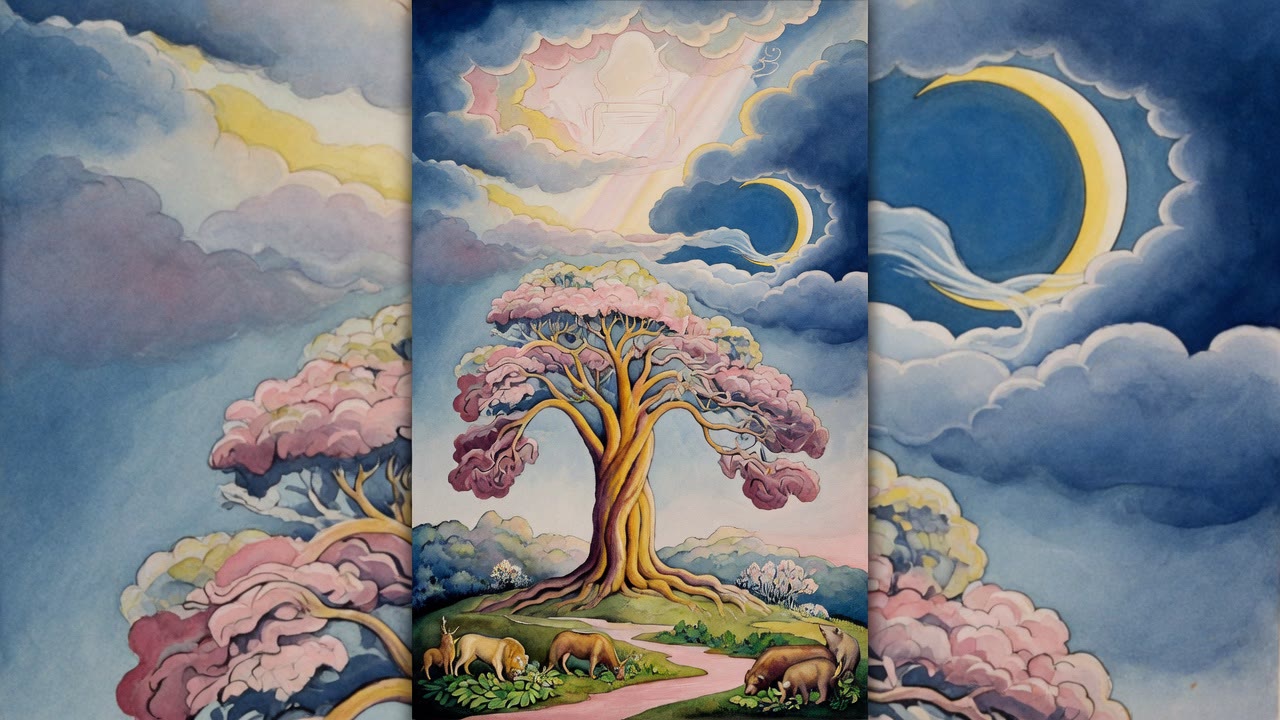
In Eden a tree stood a five-hundred-year climb tall, beasts ate only green herbs, and the moon slipped monthly from double cloud like a horn.
Table of Contents
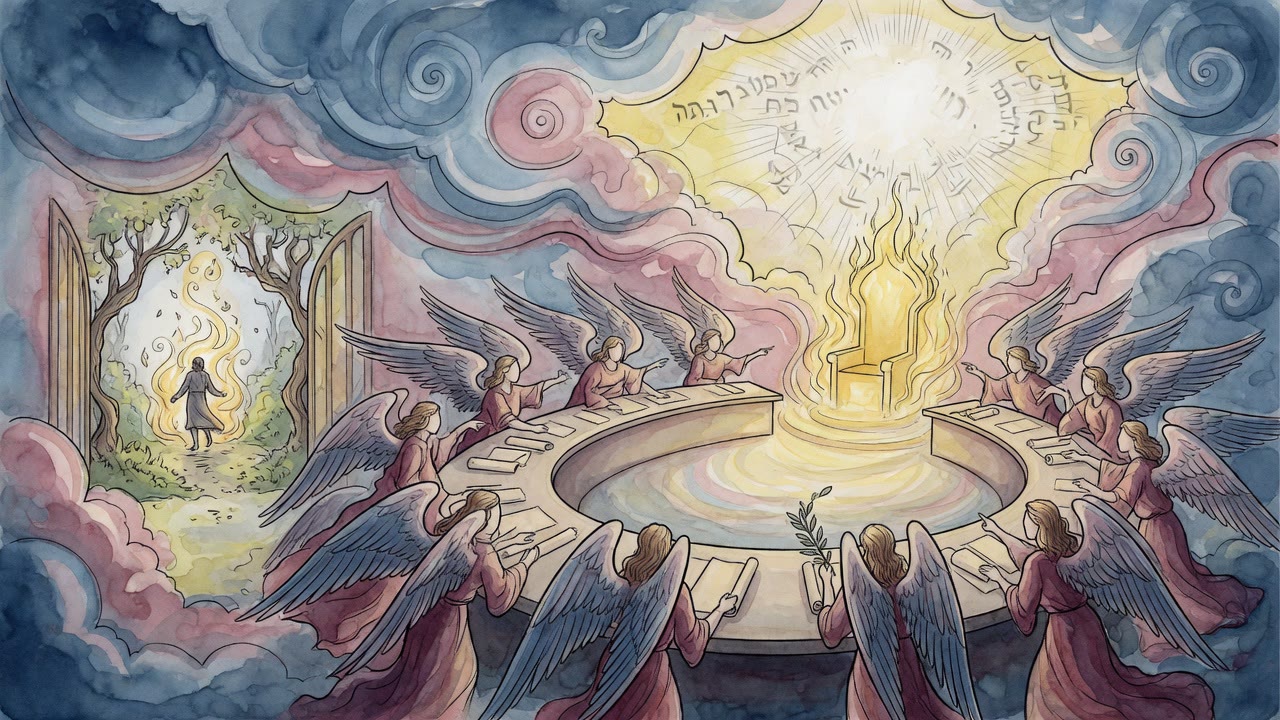
The first climber never finished. At the center of the garden stood a trunk so high that a traveler would need five hundred years to reach the crown. Roots drank the rivers of Eden. Leaves scraped the underside of the first heaven. The Tree of Life did not grow for shade alone. It grew as a ladder between worlds.
 Click for full size
A Trunk That Bridged Earth and Sky
The Aramaic translator of Genesis did not soften the measure. The Tree of Life stood in the midst of the garden, and its height was a journey of five hundred years. Elsewhere the sages use that same span for the distance between earth and the first firmament, and between one heaven and the next. The tree was not a tall plant. It was architecture. Canopy in the upper air, roots in the soil where Adam first learned the names of beasts.
Beside it rose the other tree, shorter in mythic fame and sharper in danger: the Tree of Knowledge, whose fruit would teach good from evil to mouths not ready for the gift. Size was never the threat there. Awareness was. The tall tree offered life that stretched toward heaven. The second offered a moral sight that would exile its eaters from both.
When Every Mouth Ate Green
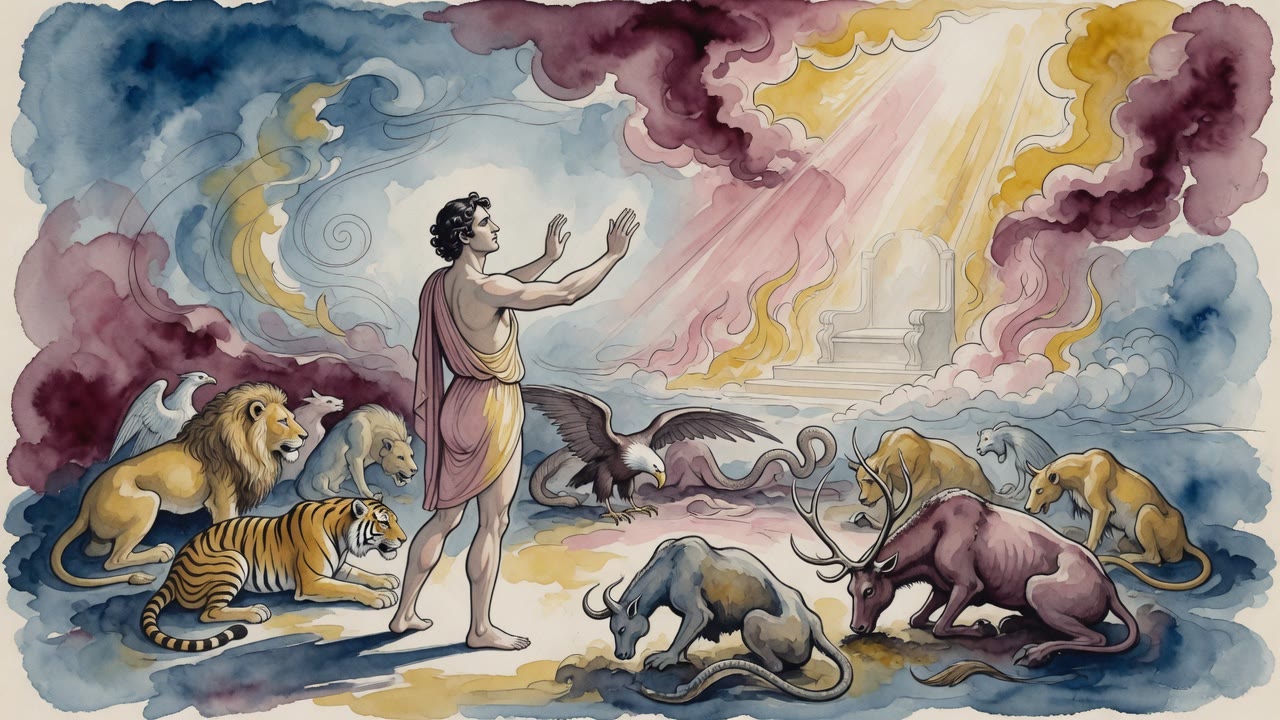
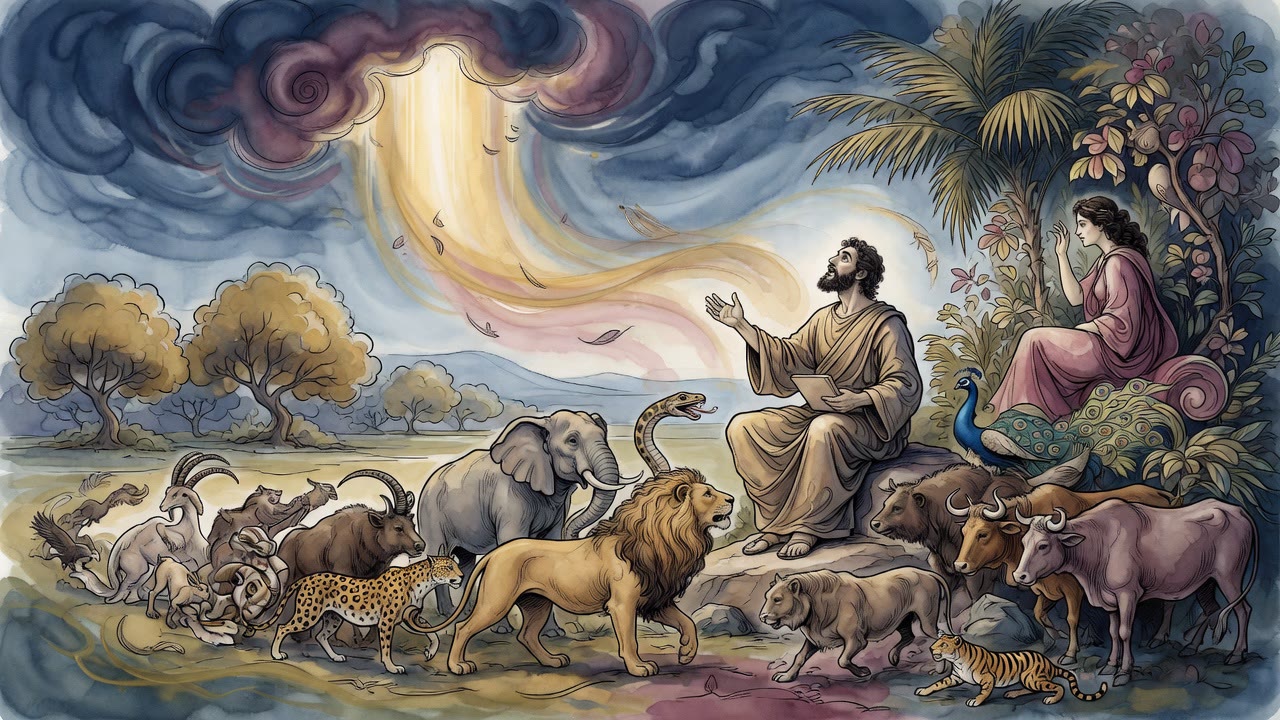
Below the branches, the food of the world was still innocent. To every beast of the earth, every bird of the heavens, every crawling thing with a living soul, God gave the green herbs for food. No tooth was yet set for blood. The lion's breath smelled of leaves. The hawk's crop held seed and shoot. Eden's peace was not a poem laid over violence. It was a kitchen rule: green for all that moves.
Adam watched a deer crop the same grass a smaller creature had just left. The air held no cry of prey. Hunger existed. Murder did not. The tall tree above them measured a different hunger, the hunger for endless life, and that hunger would wait until human hands reached past permission.
The Moon Between Two Clouds
Above the garden the month itself had a house. Between cloud and thick darkness the moon rested as if between two dishes turned one over the other. At the conjunction, when the sky went black and the sun seemed to swallow its companion, the clouds turned toward the east. From their seam the moon emerged like a ram's horn, a thin white blade of beginning.
One measure on the first night. A second measure on the second. Night by night the horn fattened until the middle of the month poured full light on Eden's rivers. Then the clouds turned west. The corner that had first appeared slipped back under covering, measure by measure, until the shofar (a ram's horn) season of concealment, when the moon hid completely and a trumpet would one day mark the covering on a feast day.
Job's old line names the arrangement: cloud as garment, thick darkness as swaddling band (Job 38:9). The moon is not abandoned in the dark. It is dressed for a cycle. Fullness and vanishing both belong to the same care.
Measure Against Measure of Hunger
Five hundred years of height. A month of measures on the moon. A diet of green for every living soul. Eden is a school of measures before it is a story of loss. The first humans were placed among numbers that outran a single lifetime, under a sky that taught waxing and waning, among animals that did not yet teach fear by tooth.
When the second tree's fruit entered a mouth, the measures did not vanish. They became accusations. The tall tree still stood, unreachable as exile lengthened. The moon still hid and returned, indifferent to human shame. The green herbs remained in the verse as a scar of peace: proof that blood was a later invention of appetite, not the foundation of the world.
A later reader hears "five hundred years" and thinks of the Talmud's distances between heavens. The Targumist had already planted that cosmic yardstick in the garden's center. To want the Tree of Life is to want a climb that would outlast empires. To settle for knowledge without readiness is to choose a shorter tree and a longer exile. The horn of the new moon still rises between the dishes of cloud, counting months for people who no longer walk under the five-hundred-year leaves.
What the Climb Would Have Cost
Imagine a hand on the bark of the Tree of Life. Five hundred years of climbing. The climber would outlive cities that had not yet been founded. By the time he reached the first leaves of the upper world, the beasts below would still be chewing green if the first law had held. The moon would have waxed and waned six thousand times. The garden would have stayed a school of names rather than a scene of flight.
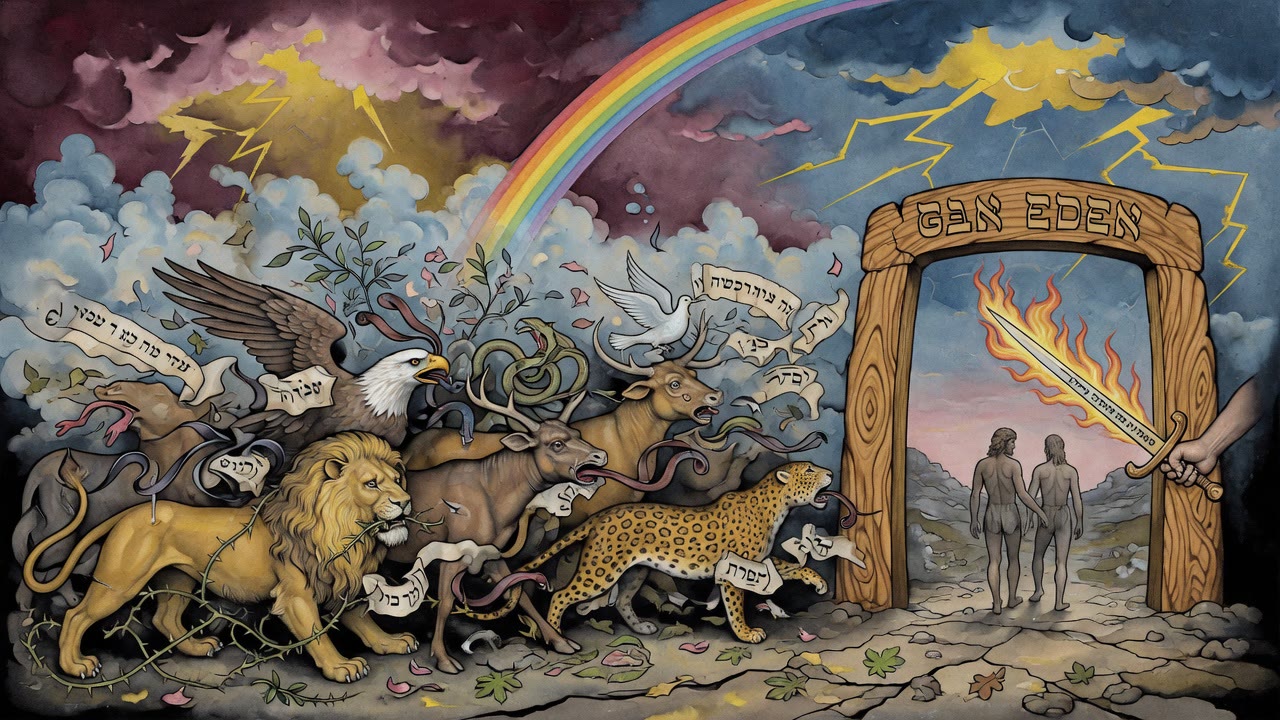
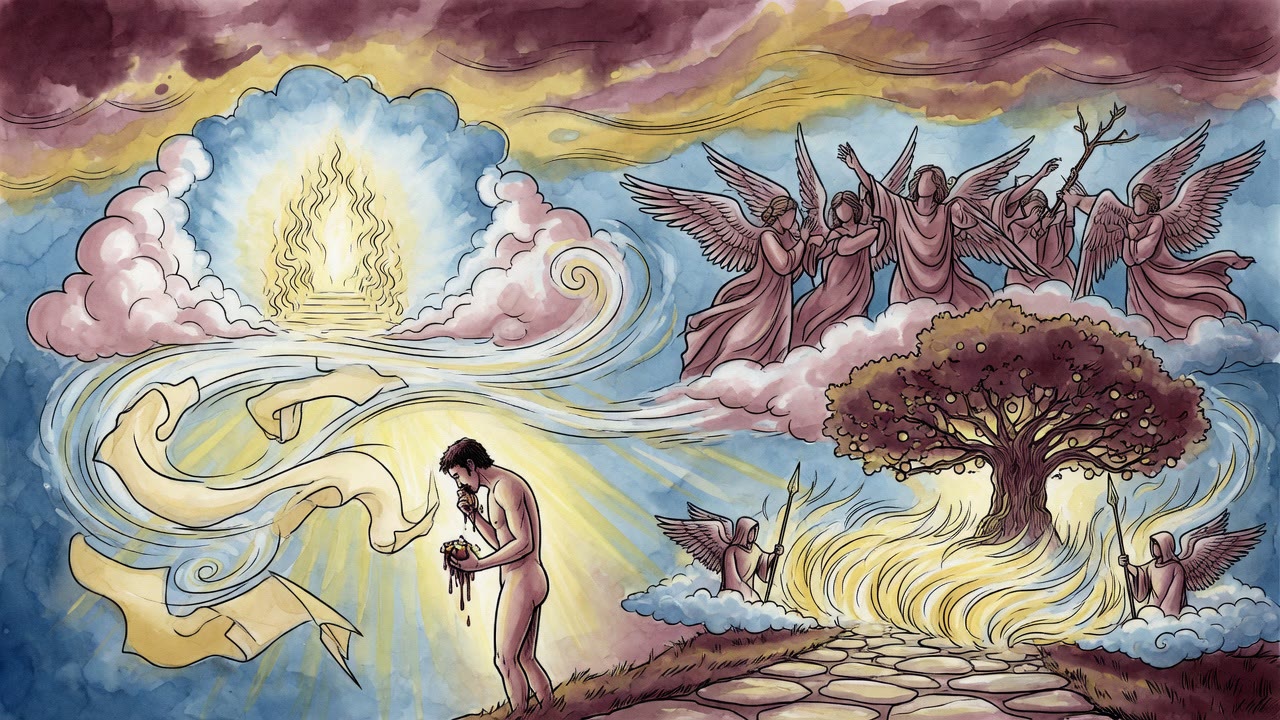
It did not hold. Knowledge was bitten. Coats of skin replaced the first ease. The tree remained in memory as a measure of how far life once reached toward heaven, and how short a hand can be when it grabs the wrong fruit. The green herbs remain in the verse as a witness that blood was not the original menu. The moon still slips from the double cloud like a horn, still teaches that darkness is a garment with a schedule, not a final burial.
Eden is closed. The five-hundred-year trunk still stands in the Targum's sentence, too tall for a casual glance, tall enough to shame any small ambition that calls itself eternity.
← All myths