Vashti Refused the King Who Ordered Her Stripped
When Ahasuerus ordered Vashti to appear naked before his banquet guests, she sent back a message that listed exactly what kind of man she thought he was.
Table of Contents
 Click for full size
The Seventh Day
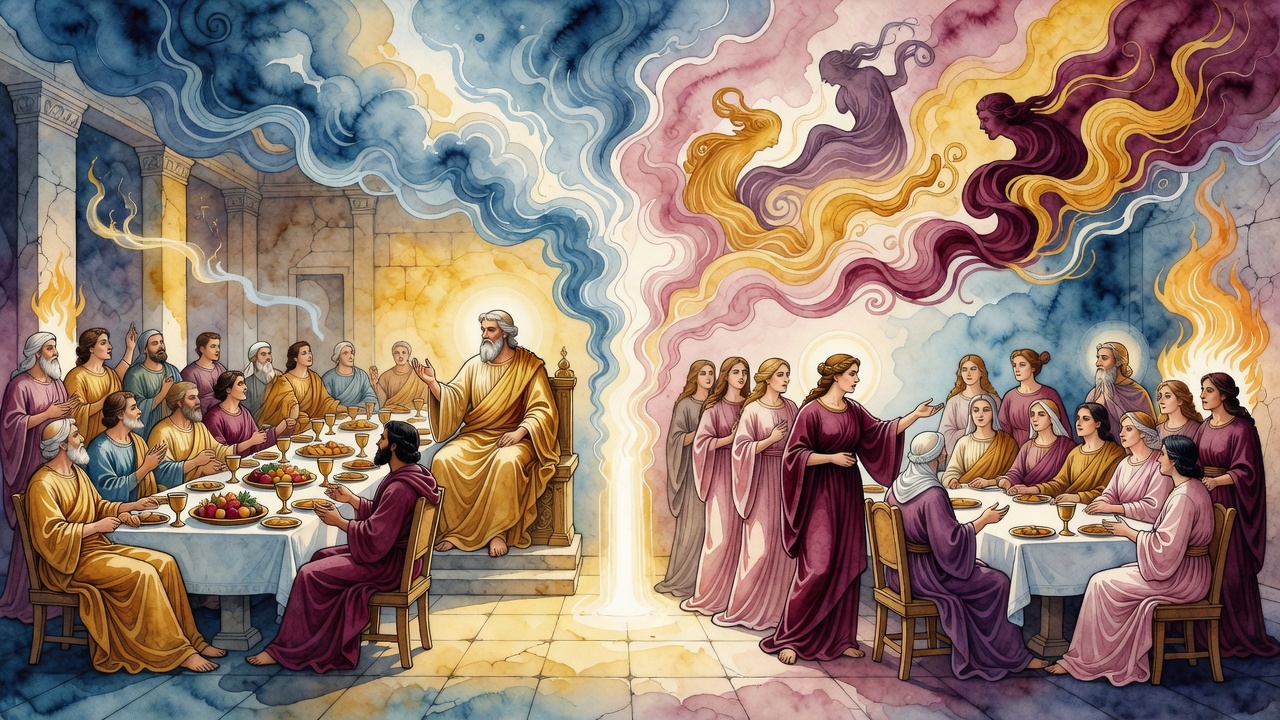
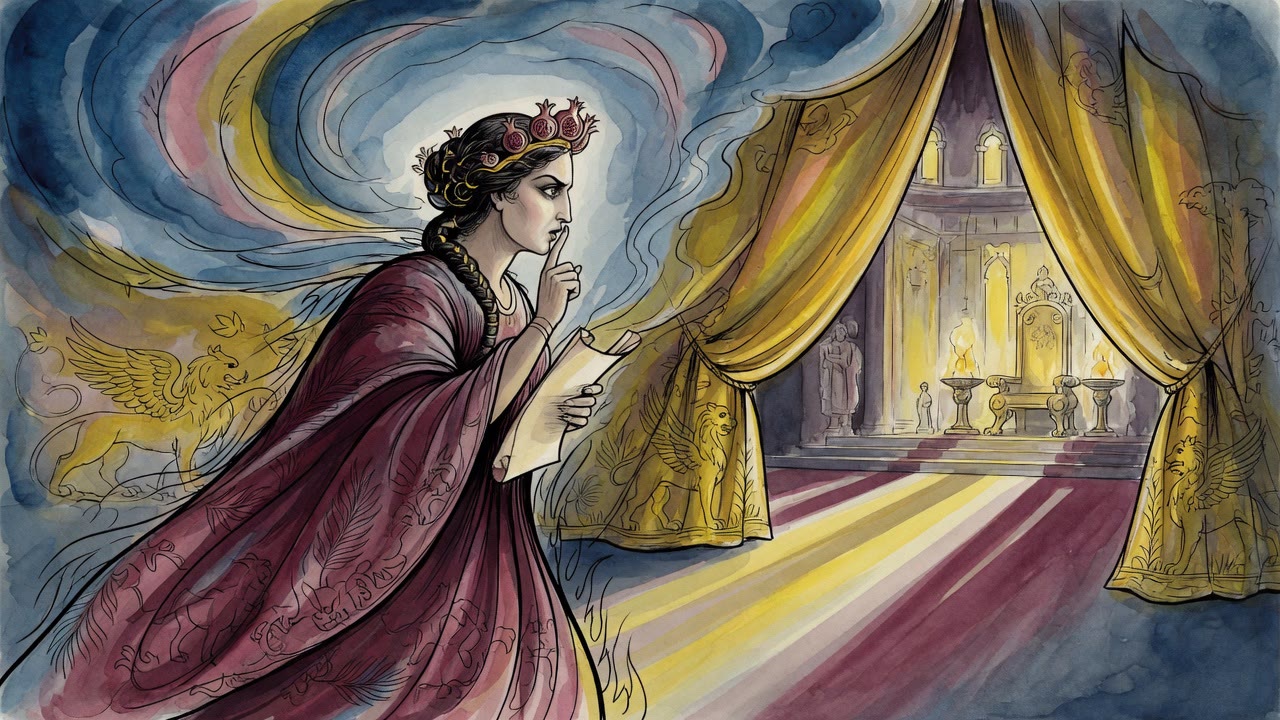
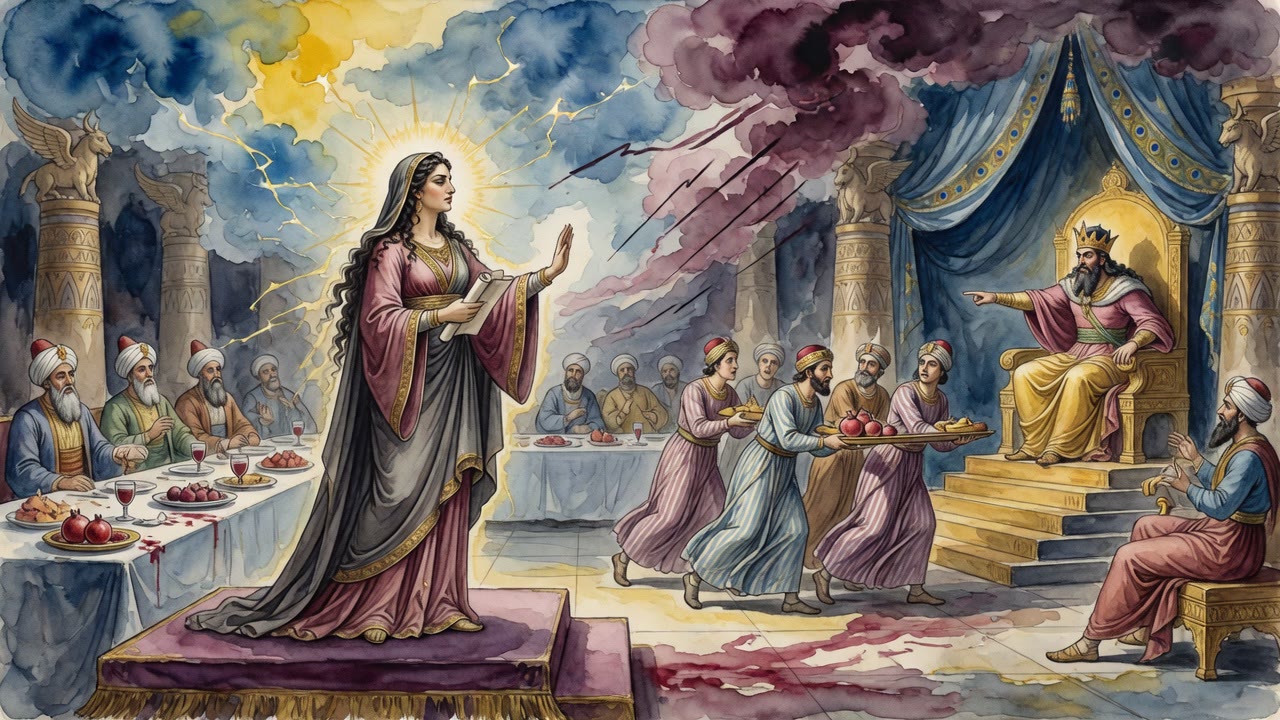
The banquet had gone on for seven days. Ahasuerus, king of Persia, was deep into the wine, and his court was engaged in the argument that drunk men at feasts always engage in: which nation produced the most beautiful women. Median women, some said. Persian, others argued. The king settled the argument the way he settled most things: by decree. He sent his seven chamberlains to bring Queen Vashti before the court wearing her royal crown.
Only the crown. The Esther Rabbah made the demand explicit: his guests had agreed she should appear naked. He had said yes. He sent the chamberlains with the instruction, and the instruction included the crown as its only garment, because her beauty was what was being displayed and the crown was what identified her as his possession.
She refused.
What She Sent Back
Before she refused, she sent him a message. She reasoned with him, the Esther Rabbah records, using two arguments designed to appeal to whatever remained of his political instincts through the wine. First: if they find me beautiful, they will want me for themselves and kill you to get me. Second: if they find me ugly, you will be shamed, because I am your queen and my appearance reflects on you. Either outcome damages you. Stop while you can.
He did not grasp the allusions. She had reasoned with him and he had not heard her. So she provoked him. She sent a second message, and this one was not diplomatic. She told him he used to be the stable boy in her father's house. That he had been accustomed to bringing naked prostitutes before himself in that capacity and had not abandoned the habit now that he sat on a throne. "You were a stable boy then," she told him, "and you are asking for the same thing now."
He was not provoked. He was already too drunk to process what she was saying. She had called him a former stable boy and he had not reacted. So she refused the summons entirely.
Why God Let This Happen
The Esther Rabbah opened with the verse from Isaiah: "My people, its oppressors are babes and women govern them." The sages interpreted this as a description of Israel's condition during the Persian exile, when their fate depended on the decisions of a foolish king and his banished queen and eventually a Jewish woman who had hidden her identity in a foreign palace.
Rabbi Aivu offered the theological frame: when Israel eats and drinks and rejoices, they bless God. When the nations of the world eat and drink, they engage in lewdness. The banquet at which Vashti was ordered to appear was the Gentile version of a celebration, wine and the display of women. The atonement of Israel, the rabbi said, was precisely in this contrast: their banquets turned upward, and the ones that ended in Vashti's humiliation turned in a different direction entirely.
The Law That Applied to Pigs and Not to Israel
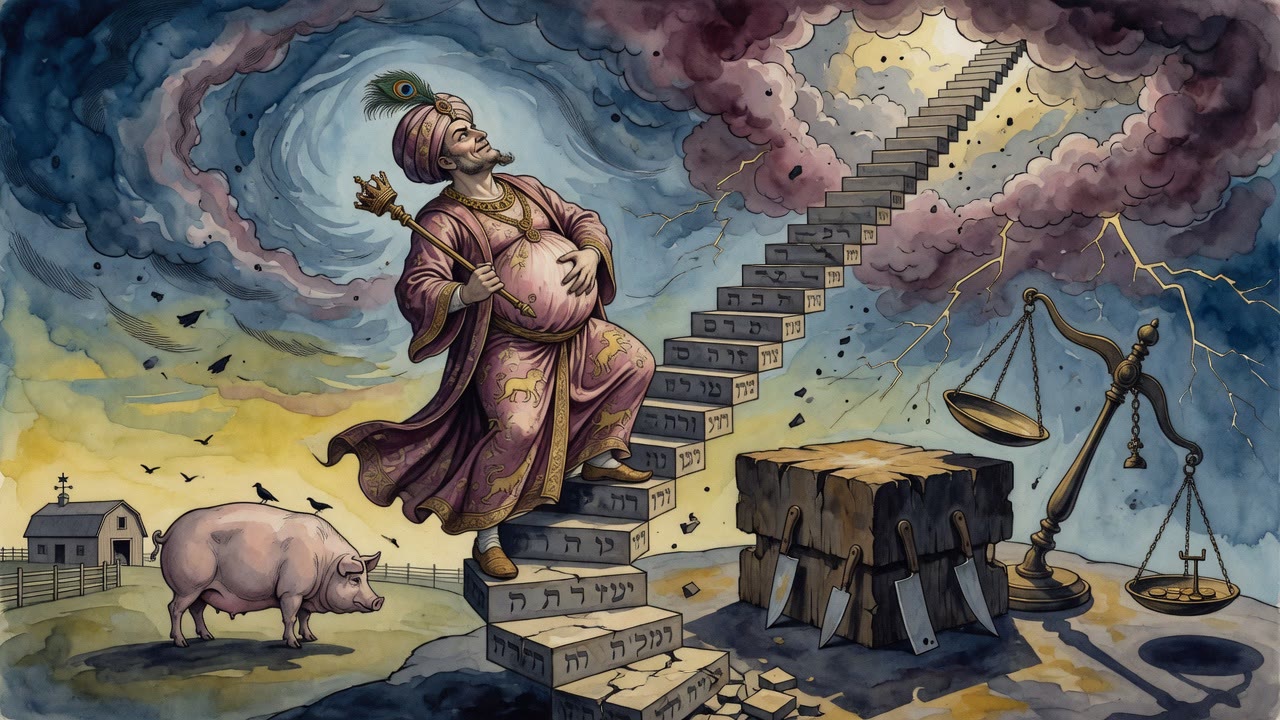
When Ahasuerus's advisors were asked what the law required for Vashti's defiance, Rabbi Yitzhak in the Esther Rabbah drew a precise and pointed contrast. Vashti, whom the midrash called a pig directly, received due process. She had defied a royal command conveyed through proper channels; the law applied to her; she received judgment according to law. Proportionate, measured, correct.
But for the holy people, for the Jews who would later face Haman's decree, there was no law. There was raw cruelty, a decree of annihilation that no statute could justify, a planned genocide that had nothing to do with any legal offense. The contrast was pointed: the Gentile queen who merely refused to appear naked at a banquet received formal legal proceedings. The Jewish people who had committed no offense whatsoever faced extermination by a man who hated them for existing.
The Space She Left Behind
Vashti's refusal created the vacancy that Esther would eventually fill. The search for a replacement queen, the collection of every beautiful virgin in the empire, the selection process that brought a Jewish orphan named Hadassah into the palace under the name Esther, all of this followed from the moment Vashti sent back her refusal and her insults and refused to walk through the banquet hall in a crown and nothing else.
The Esther Rabbah did not present Vashti as a heroine. It called her a pig. It noted her own cruelty toward her Jewish servants, whom she had required to work on the Sabbath. The tradition preserved both things simultaneously: she had been treated badly and she had treated others badly, and her refusal, whatever its moral character, was the mechanism through which the story moved toward Esther's arrival. The empty throne was waiting.
← All myths