Waters Raged at Noah Until God Saw Sinai
The flood pressed the ark like a king in fury. God remembered not only Noah, but Israel not yet born standing open-handed at Sinai.
Table of Contents
 Click for full size
Timbers Under Siege
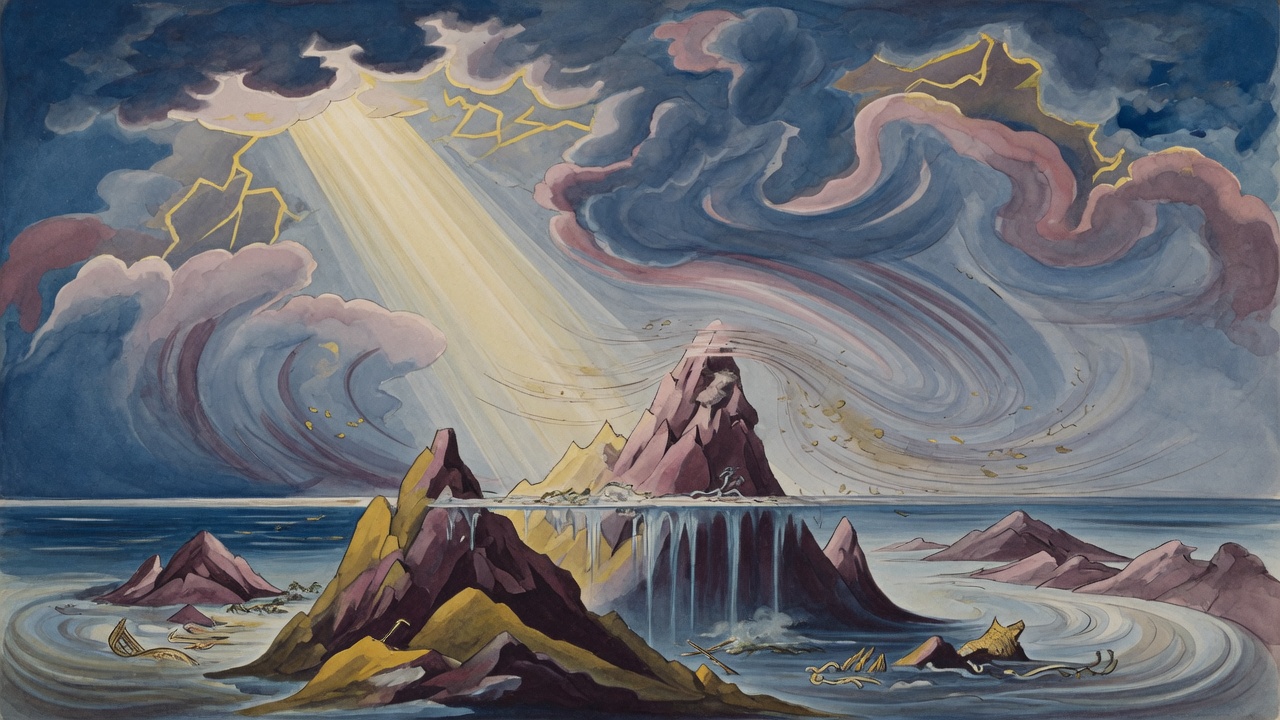
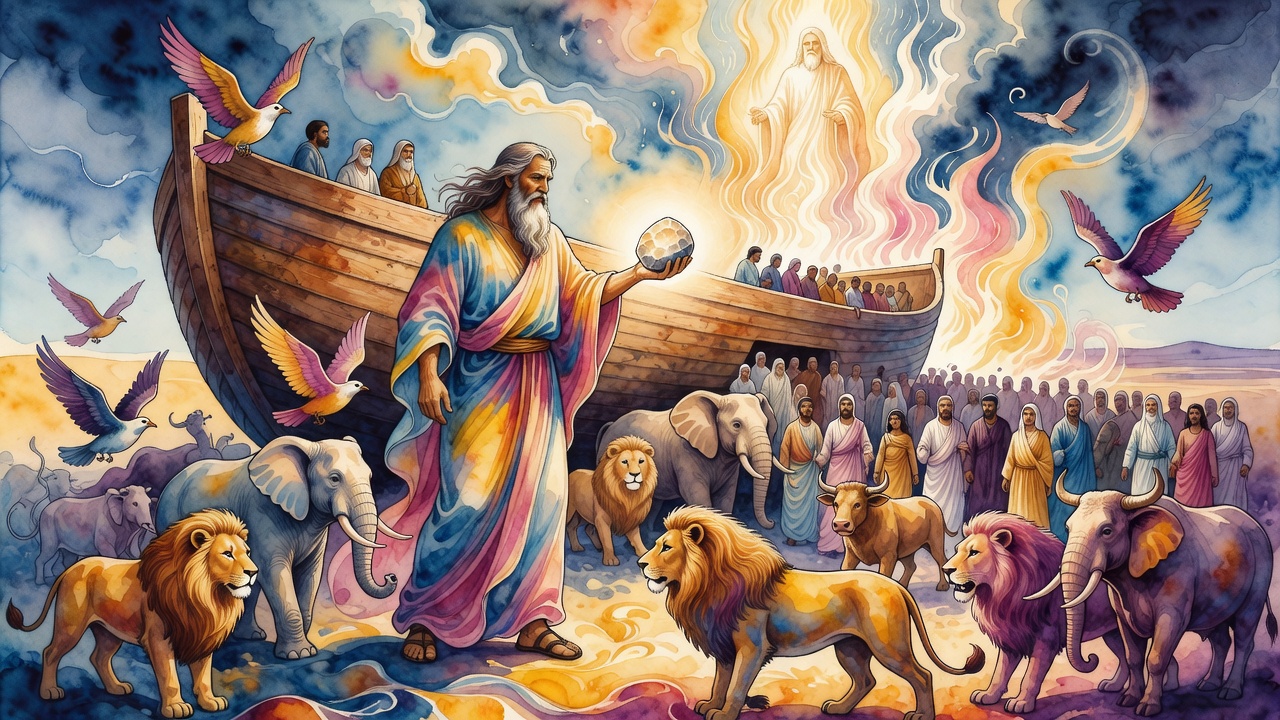
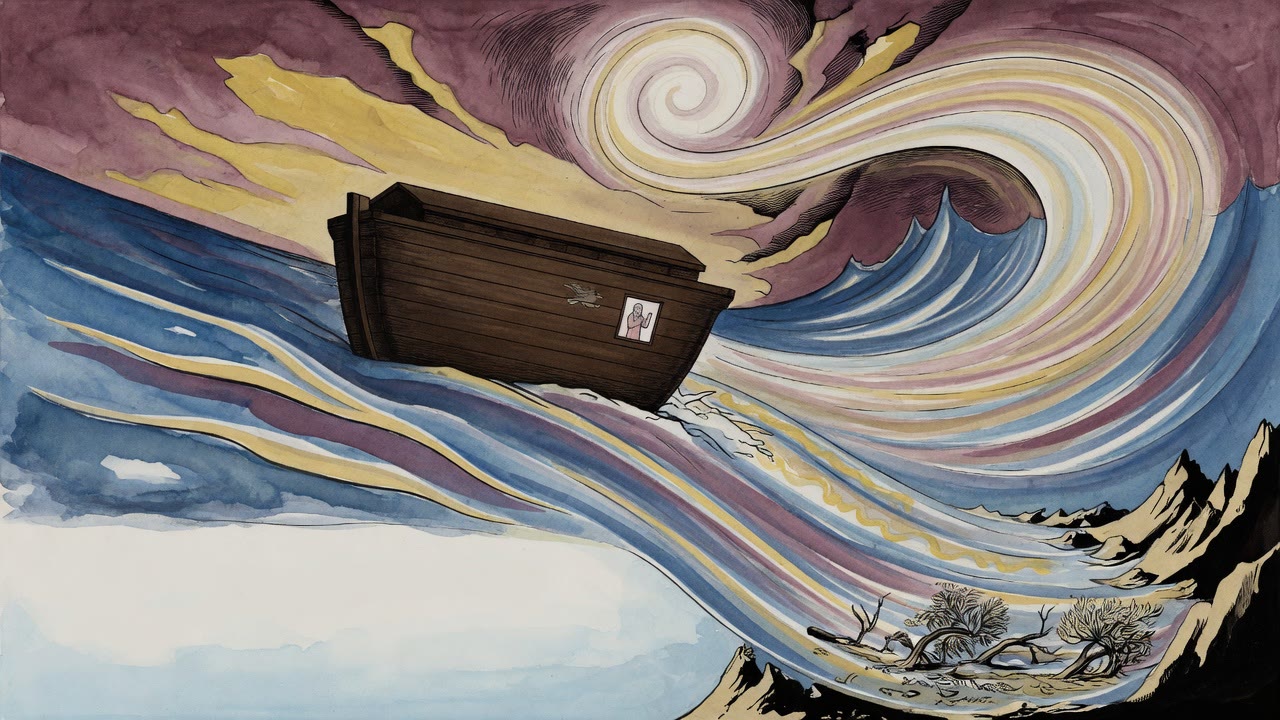
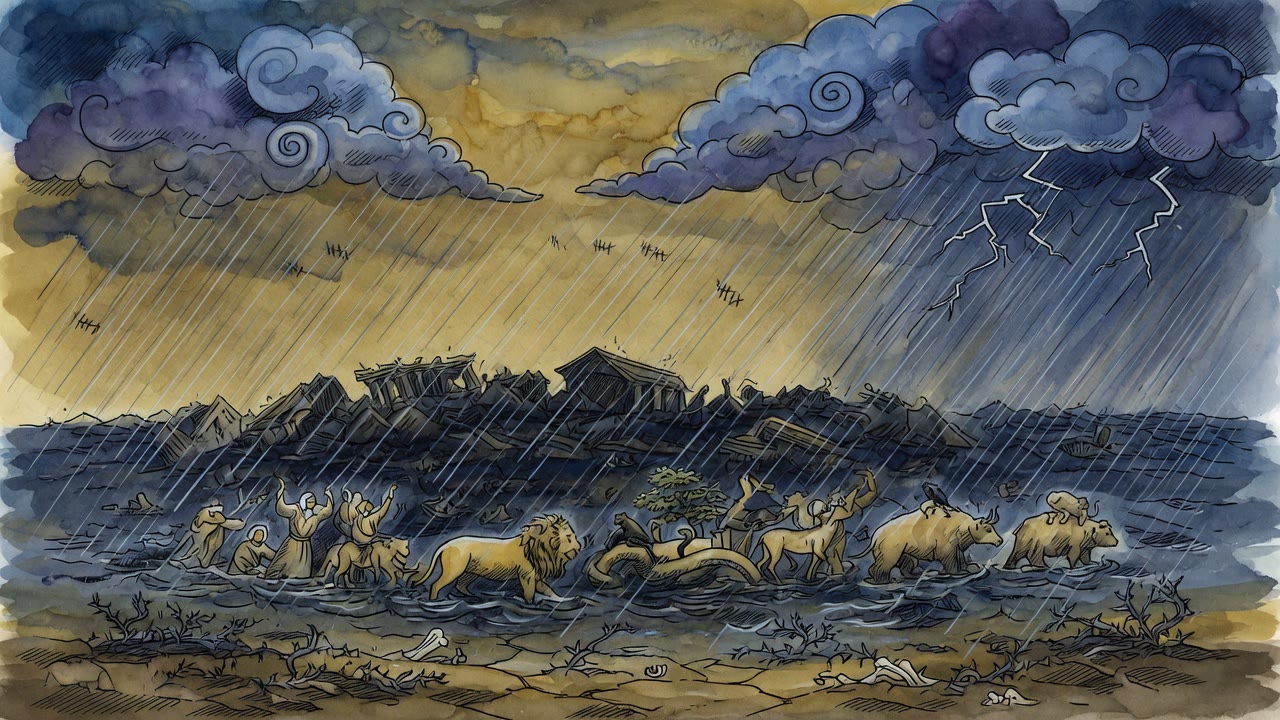
Noah pressed his palm to the pitch-smeared wall and felt the river testing every seam. Forty days the rain had fallen. A hundred and fifty more the waters held dominion, ending at the close of the month of Iyar, for Marcheshvan, Tevet, and Adar had been short months. By then the waters had grown wrathful. They were not content to drown the earth. Filled with rage, they pressed against the timbers of the ark and sought to shatter it.
The animals shifted and cried. The boards groaned. Outside, a world that had mocked the builder lay silent under a roof of brown flood. Inside, one family rode the anger of the deep. Noah had built for rain. He had not built for water that hated him.
What Heaven Remembered
When Scripture says God remembered Noah as the waters churned, the memory was not only the righteous man in the dark hold. Heaven looked past the wreckage of a drowned world and saw a day not yet arrived: Israel standing at the foot of Mount Sinai, hands open to receive the Torah.
"On this day they came to the wilderness of Sinai" (Exodus 19:1). That same day, the tradition says, was the day God worked His miracles for Noah. The merit of Torah, not yet given, reached backward through time to still the raging flood. The ark did not survive by pitch alone. It survived because a future covenant cast its weight into the past.
Hear the word the verse chooses: "the waters subsided." It is the very word used of a king's fury, "and the wrath of the king abated" (Esther 7:10). The waters did not merely sink. Their anger cooled, because Heaven had remembered a mountain and a people still unborn.
Dragged Under the Mountain
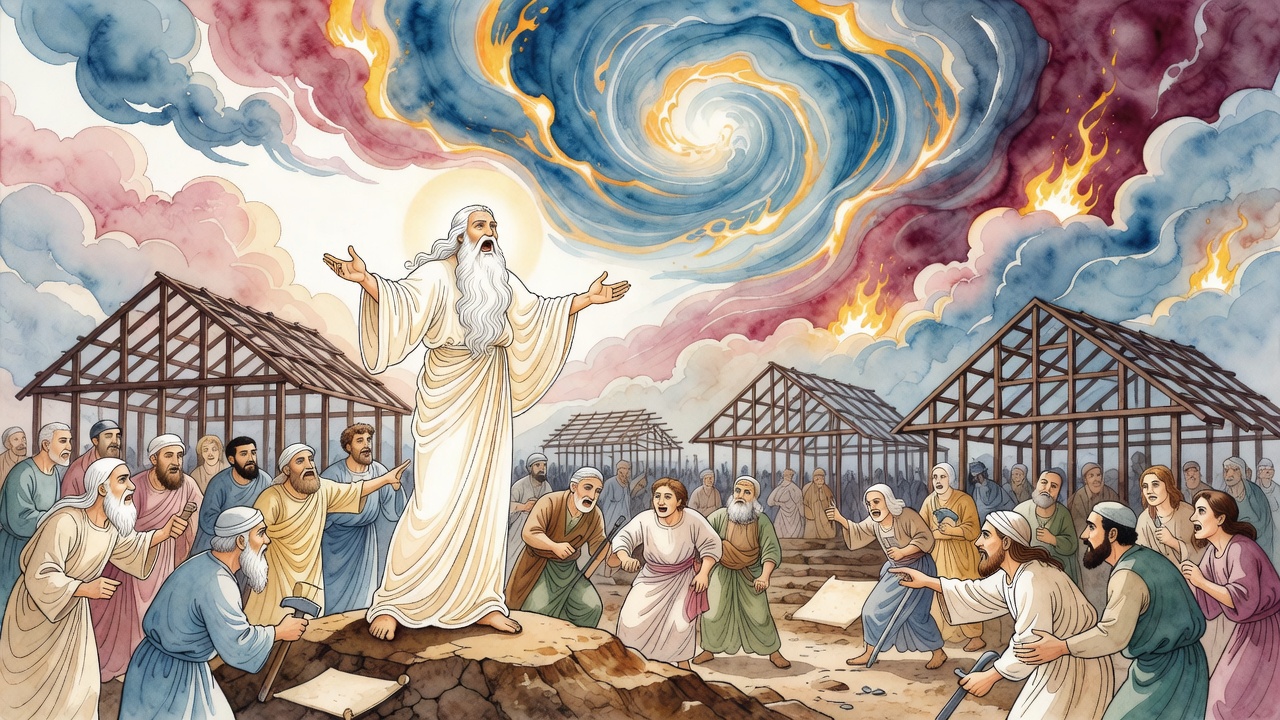
When that future day finally came, the people did not run toward the fire with the same eagerness they would later show for doubt. Moses turns the verse against them. "You drew near and stood under the mountain," yes, but mark the difference. When the spies were sent, they came forward all of them, eager, of their own desire. When they stood beneath Sinai, they did not come willingly at all.
"And Moses brought forth the people." Brought them out. Drove them. Set them in their place. Against their will he made them stand under the mountain. The same crowd that would rush to peer into the land had to be led by the hand and held in place to receive the word that would make the land worth having.
Toward the spies, toward the road that led only to weeping, they ran of their own accord. Toward the covenant, toward the fire and the voice of the living word, they had to be almost dragged. The heart of Israel bent strangely: bold toward ruin, hesitant toward gift.
One Memory, Two Crowds
So the flood and the mountain share a single thread. In Noah's day, Heaven remembered Sinai and cooled the waters. In Moses' day, Heaven forced a reluctant nation under the mountain that had already saved an ark they had never seen. The Torah that stills wrath also demands a standing place, even from feet that would rather wander.
Noah never heard the Ten Words. Israel never smelled the pitch of the ark. Between them runs the same pressure: water that wants to break, people that want to flee, and a God who remembers a covenant hard enough to quiet both. The boards held. The mountain held. The people, at last, stood still long enough for the voice to fall.
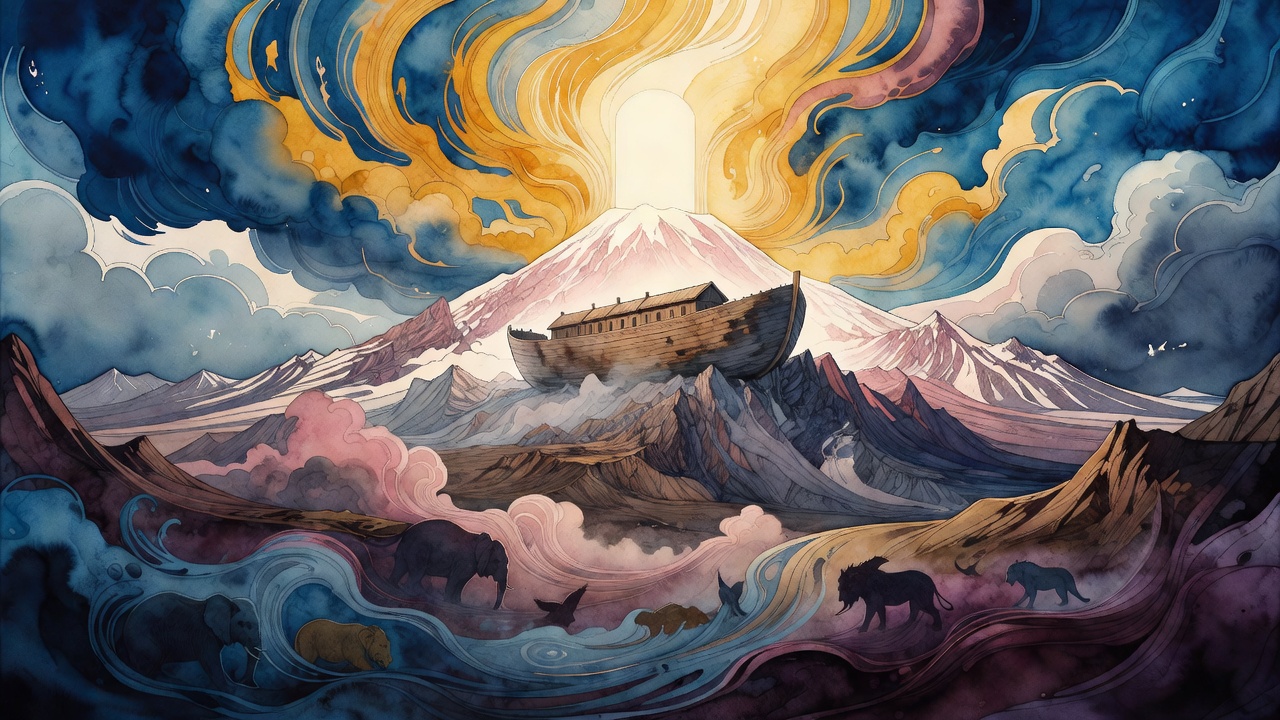
When the dove finally found dry ground, the world began again under a sky that had already spent Sinai's merit on a carpenter's boat. When the mountain smoked, a people that hated being held still learned that some gifts arrive only under compulsion. Both hours answer the same question. What can still a fury, of water or of will? Only a memory strong enough to reach across time and force the next breath.
Noah did not know the name Sinai. He knew only that the knocking on the hull had changed, as if a mob outside had been ordered to step back. The pitch held. A child in the dark asked if the world was finished. Noah said only that the rain had stopped and the anger had not, until the anger too grew tired. Somewhere ahead of all history, a mountain waited to smoke, and that waiting cooled the present.
When Israel later dug heels against the mountain, Moses felt the same stubborn water in human form. People rush toward the report of giants. People stall when the sky opens with law. He pulled them into rows under a peak that had already, in Heaven's memory, saved a boat. The flood and the covenant are not two sermons. They are one refusal of chaos: water ordered, will ordered, a people forced to stand where safety actually is.
Noah stepped onto drying mud and smelled death and new rain. Centuries later Israel smelled smoke and fear under a mountain they had not chosen freely. Both hours answer to a God who remembers forward and commands sideways, who stills what rages and holds what flees until the next breath of the world can be clean.
← All myths