5 min read

The Wheat That Waited for the Threshing Floor

Stubble, straw, and chaff scream that the field was sown for them alone, while the quiet wheat waits for the winnowing wind.

Curated by Arthur · Told by Maggid ·
Table of Contents
  1. The Field That Would Not Stop Arguing
  2. The Landowner Arrives
  3. One Dove, One Mother, One Clarity
  4. What the Threshing Floor Knows
The Wheat That Waited for the Threshing Floor Click for full size

The Field That Would Not Stop Arguing

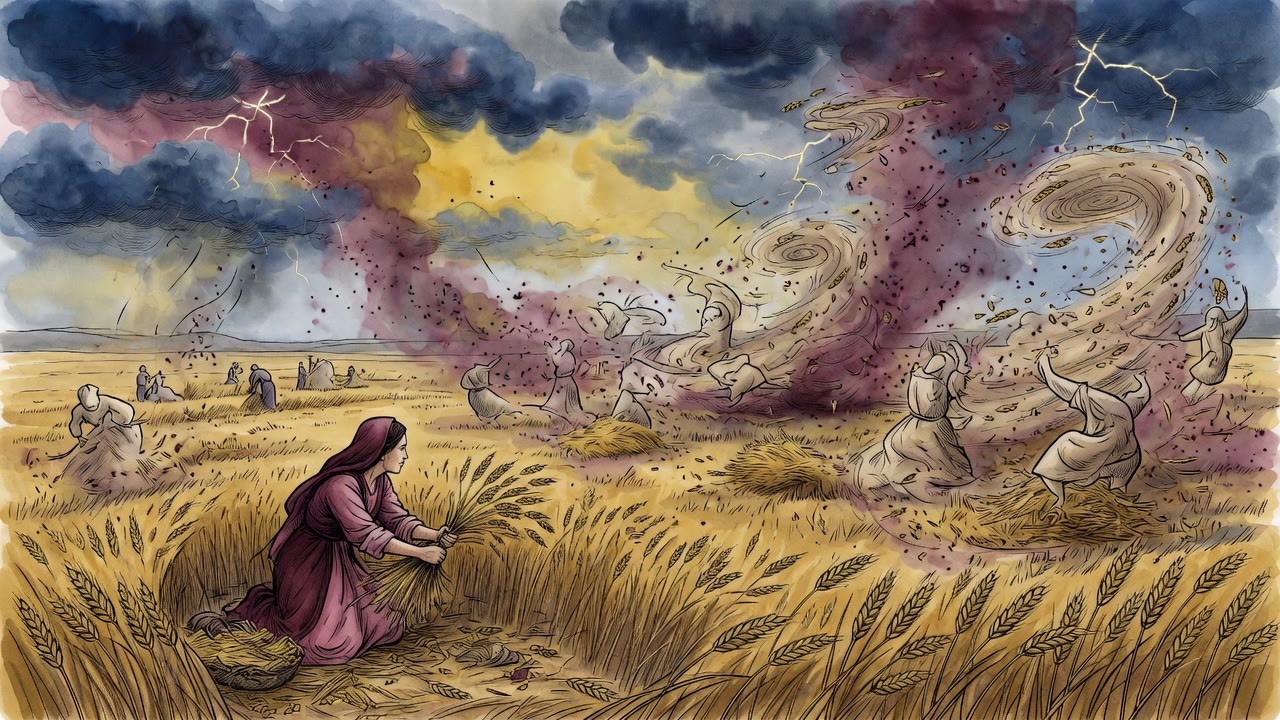
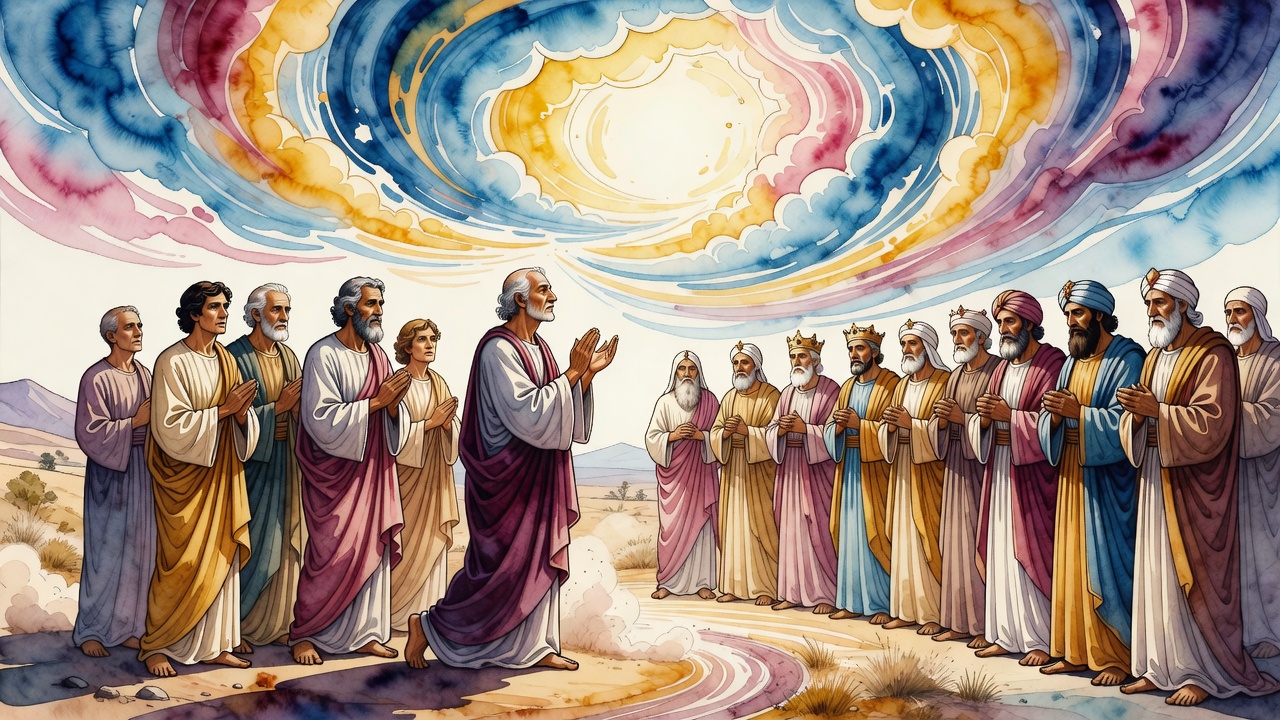
Before the harvest, the field itself began to shout. Stubble cried, "The earth was broken for me!" Straw answered, "No, for me!" Chaff, light and full of its own noise, insisted the whole sowing had been a theater built for its glory alone.

The wheat said almost nothing. "Wait until you come to the threshing floor," it murmured, "and we will know for what the field was sown."

That is the scene the midrash plants beside the nations' boast and Jacob's line. Everyone is shouting "Me! Me!" The quiet grain is not meekness as costume. It is patience that trusts a later wind and a heavier truth.

In every market of empire, someone is still performing that quarrel. The midrash simply gives the quarrel a field, a season, and a fork.

The Landowner Arrives

When the owner came with the winnowing fork, the argument ended without a speech. Chaff rose and vanished on the air. Stubble was cast aside. Straw went to the fire. Wheat gathered into a pile that people kissed when they saw it, because bread is not a theory and hunger is not polite.

The nations of the world, says the midrash, are stubble, straw, and chaff. Each claims the world was created for its own sake. Israel stands like the wheat and answers only with a delay: wait for the day when the claim is tested under a tool that does not care for slogans.

Malachi supplies the heat of that day: a furnace, the wicked as straw (Malachi 3:19). Isaiah supplies the scatter: the wicked nations tossed and lost on the wind (Isaiah 41:16). The field was never neutral ground. It was always waiting for a fork in a trained hand.

Anyone who watched the pile after the wind kissed the grain as one kisses what feeds children. The midrash lets that gesture stand. Reverence attaches to what survives judgment, not to what shouted loudest before the wind rose.

One Dove, One Mother, One Clarity

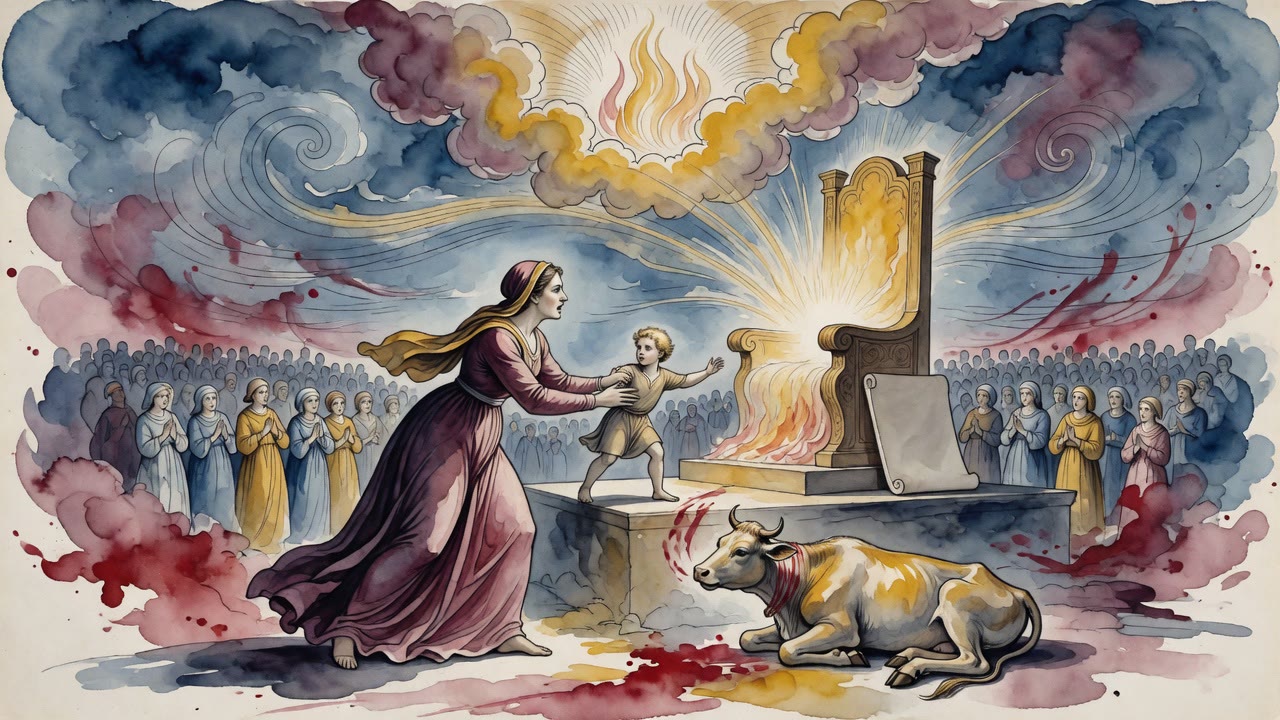
Another thread of Genesis midrash refuses to let uniqueness dissolve into empty slogan. "One is my faultless dove," sings the Song, and the rabbis hear Abraham, the single one who inherited a land when the many bowed to many gods (Song of Songs 6:9; Ezekiel 33:24). "The only one of her mother" is Isaac, miracle-born, Sarah's singular weight and joy. "Pure to the one who bore her" becomes Jacob, because it was clear, barur, to Rebecca which son carried the clean line through a house split by twins.

Girls saw and lauded: the tribes, news running even into Pharaoh's house that Joseph's brothers had come. The praise is not vanity painted on a banner. It is recognition that a family can be wheat while the markets of empire shout like chaff in a dry month.

Rebecca's clarity matters here. She does not wait for the threshing floor of history to tell her which son is grain. She already knows in her body, against a husband's first instinct, and she acts. The midrash's wordplay between pure and clear is not decoration. It is how a mother becomes an early wind.

What the Threshing Floor Knows

Jacob's legacy is not a flat list of twelve names recited at a feast. It is a field under argument, then under judgment. The sons quarrel in tents and pits. The nations quarrel in capitals. History piles claims the way a barn piles byproducts after a rich year.

The midrash will not let Israel win the argument by volume. Volume is the chaff's native skill. Israel's line is told to wait for the floor where weight matters, where wind is not an insult but a tool in the owner's hand, and where kissing the grain is relief that something edible survived the boast.

On that floor, the quiet speech of the wheat is vindicated without needing to become a shout. The stubble's case burns. The straw's case burns. The chaff's case is already gone before anyone can write it down.

What remains is bread's possibility, and a people taught, again and again, not to mistake noise for election.

Jacob's house carried its own version of the field's quarrel. Brothers claimed firstness, coats, dreams, and the right to be heard. The nations outside would later claim history itself. The midrash's wheat does not win by outshouting either circle. It waits for a tool that separates by weight.

On a real threshing floor, the sound is not debate. It is wood, wind, and the dry music of husks leaving. Children learn early which pile will become bread. Adults in empires forget, and need the parable again each time a capital announces it was the purpose of creation.


← All myths

From the tradition

Sources

2 sources

The texts behind this telling. Some cards carry a translation of the source; others are our own retelling of it, and each card says which. Every card links out to the original.

Bereshit Rabbah 83:5Bereshit Rabbah

Retold in our words. Read the original at the link below.The Sefaria Midrash Rabbah, 2022 · CC-BY

Like everyone's shouting, "Me! Me! It's all about me!" Well, the ancient rabbis felt that too, and they captured this human tendency in a beautiful, earthy parable found in Bereshit Rabbah 83.

A field, ripe with wheat. But before the harvest, the stubble, the straw, and the chaff – the leftovers, the byproducts – they're all arguing. "The field was sown for my sake!" each one cries. They’re convinced they’re the most important part of the whole operation. But the wheat? The wheat just sits quietly, patiently waiting. "Wait until you come to the threshing floor," it says, "and we will know for what the field was sown."

Isn't that brilliant? The threshing floor – the place of judgment, of separation. Finally, the landowner arrives and begins the winnowing. The chaff, light and worthless, is carried away by the wind. The stubble is cast aside, the straw is burned. But the wheat? The wheat is gathered into a grain pile. And anyone who saw it, kissed it. image for a moment.

The Midrash (rabbinic interpretive commentary), that rabbinic method of interpreting scripture, doesn't leave us hanging there. It connects this agricultural scene to a much larger question – the very purpose of creation. The nations of the world, it says, are like the stubble, straw, and chaff. Each one claims, "We are primary! The world was created for our sake!" But Israel, like the wheat, offers a different perspective. "Wait until the day arrives," they say, "when we will know for whose sake the world was created."

And what will that day look like?

The Midrash then quotes the prophet Malachi (3:19): "For, behold, the day is coming, burning like a furnace, [and all the wicked and all the evildoers will be straw]." A pretty stark image. And Isaiah (41:16) echoes this, saying of the wicked nations, "You will winnow them and the wind will carry them and the storm will scatter them."

But for Israel, there's a different fate. Again, from Isaiah (41:16): "But you will rejoice in the Lord, you will be glorified in the Holy One of Israel."

So what's the takeaway here? Is it about judging others? I don't think so. It’s more about focus. It's about understanding that true value isn't found in self-proclamation, but in something deeper, something more lasting. It's about waiting for the "threshing floor," that moment of truth when the essential is separated from the superficial. It’s about being the wheat, not the chaff.

And, perhaps most powerfully, it's about recognizing the inherent worth and beauty in the "grain" – in the things that truly nourish and sustain us, the things worthy of being kissed. As (Psalm 2:12) says, "Kiss the grain lest He be angry." Here, the word var, often translated as "son" or "purity," can also mean "grain."

Maybe, just maybe, if we focus on cultivating that inner "grain," that inner essence of goodness and purpose, we can move beyond the petty squabbles and truly understand our place in the grand scheme of things.

Full source
Bereshit Rabbah 90:1Bereshit Rabbah

Retold in our words. Read the original at the link below.The Sefaria Midrash Rabbah, 2022 · CC-BY

The rabbis of Bereshit Rabbah, an ancient and profound commentary on the Book of Genesis, don't just take things at face value. They see echoes, connections, and hidden meanings woven throughout the entire pattern of the Torah. They find clues that unlock a richer understanding. So, they ask themselves: what else does this verse remind us of?

Their answer? The Song of Songs, that most passionate and allegorical of books. Specifically, (Song of Songs 6:9): "One is my faultless dove, the only one of her mother…". How do these two verses possibly relate?

Well, the rabbis connect them through a brilliant chain of associations. "One is my faultless dove," they say, "this is Abraham!" Why Abraham? Because, as it says in (Ezekiel 33:24), "Abraham was one, and he inherited the land." He was unique, a pioneer of monotheism, a single individual who stood against the tide of his time.

Who is "the only one of her mother"? That's Isaac, of course, who truly was his mother Sarah's only son. Think about the weight of that: the miracle of his birth in Sarah's old age, the immense expectations placed upon him.

Then comes the phrase, "Pure [bara] to the one who bore her." The rabbis cleverly link this to Jacob. They see that it was clear [barur] to Rebecca, his mother, that Jacob was righteous. This connection plays on the similar sounds of the Hebrew words bara (pure) and barur (clear), a classic example of rabbinic wordplay that reveals hidden connections. Rebecca knew, deep in her heart, that Jacob possessed a special quality, a purity of spirit.

But what about the rest of the verse? "Girls saw her and lauded her…" Ah, that refers to the tribes, the sons of Jacob. How so? Because "the news was heard in Pharaoh's house, [saying: Joseph's brothers have come; and it was good in the eyes of Pharaoh and the eyes of his servants]" (Genesis 45:16). The tribes, initially seen as simple shepherds, were now being recognized and praised in the highest echelons of Egyptian society.

Finally, "Queens and concubines, and praised her", this, the rabbis say, is Joseph himself. He rose to such prominence in Egypt that even the most powerful women admired and praised him.

So, what’s the big picture here? Through this intricate interpretation, Bereshit Rabbah reveals that Pharaoh's simple question about Joseph is actually a profound statement about the entire lineage of the Jewish people. It’s about recognizing the unique qualities of Abraham, Isaac, Jacob, and Joseph, qualities that, when combined, represent the enduring spirit of the Jewish people.

Pharaoh's question, "Can we find…like this…?" becomes a rhetorical one. The answer, according to the rabbis, is a resounding NO! "If we go from one end of the world to the other," they declare, "we will not find one like this." Not just one like Joseph, but one like the entire chain of patriarchs, each contributing to a unique and unbroken legacy.

It’s a powerful reminder that even the simplest words can hold layers of meaning, waiting to be uncovered by a thoughtful and searching heart. And it shows us how the rabbis of old saw the entire Torah as one interconnected story, a song of praise to the Divine, echoing through the ages.

Full source