When Korah Drew Hearts With Soft Words Alone
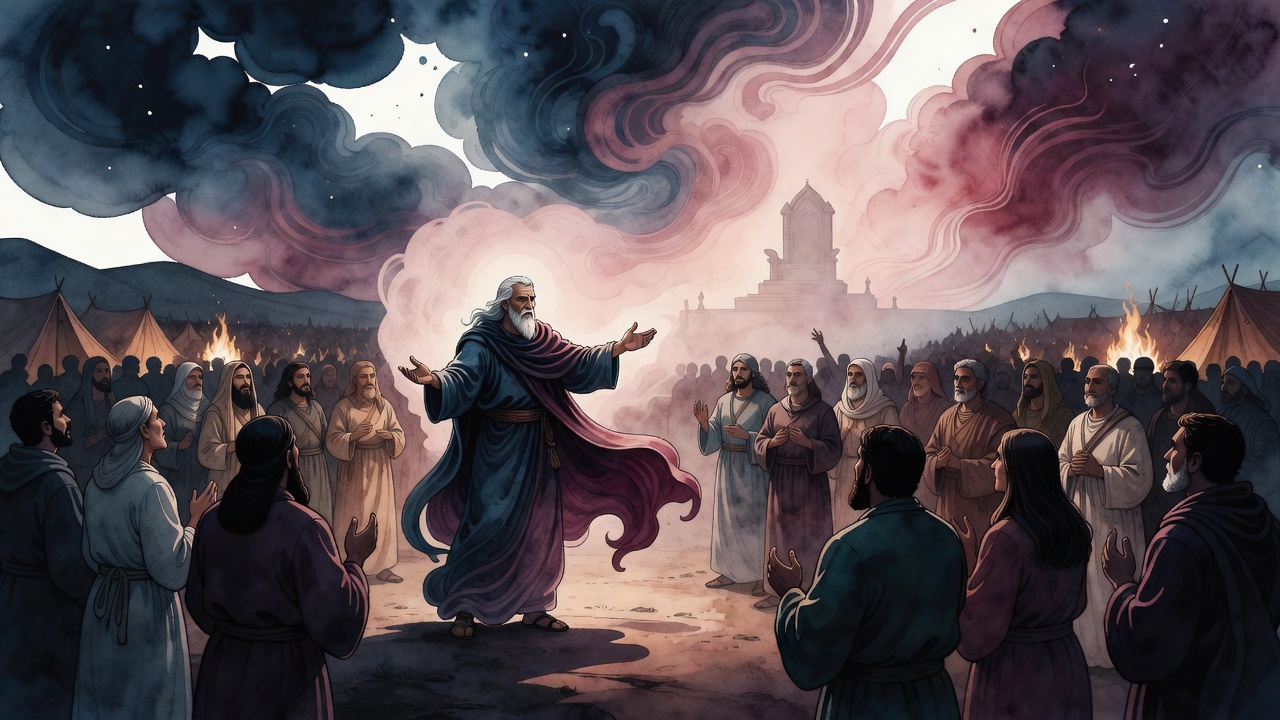
Korah seizes no rope and no staff. Soft speech gathers the great of Israel until a camp walks after a man who never raises his hand.
Table of Contents
Korah came to the judge's tent at the hour when the camp of Israel smelled of cooking and the light went orange on the canvas, and he never once raised his voice.
 Click for full size
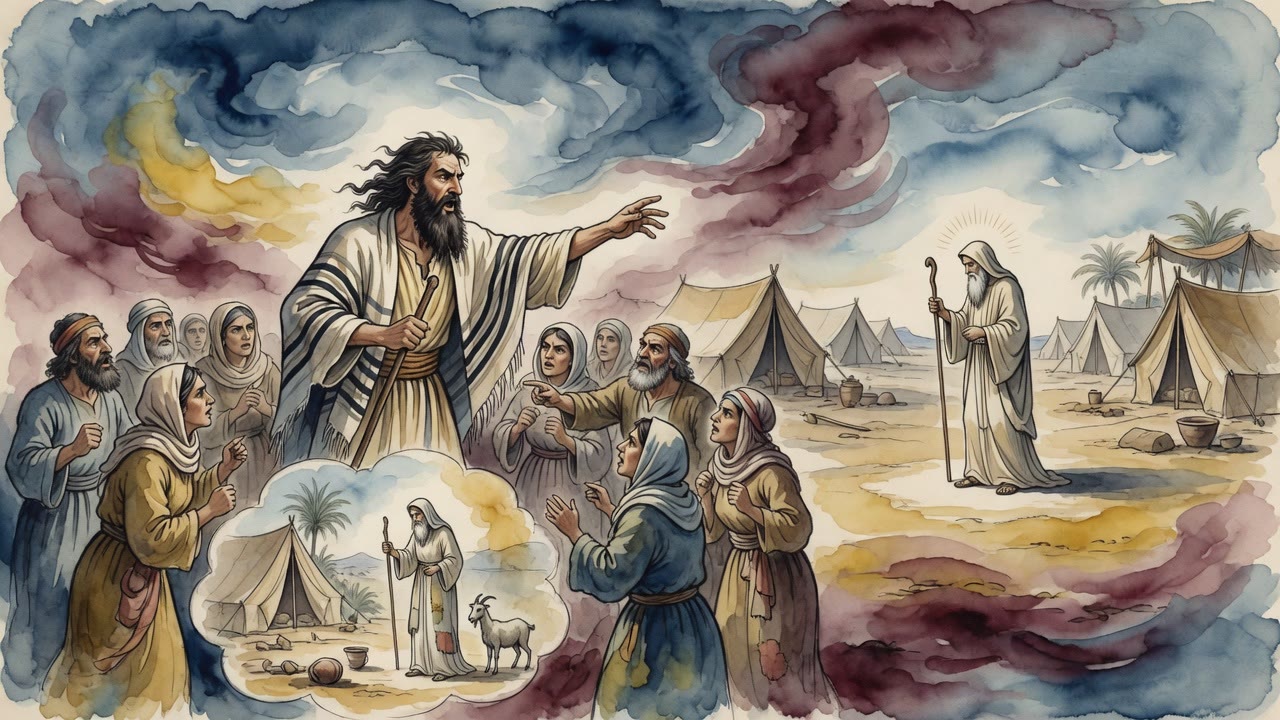
He said the judge's name first, which nobody had done in a long while. He said he had heard the ruling on the boundary case between two households of Naphtali, that it had been right, and that no one had bothered to say so. He said a man who could see a case that clearly should not be seated at the low end of a bench. He said all of it quietly, outside the tent flap, and he left before he could be thanked.
The judge stood in his own doorway afterward and found that his heart was going faster than the conversation had earned.
Soft Words and Nothing in the Hand
Korah worked the camp that way for days. No rope, no staff, no purse, and he was rich enough to have used one. Money buys the wrong men and everybody knows afterward whose they are, so he spent speech instead, gentle and aimed, laid across the tents the way a man lays out a net, which is to say flat and wide and low enough that nobody sees it until his own foot is inside.
What he said in public was harder than what he said at the tent flaps. The whole congregation is holy, all of them, and the Lord is among them, so why do you two lift yourselves above the assembly (Numbers 16:3). It was a good question. That was the trouble with it.
He gathered the great ones of Israel and members of the courts, men who had spent their working lives deciding what one man owed another, and they came out of their tents and walked after him. Not one of them was dragged.
The Same Word From the Other Direction
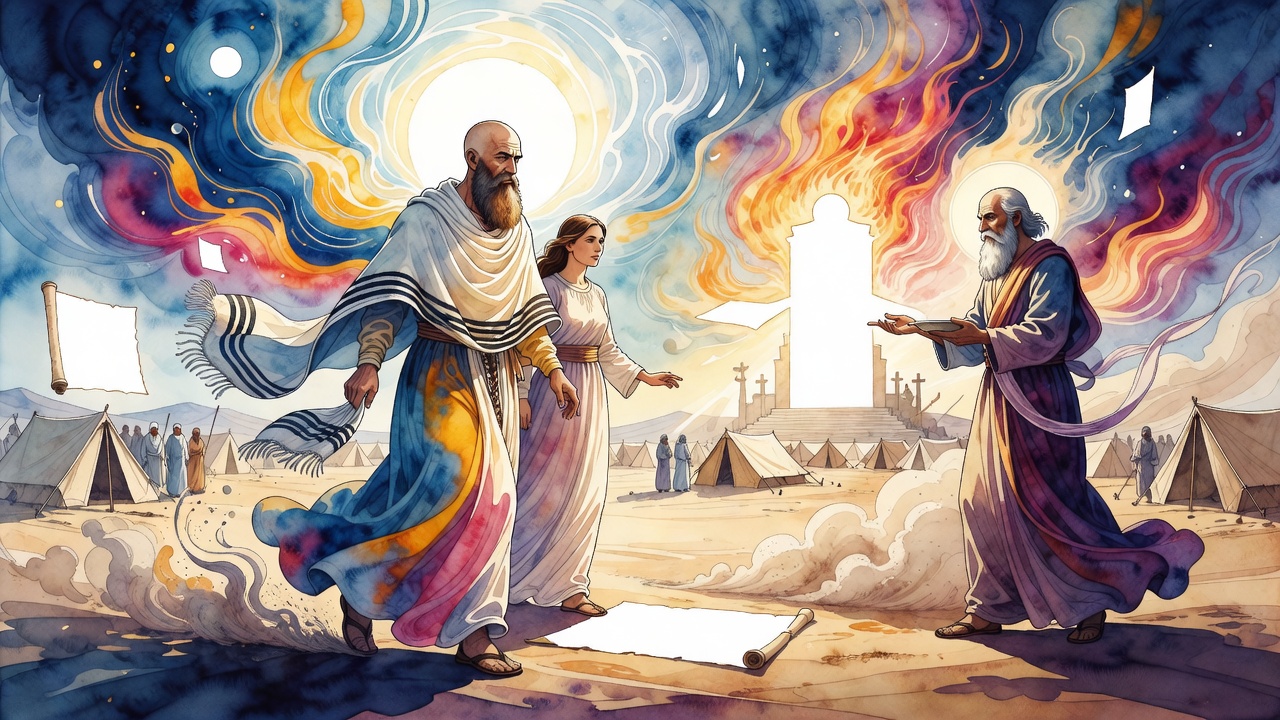
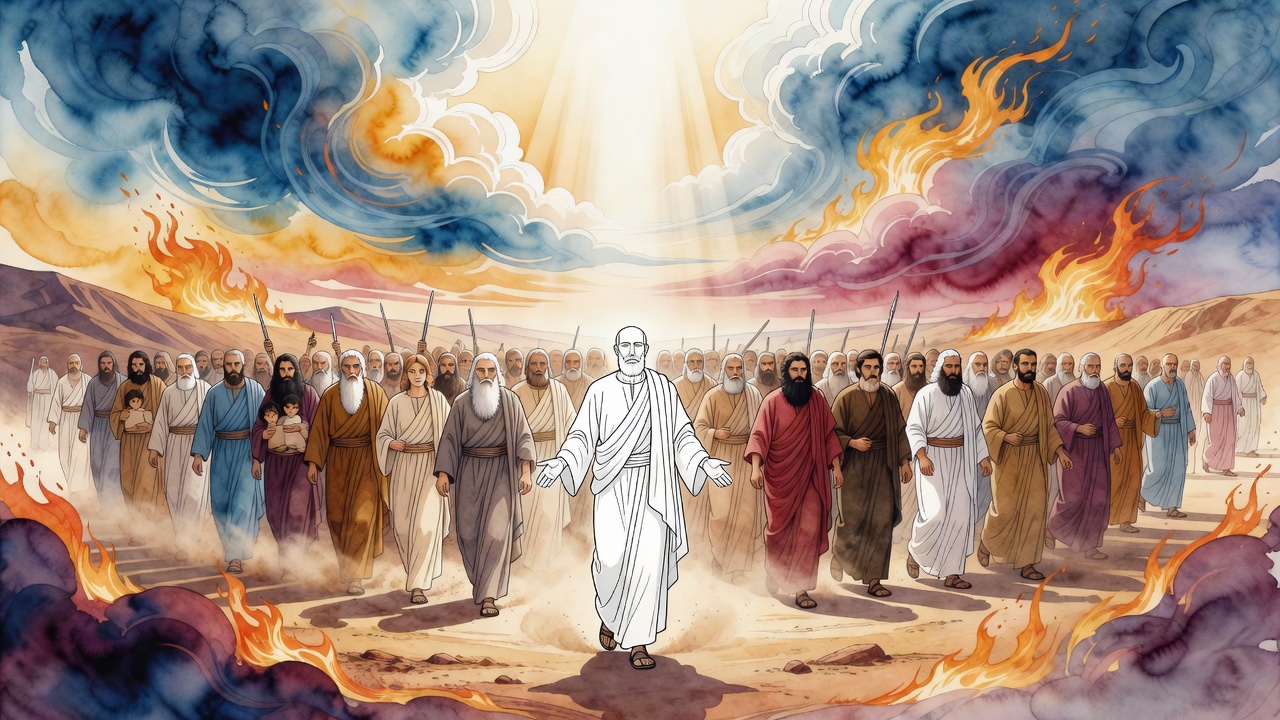
The judge knew he had been taken, and he knew it because the identical thing had been done to him once already. In the first year Moses and Aaron had come through and taken him along with a few dozen others and set them over the people. There was no rope that day either. Moses had used words so plain they were nearly dull, and the judge had walked after him for exactly the reason he was walking now, which is that a man had said something true about him and then asked him to come along.
So the deed was the same in both directions and only the direction had changed. Standing in the dark between his tent and the crowd, he could feel how thin that difference was, and how completely it decided everything downstream.
He got as far as the ash pit at the end of his own row and stopped there. Behind him was the tent and the low lamp and the whole possibility of not going. Ahead of him was a circle of men he had respected his entire adult life, all of them turned inward, and the sound coming out of the middle of the circle was Korah being reasonable. He stood at the ash pit long enough for his sandal to press a shape into the cold ash. Then he lifted the foot and put it down again farther on.
The Pan He Had No Business Holding
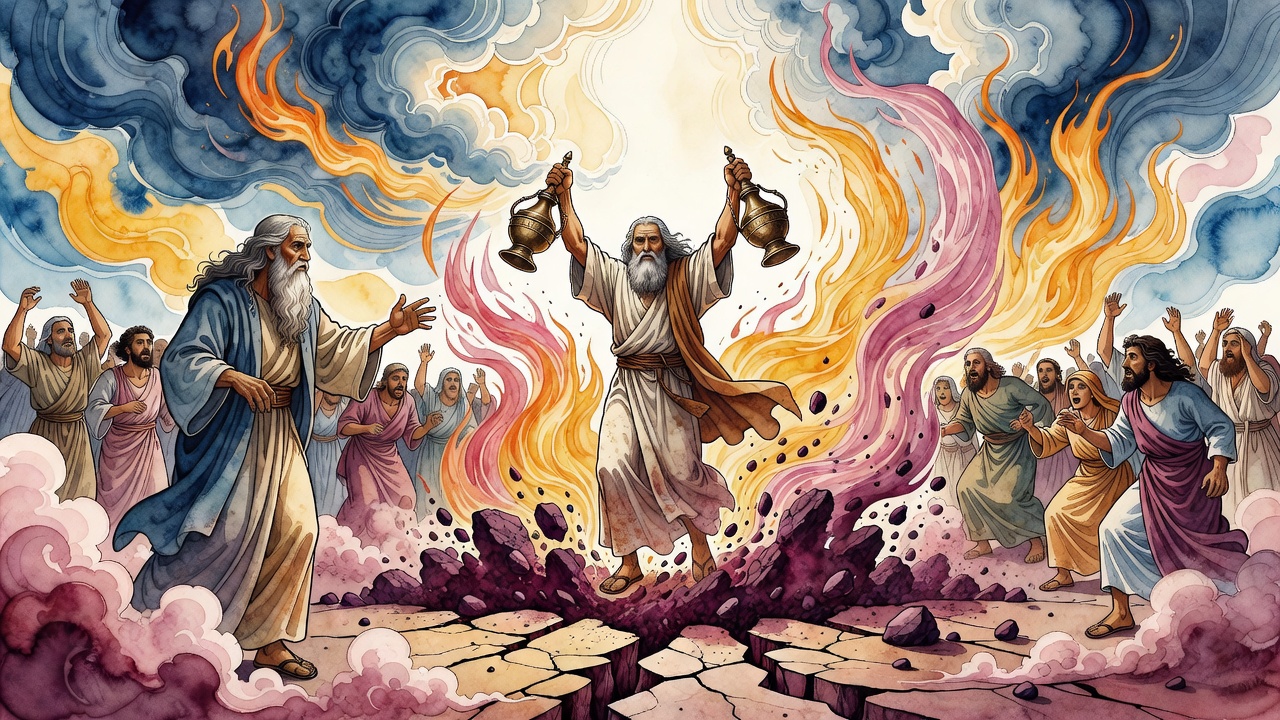
By morning there were two hundred and fifty men with fire pans and the judge was one of them. Incense is not heavy. It is a pan, some coals, a handful of powder, and the whole weight of the thing is in what it claims, which is that the man holding it may stand where the priest stands.
A law he had ruled by for years came back to him while he was setting his coals, and it came back at the worst possible moment. A murderer is taken even from the altar to die, since the service shelters nobody. From My very altar shall you take him to die (Exodus 21:14). He had cited that from the bench himself, and he had always liked the hardness of it.
Now he was holding fire in a quarrel he could feel would end in bodies, and it was clear that the altar he was walking toward would not cover him either. He lit the incense anyway, and that is the part he could not have explained to the man he had been a month earlier.
Ground That Drinks What Heaven Sends
In Egypt a man watered his own seed. He cut a channel from the river and walked the water down to the roots himself, the way anyone waters a bed of herbs, and the ground took what it was given and nothing else.
The land they were walking toward did not work like that. It drinks from the sky on a schedule that belongs to somebody else, the early rain in Marcheshvan and the late rain in Nisan, and if the people turn aside after other gods the clouds simply shut and the ground gets nothing. Ground like that has a mouth in it. It lies there open, waiting to be given what comes down.
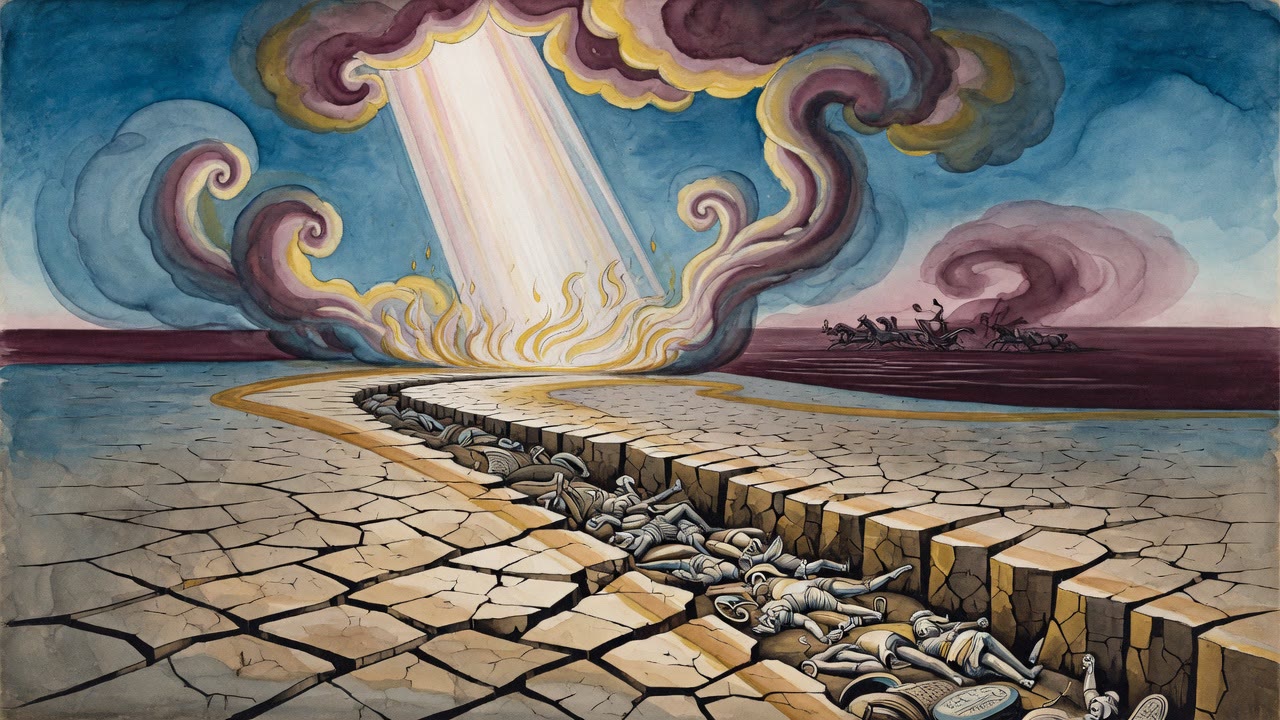
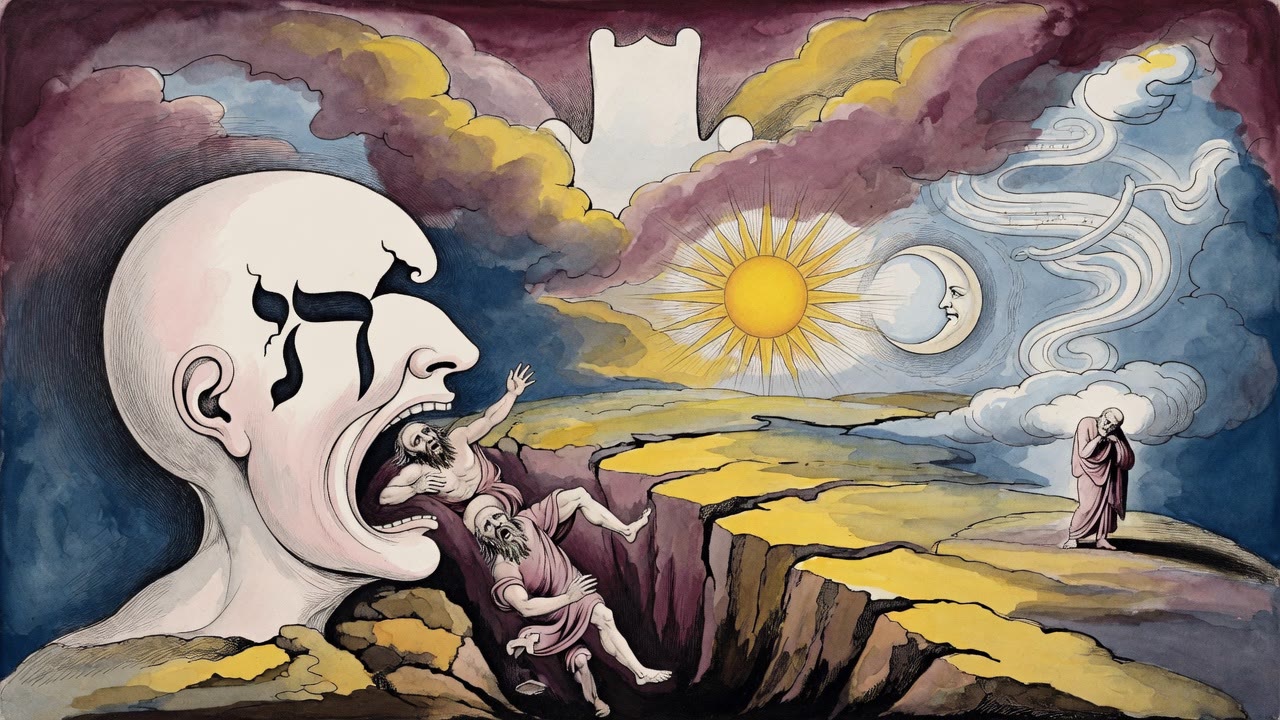
The ground under the camp opened in the middle of all Israel, and it did not take only Korah. It took Dathan and Abiram, the sons of Eliab of the line of Reuben, and the men of their households went down with them, and everything the two families owned went down as well with the tent ropes still pegged.
What the Camp Heard Afterward
The quiet that followed had a particular quality to it, because every man standing in it was going back through the last two weeks looking for the sentence that had moved him. There had been no sentence. There had been a name pronounced correctly at a tent flap, and a compliment nobody else had bothered to pay, and a walk in the dark toward a circle of men who were all facing inward.
The judge's sandal print was still in the cold ash at the end of his own row. The row was still standing. The ground under it had held, though the ground four rows over had not, and nothing anybody could see in the dirt explained which was which.
← All myths