5 min read

When Pharaoh Banned Moses From His Face

After plague after plague, Pharaoh offered half freedom and kept the herds. Moses demanded the livestock and the kings own beasts. The court door slammed…

Curated by Arthur · Told by Maggid ·
Table of Contents
  1. The Softened Message
  2. Young and Old or No One
  3. The Herds as the Last Lever
  4. Never See My Face Again

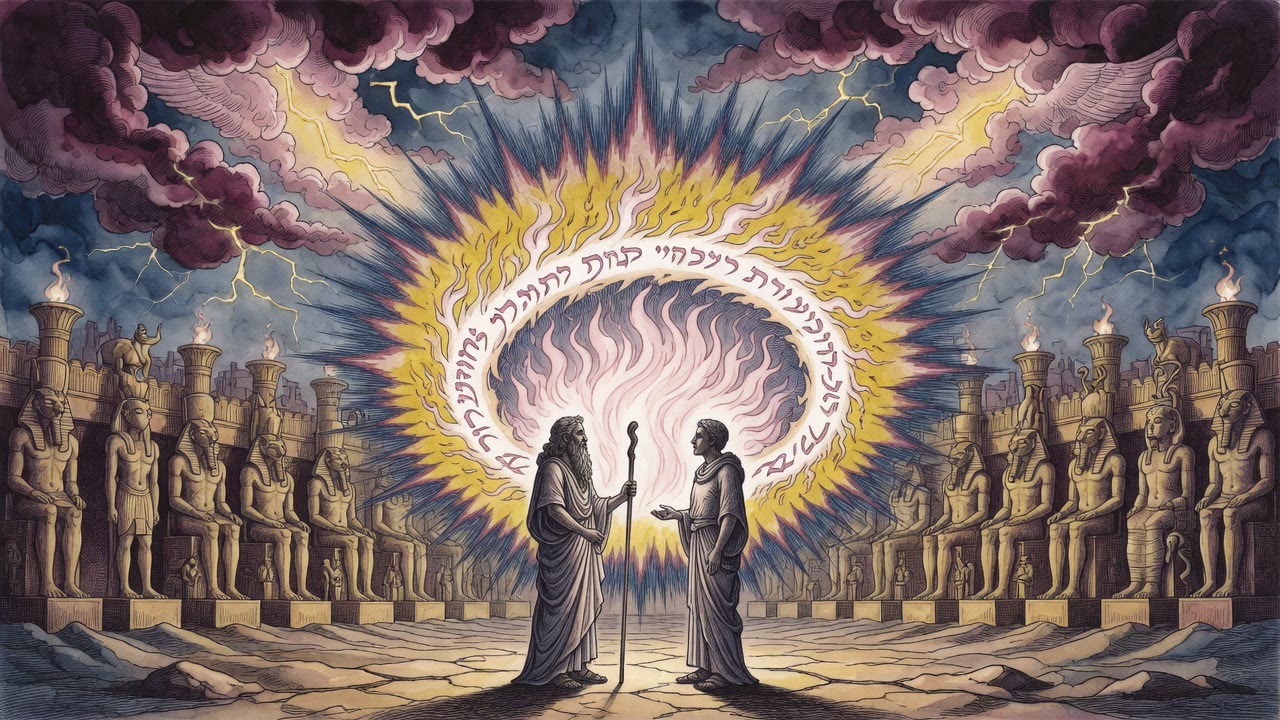
Moses and Aaron crossed the polished floor of the palace again. Guards shifted. The air still smelled of the last plague. Pharaoh sat high, gold at his wrists, and waited for them to flinch.
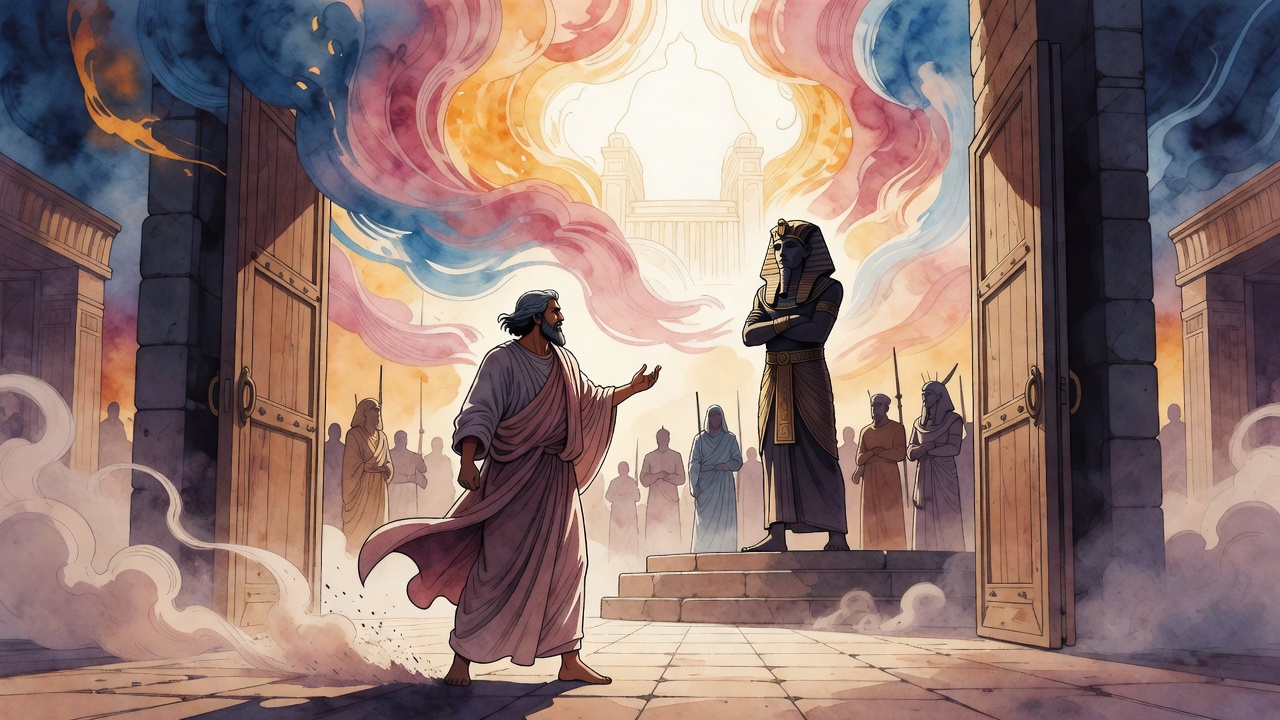
When Pharaoh Banned Moses From His Face Click for full size

They did not flinch. They asked for three days in the wilderness, a sacrifice to the God of the Hebrews, and they chose their words the way men choose shields in a fight.

The Softened Message

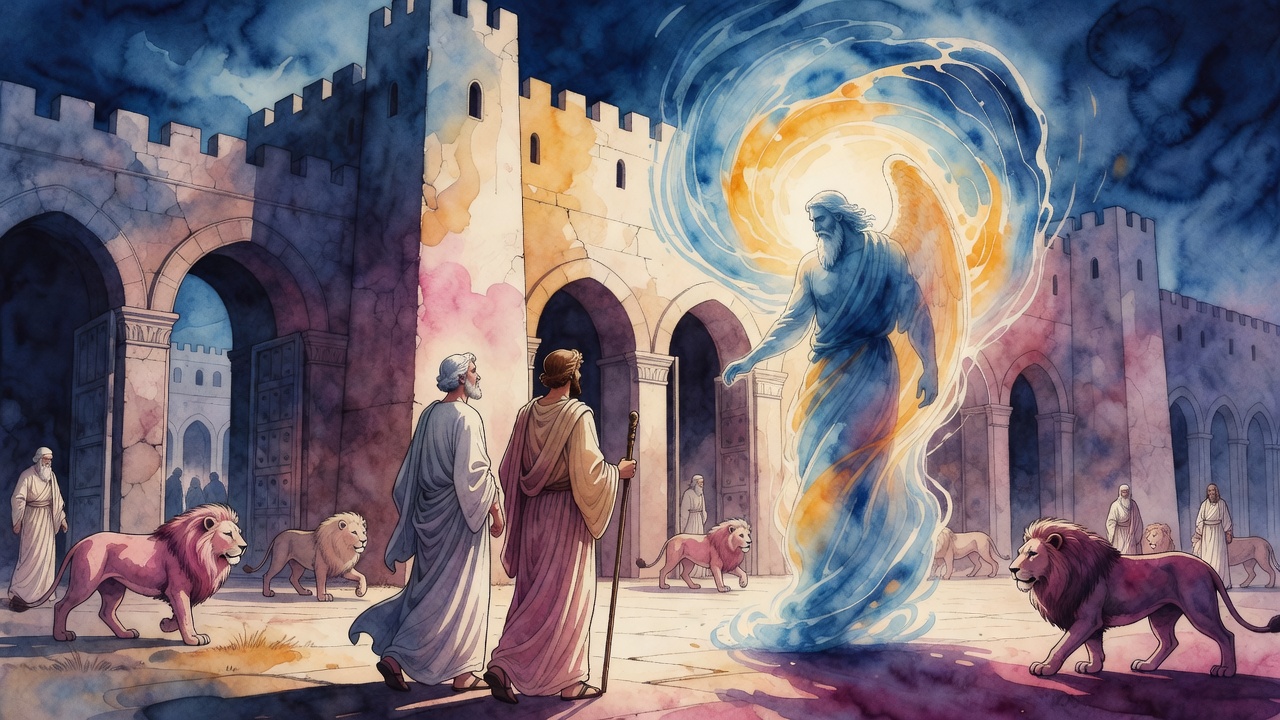
The first time they had come, the wording had slipped. God had told them to speak in the name of the Lord, God of Israel. In the hall they had softened it. Pharaoh had probed the crack.

So they changed. "The God of the Hebrews has met with us," they said. "Let us go, please, three days journey into the wilderness, and sacrifice to the Lord our God, lest He afflict us with pestilence or with the sword" (Exodus 5:3).

Pharaoh heard "us" where a hard man would have expected "you." The brothers did not correct him. In that hall, deference was a blade wrapped in cloth. A person is obligated to accord deference to royalty, even when the throne is the enemy of every child still in Goshen.

Pharaoh leaned forward. The request for three days sounded like a feast day. He already heard the road out of Egypt under it.

Young and Old or No One

Plagues kept arriving. Advisors begged the king to cut his losses. Moses and Aaron were brought back for another round.

Moses spoke without narrowing the people. "We will go with our young and with our old" (Exodus 10:9). Toddlers. Grandfathers. The whole camp.

Pharaoh laughed without joy. "So let the Lord be with you. See that evil is facing you." In his mouth, evil meant flight. Adults might go to sacrifice, he argued. Children? What business did children have at an altar? "It is the way of youths and elders to sacrifice, but the young and the children?" He named the three-day journey a smokescreen. If the whole nation left, he said, it would never return.

He offered a thinner door. "Not so; let the men go now and serve the Lord; for that is what you seek" (Exodus 10:11). Leave the little ones. Leave the proof that this was only worship, not escape.

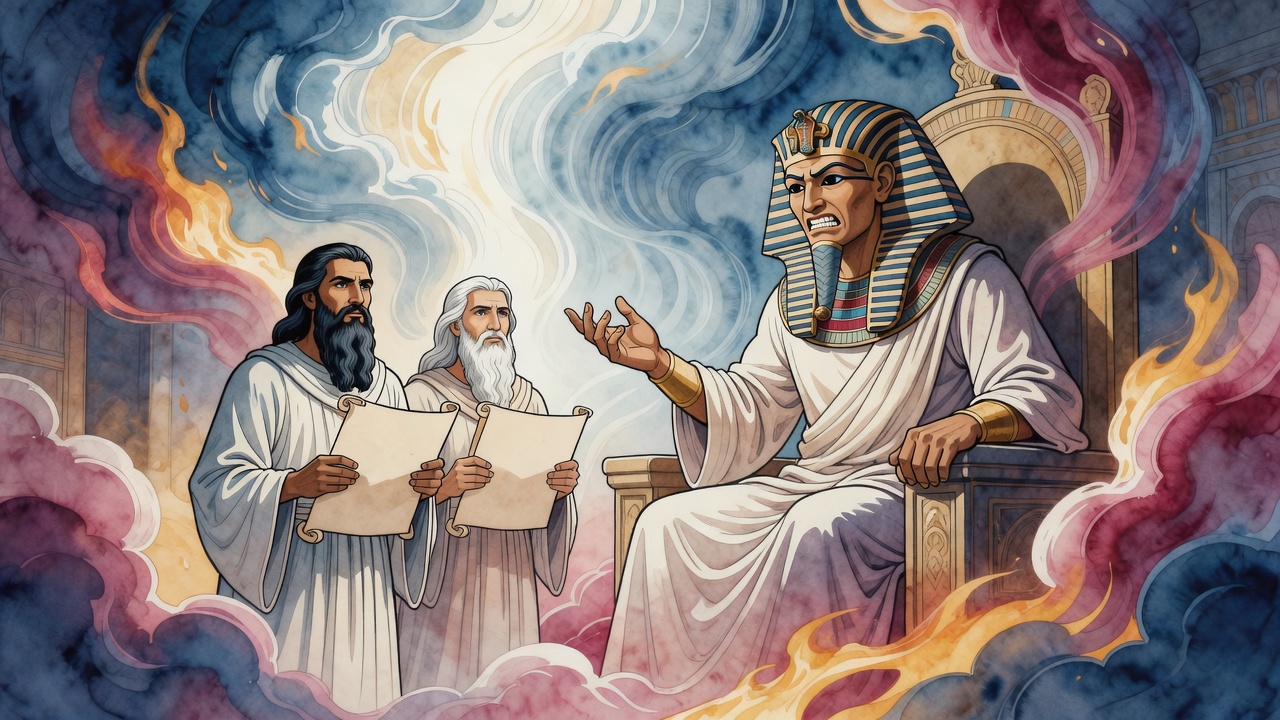
Moses did not take the thinner door. Pharaoh rose, rage shaking the gold. "He drove them out from Pharaohs presence" (Exodus 10:11). The brothers hit the courtyard with the kings spit still in the air.

The Herds as the Last Lever

More darkness. More death in the fields. Pharaoh cracked again and called Moses in alone for the last bargain he would offer as a free man.

"Go serve the Lord," he said. "But leave your flocks and herds behind. Your children can go."

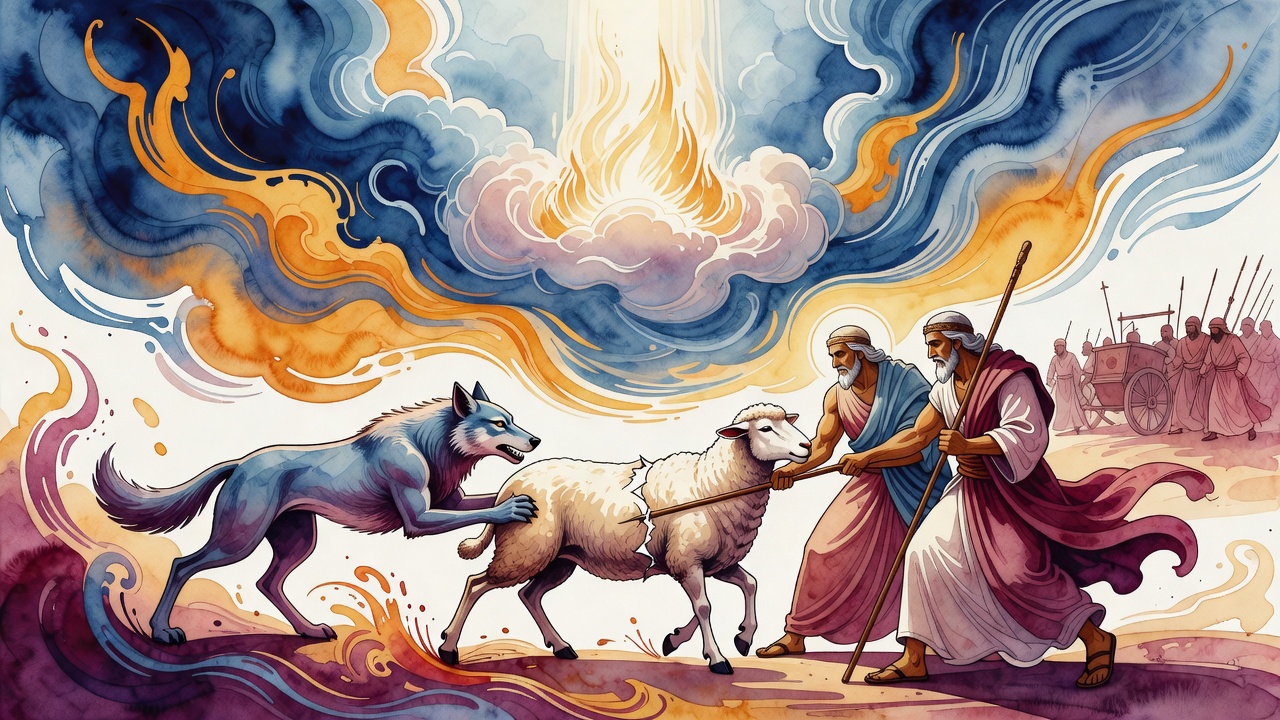
It sounded like mercy. It was a chain on the future. Without animals there would be no ongoing sacrifice, no wealth for the road, no proof that Egypt had truly released them.

Moses stepped closer to the throne than etiquette liked. "You, too, will give into our hand feast offerings and burnt offerings, and we will sacrifice to the Lord our God" (Exodus 10:25). Not only would Israel take its own herds. Pharaoh would hand over beasts of his own, animals offered in the kings own name to a God who had already shattered the Nile and the sky.

The room went quiet. A god-king being asked to fund the worship of the God of slaves is not a negotiation. It is a public unseating.

"Our livestock, too, will go with us" (Exodus 10:26), Moses added. Pharaohs animals for the first sacrifice. Israels animals for whatever service the road still demanded. Nothing left behind as hostage.

Never See My Face Again

Pharaoh stood so hard the chair scraped. "Go from me! Beware, do not see my face anymore, for the moment you look upon my face, you will die."

Moses did not kneel. He did not soften the sentence. "You have spoken well," he answered. "I will never see your face again."

That vow cut both ways. The court that had heard soft words about Hebrews and pestilence now heard a sealed door. The next time God moved, it would not be through another audience with a stubborn man on a throne. It would be night, blood, and a people walking out with children and cattle both.

Moses turned his back on gold. Aaron matched his step. Behind them, Pharaoh sat in a room that had already lost the argument, still clutching the right to ban a face he would never control again. Courtiers flattened against the walls. No one offered a softer exit clause. The ban on the face was the kings last tool, and Moses had taken it as a gift.

Outside, Goshen waited with its little ones and its herds. Women packed dough that would not have time to rise. Men checked the ropes on cattle Pharaoh had tried to keep as hostages. The three-day story was finished. The long road was about to begin, and the next blow from heaven would not ask for another audience in that hall.


← All myths
From the tradition

Sources

3 sources

The texts behind this telling. Some cards carry a translation of the source; others are our own retelling of it, and each card says which. Every card links out to the original.

Shemot Rabbah 5:15Shemot Rabbah

Retold in our words. Read the original at the link below.The Sefaria Midrash Rabbah, 2022 · CC-BY

That feeling isn't new. It goes all the way back to Moses and Aaron facing down Pharaoh in the book of Exodus. They’re walking into the lion's den, asking the most powerful ruler on Earth to let his workforce, his slaves, go for three whole days!

Our text, Shemot Rabbah – a classic collection of rabbinic interpretations on the book of Exodus – dives deep into just one verse: (Exodus 5:3). "They said: The God of the Hebrews has met with us. Let us go, please, three days’ journey into the wilderness, and sacrifice to the Lord our God, lest He afflict us with pestilence or with the sword.”

Notice anything interesting about that verse? Something maybe a little…off?

The Rabbis did. According to Shemot Rabbah, Moses and Aaron are worried they messed up their initial approach. The text suggests that maybe Pharaoh questioned them because they altered God's original message. Instead of saying exactly what God told them – “So said the Lord, God of Israel” – they softened it. So they switched tactics. This time, they specifically said, “The God of the Hebrews.”

But it's the next part that really gets me: "Lest He afflict us with pestilence or with the sword." Shouldn't it say, "Lest He afflict you?" After all, Pharaoh is the one they're trying to convince!

Shemot Rabbah offers a fascinating explanation. The "us" isn't a mistake. It's deliberate. It demonstrates deference. The Rabbis are teaching us a profound lesson: even when standing up to power, respect is paramount.

Why? Because, the text says, "a person is obligated to accord deference to royalty.” It's a delicate dance, isn't it? Speaking truth to power while still acknowledging the position, the authority, even of someone you profoundly disagree with.

It makes you wonder, doesn't it? In our own lives, how often do we sacrifice politeness for the sake of being "right?" And how often might we be more effective, more persuasive, if we remembered the lesson of Moses and Aaron: that even in the face of injustice, respect can open doors. Maybe not the doors to freedom immediately, but doors to dialogue, to understanding, to something more than just a slammed gate.

Full source
Shemot Rabbah 13:5Shemot Rabbah

Retold in our words. Read the original at the link below.The Sefaria Midrash Rabbah, 2022 · CC-BY

Shemot Rabbah turns to Pharaoh, Moses and the Holy Sanctuary.

Pharaoh's advisors, sensing the impending doom, had pleaded with him to release the Israelites after yet another devastating plague. MOSES and AARON were brought back in for another round of negotiations. Moses, unwavering, declared, "We will go with our young and with our old…" (Exodus 10:9).

Pharaoh, ever the master manipulator, saw through what he believed was a deceitful plan. "So let the Lord be with you… see that evil is facing you," he sneered. What did he mean by "evil"? According to the Shemot Rabbah, Pharaoh was essentially accusing Moses and Aaron of plotting an escape. He argued that while it was understandable for adults to participate in religious sacrifices, what business did young children have in such matters? "It is the way of youths and elders to sacrifice, but the young and the children?" he questioned, implying their inclusion was a ruse. This wasn't about genuine worship, he thought; it was about fleeing Egypt for good!

Pharaoh believed their request for a "three-day journey" (Exodus 5:3, 8:23) was just a smokescreen. He was convinced that if he let everyone go, they'd never return. Therefore, he warned, "See that what you are thinking, that you intend to flee, will return against you, so you will not depart from here."

He then proposed a compromise, dripping with suspicion: "Not so; let the men go now and serve the Lord; for that is what you seek" (Exodus 10:11). He challenged them: if their intentions were truly pure, why insist on bringing the children? After all, children aren't exactly essential for performing sacrifices. "Since the children are not fit to serve, why do you need them?" he asked. This was his "proof" that they were planning something sinister – that "you are seeking to perform evil, you wish to flee."

Unconvinced and enraged, Pharaoh ended the discussion abruptly. "He drove them out from Pharaoh's presence" (Exodus 10:11). And just like that, another opportunity for peaceful resolution was squandered due to Pharaoh's paranoia and unwillingness to trust in the Israelites' sincerity.

What's so powerful about this passage from Shemot Rabbah is how it highlights the destructive power of distrust. Pharaoh's suspicion, his inability to believe in the Israelites' stated intentions, ultimately led to his own downfall and the continued suffering of his people. How often do our own biases and preconceived notions blind us to the truth, leading us down paths of unnecessary conflict and hardship?

Full source
Shemot Rabbah 14:4Shemot Rabbah

Retold in our words. Read the original at the link below.The Sefaria Midrash Rabbah, 2022 · CC-BY

It's so much more than just a simple "Let my people go!" narrative. Take, for instance, the exchange in (Exodus 10:24-29). It's a masterclass in negotiation, divine will, and maybe even a little bit of sass.

Pharaoh, his kingdom reeling from plague after plague, finally cracks. He summons MOSES and says, "Go serve the Lord, but leave your flocks and herds behind. Your children can go, though." It sounds like a compromise. A little give and take? But Moses, he's not buying it.

"You, too," Moses retorts, "will give into our hand feast offerings and burnt offerings, and we will sacrifice to the Lord our God." (Exodus 10:25). Now, that's a bold move. It's not just about what they’re taking, but what Pharaoh will provide. But why?

The Shemot Rabbah, a classic collection of Midrashim (rabbinic interpretive commentary) (interpretive stories), illuminates this moment beautifully. Moses isn’t just haggling over livestock. He’s making a profound statement. He's saying, "Don't think we'll sacrifice anything of our own. You, too, will give into our hand feast offerings and burnt offerings that we will sacrifice to the Holy One, blessed be He, in your name." for a second. In Pharaoh's name. As if Pharaoh, the self-proclaimed god-king, is going to be making offerings to the God of the Israelites. It's a complete reversal of power. A total undermining of Pharaoh’s authority. It's not just about the sacrifice; it's about the symbolic submission.

And then, Moses adds, "Our livestock, too, will go with us" (Exodus 10:26). The Shemot Rabbah explains this further: "You will give us animals for immediate sacrifice on your behalf, and we will take our livestock for the purpose of any additional offerings." So, Pharaoh provides the initial offering, acknowledging God's power in that moment, and the Israelites keep their own animals for the ongoing service of God.

Pharaoh, predictably, loses it. "Go from me!" he shouts. "Beware, do not see my face anymore, for the moment you look upon my face, you shall die!" (Exodus 10:28). It's the ultimate power play, the king threatening death to maintain control.

And Moses? He simply replies, "You have spoken well; I will not see your face anymore" (Exodus 10:29). It sounds like acceptance, almost defeat. But is it?

The Shemot Rabbah offers a fascinating interpretation: "You have projected the truth, as ‘I will not see your face anymore,’ as the Holy One, blessed be He, said to me as you have said.” In other words, Moses isn't just agreeing with Pharaoh. He's revealing that Pharaoh's words echo a divine decree. GOD has already told Moses that their paths will diverge. Pharaoh, in his rage, is unknowingly fulfilling God's plan.

So, what does this all mean?

Perhaps it's a reminder that even in moments of intense conflict, divine will is at play. Even the most powerful figures can be instruments of a higher purpose, whether they realize it or not. And maybe, just maybe, it's a lesson in the art of negotiation. Sometimes, the most powerful response is not defiance, but a quiet, knowing agreement that reveals the other person's words are ultimately meaningless against the backdrop of something much, much larger.

Full source