Parshat Bo5 min read

Pharaoh Kept the Flocks and Lost the Night

Pharaoh offered freedom without livestock. Moses demanded animals for sacrifice in Egypt's name and never saw that face again.

Curated by Arthur · Told by Maggid ·
Table of Contents
  1. A King Who Still Bargained
  2. Animals for His Name
  3. Do Not See My Face
  4. When the Word Broke
  5. The Night After Negotiation
Pharaoh Kept the Flocks and Lost the Night Click for full size

A King Who Still Bargained

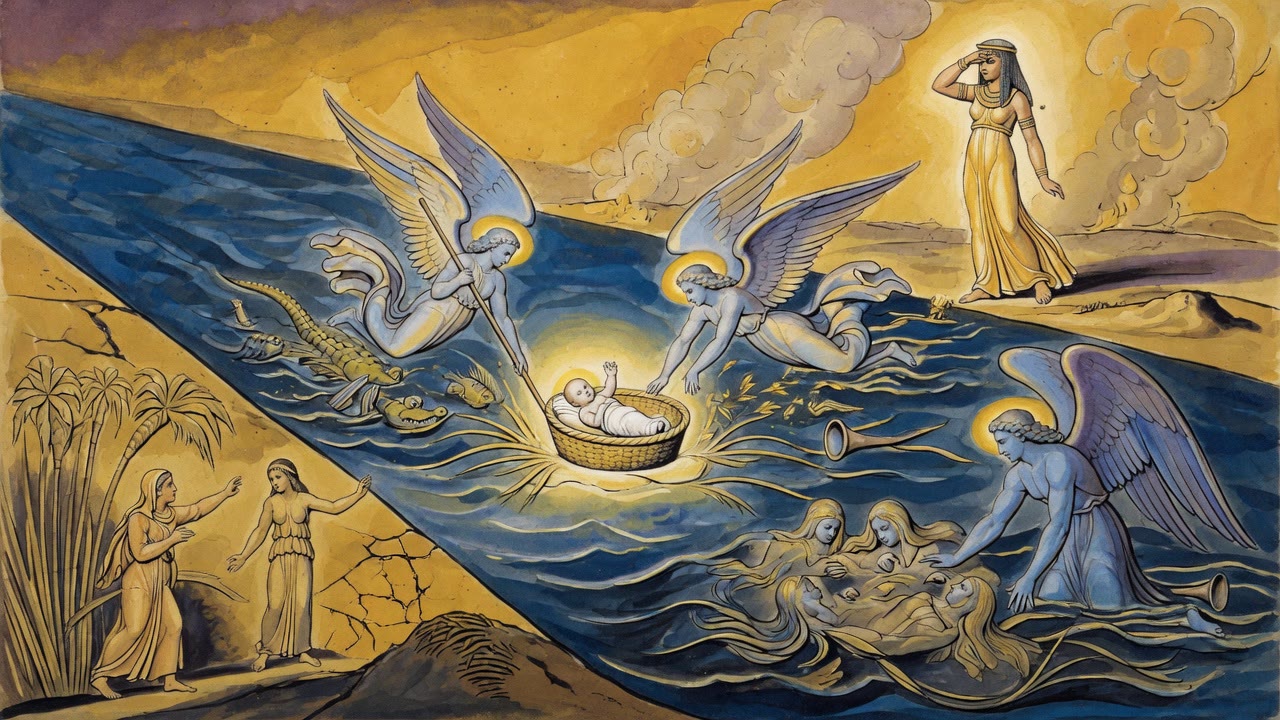
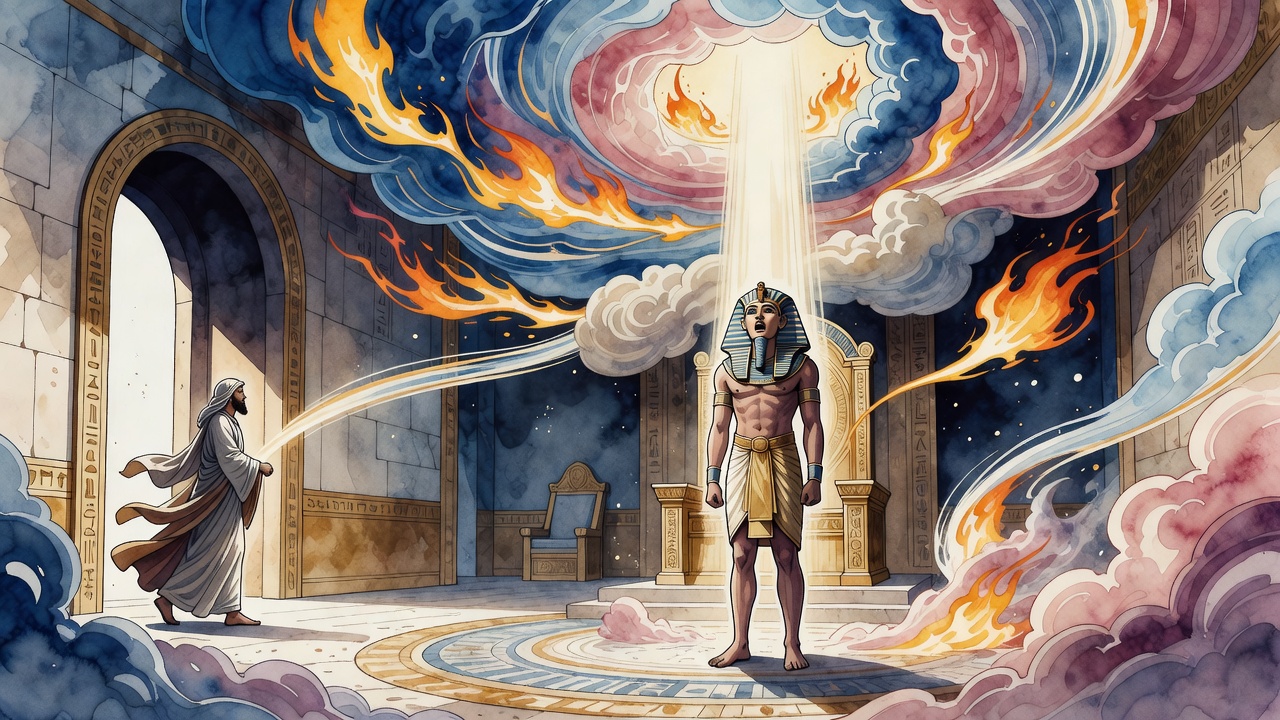
Pharaoh summoned Moses after the dark had already hurt his land. "Go serve the Lord. Leave your flocks and herds. Your children may go" (Exodus 10:24). It sounded like mercy with a hook. Children free, wealth held hostage, worship trimmed to what Egypt would permit.
Moses did not take the half door. "You too will give into our hand feast offerings and burnt offerings, and we will sacrifice to the Lord our God" (Exodus 10:25). Not only would Israel leave with its animals. Pharaoh himself would supply beasts for the altar, offerings cut in the name of the God he had refused.

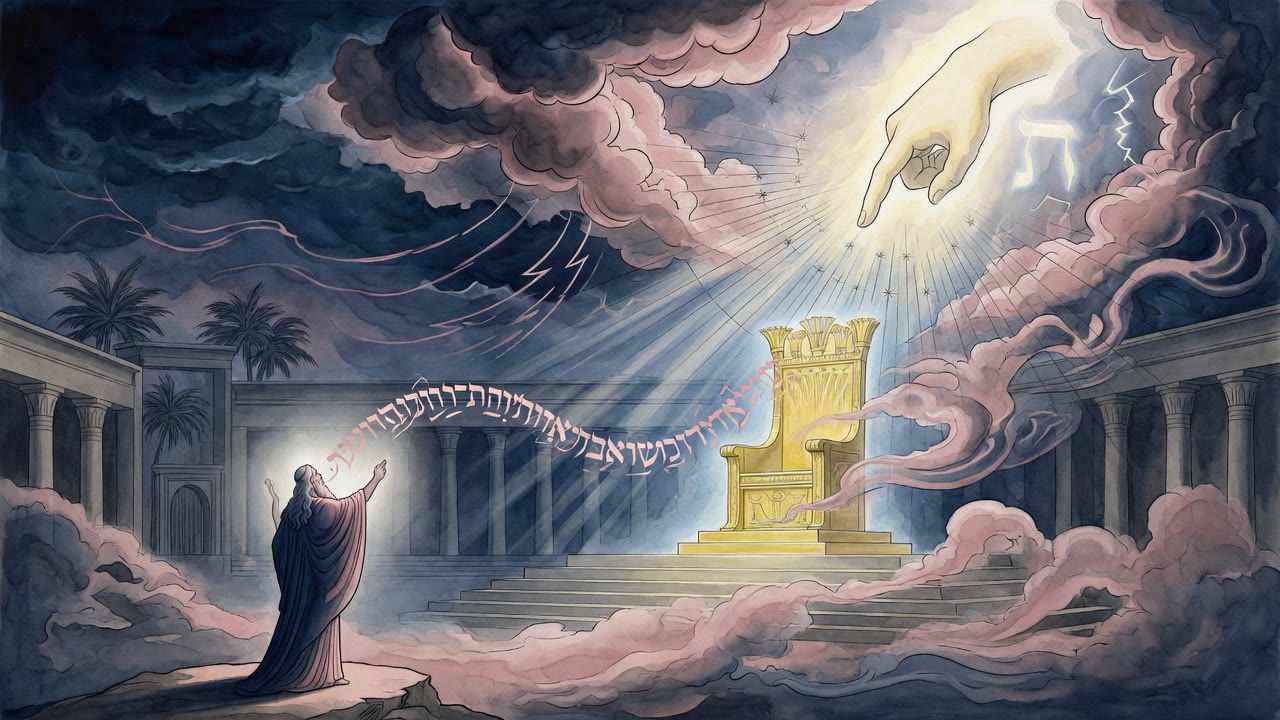
The throne room tightened. Courtiers who had learned to read the king's moods heard a slave's brother set terms like a creditor. Locust and darkness had already written their signatures on the kingdom. Pharaoh still tried to edit the release.

Moses stood with the dust of Goshen on his feet and did not lower his eyes.

Animals for His Name

The midrash hears the insult inside the demand. Pharaoh would hand over animals to be sacrificed as if on his behalf, a public admission that the Hebrew God collected tribute from the palace. Israel's own herds would follow for any further service. Egypt would fund the first fire. The slaves would keep the ongoing flock.

"Our livestock too will go with us," Moses said. Not a hoof left for Egyptian barns (Exodus 10:26). Freedom without the means of worship is another kind of leash. Moses cut it in front of the man who thought he still set terms. Sacrifice in the wilderness would need flesh. So would the story of who paid for the first smoke.

Pharaoh's voice rose to a death sentence because bargaining had failed and humiliation had not.

Do Not See My Face

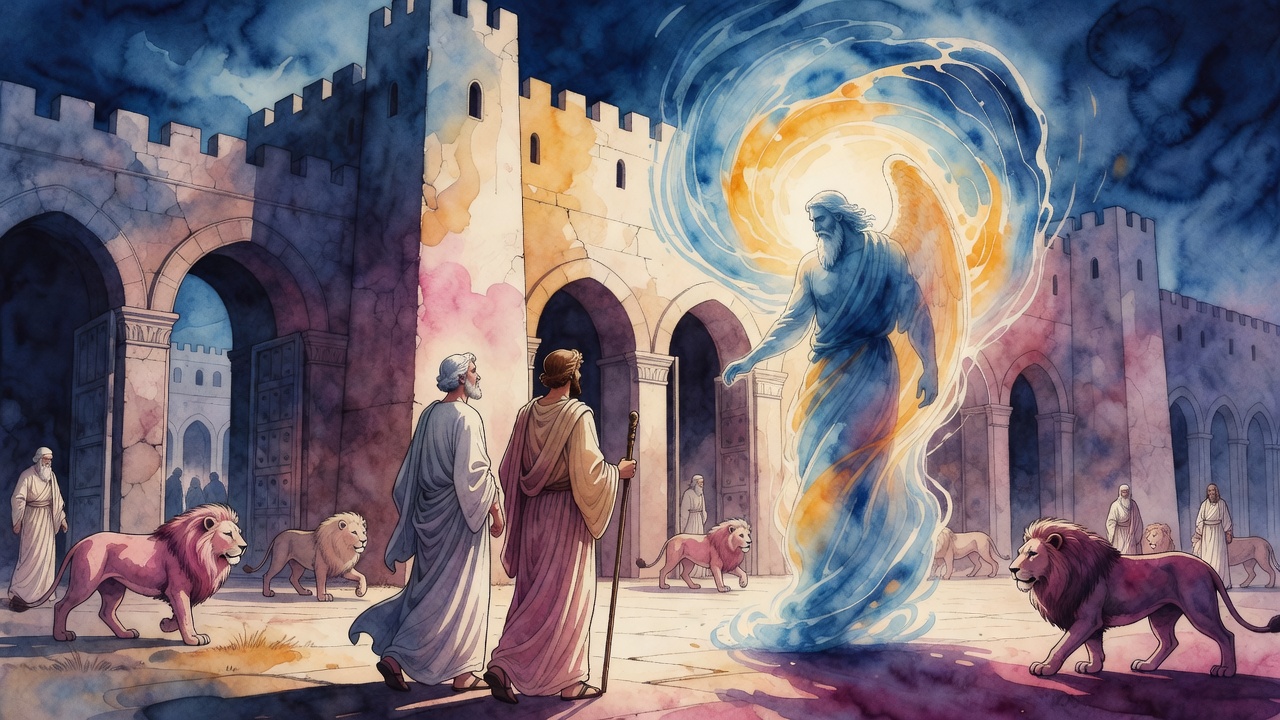
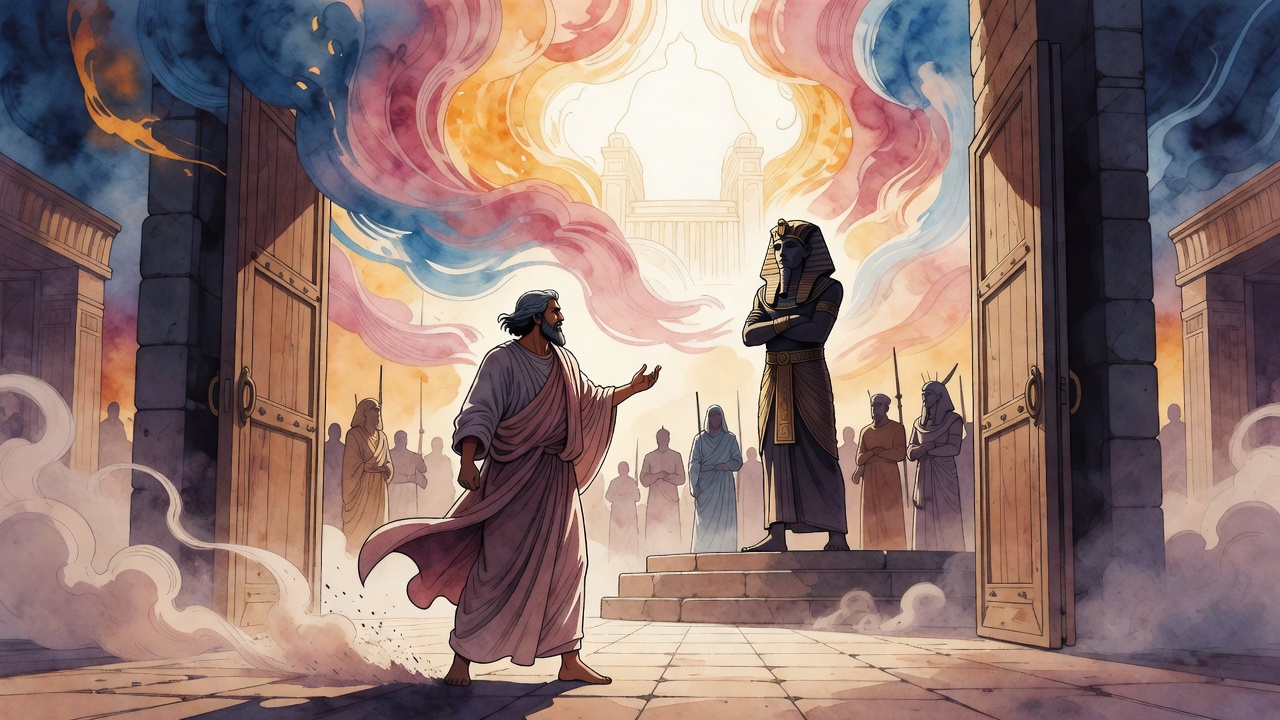
"Go from me. Beware. Do not see my face again. On the day you see my face you will die" (Exodus 10:28). Royal rage dressed itself as law. Moses answered as if agreeing. "You have spoken well. I will not see your face again" (Exodus 10:29).

The midrash flips the line. God had already told Moses the audiences were finished. Pharaoh's threat was late echo, not mastery. The king thought he closed the door. Heaven had closed it first. Moses walked out under a sentence that was really a schedule. He did not need to win the last word. He only needed to recognize it.

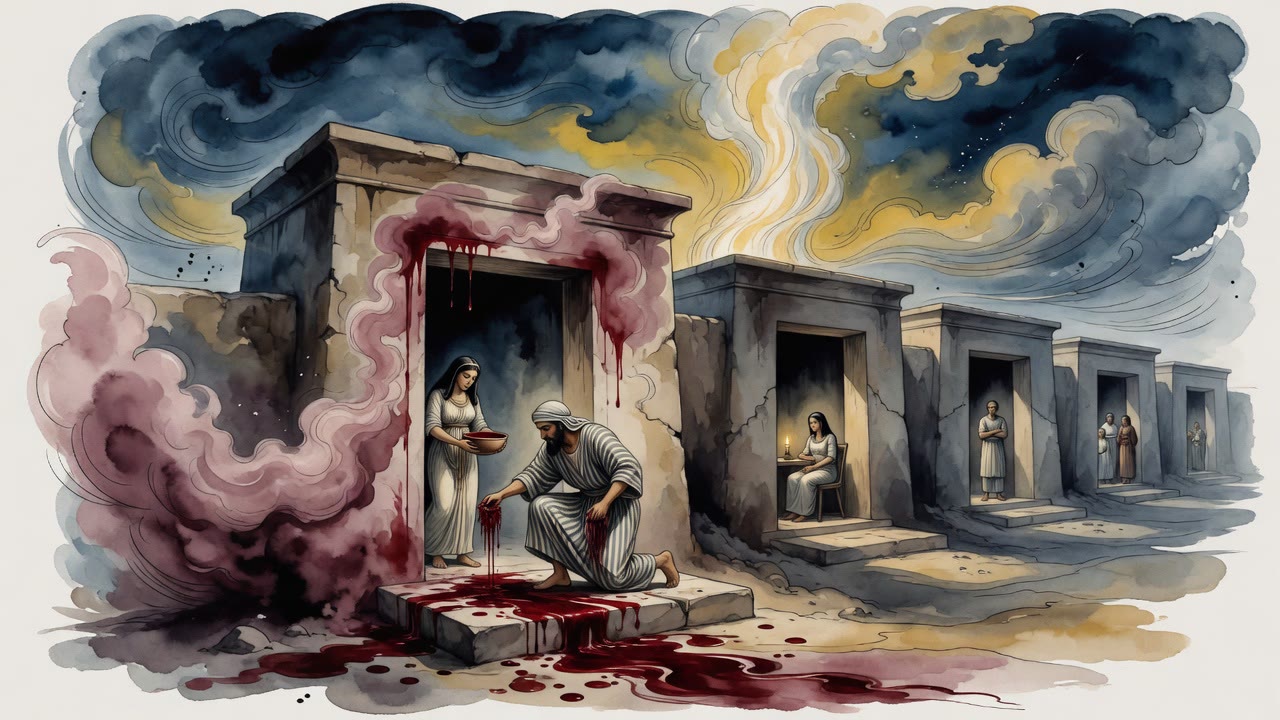
Plague still had one more night to spend. The unfinished argument moved from throne room to doorposts, from speech to blood.

Guards stepped aside. Moses left without a backward glance that could be priced as fear.

When the Word Broke

Earlier Pharaoh had sworn, "I will not let Israel go." God had answered, "Let My people go." Whose word would stand? The midrash sets the two sentences against each other like blades. When the last pressure landed, Pharaoh himself rose, found Moses, and begged them to leave. He fell from decree into plea. The midrash paints him humbled at the prophet's feet, asking the slaves to go before more death entered the house (Exodus 12:31).

God's question hangs over the wreckage. Did your word stand, Pharaoh, or Mine? The king who tried to keep flocks and release children ends by releasing everything in a panic Egypt cannot stage-manage. Jewelry presses into Hebrew hands. Dough that has not risen rides on shoulders. The army will follow later and learn the sea's opinion.

Israel walked out carrying what Pharaoh no longer claimed. The word that had filled the palace with "no" lay broken under the wailing of a night that did not negotiate.

The Night After Negotiation

Between the slammed audience and the midnight cry, Moses carried two certainties. Pharaoh would not set the terms of worship, and God had already closed the door on further speeches in that hall. The flocks that Egypt tried to keep became a test of whether freedom meant only empty hands or a people able to serve with full herds.

No further face-to-face. Moses and Pharaoh had used up the last conversation the decree allowed. What remained was blood on doorposts, a cry at midnight, and a road toward a sea that would finish the argument without speeches.

The flocks went. The children went. The offerings Pharaoh never willingly gave still burned in the story as the price a hard mouth finally paid. Bargaining ended. Exodus began. Every later telling that softens Pharaoh into a mere obstacle forgets this room, where a man tried to keep the animals and lost the night, then ran after a people he could not hold.

Moses did not need to see that face again. The face came looking for him instead, desperate, loud, and too late to set terms.


← All myths
From the tradition

Sources

2 sources

The texts behind this telling. Some cards carry a translation of the source; others are our own retelling of it, and each card says which. Every card links out to the original.

Shemot Rabbah 14:4Shemot Rabbah

Retold in our words. Read the original at the link below.The Sefaria Midrash Rabbah, 2022 · CC-BY

It's so much more than just a simple "Let my people go!" narrative. Take, for instance, the exchange in (Exodus 10:24-29). It's a masterclass in negotiation, divine will, and maybe even a little bit of sass.

Pharaoh, his kingdom reeling from plague after plague, finally cracks. He summons MOSES and says, "Go serve the Lord, but leave your flocks and herds behind. Your children can go, though." It sounds like a compromise. A little give and take? But Moses, he's not buying it.

"You, too," Moses retorts, "will give into our hand feast offerings and burnt offerings, and we will sacrifice to the Lord our God." (Exodus 10:25). Now, that's a bold move. It's not just about what they’re taking, but what Pharaoh will provide. But why?

The Shemot Rabbah, a classic collection of Midrashim (rabbinic interpretive commentary) (interpretive stories), illuminates this moment beautifully. Moses isn’t just haggling over livestock. He’s making a profound statement. He's saying, "Don't think we'll sacrifice anything of our own. You, too, will give into our hand feast offerings and burnt offerings that we will sacrifice to the Holy One, blessed be He, in your name." for a second. In Pharaoh's name. As if Pharaoh, the self-proclaimed god-king, is going to be making offerings to the God of the Israelites. It's a complete reversal of power. A total undermining of Pharaoh’s authority. It's not just about the sacrifice; it's about the symbolic submission.

And then, Moses adds, "Our livestock, too, will go with us" (Exodus 10:26). The Shemot Rabbah explains this further: "You will give us animals for immediate sacrifice on your behalf, and we will take our livestock for the purpose of any additional offerings." So, Pharaoh provides the initial offering, acknowledging God's power in that moment, and the Israelites keep their own animals for the ongoing service of God.

Pharaoh, predictably, loses it. "Go from me!" he shouts. "Beware, do not see my face anymore, for the moment you look upon my face, you shall die!" (Exodus 10:28). It's the ultimate power play, the king threatening death to maintain control.

And Moses? He simply replies, "You have spoken well; I will not see your face anymore" (Exodus 10:29). It sounds like acceptance, almost defeat. But is it?

The Shemot Rabbah offers a fascinating interpretation: "You have projected the truth, as ‘I will not see your face anymore,’ as the Holy One, blessed be He, said to me as you have said.” In other words, Moses isn't just agreeing with Pharaoh. He's revealing that Pharaoh's words echo a divine decree. GOD has already told Moses that their paths will diverge. Pharaoh, in his rage, is unknowingly fulfilling God's plan.

So, what does this all mean?

Perhaps it's a reminder that even in moments of intense conflict, divine will is at play. Even the most powerful figures can be instruments of a higher purpose, whether they realize it or not. And maybe, just maybe, it's a lesson in the art of negotiation. Sometimes, the most powerful response is not defiance, but a quiet, knowing agreement that reveals the other person's words are ultimately meaningless against the backdrop of something much, much larger.

Full source
Shemot Rabbah 20:3Shemot Rabbah

Retold in our words. Read the original at the link below.The Sefaria Midrash Rabbah, 2022 · CC-BY

Shemot Rabbah turns to Did Pharaoh Simply Cave or Was There More.

Our sages explore this question in Shemot Rabbah, a rich collection of Midrashic (rabbinic interpretive commentary) interpretations on the Book of Exodus. Specifically, Shemot Rabbah 20 offers a fascinating perspective on the verse "It was when Pharaoh let the people go." (Exodus 13:17). It begins by quoting (Psalms 147:15), "He sends His command to earth." The Midrash contrasts God's unwavering word with the fleeting pronouncements of the wicked. Pharaoh, in his arrogance, declared, "I will not let Israel go!" (Exodus 5:2). But God countered, "Let My people go!" (Exodus 5:1). Whose word would prevail?

The Midrash paints a dramatic picture: ultimately, Pharaoh himself arose, humbled and defeated, and fell at Moses' feet, begging the Israelites to leave (Exodus 12:31). It's a powerful image of divine authority triumphing over earthly power. God asks Pharaoh: "What then, Pharaoh, did your word stand, or My word?" Hence the verse, "He sends His command to earth," which is fulfilled "when Pharaoh let the people go."

Here's where it gets interesting. The Midrash anticipates a potential objection: if God was the one who truly freed the Israelites, why does the Torah attribute the act of letting them go to Pharaoh? After all, Balaam later says, "God, who took them out of Egypt" (Numbers 24:8).

The answer, according to Shemot Rabbah, is surprising. The phrase "letting them go" (shiluaḥ) in this context implies something more than just releasing the Israelites from bondage. It suggests accompaniment. The Midrash draws a parallel to (Genesis 18:16), where Abraham "went with them to see them off" (leshalleḥam). So, the Midrash interprets that Pharaoh was actually accompanying the Israelites on their departure, pleading with them, "Pray and beg for mercy for me!" (Exodus 12:32). "Take both your flocks and your herds, as you said, and go; and bless me, too" (Exodus 12:32). Pharaoh, the once-proud and defiant ruler, now humbled and begging for blessings from the very people he enslaved. It flips the script on the Exodus narrative, adding a layer of complexity to Pharaoh's character and his role in the Israelites' liberation.

What does this Midrash teach us? Perhaps it highlights the subtle ways in which even those who oppose God's will can ultimately become instruments in its fulfillment. Pharaoh's initial resistance only served to amplify God's power, and his eventual "accompaniment" suggests a begrudging acknowledgment of that power. Maybe, just maybe, it even hints at the possibility of redemption, even for the most hardened of hearts. It certainly gives us pause to consider the many-sided nature of power, free will, and divine providence.

Full source