When the Earth Ran to Meet Abraham and Jacob
Lot was already gone. Abraham divided his men in the dark. The miles under his sandals shortened before he asked them to.
Table of Contents
 Click for full size
Abraham Chased the Kings in the Dark
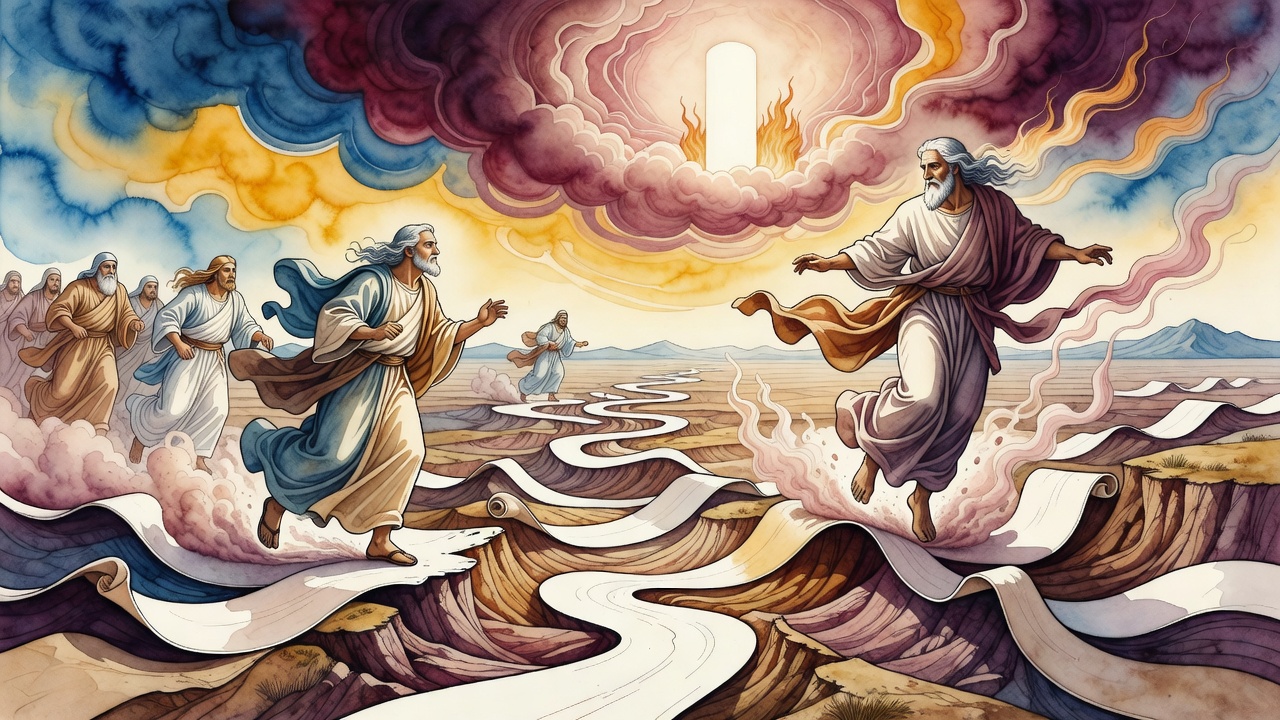
Abraham did not wait for morning. Lot was already gone into the smoke of four kings, and the old man divided his household against them by night (Genesis 14:15). The road should have been long. Dirt that had been ordinary under ordinary sandals grew impatient and ran to meet him.
His men breathed hard to keep up. A father who would not lose a nephew to plunder did not shorten his stride for them. He struck. He pulled Lot out breathing. The night that had split for him closed again.
Nothing in the field explained the missing miles. No marker. No shortcut anyone could point to later. Heaven had decided a righteous chase should not waste hours the victim did not have.
Eliezer Reached the Spring in One Day
Eliezer left with camels and a charge to find a wife for Isaac. A man can spend weeks between wells and still miss the right face. He reached the spring in a single day.
His own mouth confessed it later, not as a boast, as a gift named out loud. "And I came this day to the spring" (Genesis 24:42). He had set out and arrived on the same sun. The earth that had leaped for Abraham leaped again for the servant carrying Abraham's errand.
At the water a girl offered drink before he finished asking. Dust still clung to his hem. He watered the camels and watched her jar tip and rise. Some errands are walked by feet. This one had been walked by the ground, and it had delivered him into a conversation that would bind Isaac to a wife before the next morning could argue.
Abishai Arrived Between David and the Giant
Years later a giant named Ishbi-benob, brother of Goliath, bore down on a weary David. The king needed a sister's son at his side. Joab and Abishai were far off, warring against Ammon and Aram. David prayed anyway.
God made the earth leap a third time. In a blink Abishai was there, and the verse says Abishai son of Zeruiah helped him (2 Samuel 21:17). The giant met a man who should not have arrived yet. The giant did not finish what he started.
Abishai had no time to marvel. A moment earlier the air had smelled of Ammon. Now it smelled of David's sweat and a giant's rage. His sword found work. Afterward, when the giant lay still, he looked at the horizon he should still have been crossing. David clapped his shoulder once, hard, the way men do when words would break.
Jacob Lifted His Feet
Jacob left Beersheba with a staff and a fear of Esau's memory. He lifted his feet (Genesis 29:1). Other men are carried by their feet. The ground ran under Jacob so hard that his feet seemed lifted, as if the road itself wanted him at a place it already knew.
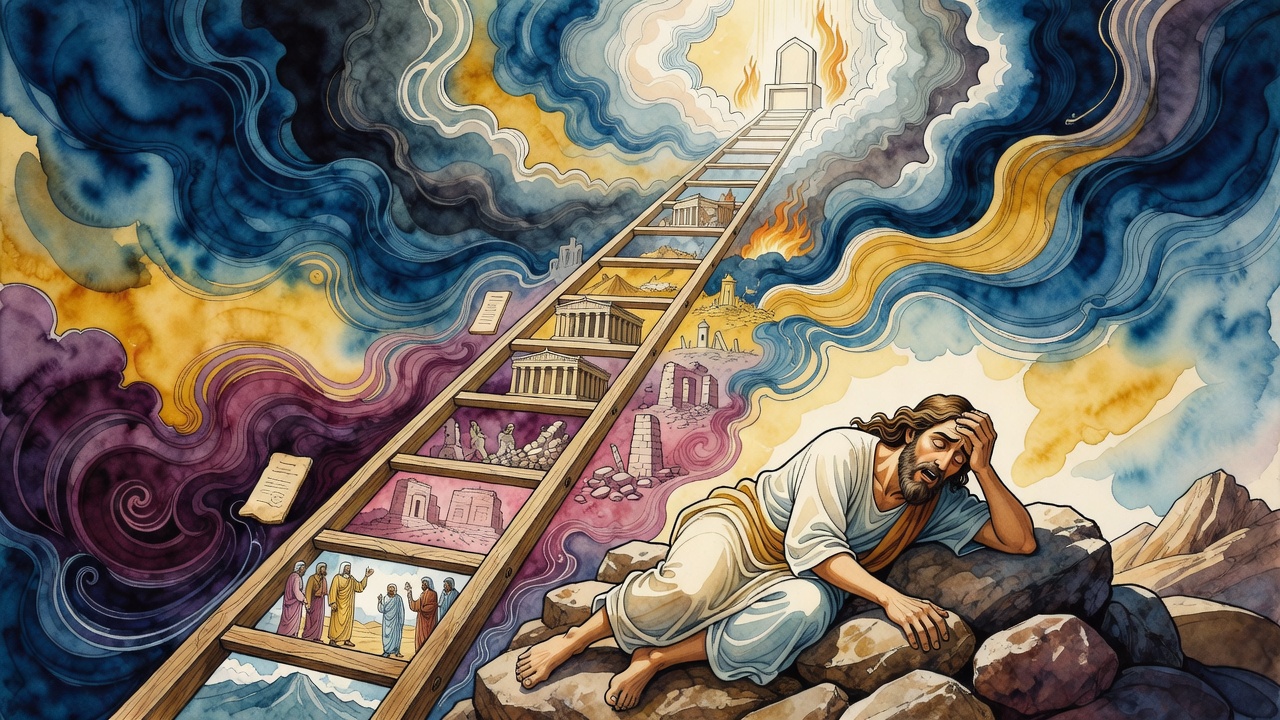
He walked toward exile. The land cooperated with destiny more than with comfort. When night fell at Beth El he took stones, set them under his head, and slept because a body still has to sleep even when the miles have been stolen from under it.
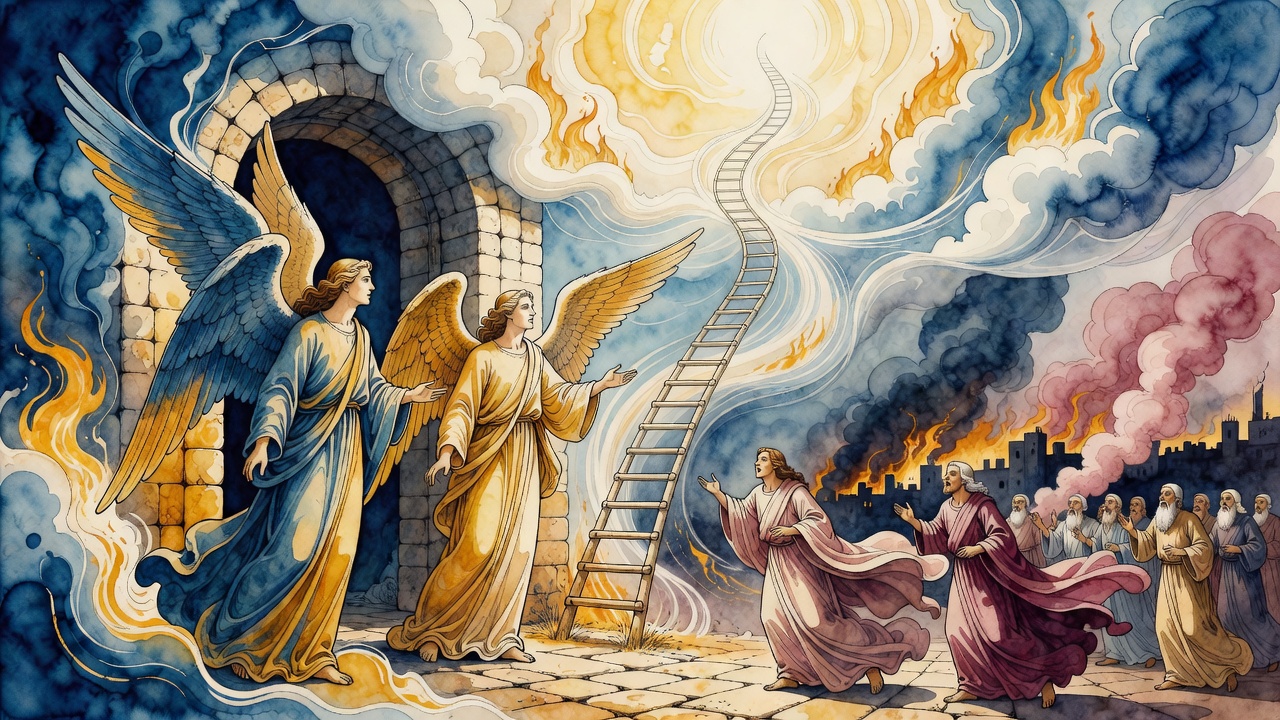
In the dream a ladder rose from earth to heaven. Angels went up and down. A man rode a whirlwind up the rungs as if the air were a staircase he had used before. The top burned like a mountain on fire, earth below, heaven above, one shaft joining them. Jacob did not have names for what he saw. He had the heat of it, and the height, and the knowledge that the leaping road had been racing him here.
The Road Went Ordinary
He woke afraid and named the place. The ground that had hurried him now held still. He stacked the stones he had used for a pillow into a pillar and poured oil. The ladder was gone from sight and present in every joint of his body.
He had left Beersheba as a fugitive. He stood now as a man who had seen earth tied to heaven by a single shaft. Whether that shaft was a prophet who would one day refuse ordinary death, or a mountain that would burn until Torah was given, he had been dumped at the joint of the worlds and left to walk from there like other men.
He lifted his staff. His feet carried him at last the way feet usually do. The memory of a leaping land stayed in his heel like a second pulse. The four for whom the earth grew impatient were not tourists. They were people Heaven needed somewhere else before ordinary miles could finish their work.
← All myths