6 min read

God Stood Over Jacob Against the Jealous Court

Jacob slept on bare ground while the guardian princes of the nations plotted above him, and God stepped between them and His favorite.

Curated by Arthur · Told by Maggid ·
Table of Contents
  1. The Pauper Who Walked the Halls
  2. The Stand Over the Stone
  3. When the Days Turn Sour
  4. Nobles Who Crown and Destroy
  5. What the Sleeping Man Keeps

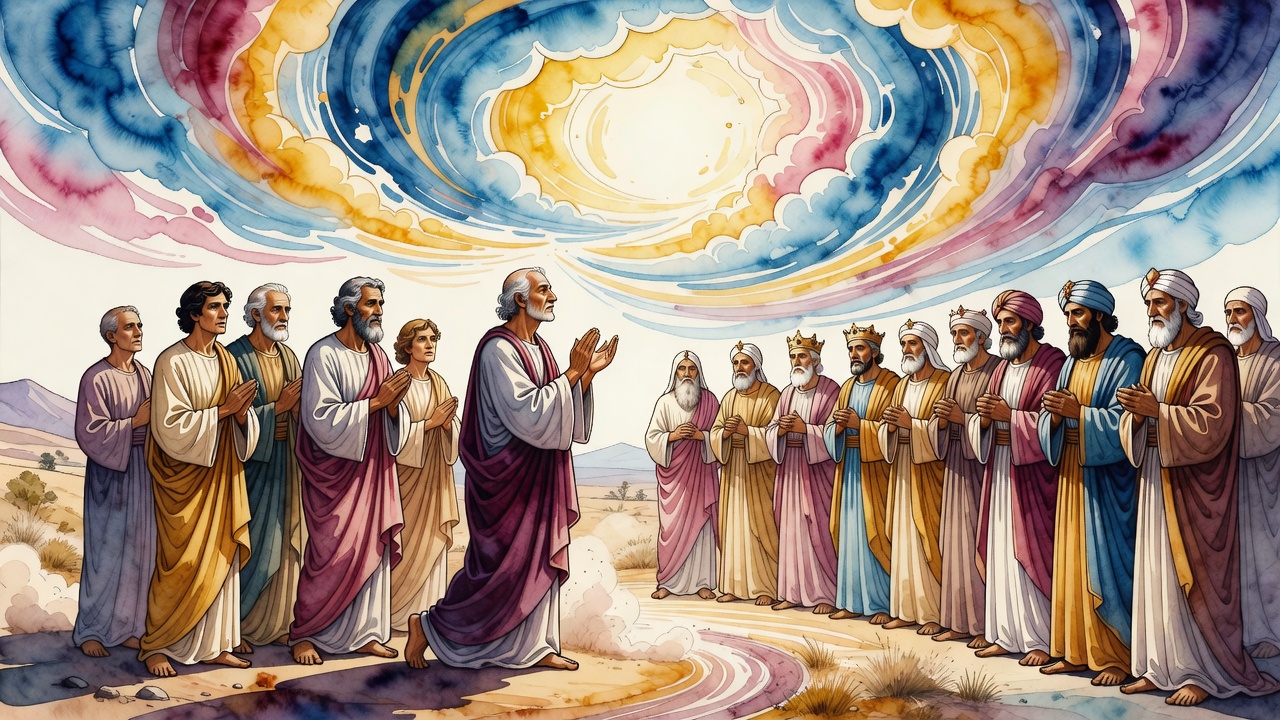
Jacob lay down with a stone for a pillow and the open sky for a roof. Below him the ground was hard. Above him the guardian princes of the nations gathered like courtiers who had smelled a scandal in the palace.
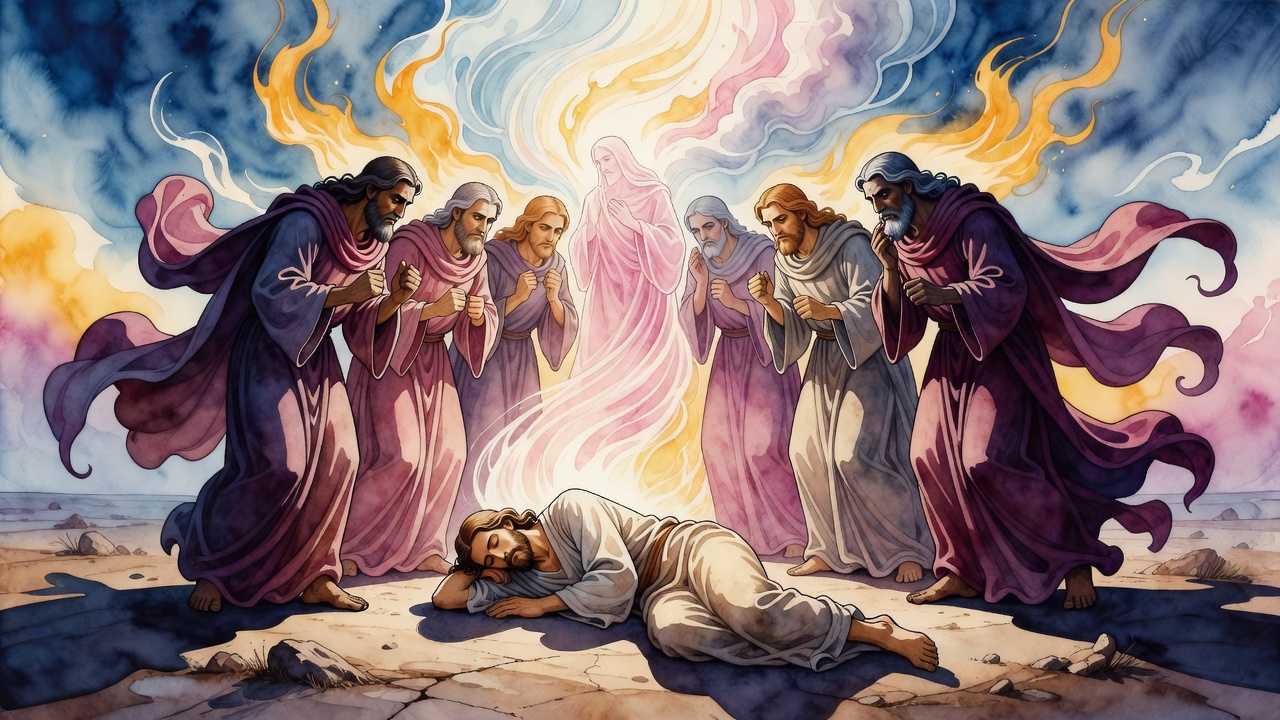
God Stood Over Jacob Against the Jealous Court Click for full size

The Pauper Who Walked the Halls

Picture a poor man the king has taken as a favorite. He does not wait at the gate. He wanders the corridors, sits where ministers sit, drinks from cups that cost more than his whole village. The other courtiers watch him and seethe. Who let this beggar in? Who taught him the ways of the court? They meet in corners and plan his death, because envy is patient only until it finds a knife.

Then the king himself steps into the hallway and says, without raising his voice, "I myself stand over him."

The plot dissolves. No one touches a man the king has covered with his own body. Threats that looked solid in a whisper turn soft in the presence of the throne. The favorite does not even need to know how close the knives came. The king knows. That is enough.

That is how the midrash reads the night Jacob slept on the road. The princes of the nations looked down and saw not a traveler, but the root of a people who would outlast every kingdom they served. They recognized the favorite. They wanted the line cut before it began.

The Stand Over the Stone

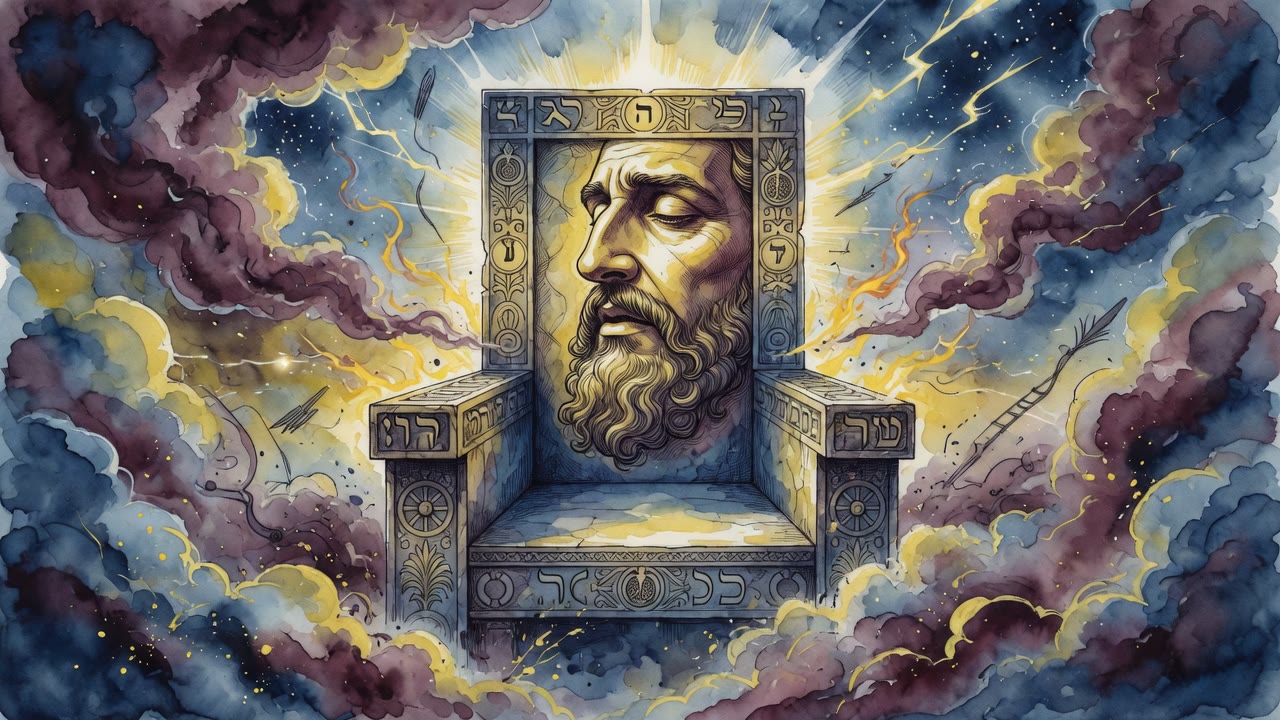
In that instant the verse turns. The Holy One, blessed be He, took His stand over the sleeping man. Not as a distant decree, not as a letter from heaven, but as a King placing Himself between His beloved and a jealous court. The ladder of angels would rise and fall later. First came the shield.

God did not argue with the princes. He did not negotiate a treaty. He stood. The body of the King became the wall the court could not climb. Angels might ascend and descend on a ladder of traffic, but the first traffic of the night was a conspiracy stopped by Presence.

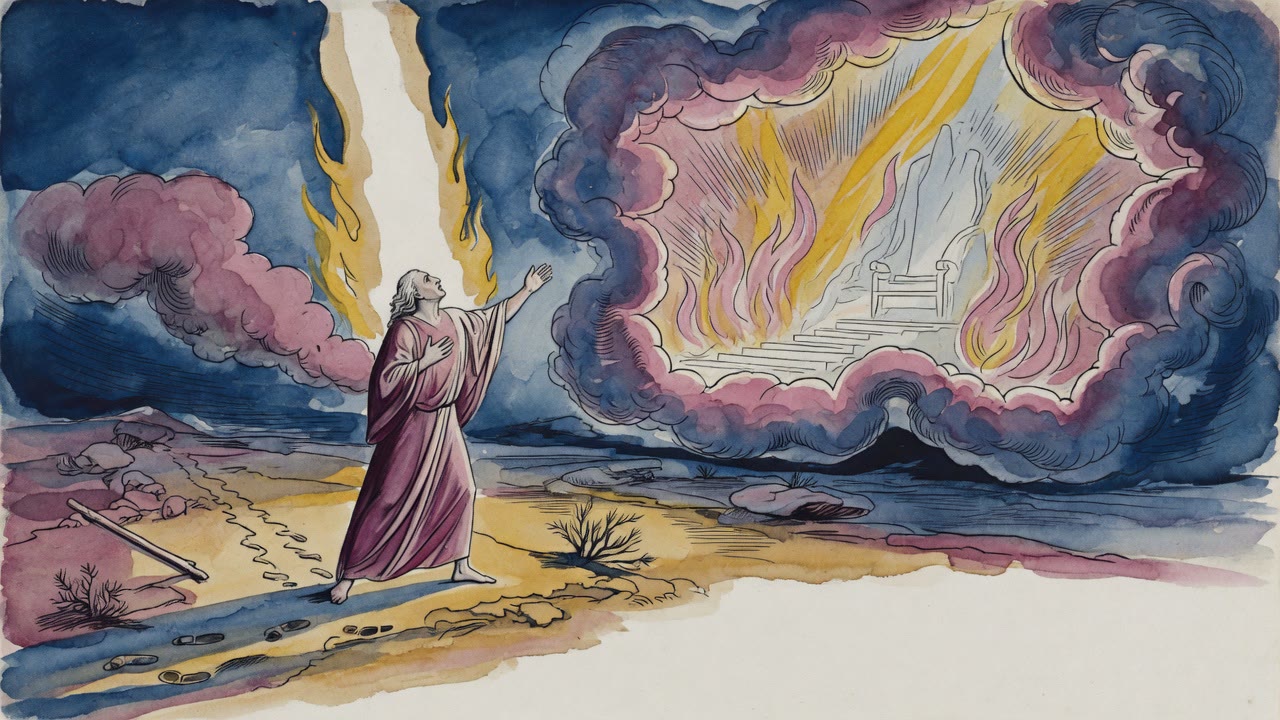
Jacob dreamed of a house of God and a gate of heaven. He did not see the conspiracy he had already survived by sleeping under a weight heavier than any stone. Protection arrived before interpretation. Safety arrived before the vow.

When he woke he was afraid, and the fear was clean. A man who has been covered by the King should tremble, not because the King is absent, but because the King was near enough to stand.

When the Days Turn Sour

The sages notice a phrase that darkens a page: "it was in the days of." When Scripture says those words of Amrafel, war follows. Barbarians come against a province the king once loved because his friend lived there. People fear the king will withdraw his care once blood hits the road. So it was when the Chaldeans marched and Abraham, God's friend, stood in the path of their knives.

Abraham was, in one reading, the eyeball of the world. To strike him was to try to blind the planet. The attackers aimed at the eye that still saw injustice and named it. The same jealous logic that rose over Jacob's pillow had already risen over Abraham's path. The favorite draws hatred the way a lamp draws moths.

In the days of Amrafel the world learned that love from Heaven does not cancel war. It marks the one for whom the war is really fought. Jacob inherits that mark in his sleep. The court above him is only the newest version of an old campaign against the friend of God.

Nobles Who Crown and Destroy

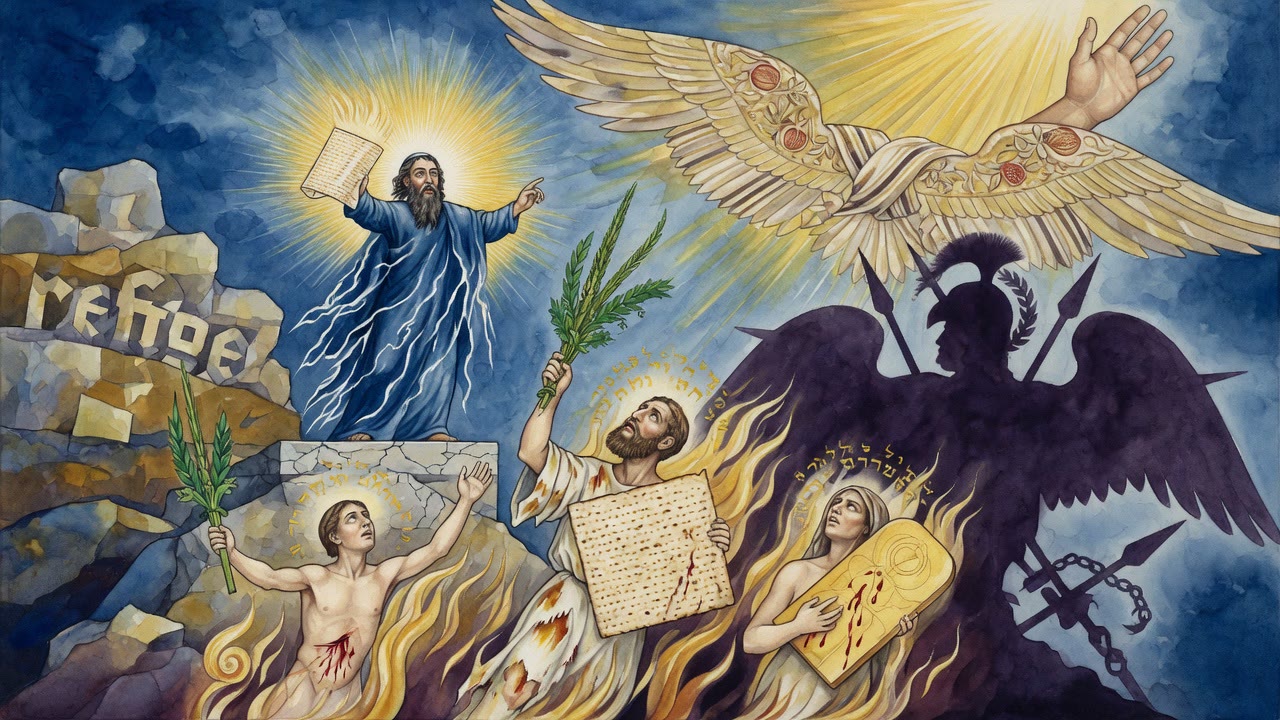
Elsewhere the midrash looks at a king's "nobles" and hears legions, counselors, the men who call a ruler emperor before the people dare. Those same kinds of voices once advised Nebuchadnezzar and helped him climb toward the Temple's ruin. Heaven does not leave such counsel uncounted. The Holy One destroyed that circle and raised others in its place. Counsel is not neutral. The men who stand nearest a throne decide whether the throne blesses or burns.

Jacob's night is the reverse image of that court. There the nobles plot. Here the King cancels them by standing. There empire listens to destroyers. Here the poor favorite sleeps under a canopy no legion can cut. Rome's later titles, Augustus and the rest, only prove the midrash knew how power really works: the inner circle speaks first, and the world follows.

But the inner circle of heaven is not free to vote Jacob off the earth. The King has already spoken with His posture.

What the Sleeping Man Keeps

Morning would bring a vow and oil poured on the stone. Morning would bring the long road toward Laban's house and years of hard love. None of that undoes the first fact of the night: before Jacob bargained, before he named the place Bethel, the King had already claimed him in public view of every prince who wanted him gone.

A favorite does not earn the king's body by cleverness. The king chooses. The court hates. The stand remains. Jacob will wrestle later and limp. He will fear Esau and divide his camp. Those later pressures do not erase the earlier covering. They test whether the man who was protected can live as if the King still stands.

So the sleeping man on the ground became the proof that heaven's jealousy cannot outrank heaven's love. The princes of the nations still watch. The King still stands. The stone under Jacob's head was cold. The Presence over him was not.


← All myths
From the tradition

Sources

3 sources

The texts behind this telling. Some cards carry a translation of the source; others are our own retelling of it, and each card says which. Every card links out to the original.

Yalkut Shimoni on Torah 120:2Yalkut Shimoni on Torah

Translation of the source text.Torat Emet (Yalkut Shimoni) · CC-BY-NC

"And behold, the LORD stood over him" (Genesis 28:13). A parable: to a poor man whom the king loved, and who would come and go in the palace without permission. The members of the palace were jealous and sought to kill him. The king said to them, "I stand over him." So the Holy One, blessed be He, heard the princes of the kingdoms who were saying, "This one is destined to inherit the world and to remove the kingdoms; let us kill him." Immediately, "And behold, the LORD stood over him."

Full source
Esther Rabbah 1:19Esther Rabbah

Retold in our words. Read the original at the link below.The Sefaria Midrash Rabbah, 2022 · CC-BY

The nobles – Rabbi Elazar said: The nobles are the king’s two legions, as the king is not called Augustus (i.e. emperor) until they call him that first, and these are they. Rabbi Yitzḥak said: The Decumanians and the Augustans [legions].22These are clearly Latin terms and presumably based on Roman units that were close to the emperor. Some have suggested that these are the Praetorian Guards, transplanted here to a Babylonian/Persian context. It was they who counseled Nebuchadnezzar and he went up and destroyed the Temple. The Holy One blessed be He destroyed them utterly and established others in their stead, and these were they. Rabbi Yuda son of Rabbi Simon said in the name of Rabbi Elazar: They were the capable and the literate; Rav Huna said: Those possessing reason and their deputies; Rabbi Yitzḥak said: Those possessing reason were his counselors; that is what you say: “Then Daniel responded with counsel and discretion” (Daniel 2:14).

Full source
Vayikra Rabbah 11:7Vayikra Rabbah

Retold in our words. Read the original at the link below.The Sefaria Midrash Rabbah, 2022 · CC-BY

Our Sages certainly did. They paid close attention to the nuances of the Hebrew language, believing that even a seemingly small word could unlock profound insights.

In Vayikra Rabbah 11, a fascinating discussion unfolds around the phrase "vayhi bi-mei" – "it was in the days of." Rabbi Tanhuma, Rabbi Ḥiyya, and Rabbi Berekhya, citing Rabbi Elazar HaModa’i, suggest that this specific construction, "it was in the days of," is a harbinger of trouble. for a second. Is it just coincidence, or is there something deeper going on?

Rabbi Shmuel bar Naḥman takes this idea and runs with it, identifying five instances where this phrase appears, each followed by a period of strife. The source unfolds one: "It was in the days of Amrafel" (Genesis 14:1). What trouble arose then? War, plain and simple. (Genesis 14:2) tells us, "They waged war, etc."

The Midrash (rabbinic interpretive commentary) then offers a powerful analogy. The king, out of love for his friend, takes special care of that province. But then barbarians attack! Everyone fears that the king will no longer care for the province as he once did.

So too, with Abraham, our patriarch. He was so beloved by the Holy One, blessed be He, that God watched over the entire world for his sake. As (Genesis 12:3) states, "[All the families of the earth] shall be blessed in you.” But when the Chaldeans came and confronted Abraham, people worried that God would withdraw His protection. This is reflected in (Genesis 14:7): "They returned and came to Ein Mishpat, which is Kadesh.”

Rabbi Ḥiyya interprets “Ein Mishpat” as the "eyeball of the world," with Abraham being as precious to the world as the eye is to a person. The attackers sought to blind the eye that confronted injustice. Rabbi Aḥa adds that “Kadesh” implies that it was Abraham who sanctified (kiddesh) God's name by descending into the fiery furnace. The kings cried "Woe, woe" – “vayhi in the days of Amrafel the king of Shinar.”

The Midrash continues, exploring other instances. "It was during the days of Aḥaz" (Isaiah 7:1). The trouble? Aram and the Philistines attacking Israel. The analogy here is chilling: a king entrusts his son to a steward who hates him. The steward, fearing punishment for outright murder, decides to starve the son by withholding his wet nurse. Aḥaz, in this analogy, is the corrupt steward. He reasons that without children, there are no students; without students, no scholars; without scholars, no Torah; and without Torah, God’s presence will not dwell in the world. So, he locks the synagogues and study halls. (Isaiah 8:16) says, “Bind the testimony, seal the Torah in my disciples.” Rabbi Huna, citing Rabbi Elazar, explains that Aḥaz was named so because he "seized" (ahaz) the synagogues. People cried, "Woe, woe – vayhi during the days of Aḥaz.”

What about “It was during the days of Yehoyakim son of Josiah” (Jeremiah 1:3)? The trouble then was utter desolation, as (Jeremiah 4:23) says: “I saw the land, and behold, it is emptiness and disorder, [and the heavens, and their light is not].” The analogy: a king's letters are treated with reverence in every province but his own, where they are ripped and burned. (Jeremiah 36:23) tells us how Yehoyakim cut up the scroll with a scribe's razor and threw it into the fire. Again, the cry of despair: "Woe, woe – vayhi during the days of Yehoyakim.”

Then there's “It was during the days of Aḥashverosh” (Esther 1:1). The trouble? A plot "to destroy, to kill, and to eliminate" (Esther 3:13) the Jewish people. The analogy shifts to a king's vineyard attacked by three enemies: Pharaoh, who killed the baby boys (Exodus 1:22); Nebuchadnezzar, who exiled the elite (II (Kings 24:1)6); and Haman, who sought to uproot the entire Jewish people. When people saw Aḥashverosh selling and Haman buying their destruction, they cried, "Woe, woe – vayhi during the days of Aḥashverosh.”

Finally, “It was during the days when the judges judged” (Ruth 1:1). The trouble? “There was a famine in the land” (Ruth 1:1). This time, the analogy involves a province that mistreats the king's tax collector. Similarly, Israelites would mistreat their judges. God, witnessing this disrespect, brought famine upon them.

But wait, there's a twist! Shimon bar Rav Abba, citing Rabbi Yonatan, offers a different perspective: Vayhi signifies either unparalleled trouble or unparalleled joy! Rabbi Yishmael challenges this, arguing that vayhi never indicates joy, while vehaya never indicates trouble. A series of objections and counter-objections follow, examining verses from Genesis to Samuel, each debated and reinterpreted. For example, the creation of light ("God said: Let there be light, and there was [vayhi] light") is deemed not pure joy because the world wasn't worthy of that light. Even when it says “The Lord was [vayhi] with Joseph and he was a successful man" (Genesis 39:2), it's not pure joy, because that success led to Potiphar's wife's advances.

The debate culminates with Rabbi Yishmael conceding that “It was [vehaya] when Jerusalem was captured” (Jeremiah 38:28) wasn’t entirely trouble, because Israel received retribution for its sins, preventing even greater calamity.

So, what do we take away from all of this? Is "vayhi bi-mei" a guaranteed sign of trouble? Perhaps not in every single instance. But the Sages are pointing to something important: that certain phrases, certain historical moments, carry a weight, a shadow of potential suffering. They remind us to be vigilant, to learn from the past, and to recognize the subtle signs that might precede difficult times. And perhaps, most importantly, to appreciate those moments of true joy when they arrive, for they are precious and, as this Midrash suggests, not always easy to find.

Full source