5 min read

When the Great Tree Fell and Elazar Fell With It

Rabbi Elazar kissed his dying father's hands in the Idra, named three pillars becoming one, and the companions lost the tree that fed them all.

Curated by Arthur · Told by Maggid ·
Table of Contents
  1. Hands, Dust, and Silence
  2. The Tree That Fed the Field
  3. How He Taught Them to Name Offerings
  4. The Last Blessing Greater Than the First
  5. After the Pillar
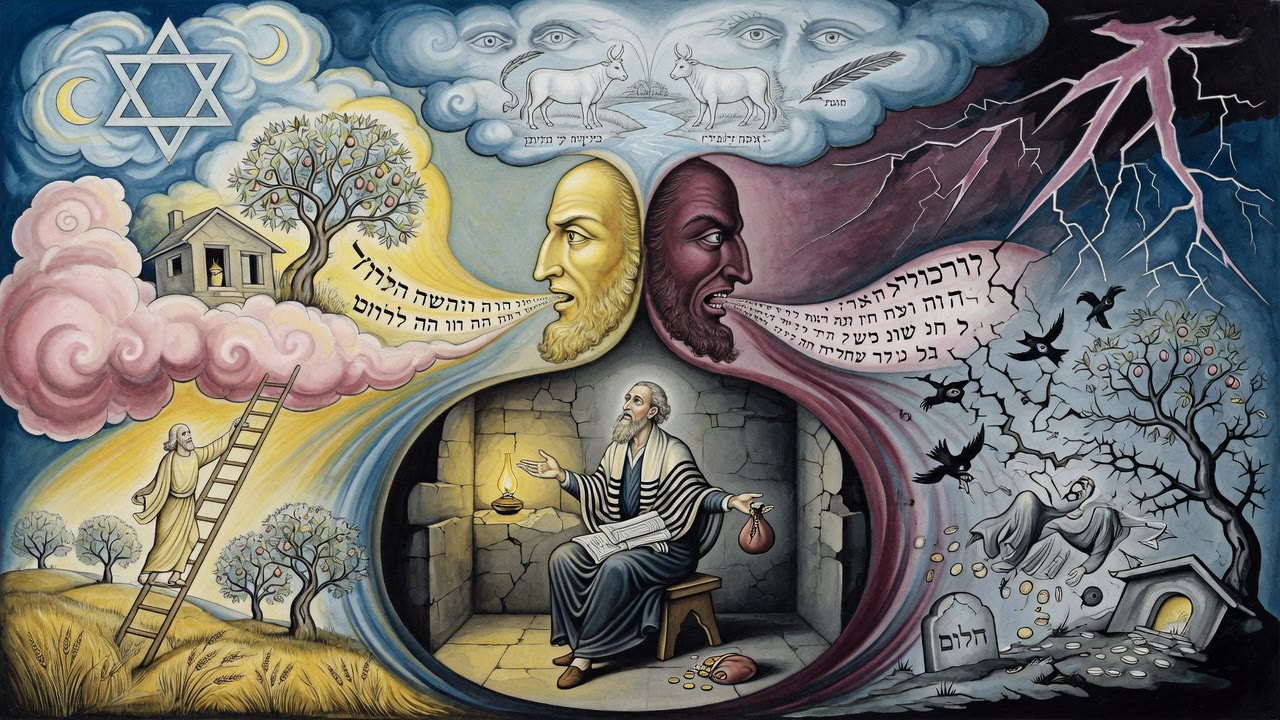
When the Great Tree Fell and Elazar Fell With It Click for full size

Hands, Dust, and Silence

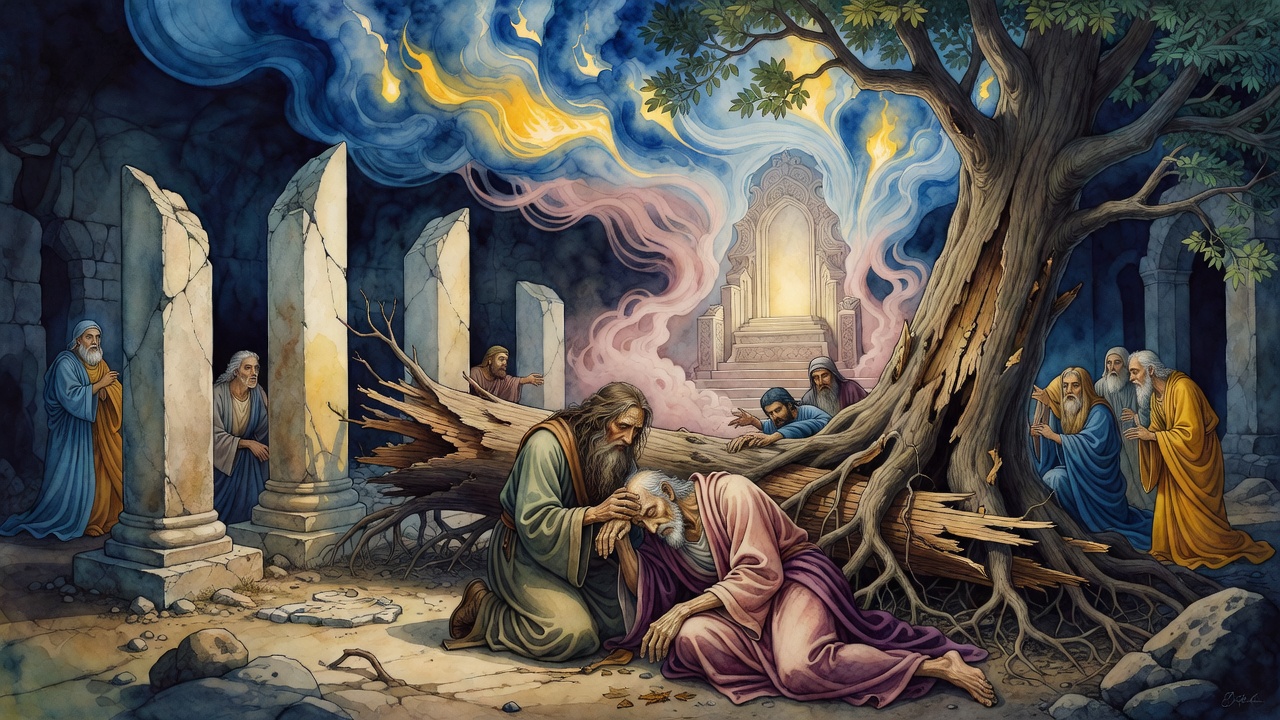
In the last assembly called the Idra Zuta, Rabbi Elazar stood over his father and could not keep his body upright. He took the hands of Rabbi Shimon bar Yochai, kissed them, and in a devotion that ignored dignity he put his mouth to the dust under those feet. The companions around the bed could not speak. Grief sealed their throats. Elazar fell three times before he found a sentence.

"Father, father, there were three that now became one."

He meant the three pillars of his world: his father, himself, and Rabbi Pinchas ben Yair, his father-in-law. With Rabbi Shimon gone, two of the three collapsed into a single orphaned life. The room that had held a living tree of teaching suddenly held only branches on the floor.

The Tree That Fed the Field

They named him a great tree under which animals of the field had wandered and on whose branches birds had perched, a tree with food for all. When such a tree falls, the midrash of the Zohar says, the animals migrate and the birds sink toward the abysses of a great sea. The companions, instead of the nourishment they took from him, will drink blood. The image is not gentle. Loss of a true teacher is not a soft emptiness. It is famine that turns a circle of students into scavengers of memory.

Outside that sealed room the world still traded and argued. Inside it, the center had stopped breathing.

How He Taught Them to Name Offerings

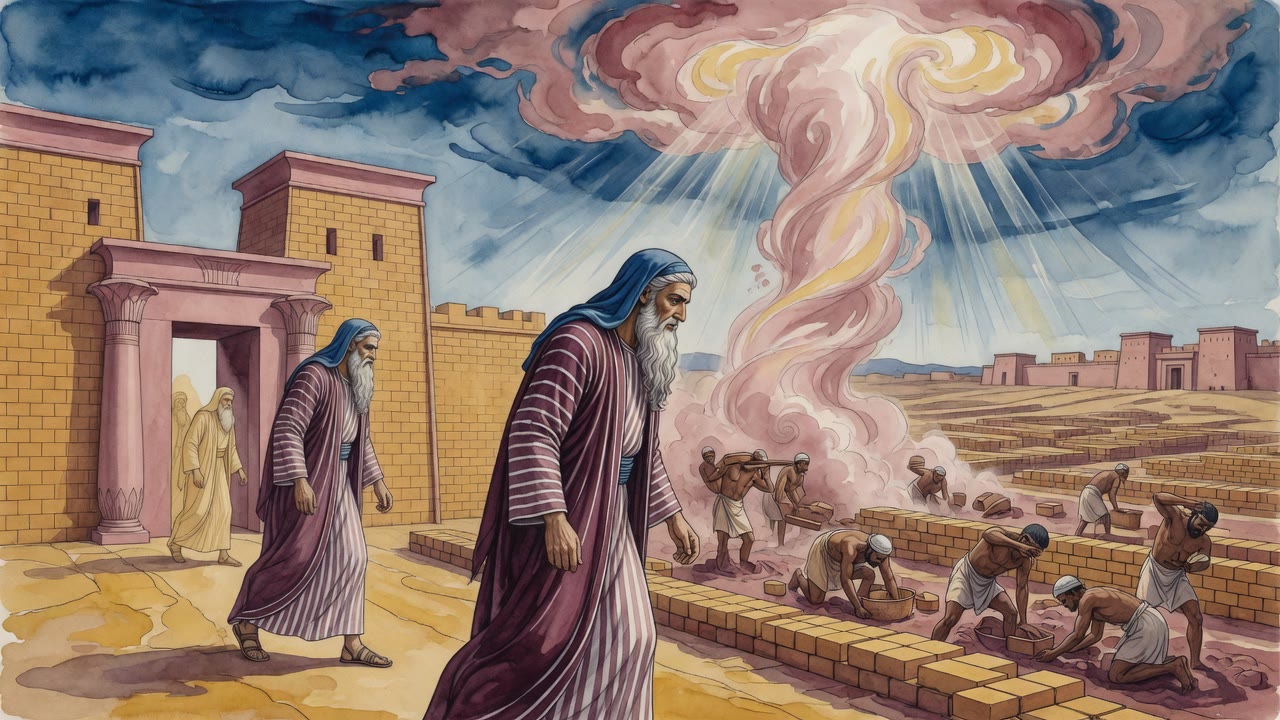
While he lived, Rabbi Shimon had been exact about speech as well as secrets. He rebuked people who said, "To the Lord, an offering," putting the Name first and the gift second. The Torah never does that, he taught. "When one of you presents an offering to the Lord" (Leviticus 1:2). The offering is named first. The Name comes after. Word order is theology. To name the sacrifice first is to admit it comes from human hands. To hang the divine Name on an unfinished gift risks light speech of the Holy. Even creation, he noted, puts the verb before the subject. "In the beginning created God" (Genesis 1:1). Work before Name. Humility before display.

A man who ordered language that carefully leaves a vacuum when he dies. Careless mouths suddenly have no master.

The Last Blessing Greater Than the First

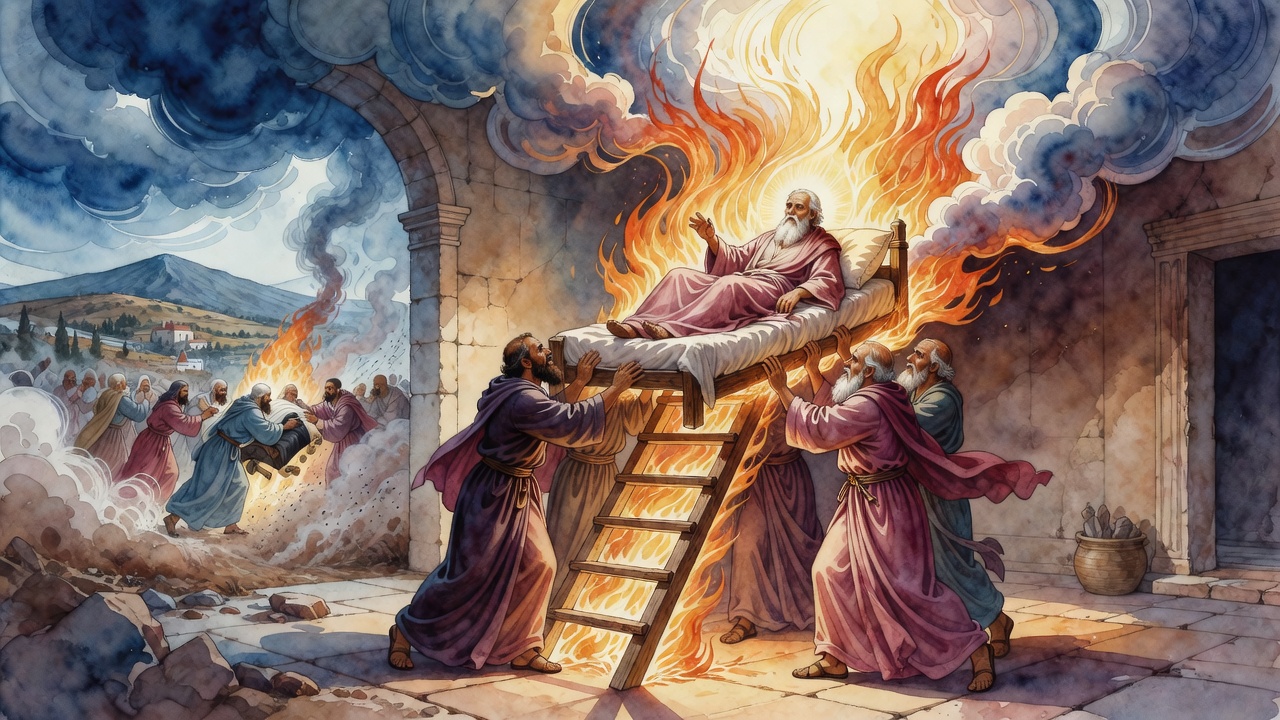
Three rabbis once came to study with him and could not leave only once. They took leave, lingered, and returned for a second farewell. Why the doubling? Because the last blessing is greater than the first. They proved it from Joshua releasing Reuben and Gad with a second sending and riches, and from Solomon dismissing Israel after the Temple dedication into glad homes and a promise of the world to come. Rabbi Shimon sent two scholars to walk behind those departing students, to hear what Torah they would still turn on the road. Even the leave-taking was a classroom.

A father once brought his son for a blessing and received lines that sounded like curses: sow and never reap, build a house only to see it ruined, never live to see the new year. The boy went home crushed until his father unfolded each line. Sow and not reap means children who do not die young. A ruined house means this world traded for the lasting one. Never seeing the new year means a living wife, no forced remarriage. Every hard word was a hidden mercy.

After the Pillar

When the Idra ended in death, Elazar's three-into-one cry and the tree image and the careful grammar of offerings and the doubled farewell all pressed into one pressure. A generation had leaned on a living trunk. The trunk fell. The companions would have to learn whether the food they took from him could grow again from their own mouths, without drinking blood of nostalgia.

The dust on Elazar's lips was not theater. It was the last place a son could put love when speech failed.

Mourning in the Idra is physical before it is theological. Mouths find dust. Bodies hit the floor three times. Only then does the metaphor of the fallen tree arrive, as if the room needed a second language after the first language of kissing hands failed. Students who later study the Zohar from a printed page can forget that the first audience of these secrets was a circle watching a man die.

The care about naming offerings belongs in the same mouth. A teacher who will not let the Name be hung carelessly on an unfinished gift is a teacher whose death leaves a hole in ethical speech as well as in mystical mapmaking. Elazar inherits both holes. Three become one, and the one must decide whether to become a smaller tree or only a memorial plaque.


← All myths

From the tradition

Sources

3 sources

The texts behind this telling. Some cards carry a translation of the source; others are our own retelling of it, and each card says which. Every card links out to the original.

Idra Zuta 1:177Idra Zuta

Retold in our words. Read the original at the link below.Idra Zuta, The Small Gathering, trans. Michal Ricardo · CC-BY

The Idra Zuta, a profound section of the Zohar, grapples with just that emotion as it recounts the passing of the great Rabbi Shimon bar Yochai.

The scene: Rabbi Elazar, his son, stands beside him, overcome. He takes his father's hands, kisses them, and in a moment of utter devotion, even licks the dust beneath his feet. The other companions, the students and followers gathered there, are choked with grief, unable to utter a single word.

The weight of the moment is almost unbearable. Rabbi Elazar falls, not once, but three times, speechless with sorrow. Finally, he manages to utter: "Father, father, there were three that now became one."

What does this mean, "three that now became one"? He's referring to the three towering figures in his life: his father, Rabbi Shimon bar Yochai; Rabbi Elazar himself; and Rabbi Pinchas ben Yair, his father-in-law. Now, with his father gone, Rabbi Elazar feels utterly orphaned, bereft of not one, but two of these pillars. He is alone in the world.

The text then shifts to a powerful metaphor. Rabbi Shimon bar Yochai is likened to a great tree, a source of life and sustenance. "Now that the great tree is gone, under which the animals of the field roamed and on which branches fowl perched, and it had food for all.." The imagery is vivid. This tree wasn't just any tree; it was a source of shelter, nourishment, and life for everything around it. It's a description that echoes the sentiments we find elsewhere in Jewish literature about the loss of a great leader.

And what happens when such a tree falls? "Now the animals migrate and the fowl that sat on its branches sink into the abysses in the great sea. And the companions, instead of the food they received from him, will drink blood." The animals, lost and without direction, wander aimlessly. The birds, once perched safely, plunge into the depths. The companions, deprived of his wisdom and guidance, are left with pain and sorrow.

The imagery here is stark. Instead of the sweet nourishment of Torah and wisdom they received from Rabbi Shimon bar Yochai, they are left to "drink blood" – a potent symbol of suffering and loss. It emphasizes the profound impact of losing a spiritual giant.

The Idra Zuta doesn't shy away from the raw, visceral emotions of grief. It acknowledges the disorientation and pain that accompany the loss of a guiding light. It's a reminder that the departure of those who nourish us leaves a void, a space where we must confront our own vulnerability and seek new sources of strength.

Full source
Midrash Tanchuma Buber, Bereshit 6:1Midrash Tanchuma Buber, Bereshit

Retold in our words. Read the original at the link below.Midrash Tanhuma, S. Buber Recension, trans. John T. Townsend (1989) · CC-BY

There is a right way to speak of offerings, and the wrong way offends the Holy One. Midrash Tanchuma Buber, Bereshit 6:1 preserves a sharp teaching from R. Shimon ben Yochai, the second-century sage who would later become the legendary author of the Zohar in mystical tradition.

The grammatical rebuke

"Woe to blasphemers," R. Shimon warned, "who take the name of the Holy One lightly." His specific concern was a habit of careless speech. People would say: "To the Lord, an offering. To the Lord, a burnt offering." Putting the divine name first, the sacrifice second.

The Torah, R. Shimon insisted, never does this. Look at the actual verses. (Leviticus 1:2): "When one of you presents an offering to the Lord." (Numbers 8:12): "A sin offering to the Lord." The pattern repeats across (Leviticus 23:18), (Numbers 28:11), (Malachi 2:12), and others. Every single time, the offering comes first. The divine name comes second.

Why word order matters

This is not pedantry. For R. Shimon, it encoded a theology. To name the sacrifice first is to acknowledge that the gift comes from human hands. To name God first would risk making the offering seem like a divine requirement rather than a human response. The Torah's grammar builds in humility.

It also prevented a subtler problem. If you announce "to the Lord" before specifying what you are offering, you have bound the divine name to an act not yet completed. Speech in Jewish ethics is powerful, lashon (tongue) creates realities. And invoking the Holy Name before the offering is ready risks pronouncing the Name in vain.

The link to (Genesis 1:1)

R. Shimon connects the teaching back to creation. (Genesis 1:1) in Hebrew reads Bereshit bara Elohim, "In the beginning created God." The verb precedes the subject. The work comes before the Name. This is the same pattern as the sacrifices. Mention the creation first; mention the Creator second. Mention the offering first; mention the One to whom it is offered second.

"When he mentions his creation," R. Shimon taught, "it is only afterwards that he mentions his name."

The ethical implication

To invoke the divine name casually, as modern English does all the time, would have horrified R. Shimon. The Name belongs at the end of a sentence, as a completion, not as a filler. A person who speaks of God carelessly, he implies, is practicing a small blasphemy every time.

The takeaway: the order of words in Jewish speech is not decorative. It is ethical. Name the gift before you name the One who receives it. Name the deed before you name the Doer. That is how the Torah itself speaks, and it is the grammar of reverence.

Full source
Yalkut Shimoni on Nach 31:1Yalkut Shimoni on Nach

Translation of the source text.Yalkut Shimoni on Nach (Sefaria) · CC-BY-NC

"And Joshua blessed them and sent them away" (Joshua 22:6). Rabbi Yitzchak, Rabbi Yochanan, and Rabbi Yudan the convert went to hear Torah from Rabbi Shimon bar Yochai. Some say it was the chapter on property, and some say the chapter on vows. They took leave of him, then waited there one more day, saying, "We must take leave of him a second time." One of them expounded and said to them: It is already written, "And Joshua blessed them and sent them away, and they went to their tents" (Joshua 22:6). Why then does Scripture also say, "Moreover, when Joshua sent them away to their tents and blessed them" (Joshua 22:7)? Rather, while Israel was conquering and dividing the Land, the tribes of Reuben and Gad were with them, and they spent fourteen years there conquering and dividing the Land. After fourteen years they took leave of Joshua to go to their tents, lingered there a few more days, returned, and took leave of him a second time. That is why it says "Moreover, when Joshua sent them away." Rabbi Yudan said: The tribes of Reuben and Gad were Joshua's escort, and accompanied him as far as the Jordan; and when they saw that his escort had grown small, they turned back and accompanied him as far as his house. The last blessing was greater than the first. As it is written, "And he spoke to them, saying, Return to your tents with great riches and with very much cattle, with silver and gold" (Joshua 22:8).

Another one expounded: "On the eighth day he sent the people away, and they blessed the king" (1 Kings 8:66). Why does Scripture say, "On the twenty-third day of the seventh month he sent the people away" (2 Chronicles 7:10)? Rather, they took leave of him, waited there a few more days, and took leave a second time. The last blessing was greater than the first, as it says, "On the eighth day he sent the people away, and they went to their tents" (1 Kings 8:66), for they found their wives in a state of purity; joyful, for they had benefited from the radiance of the Divine Presence; and glad of heart, for the wife of each one of them conceived a male child; and over all the goodness, a heavenly voice went forth and said to them, "You are all destined for the life of the world to come."

Another one expounded: It is already written, "And she went from him" (2 Kings 4:5). Why does Scripture say, "And she came and told the man of God" (2 Kings 4:7)? Rather, the oil rose in price, and she came to ask him whether to sell it or not. The last blessing was greater than the first, as it says, "And you and your sons shall live on the rest" (2 Kings 4:7), until the dead are revived.

And when Rabbi Shimon saw that these were settled, civilized men, he sent with them a pair of Torah scholars to learn what they would expound on the road. One of them expounded: It is already written, "And the angel of God who went before the camp of Israel moved and went behind them" (Exodus 14:19). Why does Scripture say, "And the pillar of cloud moved from before them and stood behind them"? Rather, that attribute of strict justice that had been stretched out against Israel, the Holy One, blessed be He, turned and stretched out against Egypt. And another expounded: It is already written, "And the rainbow shall be in the cloud, and I will look upon it to remember the everlasting covenant between God" (Genesis 9:16). "Between God" is the attribute of justice above; "and every living creature" is the attribute of justice below. The attribute of justice above is severe, and the one below is mild. And another expounded: One verse says, "All things [chafatzim] cannot be compared to her" (Proverbs 3:15), and another verse says, "And all your desirable things [chafatzecha] cannot be compared to her" (Proverbs 8:11). "All things" [chafatzim]: these are commandments and good deeds. "Your desirable things" [chafatzecha]: these are precious stones and pearls.

And some say: A father said to his son, "These men are people of distinguished form; go to them and let them bless you." He went and found them debating verses. It is written, "Weigh carefully the path of your foot" (Proverbs 4:26), and it is written, "Lest you weigh the path of life" (Proverbs 5:6). There is no difficulty: here it speaks of a commandment that can be performed by others; there of a commandment that cannot be performed by others. As they sat again, this matter troubled them: It is written, "And all your desirable things cannot be compared to her" (Proverbs 8:11), implying that matters of Heaven can be compared to her, yet it is written, "All things cannot be compared to her" (Proverbs 3:15). There is no difficulty: here it speaks of a commandment that can be performed by others, and so forth. They said to him, "What do you want here?" He said, "My father told me to come so that you would bless me." They said to him: May it be His will that you sow and not reap, that you bring in and not take out, that you take out and not bring in, that your house be destroyed and your lodging-place be settled, that your table be confused, and that you not see the new year. When he came to his father he said, "Not only did they not bless me, they actually distressed me." He said, "What did they say to you?" He said, "This and this they said to me." He said to him: These are all blessings! "That you sow and not reap": that you beget children and they not die. "That you bring in and not take out": that you bring in a daughter-in-law and your sons not die so that she goes out. "That you take out and not bring in": that you bring out daughters in marriage and their husbands not die so that they return to you. "That your house be destroyed and your lodging-place be settled": for this world is a lodging-place and the world to come is a house. "That your table be confused": with sons and daughters. "That you not see the new year": that your wife not die and you not take another wife.

Full source