Parshat Naso5 min read

Who Blesses the Levites Who Bless Israel

Abraham asked who pours blessing back on Levi. God said He blesses the blessers. The priestly lines open wealth, Torah, priests, prophets, and favor.

Curated by Arthur · Told by Maggid ·
Table of Contents
  1. Who Fills the Channel
  2. Bless and Keep
  3. Face, Fire, and Prophets
  4. From Abraham's Question to the Raised Hands

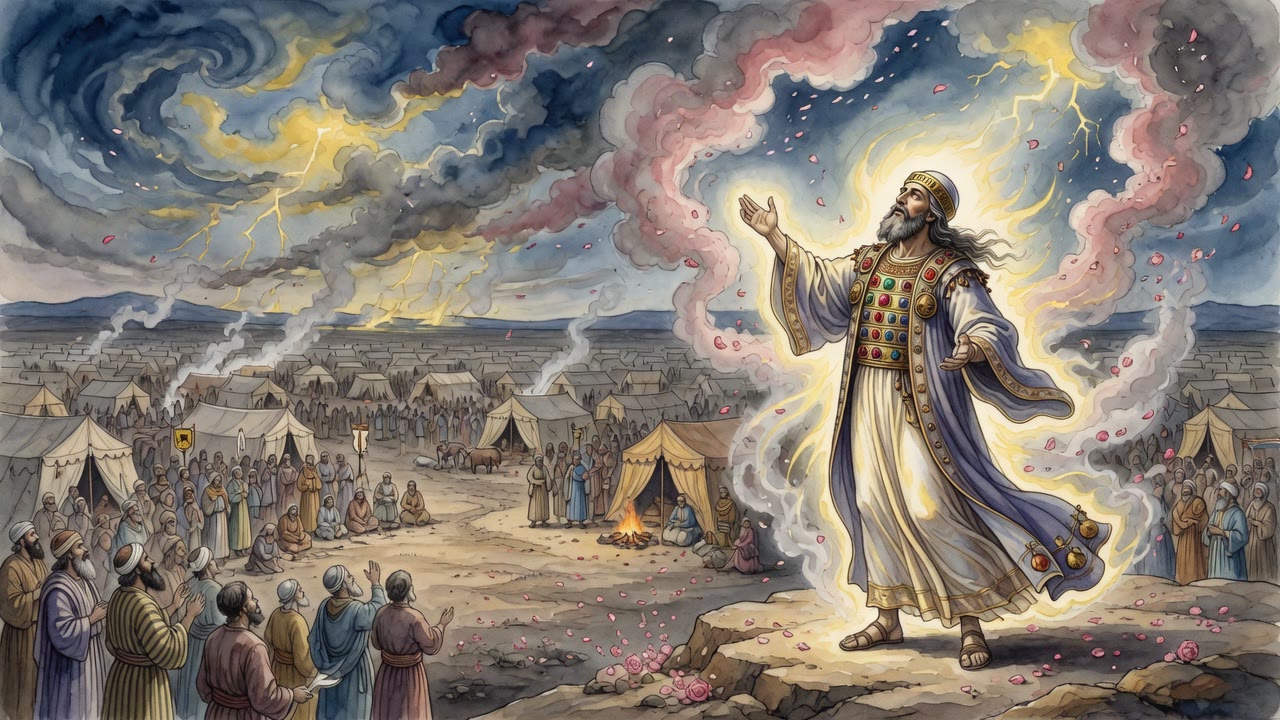
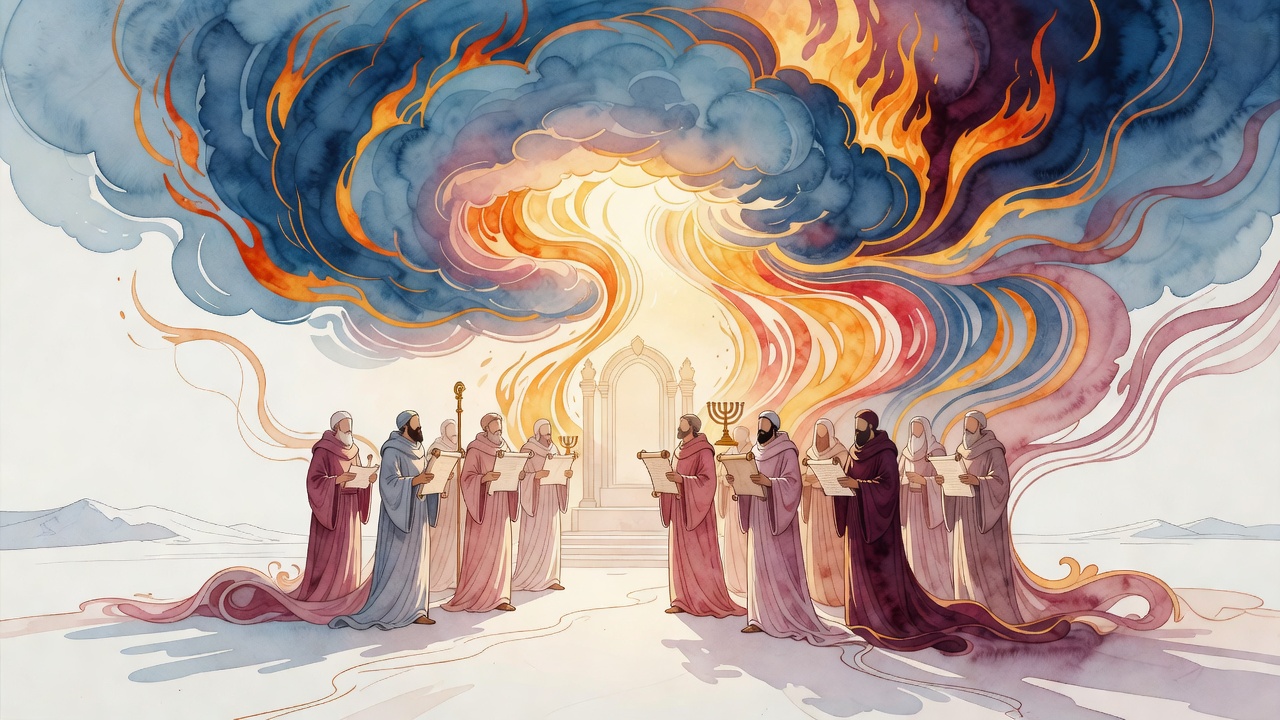
When the Holy One told Abraham "and be a blessing," the promise stretched past one man's tent. "From you," He said, "I will raise up a tribe whose whole calling is to bless Israel." That tribe was Levi, destined to stand with lifted hands and lay the divine Name upon the people.
Who Blesses the Levites Who Bless Israel Click for full size

Who Fills the Channel

Abraham pressed further, as he always pressed. "Master of the Universe, if Levi blesses Israel, then who blesses Levi? Who pours blessing back upon the ones who pour it out?"

The answer turned the whole chain upward. "When they bless Israel," the Holy One replied, "I bless them." For Scripture says, They shall put My name upon the children of Israel, and I will bless them (Numbers 6:27). The priest is no fountain of his own water. He is a channel. The One who fills him is God Himself.

In this world, Levi blesses Israel in God's name, mediating the gift through human lips. In the world to come, no priest will stand between. "I, in My own glory, will bless you," says the Holy One, as the prophet foresaw a habitation of righteousness and a holy mountain under direct speech.

Bless and Keep

When the Torah later commanded, "Thus shall you bless the children of Israel," the lines opened like rooms in a house. "The Lord bless you and keep you" (Numbers 6:24). Bless with wealth. Keep so that the wealth turns toward good works, mitzvot (commandments), and not toward waste. Blessing without keeping is gold left on an open road. Keeping without blessing is a locked chest with nothing inside.

A king of flesh and blood has a friend far off. He sends for him, loads him with gold, and the road home is full of thieves. Heaven's blessing comes with a keeping so the gift arrives. The Name on the people's heads is not a bare wish. It is a guard on the path.

Face, Fire, and Prophets

"The Lord make His face shine upon you" (Numbers 6:25). One reading raises children who will be Torah scholars, for the commandment is a lamp and Torah is light (Proverbs 6:23). Another hearing of the same verb of shining raises priests who kindle fire upon the altar. The face that shines is study and sacrifice at once.

"And be gracious to you." Rabbi Hiyya the Great taught, "May the Lord encamp with you." Another line hears prophets rising from the people, a spirit of grace poured on the house of David and on those who dwell in Jerusalem. Grace in whatever place the camp goes, the way favor found a young woman in a foreign court and kept her alive for a larger rescue.

"The Lord lift up His face unto you" (Numbers 6:26). Another text says of the Holy One that He does not lift up His face, does not show favor. How can both stand? If a person has repented before judgment is sealed, the Lord lifts His face. When judgment has already sealed, He does not. The blessing is timed to an open door of return.

From Abraham's Question to the Raised Hands

So Abraham's early fear for the blessers finds its answer in the later formula. Levi lifts hands. Israel receives the Name. God fills the channel and keeps the gift from thieves on the road. Scholars, altar fire, prophets, encamping Presence, timed favor. Each phrase of the priestly blessing is a room Abraham could not yet name when he first asked who blesses those who bless.

On the day the priests stand and stretch their fingers, the old question still sits under the words. Who blesses the blessers? The answer is not another tribe and not a higher human court. It is the Holy One who put His Name in their mouths and promised to stand behind every true pronunciation of it.

Abraham asked. Heaven answered with a tribe, a formula, and a future day when even the channel falls away and glory blesses without middlemen. Until that day, the hands rise, the Name settles, and the One who fills the priests keeps the people on the road home.

Abraham could already see hands raised over a camp he would never walk through. He could not yet see who would refill those hands when they emptied. That was the ache inside his question. Blessing that only goes out and never returns leaves a tribe of dry wells.

Heaven's answer made the priests into pipes, not springs. Gold on the road needs a guard. So bless arrives tied to keep. Light on the face becomes scholars at a table and fire on an altar. Grace becomes prophets and an encamping Presence. Favor opens only while repentance can still walk through the door.

When the world to come arrives and glory blesses without middlemen, Abraham's question will finally rest. Until then every priestly blessing is a short drama of channel and source. The Name leaves human mouths. The Holy One stands behind it. The road home stays watched.


← All myths
From the tradition

Sources

2 sources

The texts behind this telling. Some cards carry a translation of the source; others are our own retelling of it, and each card says which. Every card links out to the original.

Midrash Tanchuma Buber, Lech Lecha 5:3Midrash Tanchuma Buber, Lech Lecha

Translation of the source text.Midrash Tanchuma (Buber), Public Domain, on Sefaria · CC-BY-SA

Another interpretation of (Genesis 12:2) "and be a blessing": The Holy One, blessed be He, said to him, "I am destined to raise up from you a tribe that blesses Israel." And which is this? The tribe of Levi, which blesses Israel. Abraham said before Him, "Master of the Universe, who blesses that tribe?" The Holy One, blessed be He, said to him, "When they bless Israel, I bless them, as it is said (Numbers 6:27): 'And they shall put My name upon the children of Israel, and I will bless them.'" The Holy One, blessed be He, said to Israel, "In this world the tribe of Levi blesses you in My name, but in the world to come I, in My glory, bless you, as it is said (Jeremiah 31:22 [23]): 'The LORD bless you, O habitation of righteousness, O holy mountain.'"

Full source
Midrash Tanchuma, Nasso 10Midrash Tanchuma

Retold in our words. Read the original at the link below.Townsend 1989 translation of Midrash Tanhuma, S. Buber Recension · CC-BY

Another interpretation (of Numb. 6:23-24), “Thus shall you bless the Children of Israel: The Lord bless you and keep you.” “Bless you,” with wealth; “and keep you,” so that may do good works (mitswot). (Vs. 25:) “The Lord make His face shine,” and raise up children from you to be Torah scholars. Thus it is stated (in Prov. 6:23), “For the commandment (mitzvah) is a lamp, and Torah is [a light].” Another interpretation (of Numb. 6:25), “The Lord make His face shine (from he'ir) [upon you],” to raise up priests from you, who kindle fire (from he'ir) upon the altar. Thus it is stated (in Mal. 1:10), “you will not kindle fire (from he'ir) on My altar in vain.” (Numb. 6:25, cont.) “And be gracious to you.” R. Hiyya the Great taught, “May the Lord encamp with you.” Another interpretation (of Numb. 6:25), “and be gracious to you,” to raise up prophets from you. Thus it is stated (in Zech. 12:10), “And I will pour out upon the House of David and upon anyone dwelling in Jerusalem a spirit of grace and mercy.” Another interpretation (of Numb. 6:25), “and be gracious to you.” May He set His grace upon you in whatever place you go. Thus it is stated (in Esth. 2:17), “and she won grace and favor.” (Numb. 6:26:) “The Lord lift up His face unto you.” But another text says (of the Holy One, blessed be He, in Deut. 10:17), “who does not lift up His face (i.e. show favor).” How can this be? [If] one has repented before judgment is sealed, (Numb. 6:26:) “The Lord lift up his face (i.e. show favor).” When judgment has been sealed, (Deut. 10:17:) “who does not lift up His face.” Another interpretation (of Numb. 6:24), “The Lord bless you and keep you.” Along with the blessing there is a keeping. A king of flesh and blood has a friend in Syria, but he dwells in Rome; when the king sent for him, he arose and came to him, and [the king] gave him a hundred pounds of gold; [but when] he loaded it up and set out on the road, bandits fell upon him. They took everything that he had given him and everything [else] that he had with him. For that reason it is stated (in Numb. 6:24), “The Lord bless you and keep you.” Another interpretation (of Numb. 6:24), “The Lord bless you and keep you.” May He bless you with money, that there not be a tax collection in the province, and that a tax collector not come to the province and say to you, “Give your gold.” Rather (as in Numb. 6:24), “The Lord bless you and keep you.” Another explanation. “Bless you” refers to sons (who can produce wealth), [while] “keep you” refers to daughters, since the females need keeping. And so it says (in Ps. 121:5), “The Lord is your keeper; the Lord is your shade [on your right hand].” (Numb. 6:25:) “The Lord make His face shine upon you. May He make the light of His face shine for you.” Now “make shine” (y'r) can only mean life, since it is written (in Prov. 16:15), “In the light of the king's face there is life.” It also says (in Ps. 118:27), “The Lord is God and has given light (y'r) to us.” And similarly it says (in Ps. 67:2), “May God be gracious to us and bless us; [may He make His face shine for us].” (Numb. 6:26:) “The Lord lift up his face.” Does the Holy One, blessed be He, lift up His face for a creature? Is it not already written (in Deut. 10:17), “who does not lift up His face (i.e. show favor).” It is simply that, just as they lift up their faces (show favor) to Me, so do I lift up My face to them. How so? I have written in the Torah (in Deut. 8:10), “Then you shall eat, be full, and bless [the Lord your God].” So when a person sits down with his children and the children of his house, and when there is not enough before them to be full, they [still] lift their faces to Me as they give the blessing. They exercise meticulous care [to recite a blessing] for [something as small] as an olive, for [something as small] as an egg. Therefore (in Numb. 6:26), “The Lord lift up his face unto you […].” (Numb. 6:23:) “Thus shall you bless the Children of Israel], ‘Say to them.’” “Say (amor)” is written] fully (i.e. with the o represented by the vowel letter, waw). Say to them, i.e. to the priests, “[It does] not [follow that], because I told you to bless Israel, that you will bless them [as though] in forced labor and in sudden haste. Rather you shall bless them (fully) with religious devotion (kawwanah) of the heart, so that the blessing will be fully effective with them. It is therefore stated, “Say” fully, to say that a person should wish his fellow well with a full [heart].

Full source