5 min read

Who Climbed to Heaven and Came Back Down

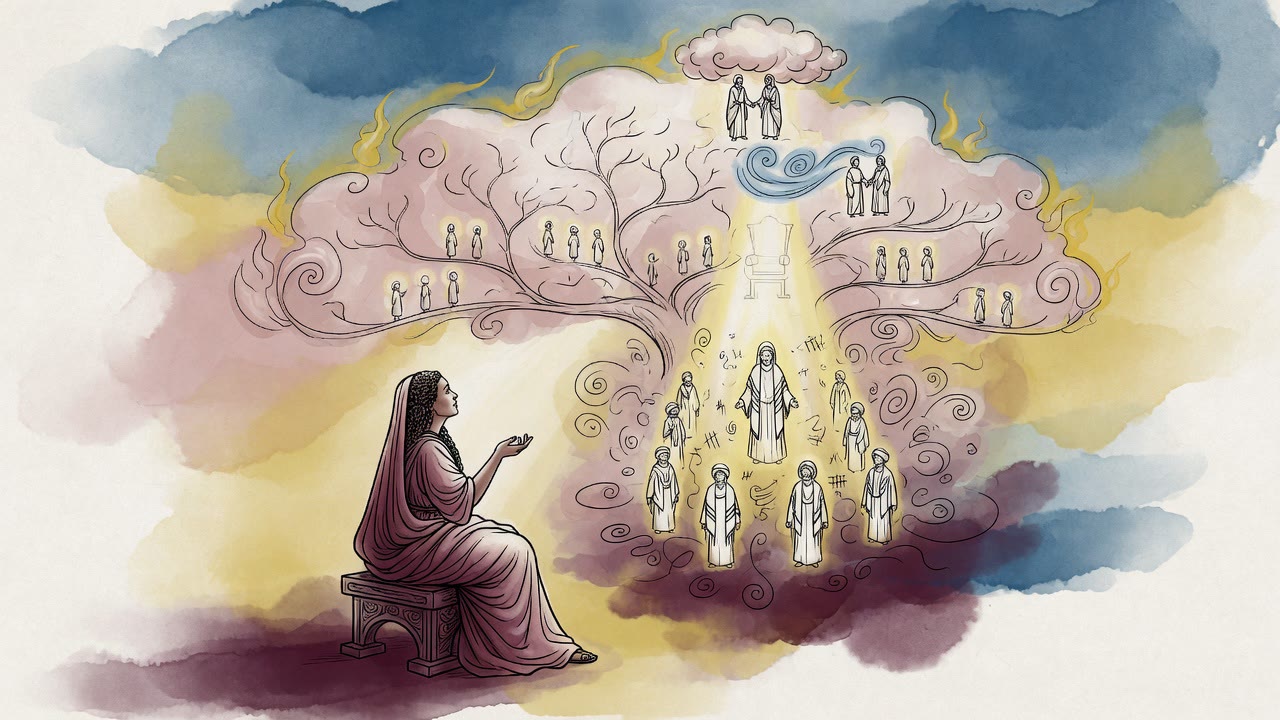
Proverbs asks who ascended and returned; the midrash answers with God at Sinai, Elijah in the whirlwind, and Moses climbing with wind and water in his hands.

Curated by Arthur · Told by Maggid ·
Table of Contents
  1. The Riddle Hits the Floor
  2. God Goes Up and Comes Down
  3. Elijah in the Whirlwind
  4. Moses on the Mountain and Over the Sea
  5. Hands That Hold the Measure
Who Climbed to Heaven and Came Back Down Click for full size

The Riddle Hits the Floor

"Who has ascended to Heaven and come down? Who has gathered the wind in the hollows of his hands? Who has bound water in a mantle? Who established all the extremities of the Earth? What is his name, and what is his son's name, if you know?" (Proverbs 30:4).

The question does not stay in the air like a riddle for clever boys. In the study house it becomes bodies and weather. Someone has to climb. Someone has to come back. Someone has to hold wind without letting it shred the hand. Someone has to wrap water so it does not run. The midrash refuses to leave the verse as pure poetry.

God Goes Up and Comes Down

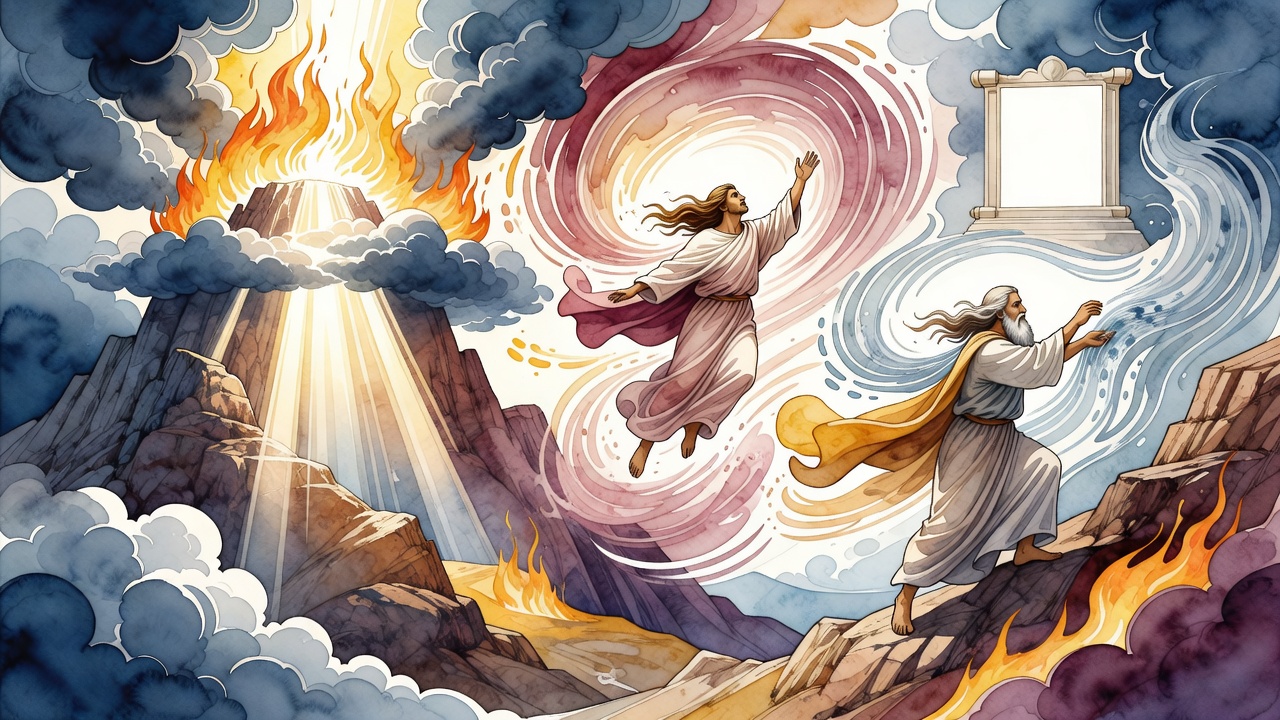
First answer: God. He ascended with sounds of exultation (Psalms 47:5). He descended upon Mount Sinai (Exodus 19:20). He holds every living soul in His hand (Job 12:10). He binds water in His clouds (Job 26:8). He kills and makes alive (1 Samuel 2:6). His names are Rock, Shaddai, LORD of hosts. His son's name is Israel, "My son, My firstborn" (Exodus 4:22).

The mountain still smells like that descent in the memory of the people. Fire on stone. A fence around a peak. A voice that makes the climber into a listener and the listener into a nation. If the riddle is about absolute power, the answer is simple and overwhelming: the One who both rises in shout and comes down onto a mountain of dust.

Elijah in the Whirlwind

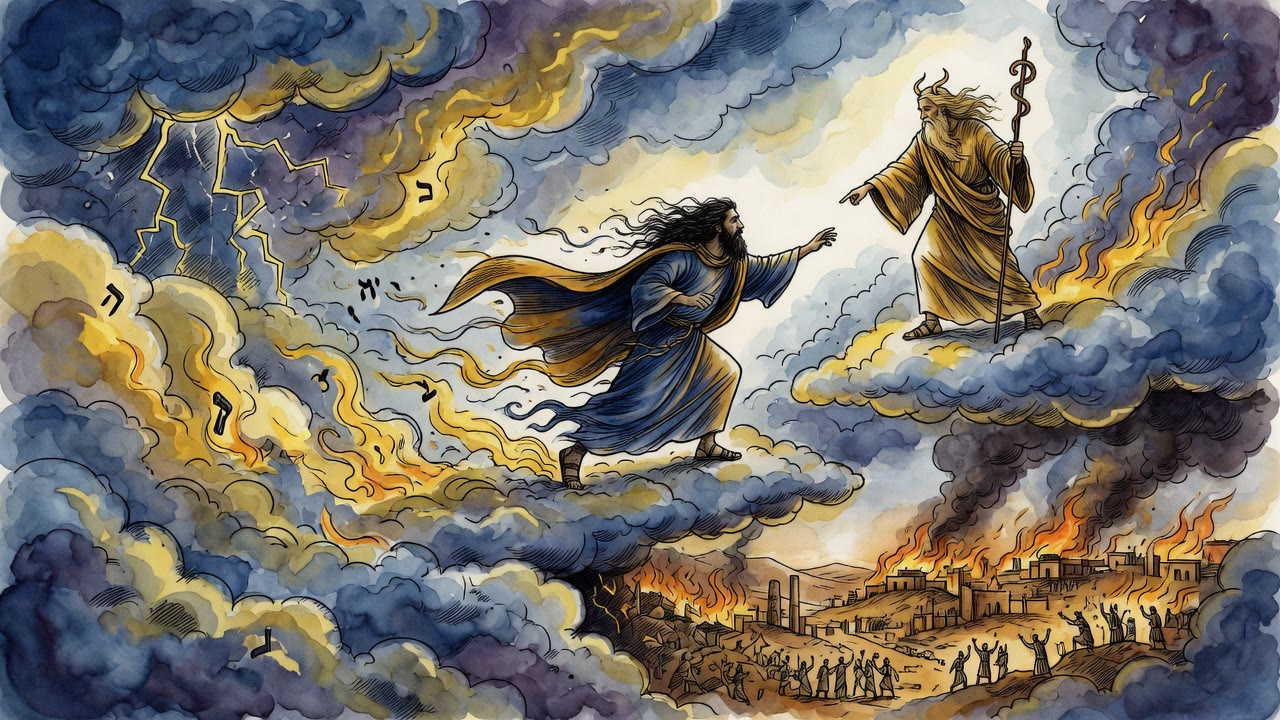
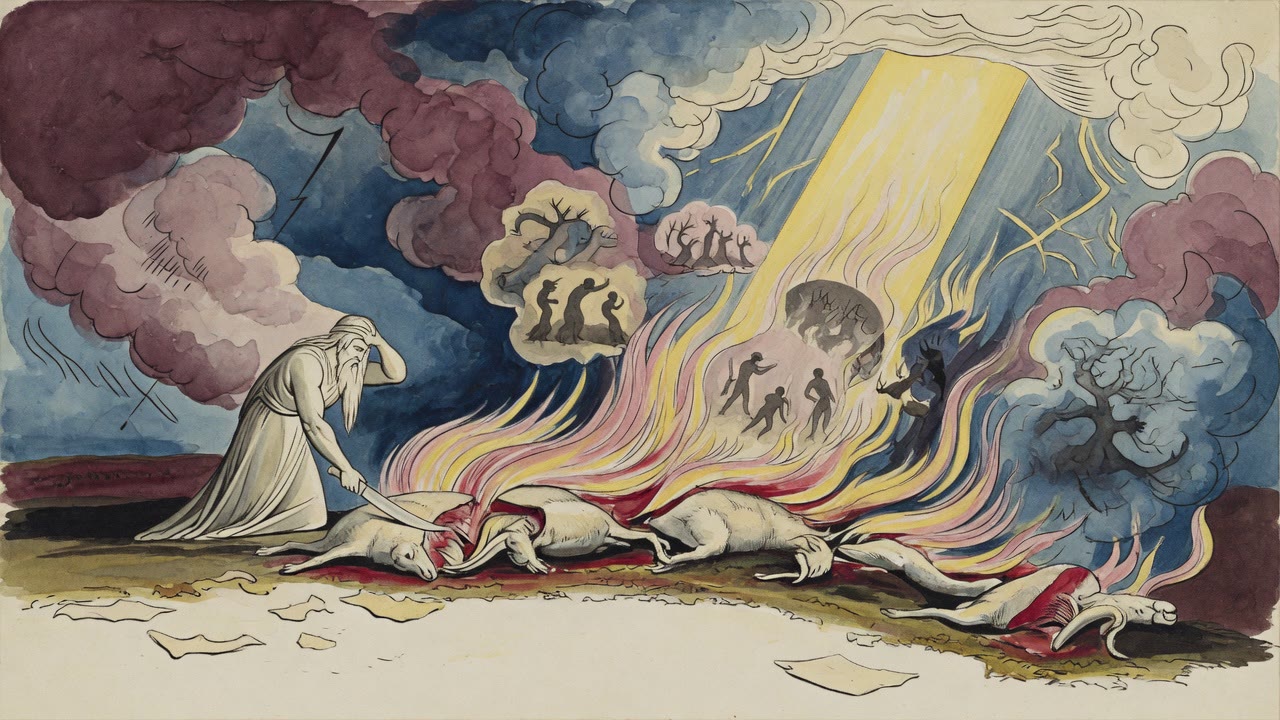
Second living answer: Elijah. He ascended in a whirlwind (2 Kings 2:11). He came down when the angel said, "Go down with him, do not be afraid" (2 Kings 1:15). He gathered the wind when he told Ahab there would be no dew or rain except at his word (1 Kings 17:1). He bound water when he rolled his mantle and struck the Jordan until it split (2 Kings 2:8). He raised the ends of the earth when he returned a widow's son and said, "See, your son lives" (1 Kings 17:23).

The Hebrew phrase for the ends of the earth can also be heard as nothingness. Elijah lifts a child out of nothingness itself. The mantle still carries river-water in the memory of the strike. The whirlwind still opens and closes around a man who can both leave and return, who can lock the sky and unlock a boy's breath in the same career of obedience.

Ahab's drought is wind gathered into a prophet's oath. The Jordan's wall of water is a mantle's work. The riddle's four questions fit Elijah the way a glove fits a hand that has already done the labor.

Moses on the Mountain and Over the Sea

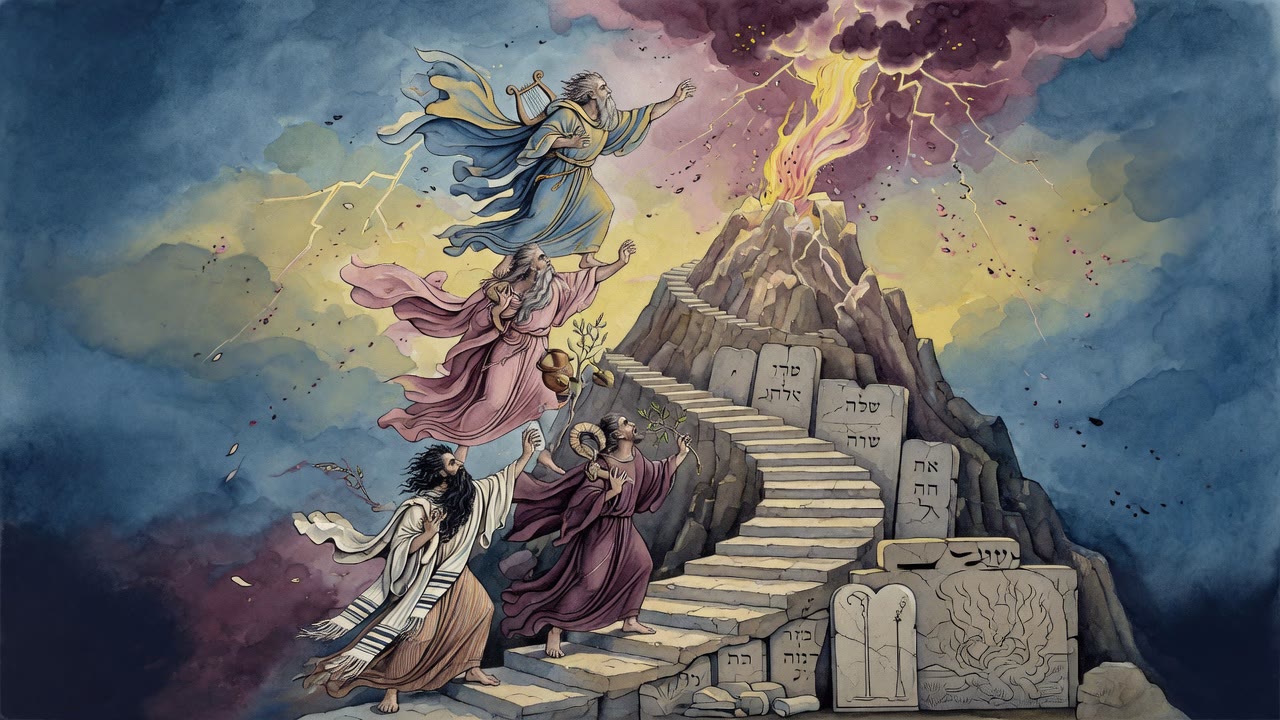
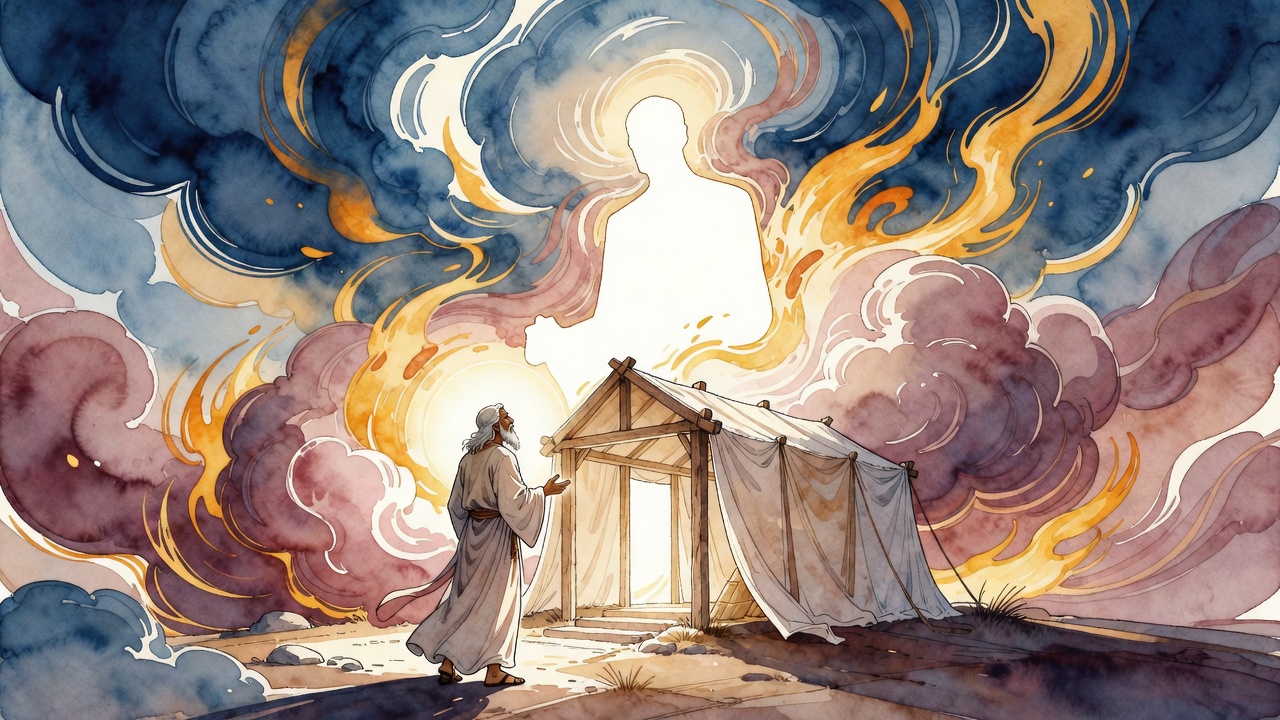
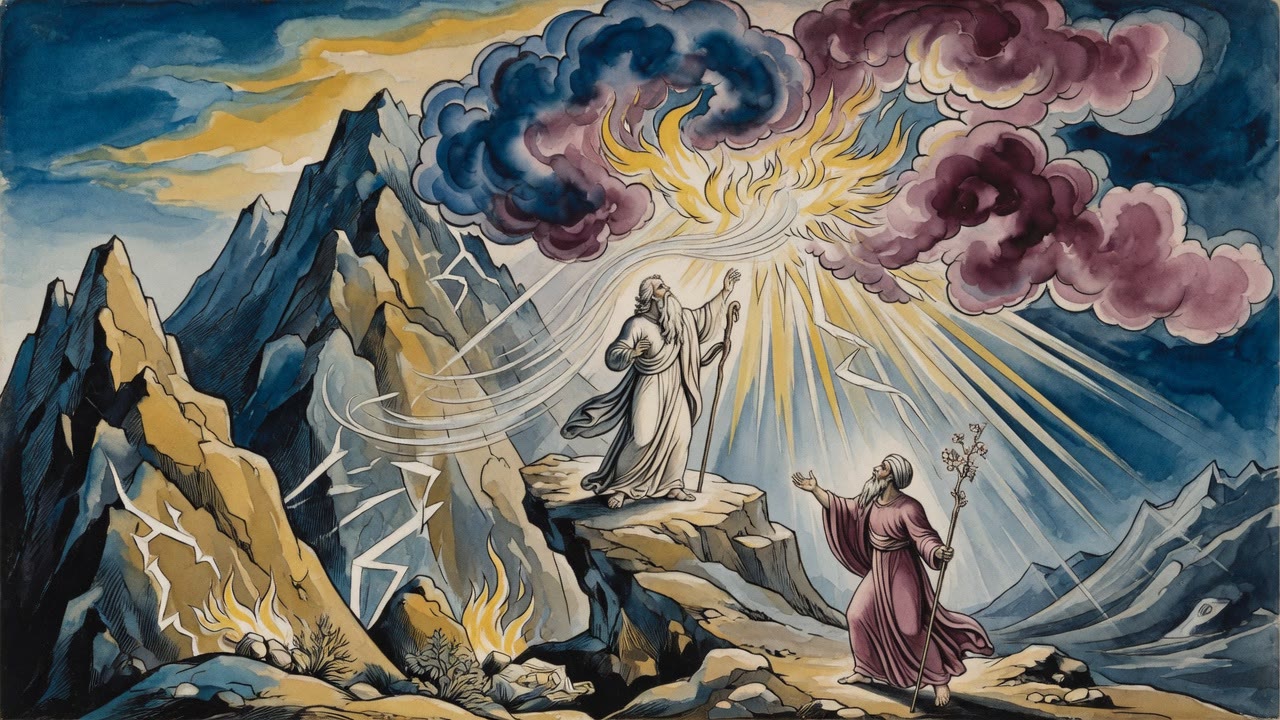
Third answer: Moses. He went up to God (Exodus 19:3). He came down from the mountain (Exodus 19:14). He gathered the wind when he told Pharaoh he would spread his hands and the thunder would cease (Exodus 9:29). He bound the water when the sea stood in a heap (Exodus 15:8). He established the ends of the earth when the Tabernacle steadied a people that had been all motion and panic, a moving camp given a center of glory.

When that sun of prophecy is later gathered from the world, lesser lights darken. Rabbi Shimon cries out for the faithful shepherd as if the house of prophecy itself has been shut: "Not so my servant Moses; he is trusted in all My house" (Numbers 12:7). Stars of twilight go dark in the grief of Job's line. The man who climbed and came down left a dimmer sky behind him. The moon and planets of later prophecy had drawn their light from that sun. When the sun is taken, their night grows thicker.

Hands That Hold the Measure

There is also the quiet answer the midrash tucks between the thunderers: the honest tither whose prayer rises and pulls rain down, because his hands do not shave the measure in the field. The one who grips too tightly becomes the reason the heavens close. Ascent here is not a whirlwind. It is a portion weighed fair, a refusal to steal from the poor and from God in the same motion of the hand.

So the riddle has many true mouths. God. Elijah. Moses. The open hand in the field. Ascent is not only spectacle. Sometimes it is a mantle on a river, a prophet's body on a mountain, a widow's child breathing again, a farmer who will not thin the tithe and so unlocks the rain.

Who climbed and came back? The sources refuse a single name. They keep stacking climbers until the question becomes a hallway of doors, each one still warm from a foot that returned, each one answering Proverbs with a body that still has dust on it.


← All myths
From the tradition

Sources

2 sources

The texts behind this telling. Some cards carry a translation of the source; others are our own retelling of it, and each card says which. Every card links out to the original.

Pesikta DeRav Kahana 1:4Pesikta de-Rav Kahana

Translation of the source text.Sefaria Community Translation · CC-BY

"Who has ascended to heaven and come down? Who has gathered the wind in His fists? Who has bound the waters in a garment? Who has established all the ends of the earth? What is His name, and what is His son's name, if you know?" (Proverbs 30:4). "Who has ascended to heaven" - this is the Holy One, blessed be He, of whom it is written, "God has gone up with a shout" (Psalms 47:6). "And come down" - "And the LORD came down upon Mount Sinai" (Exodus 19:20). "Who has gathered the wind" - "In whose hand is the life of every living thing" (Job 12:10). "Who has bound the waters" - "He binds up the waters in His clouds" (ibid. 26:8). "Who has established all the ends of the earth" - "The LORD kills and makes alive" (1 Samuel 2:6). "And what is His name" - "Rock" is His name, "Almighty" is His name, "the LORD of hosts" is His name. "And what is His son's name" - "Israel is My firstborn son" (Exodus 4:22) is His name. Another interpretation: "Who has ascended to heaven" (Proverbs ibid.) - who is the one whose prayer ascends to heaven and brings down rains? This is the one who distributes his tithes by his fistfuls, who brings down dew and rain to the world. "Who has gathered the wind in His fists, who has bound the waters in a garment, who has established all the ends of the earth" (Proverbs ibid.) - who is the one whose prayer does not ascend to heaven and does not bring down the rains? This is the one who does not distribute his tithes by his fistfuls, who restrains the heavens from bringing down dew and rain to the world. Another interpretation: "Who has ascended to heaven" (Proverbs ibid.) - this is Elijah, of whom it is written, "And Elijah went up by a whirlwind into heaven" (2 Kings 2:11). "And come down" - "Go down with him; do not fear" (ibid. 1:15). "Who has gathered the wind in His fists" - "As the LORD God of Israel lives, before whom I have stood" (1 Kings 17:1). "Who has bound the waters" (Proverbs ibid.) - "And Elijah took his mantle and rolled it together" (2 Kings 2:8). "Who has established all the ends of the earth" (Proverbs ibid.) - "And Elijah said, See, your son lives" (1 Kings 17:23). Another interpretation: "Who has ascended to heaven" (Proverbs ibid.) - this is Moses, of whom it is written, "And Moses went up to God" (Exodus 19:3). "And come down" - "And Moses came down from the mountain" (ibid. ibid. 14). "Who has gathered the wind" - "As soon as I have gone out of the city" (ibid. 9:29). "Who has bound the waters" (Proverbs ibid.) - "The floods stood upright as a heap" (ibid. 15:8). "Who has established all the ends of the earth" - this is the Tent of Meeting, as it is said, "And it came to pass on the day that Moses finished setting up the Tabernacle" (Numbers 7:1), for the world was set up along with it. Rabbi Joshua ben Levi in the name of Rabbi Simeon ben Yochai: It does not say "to set up a tabernacle," but rather "to set up the Tabernacle." What was set up along with it? The world was set up along with it, for until the Tabernacle was set up the world was shaking, and once the Tabernacle was set up the world became firmly founded. Therefore it says, "And it came to pass on the day that Moses finished" (Numbers 7:1).

Full source
Tikkunei Zohar 62:24Tikkunei Zohar

Retold in our words. Read the original at the link below.Sefaria-hosted English translation · CC-BY

The Tikkunei (spiritual repair) Zohar, a central text of Kabbalah, grapples with that very feeling. It explores what happens when a truly great soul departs this world, specifically focusing on the loss of Moses, the ultimate prophet.

Rabbi Shim’on, surrounded by his students, a palpable sense of grief hanging in the air. He cries out, a raw, heartfelt plea:

“Faithful shepherd! Master of all prophets! Arise! Be aroused from your sleep!”

A yearning for the presence of someone irreplaceable. Rabbi Shim’on isn’t just lamenting a death; he's lamenting the dimming of a light. He describes Moses as being like the sun. And from that sun, the moon and planets, lesser prophets, derived their own light. They had no other source. This, the Tikkunei Zohar emphasizes, is a truly unique individual.

The text continues, "And when you were gathered from the world, it is stated of them: (Job 3:9) May the stars of its twilight be darkened..." The passage from Job paints a picture of cosmic mourning. It suggests that the very fabric of reality is affected by the loss of such a monumental figure. It's not just sadness; it's a disruption in the order of things.

But Rabbi Shim’on doesn't stop there. He goes on to say that when Moses left the world, "the house of prophecy" itself was shut. He quotes (Numbers 12:7): "Not so my servant Moses, in all My 'house' he is faithful." This "house" isn't just a building; it's a metaphor for the very possibility of direct communication with the Divine. With Moses gone, that connection feels severed, the channel closed. What does it mean for a “house of prophecy” to be shut? It's more than just a lack of new messages. It's a sense of being cut off, adrift. It’s the feeling that the world is just a little bit darker, a little less connected to the source of all things.

The Tikkunei Zohar isn't just a historical account; it’s an exploration of the impact that truly great individuals have on the world. It asks us to consider the void left behind when such a person departs. And perhaps, it subtly challenges us to consider how we might, in our own way, keep the light of prophecy alive. To keep that "house" open, even in the absence of its greatest inhabitant. Because even after the sun sets, the stars, however dim, still shine.

Full source