Parshat Bereshit5 min read

Why God Set Adam's Soul in the Nostrils, Not the Mouth

The body lay finished and empty, limbs shaped, face still. God looked at its mouth and heard the slander it would one day spread against a neighbor.

Curated by Arthur · Told by Maggid ·
Table of Contents
  1. The Sixth Day and the Quarrel of Heaven and Earth
  2. God Weighs the Body Before the Breath
  3. The Breath That Chose the Nostrils
  4. The Whole of Time Opened Before Adam Could Speak
  5. The Earth That Would Not Take a Body Until Adam Returned
Why God Set Adam's Soul in the Nostrils, Not the Mouth Click for full size

The Sixth Day and the Quarrel of Heaven and Earth

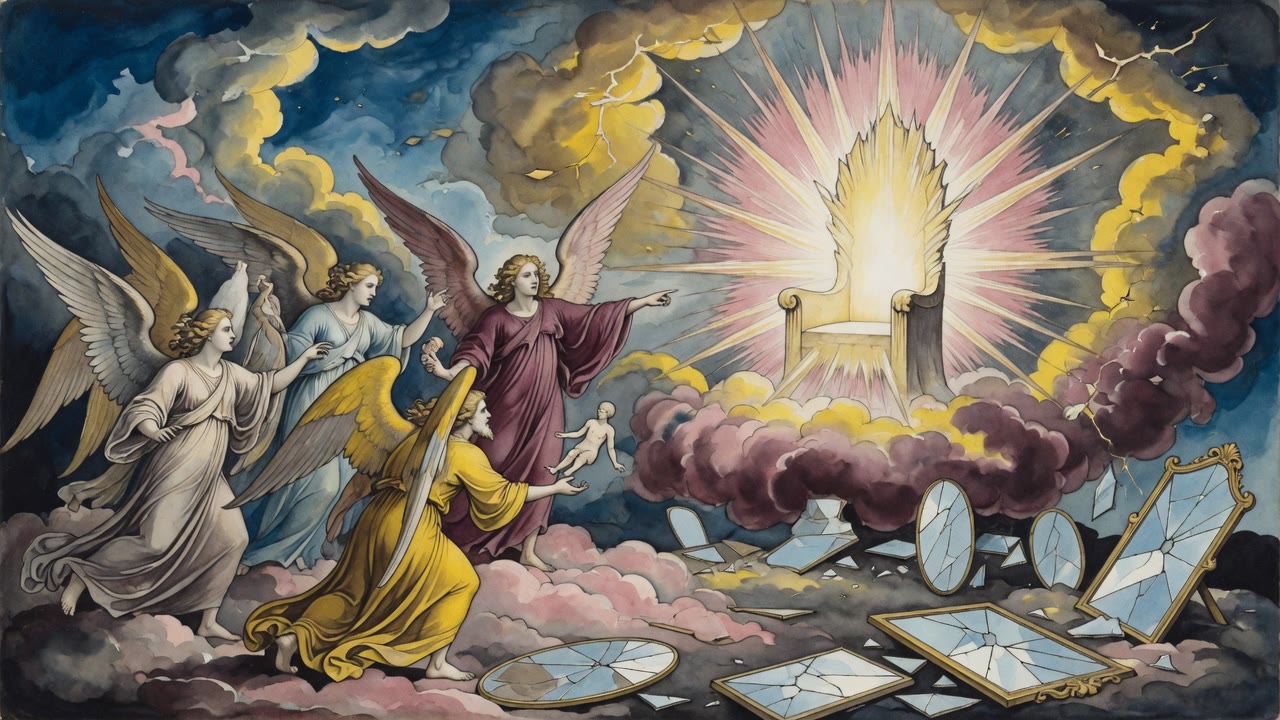
For five days God had built the world like a careful arbiter, alternating between above and below so that neither realm could ever claim He loved it more. Heaven and earth on the first day. The firmament stretched overhead on the second. On the third He split the waters, on the fourth He hung the sun and moon and stars, on the fifth He gathered the lower waters into their seas. One work was left for the sixth day, and God paused over it. "If I create only above, the earth will be angry," He reasoned. "And if I create only below, the heavens will be angry." So the last creature would be drawn from both. He bent to the ground of the world below and took up a handful of dust, and He held something back, for into this shape He also meant to pour a breath from above.

God Weighs the Body Before the Breath

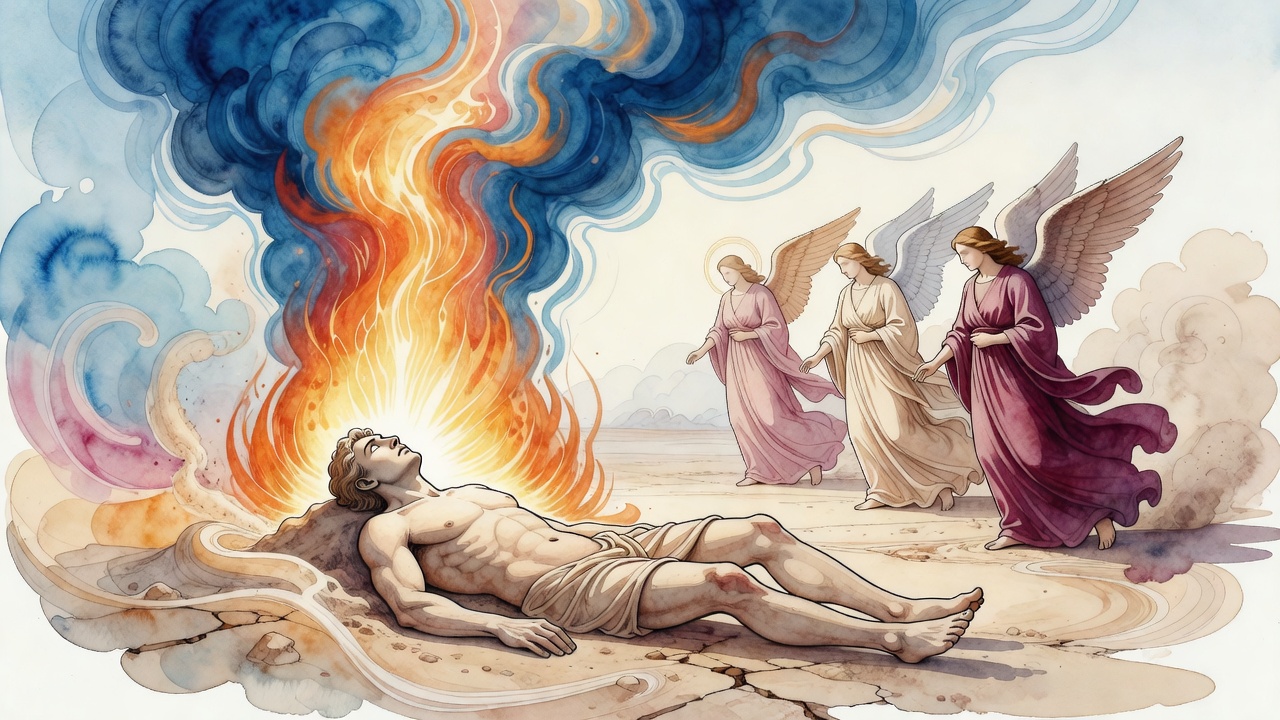
The body lay finished and empty. Limbs shaped, face still, clay that had never once moved. In God's keeping waited the neshama, the soul He meant to seat inside it. But where? A soul has to live somewhere in a body, and every doorway into this one carried a risk. He looked at the mouth and heard the words it would someday speak, the lies it would tell and the slander it would spread against a neighbor. Not the mouth. He looked at the eyes and watched them turn to gaze where they had no business gazing, greedy and coveting. Not the eyes. He looked at the ears and heard the gossip and blasphemy they would gladly drink in. Not the ears.

The Breath That Chose the Nostrils

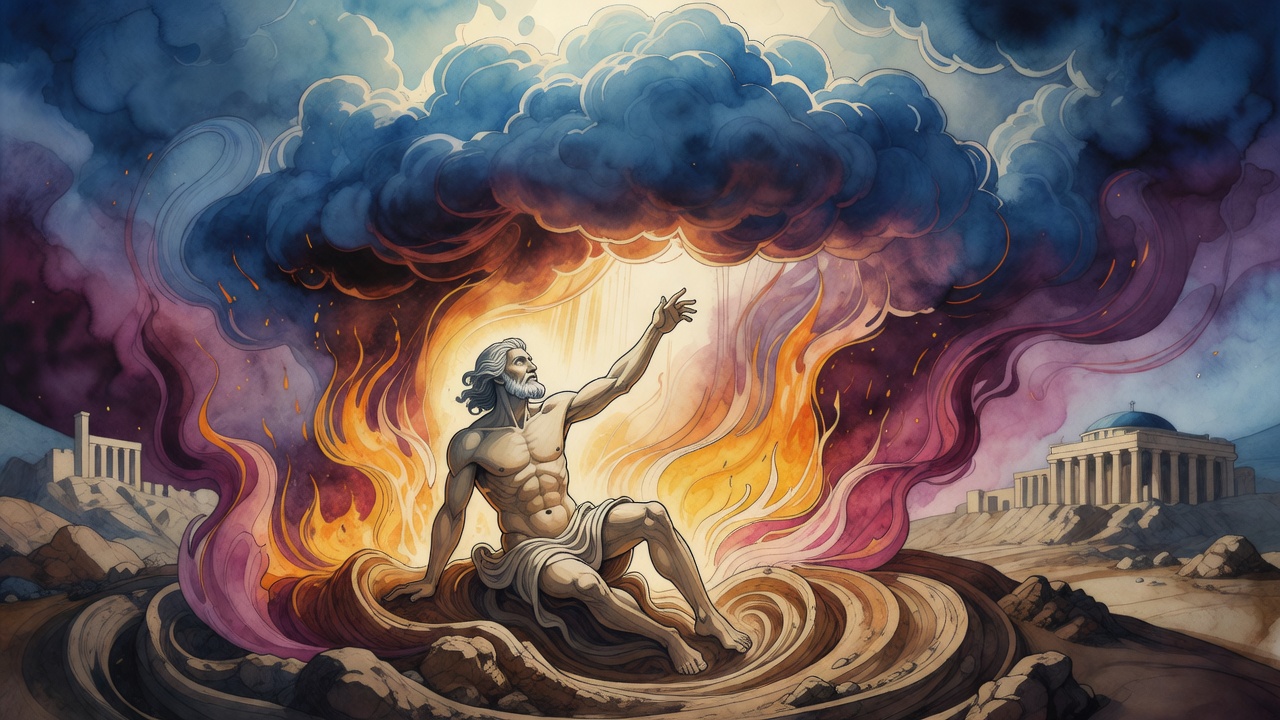
Then God looked at the nostrils. A nose does one honest thing without ever being taught it. It knows rot from fragrance, and it turns from the foul thing toward the sweet on its own. Just so, He reasoned, the righteous would learn to turn away from sin and lean toward the words of Torah. So God bent low over the still face and breathed His own breath into those two small openings. Breath from above poured down into dust from below, and the cold clay warmed under it. The chest rose. The first man pulled his first air through the very passage God had decided to trust.

The Whole of Time Opened Before Adam Could Speak

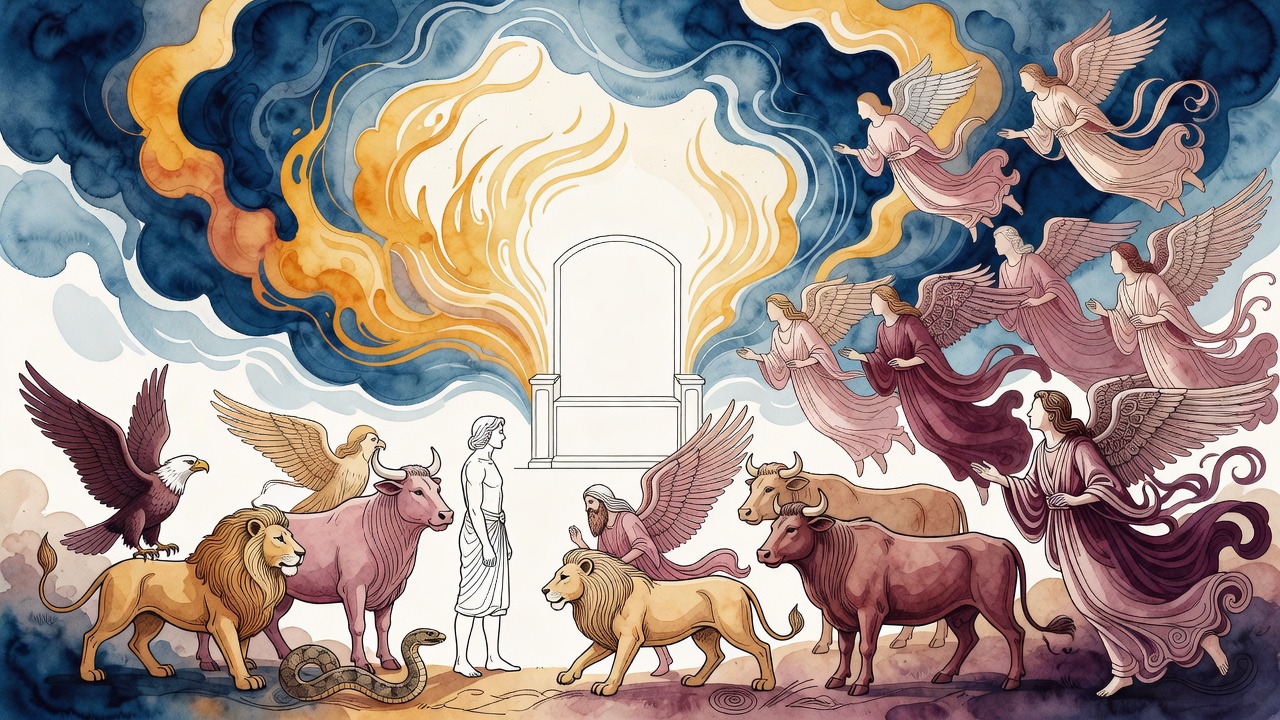
But before Adam could sit up, before the breath had fully finished becoming a life, God gave him one overwhelming instant. In it Adam saw everyone who would ever descend from him. Every generation, set out in its order. Every leader, every prophet, every scholar, every ordinary soul who would live and die on the ground beneath him. He saw the tale of their years and the number of their days, the reckoning of their hours and the measure of their steps, the whole weight of it at once, before he had spoken a single word or taken a single step of his own. Then the vision closed over, and he was only a man, breathing, holding more than any man could hold.

The Earth That Would Not Take a Body Until Adam Returned

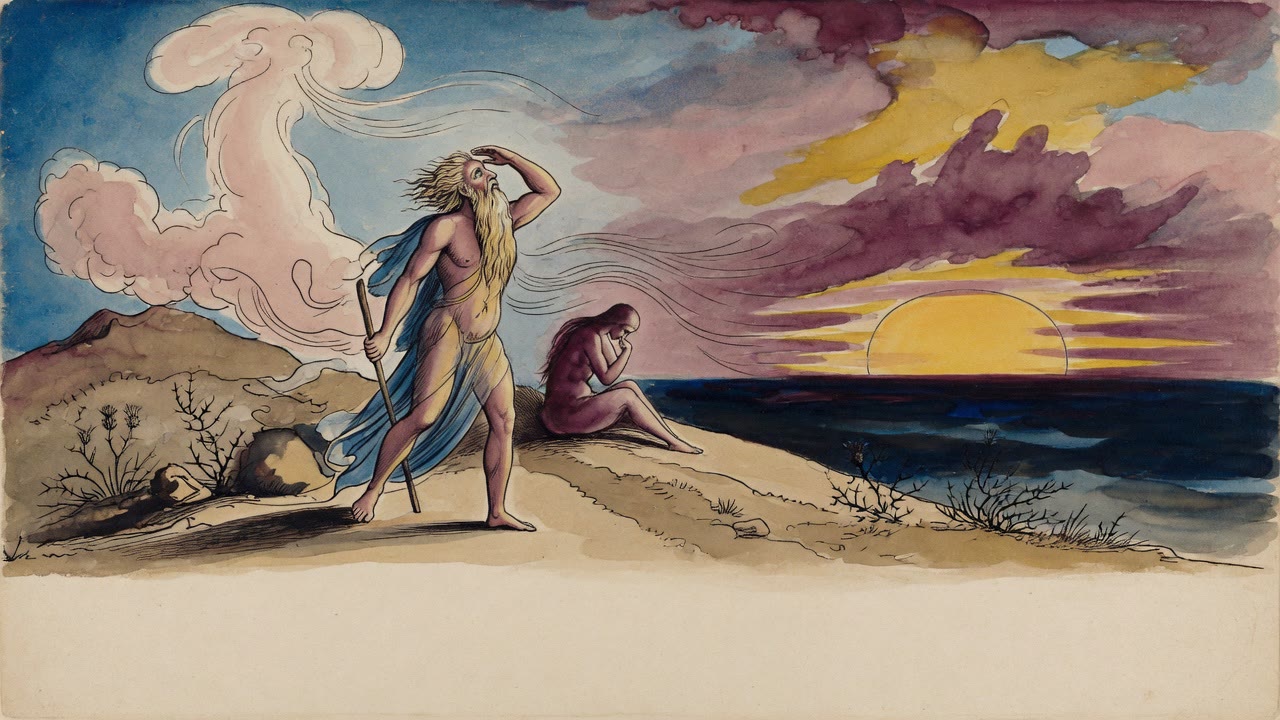
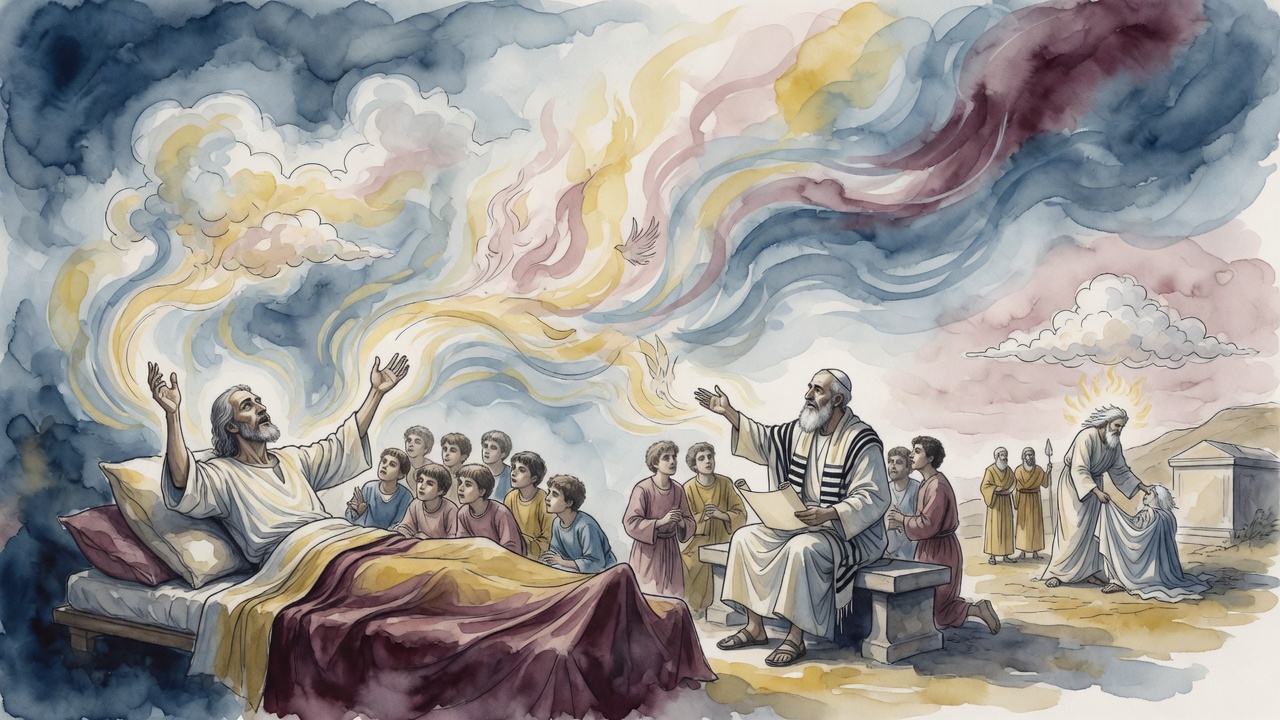
Adam lived his long life, and then he died, the first of all who breathed to learn what dust does at the end. God did not leave the burying to men who did not yet know how it was done. He sent down three of His greatest archangels. They wound the first body in linen and anointed it with fragrant oil, handling the dead flesh with the reverence owed to a king.

But another body was waiting. Abel. Since the day Cain struck him down, Abel's corpse had never once gone into the ground. Cain had tried to hide it, and the earth would not keep it. Each time the body was pressed into the soil it rose again, and a voice rose with it. "No creature shall rest in the earth until the first one of all has returned the dust to me of which it was formed." The ground was holding out for Adam. Until the first man went back into the source, it would swallow no one, and so Abel had lain all those years on a stone the angels had set beneath him. Now the three archangels lifted him too and made him ready for burial beside Adam. They carried both brothers into Paradise and laid them in the earth at the exact place from which God had once scooped the dust to shape the first man. The breath had come from above. The body went back below, into the very handful of ground it had started as, and the earth, satisfied at last, closed over the two of them and finally took its dead.


← All myths
From the tradition

Sources

3 sources

The texts behind this telling. Some cards carry a translation of the source; others are our own retelling of it, and each card says which. Every card links out to the original.

Legends of the Jews 2:33Legends of the Jews

Retold in our words. Read the original at the link below.The Legends of the Jews by Louis Ginzberg (1909) · Public Domain

The scene: God is preparing to breathe the soul into Adam's body, a body still like clay, unformed and lifeless. But where to place this precious neshama, this soul? It's a question fraught with consequence. The text from Legends of the Jews paints a vivid picture. God considers the mouth, but worries it will utter hurtful words. The eyes? They might be used for lustful gazes. The ears? They could be filled with slander and blasphemy.

So, where does God choose? The nostrils. Why? Because, as the text beautifully puts it, just as the nostrils discern between the unclean and the fragrant, so too will the pious shun sin and cleave to the words of Torah. The breath of life, infused with the potential for goodness and discernment.

The story doesn't end there. The moment the soul enters Adam, something extraordinary happens. Even before he's fully alive, God reveals the entire history of humankind to him. for a second. Everything – every generation, every leader, every prophet, every scholar, every single person – laid out before him.

Legends of the Jews goes on to say that Adam saw the tale of their years, the number of their days, the reckoning of their hours, and the measure of their steps. It was all made known to him. What a staggering vision! What an incredible burden, perhaps, to bear. To see the triumphs and tragedies, the beauty and the ugliness, all at once.

This moment, this fleeting instant between lifelessness and life, becomes a window into the very essence of existence. It speaks to the immense potential within each of us, and the responsibility that comes with it. We are not born into a vacuum. We are part of a vast, interconnected pattern of history and destiny. Adam, in that single breath, became aware of it all.

What glimpses of eternity do we receive in our own fleeting moments of awakening? What potential for good, and what responsibility to the generations that came before and will come after, do we carry within our own breath?

Full source
Midrash TanhumaMidrash Tanchuma

Retold in our words. Read the original at the link below.Townsend 1989 translation of Midrash Tanhuma, S. Buber Recension · CC-BY

The creation story, as we know it, unfolds over six days. But have you ever noticed how God seems to be balancing things? Like a cosmic choreographer, making sure everything is just so. We read, for example, in Midrash (rabbinic interpretive commentary) Tanhuma, Bereshit 15, that He created above and below on alternate days. Day One: heaven and earth. Day Two: the firmament, the sky above. Then, Day Three: He divides the waters, separating those above from those below. Day Four: the sun, moon, and stars are placed above. And Day Five? The waters below are gathered.

Leaving us with just one day left. One day to create.

God, facing the final act of creation, seems to pause. He considers the implications. "If I create only above," He muses, "the earth will be angry. But if I create only below, the heavens will be angry. The Divine weighing the cosmic scales, ensuring balance.

So, what did God do?

He created Adam. But not entirely from above, nor entirely from below. He drew from both realms. He formed Adam in the world below, using earth. But then, crucially, He breathed into him… breath from above.

As the Midrash Tanhuma suggests, this act demonstrates God’s evenhandedness in Creation. He alternated between creating above and creating below, ensuring neither the heavens nor the earth felt slighted. And when it came to creating humankind, He masterfully combined elements from both realms.

That breath, that divine spark… it's what makes us human. It's the neshamah, the soul, connecting us to something higher, something beyond the earthly. We are a microcosm of the universe, a meeting point of heaven and earth.

Remember that you are, by design, a blend of both worlds. And perhaps, that tension, that constant negotiation between above and below, is precisely what makes us… well, us.

Full source
Legends of the Jews 2:120Legends of the Jews

Retold in our words. Read the original at the link below.The Legends of the Jews by Louis Ginzberg (1909) · Public Domain

Legends of the Jews turns to Three Archangels Prepared Adam's Body for Burial.

The story goes that, after Adam's death, God commanded three of the greatest archangels to prepare his body for burial. Imagine the scene: these celestial beings, tasked with a profoundly human act of mourning and respect. They shrouded Adam's body in linen, and anointed him with fragrant oil, a sign of honor and reverence.

The story doesn't end there. Remember Abel, murdered by his own brother? According to legend, his body had remained unburied since that tragic event. Why? Because, as we find in Legends of the Jews, despite Cain's attempts to conceal the body, the earth itself refused to hold him. Abel's corpse would repeatedly rise from the ground, accompanied by a voice proclaiming, "No creature shall rest in the earth until the first one of all has returned the dust to me of which it was formed." The earth itself yearned for Adam, the first human, to return to the soil from which he was created, before it could accept any other mortal remains.

So, the angels, following God's command, also took Abel's body, which had been resting on a stone placed there by angels, and prepared it for burial alongside Adam. Both bodies were then carried to Paradise itself.

And where, in Paradise, were they buried? According to the legend, they were interred on the very spot from which God had taken the dust to create Adam in the first place. A full circle, returning to the source.

This tale, drawn from Ginzberg's Legends of the Jews, offers a glimpse into the elaborate narratives that surround even the most familiar biblical figures. It adds layers of meaning and wonder to the stories we think we know.

What does it all mean? Perhaps it's a reminder of the profound connection between humanity and the earth. Or maybe it's evidence of the enduring power of redemption and the promise of paradise. Whatever your interpretation, it’s a story that invites us to ponder the mysteries of life, death, and the eternal beyond.

Full source