How Targum Pseudo-Jonathan Wove Moses Into the Patriarchal Line
Joseph's deathbed password reaches Moses, Levi lives long enough to see the deliverer born, and Jethro hears of the mountain of glory before Moses arrives.
Table of Contents
 Click for full size
The Password From Joseph's Mouth
Joseph's last request was a practical instruction wrapped inside a theological claim. He was dying in Egypt, far from the land his great-grandfather had been promised. He made his brothers swear an oath: when God remembers you, carry my bones out of here. The Hebrew for remember is pakod, and Joseph doubled it. Pakod yifkod. Remembering, He will remember you.
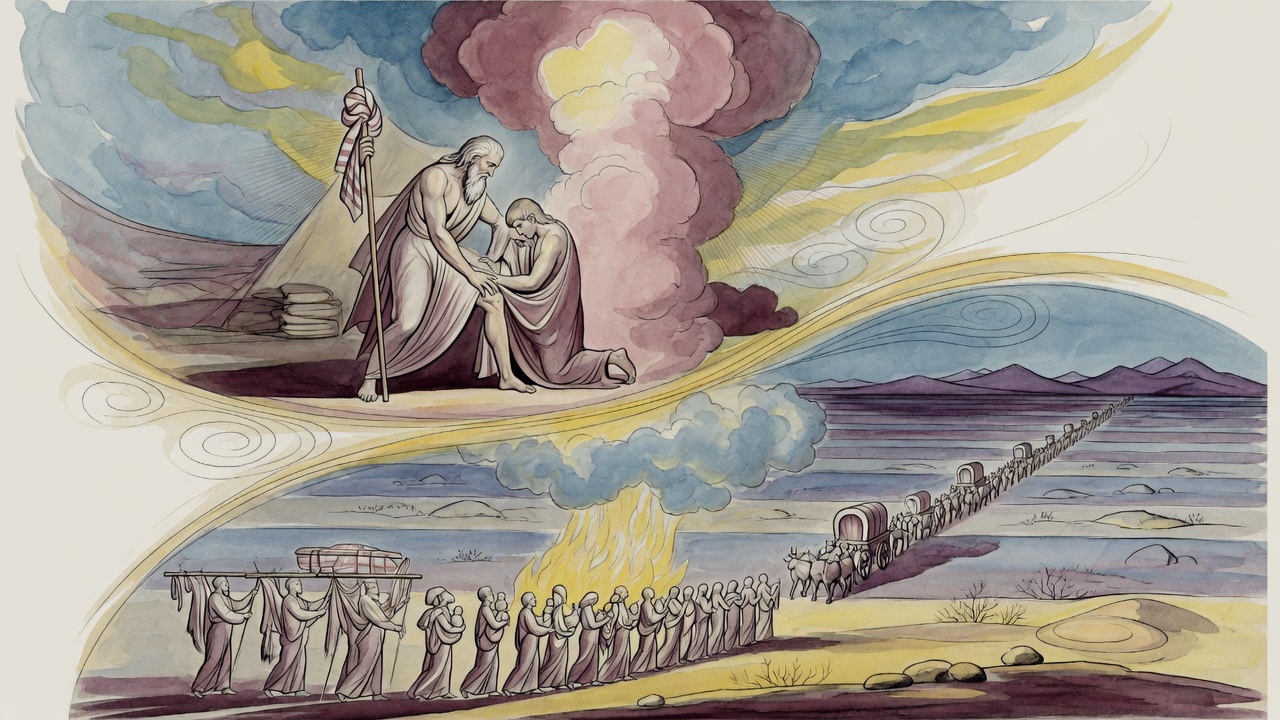
That doubled construction became a password. The tradition preserved in Targum Pseudo-Jonathan on Exodus treats it as the sign by which Israel would know the authentic redeemer from any impostor. Only the true deliverer would know to say it, because it had been passed down through the generations as the marker of the genuine covenant. Moses would not simply announce himself to the elders. He would say the words Joseph had said, and the elders who had been waiting would recognize the phrase as the credential it was meant to be.
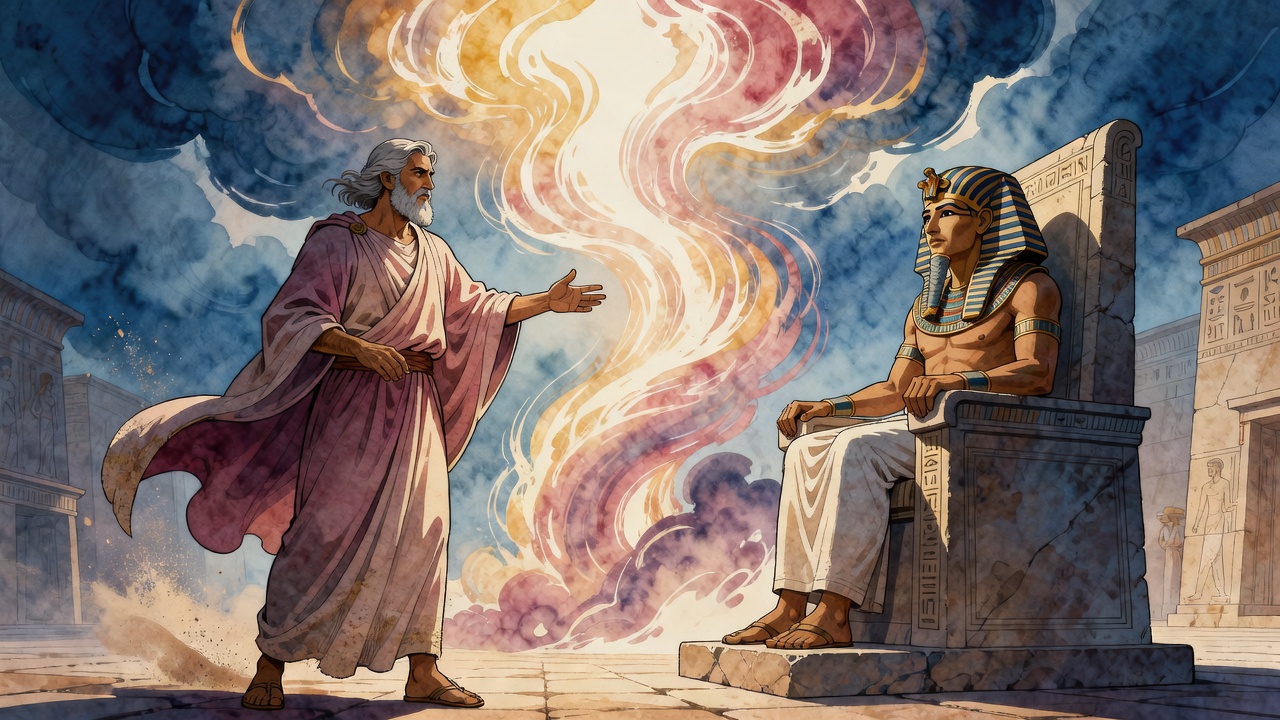
In the Targum's telling, when Moses gathers the elders and says that the God of their fathers has appeared to him, saying pakod pakadeti, remembering I have remembered you, the phrase lands differently than it would in an ordinary message. It is the password. Joseph had set the lock four hundred years earlier. Moses has the key.
The Sign That Named Every Patriarch
The sign Moses was given at the burning bush was not only a credential for the elders. It was a recitation of covenants. God tells Moses what to say: I am the God of Abraham, the God of Isaac, the God of Jacob. Not the God of the patriarchs in aggregate, but of each one, named and individuated, each with a separate covenantal relationship that was still operative and was now being called upon.
Targum Pseudo-Jonathan emphasizes the specificity of the naming. Moses is not stepping into a generic ancestral tradition. He is stepping into three distinct covenants, each made with a different person, each carrying its own terms and its own unfulfilled promises. The redemption from Egypt is not a new event in the history of the divine relationship with Israel. It is the completion of something that began with Abraham's call from Ur, that was confirmed with Isaac on the mountain, and that was renewed with Jacob at the ford of the Jabbok. Moses enters the story as the inheritor of all three threads simultaneously.
Levi Lived to See the Deliverers Born
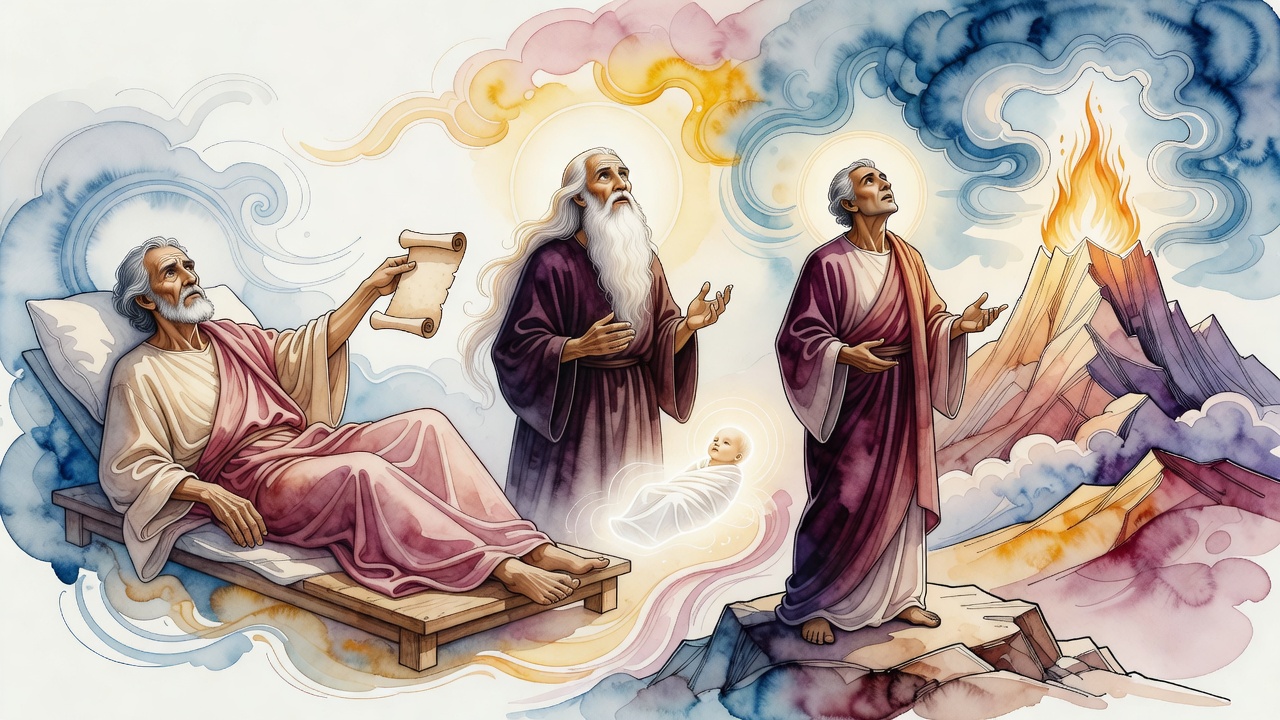
Between Joseph's deathbed and Moses's birth, the Targum pauses to record a genealogical fact with theological weight. Levi, the son of Jacob, lived longer than any of his brothers. He was the last of the patriarchal generation to die in Egypt. And the tradition preserved in the Targum notes that his lifespan was long enough to overlap with the birth of Moses and Aaron.
Levi did not die before the deliverers were born. He saw them. He may have held the infant Moses, or at least lived in the same generation with a man who would redeem everything Levi had come to Egypt carrying. The genealogical continuity is not only biological. It is witnessing. Levi was the link between the promise Joseph had spoken at his death and the generation that would see the promise kept. His long life was the bridge.
The Targum is doing something precise here: refusing to let Moses be a stranger who appeared from outside the family's history. Levi was there. Moses was there. The chain was unbroken and a living man had stood in both parts of it.
Jethro Hears the Mountain Before Moses Arrives
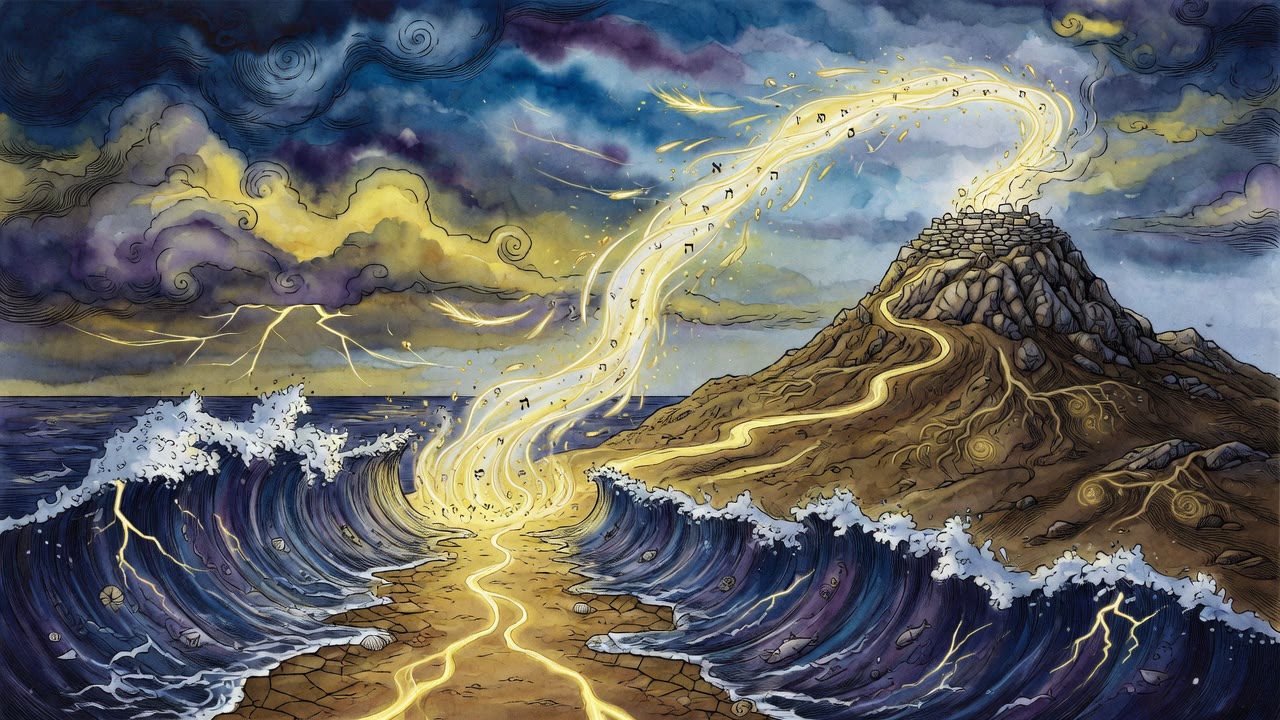
When Jethro comes to meet Moses after the Exodus, the Targum places the reunion near the mountain of glory. Not a generic location, not simply the wilderness where Moses had been shepherding. The mountain has a name in the Targum's geography: the mountain of glory, which is the mountain where Moses had once stood at the burning bush, which is the mountain where Israel would receive the Torah.
Jethro, the Midianite priest, arrives near that mountain because he has heard. Not only heard about the Exodus, though that was the occasion. He has heard about the mountain itself, about what happened there, about the God who had spoken to his son-in-law from inside fire. He comes to the right place because he has been listening correctly. The Gentile who recognized the God of Israel for what He was, who said now I know that the Lord is greater than all gods, comes to meet Moses at the mountain that had made the entire redemption possible.
The circle closes here. Joseph set the password in Egypt before the slavery reached its worst. Levi lived long enough to see the deliverers born before the worst came. Moses carried the password to the elders, named the three patriarchs who had each made their own covenant, stood at the mountain where the covenant would be renewed with the whole people. Jethro, who was outside the covenant, arrives at the same mountain to confirm from outside what Moses had been given from inside.
← All myths