The Wicked Son Said the Passover Was Not His and Lost His Redemption
The plate held matzah and maror. A son asked what the work was to them. The father answered with a night that no longer named him.
Table of Contents
 Click for full size
The Word That Left the Circle
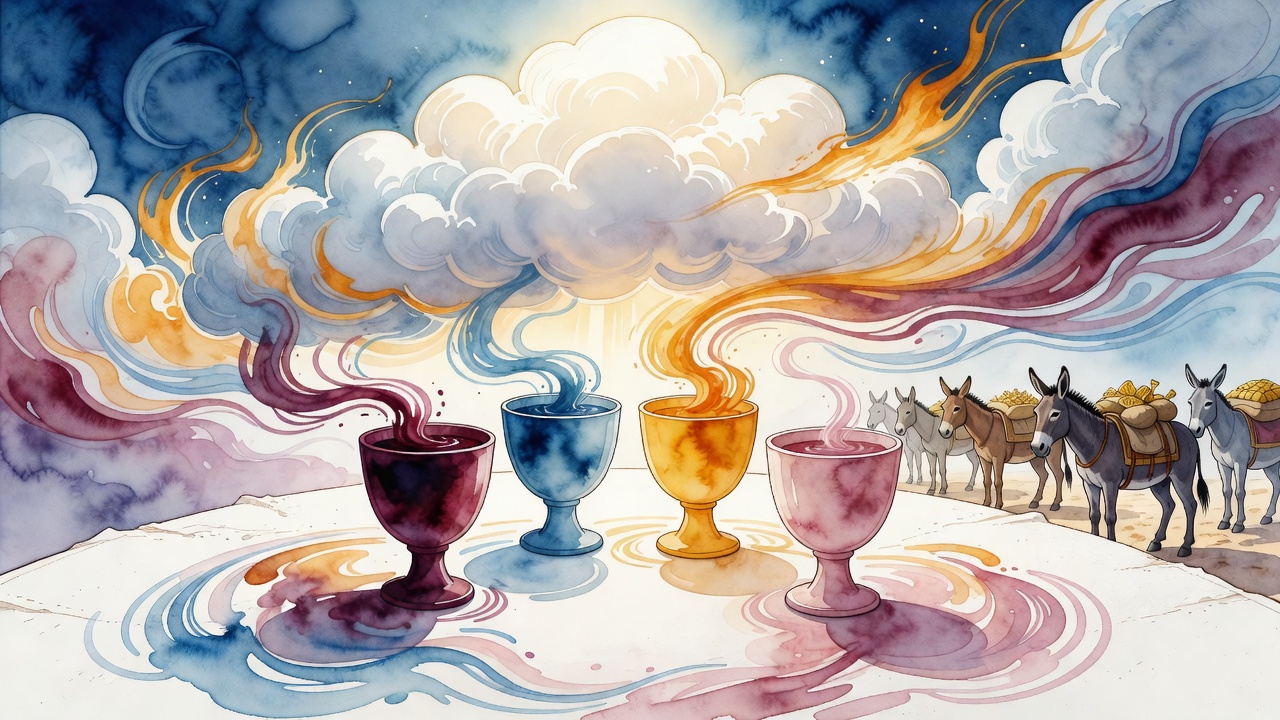
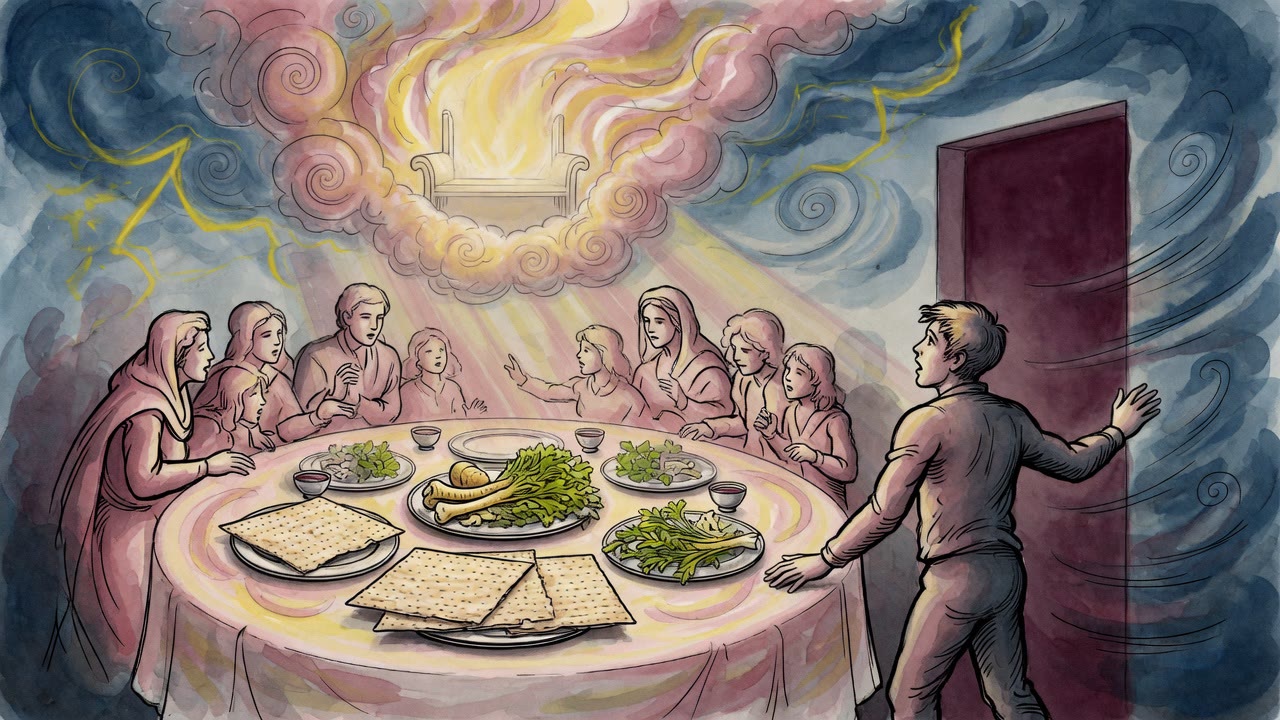
The Passover plate held matzah and maror. The hour was the hour when those foods sat in front of living mouths, not a talk in daylight. A child spoke into that hour.
One child asked as kin. This one pointed at the work of the night and said, "What is this service to you?" (Exodus 12:26).
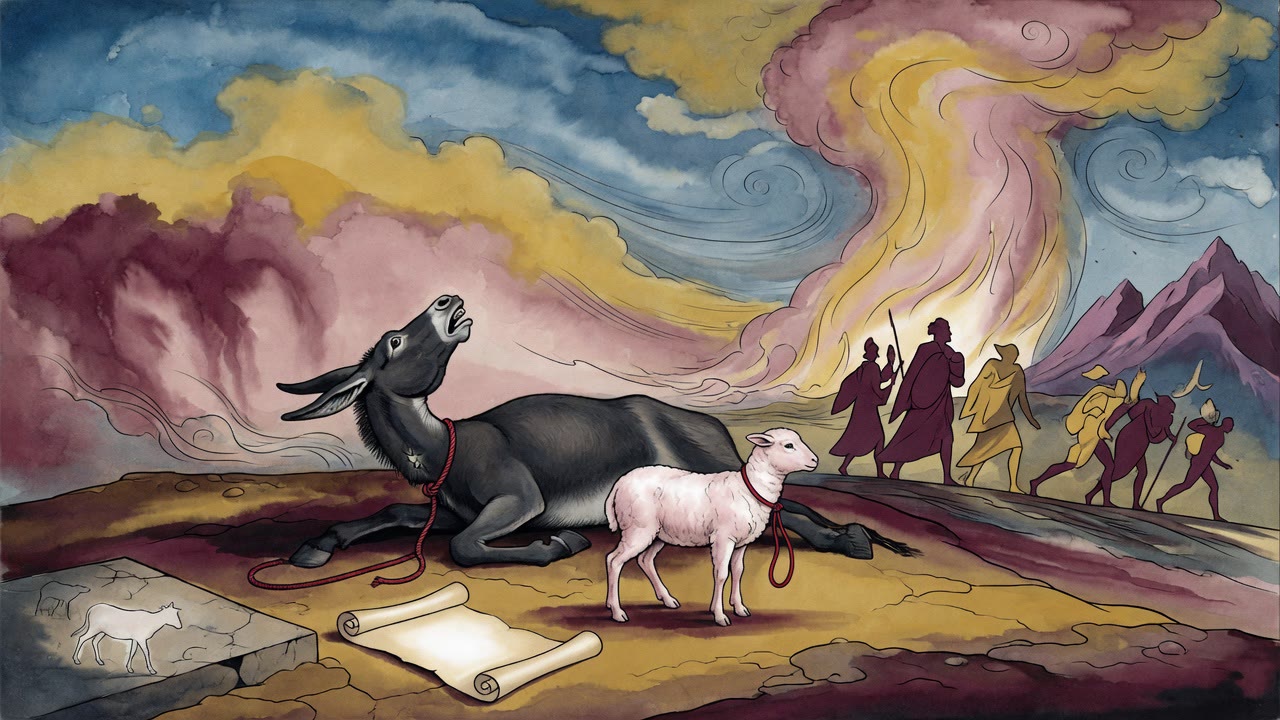
The word "you" landed like a closed door. He had already stepped outside the circle he pretended to study. The lamb, the bitter herbs, the story of night and blood on doorposts, all of it turned into a show he watched from the aisle.
His father did not chase him with soft explanation. The answer matched the exile the son had chosen with his mouth.
Because of This, While the Food Sat
"Because of this the Lord wrought for me" (Exodus 13:8), the father said, and his hand was on the plate. For me. Not for him. Because of this, in the hour when matzah and maror lie on the table, not from the new moon, not while daylight still belongs to ordinary work.
The telling binds to the tasted night. When the son sneered at "this work," the parent pointed at the same "this" and claimed it personally. God acted for me when I left Egypt.
A younger child at the same table asked a different question, hungry for the statutes, still inside the house. The father answered that child with a map. He answered the first son with a door. The foods did not change. The grammar did.
He took himself out. The house would not drag him back with flattery. The redemption story is not a museum anyone may tour while denying membership. It is a family ledger. Names inside the ledger leave Egypt. Names outside stay under Pharaoh's count.
If He Had Been in Egypt
"Had you been in Egypt, you would not have been redeemed," the father said.
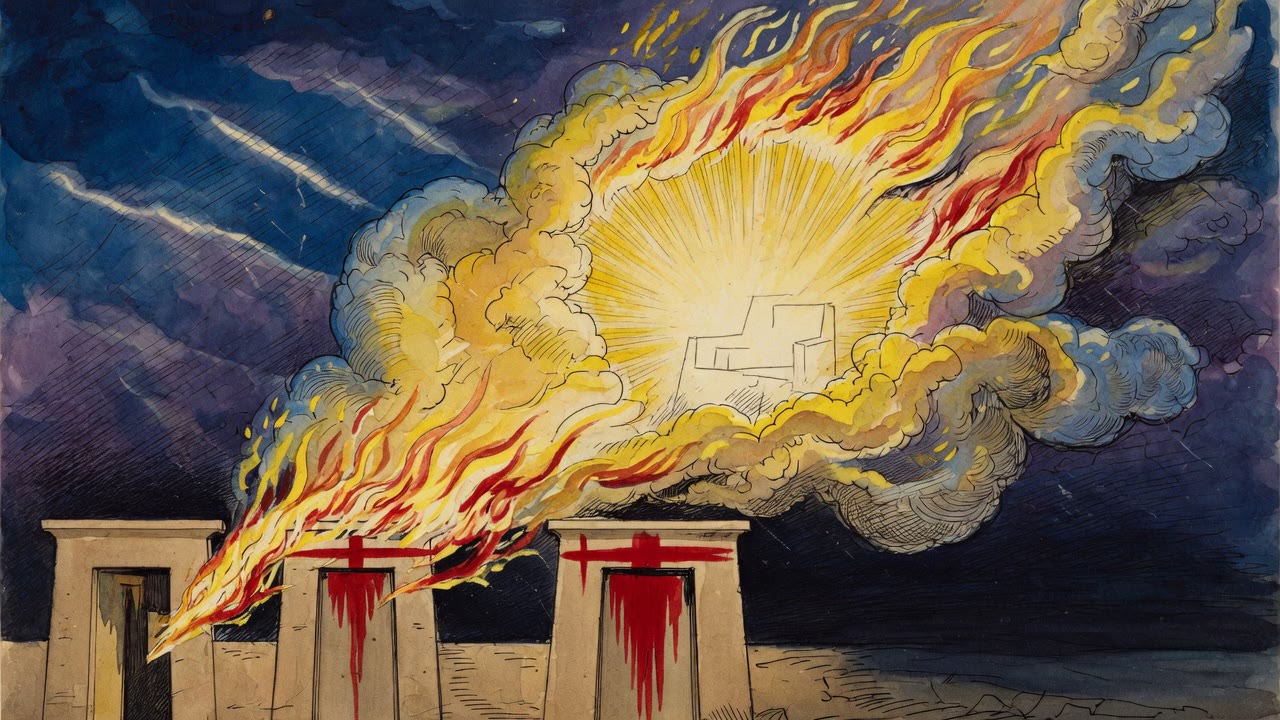
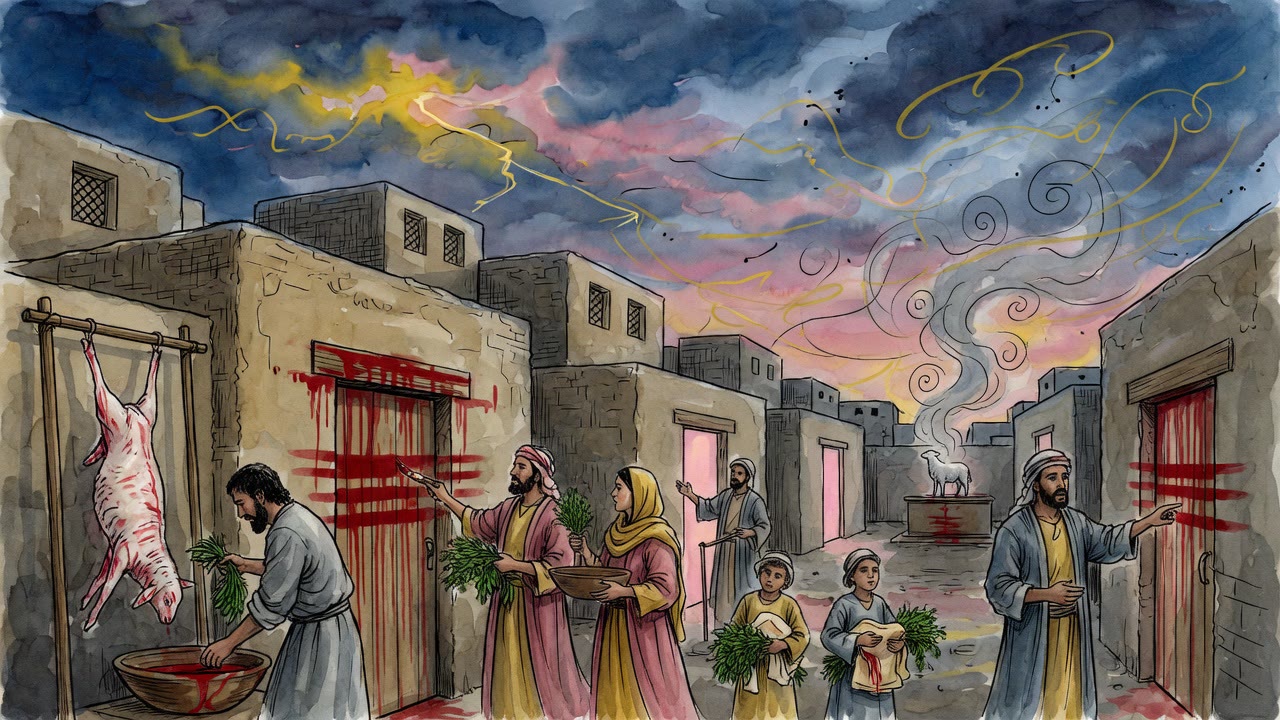
Picture him in the generation of the plagues, standing among Hebrews with the same mouth. What is this to you? He would not have put blood on the door. He would not have eaten in haste with staff in hand. The destroyer would have found him unmarked.
The father's answer was not a curse invented at a later table. It was a historical counterfactual spoken as the law of belonging. Redemption has a guest list written in first person. The son edited himself into a tourist's distance and was surprised when the story accepted the edit.
Around him other children asked as members. One sat quiet and needed the whole story told without a prompt. One could not even frame a question and had to be opened like a closed book. The wicked son's question was not curiosity. It was secession performed with good table manners. He kept his seat and renounced his passport in the same breath.
The Night That Did Not Name Him
No angel needed to bar him. A pronoun was enough. "You" built the wall. "Me" answered from the other side. The seder continued. Songs rose. Children who asked as members received the full map of the night. The son who asked as a tourist kept the taste of bitterness without the claim of freedom.
The father told the others that in every generation a person must see himself as if he left Egypt. Taste the bread of haste as if one's own back still remembers brick. That duty is the opposite of the stance across the table. The wicked son saw the leaving as someone else's parade.
The parent's answer did not raise a fist. It raised a mirror. He had spoken as an outsider. The answer showed how redemption sounds to an outsider: like a story that happened to someone else. "For me" is not cruelty for sport. It is the only honest reply to "to you." The night of watching in Egypt did not save tourists. It saved a people who put blood on wood and ate with staff in hand as if the road already owned their feet.
The Table Went On
The foods remained. Matzah still broke. Maror still bit. The work of the night went on without him, exactly as he had framed it.
He sat in the chair. His cup was still poured. No one dragged him into the street. He had lost the redemption in the sentence that left his mouth, and the sentence that answered it only made the loss official. Belong or watch. Taste or catalog. The matzah breaks either way. Only one way leaves Egypt in the bones.
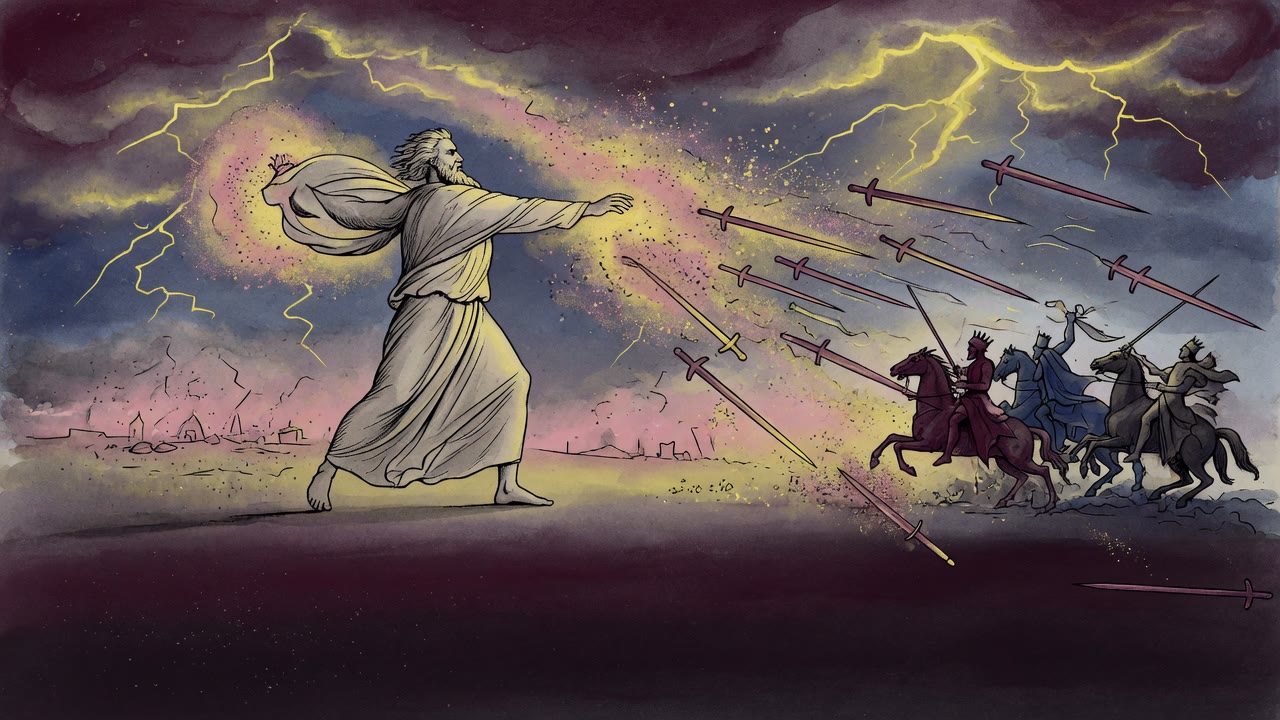
Later the songs would reach the part about the outstretched arm. His mouth could still make the words. The table had already recorded which person those words were for. The plate stayed in the center. The night kept its claim. The son kept his distance, official now, written back to him in the same sharp language he had used to step outside.
← All myths