Wisdom Shouts in the Street and Rabbi Johanan Sent Him to the Study Hall
He asked for a chapter of Mishnah between the onion stalls. His teacher asked him where a man goes when he has a pearl to sell.
Table of Contents
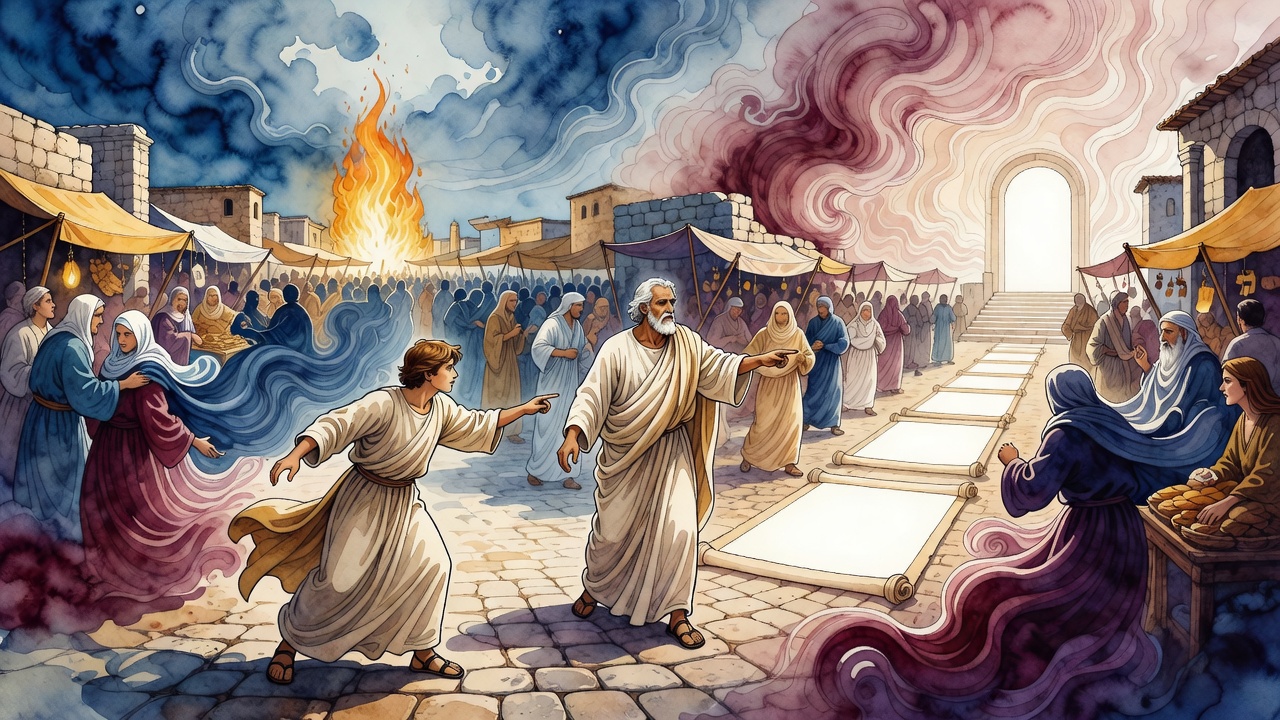
Rabbi Samuel bar Nahman caught his teacher between the stalls and asked him to recite a chapter of Mishnah right there. Ropes of onions hung over both their heads. A woman was arguing about the weight of a bundle of garlic. A donkey stood in the lane and would not move for anyone.
 Click for full size
"Go to the house of study," Rabbi Johanan ben Eleazar said, "and I will recite it for you there."
Samuel had the verse ready before the answer finished. "Did you not teach me this yourself? Wisdom shouts for joy in the street" (Proverbs 1:20).
Where a Pearl Is Sold
"You know how to read Scripture," Johanan said. "You do not yet know how to recite Mishnah."
He turned and looked down the row. Onions. Garlic. Cabbages with the field still on them. Then he asked where a man goes when he has a pearl to sell.
Not here. A pearl goes to the street where pearls are sold, to merchants who can tell one from a rinsed river stone and will not insult it with a price. Nobody carries a jewel to the vegetable sellers. "Wisdom shouts in the street" means the street of Torah. And "in the squares she raises her voice" means the place where her voice is given room to widen: the synagogues, the study halls, the benches where one line gets turned over and over until the lamps burn down.
Samuel had wanted Torah without the walk. His teacher had just told him the price.
The Crowds She Called Down
Johanan did not stop at the pearl. He pushed the next line of the verse at his student, and the market seemed to shrink behind them.
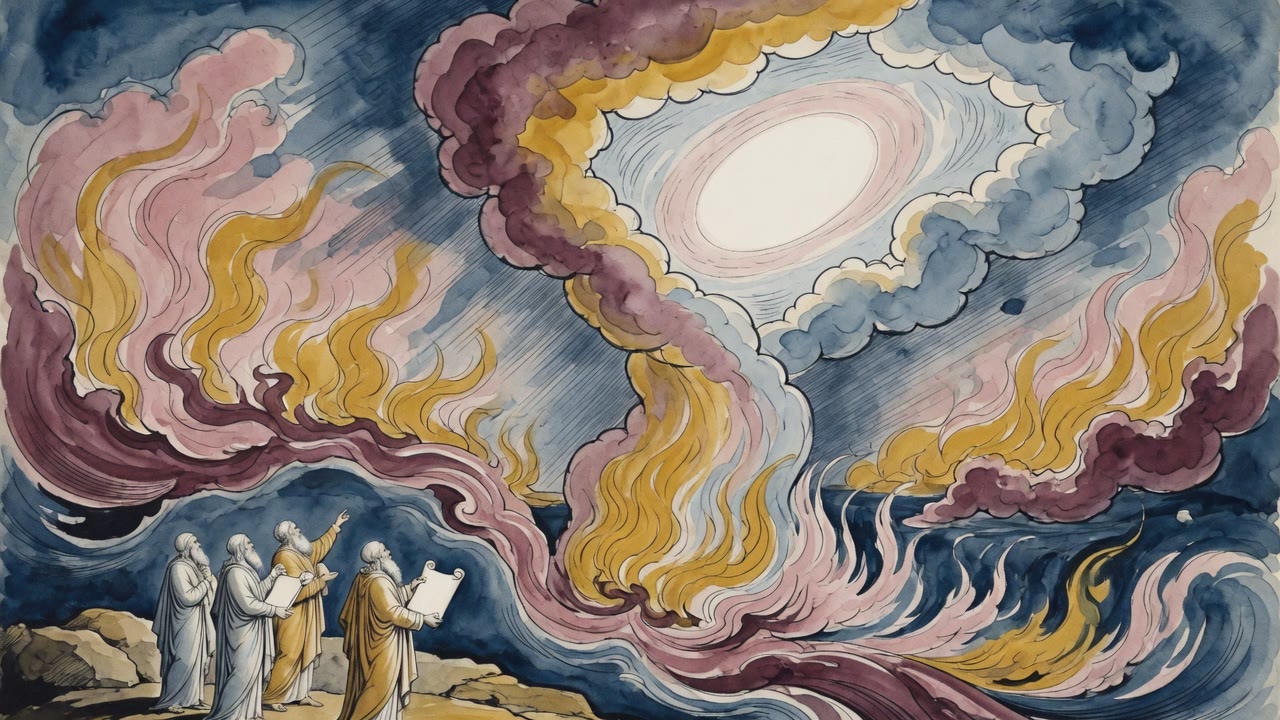
"At the head of the roaring crowds she calls" (Proverbs 1:21). She has been calling since the first line of the Torah, and the crowds she has brought down since are worth counting. The generation of the flood heard her and changed nothing, and the water climbed over the tops of the mountains. The generation on the plain of Shinar heard her and kept stacking bricks until their own mouths turned against them. Sodom heard her, and shut its doors, and burned.
Read the same word another way and it is the head of death, and she was already calling in the garden. "On the day that you eat of it, you shall surely die" (Genesis 2:17). Adam heard that sentence and ate.
"They used to build the synagogues on the high ground of a city, at the gates," Johanan said, "so her voice would come down over the roofs. And if you have said a word of Torah once, never tell me you have already said it. Say it again."
Rain in Season or Powder From the Sky
One mouth, two things spoken. Rabbi Abba heard Wisdom say the good and say the evil in the same breath, and he had the verses to hand. Walk in My statutes and I will give your rains in their season (Leviticus 26:3-4). Refuse to listen and I will make your skies like iron (Leviticus 26:19).
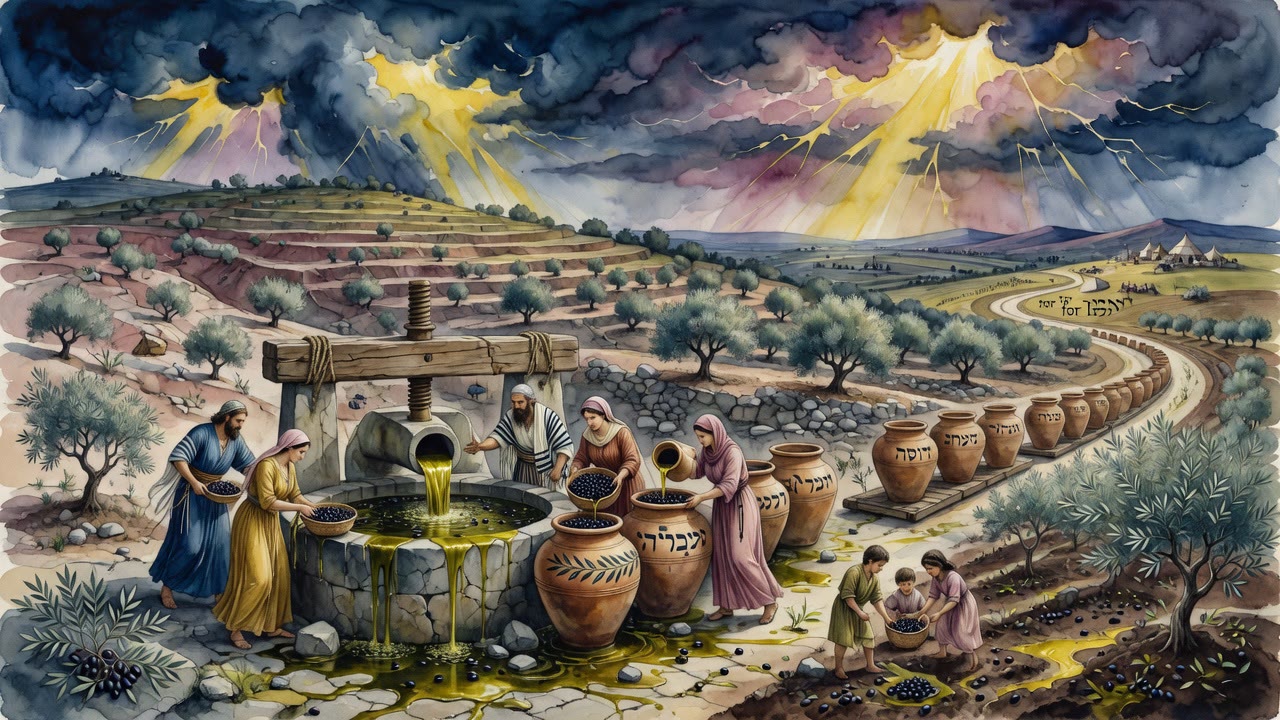
Rabbi Aha heard the harder line. If you do not heed Me, the rain of your land will come down as powder and dust (Deuteronomy 28:24). Fields lying open with their mouths up, and what falls into them is grit. A farmer walking out at first light to see what the night left, and finding his own soil sifting through his fingers.
Rain is not a small subject. Rabbi Yonatan counted three things given to the world outright, as gifts, with nothing asked in return: the Torah, the lights in the sky, and the rains. Tablets, stars, water. Samuel had asked for a chapter in a market. He was standing inside an argument about whether the crops would come up.
The House He Wanted Below
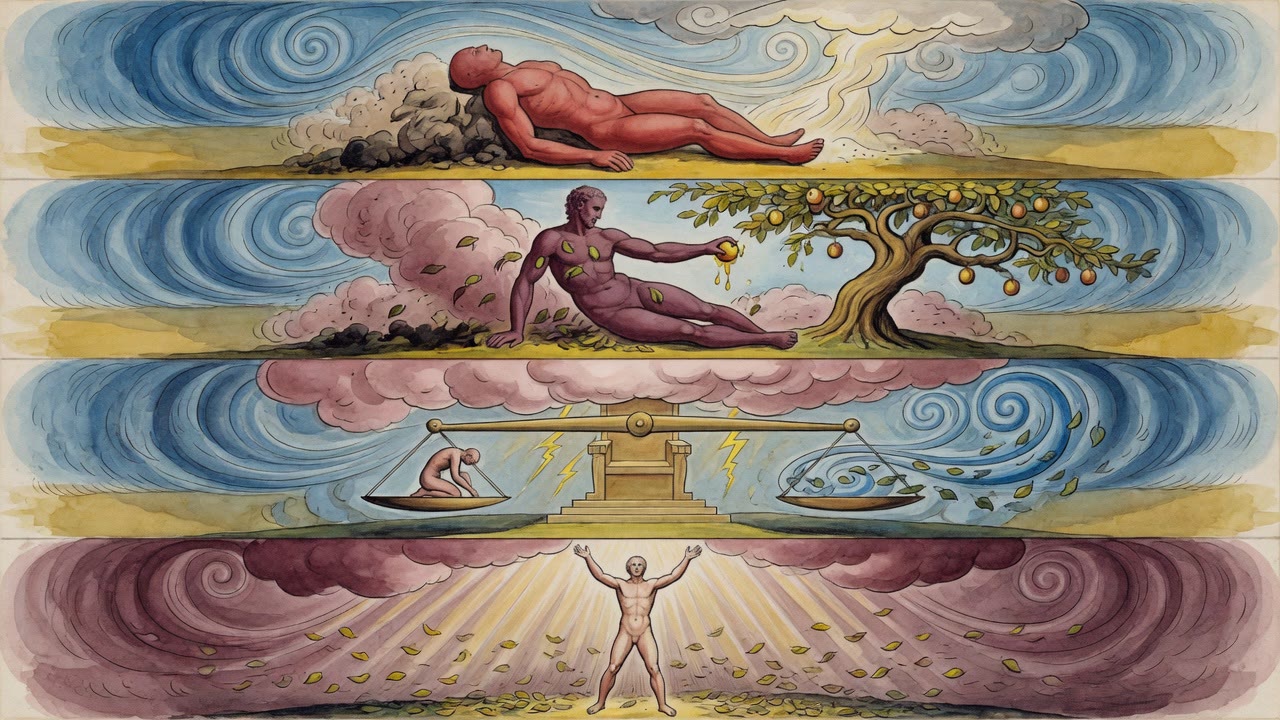
Something else stands behind the statutes, and Johanan traced it back to the first man in the garden. God wanted a house below the way He has one above. He said as much to Adam: if you prove worthy, then as I am king over the ones above, I will make you king over the ones below. "The Lord God took the human" (Genesis 2:15), and took is a word of raising, the same word used when a woman is taken into a palace.
Adam ate, and the Presence drew back from him, and the house below stayed unbuilt.
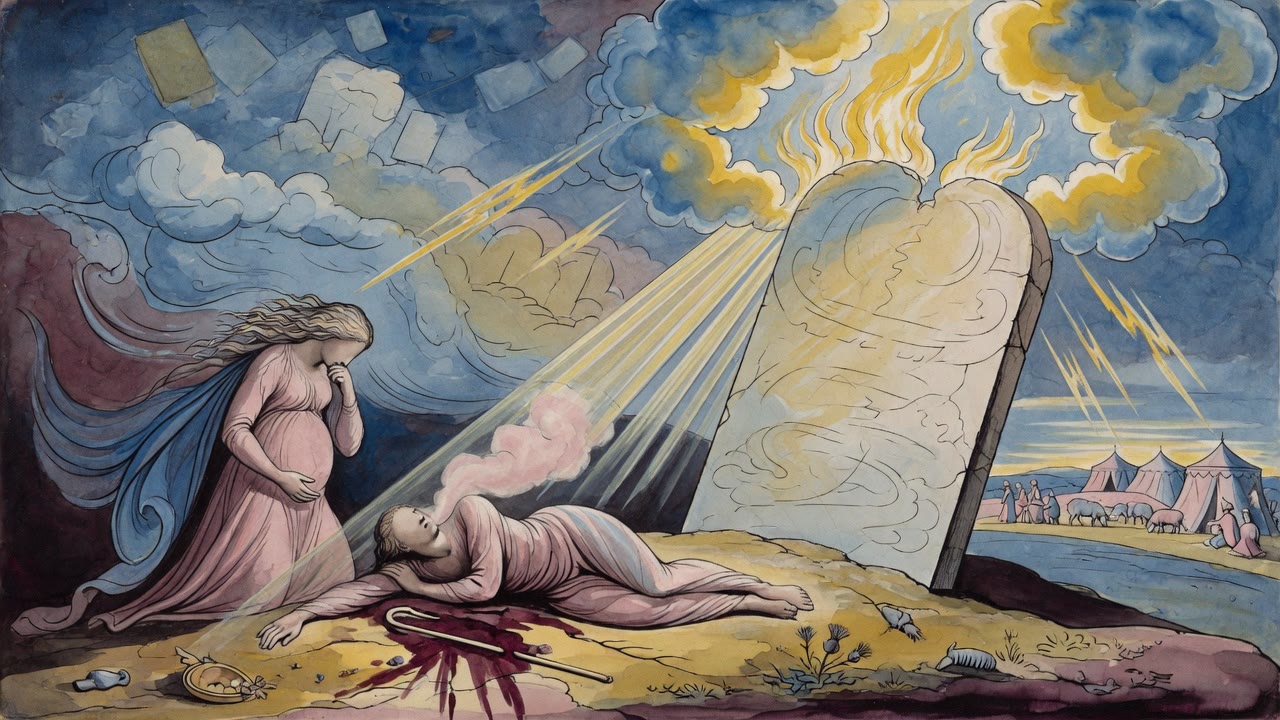
Israel came out of Egypt on one condition, that they put up a place for Him to stay. "Let them make Me a sanctuary" (Exodus 25:8). Solomon heard the same terms read over the foundations of his own house: walk in My statutes, and I will dwell in the midst of Israel and never abandon them. He was old when his wives turned his heart, and the terms did not change to accommodate a king.
The Walk Out of the Market
Johanan stopped talking and started walking. He went up the lane, past the garlic and the arguing woman and the donkey that had still not moved, in the direction of the study hall.
Samuel bar Nahman went after him. Behind them the stalls kept doing what stalls do, weighing and haggling and shouting prices over each other, a whole street of voices that had not heard a word of any of it.
← All myths