Yitro Heard Amalek Fall and Left Pharaoh's Court
Yitro, once an advisor in Pharaoh's circle with Amalek, hears that Amalek's name is being erased and walks away toward the God of Israel.
Table of Contents
Yitro heard a name die on the wind, and the hearing rearranged his life.
 Click for full size
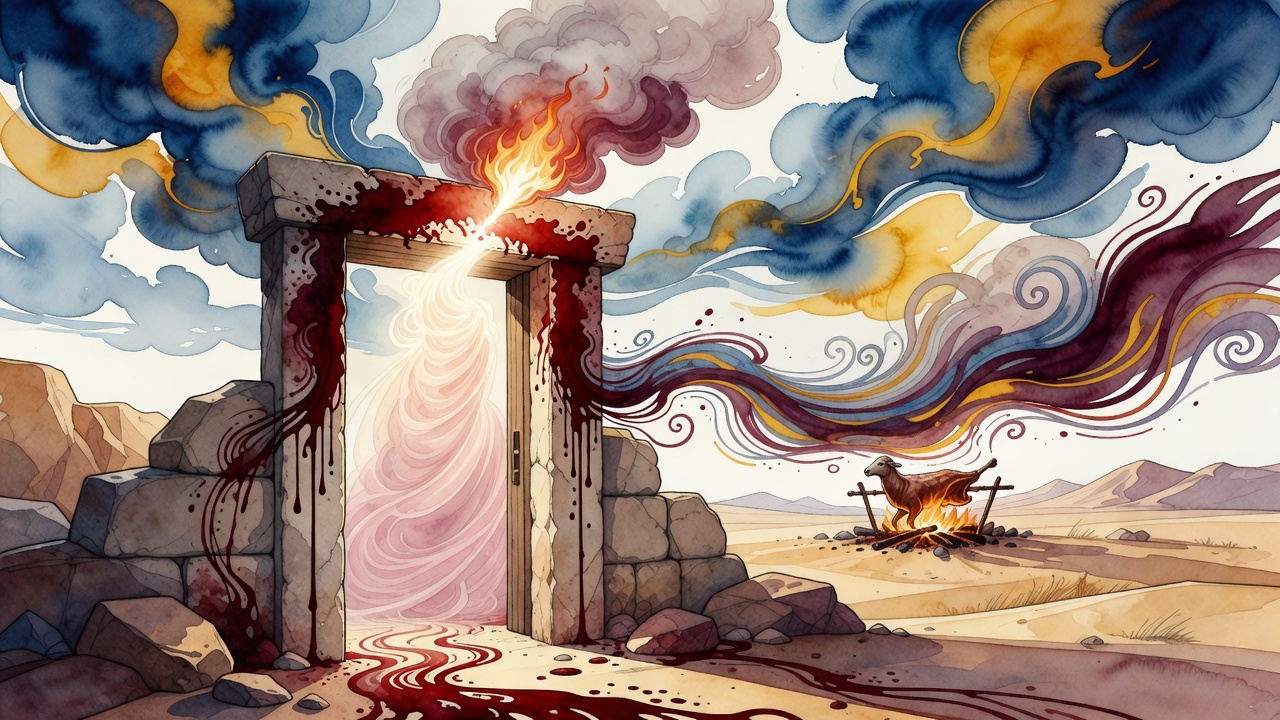
In Pharaoh's court he had sat near another counselor, Amalek, when the question was how to break Israel. Maps, births, bricks, rivers. Two mouths had offered hard advice in a room that smelled of ink and fear. Then the God of the slaves struck Amalek so cleanly that memory itself began to fray, and Yitro's chair no longer felt like a chair.
Two Advisors in One Palace
Yitro and Amalek had shared the same low table when Pharaoh asked what to do with a people too large for whips alone. One path stayed the enemy of Israel. The other path, still Midianite, still outside the camp, started to tilt the moment the reports came in.
"Yitro heard" (Exodus 18:1) is a short line. The hearing is not gossip about weather. He heard the fall. He heard that heaven had begun to expunge a name (Exodus 17:14). Strike the cynic, the proverb says, and the simple grow wise (Proverbs 19:25). Amalek took the blow. Yitro took the lesson with both hands.
He stood up from the old counsel. A servant reached for his cup and found it empty. The road out of that room was not a parade. It was a man walking away from a friendship that had shared Pharaoh's table and shared Pharaoh's cruelty, sandals already turned toward a different mountain.
Courtiers watched him leave and measured how much courage a Midianite priest needed to abandon a winning empire for a camp of former slaves. Yitro did not answer them. He packed what a traveler packs and left the rest to the dust of Egypt.
The Name That Would Not Stick
Amalek's end did not look like ordinary defeat. Crops had burned in other ages when Midian and Amalek rode in (Judges 6:3-4). Elders of Moab and Midian had once leaned together against Israel (Numbers 22:7). The pattern was old. This time the pattern cracked under a God who promised to erase a memory, not merely a border.
Yitro felt the crack in his ribs. If Amalek could be scraped from the world's tongue, then the God who did the scraping was not a local storm. He was the Judge who could erase a counselor the way a scribe erases a blot. Yitro did not wait for a second demonstration. He said, in the quiet of his own throat, that his only road now ran toward the God of Israel.
Repentance here is not a soft mood. It is a change of allegiance while the palace still stands and the old friends still have knives. He crossed open country with that change unfinished in his chest, every night-fire a chance to turn back, every morning a choice not to.
Behind him, Amalek's banners thinned in the stories travelers told. Ahead of him, smoke from a free people rose from a wilderness that had never asked his advice.
Bilam Watches Two Birds
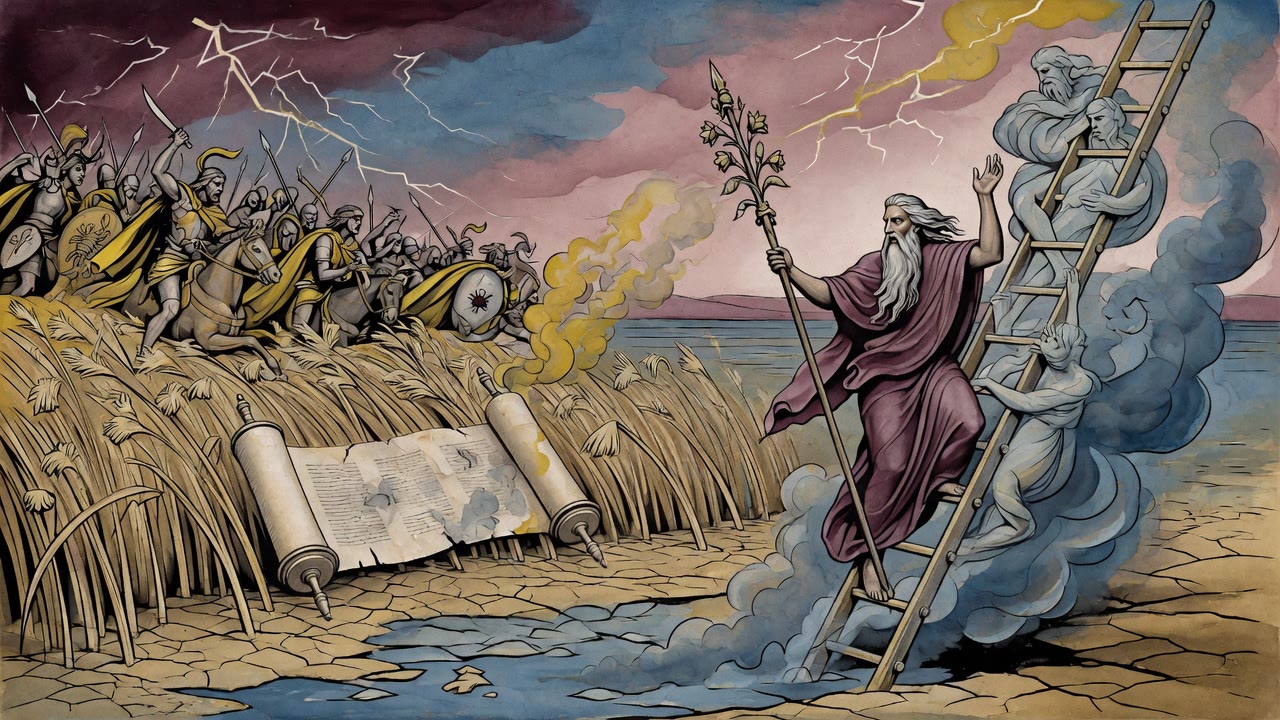
Bilam sees Amalek and sings destruction over him (Numbers 24:20). When his eye turns toward Yitro's line, the song changes. A hunter traps one bird, then freezes when another lands on a royal statue. Harm the bird and the statue scars. Harm the statue and the king answers.
Yitro had flown to a protected place. "Mighty is your dwelling" (Numbers 24:21) hangs over the one who fled into Israel's God. Amalek's end is ash. Yitro's end is a tent near Moses, advice offered without a whip in the hand, hands that once drew maps of oppression now sketching courts that would spare the weak from standing all day in the heat.
The same desert held both fates. One man stayed the enemy and was marked for blotting. One man left the table of advice and lived long enough to kiss his daughter and greet the man who split the sea.
Bilam's mouth, always dangerous, becomes a witness he never meant to be. Doom for the one who would not turn. Shelter for the one who did.
Dark Outside, Song Inside
After the sea, Israel sings and then learns to name its own face. "I am black but comely" (Song of Songs 1:5), dark in deeds, fair in the deeds of the ancestors. The nation that just watched chariots drown still carries soot from Egypt and gold from freewill offerings in the same pack.
Yitro arrives into that doubled people. He has been dark with old counsel. He comes seeking the comeliness of a God who breaks the cynic and leaves a door for the one who turns. Torah scholars in the same telling look rough as Kedar's tents on the outside and hold whole libraries within. Yitro's skin still smells of Midian and palace smoke. Inside him a new allegiance has already begun to stack verses he has not yet heard sung.
He will sit with Moses. He will watch the people throng for judgment from morning until the light fails. He will speak a practical mercy that rearranges the courts so one man does not collapse under every quarrel. That speech is later. First there is only the hearing, the leaving, the statue that cannot be shot.
Amalek's name thins on the wind that first found Yitro. Yitro's feet thicken with dust on the road to the mountain of God. The court that once held two advisors keeps only the memory of the one who would not turn, and the sand does the rest of the erasing.
← All myths