Israel Waded to Their Noses and Called Themselves Dark yet Comely
God detours Israel from the Philistine road. At the sea they enter to their noses, pluck fruit from water walls, and sing as dark yet comely.
Table of Contents
 Click for full size
Not by the Philistine Road
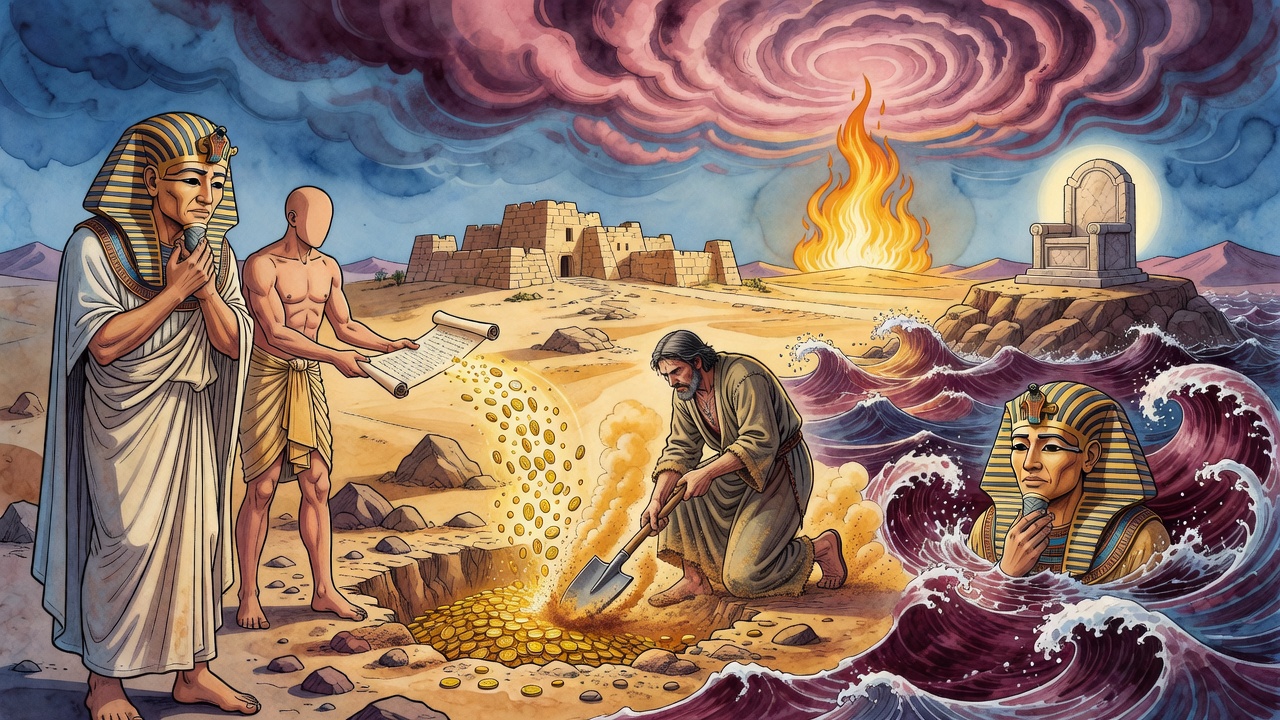
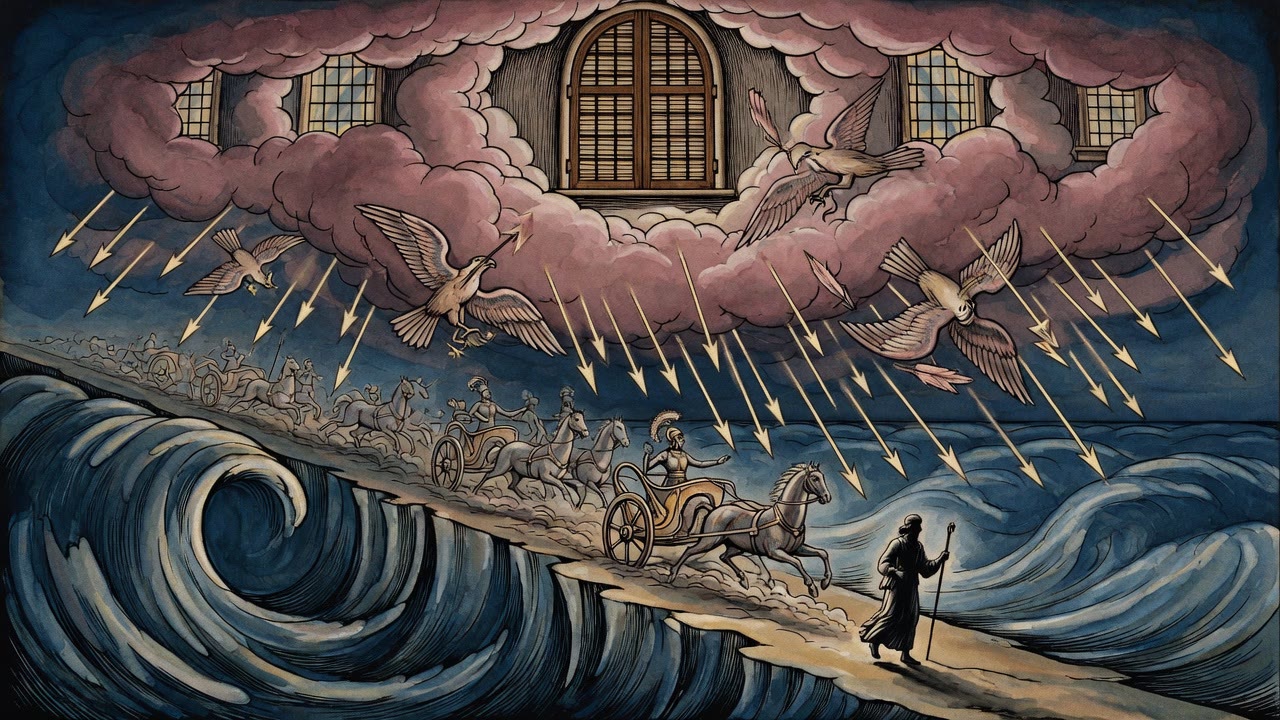
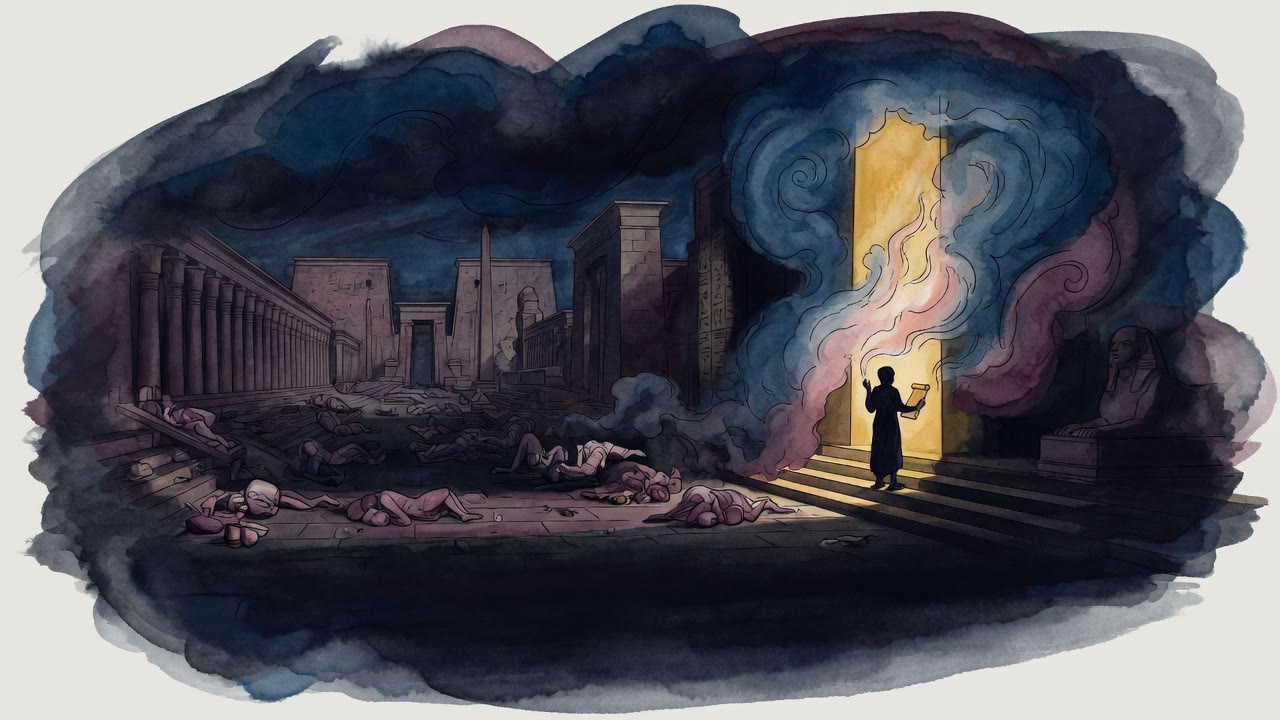
God did not lead them by the way of the land of the Philistines, though that was near. Rabbi Shimon ben Lakish offers a hard analogy. A king's son is kidnapped and enslaved. The king rescues him. That is not enough until he enslaves the kidnappers as they enslaved his son. Joy was not complete until He tossed Pharaoh and his army into the sea.
Rabbi Yehoshua ben Levi offers another image. A king has twelve sons and only ten estates. He waits until he acquires two more. Heaven knew a straight march would leave the tribes short of space and full of strife. The detour was design.
The long road existed so the sea could finish what the palace had begun, and so the inheritance could be large enough for twelve names without civil war over borders.
Up to Their Noses
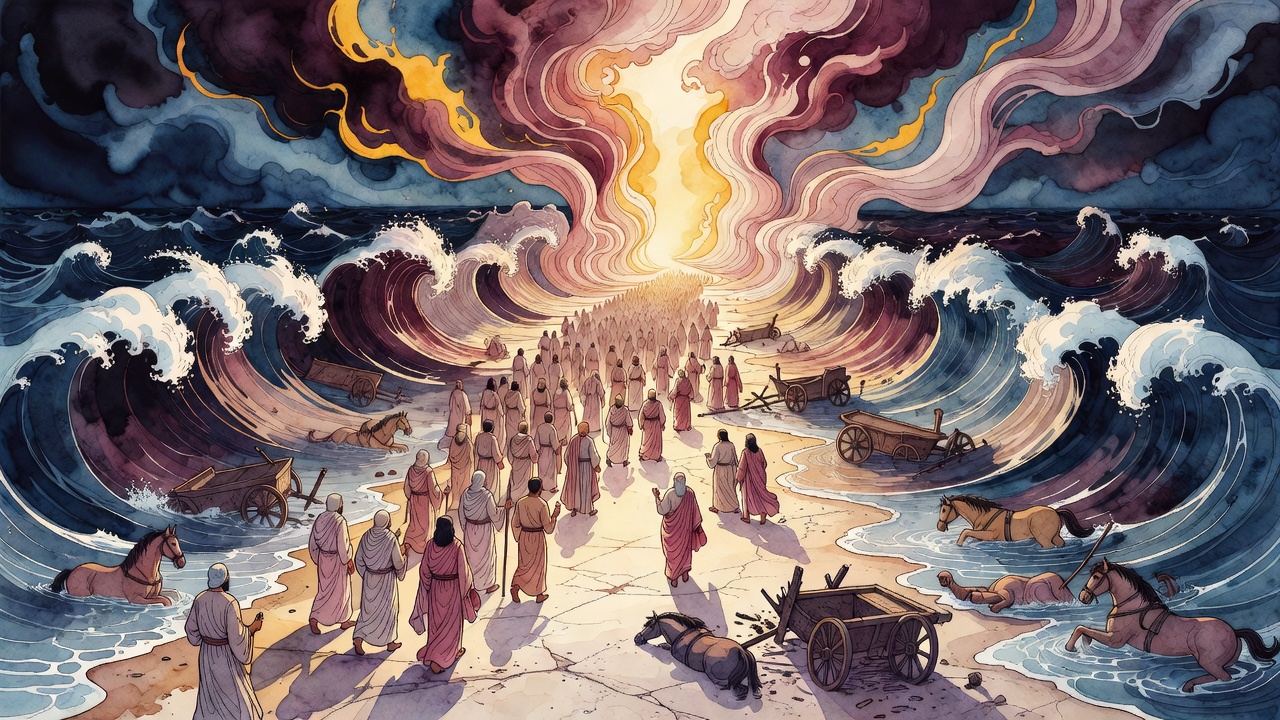
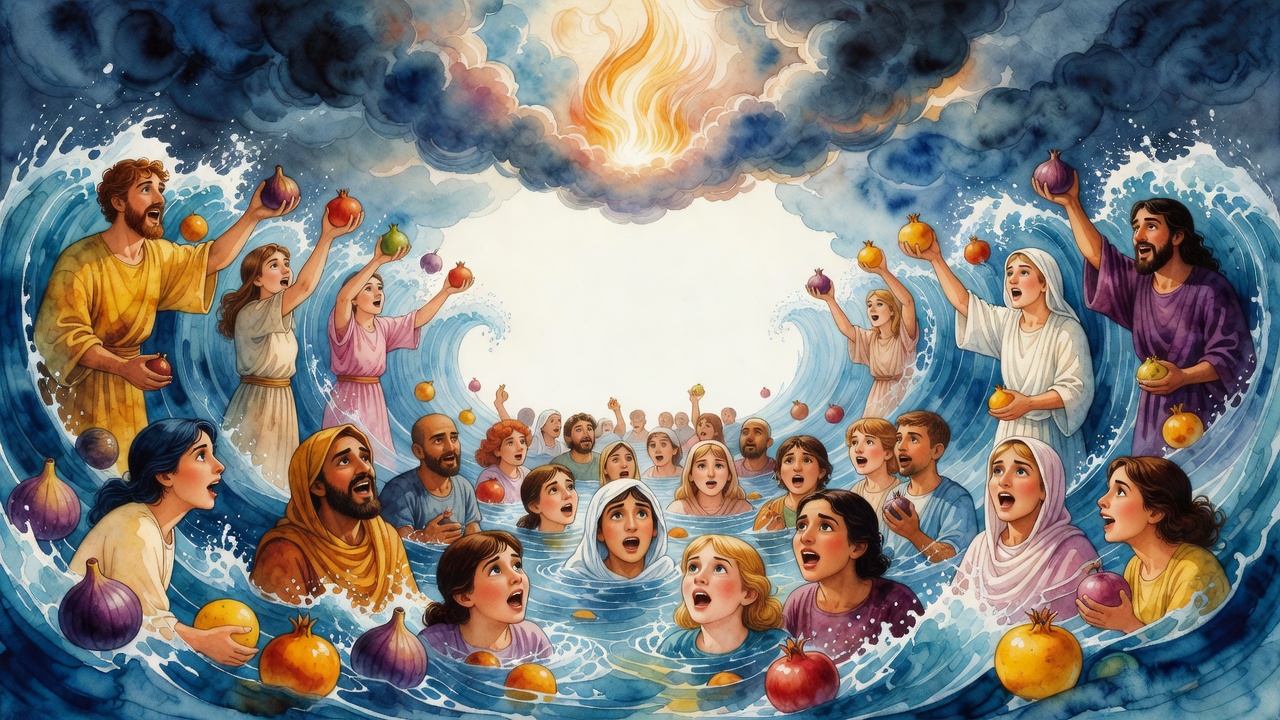
Were they already on dry ground when the walls stood, or still in the midst of the sea? The Midrash answers with commitment. They went in until the water reached their noses. Only then did it become dry land under their feet.
Rabbi Nehorai paints a mother with a crying baby. She plucks an apple or a pomegranate from the wall of water and gives it to the child. "He led them through the depths, as through the wilderness." The sea was already a table.
Dry ground was not the starting point. Trust wet to the nostrils was. Miracle answers feet that enter, not feet that wait for a dry path first.
I Am Dark but Comely
Then Moses and the children of Israel sang. The rabbis hear the Song of Songs. "I am black but comely, daughters of Jerusalem." The congregation declares, "I am black in my actions, but comely in the actions of my ancestors."
Black with the failures of Egypt's long night. Comely with the merit of the house that still had names. The tents of Kedar are ugly outside and pleasant within. Israel claims that double surface after the water closes over the chariots.
Do not read only "daughters of Jerusalem." Read also "builders of Jerusalem," the courts that will fortify the city. The song looks past the shoreline to a people who will build what they have been saved to become.
From Detour to Song
The Philistine road would have been faster and emptier of miracles. Heaven chose the longer path that drowned an army and forced a nation into the water before it dried.
When the song rises, it rises from people who went in to their noses, watched an empire sink, and admitted both their stain and their inheritance in one line.
Dark. Beautiful. Wet. Dry. Free. The detour that looked like delay was the only road that could hold all of those words at once.
The near road would have saved time and cost them justice, fruit in the walls, and the honesty of a song that admits darkness while claiming ancestral beauty. Heaven chose the long book of the sea so all of those goods could ride in one crossing.
Nose-deep trust, then dry ground. Empire sunk, then double speech. Detour becomes birth when the Philistine coast is refused and the deep road is taken with a baby still crying for fruit only a miracle wall can give.
Twelve tribes would need space later. One drowned army would need a sea now. One singing nation would need the honesty to say they are both black and comely before the next step toward a land not yet fully measured.
← All myths