Retold in our words. Read the original at the link below.The Minor Tractates of the Talmud, trans. A. Cohen, Soncino Press (1965) · CC-BY
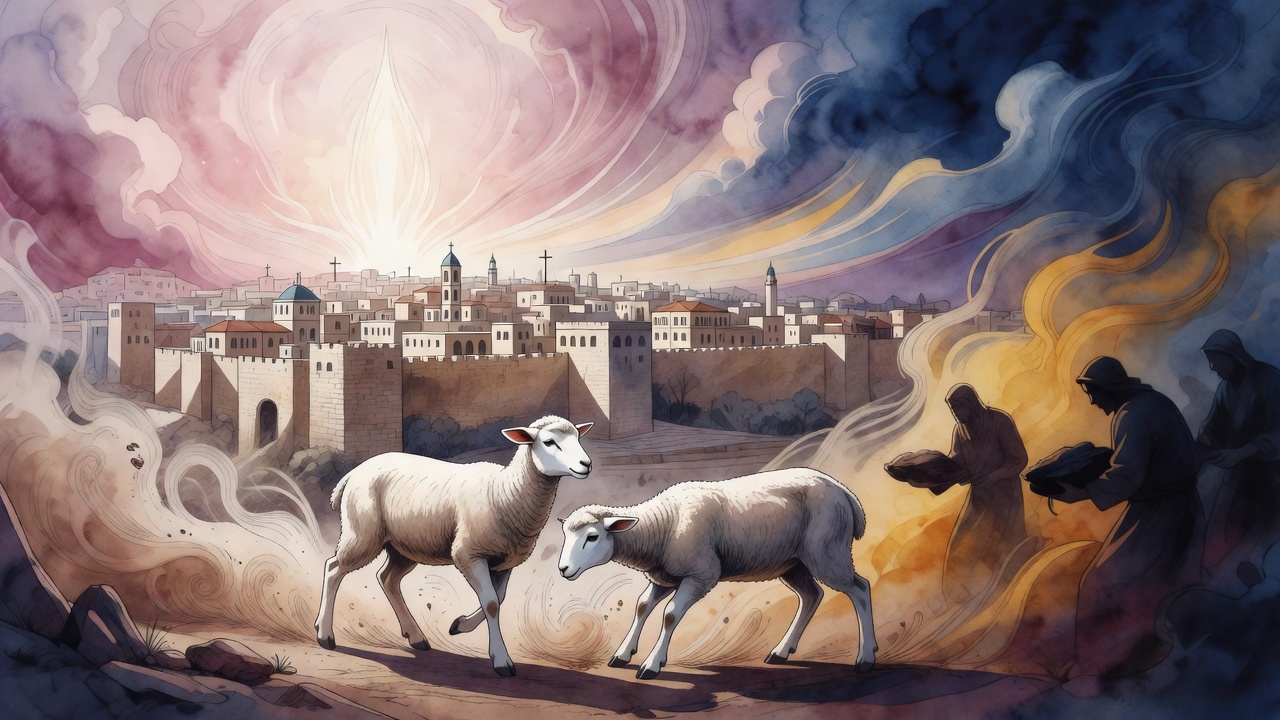
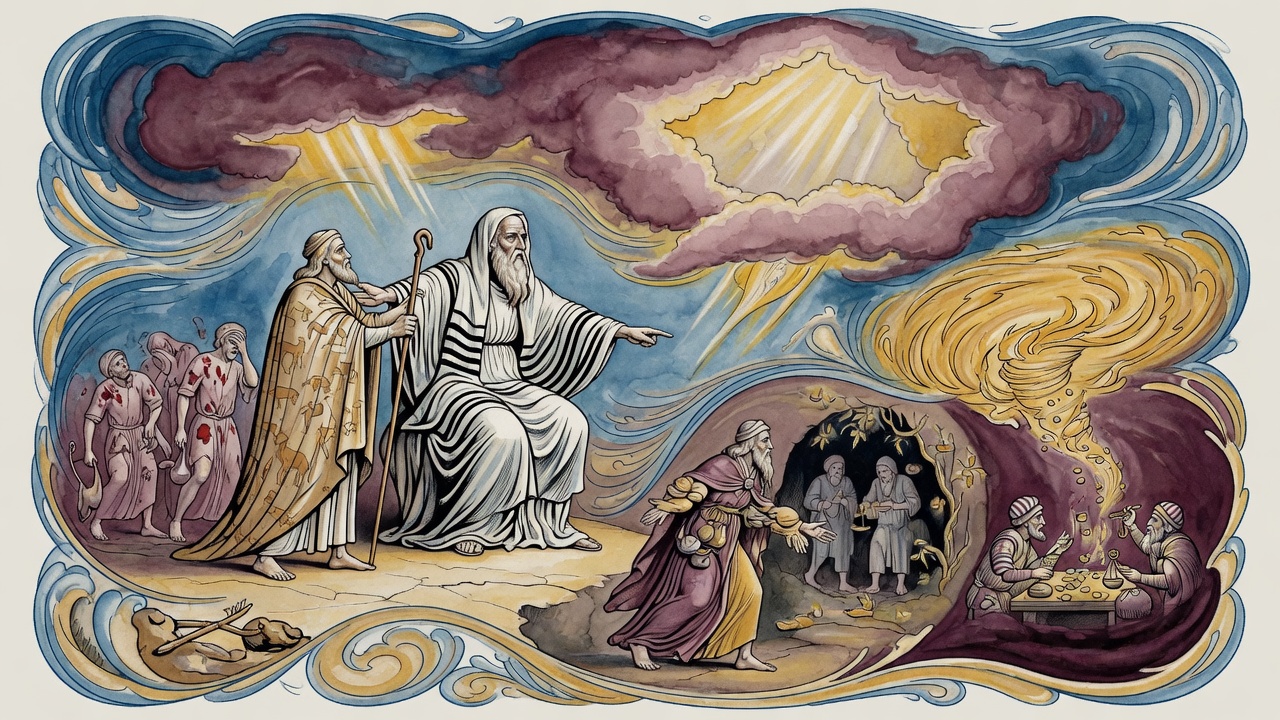
SIMON THE JUST WAS ONE OF THE LAST SURVIVORS OF THE GREAT ASSEMBLY. HE USED TO SAY: UPON THREE THINGS THE WORLD IS BASED: UPON THE TORAH, UPON THE TEMPLE SERVICE, AND UPON THE PRACTICE OF LOVINGKINDNESS.UPON THE TORAH, how is this? It states, For I desire mercy, and not sacrifice, and the knowledge of God rather than burnt-offerings.1Hos. 6, 6. Hence one may infer that of all sacrifices the burnt-offering is the most acceptable since it is entirely consumed by fire, as it is stated, And the priest shall make the whole smoke on the altar, for a burnt-offering.2Lev. 1, 9. In another passage it states, And Samuel took a sucking lamb, and offered it for a whole burnt-offering unto the Lord.31 Sam. 7, 9. Samuel’s prayer was immediately answered by God on account of the acceptability of the burnt-offering. Nevertheless, the study of Torah is even more acceptable to the All-present than burnt-offerings, since if a man studies Torah he knows the will of the All-present, as it is stated, Then shalt thou understand the fear of the Lord, and find out the will of God.4Prov. 2, 5. E.V. find the knowledge of God. Hence it follows that when a scholar sits and expounds the Torah in an assembly, Scripture accounts it to him as though he had offered the fat and the blood [of a sacrifice] upon the altar.Should5This and the subsequent passages are inserted here to teach that though the study of the Torah is the highest good, even that may be interrupted for a wedding ceremony or a funeral procession in the circumstances stated here. two scholars be sitting engaged in the study of the Torah, and a bridal procession or a cortège passes by them, if there are sufficient people present to attend to the needs of the occasion,6As to what is considered sufficient, cf. Keth. 17a (Sonc. ed. p. 95). let them not interrupt their studies; otherwise it is their duty to rise and cheer7A rare word from the root shanan, ‘to repeat a thing’, and hence ‘ to ac claim’ or ‘applaud repeatedly’. Cf. Jastrow s.v. and the next note but one. and applaud the bride or accompany the dead to the grave.
It once happened that R. Judah b. Ilai was sitting and lecturing to his disciples when a bride passed before him. At once he took in his hand what was usual for the occasion,8i.e. myrtle branches. The text is uncertain, and GRA reads: ‘as there were not sufficient people for her needs’. and cheered9In the parallel passage in Midrash (rabbinic interpretive commentary) Haggadol, ed. Schechter, p. 82, the word is not meshannen (var. meshannenen) but mesha’anen from a root sha‘an ‘to shake, wave about’. The text there reads: ‘He took in his hand a myrtle branch and waved it until the bride had passed’. the bride until she had passed by.
On another occasion while R. Judah b. Ilai was sitting and lecturing to his disciples, a bride passed before him. ‘What was that?’ he asked, and they replied, ‘A bridal party’. He said to them, ‘My sons, arise and attend to the bride, for so we find that the Holy One, blessed be He, attended to a bride, as it is stated, And the Lord God built up the rib.10Gen. 2, 22; so the text lit. And if He attended to a bride, how much more should we do so!’ Where do we find that the Holy One, blessed be He, attended to a bride? For it is stated, And the Lord God built up the rib; and in coastal towns a bride is referred to as ben’itha.11i.e. ‘with hair plaited’. The Talmud, Ber. 61a (Sonc. ed. p. 382), Shab. 95a (Sonc. ed. p. 454), connects the Heb. root for ‘build’ (banah) with binyatha, a word used in the coastal towns for ‘plaits’, and explains that God plaited Eve’s hair. Hence we learn that the Holy One, blessed be He, equipped Eve, adorned her as a bride and conducted her to Adam, as it is stated, And He brought her unto Adam.12Gen. ibid.On one occasion only did the Holy One, blessed be He, act as a groomsman to man; thereafter a man provides his own groomsman, as it is stated, Bone of my bone, and flesh of my flesh.13ibid. 23. On one occasion only was the wife formed out of the man;14lit. ‘was Eve taken from Adam’. thereafter a man takes the daughter of his fellow to wife.
UPON THE TEMPLE SERVICE, how is this? As long as the Temple Service continued, the world was a source of blessing to its inhabitants and the rains fell [20a] in their seasons, as it is stated, To love the Lord your God, and to serve Him with all your heart and with all your soul, that I will give the rain of your land in its season, the former rain and the latter rain…. And I will give grass in thy fields for thy cattle.15Deut. 11, 13-15. But when the Temple Service ceased, the world was no longer a source of blessing to its inhabitants and the rains did not fall in their season, as it is stated, Take heed to yourselves, lest your heart be deceived … and He shut up the heaven, so that there shall be no rain.16ibid. 16f. And it also declares in the Book of Haggai, I pray you, consider from this day and forward, before a stone was laid upon a stone in the temple of the Lord, through all that time, when one came to a heap of twenty measures, there were but ten; when one came to the winevat to draw out fifty measures, there were but twenty.17Hag. 2, 15f. Why does not the verse also state in regard to the winevat ‘to draw out twenty measures, there were but ten’ as it does in regard to the wheat? Because the winevat is a significant omen, more so than wheat, thus teaching you that whenever the yield of wine is affected it is a bad omen for the whole year. [At that time] Israel said to the Holy One, blessed be He, ‘Sovereign of the universe! Why hast Thou done this to us?’ And the Divine Spirit replied, ‘Ye looked for much, and, lo, it came to little … Because of My house that lieth waste, while ye run every man for his own house.18ibid. I, 9. But if you will devote yourselves to the service of the Temple, I will bless you as formerly, as it is stated, Consider, I pray you … from the four-and-twentieth day of the ninth month, even from the day that the foundation of the Lord’s temple was laid … Is the seed yet in the barn? Yea, the vine, and the fig-tree, and the pomegranate, and the olive-tree hath not brought forth, from this day will I bless you’.19ibid. II, 18f. Hence you learn that no service is more precious to the Holy One, blessed be He, than the Temple Service.
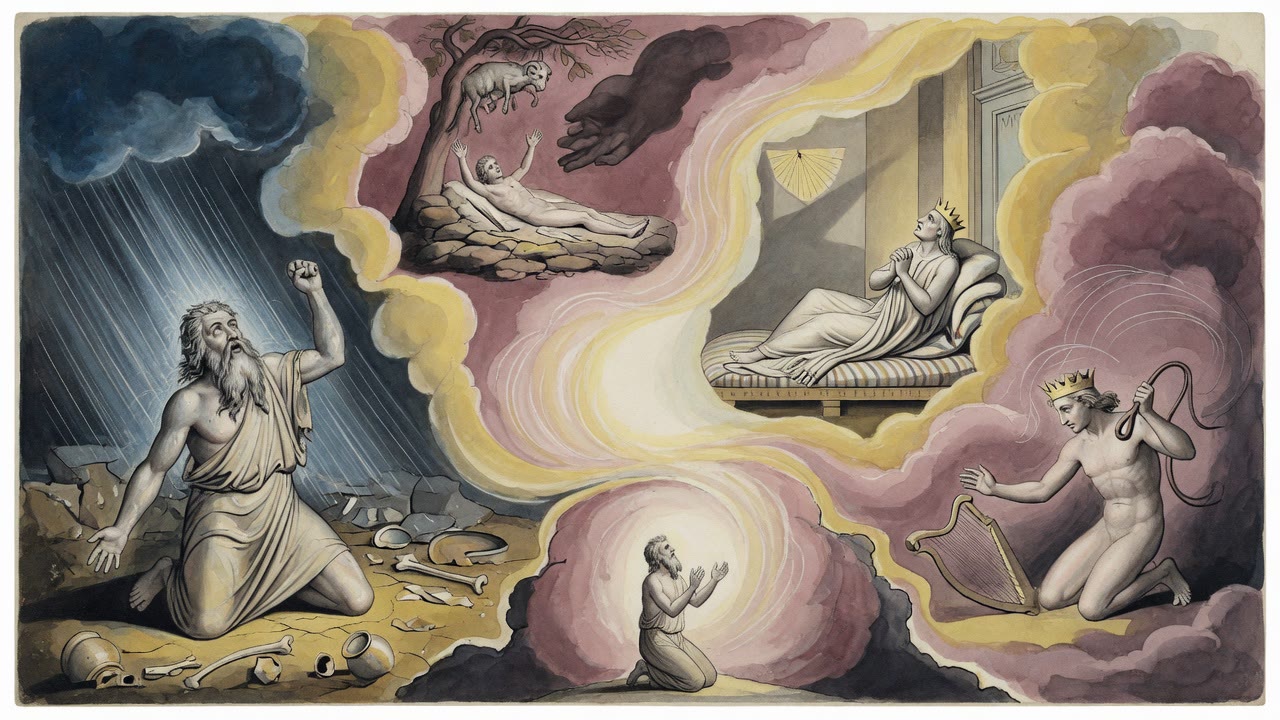
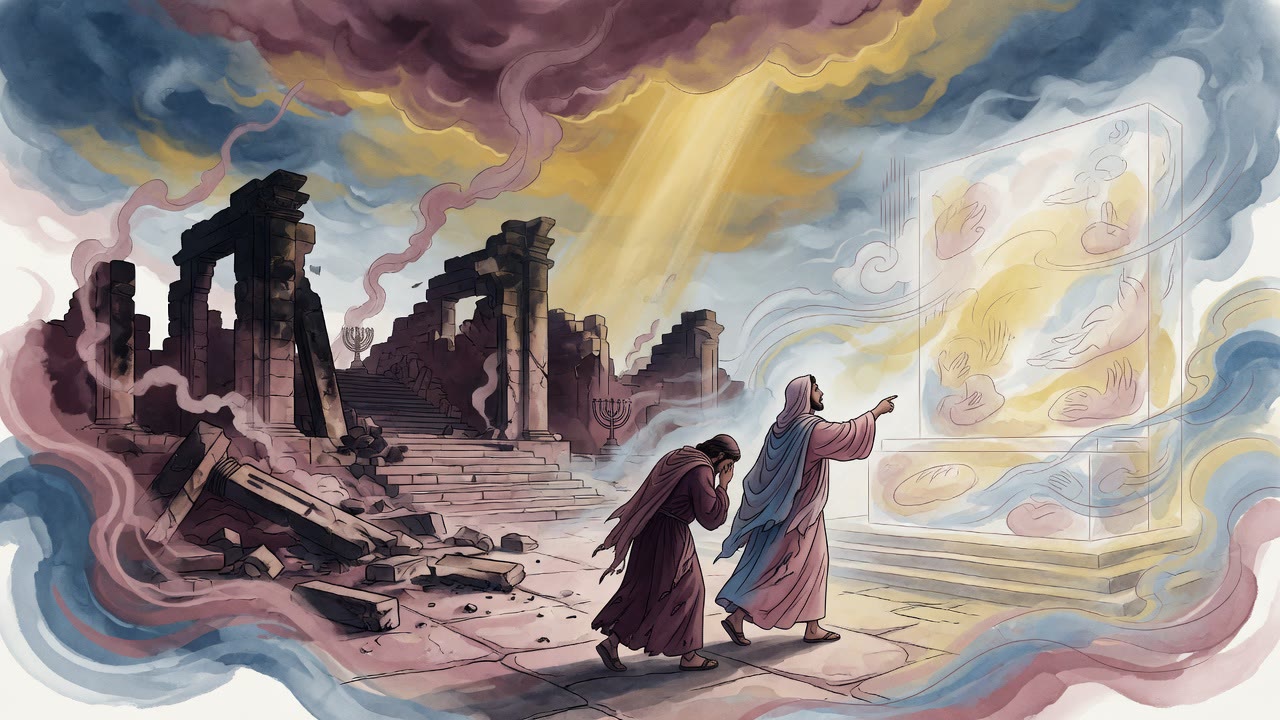
UPON THE PRACTICE OF LOVINGKINDNESS, how is this? Scripture states, I desire lovingkindness and not sacrifice.20Hos. 6, 6. E.V. I desire mercy. In the beginning the world was created by lovingkindness alone, as it is stated, For I have said: The world is built by lovingkindness; Thou dost establish the heavens with Thy faithfulness.21Ps. 89, 3. E.V. For ever is mercy built; in the very heavens Thou dost establish Thy faithfulness.It happened once that Rabban Joḥanan b. Zakkai was coming out of Jerusalem, followed by R. Joshua, and he beheld the Temple in ruins. ‘Woe to us,’ cried R. Joshua, ‘for this house that lies in ruins, the place where atonement was made for the sins of Israel!’ Rabban Joḥanan said to him, ‘My son, be not grieved, for we have another means of atonement which is as effective, and that is, the practice of lovingkindness, as it is stated, For I desire lovingkindness and not sacrifice’. And so we find it with Daniel, the man greatly beloved, who devoted himself to acts of lovingkindness. What were the acts of lovingkindness to which Daniel devoted himself? If you say that he offered burnt-offerings and peace-offerings in Babylon, had it not been previously ordained, Take heed to thyself that thou offer not thy burnt-offerings in every place that thou seest; but in the place which the Lord shall choose in one of thy tribes, there thou shalt offer thy burnt-offerings.22Deut. 12, 13f. What, then, were the acts of lovingkindness to which he devoted himself? He provided for the bride and made her to rejoice, he attended the dead to the grave, he gave alms to the poor, and prayed three times daily, and his prayer was accepted with favour, as it is stated, And when Daniel knew that the writing was signed, he went into his house, now his windows were open in his upper chamber toward Jerusalem. And he kneeled upon his knees three times a day, and prayed, and gave thanks before his God, as he did aforetime.23Dan. 6, 11.When24This passage is quoted here to indicate the active steps taken by Rabban Joḥanan b. Zakkai to preserve Judaism although the Temple was destroyed. Vespasian came to destroy Jerusalem, he proclaimed [to its inhabitants], ‘Fools, why do you seek to destroy this city and burn the Temple? What do I demand of you? Merely that you deliver to me one bow or one arrow25A token of submission. and then I will depart from you’. They answered him, ‘As we went forth against your two predecessors26The allusion is uncertain. The version given here differs in many respects from other passages in Rabbinic literature relating to Vespasian; cf. Giṭ. 56b (Sonc. ed. p. 258). [S. Zeitlin, Megillat Taanit, p. 104, writes: “The two former generals were undoubtedly Florus and Cestius”, whose armies were defeated in 66 C.E. but the generals were not killed by the Jews.] and slew them, so we will go out against you and slay you’. When Rabban Joḥanan b. Zakkai heard this, he sent for the men of Jerusalem and said to them, ‘My sons, why would you destroy this city and burn the Temple? What does he demand of you? Merely one bow or one arrow, and then he will depart from you’. They answered him, ‘As we went forth against his two predecessors and slew them, so we will go out against him and slay him’.Now Vespasian had some men of his resident [within and] close to the walls of Jerusalem, and whatever they heard they wrote upon an arrow which they shot beyond the wall. [In this manner] they reported that Rabban Joḥanan b. Zakkai was among Caesar’s friends. So Rabban Joḥanan b. Zakkai appealed to the men of Jerusalem. After he had pleaded with them for several days27lit. ‘one day and two and three days’. and they would not agree with him, he sent for his disciples, R. Eliezer and R. Joshua, and said to them, ‘My sons, arise and carry me forth from here. Make a coffin for me and I will lie in it’. [They did so, and] R. Eliezer took hold of it at the head and R. Joshua at the foot, and they carried him until sunset when they arrived at the gates of Jerusalem. The gatekeepers asked, ‘What is this?’ They replied, ‘A dead man; do you not know that a corpse may not be kept overnight in Jerusalem?’28Cf. below XXXV, 2, p. 171. They said, ‘If it is a corpse, carry it out’. They carried it out (and bore it until sunset)29The words in brackets are clearly to be deleted. when they arrived before Vespasian, opened the coffin and [Rabban Joḥanan] stood before him. He asked, ‘You are Rabban Joḥanan b. Zakkai? Ask what I shall give you’. He replied, ‘I ask for nothing but Jabneh whither I may go and teach my disciples, where I can institute prayers,30Or, ‘the house of prayer’. A variant gives the curious reading: ‘the precept of tefillin (phylacteries)’. and observe all the commandments prescribed in the Torah’. He said to him, ‘Go and do all that you wish to perform’. Rabban Joḥanan then said, ‘May I be permitted to say a word to you?’ ‘Speak,’ he said. Rabban Joḥanan then said, ‘You are about to become Emperor’. ‘How do you know this?’ he asked, and Rabban Joḥanan replied, ‘There is a tradition with us that the Temple will not be delivered into the hand of a common soldier but to a king, as it is stated, And He shall cut down the thickets of the forest with iron, and Lebanon shall fall by a mighty one’.31Is. 10, 34. Cf. Giḳ. loc. cit. where Lebanon is identified with the Temple and mighty one is applied to a king. [In Jewish War III, viii, 9 Josephus relates that he made the same prediction to Vespasian.] It is related that a few days had not elapsed before there came to him a despatch32Or, ‘two deputies’; so Rashi in Ta‘an. 18b. [This interpretation is accepted by Krauss, Lehnwörter, p. 201.] from his city [Rome], informing him that Caesar had died, and he had been elected Emperor. They brought to him a battering-ram which he directed33Reading wesamah as suggested by GRA. The word in V, wetifa’, is apparently an abbreviation which has so far defied satisfactory explanation. towards the wall of Jerusalem. Then they brought to him logs of cedar which he inserted in the battering-ram and hurled at the wall until he breached it. They then brought to him a pig’s head which he inserted in the battering-ram and shot it on to the sacrificial limbs that were upon the altar. At that moment Jerusalem was captured. Rabban Joḥanan was sitting and anxiously waiting for news, as Eli had sat and waited for news, as it is stated, Lo, Eli sat upon his seat by the wayside, watching; for his heart trembled for the ark of God.341 Sam. 4, 13. As soon as Rabban Joḥanan b. Zakkai heard that Jerusalem was destroyed and the Temple in flames, he rent his clothes, his disciples also rent their clothes, and they wept and cried out and lamented.Scripture states,35Some attach the verse which is cited to the preceding paragraph, thus: ‘and lamented saying, Open thy doors’ etc. Open thy doors, O Lebanon, that the fire may devour thy cedars.36Zech, 11, 1. This alludes to the chief priests who were in the Temple, took their keys in their hands and hurled them upwards, exclaiming before the Holy One, blessed be He, ‘Lord of the universe! here are Thy keys which Thou didst entrust to us, seeing that we have not been faithful treasurers to discharge the duties imposed by the King, and we are no longer worthy to eat from the King’s table’.The patriarchs, Abraham, Isaac and Jacob, and the twelve tribes also wept and cried out and lamented, saying, Wail, O cypress-tree, for the cedar is fallen, because the glorious ones are spoiled; [wail, O ye oaks of Bashan, for the strong forest is come down].37ibid. 2. Wail, O cypress-tree, for the cedar is fallen refers to the Temple; because the glorious ones are spoiled refers to Abraham, Isaac and Jacob and the twelve tribes; wail, O ye oaks of Bashan refers to Moses, Aaron and Miriam; for the strong forest is come down refers to the Holy of Holies. Hark! the wailing of the shepherds, for their glory is spoiled38ibid. 3. refers to David and his son Solomon. Hark! the roaring of young lions, for the thickets of the Jordan are spoiled refers to Elijah and Elisha.
In three things did the Holy One, blessed be He, make human beings to differ one from the other: in voice, in temperament39lit. ‘pleasantness’. and in features.40In the parallel passage in Sanh. 38a (Sonc. ed. p. 240) the text reads: ‘in voice, in appearance, and in mind’. Why in voice? The Holy One, blessed be He, made the voices of men different one from the other; for had He not done so, immorality would have increased in the world, since as soon as a man left his home another might enter and ravish his wife in his own house. Therefore did the Holy One, blessed be He, make men differ from each other in voice, one man’s voice being different from his fellow’s. Why in temperament? The Holy One, blessed be He, made the temperament of men different one from the other; because had He not done so men would be jealous of each other. Therefore did the Holy One, blessed be He, make mankind differ from one another in temperament, one man’s temperament being different from his fellow’s. Why in appearance? The Holy One, blessed be He, made the features of human beings different one from another; because had He not done so, the daughters of Israel would not recognize their husbands nor the husbands their wives. Therefore did the Holy One, blessed be He, make them different in facial features.

 Click for full size