Parshat Vayeshev5 min read

Zebulon Kept Watch While His Brothers Ate

After they threw Joseph in the pit, the brothers sat down to eat. Only Zebulon refused food and kept watch, while Judah blocked a blessing over murder.

Curated by Arthur · Told by Maggid ·
Table of Contents
  1. A Bow-Shot Away from the Cries
  2. Judah Stopped the Blessing
  3. Reuben Came Late to an Empty Pit
  4. The Watch That Could Not Save
Zebulon Kept Watch While His Brothers Ate Click for full size

A Bow-Shot Away from the Cries

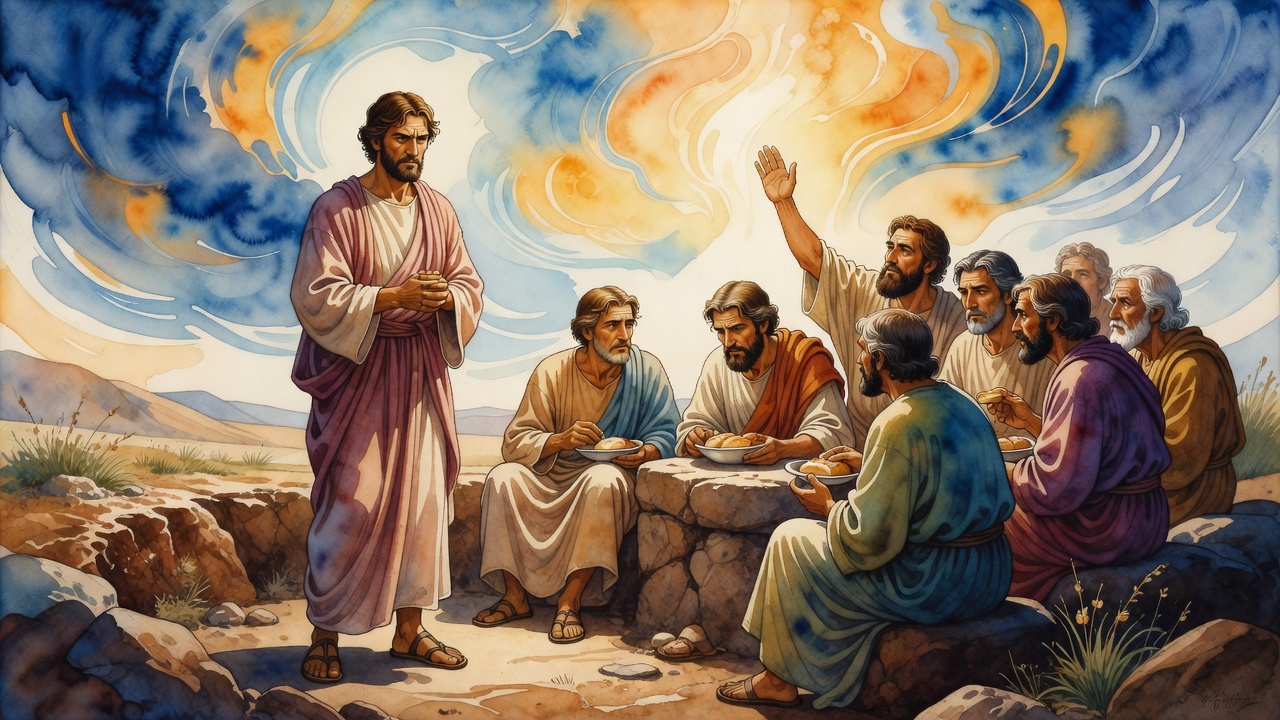
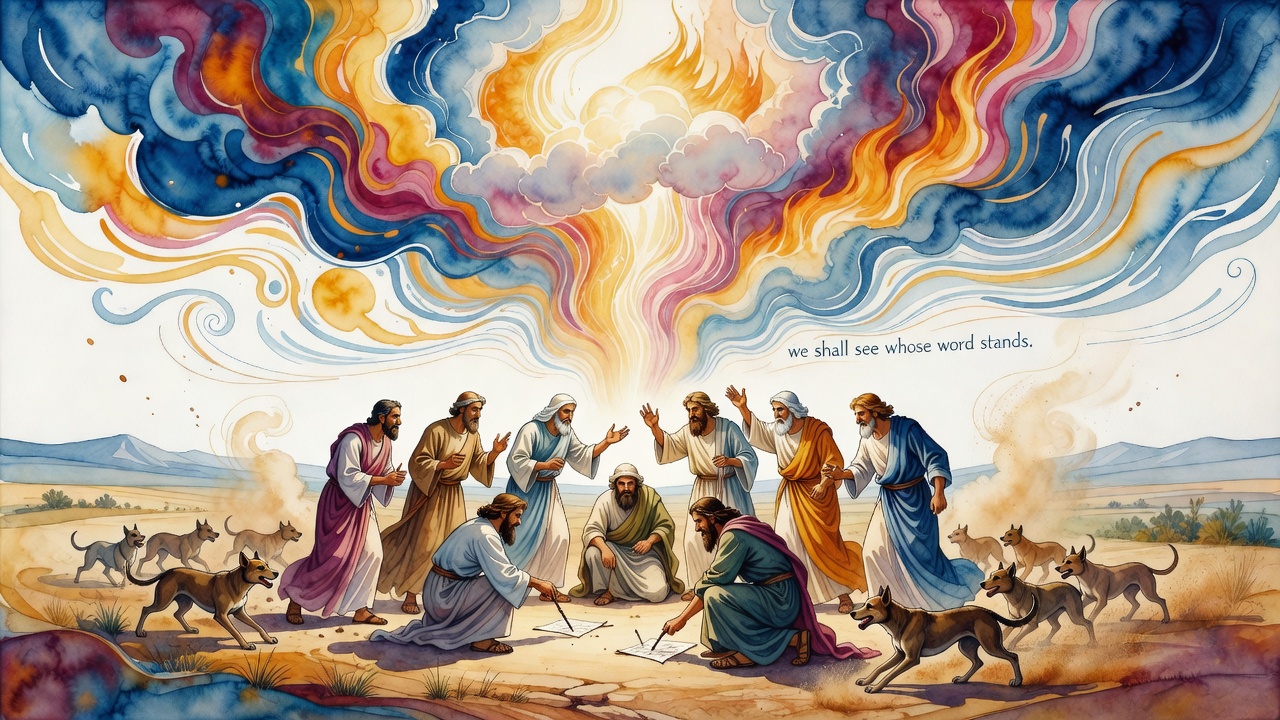
They threw Joseph into the pit and walked a bow-shot away so the crying would thin. Distance is a kind of mercy people invent for themselves when they still want to finish a meal. The coat of many colors was gone from his shoulders. The dreams of sheaves and stars were in the dark with the boy. The brothers sat down to eat as if bread could make a deed ordinary.

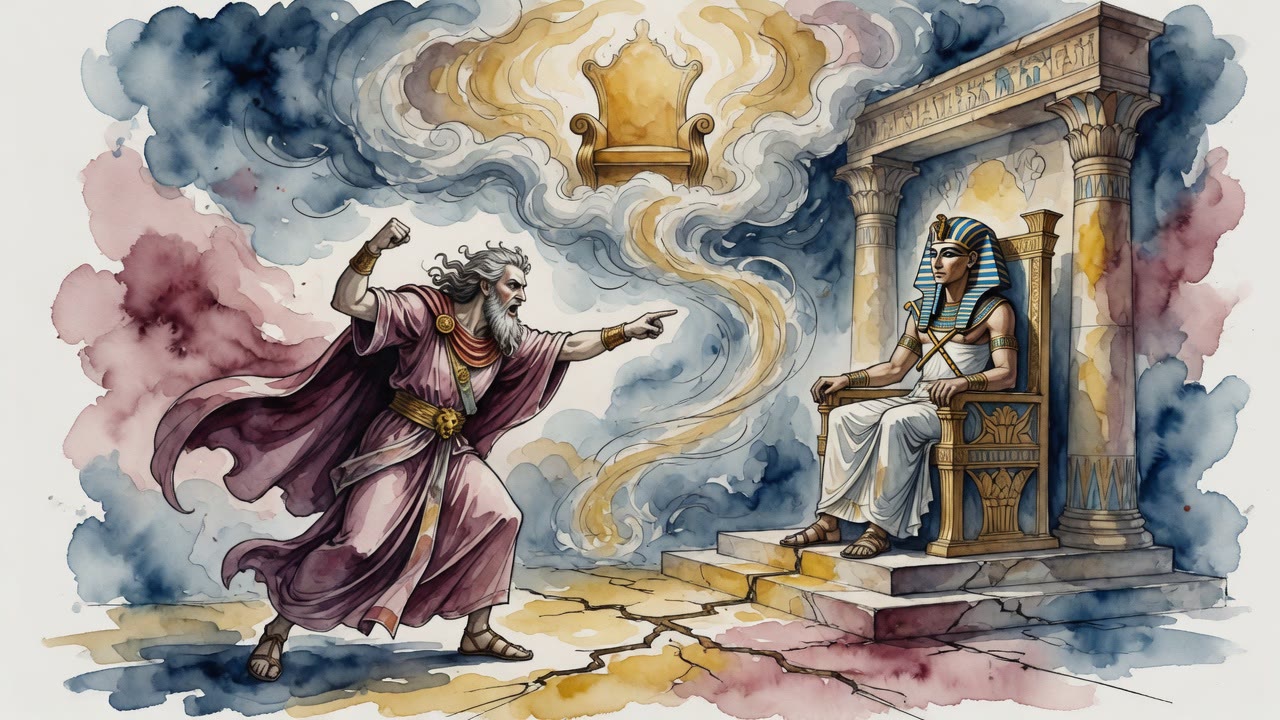
Earlier they had refused those dreams with a double question that heaven, the legends say, turned into prophecy. "Shalt thou reign over us? Or shalt thou have dominion over us?" They meant scorn. The doubled verbs would later fit kings and judges from Joseph's line. At the pit's edge they did not feel like prophets. They felt like men who had finally put a favored brother where favored brothers go when envy matures.

Zebulon could not swallow. For two days and nights he refused food while the others tried to make a feast of their decision. They set him to watch the pit because he was not eating with them anyway. The one who felt the most became the jailer of the one he pitied. He heard the sounds that distance failed to erase.

Judah Stopped the Blessing

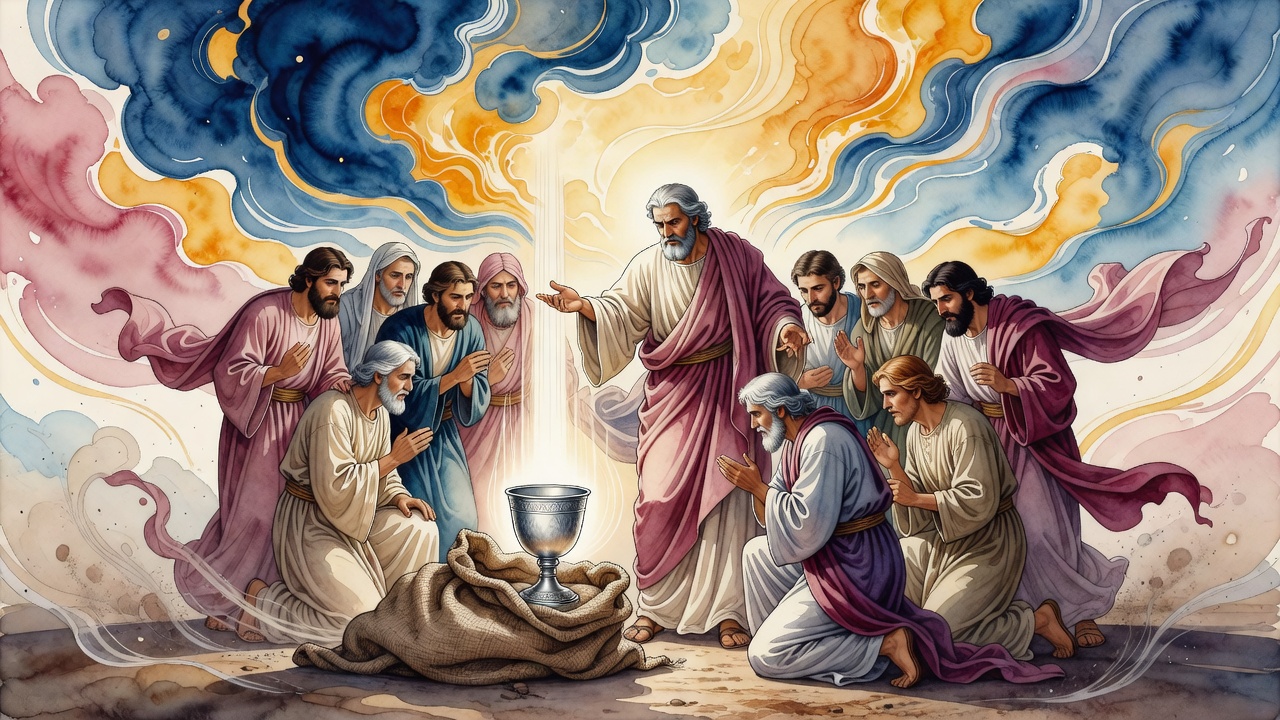
After the meal they reached for birkat hamazon, the blessing after bread, as if heaven were a guest at their picnic of conspiracy. Judah cut the words short. "We are about to take the life of a human being, and yet would bless God? That is not a blessing, that is contemning the Lord." Even malice has a threshold where hypocrisy becomes too loud for a man who still wants his mouth to mean something.

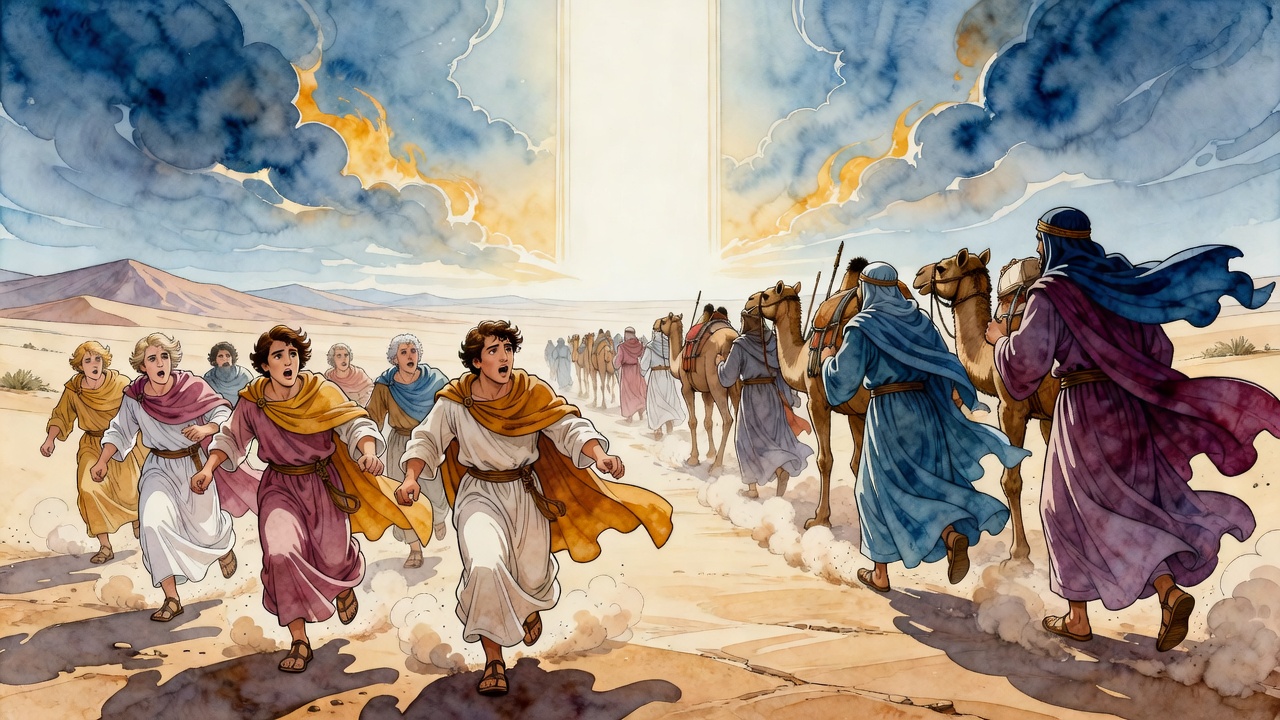
He pointed to a caravan of Ishmaelites on the road to Egypt, dust and bells and the ordinary commerce of a world that did not know a family was choosing a crime. "What profit is it if we slay our brother?" he asked. Sell him. Let foreign hands carry him until he is lost among the nations. The proposal wore the mask of restraint. It was still a sentence of erasure, only slower, only with silver counted at the end.

Simeon and Gad, in Zebulon's worry, were the ones who might still finish the boy with a blade if left alone at the rim. Judah took turns at the watch for that reason too. Partial conscience multiplies guards without multiplying mercy. They protected Joseph from immediate murder so they could complete a more marketable cruelty.

Reuben Came Late to an Empty Pit

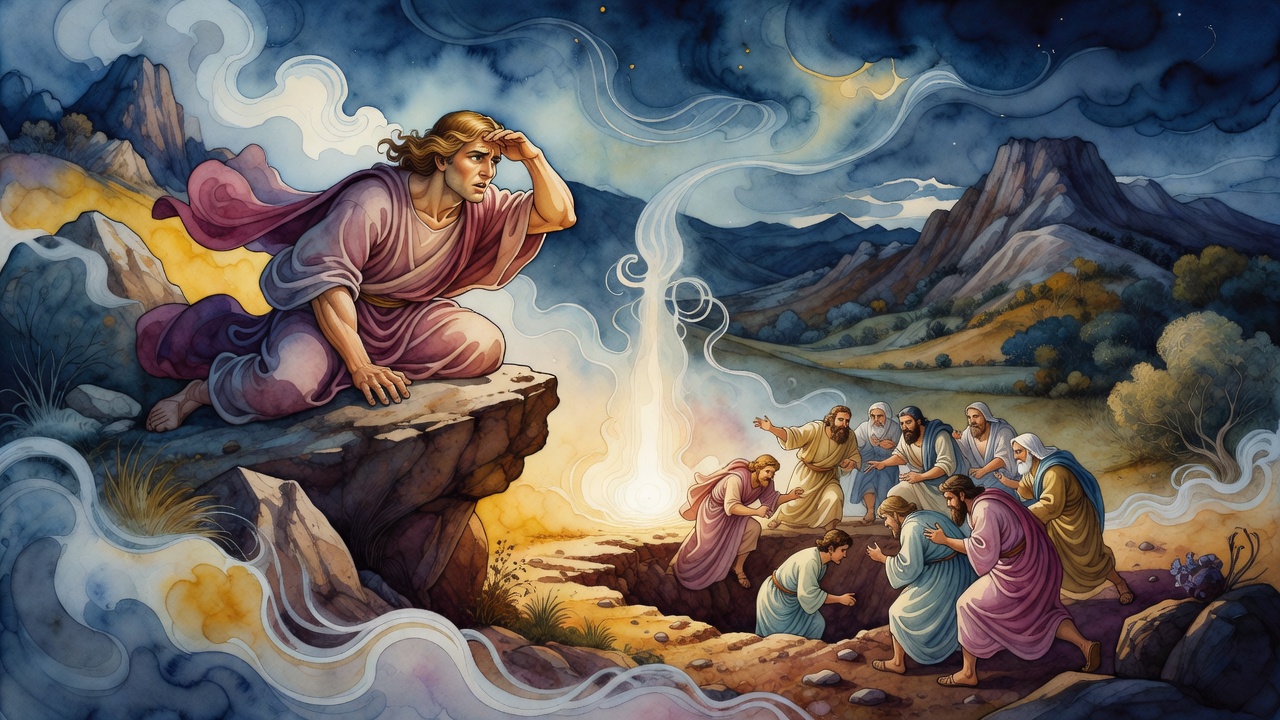
Reuben was not with them when the sale happened. The legends place him in repentance for an earlier wrong against Jacob, studying and praying away from the flock, trying to stitch a tear in father-son honor. He returned to the pit with a secret plan to lift Joseph out and restore him without the others knowing. He stood at the rim and called, "Joseph! Joseph!" Silence answered.

Fear invents snakes and terror deaths when a voice does not come back from the dark. When he learned the Midianite trail was already cold, the eldest brother tore his clothes in a grief that arrived too late to change the merchandise. The caravan had taken the boy. The pit held only air and the smell of what brothers do when dreams offend them.

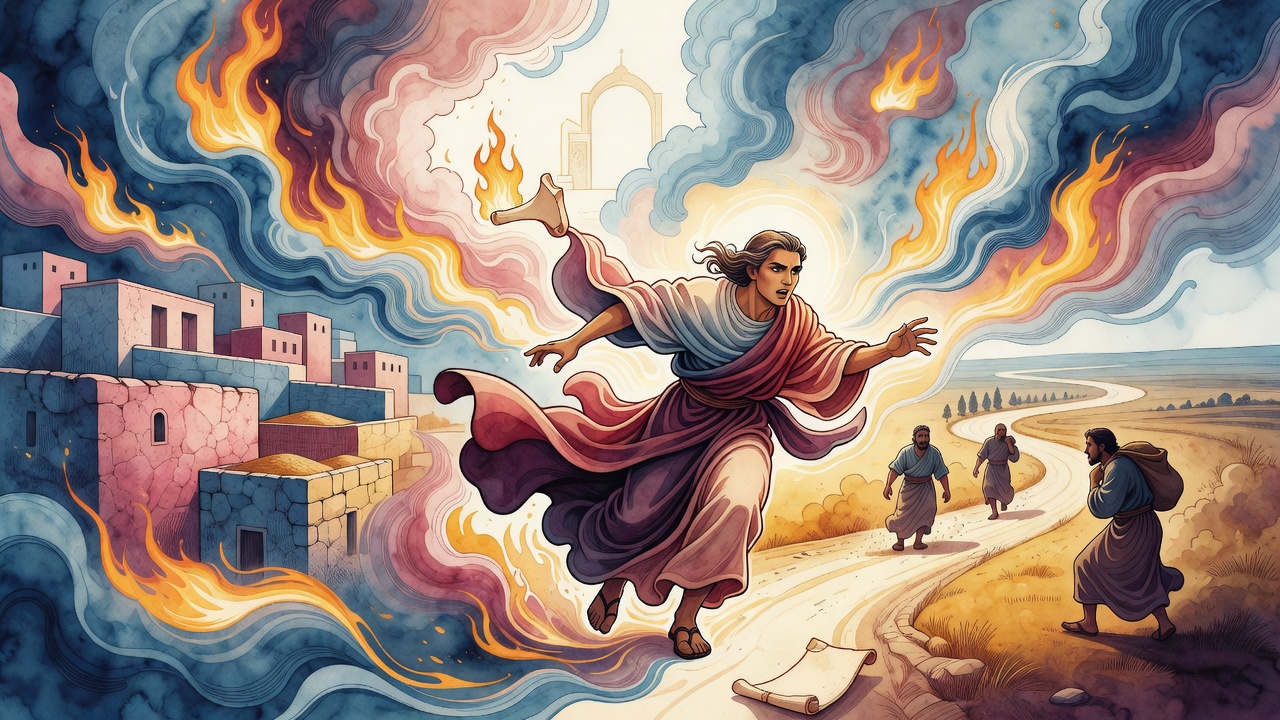
They would later chase the road, the legends say, hoping to ransom him back, a second thought galloping after the first. The caravan was too far. Regret makes poor horses. Reuben's private teshuvah (repentance, the turn back to God) for one sin had opened a window for another, and heaven's timing felt like a trap.

The Watch That Could Not Save

Zebulon had watched. Judah had redirected the murder into a sale. Reuben had meant a rescue. None of them undid the coat dipped in blood that would soon lie to Jacob and turn a father's eyes dark with mourning that lasted years. Pity without power becomes a private weather. Strategy without mercy becomes a market. Repentance that starts after the caravan leaves becomes a lifelong scar.

Years later Egypt would force them to bow, and the dreams would finish their work with grain and accusation and a cup in a sack. On that first day by the pit, all that was left was a full stomach for some, an empty one for Zebulon, and a boy already learning the language of strangers on a road that led south.

The blessing they almost said over bread never rose. The silence after Judah's rebuke was the truest prayer of the afternoon, and even that prayer did not climb down the rope into the dark where Joseph waited for a hand that never came.


← All myths
From the tradition

Sources

4 sources

The texts behind this telling. Some cards carry a translation of the source; others are our own retelling of it, and each card says which. Every card links out to the original.

Legends of the Jews 1:24Legends of the Jews

Retold in our words. Read the original at the link below.The Legends of the Jews by Louis Ginzberg (1909) · Public Domain

The jealousy, the betrayal, the selling into slavery. But what about the moments in between? Were they all heartless?

Well, according to Legends of the Jews, not entirely.

The scene. The brothers, having just tossed young Joseph into that dark, empty pit, are trying to distance themselves from the sound of his cries. They move a "bow-shot's distance" away, attempting to escape the guilt. But one brother, Zebulon, can't quite manage it.

Ginzberg's retelling, drawing from various Midrashic (rabbinic interpretive commentary) sources, paints Zebulon as the only one who showed any real pity. For two long days and nights, he refused to eat. The others feasting, perhaps trying to celebrate their twisted victory, while Zebulon is consumed by grief.

And get this – he was even charged with keeping watch over the pit! His brothers chose him because he wasn't eating with them anyway. Think about the irony. The one brother who felt the most remorse was also the one tasked with ensuring Joseph stayed trapped. What a burden!

But Zebulon wasn't alone in his concern. Judah, too, felt a flicker of responsibility. He worried that Simon and Gad, perhaps the most hot-headed of the brothers, might take things even further and kill Joseph outright. So, Judah also took turns keeping watch, fearing the worst.

Even in the midst of such a terrible act, there were glimmers of conscience, of regret. And that sometimes, the smallest acts of compassion can make all the difference.

Full source
Legends of the Jews 1:25Legends of the Jews

Retold in our words. Read the original at the link below.The Legends of the Jews by Louis Ginzberg (1909) · Public Domain

The brothers were so consumed with malice that they decided to finish their meal before carrying out their deadly plan.

They finished eating, and then, incredibly, they tried to say grace – birkat hamazon, the blessing after meals. But Judah, one of the brothers, stopped them. The tension, the barely concealed hatred, and then Judah’s voice cutting through it all.

“We are about to take the life of a human being, and yet would bless God?” he asked, as recounted in Legends of the Jews. “That is not a blessing, that is contemning the Lord.” It seems even in their darkness, a flicker of conscience remained.

Judah, perhaps motivated by a sliver of guilt or maybe a more practical concern, offered an alternative. "What profit is it if we slay our brother?" he argued. "Rather will the punishment of God descend upon us." He suggests a different path, a path of calculated cruelty rather than outright murder.

He pointed out a traveling company of Ishmaelites passing by, on their way to Egypt. "Come and let us sell him to the Ishmaelites," Judah proposed, "and let not our hand be upon him. The Ishmaelites will take him with them upon their journeyings, and he will be lost among the peoples of the earth." A fate worse than death, perhaps, to be utterly lost and without connection.

Judah even justified their actions with a twisted sense of tradition. "Let us follow the custom of former days, for Canaan, too, the son of Ham, was made a slave for his evil deeds, and so will we do with our brother Joseph." This appeal to precedent, however warped, is a disturbing glimpse into their mindset. They were willing to sell their own brother into slavery, to erase him from their lives and cast him into the unknown, all while clinging to a semblance of moral justification. It's a stark reminder of how easily even family bonds can be shattered by envy and hatred. Was it a genuine desire to avoid bloodshed, or something else entirely?

Full source
Legends of the Jews 1:44Legends of the Jews

Retold in our words. Read the original at the link below.The Legends of the Jews by Louis Ginzberg (1909) · Public Domain

The coat of many colors, the jealousy, the betrayal. But what about those first few hours after that fateful act?

In Legends of the Jews, that amazing compilation of rabbinic tales gathered by Louis Ginzberg, the brothers were almost immediately filled with regret. Can you imagine? One minute they're rid of their troublesome brother, the next, they're chasing after the Midianites who bought him, desperate to undo what they'd done! They wanted to ransom him, buy him back. But alas, their efforts were in vain. The caravan was too far ahead. The die had been cast.

Meanwhile, Reuben, the eldest, was nowhere to be seen during the sale. Where was he? Well that he was deeply involved in teshuvah (repentance), repentance. He was praying, studying Torah, trying to atone for a previous transgression against his father, Jacob. Because of this, he hadn't been present with his brothers, tending the flocks. And so, he missed the whole, terrible event.

Reuben’s absence sets the stage for a dramatic discovery. His first thought was to check the pit. Maybe, just maybe, Joseph was still there. He planned to rescue him secretly, returning him to Jacob without the other brothers knowing. So, he goes to the pit, stands at the edge, and calls out, "Joseph! Joseph!"

Silence.

No answer.

Reuben fears the worst. Maybe Joseph died of fright down there, alone in the dark. Or perhaps a snake bit him. Horrified, he climbs down into the pit, only to find it… empty. Neither living nor dead. Just… gone.

He climbs back out, tears his clothes in mourning, and cries out in anguish, "The lad is not there! What am I going to tell my father if he's dead?" He understands that as the eldest, he will be held responsible.

Then, Reuben returns to his brothers, distraught. Imagine the scene: the guilt-ridden brothers, the devastated eldest son. They confess everything. They tell him how they tried to undo their terrible deed, how they failed.

The immediate aftermath of a terrible decision, the crushing weight of regret, the desperate attempts to make things right, all ultimately falling short. And that even in the darkest of moments, the possibility of teshuvah, of turning back towards the light, always remains. Even if, in this case, it was just a little too late.

Full source
Legends of the Jews 1:11Legends of the Jews

Retold in our words. Read the original at the link below.The Legends of the Jews by Louis Ginzberg (1909) · Public Domain

Dreams not just of success, but of them bowing down to you! You can almost feel the tension in the air, can’t you?

Initially, Joseph’s brothers brush off his dream, unwilling to even entertain the idea. But Joseph, persistent and perhaps a little naive, keeps at it. He presses them, urging them to consider the implications of his vision.

Finally, they respond. But it's not exactly the response Joseph was hoping for. With thinly veiled resentment, they ask, "Shalt thou indeed reign over us? Or shalt thou indeed have dominion over us?" (Genesis 37:8). Ouch.

It sounds like a simple rejection. But according to Legends of the Jews, something deeper is happening here. Ginzberg suggests that God actually placed a prophetic interpretation into their very words! The brothers, in their disbelief and jealousy, unknowingly uttered a prophecy that would come true, not in Joseph's immediate lifetime, but in the generations that followed.

How? Well, the text explains that the "double and emphatic expressions" they used – "shalt thou indeed reign… shalt thou indeed have dominion…" – foreshadowed the greatness that would emerge from Joseph's lineage.

Specifically, Legends of the Jews identifies four figures as fulfillments of this prophecy: Jeroboam and Jehu, two kings, and Joshua and Gideon, two judges. These leaders, all descendants of Joseph, embodied the power and authority hinted at in the brothers' dismissive question.

That even in moments of rejection and doubt, seeds of future greatness can be sown. That words spoken in anger or disbelief can, unknowingly, carry the weight of prophecy.

And what potential for greatness lies dormant, waiting to be unlocked in the generations to come?

Full source