5 min read

Joseph Flees the House Where Zelicah Served Citrons

Egyptian women cut their hands staring at Joseph. Zelicah seizes his garment. The serpent once grasped what was not its own and lost everything.

Curated by Arthur · Told by Maggid ·
Table of Contents
  1. Sold for Four Hundred
  2. Knives and Citrons
  3. The Story She Told
  4. What the Serpent Lost
  5. Hands Off the Portion
Joseph Flees the House Where Zelicah Served Citrons Click for full size

Sold for Four Hundred

The Medanim brought Joseph to Potiphar like a rare tool for sale. Four hundred pieces of silver. Proof from the Ishmaelites that the youth was truly a slave, not a kidnapped freeman who would bring blood-guilt. Potiphar paid. Joseph, eighteen, beautiful-eyed, unlike anyone in Egypt, took the keys of the house until the Lord blessed the Egyptian for Joseph's sake.

Then Zelicah, Potiphar's wife, fixed her soul on him the way a hook fixes in a fish. Daily words. Flattery of hair and eyes and song. Joseph turned each compliment toward the Creator and the grave. Eyes that dazzle Egypt will be horrors in the dust, he said. Words best used for praise should not be spent on a master's wife. "How long will you speak these words?" he asked. "Rise and attend to your domestic affairs." She claimed there was no other work left in the world but him.

Knives and Citrons

Desire made her ill. When the women of Egypt came to visit, she set a banquet and placed a knife and a citron before each guest. Then she had Joseph dressed and walked through the room. The women cut their hands without noticing, eyes locked on the Hebrew, blood mixing with fruit. "What have you done?" Zelicah asked, almost laughing through the lesson. "I gave you citrons and you have cut yourselves. You saw him a moment. I see him every day. How shall I not decline?"

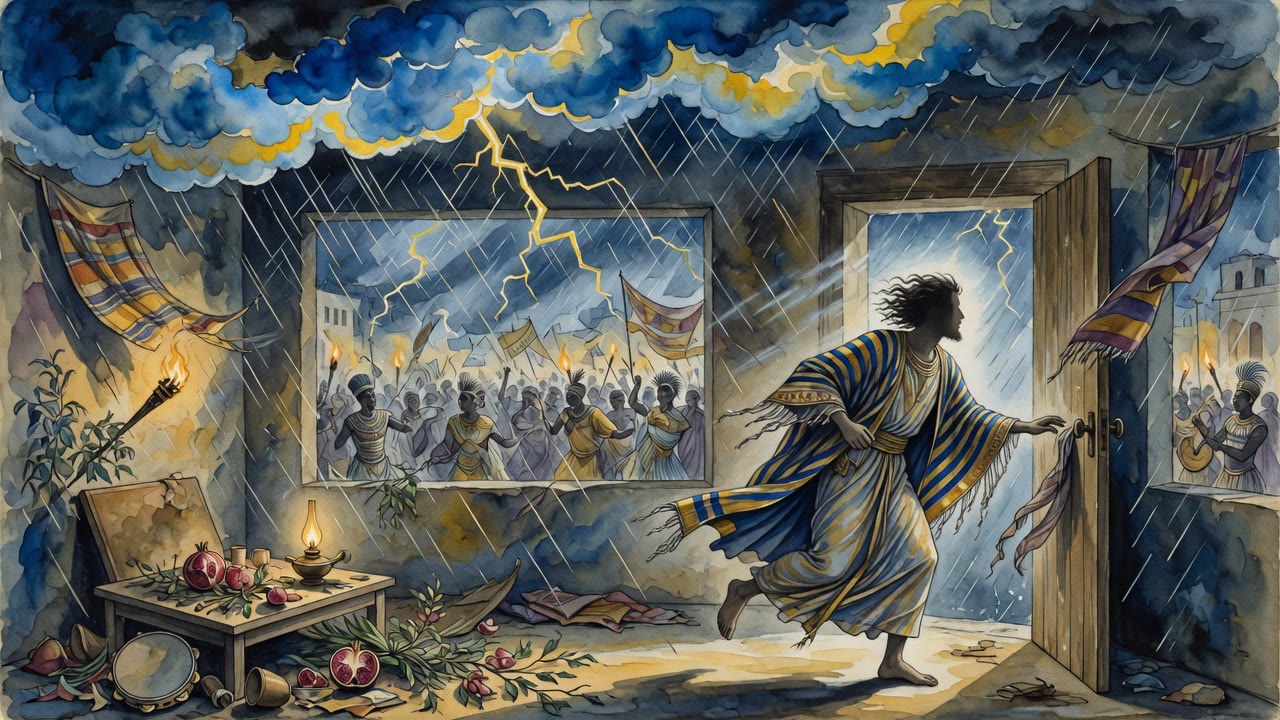
Their advice was simple and poisonous: seize him in secret. On a working day she ambushed him, fell, wept, promised her husband's blindness to the crime. Joseph refused the betrayal of master and of God. On the Nile festival she pretended sickness, perfumed the house, waited in fine garments, seized him as he passed. He fled. The garment tore and stayed in her hand like a trophy that would become a lie.

The Story She Told

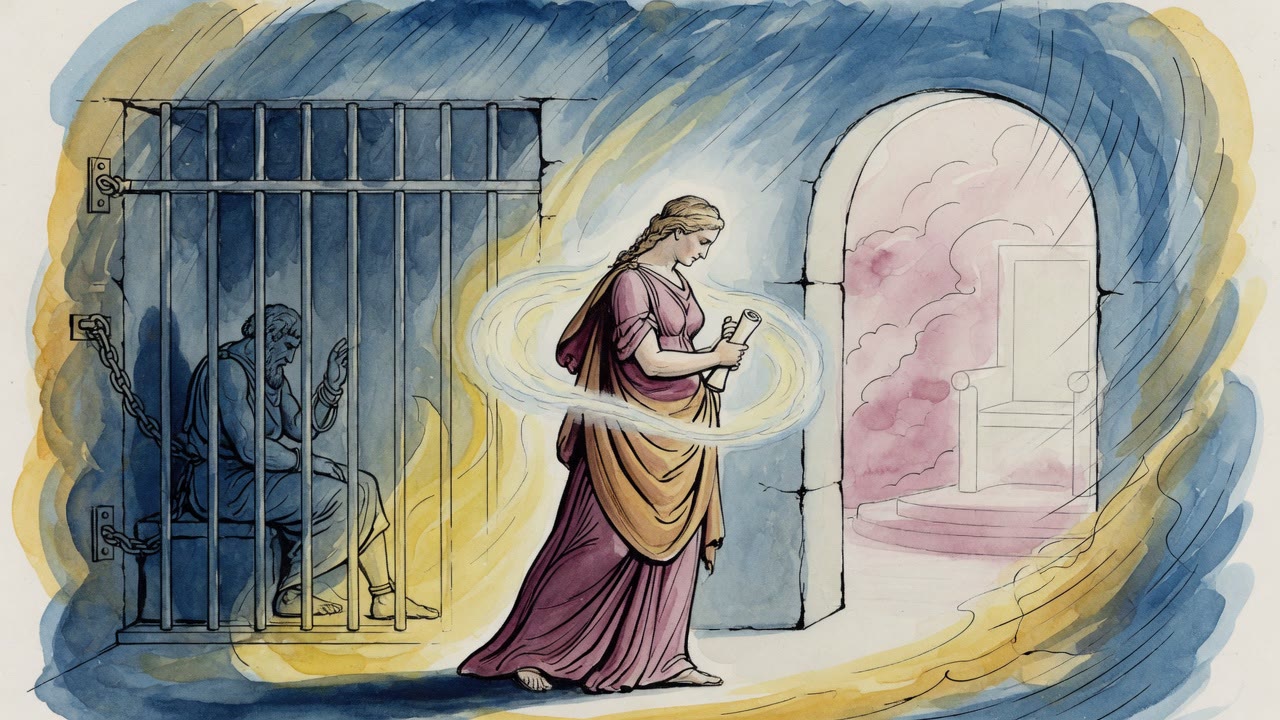
She changed clothes, called the household, inverted the flight into an attack. Potiphar beat Joseph until an eleven-month-old child, in the Book of Jasher's telling, spoke the truth of the room. Priests examined the tear in the garment's front and knew he had been running away, not forcing his way in. Scandal still demanded a prison. Even there Zelicah came daily. Joseph chose the cell over the sin.

In Canaan, Jacob mourned without comfort, not knowing his son was winning a war of eyes and hands in a foreign house. The blessing on Potiphar's estate continued to argue for Joseph even while the legal process failed him. Truth had a witness in an infant's mouth and in the geometry of cloth. Power still preferred a quiet jail to a public shame for the captain's wife.

What the Serpent Lost

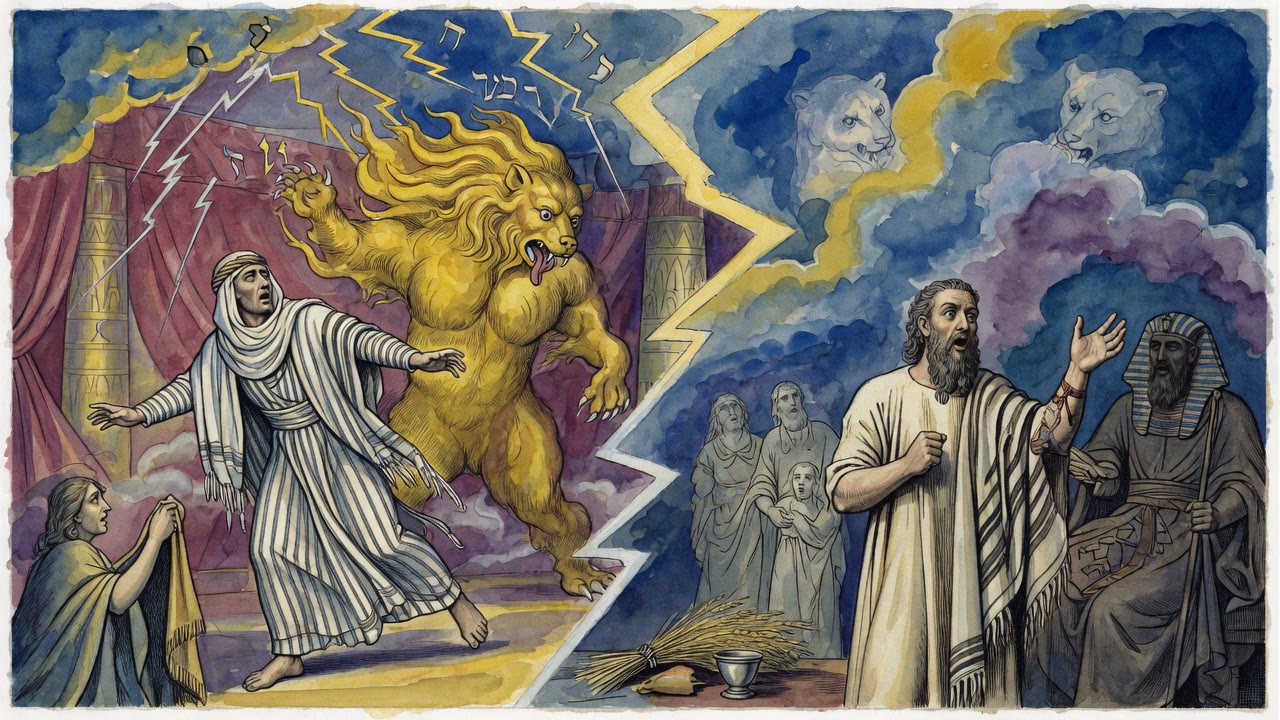
The sages lined Joseph's trial up with an older ledger. The serpent grasped at what was not its own and lost what it held. God had meant it to be king among animals; it became lowest. Upright walk became belly in the dust. Human food became dirt. The hope of taking Eve collapsed into eternal enmity with the woman. Each line of the curse undid a gift it once enjoyed.

The same pattern, they said, runs through Cain, Korah, Balaam, Doeg, Ahitophel, Gehazi, Absalom, Adonijah, Uzziah, Haman: each reached past his portion and left with empty hands and less than he started with. A woman who sets her gaze on a man not hers, the midrash adds, risks losing the husband she had. Zelicah reached. Joseph refused to be the stolen portion. The garment in her fist was all she kept of him, and even that became evidence against her story.

Hands Off the Portion

Blood on citrons. Dust on a serpent's tongue. A cloak torn at the front. The images teach one refusal. Do not grab the life that is not plated for you, even when the whole room is cutting its hands in admiration of what you want. Joseph's strength was not that he felt nothing. It was that he ran while feeling everything, and named God in the corridor.

The serpent's curse was not that it desired, but that it tried to rewrite ownership. Prison is cold. It is still warmer than the fire that takes another man's house and calls it love. Keep your hands on your own citron. Keep your eyes on the work you were sold to do. When the perfume thickens and the festival empties the house, leave the garment if you must, but leave the room. The portion that is not yours will always cost more than it promises, and the ledger of those who grasped it is a long aisle of empty hands.


← All myths

From the tradition

Sources

2 sources

The texts behind this telling. Some cards carry a translation of the source; others are our own retelling of it, and each card says which. Every card links out to the original.

Jasher 44Book of Jasher

Retold in our words. Read the original at the link below.The Book of Jasher, J. H. Parry edition (1887) · Public Domain

Book of Jasher turns to Joseph and Creation of Medanim.

The Medanim, hearing that Potiphar, "an officer of Pharaoh, captain of the guard," was looking for a servant, decided to try their luck. They approached Potiphar, saying they had a servant who would please him, if the price was right. Potiphar agreed to take a look. Joseph, presented before Potiphar, impressed him greatly. The Medanim asked for four hundred pieces of silver. Potiphar, suspicious, wanted proof of ownership, worried Joseph might be stolen. The Medanim produced the Ishmaelites, who confirmed they had sold Joseph as a slave.

Potiphar, satisfied, paid the Medanim, who then disappeared from the narrative, as did the Ishmaelites.

So, Joseph entered Potiphar's household. He quickly found favor and was put in charge of everything. The verse reads, "The Lord was with Joseph and he became a prosperous man, and the Lord blessed the house of Potiphar for the sake of Joseph." Everything Potiphar owned was placed under Joseph's control. Joseph, at this point, was eighteen years old, "a youth with beautiful eyes and of comely appearance, and like unto him was not in the whole land of Egypt."

Enter Zelicah, Potiphar's wife. She noticed Joseph and found him incredibly attractive. The text says she "coveted his beauty in her heart, and her soul was fixed upon Joseph." She began to entice him daily, but Joseph steadfastly refused to even look at her.

Zelicah tried flattery, complimenting his appearance. Joseph, however, turned her words toward God, reminding her that the Creator made all mankind. She praised his eyes, saying he had dazzled all of Egypt. Joseph countered, saying they were beautiful now, but would be horrifying in the grave. She asked him to play the harp and sing; he said his words were best used to praise God. She even suggested he curl his hair with a golden comb!

Joseph grew weary of her advances. "How long wilt thou speak these words? cease to utter these words to me, and rise and attend to thy domestic affairs," he told her. But Zelicah claimed there was nothing else to do but focus on him. Yet, despite her efforts, she couldn't sway him.

Driven by her desire, Zelicah fell ill. When the women of Egypt came to visit, asking why she was so unwell, she decided to reveal the cause. She prepared a banquet, giving each woman a knife and citrons to peel. Then, she had Joseph dressed in fine garments and brought before them.

The women were so struck by Joseph's beauty that they accidentally cut their hands with the knives, not even noticing until their hands and the citrons were covered in blood. Zelicah then asked them, “What is this work that you have done? behold I gave you citrons to eat and you have all cut your hands." The women responded with astonishment, declaring they couldn't take their eyes off him. Zelicah used this as a teaching moment, saying, “Surely this happened to you in the moment that you looked at him, and you could not contain yourselves from him; how then can I refrain when he is constantly in my house, and I see him day after day going in and out of my house? how then can I keep from declining or even from perishing on account of this?”

The women, now understanding, suggested she simply tell Joseph how she felt and seize him secretly.

On one particular day, while Joseph was working, Zelicah ambushed him. She grabbed him, but Joseph was stronger and pushed her to the ground. Zelicah, weeping, begged him to listen to her, asking if he had ever known a woman as beautiful as she, who was now ill with love for him. She promised him no harm would come from her husband.

Joseph refused, explaining that he couldn't betray his master's trust or sin against God.

Later, during a festival celebrating the Nile's inundation, Zelicah pretended to be ill and stayed home alone. She dressed in her finest garments, adorned herself with jewels, and perfumed the house. Then, she waited in the entrance of her temple, where Joseph would pass.

When Joseph entered the house and saw Zelicah, he turned back. She called out to him, urging him to continue with his work. As he passed, she seized him and his garment, threatening him with a sword. Joseph, terrified, fled, leaving his torn garment in her hand.

Fearing for her reputation, Zelicah concocted a story. She changed her clothes, took Joseph's garment, and called for her household. She accused Joseph of attempting to lie with her, claiming he fled when she cried out.

Potiphar returned home enraged. Zelicah repeated her story, and Potiphar ordered Joseph to be beaten. While being beaten, Joseph cried out to God, proclaiming his innocence.

Then, a miracle occurred. An eleven-month-old child, according to Jasher, spoke up, declaring Zelicah's lies and recounting the events accurately. Potiphar, ashamed, stopped the beating but brought Joseph before the priests, who served as judges.

The priests examined Joseph's torn garment. They determined that the tear was in the front, indicating Joseph was fleeing from her, not the other way around. However, to avoid scandal, they sentenced Joseph to the prison house.

Even in prison, Zelicah continued to pursue Joseph. She visited him daily, trying to persuade him to yield. Joseph remained steadfast, declaring it better to remain in prison than to sin against God. Zelicah threatened him with torture, but Joseph trusted in God's protection.

And so, Joseph remained in confinement. Meanwhile, back in Canaan, Jacob and his sons continued to mourn his loss, refusing to be comforted.

What are we to make of this expanded version of the story? The Book of Jasher, though not part of the biblical canon, provides a fascinating glimpse into the development of Jewish legend. It amplifies the drama, adds miraculous elements, and explores the themes of temptation, faith, and divine intervention in greater detail. It also reveals a culture's deep concern with the power dynamics between men and women, masters and slaves, and the importance of upholding moral boundaries.

It leaves us pondering: How do we remain steadfast in our convictions when faced with temptation or adversity? And how do we navigate complex situations where truth and appearances clash? Just like Joseph, perhaps we must rely on our faith and integrity, even when the path ahead seems uncertain.

Ginzberg, Louis. The Legends of the Jews. Philadelphia: The Jewish Publication Society of America, 1909. Midrash Rabbah The Zohar

Full source
Yalkut Shimoni on Torah 29:1Yalkut Shimoni on Torah

Translation of the source text.Torat Emet (Yalkut Shimoni) · CC-BY-NC

(Genesis 3:14-15) Our Rabbis taught: A wayward woman set her eyes on one who was not fit for her; what she sought was not given to her, and what was in her hand was taken from her. And so we find with the primeval serpent, who set his eye on what was not fit for him, and what was in his hand was taken from him. The Holy One, blessed be He, said: I said that he should be king over every beast and animal; now "cursed are you more than all the beasts." I said that he should walk upright; now "upon your belly you shall go." I said that his food should be the food of man; now "dust you shall eat." He said, I will kill the man and take Eve; now "I will set enmity between you and the woman." And so we find with Cain and Korah and Balaam, Doeg and Ahitophel and Gehazi, Absalom and Adonijah and Uzziah and Haman, who set their eyes on what was not fit for them: what they sought was not given to them, and what was in their hand was taken from them.

Full source