Zipporah Laid the Circumcision Blood at the Destroyer's Feet
The inn doorway filled until the lamp flame bent. Moses hit the boards. Zipporah already had a river stone cold in her hand.
Table of Contents
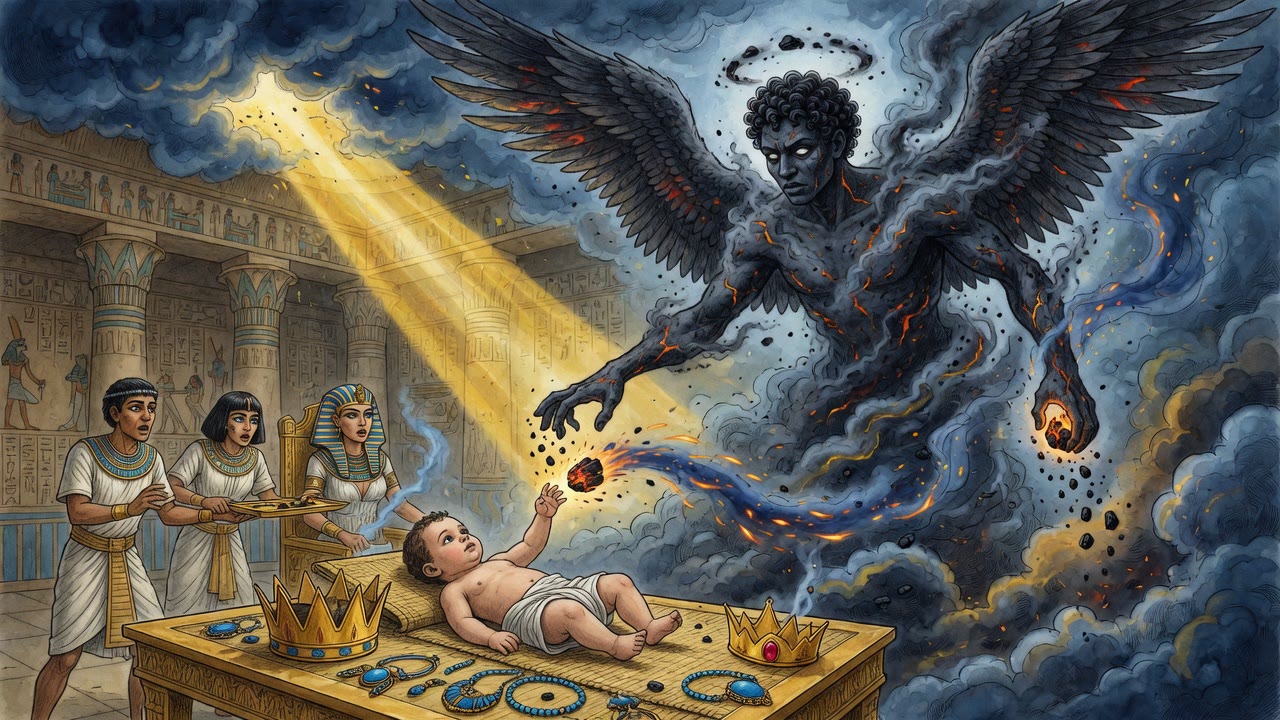
The angel did not knock. He filled the doorway of the inn until the lamp flame bent, and Moses went down hard enough that the floorboards answered.
 Click for full size
Zipporah was already moving. Gershom slept against her ribs. The stone she seized was not a knife. It was a river-sharpened edge from the road pack, cold enough to bite her palm. Midian dust still clung to their sandals. Egypt waited with a staff and a court. Between those two roads stood one figure who had not been invited.
They name him Mashchit (משחית), the Destroyer, the same order of servant who would later walk Egypt on the night of the firstborn (Exodus 12:23). He did not argue. He measured. Moses, uncut in the house of his son, lay open to that measure.
The Stone and the Sleeping Boy
Zipporah pulled Gershom free of the blanket. The child woke only to the first pressure of stone. She did not wait for Moses to rise. She did not wait for Jethro's counsel, which had already done its damage days behind them on the road. The husband had meant to cut. The father-in-law had blocked him. She said that much aloud, not as apology, as ledger.
"The husband sought to circumcise, but the father-in-law obstructed him."
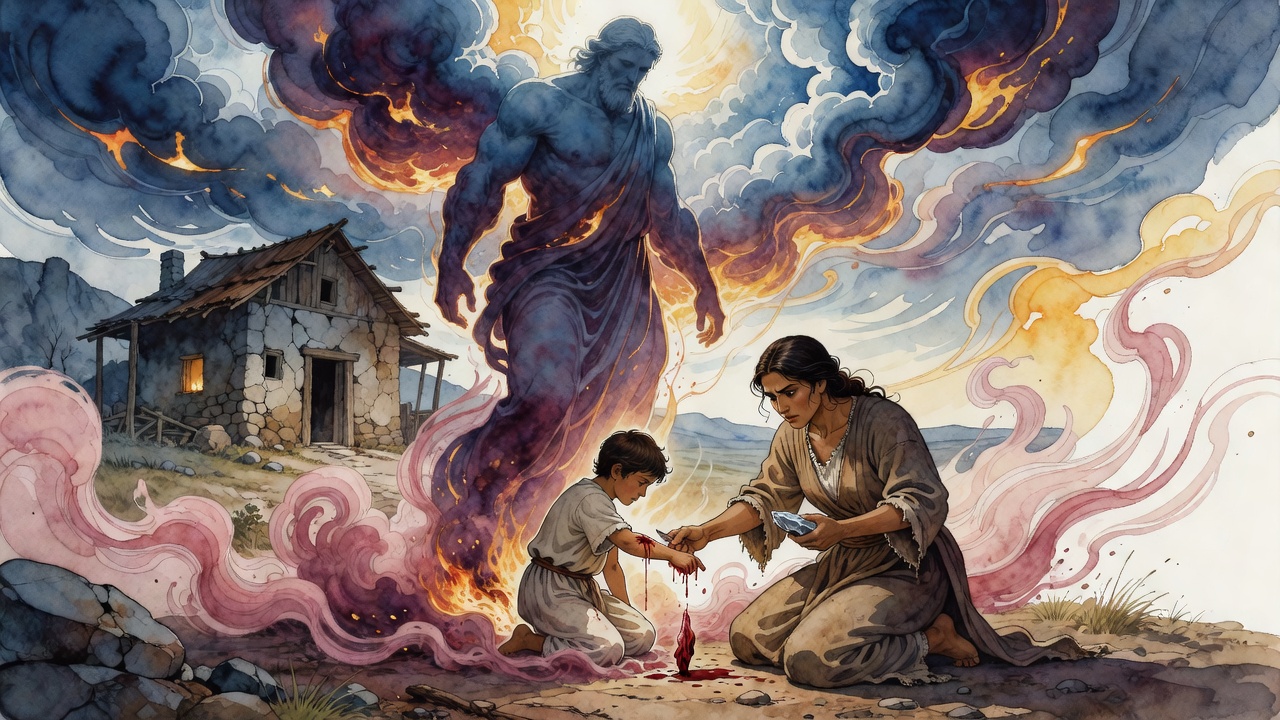
Blood came fast. She caught the severed foreskin before it hit the straw. Gershom's cry filled the small room. Moses still could not lift his head. The angel filled the lintel and did not blink.
Blood at the Angel's Feet
She crossed the narrow room on her knees. Straw stuck to her wrists. She set the flesh at the angel's feet the way a petitioner sets evidence on a judge's table. For a breath she held it there, her fingers open, so there could be no mistake about what she was offering. Her voice did not break.
"Now let this blood of the circumcision atone for my husband."
She used the old root of covering, the same root that later names the Day of Atonement. A Midianite woman, flint-light on her wrists, speaking that language over a child and a prophet who could not stand. The covenant of Abraham (Genesis 17:10) is older than this inn, older than the staff, older than the plagues still waiting in Egypt. Flesh marked for that covenant is an entry the angel cannot refuse.
The Destroyer Stepped Back
The Destroyer is not a rebel. He is a clerk of heaven with a lethal pen. Zipporah did not fight him. She satisfied him.
Moses' breath rasped once, then steadied. The weight in the doorway eased the way a beam eases when a load is shifted. Gershom cried, thin and furious. Zipporah pressed a cloth to him and did not look away from the threshold.
The angel stepped back.
No sword fell. No speech from the throne filled the rafters. The Destroyer desisted, as if the account had balanced, and the room became only a room again. Lamp. Straw. A woman shaking. A boy bleeding into wool. A man who still had to walk to Egypt in the morning.
How Lovely the Blood Looked
When the doorway emptied, Zipporah spoke a second time. Urgency had left her mouth. What remained was relief so sharp it sounded almost like praise.
"How lovely is the blood of this circumcision that has delivered my husband from the angel of destruction!"
Lovely. She looked at covenant blood and called it beautiful because it had bought a life the mission still required. Moses would stand before Pharaoh. The sea would split. None of that begins if the Destroyer finishes his work on a dusty floor between Midian and the Nile.
She bound Gershom. She washed her hands in a basin that already held road grit. Moses sat up slowly, the mark of the floor still on his cheek, and for a long breath neither of them pretended the night had been ordinary travel.
The Road Opened Again
Dawn did not erase the blood. It only made the stains easier to see. Zipporah packed the stone back among the waterskins as if it were any other tool. Moses took up the staff. The child rode against her, quiet now, the new wound protected under cloth.
Behind them the innkeeper would sweep straw and never know an angel had stood in his lintel. Ahead, Egypt still held its firstborn under a sky that had not yet darkened for the last plague. Zipporah had already met that servant in miniature and paid him in the currency heaven counts.
Moses walked. She walked. The Destroyer did not follow. The covenant had been entered on the boy's body. The prophet who forgot that mark at a father-in-law's house lived because a wife remembered it with a stone in the dark.
Years later Israel painted doorposts with lamb blood so the Destroyer would pass over (Exodus 12:23). A smaller house had already paid at a smaller threshold. Blood laid at an angel's feet. A servant who stepped back. A road that opened toward Egypt.
← All myths