Parshat Beshalach5 min read

Egypt Rode Into the Sea While Canaan Melted

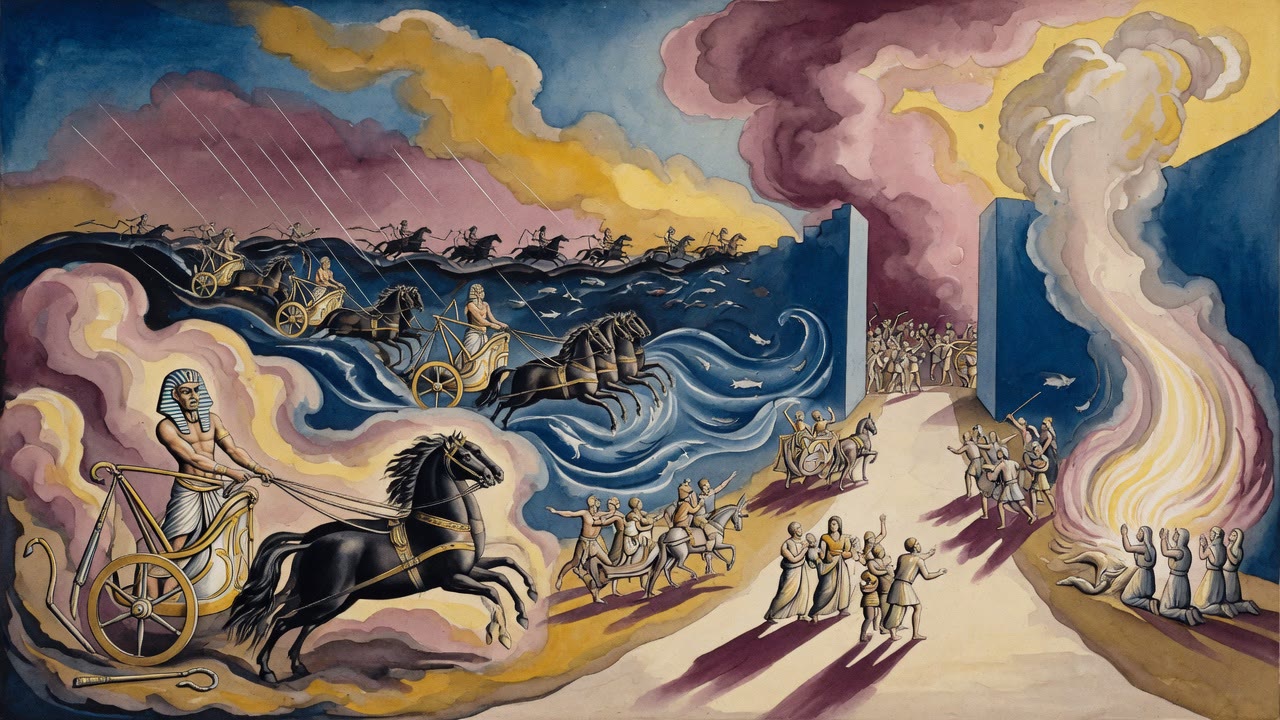
The drivers who once whipped Hebrew backs raced their horses down the dry seabed as if it were a road. Then the water came back and broke the chariots.

Curated by Arthur · Told by Maggid ·
Table of Contents
  1. When the Waters Closed
  2. Philistia, Edom, Moab
  3. Canaan Melted
  4. Bells of the Nations, Honor of Israel

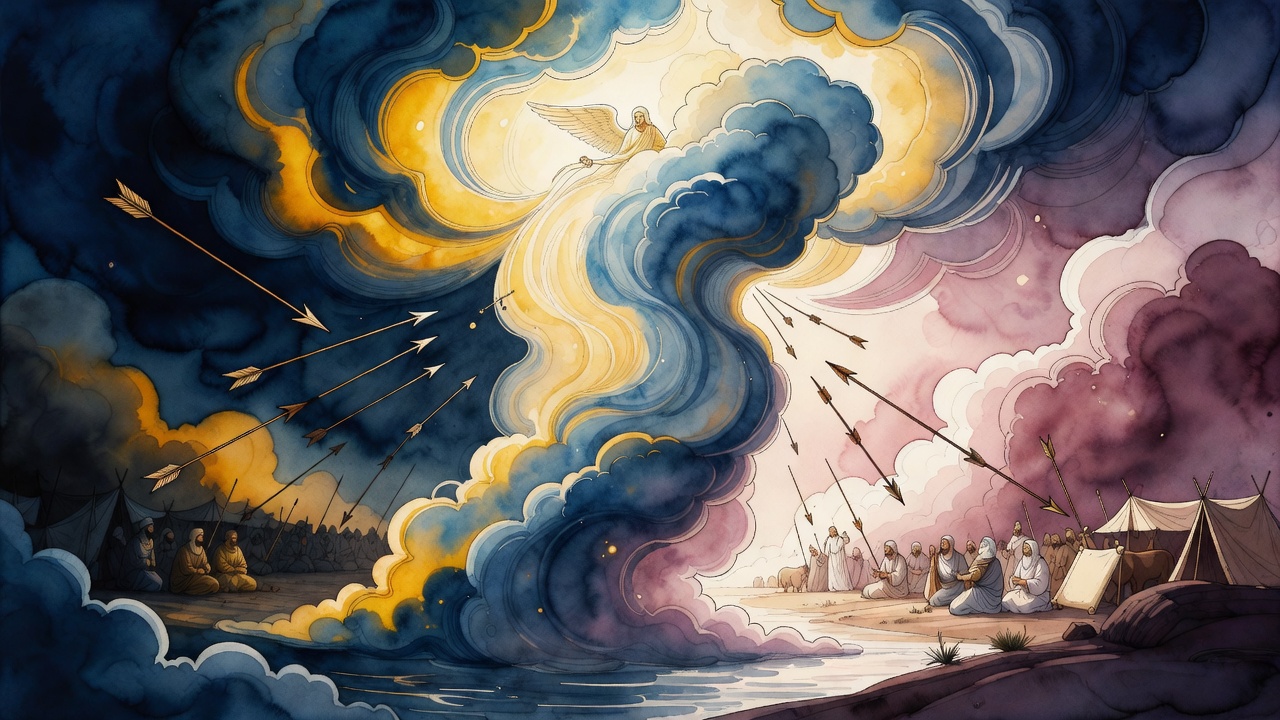
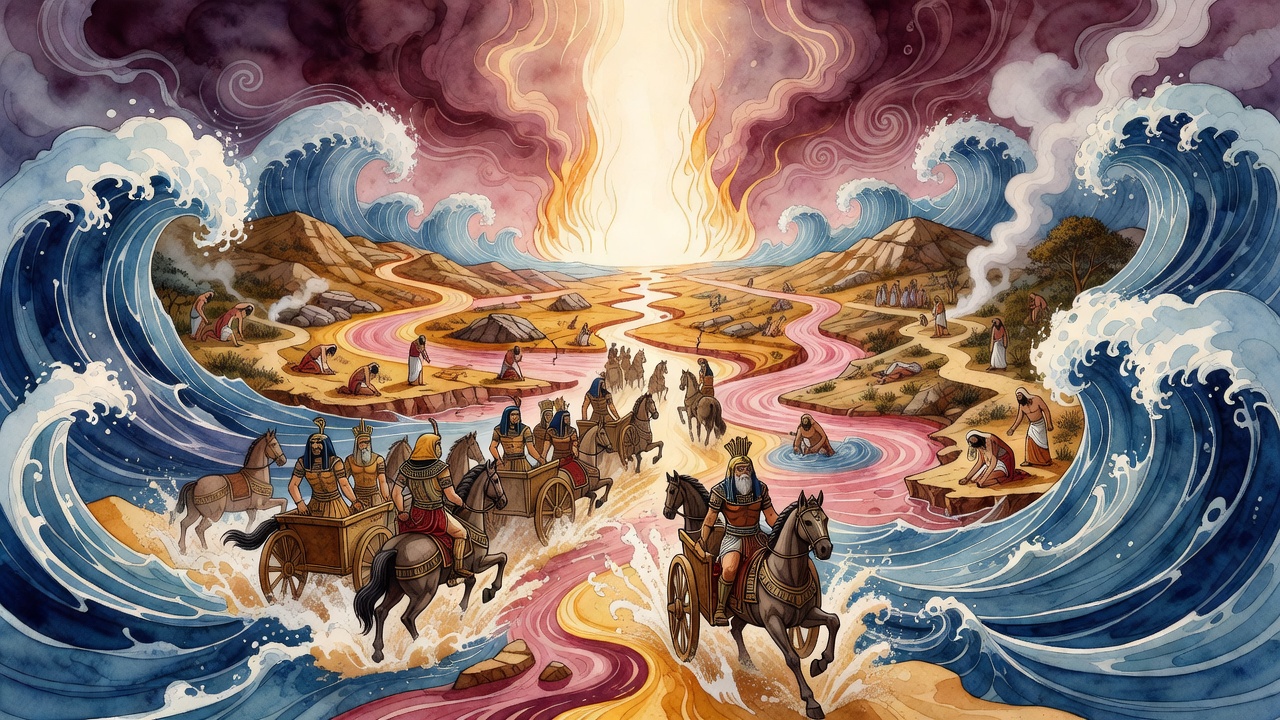
Chariot wheels found the strange dry path between walls of water, and Egypt rode in as if the corridor were a road they owned. Behind them the camp of Israel was already singing under its breath. Ahead of them the far shore looked like ordinary land. Between the two, hearts that had been hardened through plague after plague took one last hard shape and pushed the horses forward.
Egypt Rode Into the Sea While Canaan Melted Click for full size

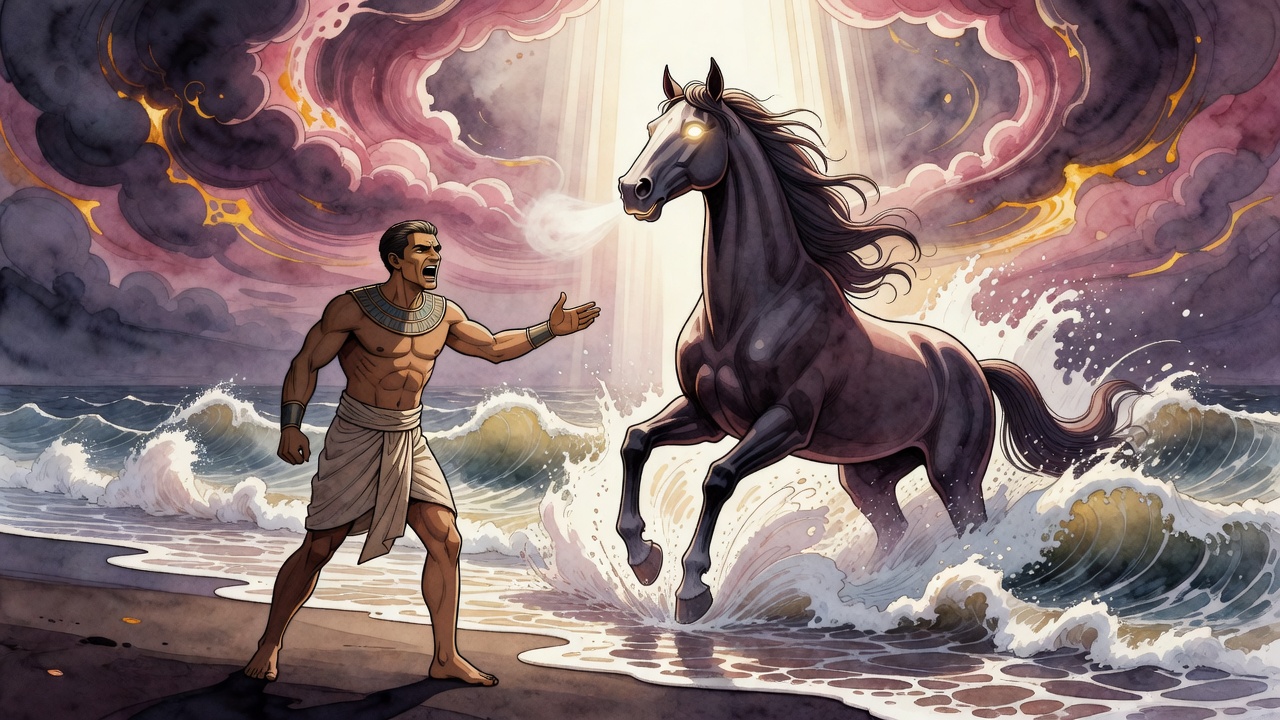
"I will harden the heart of Egypt," God had said, not as a new invention at the waterline but as the continuation of a process already explained in the plagues. The hinge between deliverance and downfall turned on that stubbornness. Pursuit was the last gift Egypt gave itself. Drivers who had once cracked whips over Hebrew backs now cracked reins over animals racing into a miracle they mistook for a highway.

When the Waters Closed

The return of the sea was not quiet. Wood cracked. Men who had cracked whips learned a different sound. Israel walked out on the far side with wet ankles and dry mouths. The song that rose was a report the nations would hear whether they wanted news or not.

"The peoples heard and trembled." Fear ran first. Then a sharper reading: anger that God was lifting Israel's horn. Heaven answered with their own history. How many kings had Edom raised while Israel had none, without Israel begrudging them? How many chieftains while Israel held its peace? Now they were furious at a redeemed slave people? Then let them have an anger without favor, the trembling of a world that has just watched an empire drown.

Philistia, Edom, Moab

Philistia gripped dread with two thoughts. One old wound: Israel might settle scores for Ephraim's failed early march. One plain interest: the route to the land ran through Philistine ground, and they imagined plunder before they imagined pilgrimage. A marching nation looks like an army even when it is a column of freed slaves and children.

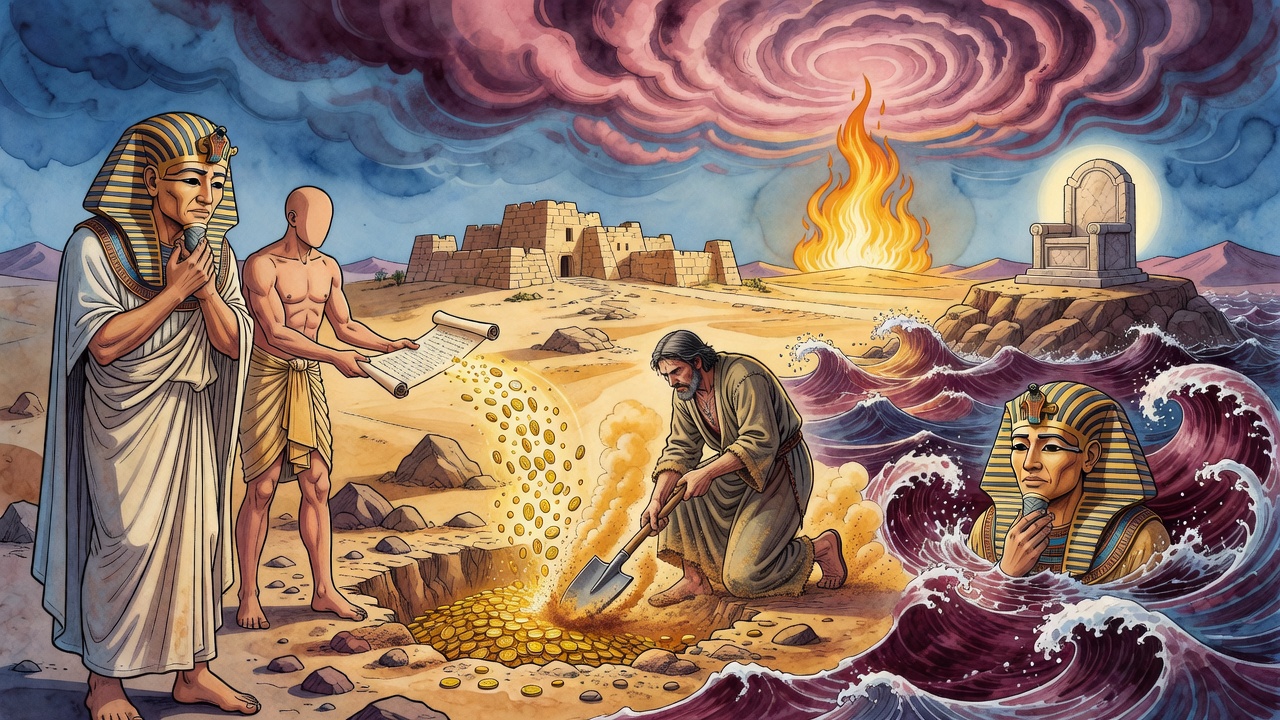
The chiefs of Edom were dismayed, yet Israel had been forbidden to seize Esau's land. Their fear was of tolls and supplies, or of the ancient grudge over a stolen blessing. Moab trembled on the same logic: not conquest, but provisions and the memory of herdsmen quarreling in Abram and Lot's day. Money and old stories made their knees weak. They feared for coin and for pride, not for cities already marked for a different sentence.

Canaan Melted

Canaan was different. When those cities heard the command to leave nothing that breathes alive, they did not only tremble. They dissolved. Edom and Moab feared for their coin. Canaan heard a sentence of erasure. The word "melted" is read as a complete dissolving, a courage that runs out like wax, not a polite diplomatic worry.

The song lists them in order along the road home, as if geography itself were a chain of nervous systems firing one after another when the sea news arrived. What Egypt lost in water, Canaan felt as future fire. The corridor of judgment at the sea became a corridor of rumor across every border that still thought itself safe.

Bells of the Nations, Honor of Israel

The nations would clang like a bell: if Egypt, who held these people under its thumb, let them go, why should we keep sending tribute and slaves to Aram and the powers that trade in forced labor? Pharaoh's heart "reversed" in the telling that he had ruled from one end of the world to the other, with sultans to match, because of the honor of having Israel under him. Every empire that ruled Israel, the midrash says, ruled broadly for that same twisted honor. When the subjects walked free through a sea road, the honor cracked, and the bells started.

Egypt's last charge into the corridor was the sound that set them ringing. Hard hearts, open sea, closed sea, and a map of nations learning that the brick pits had emptied under a Name no empire could lease forever. The song on the far shore was not only praise. It was a signal fire that made kings count their own firstborns in the dark and wonder whose water might rise next.

On the far shore a child asked why the Egyptians had followed at all. An elder pointed at the wet sand where chariot tracks ended in nothing and said that a hard heart can mistake a miracle for a road and a judgment for a chance at revenge. The nations hearing the news made the opposite mistake: they treated a freed people as a sudden empire. Between those errors, Israel stood with a song and a long walk still ahead, carrying both the memory of walls of water and the knowledge that fear among kings was not yet rest among tribes.


← All myths
From the tradition

Sources

4 sources

The texts behind this telling. Some cards carry a translation of the source; others are our own retelling of it, and each card says which. Every card links out to the original.

Mekhilta DeRabbi Shimon Ben Yochai 14:16Mekhilta DeRabbi Shimon Ben Yochai

Translation of the source text.Mechilta de-Rabbi Simon b. Jochai, ed. D. Hoffmann, Frankfurt 1905 · Public Domain

"And I, behold, I will harden the heart of Egypt" (Exodus 14:17) -- as in the matter stated above.

Full source
Mekhilta DeRabbi Shimon Ben Yochai 15:14Mekhilta DeRabbi Shimon Ben Yochai

Translation of the source text.Mechilta de-Rabbi Simon b. Jochai, ed. D. Hoffmann, Frankfurt 1905 · Public Domain

"The peoples heard, they trembled" (Exodus 15:14). When they heard that Pharaoh and his army perished in the sea, and the kingdom of Egypt was destroyed, and judgments were executed upon their idols, they began to tremble.

Another interpretation: when they heard that the Holy One, blessed be He, was raising up the horn of Israel, they began to be angry. The Holy One, blessed be He, said to them: How many kings arose from you, and My children were not provoked -- "And these are the kings that reigned in the land of Edom before there reigned any king over the children of Israel" (Genesis 36:31)? How many chieftains arose from you, and My children were not angry -- "chief Lotan, chief Shobal, chief Zibeon, chief Anah" (Genesis 36:29)? Now you are angry? I will give you an anger in which there is no favor: "The LORD reigns, let the peoples tremble" (Psalms 99:1).

"Trembling took hold of the inhabitants of Philistia" (Exodus 15:14). They said: Now they are coming to exact the testimony [reckoning] of Ephraim their father, as it is said, "The children of Ephraim, being armed and carrying bows, turned back in the day of battle" (Psalms 78:9). Another interpretation: "trembling took hold of the inhabitants of Philistia" -- they said: They have no road except through us; now they are coming to plunder our property and lay waste our land.

Full source
Mekhilta DeRabbi Shimon Ben Yochai 15:15Mekhilta DeRabbi Shimon Ben Yochai

Translation of the source text.Mechilta de-Rabbi Simon b. Jochai, ed. D. Hoffmann, Frankfurt 1905 · Public Domain

"Then the chiefs of Edom were dismayed" (Exodus 15:15). If you should say that they were coming to inherit their land, it has already been said, "And command the people, saying, You are to pass through the border of your brethren the children of Esau... contend not with them" (Deuteronomy 2:4) -- rather, it was on account of provisions [tolls and supplies]. Another interpretation: they said, Now they are coming to exact the quarrel that was between our father and their father, as it is said, "And Esau hated Jacob because of the blessing" (Genesis 27:41).

"Trembling seizes the mighty of Moab" (Exodus 15:15). If you should say they were coming to lay waste their land or to inherit it, it has already been said, "Do not distress Moab" (Deuteronomy 2:9) -- rather, it was on account of provisions. Another interpretation: they said, Now they are coming to exact the quarrel that was between our father and their father, as it is said, "And there was strife between the herdsmen of Abram's cattle and the herdsmen of Lot's cattle" (Genesis 13:7).

"All the inhabitants of Canaan melted away" (Exodus 15:15). When they heard that the Holy One, blessed be He, said to Moses, "But of the cities of these peoples... you shall save alive nothing that breathes" (Deuteronomy 20:16), they began to melt away. They said: These others [Edom and Moab] feared only for their money and their property; but these [Israel] are not coming against us except to destroy us -- how much more so! -- and they began to melt away. "Melting" means nothing other than dissolving, as it is said, "the earth is dissolved and all the inhabitants thereof" (Psalms 75:4), and it says, "that their heart may melt and their stumbling blocks be multiplied... all the inhabitants of Canaan melted away" (Ezekiel 21:20).

Full source
Mekhilta Tractate Vayehi Beshalach 2:17Mekhilta DeRabbi Yishmael

Retold in our words. Read the original at the link below.Mechilta, translated by Rabbi Shraga Silverstein · CC-BY

The nations will clang to us like a bell, saying: Now if these (Jews), who were under their thumb, they let go and they left, why should we send to Aram Naharayim and to Aram Tzovah to pay tribute to them and to provide slaves for them? Thus, "And the heart of Pharaoh was reversed": to apprise us that Pharaoh ruled from one end of the world to the other, and had sultans from one end of the world to the other, all because of the honor of Israel (who was subject to him). Of him it is written (Psalms 105:20-21) "He sent a king (Pharaoh) who released him (Joseph); a ruler of peoples, who freed him. He appointed him master of his palace, and ruler of all his wealth." And thus do you find that every nation that ruled over Israel, ruled from one end of the world to the other, because of the honor of Israel.

Full source