Elijah Stacked Twelve Stones on Mount Carmel
On Carmel Elijah rebuilds a broken altar with twelve stones, one for each tribe. Fire falls, idolatry burns, and a prophet matches Moses step for step.
Table of Contents
 Click for full size
Twelve Stones and Not a Heap
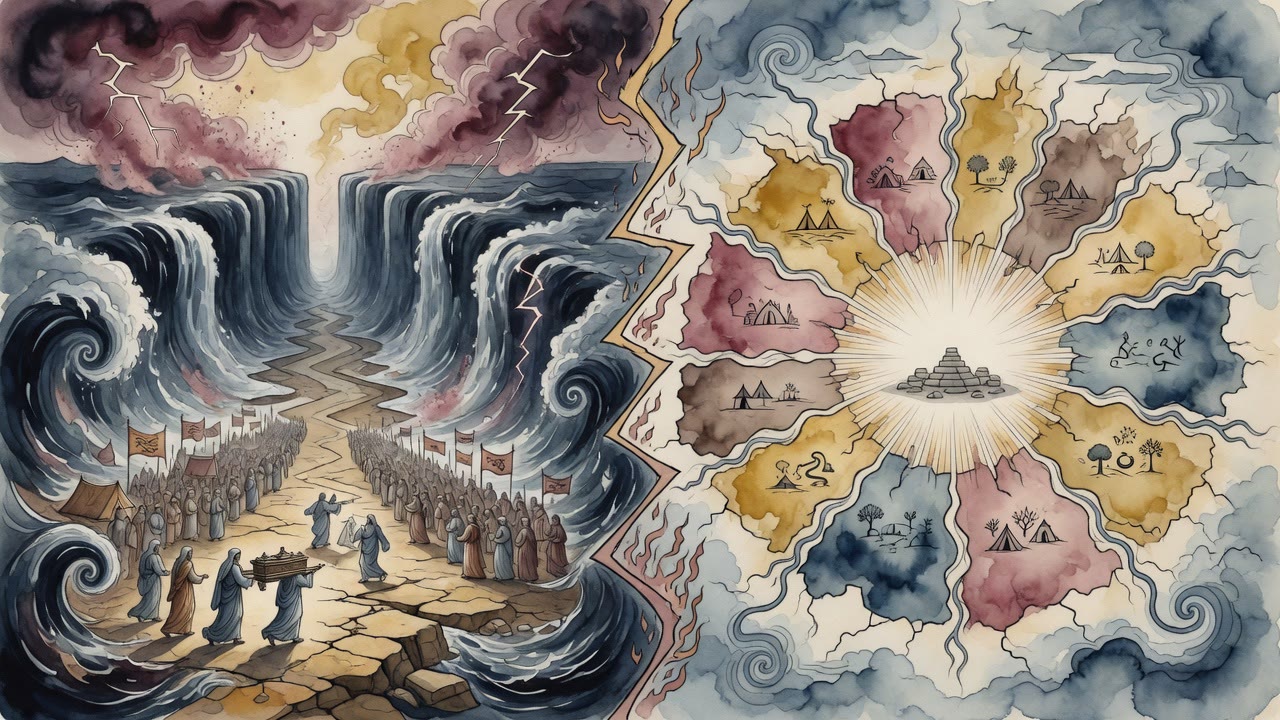
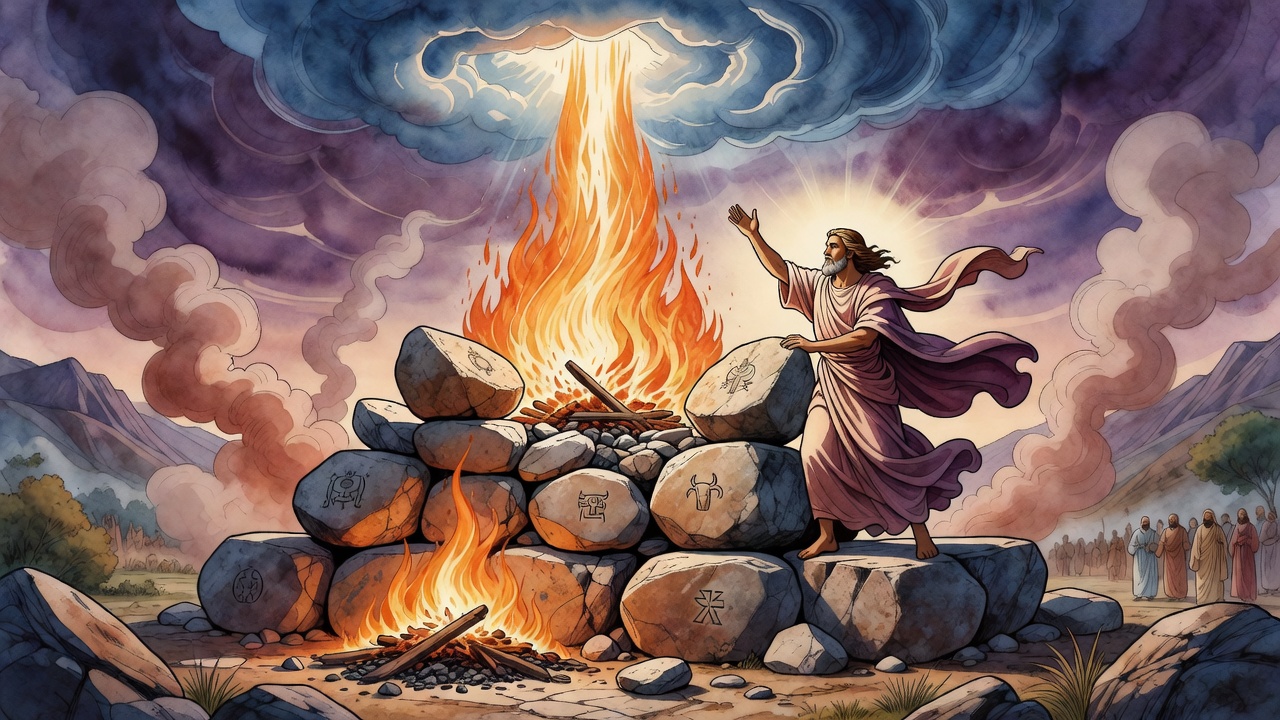
The altar on Mount Carmel had lain broken so long that grass had come up between the fallen stones, and Elijah could have rebuilt it out of whatever lay nearest. He walked the slope instead and picked the stones up one at a time, and he stopped at twelve, because nothing heaven had ever given Israel had come to Israel on its own account. It came on the account of the tribes. Twelve months in a year, twelve constellations turning overhead, twelve hours of light and twelve of dark: the clock of the world had been cut to that number for the sake of Jacob's sons, and even the Temple that was still generations from being built would stand on their merit and on nothing else. So when Elijah wanted a faithless nation back under the wings of the Shechinah (שכינה), God's presence, he refused to speak in any other language.
He counted the stones out where the crowd could watch him count.
The prophets of Baal had been at their own altar since morning. They had shouted until their voices tore, they had cut their arms until blood ran down onto the wood, and no fire had come. The people on the ridge watched it with the flat patience of a country in its third year without rain. One farmer near the front had climbed up to see a spectacle and had no intention of changing his mind about anything.
Water Poured Into the Trench
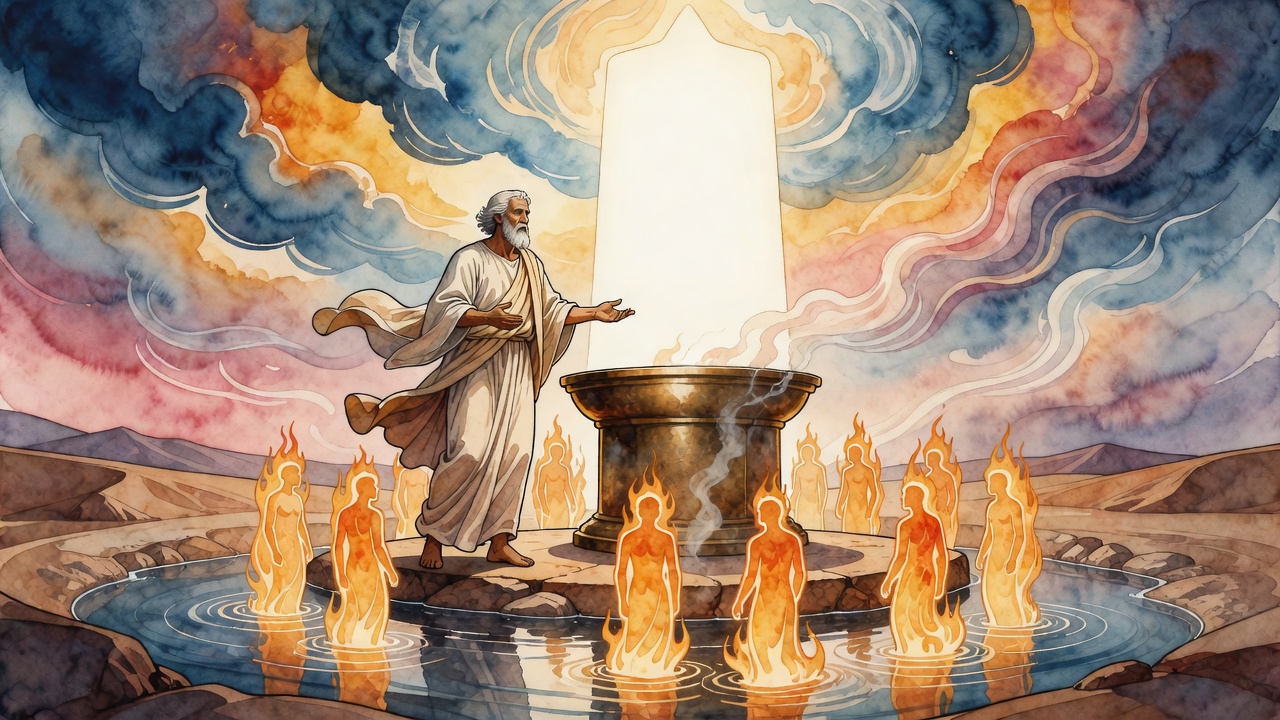
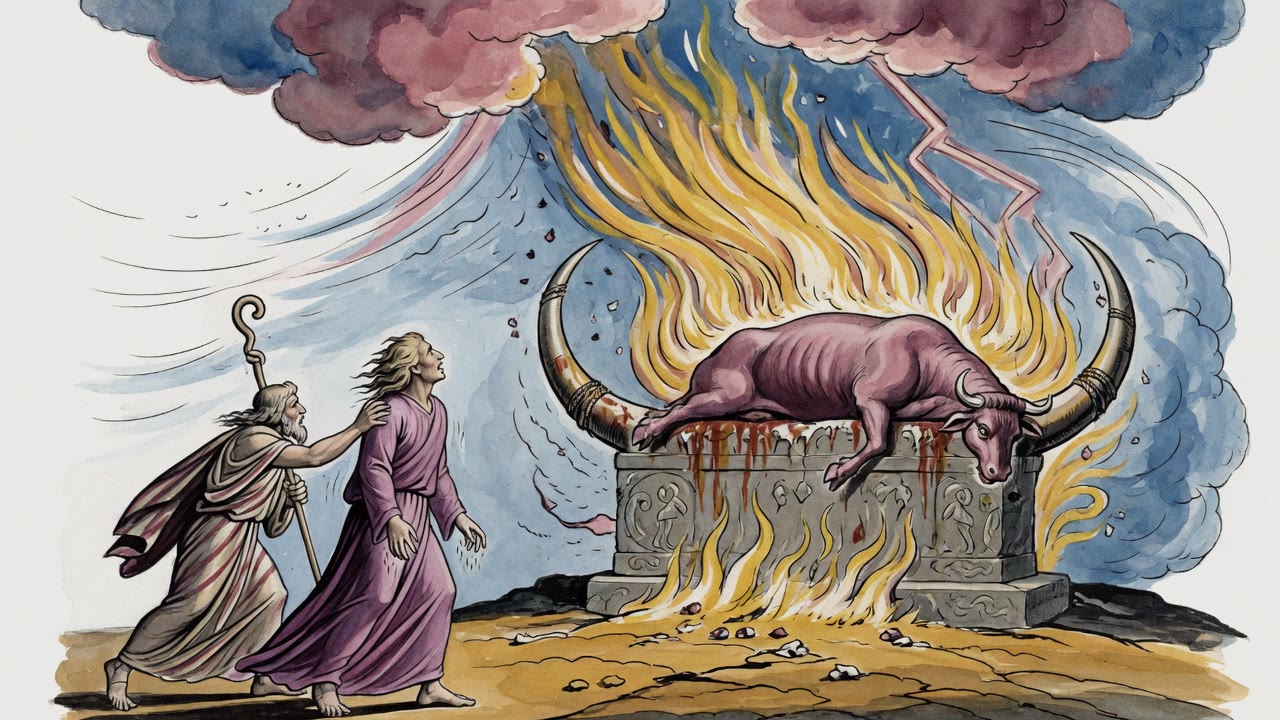
Elijah took his turn slowly. He laid the wood, cut the bull, set it on the pile, and then had jars carried up and water poured over the whole of it until the water ran off the stones, and he had it done again, and a third time, until the trench he had dug around the altar stood full. The drought had made water the most expensive thing on that mountain, so the waste was the point. He was taking away every dry stick a man could point at afterward, because a people who had spent a generation limping between two opinions would find a way to limp again if he left them one.
The farmer near the front watched good water vanish into the dirt and hated him for it.
The Fire a Sick Love Asked For
Then Elijah called on the God of Abraham, of Isaac, and of Israel, three dead men whose merit he was stacking between himself and an empty sky, the way Moses had reached for those same three names when he stood between a furious God and a people who had just poured a calf.
The fire fell. It took the bull and the wood, it took the stones and the dust under them, and it drank the trench dry, and the whole ridge went down on its face and said the sentence together: the LORD, He is God.
A love that has gone sick does not ask to be fed argument. It asks to be propped up with fires, and only the fires that proved something: the furnace Abraham was willing to walk into, the fire waiting on Moriah under a bound boy, the fire in the bush that would not eat the branch it stood on. Elijah had just added one to that list, and he knew exactly what he had handed them, because a nation that could not hold a law could still hold the memory of heat on its face. Whether it would hold past sundown was another question.
What Are You Doing Here
It did not hold past sundown. Jezebel sent word that by tomorrow at that hour he would be as dead as her prophets, and the man who had pulled fire out of a clear sky ran for the desert, sat down under a broom tree, and asked God to take his life. An angel fed him twice. On the strength of that food he walked forty days and forty nights without eating again, exactly the fast Moses had kept on the mountain, until he reached Horeb and crawled into a cave to sleep.
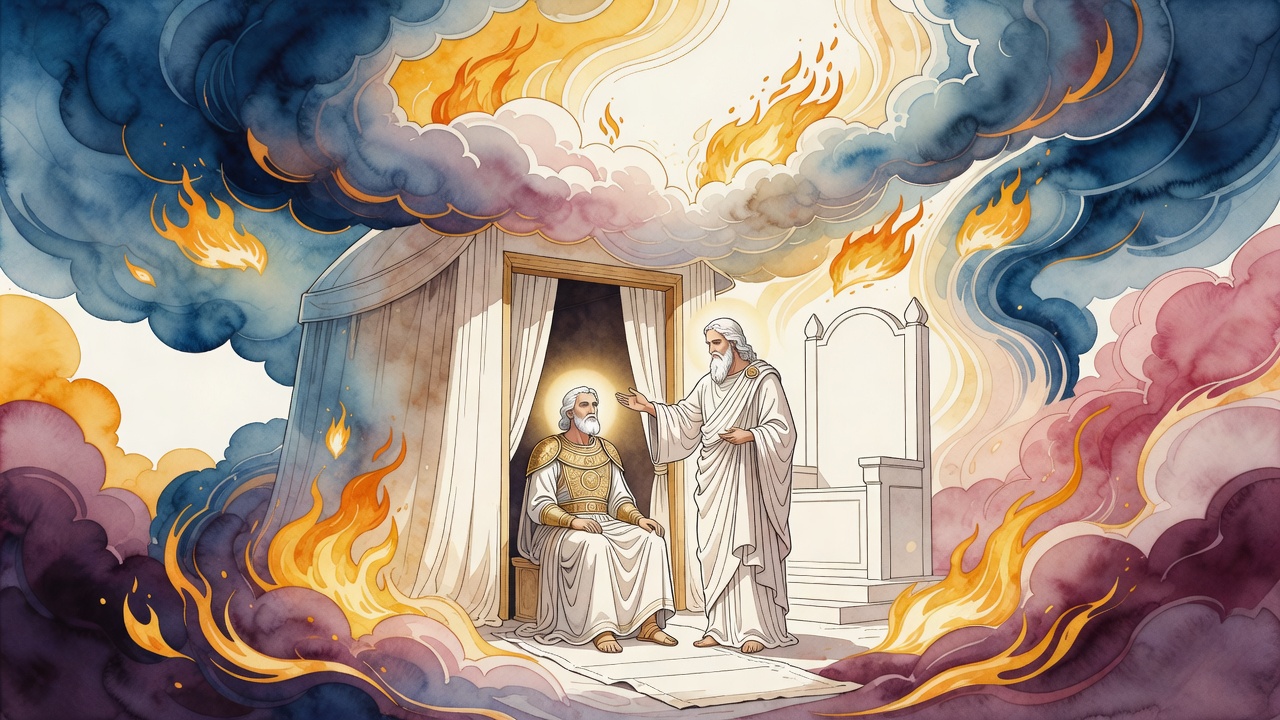
A wind came first and split the rocks, and after the wind an earthquake, and after the earthquake a fire, and God was in none of the three. Then a thin sound, barely a voice. Elijah wrapped his face in his cloak and came out to the mouth of the cave to hear what a man is told after he has fasted forty days on that rock, brought down fire, destroyed idolatry as a zealot, gathered a nation, and built an altar out of twelve stones.
What he got was a question. What are you doing here, Elijah. He stood in the cave mouth with the cloak still over his face and heard it land, four words where he had expected a commission, and the wool against his mouth went hot with his own breath. Moses had stood on that same rock and been told, stand here by Me. That was the one place in the whole long match where the two of them came apart.
The Redemption With No Way Back
Both of them came out of Levi, the first prophet and the last. Moses had taken Israel out of Egypt, but that rescue did not hold; the nation went back under other masters, and the freedom he handed them had to be handed over a second time. The one Elijah is being kept for does not come off again. Nobody goes back to the mortar after it. So he was not buried like the others, and the question at the cave was not an insult, only a man being told he had come early.
On Carmel the trench dried out and the twelve stones he had stacked stayed where he had set them, burned black through, one for each of Jacob's sons, in the shape of a people that had said a true sentence out loud once with the heat still on its face.
← All myths