Elisheva Held Four Joys Until Fire Took Them
Moses, Aaron, Nahshon, and two priestly sons fill one woman's day. Then sanctuary fire takes the sons she named with pride.
Table of Contents
 Click for full size
Four Crowns in One Household
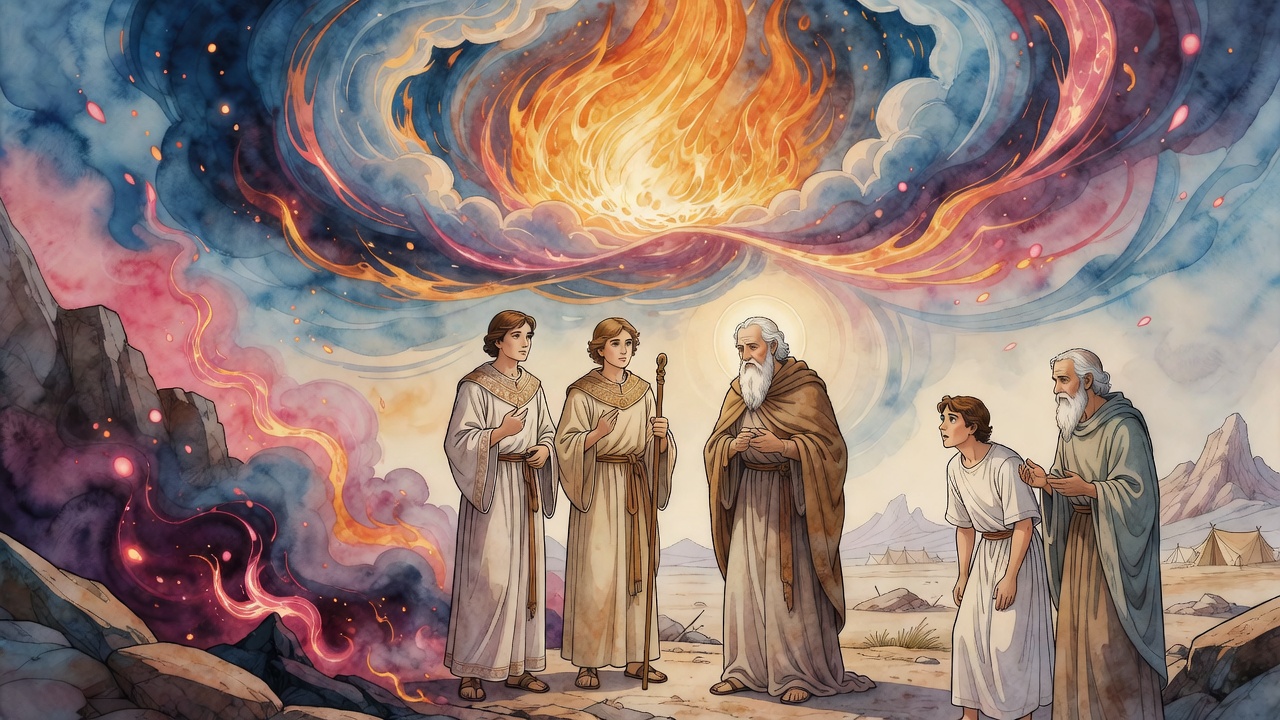
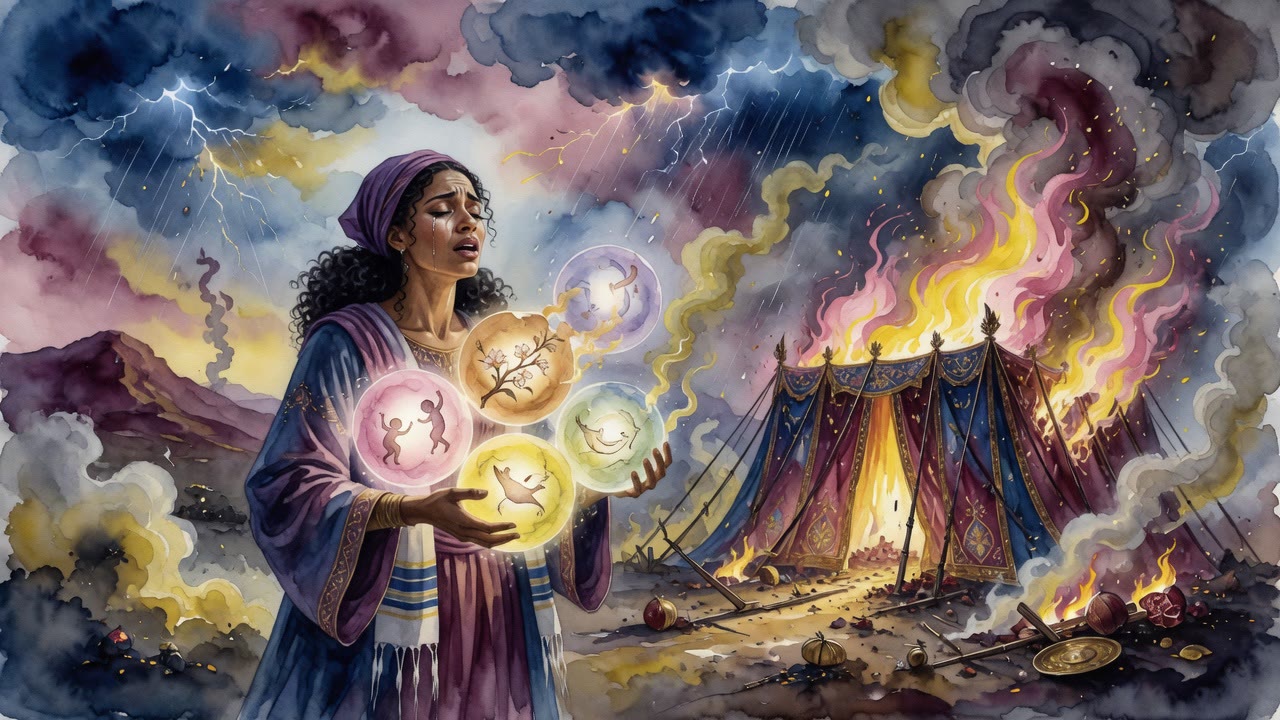
Elisheva bat Amminadav woke into a life that looked complete. Moses was her brother-in-law. Aaron was her husband. Her brother Nahshon stood as a prince of Judah. Her sons Nadav and Avihu served as deputy high priests. Four sources of joy walked the same camp paths she walked. Other women measured status in one title. She held a handful.
She could name them in a breath and still not finish the list of honors. In-law of the prophet. Wife of the high priest. Sister of the prince who stepped first into the sea's path. Mother of young men who carried fire nearer the Presence than most Israelites would ever stand. The camp knew her silhouette at the door of a tent that seemed blessed past envy.
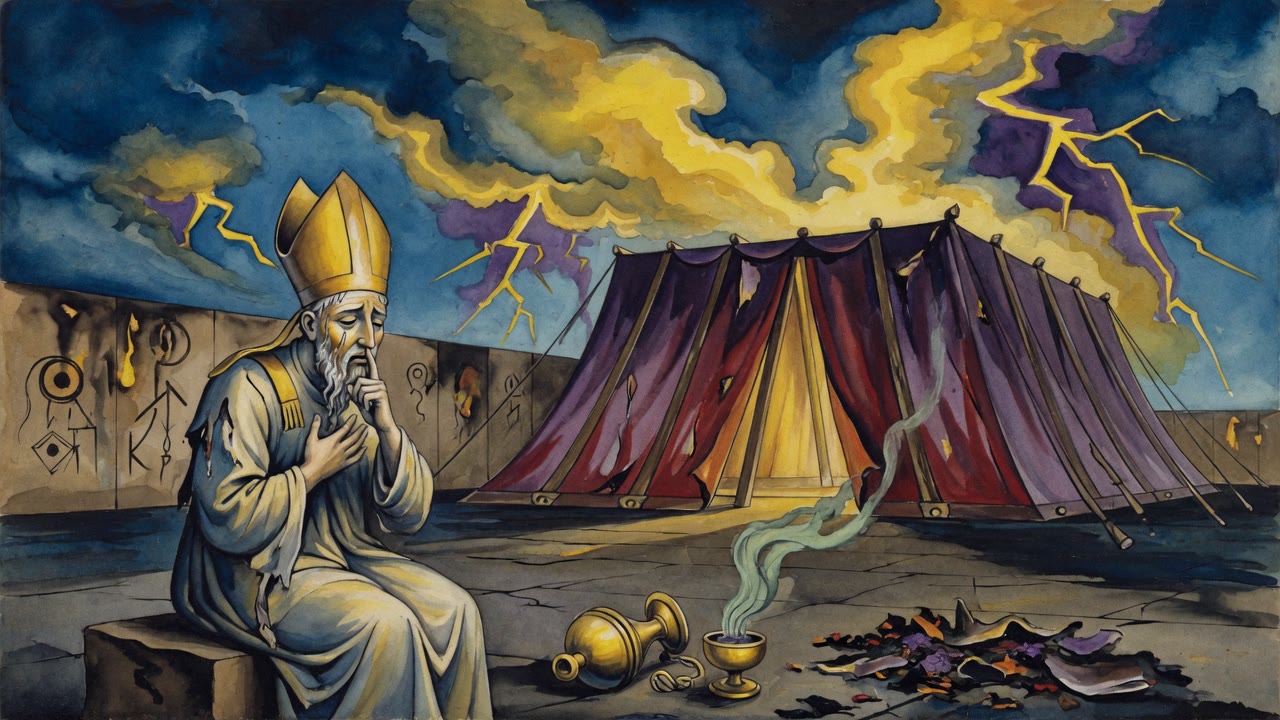
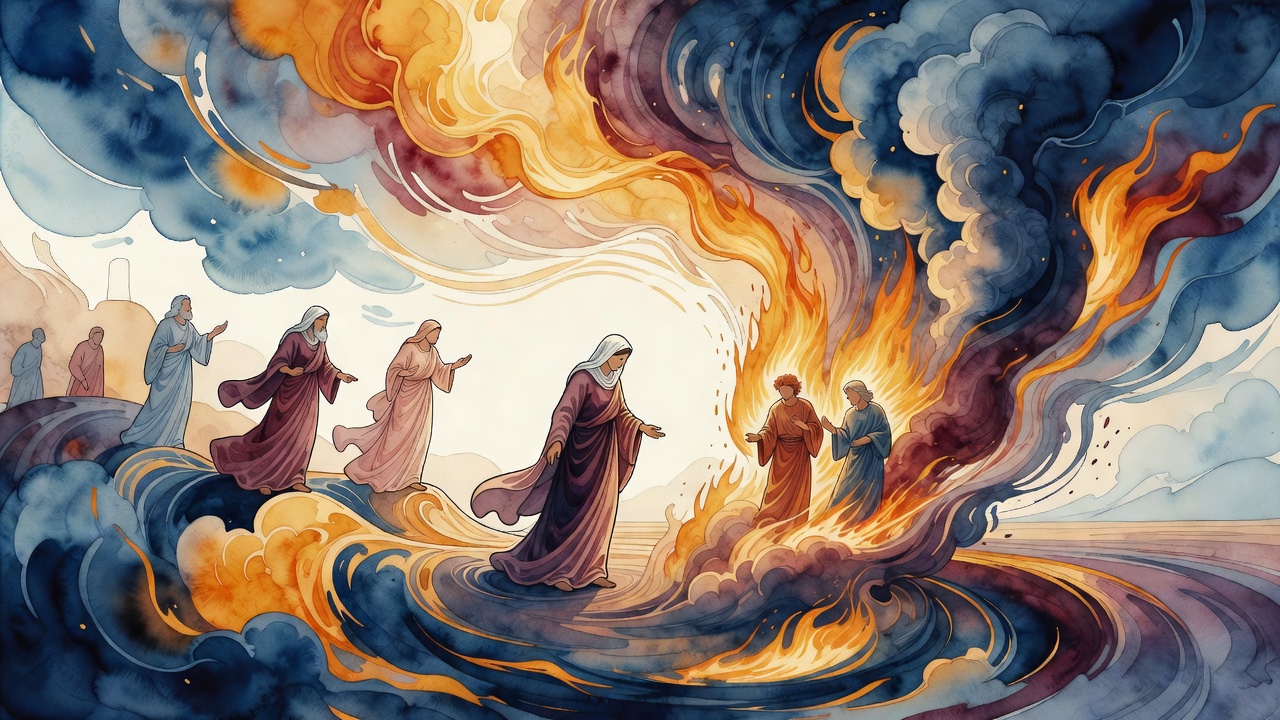
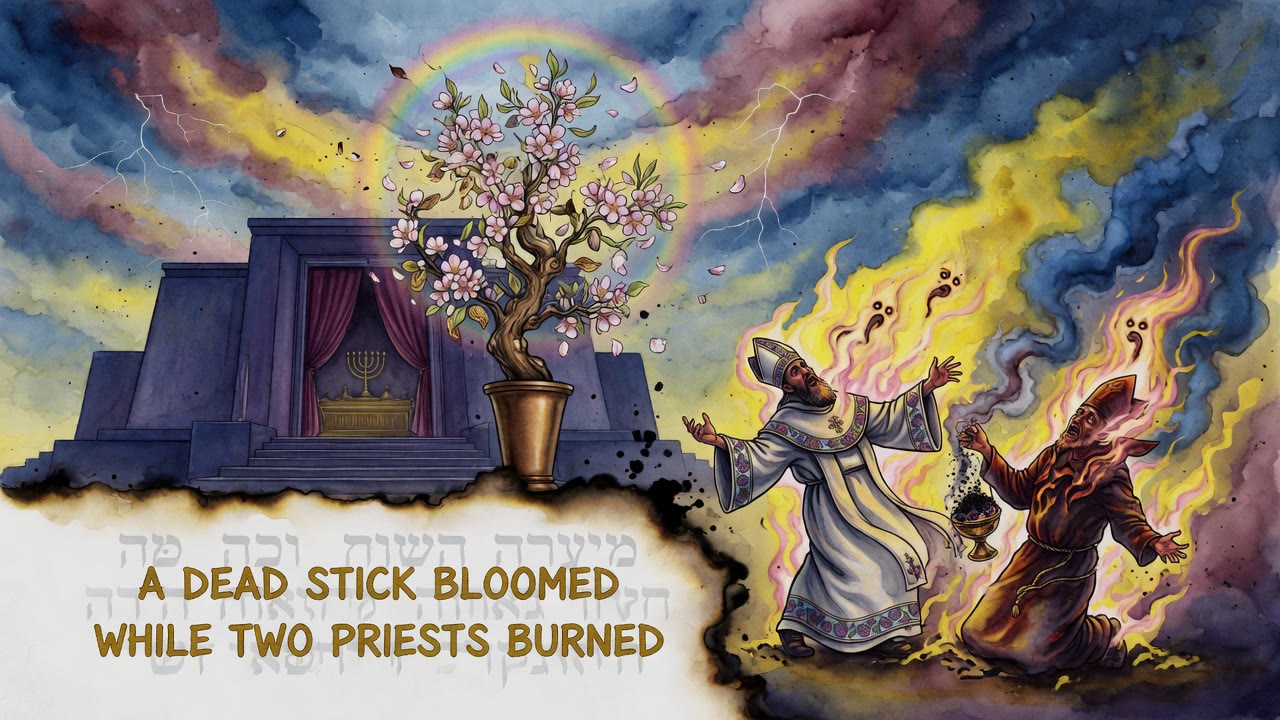
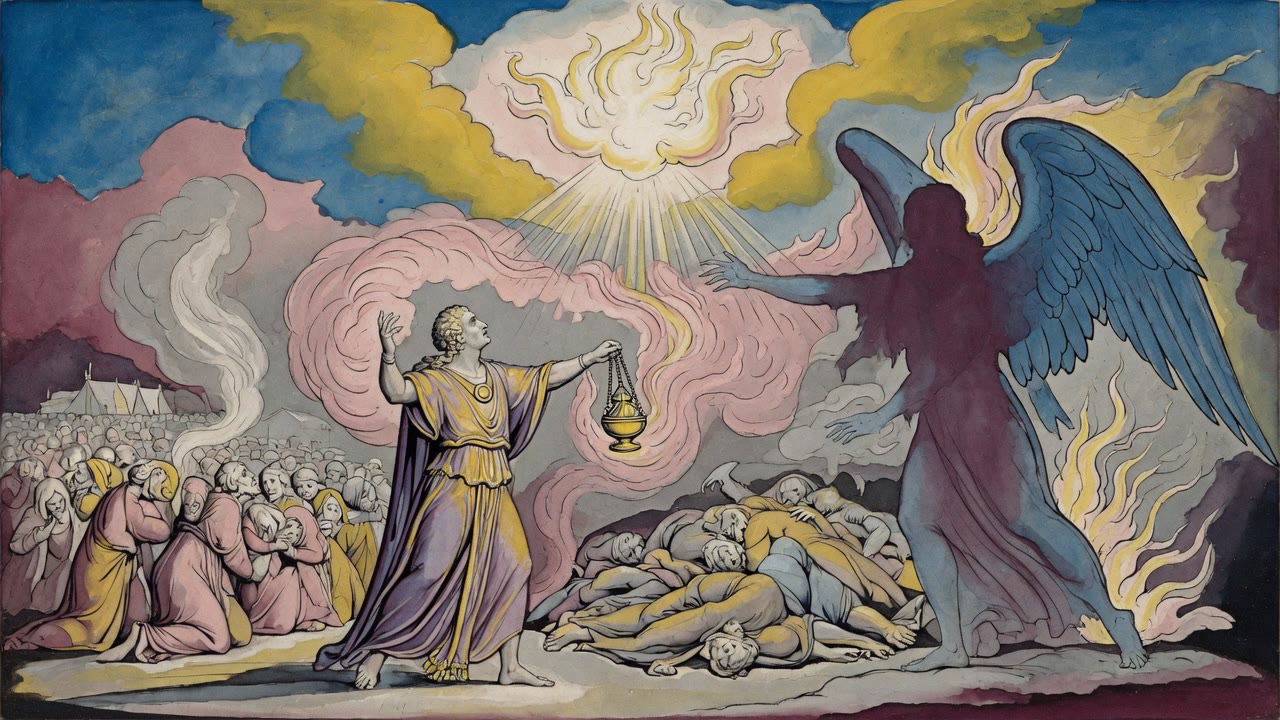
On the day the sanctuary opened, joy thickened into festival. The fire that would eat the offering was meant to seal the work. Elisheva's sons took their pans and entered with incense of their own choosing. Fire came forth from before the Lord and consumed them, and they died (Leviticus 10:1-2). The same house that had held four joys now held two bodies and a silence Aaron would not break with public grief.
When the Lamp Goes Out Early
Rabbi Yehuda held a lamp in his teaching. When a lamp extinguishes on its own, it is good for the lamp and good for the wick. When it is forced out before its time, it is bad for both. The death of the young is that forced dark. The wick still had oil. The hand that snuffed it did not wait for the last drop.
Rabbi Nehemya answered with a fig tree. Fruit harvested at its hour is good for the fruit and good for the tree. Fruit left too long turns wormy under the sun. Students once fled a fig tree's shade because the owner rose early to pick, and they feared his suspicion. He found them and begged them back. One mitzvah (a commandment), he said, you performed with me, and you withheld it. He picked early so the sun would not ruin the figs. When he left them a day, the worms proved him right. So too, they said, the Holy One knows the hour of the righteous and takes them.
Elisheva's sons died in fire, not in soft harvest. The parable still presses: heaven's timing is not a mother's calendar. A lamp forced out and a fig taken at its peak are two ways to say the same hard thing. The living must interpret without the dead present to defend their hour.
A Living Dog and a Dead Lion
"A living dog is better than a dead lion" (Ecclesiastes 9:4). Rabbi Aha read not only "joined to the living" but "chooses." While breath remains, a person chooses the good inclination or the evil one. Hope attaches to the living, even to those who once stretched a hand against God's dwelling, if repentance has already begun its hard work.
Some who aided the Temple's ruin sit in a strange sleep: too guilty for easy resurrection, too repentant for simple erasure. They sleep an eternal slumber, neither crowned nor finished. The midrash leaves them there as a warning against tidy endings. Nadav and Avihu do not return to argue their case. Their mother remains among the living with a choice the dead no longer have: whether bitterness will be the only incense left in her house.
The midrash sets her as the picture of righteous joy cut short, while the wicked seem to laugh longer. The warning to fools is not that joy is fake. It is that joy in this world is not the final ledger. A living dog still chooses. A dead lion does not, no matter how glorious the carcass.
God Stops Rejoicing in His Works
When God finished creation, He saw all that He had made, and it was very good (Genesis 1:31). After human sin, the midrash says, He lifted His Shechinah (the Divine Presence) and no longer rejoices in His world the way He once did. "May the glory of the Lord endure forever; may the Lord rejoice in His works" (Psalms 104:31) becomes a hope pointed forward, not a description of the present hour.
The wicked seem to enjoy themselves now. The fools are told not to be foolish for that reason. Elisheva's emptied joy sits inside that larger pause. Pillars were set under the earth before the story of humans was finished. The world still stands. The rejoicing waits. A woman who lost two sons at the altar knows what it is for glory to endure while delight goes quiet.
She still has Moses. She still has Aaron. She still has Nahshon. Three joys remain, and they are not small. They cannot refill the two pans that fell from her sons' hands. No one has the right to ask her to smile for the camp. The camp must stop counting her blessings as if the fire never happened.
← All myths