Parshat Toldot6 min read

Esau Married Mahalat to Please Isaac and Kept His Other Wives

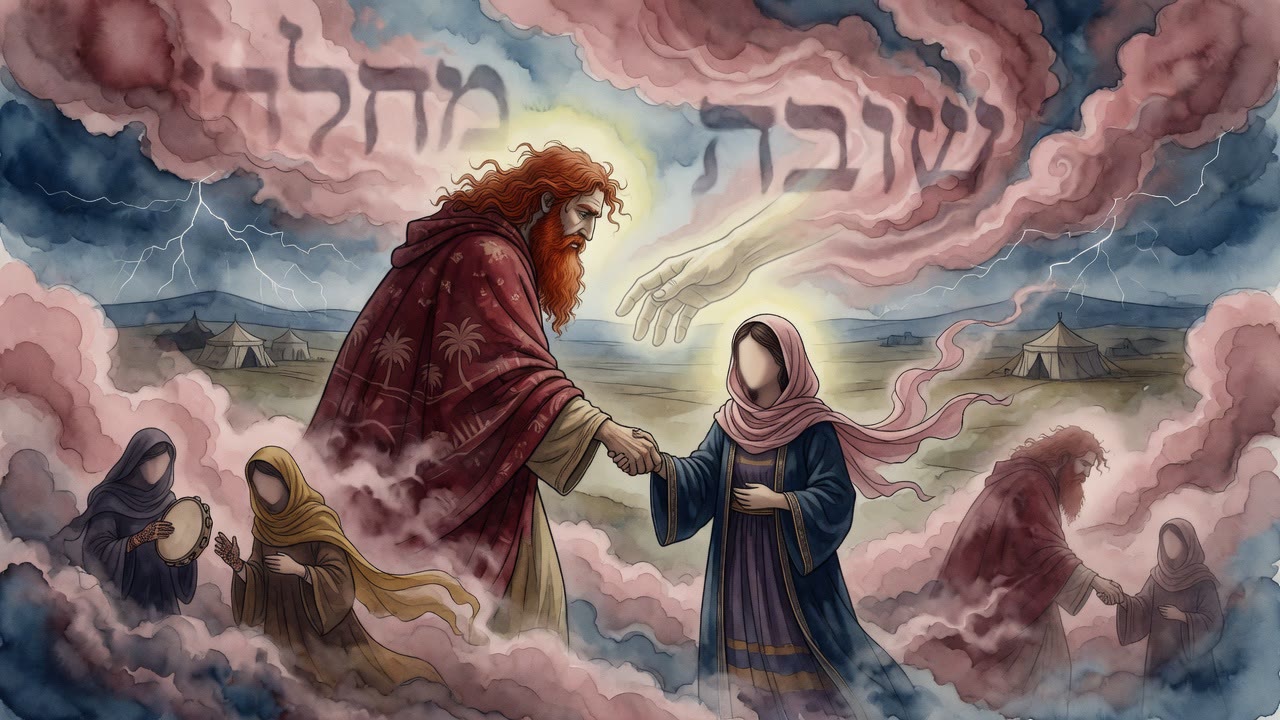
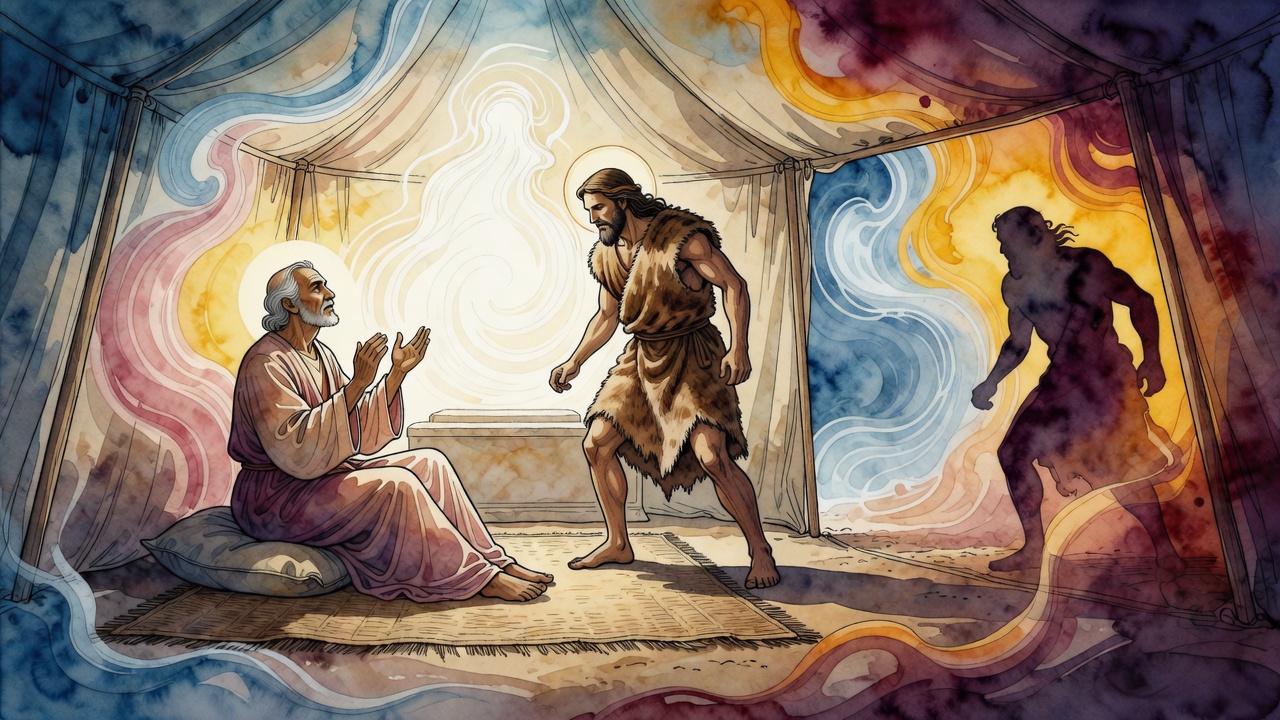
Isaac could not stand the women his son had married out of Canaan. So Esau rode down to Ishmael's camp and came back with a third one.

Curated by Arthur · Told by Maggid ·
Table of Contents
  1. He Came In With the Dish After the Blessing Was Gone
  2. A Third Wife, and Not One Sent Away
  3. Jacob Went North Because Staying Was a Snare
  4. Two Fears in One Night
  5. The Children Are Tender
Esau Married Mahalat to Please Isaac and Kept His Other Wives Click for full size

He Came In With the Dish After the Blessing Was Gone

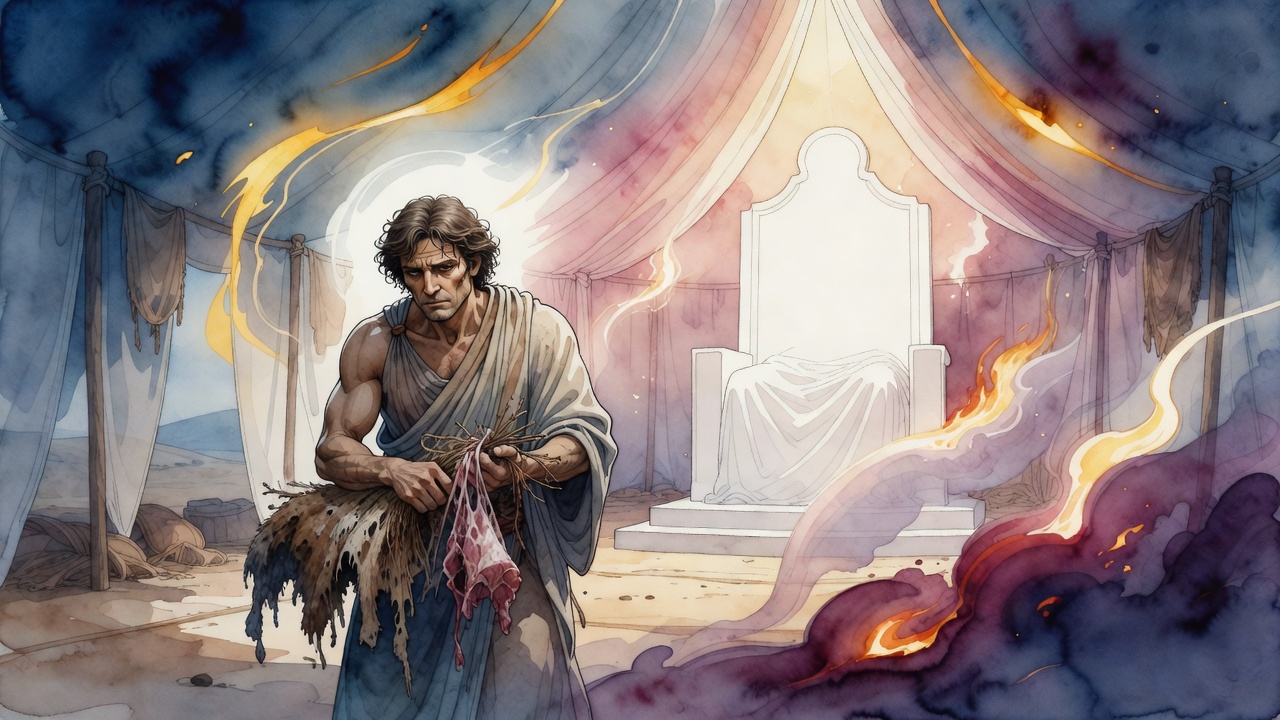
Esau had hunted it himself and cooked it himself, the way his father liked it, and he carried it in warm.

"Let my father arise, and eat from his son's game, so that your soul will bless me."

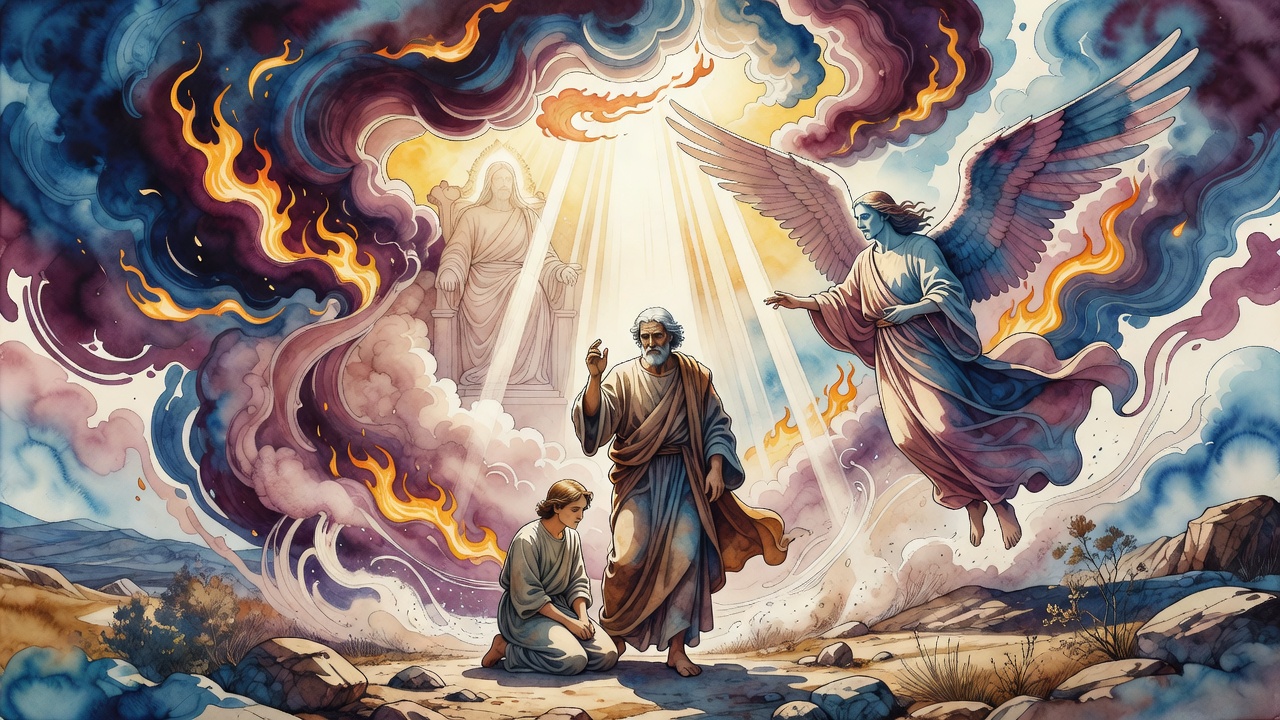
Isaac began to shake. Not a tremor. The whole body, on the bed, in front of his elder son, because the blessing had gone out of the room an hour earlier on a younger man wearing goatskins on his arms.

Esau put the dish down and cried out, and then went quiet, and then did the arithmetic. The old man would not last forever. The days of mourning for his father were coming, and after the mourning there would be a brother to deal with, and no witnesses left who mattered.

He never got the blessing. What those hands earned him was something else. Everything his line would later close its grip on, all the way down to Rome, it held by the merit of that one meal carried in to a blind man, the way a spider holds a wall with nothing but hands. And the words he used at the door came back to him in the end, turned around. He had said, let my father arise. What rose was God, and His enemies scattered.

A Third Wife, and Not One Sent Away

The wives were the other wound, and that one was still open.

Esau had married out of Canaan, twice, and both women were a daily grief to his parents. He could see it. He was not a subtle man but he was not blind either, and he could see what his father's face did when they came into a tent.

So he rode south to Ishmael's camp and asked for Mahalat, the sister of Nevayot, Abraham's own granddaughter. Right family. Right blood. A man turning himself around in front of his father.

Heaven began to let it go. Something was released, and the road back was open for about the length of that ride.

Then he came home with her and put her in the house with the other two, and sent nobody away.

Divorce the first ones and it would have been a return. What he did instead was add. Pain on top of pain, thorn on top of thorn, one more woman into a house that was already full, and the house stayed exactly what it had been with a new wife in it and a father who still could not sit at ease in his own tent.

Jacob Went North Because Staying Was a Snare

Jacob left Beersheba for Haran while all this was going on, and he did not leave because travel improves a man.

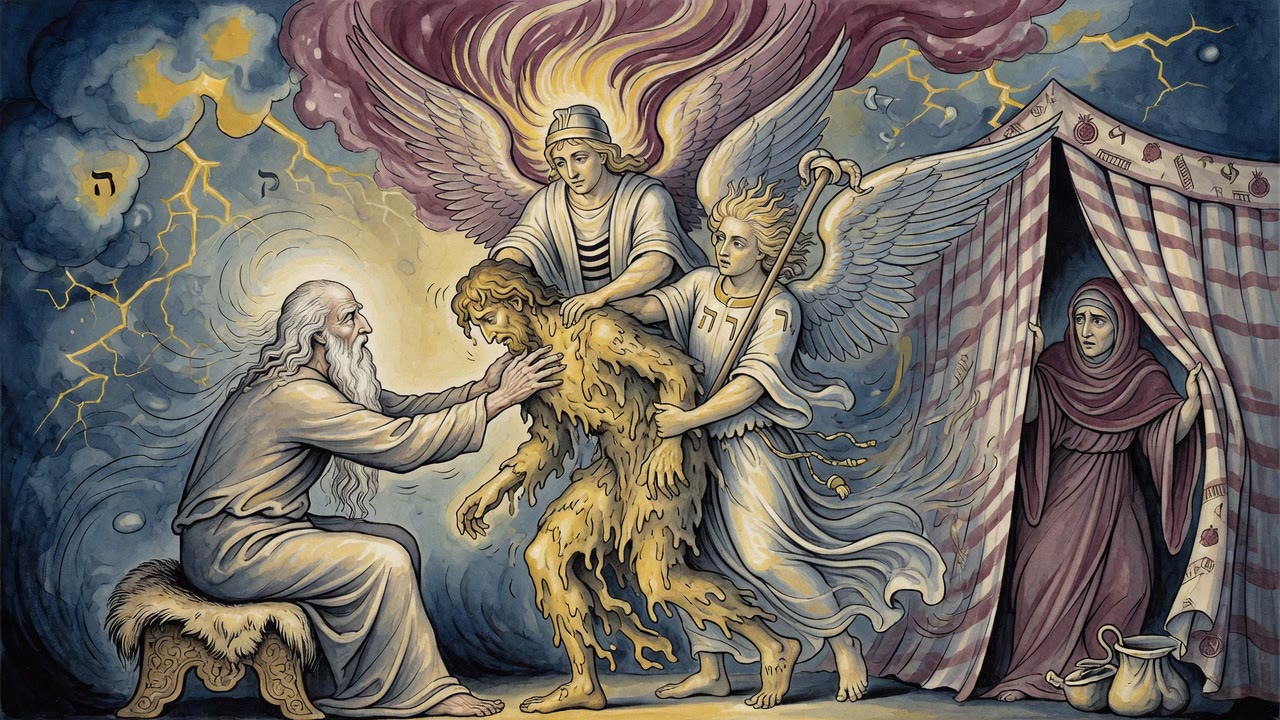
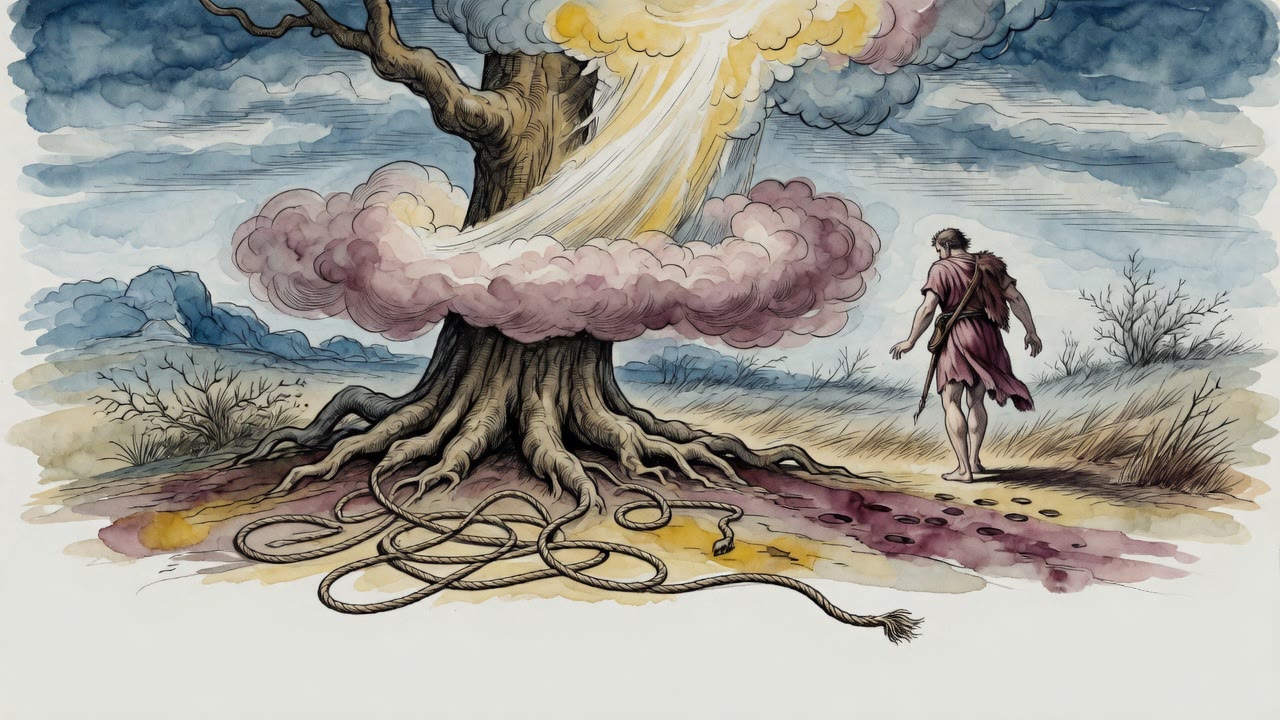
Two households in that country had turned against heaven and were angry, and their anger had a name in it, and the name was his. A snare had been set out of other men's mouths. He walked out of it northward with a staff and nothing else, and stayed away twenty years.

Two Fears in One Night

The messengers came back from Seir with a short report. Your brother is on his way to meet you. He has four hundred men.

Jacob was very frightened, and he was distressed, and those are not the same thing.

He was frightened that he would be killed. He was distressed that he would kill. Both roads out of the next morning ended with a brother dead, and he could not find a third road, and he said so to himself in plain words. If he overcomes me, he kills me. If I overcome him, I kill him.

Then he started counting what his brother had, the way a man counts spears on a ridge.

Twenty years Esau had been living in the Land. Twenty years Jacob had not. Twenty years Esau had gotten up every morning within reach of his father and mother and served them face to face, while Jacob had been in Haran arguing over spotted sheep. Say Esau comes at him carrying all of that.

And under that, the worse thought. Esau had said it out loud once, and Jacob had never stopped hearing it. The days of mourning for my father will approach. Say the old man was already dead. Say the clock had already run out and nobody had sent word.

God had told him to go back to the land of his fathers, in those words, and he was terrified anyway, because a promise in this world is not a receipt.

The Children Are Tender

Nobody died. They met, and Esau ran, and the two of them stood in the road holding each other and weeping in front of four hundred armed men who had been brought for something else.

Then Esau made his offer. Let us go together. I will travel in front of you.

Jacob said no, and he said it in the only terms that could not be argued with.

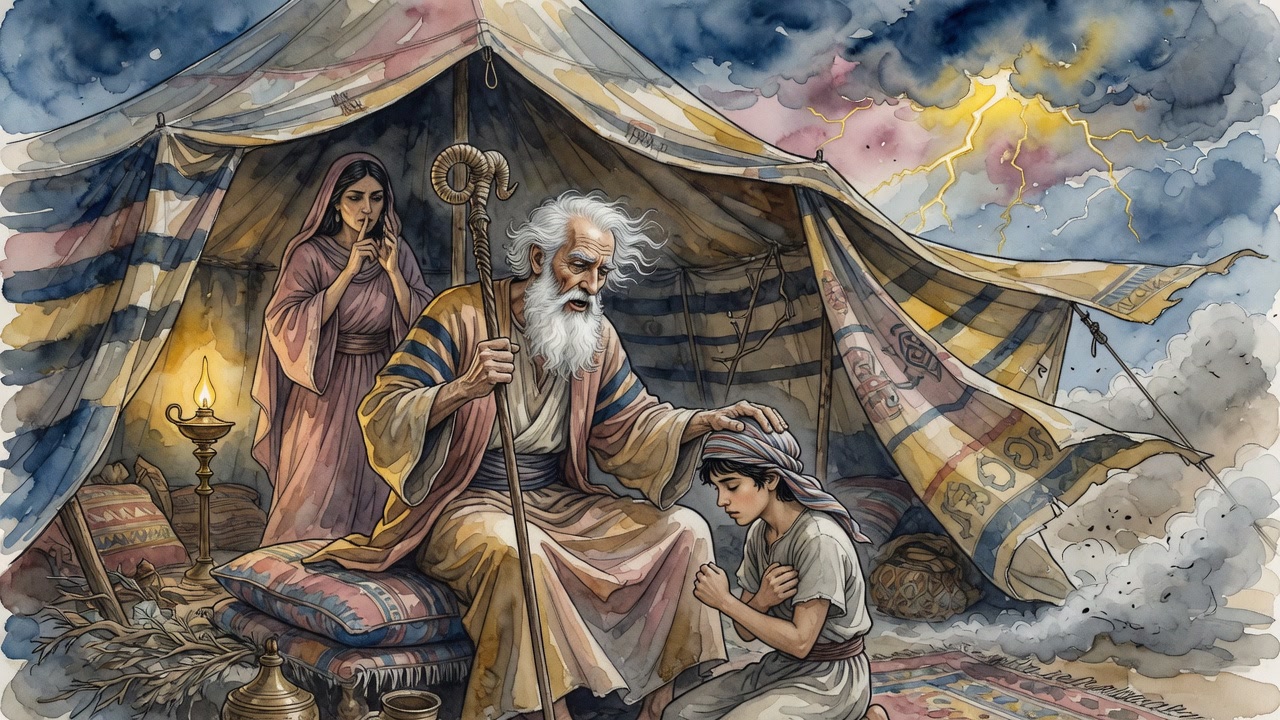
"My lord knows that the children are tender, and the nursing flocks and cattle are upon me. If they drive them hard one day, all the flocks will die."

Lambs born that season. Toddlers. Ewes still feeding. Push that column at a hunter's pace for a single day and there would be nothing left of it by evening, and no army in the world can walk slowly enough for a newborn animal.

Esau took his four hundred and went back to Seir the same day, at the pace of men with nothing fragile to carry. Jacob went the other way at the pace of the youngest thing in his camp, and every living creature that had come out of Haran with him arrived.


← All myths
From the tradition

Sources

4 sources

The texts behind this telling. Some cards carry a translation of the source; others are our own retelling of it, and each card says which. Every card links out to the original.

Bereshit Rabbah 67:13Bereshit Rabbah

Retold in our words. Read the original at the link below.The Sefaria Midrash Rabbah, 2022 · CC-BY

Take the tale of Esau, brother of Jacob. He wasn't exactly winning any popularity contests with his parents.

(Genesis 28:8) tells us, "Esau saw that the daughters of Canaan were objectionable in the eyes of Isaac his father." Ouch. But what did Esau do about it? Instead of, you know, maybe reconsidering his life choices, (Genesis 28:9) says, "Esau went to Ishmael, and took Maḥalat the daughter of Ishmael, son of Abraham, sister of Nevayot, in addition to his wives, as his wife."

Wait, what?

The Rabbis of the Midrash (rabbinic interpretive commentary) saw something interesting in this. "Esau saw that the daughters of Canaan…Esau went to Ishmael." Rabbi Yehoshua ben Levi, as quoted in Bereshit Rabbah 67, suggests that Esau was giving "consideration to converting," a euphemism for repenting.

And this new wife, Maḥalat? The name itself becomes a symbol. "Maḥalat – as the Holy One blessed be He forgave [mahal] him for his iniquities. That even a name can carry the weight of divine forgiveness.

But then, Rabbi Elazar throws a wrench in the works. He points out that Esau took Maḥalat "in addition to his wives." And he says, "Had he divorced the first ones, it would have been correct, but, 'in addition to his wives' – pain upon pain." Ouch, again.

It's like adding insult to injury, "thorn upon thorn – it was an addition to a full house." It seems Esau's repentance, if that's what it was, was a bit… half-hearted.

And while Esau’s making questionable decisions, Jacob is on the move. "Jacob departed from Beersheba, and went to Haran" (Genesis 28:10). Rabbi Yudan, quoting Rabbi Aivu, connects this journey to (Proverbs 12:13): "In the transgression of the lips is an evil snare, but the righteous emerges from trouble."

The Midrash sees a direct link: "In the transgression of the lips is an evil snare – due to the rebellion that Esau and Ishmael rebelled against the Holy One blessed be He, and angered him, and, likewise, his wives angered Him, they encountered a snare." Their actions, their words, created a trap for themselves.

"But the righteous emerges [vayetze] from trouble – this is Jacob, 'Jacob departed from Beersheba, and went to Haran.'" Jacob's journey isn't just a physical one; it's a spiritual escape, a movement away from the mess that Esau and his family have created.

So, what do we take away from this little snapshot of family drama? Maybe it's a reminder that true change requires more than just surface-level actions. It demands a real commitment, a willingness to let go of the things that are holding us back. And sometimes, maybe, it means leaving a toxic situation behind, just like Jacob did, to find our own path.

Full source
Bereshit Rabbah 78:13Bereshit Rabbah

Retold in our words. Read the original at the link below.The Sefaria Midrash Rabbah, 2022 · CC-BY

It's often through layers of interpretation, connecting seemingly unrelated verses to reveal deeper truths. the story turns to a fascinating example from Bereshit Rabbah, a collection of rabbinic interpretations on the Book of Genesis.

The verse in question comes from (Genesis 33:13), where Jacob is speaking to Esau. He says, "My lord knows that the children are tender, and the nursing flocks and cattle are upon me; if they drive them hard one day, all the flocks will die." Seems straightforward. Jacob is just saying he needs to take it slow because his family and animals can't handle a forced march.

The rabbis saw something more. They weren't content with a simple, literal reading. They asked: what if this isn't just about Jacob and Esau? What if it's a metaphor for God's relationship with Israel throughout history?

The Midrash, the rabbinic interpretive tradition, begins to unpack it. "'My lord knows that the children are tender' – this is Moses and Aaron." Wow. Suddenly, Jacob's "tender children" become Moses and Aaron, the leaders of the Israelites. And "'the nursing flocks and cattle are upon me' – this is Israel," as the prophet Ezekiel says (34:31), "You, My flock, the flock of My pasture, you are people." So, Jacob’s concern mirrors God’s concern for the well-being of the Jewish people.

Then comes a chilling thought. Rav Huna, quoting Rav Aḥa, says that if it weren't for God's mercy, "if they drive them hard one day," the entire flock would have died in the days of Hadrian. Hadrian, the Roman emperor known for his brutal suppression of the Bar Kokhba revolt and persecution of Jews! The Midrash sees Jacob's words as a prophecy, a warning that excessive pressure on the Jewish people could lead to their destruction.

But it doesn't stop there. Rabbi Berekhya, citing Rabbi Levi, offers another interpretation. "'My lord knows that the children are tender' – this is David and Solomon." Now, Jacob's words are linked to the era of the Israelite monarchy. And again, "'the nursing flocks and cattle are upon me' – this is Israel," echoing Ezekiel's words.

And once more, Rav Huna, in the name of Rav Aḥa, warns that without God's mercy, "if they drive them hard one day," the entire flock would have died in the days of Haman. Haman, the villain of the Purim story who plotted to annihilate the Jews of Persia! The parallel is striking. Jacob's plea becomes a timeless reminder of the fragility of the Jewish people and the constant threat of annihilation.

What are we to make of this? Is it just clever wordplay? I don't think so. They're living documents, constantly being reinterpreted and reapplied to new situations. They offer a framework for understanding our own history, our own struggles, and our own relationship with God. The Rabbis, through Bereshit Rabbah, invite us to see ourselves in these ancient narratives, to recognize the patterns of persecution and resilience that have shaped the Jewish experience for centuries. And ultimately, they remind us of the enduring need for compassion, understanding, and divine mercy.

Full source
Bereshit Rabbah 66:7Bereshit Rabbah

Retold in our words. Read the original at the link below.The Sefaria Midrash Rabbah, 2022 · CC-BY

Our story begins with Esau, the elder twin of Jacob. He approaches his father, Isaac, with a request, a plea for a blessing. (Genesis 27:31) tells us, "He, too, prepared delicacies, and brought them to his father, and said to his father: Let my father arise, and eat from his son’s game, so that your soul will bless me.” It seems straightforward enough. A son seeking his father's blessing.

The rabbis of the Talmud see something deeper here. A connection, perhaps even a prophecy.

Rabbi Ḥama bar Ḥanina makes a startling association, linking Esau's actions to the spider mentioned in (Proverbs 30:28): "The spider grasps with hands." What's the connection? Well, Rabbi Ḥama bar Ḥanina suggests that the "grasping" nature of the spider – often understood allegorically as the Roman Empire, said to be descended from Esau – stems directly from Esau's act of preparing delicacies. The spider, with its many legs, relentlessly weaving its web to ensnare its prey. Is it a metaphor for the empire's relentless expansion and its hunger for power? The Rabbis certainly thought so. The merit, if we can even call it that, allowing the spider (Rome/Esau) to grasp, comes from those very hands that "prepared delicacies." A chilling thought.

There's more. The passage highlights Esau's specific words: "Let my father arise." Bereshit Rabbah suggests that this seemingly innocent phrase becomes a focal point for divine justice. Because Esau tells his father, "Let [my father] arise," retribution will be exacted against him using the very same expression. How? Through the powerful words of (Psalm 68:2): “May God arise…His enemies scatter.”

The very words Esau used to coax his father into granting a blessing become the instrument of his future downfall, a prophecy of the scattering of his descendants. It's a stunning example of how words, actions, and intentions can reverberate through time, shaping not only individual destinies but the fates of entire nations.

What seemingly small actions are we taking today that might have unforeseen consequences down the line? What "delicacies" are we preparing, and what might they inadvertently empower? The story of Esau and the spider serves as a potent reminder that even the simplest acts can carry within them the seeds of both blessing and curse, empire and destruction, and ultimately, divine justice.

Full source
Bereshit Rabbah 76:2Bereshit Rabbah

Retold in our words. Read the original at the link below.The Sefaria Midrash Rabbah, 2022 · CC-BY

It’s a uniquely human experience, and it's exactly the kind of layered emotion we find in the story of Jacob's reunion with Esau.

In (Genesis 32:8), it says "Jacob was very frightened and distressed." But why both? Why not just one? The rabbis of old, in their infinite wisdom, dug deep into this seemingly simple verse.

Rabbi Yehuda ben Rabbi Ilai, whose words are preserved in Bereshit Rabbah 76, offers a powerful explanation. He points out the redundancy: shouldn’t being frightened cause distress? He suggests that Jacob’s fear and distress were distinct, stemming from two separate anxieties. Jacob was frightened, Rabbi Ilai says, "lest he kill, and distressed lest he be killed." He’s caught in a terrifying bind, knowing that either he or his brother might not survive the encounter.

The layers don’t end there. Jacob's mind races, considering every possible disadvantage. "All these years, he [Esau] has been residing in the Land of Israel," Jacob frets. "Say that he comes against me by virtue of his residence in the Land of Israel!" Maybe Esau has gained some sort of merit, some advantage, simply by living in the land promised to their ancestors.

He continues, "All these years, he has been residing and honoring his parents; say that he comes against me by virtue of his honoring father and mother." Esau, despite their fractured relationship, had been present for their parents in a way Jacob hadn't. Could that give him an edge? And then, a chilling thought: "Say that this old man died and he will come against me to kill me.” Rabbi Ilai suggests that Jacob's distress wasn't only about Esau. It was fueled by the possibility of his father Isaac's death, and the potential for Esau to seek revenge.

Rabbi Yehuda ben Rabbi Simon adds another layer to this interpretation. He reminds us that God had told Jacob to “Return to the land of your fathers, to the land of your birth” ((Genesis 31:3)). But maybe, just maybe, Jacob thought that the stipulations he'd made way back when he left for Padan Aram ((Genesis 28:20)–22) – the promises and bargains he struck with God – only extended that far. "Say that the stipulations were until here: 'And He will protect me on this path' (Genesis 28:20), and not beyond that." Had he reached the limit of divine protection?

This leads to a challenging question: if Jacob, a righteous man, received promises of protection, why was he so afraid? Rabbi Yudan offers a stark answer: "From here [we learn] that there is no promise to the righteous in this world." This isn't to say that righteousness is meaningless, but rather that divine promises aren't guarantees of an easy life. As the Etz Yosef commentary explains, promises are conditional on righteous behavior, and even the most righteous person might fear they have fallen short.

Rav Huna, citing Rabbi Aḥa, reinforces this idea. He points to the verse "Behold, I am with you" ((Genesis 28:15)) and Jacob’s subsequent question, "if God will be with me?" ((Genesis 28:20)). Again, the implication is that even with divine assurances, uncertainty remains.

He offers another example, drawing from the story of Moses. God tells Moses, "For I will be with you" ((Exodus 3:12)), implying protection. Yet, we read, "It was on the way, in the lodging, [the Lord encountered him and sought to kill him]" ((Exodus 4:24)).

Rabbi Pinḥas, citing Rabbi Ḥanin of Tzippori, brings a final example from I (Kings 1:36), where Benayahu echoes David’s decree to anoint Solomon as king. Even with divine favor seemingly assured ("Behold, a son is born to you, he will be a man of rest" – I (Chronicles 22:9)), Benayahu acknowledges that "Many adversaries may arise."

So, what does all this tell us? Perhaps it's a reminder that faith and fear can coexist. That even when we strive to live righteously, even when we receive blessings and promises, the human experience is still marked by uncertainty and vulnerability. Jacob’s fear and distress weren’t signs of weakness, but rather evidence of his deep understanding of the complexities of life, faith, and the ever-present potential for both good and evil. And maybe, just maybe, that's a comfort to us as we navigate our own fears and uncertainties in the world.

Full source