5 min read

Every Wilderness Miracle Will Return in Zion

Thunder, quake, and cloud will answer again in Jerusalem. From the sea they were led in mercy toward the mountain of the holy Shekhinah, the Divine Presence.

Curated by Arthur · Told by Maggid ·
Table of Contents
  1. Thunder Answered by Wedding Sound
  2. When the Wilderness Was a Punishment Word
  3. Led in Mercy to the Mountain of Presence
  4. What the Camp Must Carry Forward

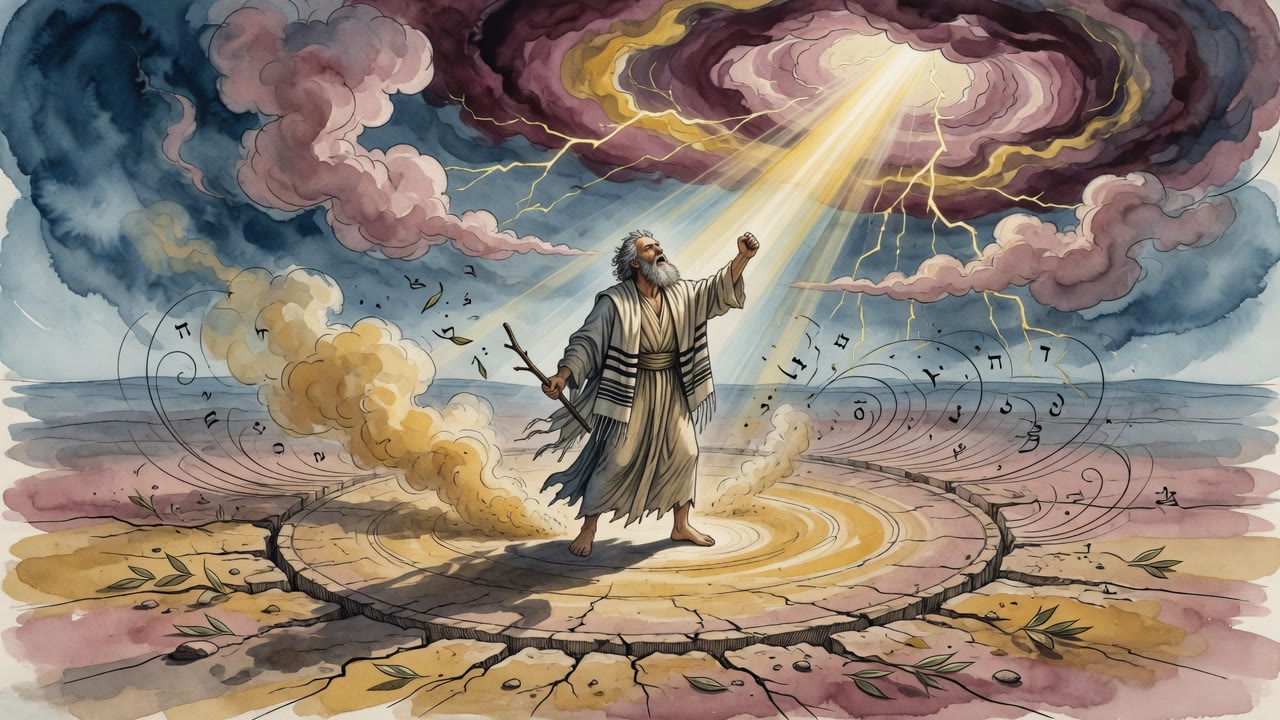
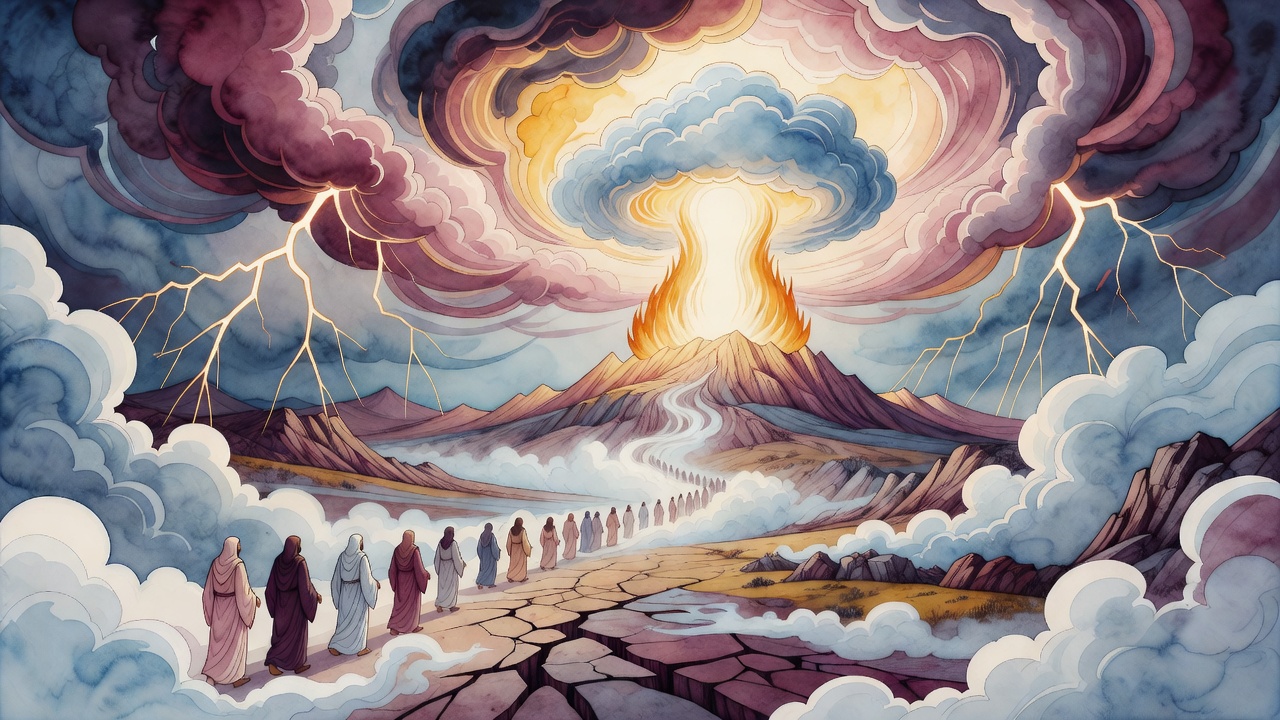
Moses opened his mouth on the plains of Moab and the old road rose behind his words: thunder at the mountain, a quaking earth, a cloud by day, a path cut through water. The people who heard him still had dust of that road in the seams of their clothes. He was not giving them nostalgia. He was giving them a future with the same verbs.
Every Wilderness Miracle Will Return in Zion Click for full size

All the miracles that He did for Israel in the wilderness, He is likewise going to do in Zion. The midrash pairs the phrases until the ear cannot unhear them. "These are the words" in the wilderness (Deuteronomy 1:1) answers "these things I will do" over Zion (Isaiah 42:16). Darkness turns to light in both maps. Rough places level in both maps.

Thunder Answered by Wedding Sound

In the wilderness the people saw the thunderings, the qolot stacked until the eye almost saw sound (Exodus 20:15). In Zion the prophet hears the sound of joy and the sound of gladness, the voice of bridegroom and bride (Jeremiah 33:11). The same root-word for sound moves from dread to wedding. What began as a mountain on fire becomes a city that can finally celebrate without looking over its shoulder.

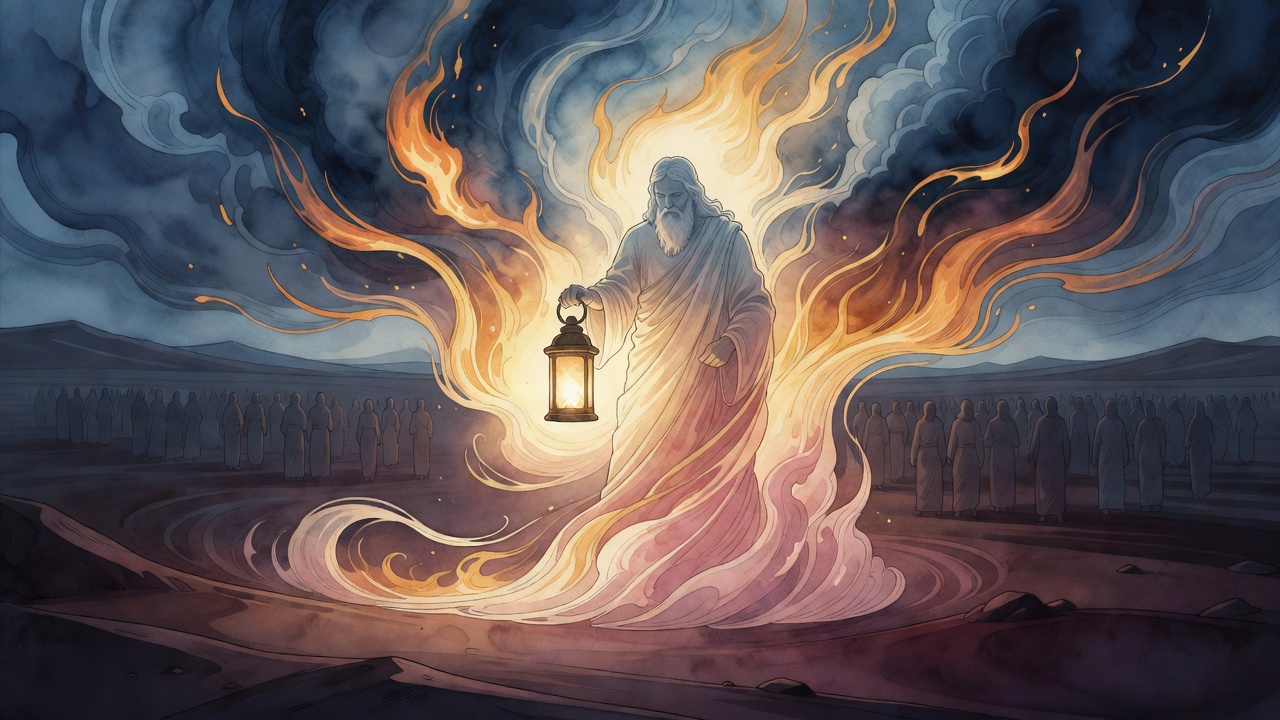
The earth quaked in the wilderness (Psalms 68:9). "I will cause the heavens and the earth to quake," says the word over the rebuilt house (Haggai 2:6). The Lord went before them by day in the desert (Exodus 13:21). "For the Lord shall go before you," says the comfort over the return (Isaiah 52:12). Guidance does not retire when the manna stops. It relocates.

When the Wilderness Was a Punishment Word

Isaiah says the wilderness and the arid land shall be glad (Isaiah 35:1). Why say that? Because Hosea had already turned "wilderness" into a threat: I will make her like a wilderness and render her like an arid land (Hosea 2:5). When Israel transgressed, the desert stopped being only memory of mercy and became a picture of divorce. Isaiah's gladness is therefore not scenery. It is the undoing of a sentence. The place of punishment is scheduled to sing.

Moses on the plains stands between those two uses of wilderness. He remembers the miracles. He also knows how quickly a camp can turn a miracle into a complaint. The pairing with Zion is a promise that the story is not trapped in sand. The same God who staged wonder in emptiness will stage wonder in a city with walls.

Led in Mercy to the Mountain of Presence

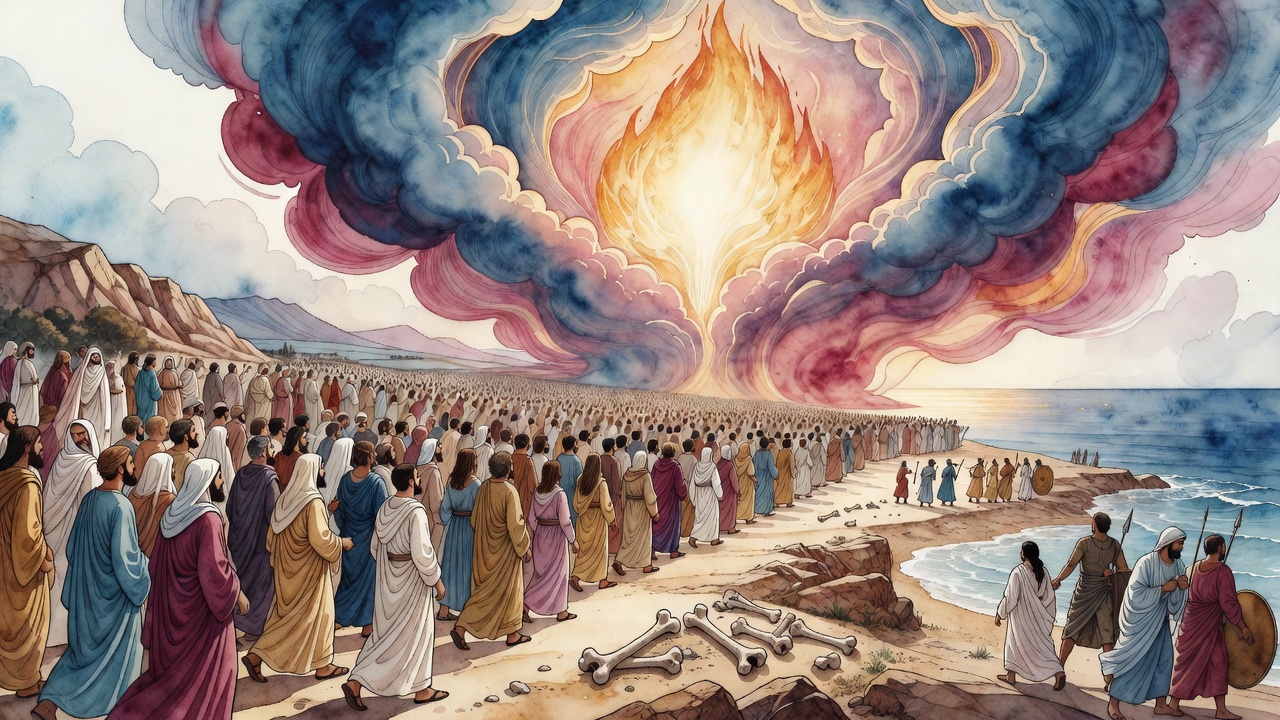
At the sea the song already knew the destination. Targum hears Exodus 15:13 not as bare geography but as spiritual homecoming: You led in Your mercy the people You redeemed, and gave them the heritage of the mountain of Your sanctuary, the dwelling of Your holy Shekhinah (the Divine Presence). Three gifts stack in one verse. Mercy: how they were led, b'chesed, not by mere force. Redemption: a price paid, a release purchased. Heritage: the mountain given as inheritance, not as a prize for perfect behavior.

The Shekhinah (God's indwelling presence) is named at the sea, long before boards and curtains, long before stone courses in Jerusalem. The destination was never only coordinates. The destination was proximity. Exodus without Sinai is escape. Exodus with the mountain of Presence is inheritance.

What the Camp Must Carry Forward

If Zion will replay the wilderness wonders, then the camp must replay the wilderness loyalty, the days when they followed the cloud without a map app and a market. The pairing is comfort for exiles and warning for the comfortable. Comfort: the miracles are not museum pieces. Warning: the God who quaked Sinai can quake the Temple mount, and the God who went before can also wait until the people turn their faces.

Stand in Moab with Moses for a breath. Hear thunder become wedding sound. See the cloud become a guide into a city. Feel the sea's mercy still pulling toward a mountain where a Presence already waits. The road is long, but the verbs match.

A child in the camp of Moab does not remember the sea. He only knows manna stories and the feel of Moses' voice shaking the air. For him the pairing is pure future: one day a city will quake the way a mountain once quaked, and joy-sound will answer thunder-sound, and the same Lord will go before them into streets with names.

An old woman who did cross the water closes her eyes and tastes salt. Mercy led them. Heritage waited. The Shekhinah was already the point of the journey when they were still wringing the sea from their hems. She believes Moses not because the rhetoric is pretty, but because she has already lived half the verbs he is promising again.


← All myths
From the tradition

Sources

2 sources

The texts behind this telling. Some cards carry a translation of the source; others are our own retelling of it, and each card says which. Every card links out to the original.

Midrash Tanchuma, Devarim 1Midrash Tanchuma

Retold in our words. Read the original at the link below.Townsend 1989 translation of Midrash Tanhuma, S. Buber Recension · CC-BY

(Deut. 1:1:) “These are the words (elleh hadevarim).” May the name [of the Holy One, blessed be He,] be blessed and may His memory be exalted. All the miracles that he did for Israel in the wilderness, He is likewise going to do in Zion. It is written concerning the wilderness (ibid.), “These are the words;” and it is written concerning Zion (in Is. 42:16), “I will turn darkness before them into light and rough places into level ground. These things (elleh hadevarim) I will do, and I will not forsake them.” It is written concerning the wilderness (in Exod. 20:15), “Now all the people saw the thunderings (qol in the plural)”; and it is written concerning Zion (in Jer. 33:11), “The sound (qol) of joy and the sound (qol) of gladness, [the voice (qol) of the bridegroom and the voice (qol) of the bride].” It is written concerning the wilderness (in Ps. 68:9), “The earth quaked”; and it is written concerning Zion (in Hag. 2:6), “I will cause the heavens and the earth to quake.” It is written concerning the wilderness (in Exod. 13:21), “And the Lord went before them by day”; and it is written concerning Zion (in Is. 52:12), “for the Lord shall go before you.” It is written concerning the wilderness (in Deut. 30:9), “for the Lord shall be glad over you again”; and it is written concerning Zion (in Is. 65:19), “I will also rejoice in Jerusalem and be glad in My people.” [Also (according to Is. 35:1),] “The wilderness and the arid land shall be glad.” What did Isaiah see to say this? It is simply that, when Israel transgressed the Torah, Hosea arose and said (in Hos. 2:5), “I will make her like a wilderness and render her like an arid land.” For that reason Isaiah has said (in Is. 35:1), “The wilderness and the arid land shall be glad.” Now all the consolations of which Isaiah spoke are double, because (according to Is. 40:2) “she (i.e., Jerusalem) has received from the hand of the Lord double for all her sins.” So for that reason the consolations are double (in vs. 1) “Comfort, O comfort My people.” [Similarly (in Is. 51:12),] “I, I am the one who comforts you.” [Also (in Is. 51:9),] “Awake, awake.” [Also (in Is. 51:17),] “Rouse yourself, rouse yourself!” [Also] (in Is. 61:10),] “I will be glad with rejoicing.” [Also] (in Is. 35:2),] “It shall blossom with blossoms.” Another interpretation (of Is. 35:1), “The wilderness and the arid land shall be glad.” For what reason was this written? To teach you that when the Holy One, blessed be He, reveals His Divine Presence over Israel, He does not reveal it all to them on one occasion, because they would not have been able to persevere in this bounty all at once; for if He had revealed His bounty to them at one time, they would all have died. See what is written (in Is. 64:3), “From time immemorial they have not heard, nor has an ear perceived, nor has an eye seen a God besides you, who works for those who wait for him.” Go and learn from Joseph; for when he made himself known to his brothers after so many years, [when] Joseph said to them (in Gen. 45:3), “I am Joseph,” they all died, “and they could not answer him; [for they were dismayed because of him].” How much the more [would Israel be dismayed] at [a sudden revelation of] the Holy One, blessed be He! So what does the Holy One, blessed be He, do for them instead? He reveals himself to them little by little. At the beginning, He makes the mountains glad, as stated (in Is. 35:1), “The wilderness and the arid land shall be glad.” Then after that (ibid.), “the steppes shall rejoice […].” Then after that (in vs. 2), “It shall bloom abundantly.” Then after that (ibid.), “the glory of Lebanon shall be given to it.” Then after that (ibid.), “they shall see the glory of the Lord, the splendor of our God.” For that reason David said (in Ps. 102:17), “For the Lord has built up Zion; He has appeared in His glory.” It also says (in Is. 52:8), “for eye to eye they will see the return of the Lord to Zion.” And it also says (in Is. 25:9), “In that day they shall say, ‘See, this is our God; we waited for Him, and He delivered us; [this is the Lord; we waited for Him, let us rejoice and be glad in His salvation.’”

Full source
Targum Pseudo-Jonathan on Exodus 15:13Targum Pseudo-Jonathan on Exodus

Retold in our words. Read the original at the link below.The Targum of Jonathan ben Uzziel, trans. J. W. Etheridge, London, 1862 · Public Domain

Targum Pseudo-Jonathan on (Exodus 15:13) translates the end of the Song of the Sea not as a geographical promise but as a spiritual homecoming: Thou hast led in Thy mercy the people whom Thou hast redeemed, and given them the heritage of the mountain of Thy sanctuary, the place of the dwelling of Thy holy Shekinah.

Three gifts are stacked here in a single verse. First, mercy. The Aramaic b'chesdach tells us how they were led. Not by force, not by coercion, not even by sheer demonstration of power, but in chesed, the lovingkindness that keeps promises across generations. Second, redemption. The word pereqt means to ransom, to pay the price of release. The Holy One did not simply free Israel; He paid for them. Third, heritage. The mountain of sanctuary, which the Sages identified with Mount Moriah and ultimately with the Temple Mount in Jerusalem, was given as inheritance, not reward.

Notice what the Targum adds: the dwelling of Thy holy Shekhinah. The Shekhinah, the indwelling Presence, is already named here at the sea, long before the Tabernacle is built, long before the Temple stands. The Targumist wants us to understand that the destination was never just geography. The destination was proximity.

The Maggid leaves this thought: to be redeemed is not only to be pulled out of bondage. It is to be led, in mercy, toward a mountain where a Presence waits. Exodus without Sinai is escape. Exodus with Sinai is inheritance.

Full source