Parshat Beshalach5 min read

Four Clouds Wrapped Israel on Every Side

Rabbi Yoshiyah counted four clouds of glory around the camp. Before, behind, above, and underfoot, Israel walked inside a moving shelter of Presence.

Curated by Arthur · Told by Maggid ·
Table of Contents
  1. How Can the Boundless Go Before Them
  2. No Gap Between Cloud and Fire
  3. Walking on Presence
  4. Two Counts, One Escort

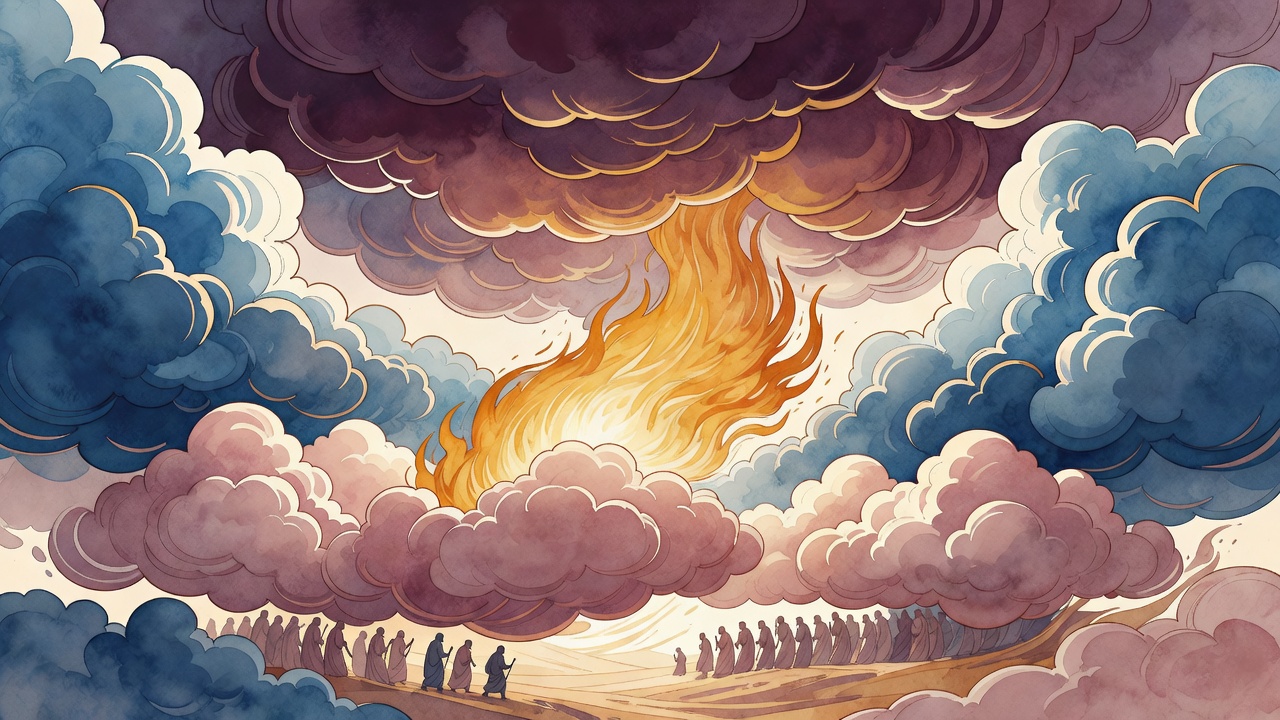
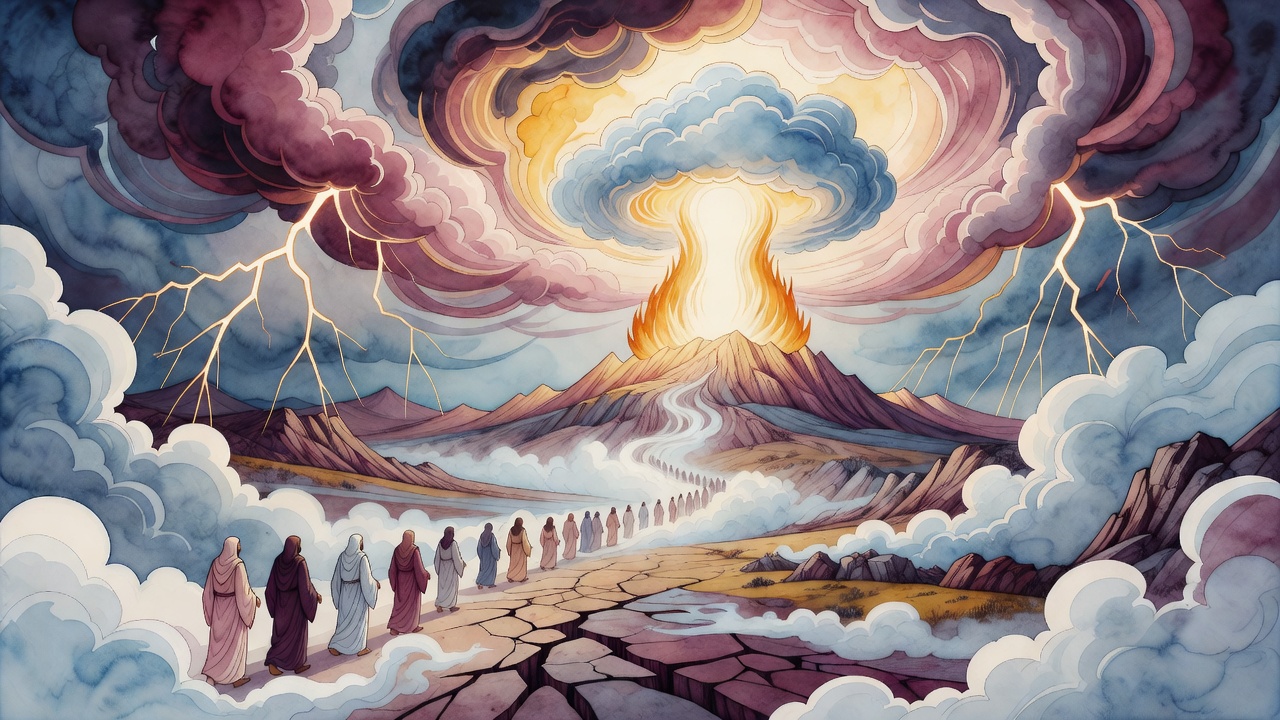
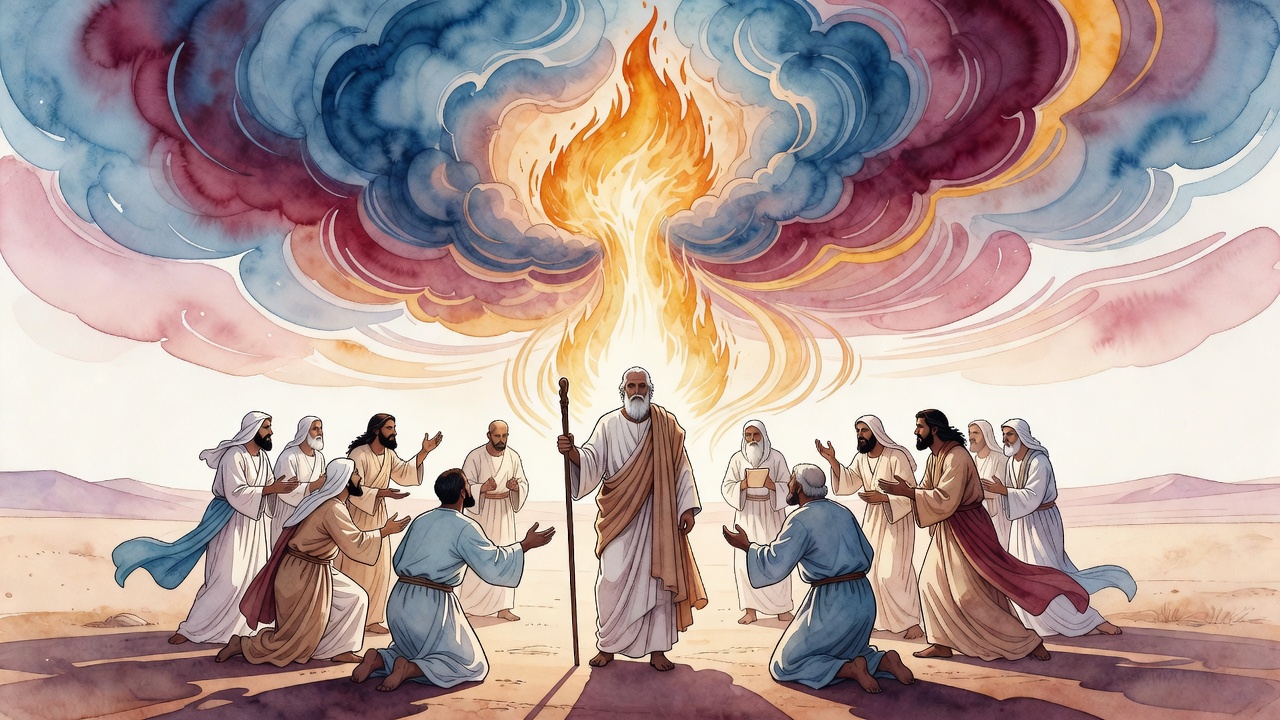
When Israel left Egypt, the road was sand and fear, and still they did not march naked to the sky. Glory took the shape of cloud. The Mekhilta records a dispute that is really two loves of the same shelter. Rabbi Yoshiyah taught four clouds. One went before, leveling path. One followed behind, sealing the rear. One hovered above against the sun. One spread underfoot so soles did not burn on the scorching floor. The nation walked inside a box of mercy with no open wall.

Four Clouds Wrapped Israel on Every Side Click for full size

Rebbi, Rabbi Yehudah HaNasi, counted two: one leading the journey, one resting over the Mishkan (the portable desert sanctuary) as the fixed sign of Presence at the center. Direction and dwelling. Road and home. Both sages agree the Exodus was not bare politics. It was travel under escort.

How Can the Boundless Go Before Them

Scripture says the Lord went before them by day. The Mekhilta flinches at a crude picture. Does the One who fills heaven and earth need to walk ahead like a guide on a trail? Jeremiah hears Him ask whether He does not fill heaven and earth. Isaiah's seraphim cry that the whole earth is full of His glory. Ezekiel sees glory that makes the earth shine. How then "went before them"?

The pillar of cloud and fire was not God stuffed into a moving point. It was accommodation, guidance made visible for a people newly unshackled, while true glory remained uncontainable. The midrash guards the principle: the Guide who seems to travel is the Presence no space can hold.

Slaves who had known only localized idols needed a moving sign. Prophets who would later know the boundless Name needed the Mekhilta's refusal to shrink Heaven into a weather effect.

No Gap Between Cloud and Fire

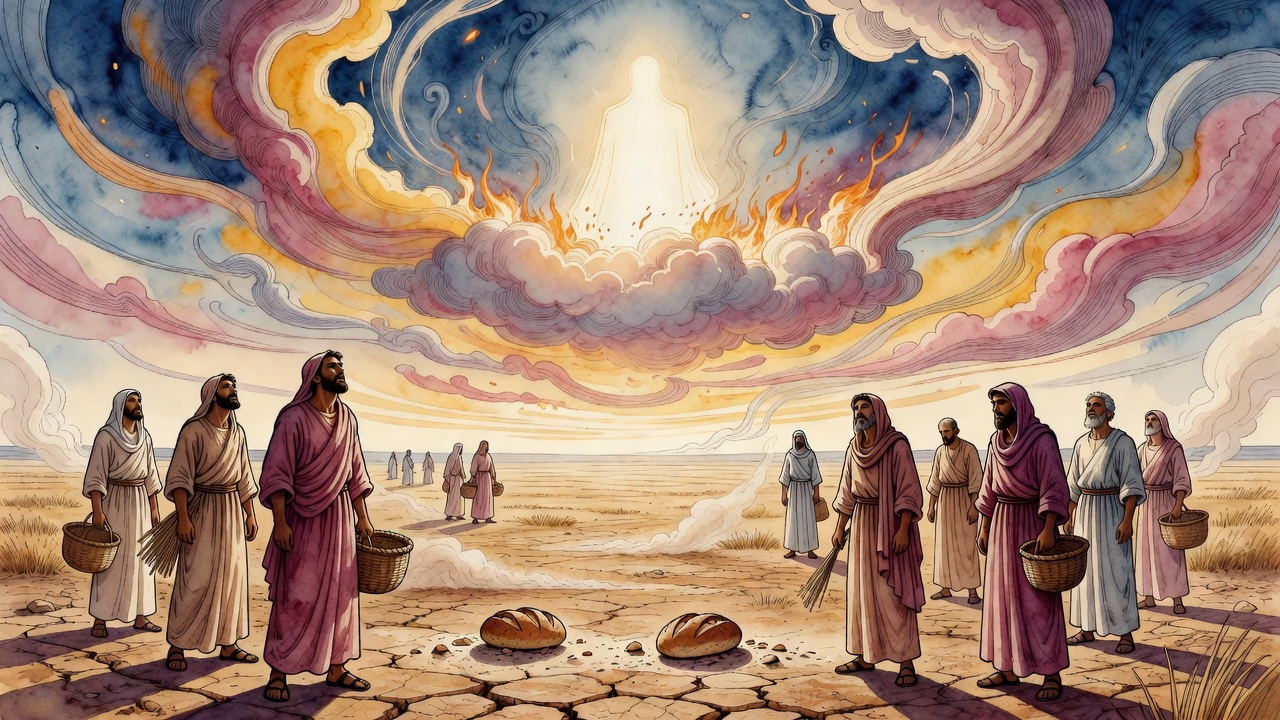
He did not dispel the pillar of cloud by day or the pillar of fire by night. Before the cloud had fully set in evening, the fire had already risen. No unguarded minute. No dark seam where Egypt's memory could slip a knife. Day-shelter and night-light overlapped like two hands trading a cup without spilling.

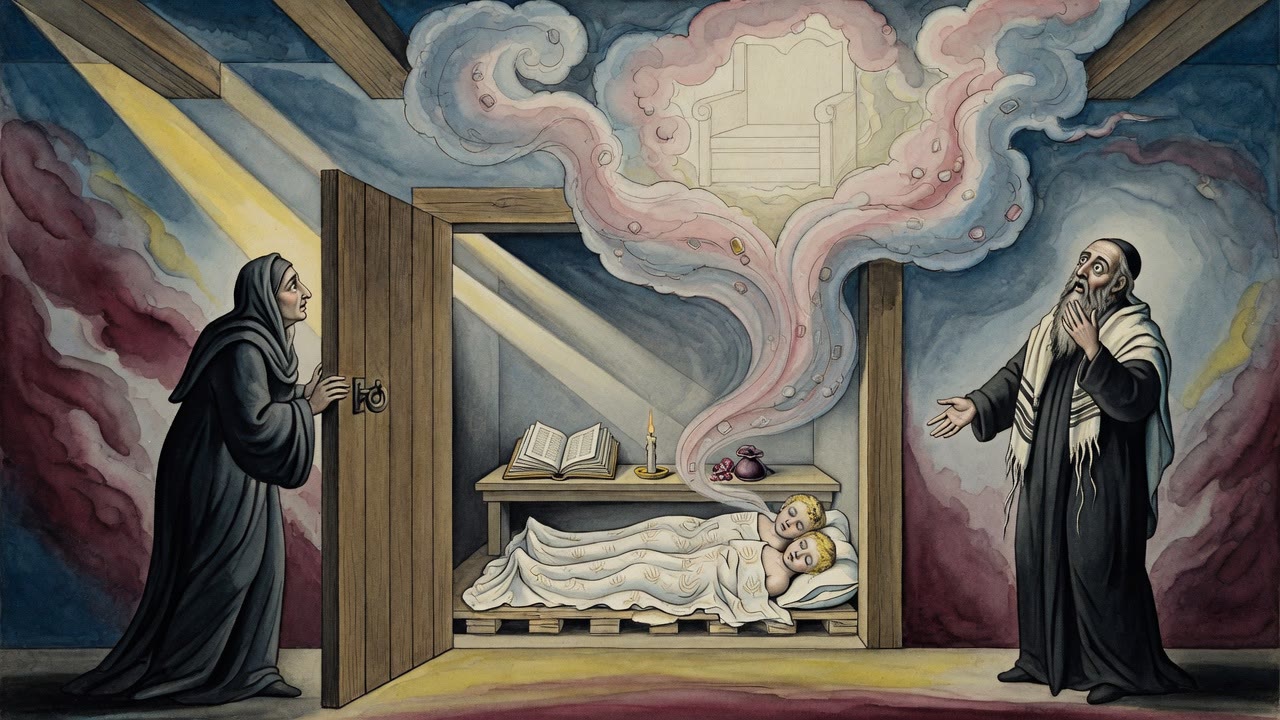
From that seamlessness the sages taught Sabbath deportment. Light the candles before daylight dies. Do not wait for full dark. As Heaven kindled fire while cloud still lingered, so a household kindles Shabbat light while Friday still has color. Wilderness care becomes kitchen law. The pillars taught time how to turn holy without a stumble.

A mother lighting wicks in a narrow room is, in this reading, copying the desert's handoff of protection. The copy is small. The pattern is the same.

Walking on Presence

Underfoot cloud is the strangest of Yoshiyah's four. Protection above and behind is imaginable. A floor of glory is almost too intimate. Israel did not merely follow a sign. They trod on kindness. Every step that did not blister was a small theology: the Holy One cares about soles as well as souls, about heat as well as ideology.

The rear cloud answers a different fear, the fear of what chases. Egypt's chariots lived in the mind long after the border fell behind. A cloud at the back is Heaven saying the past does not get unlimited access to the camp.

Children born in the desert would learn geography as layers of cloud. Ahead means the path is being smoothed. Behind means the old masters cannot easily close. Above means the sun is not the final tyrant. Below means the ground itself has been negotiated with Heaven.

Two Counts, One Escort

Four or two, the quarrel is about how tightly mercy wraps. Yoshiyah wants enclosure. Rebbi wants vector and center. A people needs both images. Sometimes salvation is a sealed room of cloud. Sometimes it is a leader-pillar and a sanctuary-marker, enough direction to move and enough holiness to camp. The Mekhilta keeps both because the wilderness was long enough to need more than one picture of help.

Whether the count is four walls of glory or two markers of path and home, the shared conviction holds. God did not free Israel and then shrug. The clouds of glory were visible proof that Presence marched every step of the way.

When later generations light candles early and read that the Lord went before them, they inherit this double care: never imagine God is small enough to be only a pillar, and never forget He loved Israel enough to look like one.

Elders kept the sequence because children need more than comfort. They need the shape of what happened.

In that shape, Heaven was not a footnote. Heaven was the pressure that made the next step possible.

The story ends where the sources end, without inventing a softer landing than the texts allow.

Still the camp repeated it, because repetition is how a people refuses to lose its own weather.


← All myths

From the tradition

Sources

3 sources

The texts behind this telling. Some cards carry a translation of the source; others are our own retelling of it, and each card says which. Every card links out to the original.

Mekhilta Tractate Vayehi Beshalach 1:23Mekhilta DeRabbi Yishmael

Retold in our words. Read the original at the link below.Mechilta, translated by Rabbi Shraga Silverstein · CC-BY

When the Israelites left Egypt and marched into the wilderness, they did not travel unprotected. God surrounded them with clouds of glory, miraculous pillars that shielded, guided, and enveloped the entire camp. But exactly how many clouds were there? The rabbis of the Mekhilta disagreed, and their debate reveals different visions of divine protection.

Rabbi Yoshiyah taught that there were four clouds accompanying Israel in the desert. One cloud went before them, scouting the path ahead and leveling the terrain. One cloud followed behind them, guarding the rear against enemies. One cloud hovered above, shielding the people from the brutal desert sun. And one cloud spread beneath their feet, so that they walked not on scorching sand but on a cushion of divine presence. In Rabbi Yoshiyah's vision, Israel was completely enclosed, wrapped on every side by the protective embrace of God.

Rebbi (Rabbi Yehudah HaNasi) offered a more restrained count. He taught there were only two clouds: one that traveled before the camp, leading the way through the trackless wilderness, and one that rested over the mishkan (the Tabernacle), marking the dwelling place of God's presence among the people. For Rebbi, the clouds were not an all-encompassing shield but directional markers, one for the journey forward, one for the sacred center.

Both positions reflect a shared conviction: the Exodus was not merely a political liberation. It was a journey conducted under supernatural escort. Whether four clouds or two, God did not simply free Israel and leave them to navigate alone. The clouds of glory (Exodus 13:21) were visible, tangible proof that the divine presence marched with them every step of the way.

Full source
Mekhilta Tractate Vayehi Beshalach 1:25Mekhilta DeRabbi Yishmael

Retold in our words. Read the original at the link below.Mechilta, translated by Rabbi Shraga Silverstein · CC-BY

(Exodus 13:21) "And the L–rd went before them by day": Can this be said? The Mekhilta opens with a sharp difficulty. If Scripture means these words literally, that the Holy One moved through space ahead of Israel as a guide walks ahead of travelers, how can that be reconciled with the verses that proclaim His unbounded presence? Is it not written (Jeremiah 23:24) "'Do I not fill the heavens and the earth?' says the L–rd"? A being who fills all of heaven and earth does not need to go before anyone, for there is no place He is absent from and no place toward which He must travel. And is it not written (Isaiah 6:3) "One seraph called to the other, 'Holy, Holy, Holy is the L–rd of hosts; the earth is full of His glory'"? The seraphim, who stand in the very presence of the Throne, testify that His glory saturates the entire world. And is it not written (Ezekiel 43:2) "And, behold, the glory of the G–d of Israel came from the east, His voice like the voice of many waters, the earth shining in His glory"? The prophet beheld a glory so vast that the whole earth blazed with its light.

How, then, am I to understand "And the L–rd went before them by day"? The rabbis press the question precisely so the reader will not collapse into a crude picture of a localized deity. The pillar of cloud and fire that led Israel was not a confinement of God to one moving point in the wilderness. Rather, it was a deliberate accommodation, a way of making His guidance visible and tangible to a people newly freed from slavery, while His true glory remained as boundless as these prophets declared. The midrash thus guards a central principle: the same God who appears to walk before Israel is the One whose presence no space can contain.

Full source
Mekhilta Tractate Vayehi Beshalach 1:28Mekhilta DeRabbi Yishmael

Retold in our words. Read the original at the link below.Mechilta, translated by Rabbi Shraga Silverstein · CC-BY

The Torah states that God "did not dispel the pillar of cloud in the day, and the pillar of fire at night." The Mekhilta reads this verse carefully and discovers two teachings hidden in its structure.

The first teaching is about divine precision. Before the pillar of cloud had fully set in the evening, the pillar of fire had already risen. There was no gap between them, no moment when Israel was left without guidance. The transition from daytime cloud to nighttime fire was seamless, one overlapping the other to ensure continuous protection.

The second teaching is about Sabbath observance. The Mekhilta says this verse "comes to teach us proper deportment for Sabbath eve." Just as the pillar of fire was kindled before the pillar of cloud disappeared, ensuring light was present before darkness arrived. So too must Sabbath candles be lit before the daylight fades on Friday evening.

This connection between the wilderness pillars and Sabbath candle-lighting is remarkable. The rabbis saw in God's own behavior a model for Jewish practice. God did not wait for total darkness before providing fire. He anticipated the need. In the same way, a Jewish household should not wait until Friday night has fully arrived. The candles go up while it is still light, a smooth, graceful transition from the ordinary week into the holiness of Shabbat (the Sabbath), mirroring God's own seamless care for Israel in the desert.

Full source