5 min read

God Told the Merrymakers Not to Lift Their Horns

Adam had canopies of precious stone and a heel that outshone the sun. He still ended as dust. At the table a man set his cup down, wine still sweet.

Curated by Arthur · Told by Maggid ·
Table of Contents
  1. Woe-Makers at the Table
  2. Abraham and the Knife That Waited
  3. God Among the Judges
  4. The Horn That Would Not Stay Up
  5. What the Quiet Ones Kept

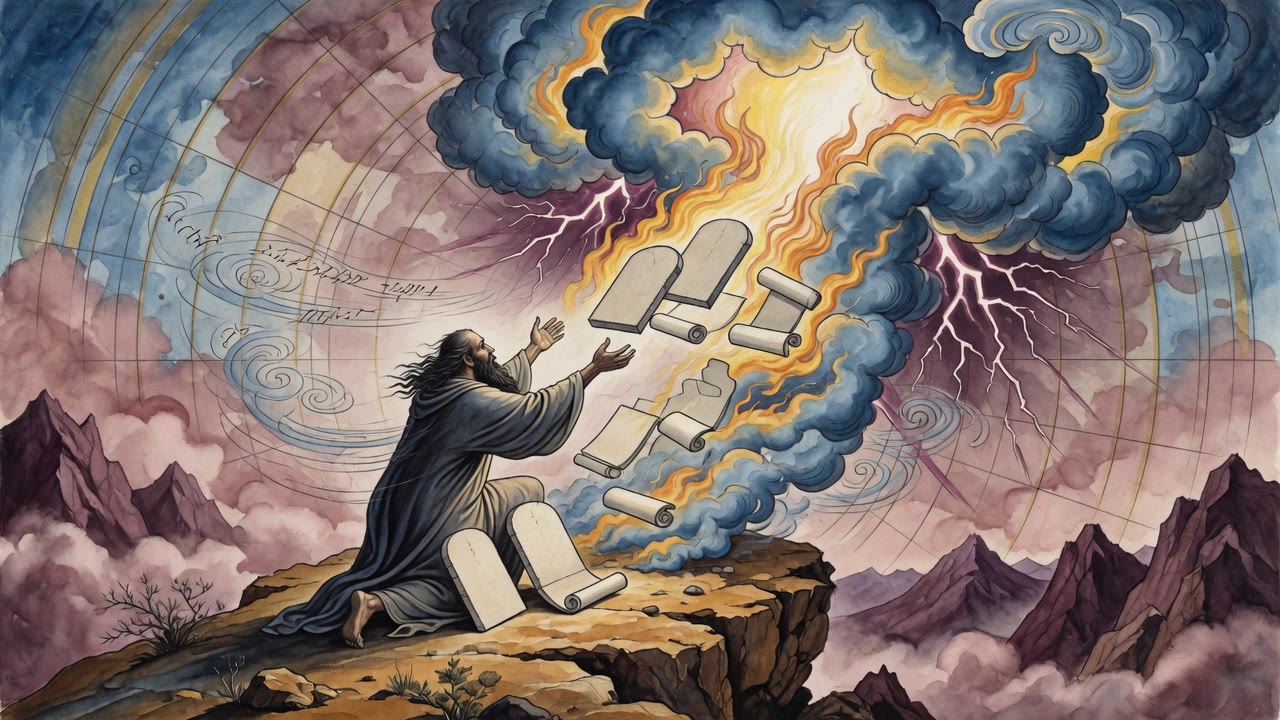
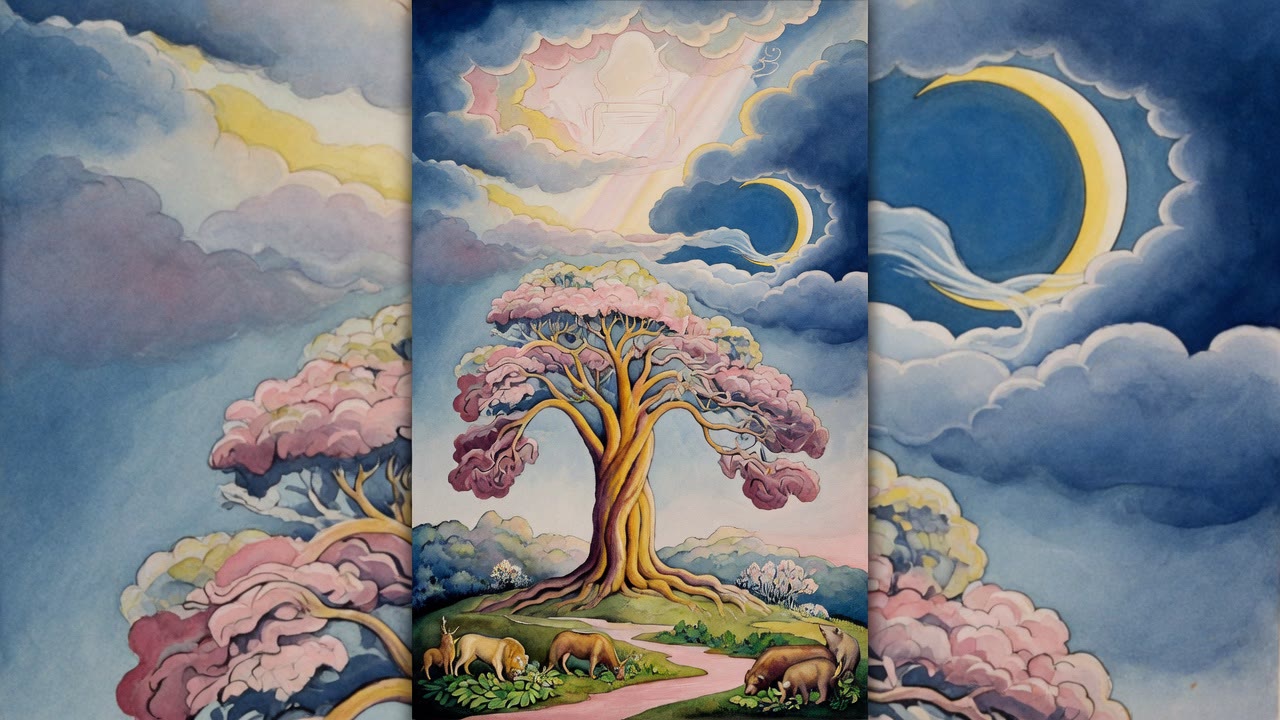
The merrymakers lifted their cups as if the world owed them music. God answered without music. Do not make merry. Do not lift up the horn. The righteous have not been happy in My world, so would you seek to be happy in it?

God Told the Merrymakers Not to Lift Their Horns Click for full size

Woe-Makers at the Table

Rabbi Levi called them woe-makers, hearts full of intrigues that turn a feast into confusion. Their laughter was not rest. It was a horn raised against the quiet of people who had already paid in full and still walked carefully.

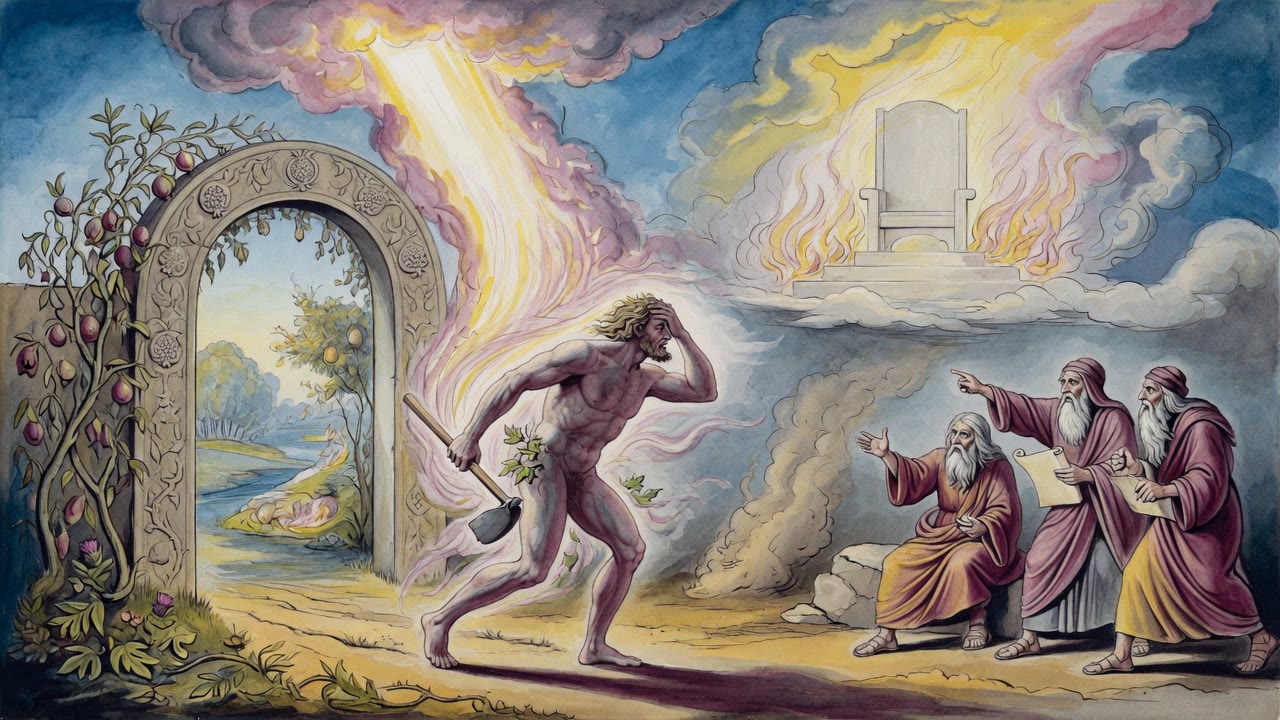
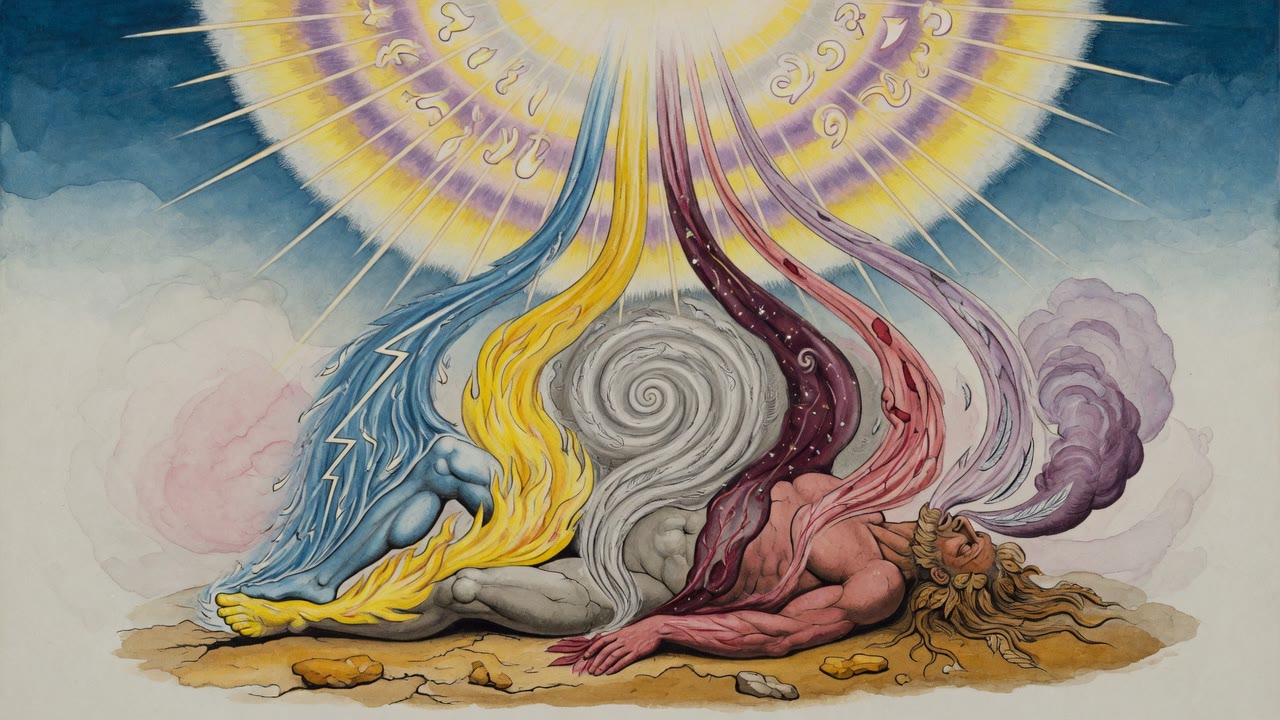
God set the first case on the table: the first Adam. The round of Adam's heel outshone the sphere of the sun. Do not be surprised. When a man makes two plates, one for himself and one for his household, whose does he make more beautiful? His own. Adam was made for the service of the Holy One. The sun was made for the service of mortals. If the heel already beat the sun, the face must have been a brightness the garden could barely hold.

Thirteen canopies, some said, of every precious stone. Eleven, said others. Ten, said the masters, counting differently the same verse from Ezekiel. After all that glory came the sentence: dust you are, and unto dust you shall return. The merrymakers wanted a horn. Adam received a grave.

Abraham and the Knife That Waited

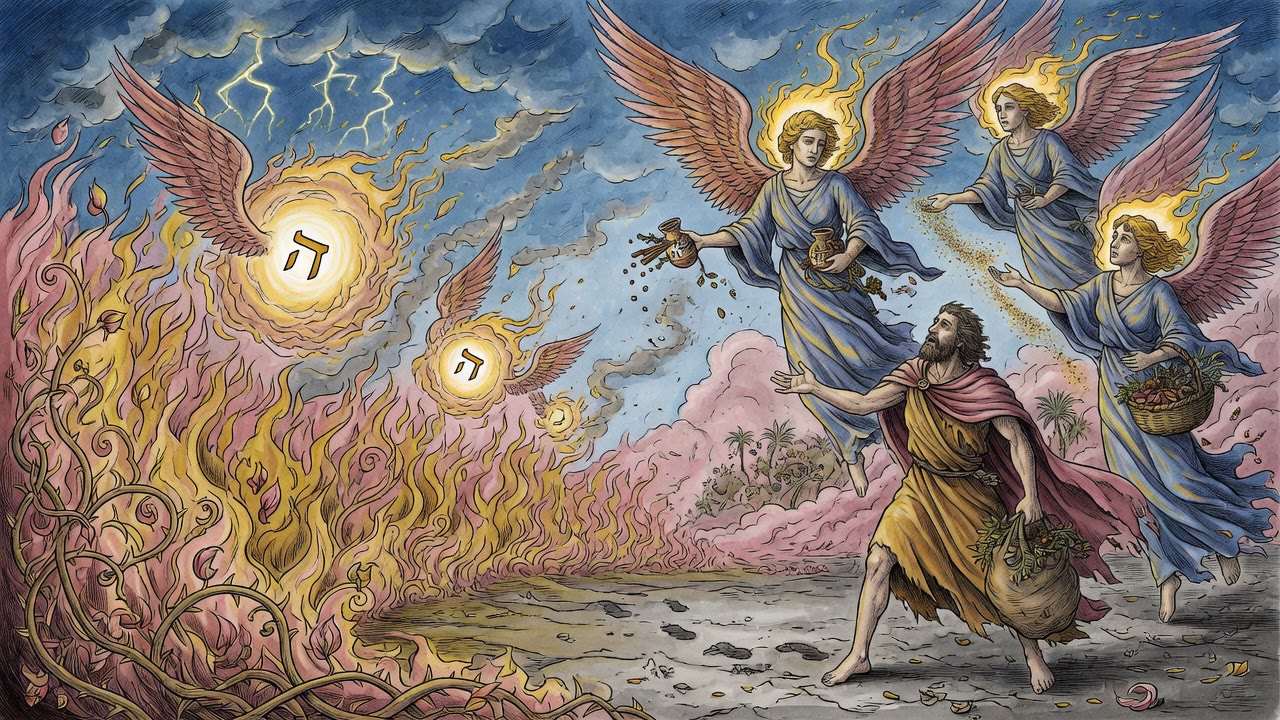
Abraham was not happy in My world, God said, so would you seek to be happy in My world? A son at a hundred years. Then the command on Moriah. The feast of birth turned into a climb with wood and fire and a knife that did not fall by Abraham's choice alone.

The woe-makers heard the list and still wanted their song. They mistook survival for ownership. Ben Sira in Jerusalem had already cut that boast short: stay not upon thy strength or wealth, and say not, It is in the power of my hand. Strength is a loan. Wealth is a weather. The hand that claims both as pure property has already lifted a horn God will lower.

Judgment does not wait for a throne room only. It stands in ordinary courts where partiality tries to sit down first.

God Among the Judges

Asaph sang it: God stands in the congregation of God; He judges among the gods. The midrash hears judges on benches, not idols on shelves. You shall not show partiality in judgment. Jehoshaphat told his officers there is no injustice with the Lord, no partiality, no taking of bribes.

God stands with them so they will not grow comfortable in the robe. I am with you, the verse says, which is comfort and threat at once. Isaiah said the Lord loves justice and hates robbery. Malachi promised a trial against those who defraud laborers, oppress widows, and turn the stranger from fairness.

Be in the midst of God and He shall judge. The merrymaker who lifts a horn in a corrupt court is the same soul who lifts a cup against Adam's dust. Both forget who is standing in the room.

The Horn That Would Not Stay Up

Do not lift up the horn, the psalm continued. The wicked want height. God answers with history: Adam's canopies collapsed into soil. Abraham's joy was interrupted by a test that still shakes every father who reads it. The judges who take bribes will meet a testimony that arrives quickly.

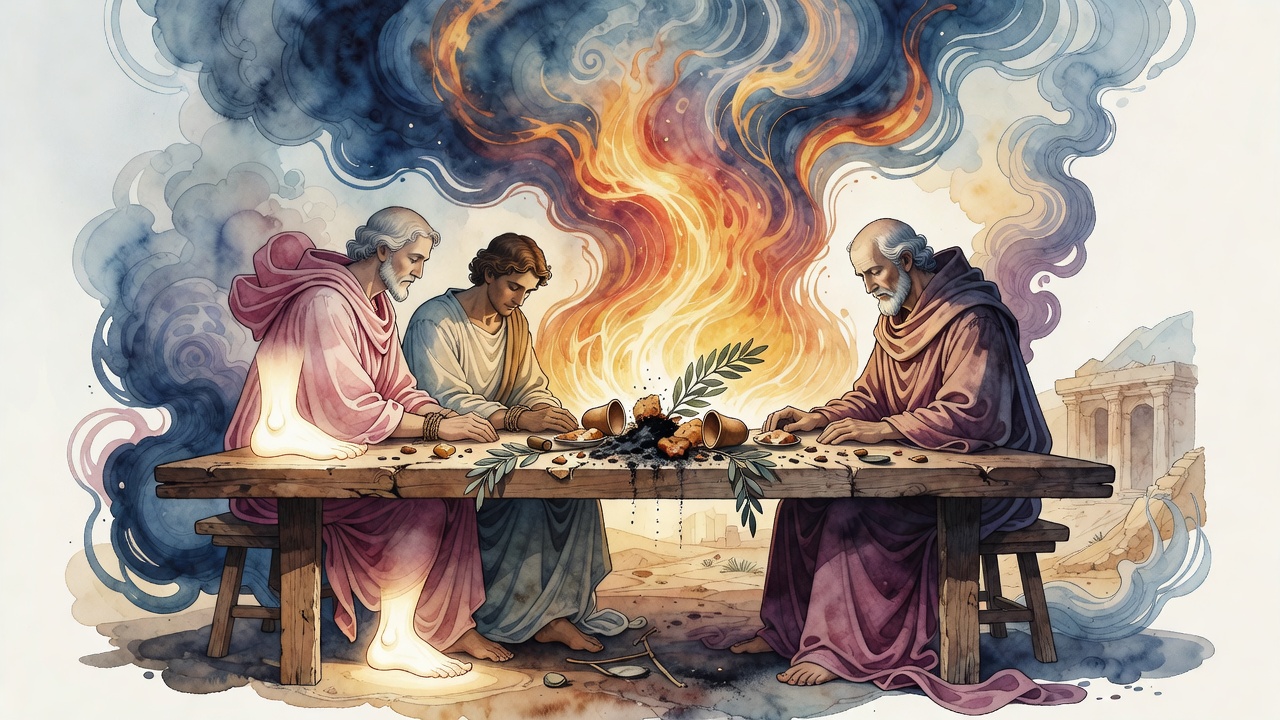
A man at the table set his cup down. The wine still smelled sweet. His hand, which had felt so sure, looked smaller without the cup to fill it. It is in the power of my hand, he had said that morning about a deal, a field, a name. The saying tasted thin now.

Outside, the sun did its ordinary work for mortals. No heel outshone it. That age was over. What remained was dust that remembered glory and a command not to fake the joy the patriarchs never kept as a possession.

What the Quiet Ones Kept

The righteous in God's world were not miserable for fashion. They were unfinished. Their peace was partial, their laughter interrupted, their victories borrowed. The merrymakers wanted the end of the story in the middle of the meal.

God refused the schedule. Horns stay down until the One who stands in the congregation raises what He chooses. Until then, the better music is a judge who fears the Presence at his elbow, and a strong man who will not say the world fits in his palm.

The cups went cold. Somewhere a father still climbed a mountain in memory, and somewhere a heel that once outshone the sun returned to the sentence that levels every feast.


← All myths
From the tradition

Sources

3 sources

The texts behind this telling. Some cards carry a translation of the source; others are our own retelling of it, and each card says which. Every card links out to the original.

Midrash Tanchuma, Achrei Mot 2Midrash Tanchuma

Retold in our words. Read the original at the link below.Townsend 1989 translation of Midrash Tanhuma, S. Buber Recension · CC-BY

R. Levy opened (with Ps. 75:5), “I say to the merrymakers (la-holelim), ‘Do not make merry;’” [‘la-holelim’ means] those who create confusion (ma'arbavya'). These are the ones whose heart is full of evil intrigues (holhaliyot). R. Levi called them "woe-makers"; these are the ones who bring woe (alelay) into the world. (Ps. 75:5, cont.) “To the wicked, do not lift up the horn.” The Holy One, blessed be He, said to the evil ones, “The righteous have not been happy in My world, so would you seek to be happy in My world? The first Adam was not happy in My world, so would you seek to be happy in My world?” R. Levi said in the name of R. [Simeon] ben Menasya], “The round of the first Adam's heel outshone the sphere of the sun.” And do not be surprised at this. According to universal custom, when a person makes two small plates, one for himself and one for his household, whose does he make the more beautiful? Is it not his own? So the first Adam was created for the service of the Holy One, blessed be He, but the sphere of the sun was created for the service of mortals. Is it not all the more certain that the round of the first Adam's heel outshone the sphere of the sun? Now if the round of Adam's heel outshone [it], how much the more [must] the countenance of his face [have outshone it]. R. Levi said in the name of R. Hama bar Hanina, “The Holy One, blessed be He, set up thirteen canopies for the first Adam in the Garden of Eden, as stated (in Ezek. 28:13), ‘You were in Eden, the garden of God, every precious stone was your covering; sapphire, turquoise….’” R. Shimon ben Laquish said, “Eleven.” Our masters said, “Ten.” And they do not disagree. The one that made thirteen of them, makes three out of “every precious stone was your covering”; the one who made them eleven, makes one out of it; and the one that makes ten of them, does not make any from them. Then after all this glory, [he was told] (in Gen. 3:19), “for dust you are and unto dust you shall return.” Abraham was not happy in My world, so would you seek to be happy in My world? Abraham had a son born to him at the end of a hundred years. Then the Holy One, blessed be He, said to him (in Gen. 22:2), “Please take your son….” So he journeyed, as written (in vs. 4), “And on the third day [Abraham] lifted [his eyes and saw]….” What did he see? He saw a cloud joined to the mountain. He said to his son, “My son, do you see what I see…?” This is that which is written (in Gen. 23:2), “and Abraham come to mourn for Sarah and weep for her.” From where had he [just] come? He had [just] come from Mount Moriah. The Holy One, blessed be He, as it were, was not happy in His world, so should people seek to be happy in His world? "The Lord [was] happy in His works" is not written here (in Ps. 104:31), but “let the Lord be happy [in His works].” And when will He rejoice in His works? When He will rejoice in the actions of the righteous in the world to come. Israel was not happy in My world, so would you seek to be happy in My world? "Israel [was] happy in its Maker" is not written here (in Ps. 149:2), but “Let Israel be happy in its Maker,” because it is in the future that they are going to be happy in the Holy One, blessed be He. It is therefore written (in Ps. 75:5), “I say to the merrymakers, ‘Do not make merry.’”

Full source
Midrash Tehillim 82:1Midrash Tehillim

Retold in our words. Read the original at the link below.Rabbi Mike Feuer, Jerusalem Anthology · CC-BY

Psalm 82 opens with a powerful image: "A Psalm of Asaph. God stands in the congregation of God; He judges among the gods." It's a verse that speaks volumes about justice, responsibility, and the divine presence. But what does it really mean?

The Midrash Tehillim, a collection of rabbinic interpretations on the Book of Psalms, dives deep into this verse. It connects this idea of divine oversight to the fundamental principle of impartial judgment. the Torah commands us in Deuteronomy (1:17), "You shall not show partiality in judgment." King Jehoshaphat echoes this sentiment in 2 Chronicles (19:6), reminding us that "there is no injustice with the Lord our God, no partiality, nor taking of bribes."

These aren't just nice sentiments, are they? They're a bedrock of a just society.

The Midrash (rabbinic interpretive commentary) suggests that these verses are there to keep judges humble. It's almost as if God is saying: "Don't get too comfortable on that bench. Don't think you're all-powerful just because you wear a robe." The Lord reminds them, "You should know that I am with you, as it is said, 'God stands in the congregation of God.'"

It’s a stark reminder that earthly justice is meant to reflect divine justice.

The prophet Isaiah (61:8) further emphasizes this point: "For I, the Lord, love justice; I hate robbery and wrongdoing." And what happens if justice is perverted? Malachi (3:5) warns of swift rebuke: "So I will come to put you on trial. I will be quick to testify against sorcerers, adulterers, and perjurers, against those who defraud laborers of their wages, who oppress the widows and the fatherless, and deprive the foreigners among you of justice."

These are powerful words. They paint a picture of a God who is not indifferent to the suffering caused by injustice. A God who actively intervenes on behalf of the vulnerable.

The Midrash Tehillim concludes with a potent message: "Be in the midst of God and He shall judge." It's a call to remember that we are always in the presence of the Divine, especially when we are tasked with making decisions that affect others' lives. It's a reminder that true justice isn't just about following the letter of the law, but about embodying compassion, fairness, and a deep awareness of our own fallibility.

So, the next time you find yourself in a position of judgment – whether it's deciding who gets the last piece of cake or making a more serious decision – remember Psalm 82. Remember that God stands in the congregation of God, and may we all strive to be worthy of that divine presence.

Full source
Ben Sira 5:1Ben Sira

Retold in our words. Read the original at the link below.The Wisdom of Ben Sira, Cambridge University Press (1899) · CC-BY

Stay not upon your strength or wealth, and do not say, "It is in the power of my hand."

Ben Sira warns against leaning on power as if it were self-made. The counsel is the whole of the source line.

Full source